

P0128 on 2013-2014 Subaru Outback 2.5L: Causes and Fixes for Low Coolant Temperature
For a 2013-2014 Subaru Outback with the 2.5L FB25 engine, code P0128 almost always means the thermostat is failing and stuck open. A new OEM thermostat and gasket is the most common and highly recommended fix. Expect to pay around $30-$50 for the genuine Subaru part.
- P0128 on a 2013-2014 Outback almost always points to a failed thermostat that is stuck open.
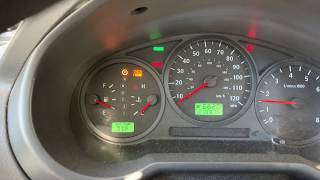
- Symptoms include a Check Engine Light, flashing cruise control, flashing brake light, and poor cabin heater performance.
- The most reliable fix is to replace the thermostat and gasket with genuine Subaru part number 21210AA211, which is a countermeasure part designed to solve this specific issue.
- This is a DIY-friendly repair for those with basic tools and mechanical skills, with a difficulty of about 2 out of 5. Proper bleeding of the cooling system after the repair is critical.
- Always check your coolant level first, but be prepared to replace the thermostat. Do not use aftermarket thermostats as they are a common cause of repeat failures for this code.
What's Unique About the 2013-2014 Subaru Outback
On the 2.5L FB25 engine in this generation of Outback, the P0128 code is a very common issue, often pointing directly to the thermostat. Subaru issued a Technical Service Bulletin (TSB 09-56-13) for this exact problem, acknowledging that the original thermostats could fail prematurely. The failure mode is typically the thermostat getting stuck in the open position, which continuously circulates coolant through the radiator and prevents the engine from warming up properly, especially in cold weather or at highway speeds. The TSB specifies that coolant can enter the thermostat's internal piston, causing it to open at a lower temperature than designed.
Symptoms You May Notice
- Check Engine Light is on
- Cruise control light is flashing (a common Subaru behavior when the Check Engine Light is on).
- Brake light on the dash may be flashing. 🎬 Watch: Why your cruise control and brake lights are flashing.
- Heater takes a long time to produce warm air or blows cool/lukewarm air, especially when idling.
- Temperature gauge on the dashboard reads lower than normal or drops at highway speeds.
- Noticeable decrease in fuel economy.
- Replacing the coolant temperature sensor when the thermostat is the actual problem. The sensor is accurately reporting the low temperature that the stuck-open thermostat is causing.
- Using a cheaper aftermarket thermostat. Many owners report that non-OEM thermostats do not regulate temperature correctly for Subaru's sensitive ECU logic, causing the P0128 code to return.
Most Likely Causes
- Failing or Stuck-Open Thermostat 🔴 High Probability → Shop Integrated Thermostat Housing Assembly Subaru released TSB 09-56-13 for this issue, indicating a known problem with the original part where coolant could enter the thermostat's internal piston, causing it to open at a lower temperature than specified. This is the most common cause by a wide margin according to owner forums.
How to confirm: Use an OBD-II scanner with live data to monitor the coolant temperature. After 15-20 minutes of driving, the temperature should reach and hold steady in the 180-210°F (82-99°C) range. If it struggles to reach this range, stays around 170-180°F, or drops significantly when driving at speed, the thermostat is almost certainly stuck open. Some owners report the code only triggers when the heater is on, as this adds an extra cooling load to the system.
Typical fix: Replace the thermostat and its gasket. 🎬 See this fast and easy Subaru thermostat replacement walkthrough. It is highly recommended to use a genuine Subaru OEM part (part number 21210AA211) to avoid repeat failures, as many aftermarket thermostats are reported to fail quickly or not meet the precise temperature specifications, causing the code to return.
Est. part cost: $30-$50 - Faulty Engine Coolant Temperature (ECT) Sensor ⚪ Low Probability → Shop Engine Coolant Temperature Sensor
How to confirm: Compare the ECT sensor reading on a scan tool to the intake air temperature sensor reading on a completely cold engine (e.g., after sitting overnight). The two readings should be very close. If the ECT reading is illogical (e.g., reads 200°F on a cold engine), the sensor is faulty. A bad ECT sensor often throws other specific codes (like P0116-P0119) in addition to P0128.
Typical fix: Replace the engine coolant temperature sensor.
Est. part cost: $20-$40 - Low Engine Coolant Level / Air in System ⚪ Low Probability The FB25 engine can be susceptible to air pockets if the cooling system is not bled properly after service. Also, this engine was subject to a warranty extension for oil consumption issues, and any related engine work could introduce cooling system problems if not refilled correctly.
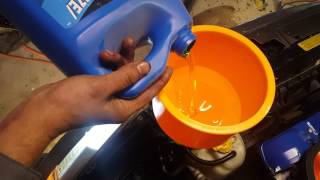
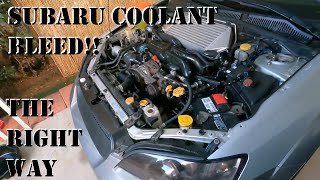
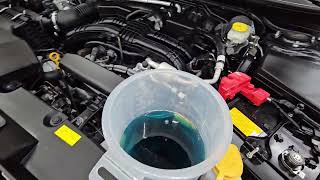
How to confirm: Visually inspect the coolant level in the overflow reservoir and the radiator (only when the engine is completely cool). If the level is low, there is a leak. If the level is fine, an air pocket could still be trapped near the ECT sensor, giving a false low reading. This is more likely if coolant service was recently performed. A proper bleeding procedure using a spill-free funnel is required. 🎬 Watch: How to properly bleed a Subaru cooling system.
Typical fix: Top off the coolant with Subaru Super Coolant (blue) and bleed all air from the system. If the level drops again, pressure test the system to find and repair the leak.
Est. part cost: $20-$30 for coolant
Rare But Worth Checking
- Cooling fan running constantly: → Shop Engine Cooling Fan Blade If the cooling fan relay fails in the 'on' position, the fan will run continuously, over-cooling the engine, especially at lower speeds or in cold weather. This is uncommon but possible and can be diagnosed by observing if the fans run as soon as the cold engine is started.
Diagnosis Steps
- Check for any Technical Service Bulletins (TSBs) related to P0128 for your vehicle. TSB 09-56-13 is highly relevant and confirms a known issue.
- With a cold engine, check the coolant level in the radiator and overflow tank. Ensure it is full and that the coolant is the correct blue Subaru Super Coolant.
- Connect an OBD-II scanner and confirm P0128 is the only code. If other codes are present, especially for the ECT sensor, diagnose them first.
- Use the scanner's live data feature to monitor the Engine Coolant Temperature (ECT). On a cold-soaked engine, it should match the Intake Air Temperature.
- Start the engine and let it idle. Watch the ECT reading. It should climb steadily.
- Drive the vehicle for 15-20 minutes, including some highway speeds. The coolant temperature should reach and maintain a stable operating temperature (e.g., ~185-205°F or 85-96°C).
- If the temperature is slow to rise, never reaches the target range, or drops significantly at highway speeds, the thermostat is almost certainly stuck open and needs to be replaced.
- After replacement, ensure the cooling system is properly bled using a spill-free funnel to prevent air pockets, which can cause similar symptoms.
Parts You'll Likely Need
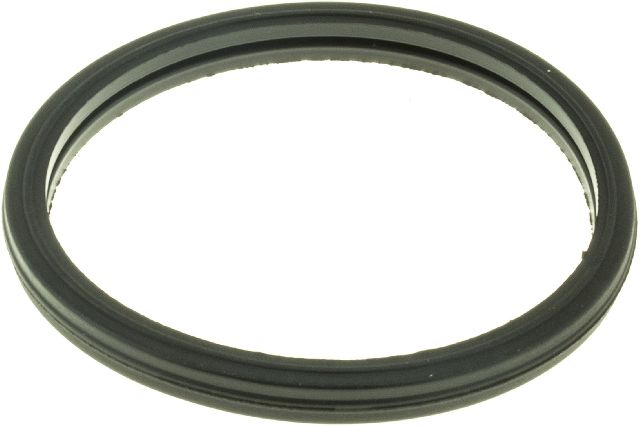
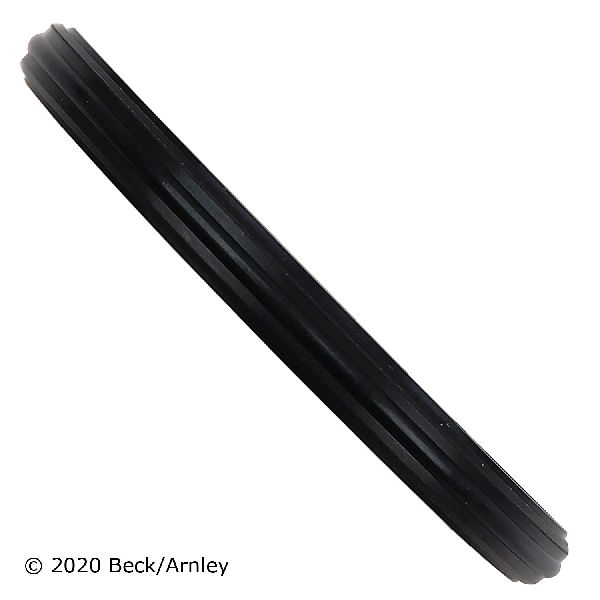
- Engine Coolant Thermostat and Gasket
(OEM #21210AA211)— This is the countermeasure part specified in TSB 09-56-13 to fix the P0128 code. It is the most common cause of failure. It supersedes part number 21210AA210.
Trusted brands: Subaru (Genuine OEM)
OEM price range: $30-$50
Aftermarket price range: $15-$30 - Subaru Super Coolant
(OEM #SOA868V9270)— You will lose some coolant when replacing the thermostat and must refill the system with the correct OEM blue coolant to prevent corrosion and ensure compatibility.
Trusted brands: Subaru (Genuine OEM)
OEM price range: $25-$35 per gallon
Technical Service Bulletins (TSBs) & Recalls
- 09-56-13 (NHTSA ID 10054329): Titled 'Countermeasure Thermostat Availability for DTC P0128', released 10/21/2013. It details the cause (coolant entering the thermostat piston) and provides the updated part number (21210AA211) for 2013-14 Legacy/Outback models with the 2.5L FB engine.
- 11-111-12R: Released 12/06/2012, this bulletin specifically addresses P0128 where the engine coolant temperature remains below the thermostat regulating temperature.
Platform-Specific Known Issues
- Subaru issued TSB 09-56-13 regarding a countermeasure thermostat (21210AA211) to fix the P0128 code, which could be caused by the original thermostat opening at too low a temperature after a cold soak.
- The combination of a steady Check Engine Light with flashing Cruise Control and Brake lights is a standard Subaru warning strategy to get the driver's attention and is expected behavior when this code is set.
- Owner forums are filled with reports of this exact issue, and the consensus is overwhelmingly to use a genuine Subaru thermostat, as aftermarket versions from brands like Duralast or Motorad are known to cause the code to reappear.
- NHTSA ODI #11436318 notes that Subaru issued TSB #11-102-11R calling for a software upgrade to address issues with the ECU setting false error codes like P0128.
Mechanic-Grade Diagnostic Values
- Engine Coolant Temperature (ECT) Sensor Resistance — expected: Approximately 2,000-3,500 Ohms when cold (e.g., 68°F/20°C), dropping to 200-400 Ohms at operating temperature (e.g., 194°F/90°C).. Failure: Readings that are infinite (open circuit), near zero (short circuit), or do not change significantly as the engine warms up indicate a faulty sensor.
- Engine Coolant Temperature (ECT) Sensor Voltage (KOEO) — expected: On a cold engine, the signal voltage should be high, typically around 3.5-4.0 Volts. As the engine warms to operating temperature, this voltage should drop to around 0.5-1.0 Volts.. Failure: Voltage that is stuck at 5V (open circuit) or 0V (short circuit), or does not decrease smoothly as the engine warms, points to a sensor or wiring issue.
Scan Tool Commands That Help
- Subaru Select Monitor (SSMIII/SSM4): Current Data Display & Save — This function allows a technician to view and record live data parameters, including Engine Coolant Temperature, Intake Air Temperature, and Engine Speed. It is the primary tool for confirming the P0128 diagnosis by observing the engine's warm-up curve in real-time, just like a generic OBD-II scanner but with faster refresh rates and more vehicle-specific parameters.
- Subaru Select Monitor (SSMIII/SSM4): Each System Check — Used to individually check the status and communication with each control module on the vehicle. This can help rule out a broader network or ECM issue if P0128 is present with other seemingly unrelated codes.
Wiring & Ground Locations
- Engine Coolant Temperature (ECT) Sensor — On the 2.5L FB25 engine, the ECT sensor is located on the top front of the engine, screwed into the coolant crossover pipe, near the thermostat housing and where the upper radiator hose connects.. This is the primary sensor the ECM uses to determine if the engine is reaching operating temperature. A faulty sensor or a corroded connector at this location can send false low-temperature signals, directly causing a P0128 code, although this is less common than thermostat failure.
- Main Engine Grounds — There are critical ground points on the top of the intake manifold that provide the ground path for the ECU and its sensors. Additional engine-to-chassis ground straps are located on either side of the engine block, connecting to the frame rails.. A poor ground connection between the engine and chassis can cause floating or incorrect voltage readings for various sensors, including the ECT sensor. While not a common cause for an isolated P0128, checking that these grounds are clean and tight is a crucial step in any electrical diagnosis on a Subaru.
- ECT Sensor Connector — A two-pin connector that plugs directly into the ECT sensor on the coolant crossover pipe.. Being located on top of the engine, the plastic connector can become brittle from heat cycles and the locking tab can break, leading to a poor connection. Oil or coolant contamination can also corrode the pins, altering the resistance reading and potentially triggering a P0128 or other ECT-related codes.
Real Owner Repair Stories
- Reddit r/MechanicAdvice post (2013 Subaru Outback) — Check engine light with codes P0128 and P0117 (ECT Circuit Low) appeared 350 miles after a shop replaced the radiator, all hoses, and thermostat.
❌ Tried (didn't work) The shop had already replaced the thermostat as part of a larger cooling system service.
✅ What actually fixed it The final fix was not posted by the user, but the top comment correctly diagnosed that the combination of codes pointed to an issue with the ECT sensor or its connector, suggesting it was likely damaged, left unplugged, or contaminated with coolant during the recent repair. This highlights the importance of checking the sensor and connector integrity after any cooling system work.
OEM Part Supersession History
21210AA210→21210AA211— The original part was prone to failure as described in TSB 09-56-13, where coolant could seep into the thermostat's piston mechanism, causing it to open at a lower-than-specified temperature. The new part is a countermeasure designed to prevent this failure.
Heads up: The old part number should not be used. 21210AA211 is the correct and only recommended OEM replacement for this issue.
Model Year Variations Within This Range
- 2013-2014: For the 2013 model year, the Outback received a significant refresh which included the introduction of the new 2.5L FB25 engine, replacing the previous EJ25 engine used in 2010-2012 models. Therefore, this P0128 guide is specific to the FB25 engine found in the 2013-2014 models and is not applicable to earlier years of the same generation.
Diagnostic Flowchart
Real Owner Stories
Aggregated from forums and TSBs cited above. Mileages and costs reflect what owners reported in those sources.
2011 Subaru Legacy
Symptoms: Check engine light came on with code P0128. Checked the coolant level and it was fine.
What fixed it: The initial thermostat replacement did not fix the problem, indicating a diagnostic dead end or a failed aftermarket part.
Source hint: Reddit r/MechanicAdvice thread 'P0128 code keeps coming back- 2011 Subaru Outback'
Subaru Outback
Symptoms: Check engine light illuminated with a P0128 code.
What fixed it: Replaced the thermostat and performed a coolant flush. The owner noted the coolant tank was empty after driving home, highlighting the need for proper bleeding and topping off.
Source hint: Reddit r/AskMechanics
2011-2014 Subaru Outback — ~100000 miles
Symptoms: The temperature gauge was reading low while driving at highway speeds.
What fixed it: Replaced the faulty thermostat with a genuine OEM Subaru thermostat.
Source hint: subaruoutback.org forum threads on 4th Gen Outbacks
2012 Subaru Outback
Symptoms: The code would only appear when the heater was turned on. Live data showed temperatures were normal until the thermostat opened. The dash lights were also flashing.
What fixed it: Went to a dealer and installed the genuine Subaru thermostat.
Source hint: Reddit r/subaru and r/MechanicAdvice post titled '2012 Subaru Outback P0128 Codes'
Documented NHTSA Reports
2011 Subaru Outback
Symptoms: An owner reported that the manufacturer admitted to an issue with the ECU setting false P0128 error codes.
What fixed it: NHTSA ODI #11436318 describes that Subaru issued TSB #11-102-11R, which called for a software upgrade to fix the problem.
Related OBD-II Codes
Frequently Asked Questions
Does TSB 09-56-13 apply to my 2013-2014 Subaru Outback 2.5L?
Why are my cruise control and brake lights flashing along with the Check Engine Light?
Can I use an aftermarket thermostat from Duralast or Motorad to fix this code?
Why does the P0128 code only appear when I turn my heater on?
What type of coolant should I use when replacing the thermostat on my FB25 engine?
Could recent engine work for oil consumption cause the P0128 code?
Helpful Videos
We Have This Part in Stock


The information in this article is provided for general reference and educational purposes only. Vehicle specifications, procedures, and part compatibility can vary by production date, trim level, and region. Always consult your vehicle's factory service manual and verify part numbers before purchasing or performing repairs. Safety-critical components such as airbags, seat belts, and braking systems should be installed by a qualified professional.
- Subaru Outback:
- 🧭 Diagnostic Flowchart
- 🎬 Helpful Videos
- 🛍️ Shop This Part
- What's Unique About the 2013-2014 Subaru Outback
- Symptoms You May Notice
- Most Likely Causes
- Rare But Worth Checking
- Diagnosis Steps
- Parts You'll Likely Need
- Technical Service Bulletins (TSBs) & Recalls
- Platform-Specific Known Issues
- Mechanic-Grade Diagnostic Values
- Scan Tool Commands That Help
- Wiring & Ground Locations
- Real Owner Repair Stories
- OEM Part Supersession History
- Model Year Variations Within This Range
- Real Owner Stories
- 2011 Subaru Legacy
- Subaru Outback
- 2011-2014 Subaru Outback — ~100000 miles
- 2012 Subaru Outback
- Documented NHTSA Reports
- 2011 Subaru Outback
- Related OBD-II Codes
- Frequently Asked Questions
- 🎟️ Get 5% Off