

P0128 on 2009-2013 Toyota Corolla: Causes and Fixes for Coolant Temperature Issues
On a 2009-2013 Corolla, code P0128 almost always means the engine thermostat is stuck open. This is a common wear-and-tear failure. Replacing the thermostat and gasket is the typical fix, costing around $20-$40 for an aftermarket part or $40-$70 for an OEM part. It's a common and relatively easy DIY repair that prevents poor fuel economy and heater performance.
- P0128 on a 2009-2013 Corolla means the engine isn't warming up as fast as it should.
- The most likely cause, by far, is a thermostat that is stuck in the open position.
- You can continue to drive the car, but you'll experience poor heat and reduced fuel economy.
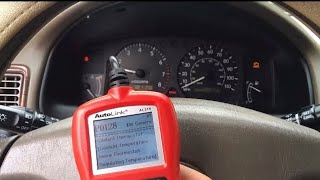
- Diagnosis can be confirmed with an OBD-II scanner's live data by watching the coolant temperature fail to reach ~180°F.
- The repair is DIY-friendly for many home mechanics and involves replacing the thermostat and refilling lost coolant.
What's Unique About the 2009-2013 Toyota Corolla
The 2ZR-FE engine in the tenth-generation Corolla has a straightforward and reliable cooling system. Code P0128 is not typically caused by a complex or unique design flaw on this platform. Instead, it's almost always the result of the mechanical thermostat, a normal wear-and-tear item, failing in the 'stuck open' position. This is a safe failure mode that prevents overheating but stops the engine from reaching its optimal operating temperature, impacting fuel efficiency and cabin heat.
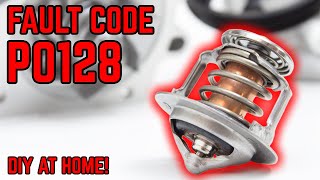
🎬 Watch: A detailed explanation of the P0128 code on Toyotas.Symptoms You May Notice
- Check Engine Light is illuminated
- Engine temperature gauge on the dashboard reads lower than normal, takes a very long time to move, or drops at highway speeds
- Heater blows lukewarm or cool air, especially on cold days
- A slight decrease in fuel economy
- Replacing the ECT sensor when the thermostat is the actual cause. Because the thermostat is a mechanical part and the ECT is an electronic sensor, it's easy to assume the sensor failed. However, the mechanical thermostat is the more common failure point for this specific code.
Most Likely Causes
- Stuck-Open Engine Thermostat 🔴 High Probability → Shop Integrated Thermostat Housing Assembly The thermostat is a mechanical part with a finite lifespan, designed to fail in the open position. Over time, the wax pellet mechanism degrades, causing it to stick open. This is the most common cause of P0128 on virtually all vehicles, including this Corolla, and is considered a standard maintenance item after many years of service.
How to confirm: Start the engine when it's cold. Feel the upper radiator hose. It should remain cool for several minutes. If it starts to get warm gradually almost immediately, the thermostat is stuck open, allowing coolant to circulate to the radiator prematurely. Alternatively, use an OBD-II scanner with live data to monitor the coolant temperature; if it rises very slowly and fails to reach and maintain ~180°F (82°C), the thermostat is the likely culprit.
Typical fix: Replace the engine thermostat and the corresponding gasket. The OEM thermostat is designed to open at 180°F (82°C). It is highly recommended to use an OEM (Toyota/Aisin) or high-quality aftermarket part, as some cheaper brands are known to fail prematurely. When installing, ensure the 'jiggle valve' on the thermostat is facing up (12 o'clock position) to allow air to bleed from the system.
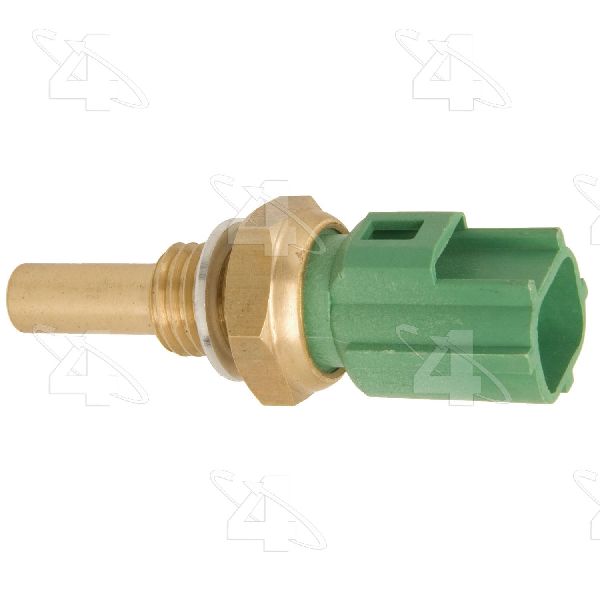
Est. part cost: $20-$70 - Faulty Engine Coolant Temperature (ECT) Sensor ⚪ Low Probability → Shop Engine Coolant Temperature Sensor The ECT sensor can degrade over time, sending inaccurate (usually colder) readings to the ECM. While less common than a failed thermostat for P0128, it's a possible cause. Often, a failing ECT sensor will trigger other codes (like P0116, P0117, P0118) in addition to or instead of P0128.
How to confirm: Using an OBD-II scanner, watch the live data from the ECT sensor. If the reading is erratic, nonsensical (e.g., -40°F), or clearly incorrect compared to the actual engine temperature, the sensor is faulty. You can also test the sensor's resistance with a multimeter; at 68°F, it should be between 2,000 and 3,000 ohms.
Typical fix: Replace the engine coolant temperature sensor. It is recommended to use a Denso (OEM) sensor for reliability.
Est. part cost: $15-$60 - Low Engine Coolant Level ⚪ Low Probability A low coolant level can create air pockets in the cooling system. If an air pocket forms around the ECT sensor, it will read the air temperature instead of the coolant temperature, leading to inaccurate readings and potentially triggering a P0128 code.
How to confirm: Visually inspect the coolant level in the overflow reservoir and the radiator (only when the engine is completely cool). If the level is below the 'Low' mark, it needs to be topped off.
Typical fix: Top off the cooling system with the correct type of coolant (Toyota Super Long Life Coolant - Pink). If the level is significantly low, you must also find and repair the source of the leak, which could be a failing water pump or hose.
Est. part cost: $25-$35
Rare But Worth Checking
- Cooling Fan Running Constantly: → Shop Engine Cooling Fan Blade If the engine's electric cooling fan is stuck on due to a faulty relay or fan switch, it can over-cool the engine, mimicking a stuck-open thermostat. Check if the fan runs immediately from a cold start with the A/C off; it should not.
- Wiring to ECT Sensor Damaged: → Shop Engine Coolant Temperature Sensor The wiring harness or connector for the ECT sensor could be corroded, loose, or damaged, causing an incorrect signal to be sent to the ECM. This is rare but worth inspecting if a new sensor doesn't fix the issue.
Diagnosis Steps
- Read the code with an OBD-II scanner to confirm P0128 is present.
- With the engine cold, check the coolant level in the overflow tank and radiator. Top off with Toyota-specified coolant if low.
- Start the engine from cold and use an OBD-II scanner to monitor live data for the Engine Coolant Temperature.
- Observe the temperature reading. It should climb steadily to approximately 180-195°F (82-90°C) and then stabilize.
- If the temperature climbs very slowly, never reaches the target range, or drops at highway speeds, the thermostat is almost certainly stuck open.
- As a physical check, feel the upper radiator hose. It should stay cool for the first 5-10 minutes of idling and then become hot quickly as the thermostat opens. If it warms up gradually from the start, the thermostat is stuck open.
- If the temperature on the scanner is erratic, reads a fixed low number like -40°F, or doesn't change, the ECT sensor or its wiring is the likely problem. A faulty ECT sensor will often set other codes like P0116, P0117, or P0118.
- Check that the cooling fan is not running constantly when the engine is cold and the A/C is off.
Parts You'll Likely Need
- Engine Coolant Thermostat
(OEM #90916-03129 (Superseded by 90916-A3003))— This is the most common failure item for code P0128. It gets stuck open, preventing the engine from warming up correctly. The OEM part opens at 180°F (82°C).
Trusted brands: Toyota (OEM), Aisin (OEM manufacturer), Stant, Gates
OEM price range: $40-$70
Aftermarket price range: $20-$40 - Engine Coolant Temperature Sensor
(OEM #89422-33030)— This sensor provides the temperature reading to the computer. If it fails and reads incorrectly, it can trigger the code. It's the second most likely part to fail, though much less common than the thermostat for P0128.
Trusted brands: Denso (OEM manufacturer), Walker Products, NTK
OEM price range: $40-$60
Aftermarket price range: $15-$30 - Toyota Super Long Life Coolant (Pink)
(OEM #00272-SLLC2)— You will lose coolant when replacing the thermostat or sensor, and it must be refilled with the correct OEM-specified fluid to ensure cooling system longevity and prevent corrosion.
Trusted brands: Toyota
OEM price range: $25-$35
Platform-Specific Known Issues
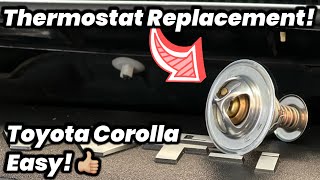
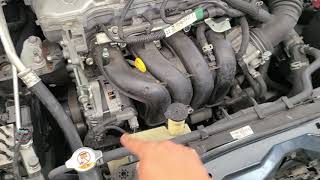
- The thermostat on the 2ZR-FE is located on the passenger side of the engine, following the lower radiator hose to the engine block. Access is relatively straightforward, making it a common DIY job. 🎬 See this step-by-step walkthrough for replacing the thermostat yourself.
Technical Service Bulletins (TSBs) & Recalls
- TSB Bulletin #T-SB-0045-13: While specifically noting other Toyota models with the 2AR-FE engine, this bulletin highlights that a MIL "ON" condition with DTC P0128 (Coolant Temperature Below Thermostat Regulating Temperature) can be caused by the Engine Control Module (ECM) logic, which may require an update to correctly interpret the thermostat regulating temperature.
Mechanic-Grade Diagnostic Values
- Engine Coolant Temperature (ECT) Sensor Resistance — expected: Approximately 2,000 to 3,000 Ohms (2-3 kΩ) at 68°F (20°C). Resistance will decrease as temperature increases.. Failure: An open circuit (infinite resistance) or short circuit (near zero resistance) indicates a failed sensor. A reading far outside the expected range for a given temperature is also a failure.
- ECT Sensor Connector Voltage (Key On, Engine Off, Connector Unplugged) — expected: One pin should show a 5V reference from the ECM, and the other pin should show near 0V (ground).. Failure: No 5V reference suggests a wiring or ECM problem. If both pins show voltage or both show ground, there is a short in the harness.
- ECT Sensor Live Data (Scanner, Sensor Unplugged) — expected: The scanner should display the lowest possible temperature reading, typically -40°F or -40°C.. Failure: If the reading does not drop to the minimum value, it may indicate a short-to-ground in the signal wire.
- ECT Sensor Live Data (Scanner, Connector Pins Jumpered) — expected: The scanner should display the highest possible temperature reading, often 250°F (121°C) or higher.. Failure: If the reading does not go to the maximum value, it indicates an open circuit in the signal or ground wire.
Wiring & Ground Locations
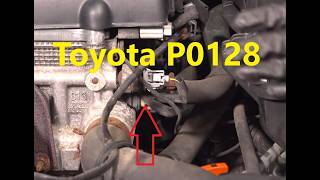
- ECT Sensor — On the 2ZR-FE engine, the sensor is located on the left (passenger) side of the engine, near the thermostat housing and underneath the alternator.. This is the primary sensor the ECM uses to monitor engine warm-up. Its physical location makes it susceptible to oil or coolant leaks from above, which can damage the connector and wiring.
- Engine Compartment Ground Points — Key ground points for the 2ZR-FE are located on the body and engine block. Specific identifiers from diagrams include AA, AB, AC, AD, BA, BB, CA, and CB, distributed around the engine bay. The main sensor ground (E2) is typically bundled with others and grounded to the cylinder head or intake manifold area.. A poor ground connection for the ECT sensor circuit can add resistance, causing the ECM to read an inaccurate (usually colder) temperature, which can mimic a stuck thermostat and trigger a P0128.
Real Owner Repair Stories
- YouTube channel 'Project Corolla' (2010 Toyota Corolla 1.8L) — Car was overheating and had a rough idle.
❌ Tried (didn't work) Initially, the owner was focused on the overheating symptom itself.
✅ What actually fixed it The root cause was a failed Engine Coolant Temperature (ECT) sensor, which caused the car to overheat. The overheating event then caused the mechanical thermostat to fail in the stuck-open position as a safety measure. The final fix required replacing both the faulty ECT sensor and the subsequently damaged thermostat. - NHTSA ODI #11580781: An owner of a similar Toyota model reported that a dealership detected Code P0128 after electronic control of the engine, throttle, or automatic transmission issues were detected, noting that the issue seems prevalent on owner sites.
OEM Part Supersession History
90916-03129→90916-A3003— Standard part number update and consolidation by Toyota. The new part is a direct replacement.
Model Year Variations Within This Range
- 2011-2013: A mid-cycle refresh for the 2011 model year included updated exterior styling (headlights, taillights, bumpers) and interior changes. The sporty XRS and luxury XLE trims were discontinued. However, the base 1.8L 2ZR-FE engine and its cooling system remained unchanged for the LE and S models, so the diagnosis and repair for code P0128 are identical across the entire 2009-2013 range.
Diagnostic Flowchart
Other Known Issues on This Vehicle
Issues unrelated to this code that are worth knowing about as an owner of this generation:
- Excessive Oil Consumption 🟠 Medium — Common in 2009-2011 models with the 2ZR-FE engine. Caused by piston ring design. Owners may need to add oil between changes. (Ref: Toyota issued a Warranty Enhancement Program (ZE7) and TSBs (like T-SB-0094-11) for this issue, extending coverage for repair, which involved an oil consumption test and potential piston/ring replacement.)
- Brief Rattle on Cold Start 🟡 Low — A brief (1-2 second) rattle or grinding noise upon cold startup is common, especially in 2009-2010 models. It is caused by a faulty VVT-i cam gear assembly. (Ref: Toyota TSB T-SB-0087-09 (and its Canadian equivalent) addresses this by replacing the camshaft timing gear assembly.)
- Water Pump Failure 🟠 Medium — The water pump can fail prematurely, typically after 60,000 miles. Symptoms include a whining/buzzing noise, and pink, crusty coolant residue on the passenger side of the engine bay.
Used vs. New Parts: Buying Guide for This Vehicle
When a used part is the smart pick: For this specific repair, using used parts is strongly discouraged. Both the thermostat and ECT sensor are low-cost, critical components whose failure can lead to poor performance, bad fuel economy, or even engine damage if a failure mode other than P0128 occurs.
What to inspect on the donor part:
- Not applicable, as new parts are the only recommended path.
OEM-only on this vehicle (don't cheap out):
- Engine Coolant Thermostat: While not strictly 'OEM-only', using the Toyota/Aisin OEM part is highly recommended for correct temperature regulation and longevity.
- Engine Coolant Temperature Sensor: Using the Denso (OEM) sensor is strongly recommended for accuracy and reliability.
Aftermarket brands forum-validated for this vehicle:
- Thermostat: Aisin (OEM manufacturer), Stant, Gates.
- ECT Sensor: Denso (OEM manufacturer), NTK.
Brands owners have reported issues with on this vehicle:
- Unbranded, 'white box' thermostats and sensors have a high rate of being defective out of the box or failing prematurely, potentially causing the code to return.
Real Owner Stories
Aggregated from forums and TSBs cited above. Mileages and costs reflect what owners reported in those sources.
2000 Toyota Corolla
Symptoms: Slow warmup and the temperature gauge stayed below the halfway mark.
What fixed it: The owner questioned the urgency of the repair after confirming common P0128 symptoms.
Source hint: Reddit r/Cartalk - 2000 Toyota corolla P0128
2018 Toyota Corolla
Symptoms: The mechanic found that both radiator hoses were getting warm at the same rate shortly after a cold start.
What fixed it: Physical check confirmed the thermostat was stuck open, allowing premature circulation.
Source hint: YouTube - p0128 COOLANT THERMOSTAT COROLLA 2018
2004 Scion xA
Symptoms: Temperature light blinking and the cooling fan starting early.
What fixed it: Owner followed a diagnostic path involving topping off coolant and checking for a P0128 code.
Source hint: ScionLife.com - 2004 xA: Temperature blinking and P0128 code
Related OBD-II Codes
Frequently Asked Questions
What specific thermostat should I use for my 2009-2013 Corolla 1.8L to fix P0128?
Is there a specific trick to installing the thermostat on the 2ZR-FE engine?
My 2009 Corolla has a P0128 and a rattle on cold start; are they related?
What type of coolant should I use to top off my 2011 Corolla?
Could a bad sensor be causing my P0128 instead of the thermostat?
Where is the thermostat located on the 1.8L 2ZR-FE engine?
Helpful Videos
We Have This Part in Stock


The information in this article is provided for general reference and educational purposes only. Vehicle specifications, procedures, and part compatibility can vary by production date, trim level, and region. Always consult your vehicle's factory service manual and verify part numbers before purchasing or performing repairs. Safety-critical components such as airbags, seat belts, and braking systems should be installed by a qualified professional.
- Toyota Corolla:
- 🧭 Diagnostic Flowchart
- 🎬 Helpful Videos
- 🛍️ Shop This Part
- What's Unique About the 2009-2013 Toyota Corolla
- Symptoms You May Notice
- Most Likely Causes
- Rare But Worth Checking
- Diagnosis Steps
- Parts You'll Likely Need
- Platform-Specific Known Issues
- Technical Service Bulletins (TSBs) & Recalls
- Mechanic-Grade Diagnostic Values
- Wiring & Ground Locations
- Real Owner Repair Stories
- OEM Part Supersession History
- Model Year Variations Within This Range
- Other Known Issues on This Vehicle
- Used vs. New Parts: Buying Guide for This Vehicle
- Real Owner Stories
- 2000 Toyota Corolla
- 2018 Toyota Corolla
- 2004 Scion xA
- Related OBD-II Codes
- Frequently Asked Questions
- 🎟️ Get 5% Off