

P0128 on 2004-2009 Toyota Prius: Coolant Temperature and Thermostat Guide
On a 2004-2009 Prius, code P0128 almost always means the engine thermostat is stuck open. This prevents the engine from reaching its proper operating temperature in the time expected by the ECU. Replacing the thermostat is the most common fix. Expect to pay around $25-$40 for an OEM-quality part and 1-2 hours for DIY labor.
- P0128 on a Gen 2 Prius is overwhelmingly caused by a thermostat that is stuck open.
- Before replacing parts, verify the engine coolant level is full (at the radiator cap) and listen for gurgling sounds that indicate air in the system, which can cause the same code.
- When replacing the thermostat, use an OEM or OEM-quality part (like Aisin or Denso) and ensure the jiggle valve on the new part faces upward.
- Properly bleeding all air from the cooling system after the repair is critical to prevent the code from returning.
What's Unique About the 2004-2009 Toyota Prius
The second-generation Prius has a complex cooling system with two separate loops: one for the gasoline engine and another for the hybrid inverter. P0128 specifically relates to the engine's loop. This system, which on some models includes a coolant heat storage tank (a thermos-like container to keep coolant hot for faster warm-ups and reduced emissions), is highly sensitive to air pockets. Improperly bled coolant after a repair can trap air and cause this code, mimicking a failed thermostat. Therefore, ruling out air in the system by performing a Prius-specific bleeding procedure is a critical first step unique to this platform.
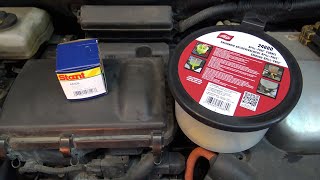
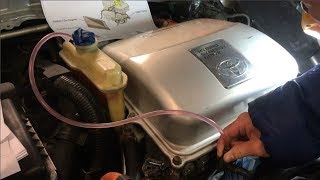
🎬 Watch: How to purge air from the coolant storage tank.Symptoms You May Notice
- Check Engine Light is on
- Engine takes much longer than usual to warm up
- Cabin heater blows lukewarm or cool air, especially at idle
- Noticeable decrease in fuel economy (MPG)
- Temperature gauge on the dashboard reads lower than normal
- Gurgling or water-rushing sounds from behind the dashboard, indicating air in the system
- Replacing the Engine Coolant Temperature (ECT) sensor when the thermostat is actually the problem. The thermostat is a mechanical part and fails more often than the electronic sensor.
- Confusing the engine cooling system with the separate inverter cooling system. Topping off the wrong reservoir (the one near the front of the engine bay) will not fix a low coolant level in the engine loop (radiator cap is further back).
- Assuming the car is fixed after replacing the thermostat without properly bleeding the system. Trapped air will cause the code to return.
Most Likely Causes
- Engine Thermostat Stuck Open 🔴 High Probability → Shop Integrated Thermostat Housing Assembly The thermostat is a mechanical part with a finite lifespan that can fail and stick in the open position. It is the most common failure leading to a P0128 code on most vehicles, including the Prius. Over time, the wax pellet motor inside the thermostat weakens, or corrosion can prevent it from closing fully.
How to confirm: After a cold start, feel the large upper radiator hose. It should remain cool for several minutes. If it starts to get warm almost immediately, the thermostat is likely stuck open, allowing coolant to circulate prematurely. The definitive test is to remove the thermostat and place it in a pot of water heated to its opening temperature (approx. 82°C / 180°F) to see if it operates correctly.
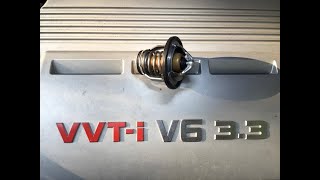
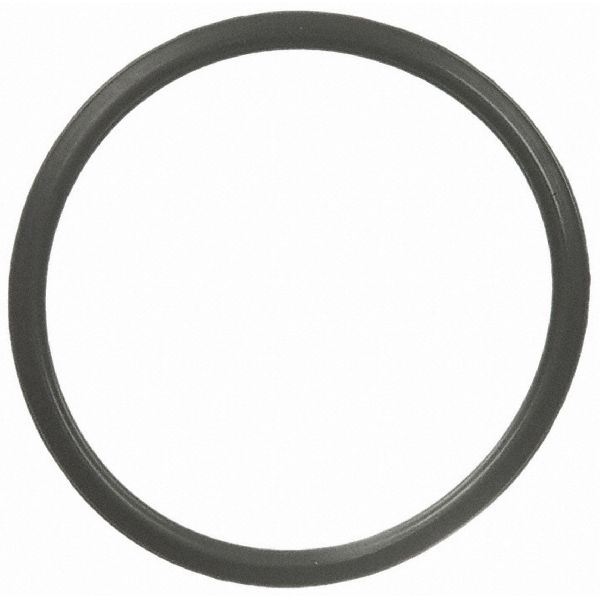
Typical fix: Replace the engine coolant thermostat and its gasket. This requires partially draining the engine coolant. The thermostat is located in a housing on the driver's side of the engine, below the airbox assembly. 🎬 Watch this step-by-step guide to replacing the Prius thermostat.
Est. part cost: $20-$45 - Low Engine Coolant or Air in the System 🟡 Medium Probability The Prius cooling system is complex and can be difficult to bleed completely. Air can get trapped after any service that involves draining the coolant, causing the temperature sensor to give inaccurate readings or creating hot spots and poor circulation.
How to confirm: Check the engine coolant level at the radiator cap (when the engine is cold), not just the inverter coolant reservoir. Listen for gurgling sounds from the dash area after startup. If the level is low or sounds are present, the system needs to be topped off and properly bled.
Typical fix: Perform a coolant bleeding procedure specific to the Gen 2 Prius. This involves using a spill-free funnel and putting the car into 'Maintenance Mode' to force the gasoline engine to run continuously, which circulates coolant and purges air.
Est. part cost: $0-$25 (for coolant) - Faulty Engine Coolant Temperature (ECT) Sensor ⚪ Low Probability → Shop Engine Coolant Temperature Sensor While less common than a thermostat failure, the ECT sensor can fail electrically, sending incorrect temperature data to the ECM.
How to confirm: Use an OBD-II scanner with live data to monitor the ECT sensor reading. See if the reading is erratic, nonsensical, or never rises to operating temperature despite the engine being hot. The sensor can also be tested with a multimeter; its resistance should be between 2,000-3,000 ohms at 68°F (20°C).
Typical fix: Replace the Engine Coolant Temperature sensor. It is a two-wire sensor located on the driver's side of the engine block, often near the thermostat housing.
Est. part cost: $30-$75
Rare But Worth Checking
- Cooling Fan Running Constantly: → Shop Engine Cooling Fan Blade If the electric radiator fan is stuck on, it can over-cool the engine, especially in cooler weather or during highway driving. Check if the fan runs as soon as the car is turned on (when cold), which would be abnormal. This could be caused by a faulty fan relay or a short in the wiring.
Diagnosis Steps
- Check Engine Coolant Level: Ensure the engine is completely cool. Remove the radiator cap (the one closer to the firewall, not the inverter reservoir cap) and verify the coolant is full to the top. If low, top it off with Toyota Super Long Life Coolant or a compatible pink/red Asian vehicle coolant.
- Check for Air in System: After topping off coolant, listen for any gurgling sounds from the dashboard on startup. If you hear any, the system has air and must be properly bled before proceeding.
- Inspect Thermostat Operation (Cold Engine): Start the cold engine and immediately feel the upper radiator hose. It should remain cool for at least a few minutes. If it warms up right away, the thermostat is stuck open and must be replaced.
- Monitor Live Data: Use an OBD-II scanner to watch the live ECT (Engine Coolant Temperature) data. The temperature should rise steadily to about 180-195°F (82-90°C) and stabilize. If it never reaches this range or fluctuates wildly, it points towards a thermostat or sensor issue.
- Test the ECT Sensor: If the thermostat seems to be working correctly, the ECT sensor itself may be faulty. You can test its resistance with a multimeter to see if it's within spec for the measured temperature. However, given the high probability of a thermostat failure, it's often more practical to replace the thermostat first.
- Replace the Thermostat: If all signs point to the thermostat, replace it. Access requires removing the airbox assembly. Be sure to use a new gasket and orient the jiggle valve in the upward (12 o'clock) position to help air escape.
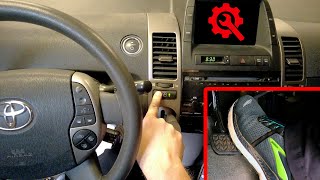
- Refill and Bleed the Cooling System: After replacing the thermostat, refill the system with the correct coolant. Attach a spill-free funnel to the radiator neck. Put the Prius in 'Maintenance Mode' (a sequence of accelerator pedal presses 🎬 See how to quickly put your Prius into Maintenance Mode. and shifter movements) to run the engine continuously and purge all air. This is a critical step.
- Clear Codes and Test Drive: Clear the P0128 code and perform a test drive to ensure the engine reaches and maintains the correct operating temperature and the code does not return.
Parts You'll Likely Need
- Engine Coolant Thermostat
(OEM #90916-A3003)— This is the most frequent cause of code P0128, as the original part can fail and stick open over time. The OEM part number 90916-03129 was superseded by 90916-A3003.
Trusted brands: Toyota (Genuine), Aisin, Denso, Kuzeh
OEM price range: $30-$45
Aftermarket price range: $20-$35 - Engine Coolant Temperature Sensor
(OEM #89422-35010)— This is the second most likely part to fail, though far less common than the thermostat. It provides the temperature reading to the computer.
Trusted brands: Denso (OEM Supplier), NTK, Standard Motor Products (SMP)
OEM price range: $60-$75
Aftermarket price range: $30-$50 - Toyota Super Long Life Coolant (Pink)
(OEM #00272-SLLC2)— You will lose coolant when replacing the thermostat or sensor and will need to top off or refill the system. Using the correct OEM coolant is highly recommended to prevent corrosion and compatibility issues.
Trusted brands: Toyota (Genuine), Zerex Asian Vehicle (Pink), Pentofrost A4
OEM price range: $25-$30 per gallon
Aftermarket price range: $20-$28 per gallon
Platform-Specific Known Issues
- Owner Experience: Remote Start Triggering Code: An owner on PriusChat reported that using a remote starter to warm up the car for 15 minutes without driving caused a P0128 code to set. The extended idle time in cold weather was not enough to bring the engine to the expected temperature within the ECU's time limit. After clearing the code, it did not return during normal driving, suggesting an intermittent or edge-case scenario rather than a hard failure.
- DIY Repair Story: Importance of Bleeding: A PriusChat forum member encountered P0128 along with no cabin heat. The community strongly advised that before replacing the thermostat, a proper coolant bleeding procedure was necessary, as air in the system was the likely culprit for both symptoms. The recommended procedure involved using Toyota's Techstream software or a specific pedal dance to run the coolant heat recovery system and force the engine to run continuously to purge all air.
- Manufacturer Service Logic: While specific to other Toyota models like the Camry, TSB Bulletin #T-SB-0045-13 notes that P0128 (Coolant Temperature Below Thermostat Regulating Temperature) can be triggered by specific Engine Control Module (ECM) logic, highlighting that the computer's monitoring parameters are a key factor in this code.
Mechanic-Grade Diagnostic Values
- Engine Coolant Temperature (ECT) Sensor Resistance — expected: Approx. 2,000-3,000 Ω at 20°C (68°F) and 250-350 Ω at 80°C (176°F).. Failure: An infinite reading (open circuit), near-zero reading (short circuit), or values significantly outside the expected range for a given temperature indicates a failed sensor.
- Engine Coolant Temperature (ECT) Sensor Signal Voltage (at ECM) — expected: Should decrease as the engine warms up. Typically ~3.0V on a cold start (~20°C) and dropping to ~1.0V at normal operating temperature (~80°C).. Failure: Voltage stuck high (e.g., > 4.9V) indicates an open circuit. Voltage stuck low (e.g., < 0.14V) indicates a short circuit.
- P0128 Malfunction Threshold — expected: The code sets when the actual Engine Coolant Temperature is less than 75°C (167°F) at the moment the ECM's internal model calculates that the temperature *should* have reached 75°C.. Failure: This condition being met for 5 seconds or more will trigger the code.
- Thermostat Opening Temperature — expected: The thermostat should begin to open between 80°C and 84°C (176°F to 183°F).. Failure: If the valve is open at a lower temperature or fails to open in this range, it is faulty.
Scan Tool Commands That Help
- Toyota Techstream: Activate the Water Pump — Found under 'Powertrain / Engine and ECT / Active Test'. This command forces the electric water pump to run, which is essential for properly bleeding air from the engine's cooling loop after a repair.
- Toyota Techstream: Inspection Mode — Found under 'Powertrain / Hybrid Control / Active Test'. This forces the gasoline engine to run continuously, preventing the hybrid system from shutting it off. It is critical for warming up the engine to test thermostat operation and for bleeding air from the cooling system.
- Toyota Techstream: Control the Cooling Fan — Allows you to manually turn the radiator fans on and off to verify the fan relay and motor are working correctly, helping to rule out a constantly-running fan as the cause of overcooling.
- Toyota Techstream: Activate CHS Pump — Allows for active testing of the Coolant Heat Storage ('thermos') pump. This is used to diagnose the heat recovery system, which can influence engine warm-up times.
Wiring & Ground Locations
- ECM Pin THW (Terminal 97) — At the main Engine Control Module (ECM) connector.. This is the signal pin for the Engine Coolant Temperature sensor. You can back-probe this pin to check the voltage signal the ECM is receiving directly from the sensor, which helps differentiate a sensor problem from a wiring problem.
- ECM Pin E2 (Terminal 96) — At the main Engine Control Module (ECM) connector.. This is the sensor ground pin provided by the ECM for the ECT sensor. Checking for continuity between this pin and the corresponding wire at the sensor connector verifies the ground side of the circuit.
OEM Part Supersession History
90916-03129, 90916-03084→90916-A3003— Part revision and consolidation by Toyota.16660-21010→16660-21011— Part revision for the Coolant Heat Storage Tank Assembly.
Model Year Variations Within This Range
- 2004-2009: The complex cooling system, including the main engine loop and the separate Coolant Heat Storage (CHS) 'thermos' system, was a consistent feature across all model years of the second-generation Prius in the US market. There are no significant year-to-year variations within this generation that would alter the diagnosis of P0128.
Diagnostic Flowchart
Other Known Issues on This Vehicle
Issues unrelated to this code that are worth knowing about as an owner of this generation:
- Combination Meter (Dashboard) Failure 🟠 Medium — Very common, especially on 2004-2007 models. Often starts intermittently in cold weather and progresses to a permanent black screen. Can cause other issues like the car not turning off easily or the rear hatch not opening. (Ref: T-SB-0172-09 Rev2 acknowledges the issue and provides a part number for an updated meter, but warranty coverage was limited to 3yr/36k miles.)
- Brake Actuator Assembly Failure 🔴 High — A significant and expensive failure. Symptoms include a loud, frequently running pump noise from under the hood, and multiple brake-related warning lights (ABS, VSC, Brake). Failure results in loss of power brake assist. (Ref: Toyota issued a Warranty Enhancement Program (ZG1) extending coverage for this part, but the terms and expiration dates have caused confusion for many owners.)
- Inverter Coolant Pump Failure 🔴 High — Common failure, especially at higher mileage (100k+ miles). Can cause the hybrid system to overheat and shut down, potentially leaving the car stranded. Often sets code P0A93. (Ref: A recall (NHTSA ID 12V536000) was issued for some 2004-2009 models for the electrically driven water pump, which could fail and cause the hybrid system to stall.)
- Excessive Oil Consumption 🟠 Medium — Tends to begin after 100,000 miles. The 1NZ-FXE engine can start to consume oil due to piston rings getting stuck with carbon deposits and aging valve stem seals.
- HID Headlight Ballast Failure 🟡 Low — On models equipped with HID headlights, a common failure is the ballast (igniter), causing the headlight to flicker, change color, or turn off intermittently. This is a safety concern for night driving. (Ref: A class-action lawsuit was filed regarding this issue, but individual owner success in getting it covered varies.)
Used vs. New Parts: Buying Guide for This Vehicle
When a used part is the smart pick: For high-cost, lower-failure rate assemblies like the Coolant Heat Storage Tank ('thermos'), a used part from a verified low-mileage donor vehicle can be a cost-effective alternative to a new OEM unit which is very expensive.
Donor-vehicle mileage cap: roughly under 100000 miles for the part to have meaningful remaining life.
What to inspect on the donor part:
- Verify the donor vehicle's mileage.
- Inspect the plastic tank for any hairline cracks, especially around mounting points and hose connections.
- Ensure electrical connectors for the pump and sensor are intact and free of corrosion.
- Avoid parts from vehicles with heavy front-end collision damage.
OEM-only on this vehicle (don't cheap out):
- Engine Coolant Thermostat
Aftermarket brands forum-validated for this vehicle:
- Aisin (for thermostat - OEM supplier)
- Denso (for thermostat/sensors - OEM supplier)
- Zerex Asian Vehicle (Pink) (for coolant)
Brands owners have reported issues with on this vehicle:
- Unnamed or 'white-box' thermostats. The labor involved in replacement is too high to risk using a part with questionable reliability.
Real Owner Stories
Aggregated from forums and TSBs cited above. Mileages and costs reflect what owners reported in those sources.
2004-2009 Toyota Prius 1.5L Hybrid
Symptoms: The owner used a remote starter to warm up the car for 15 minutes in cold weather without driving. This caused the P0128 code to set because the engine didn't reach temperature fast enough.
What fixed it: The code was cleared and did not return during normal driving, indicating it was an intermittent issue caused by extended idling in the cold.
Source hint: PriusChat - 'P0128 encounter' (https://priuschat.com/threads/p0128-encounter.243049/)
2004-2009 Toyota Prius 1.5L Hybrid
Symptoms: The vehicle had a P0128 code and the cabin heater was not producing heat.
What fixed it: Performing a proper coolant bleeding procedure to remove air from the system, which involved running the coolant heat recovery system and forcing the engine to run continuously.
Source hint: PriusChat - 'DTC P0128 and No Heater' (https://priuschat.com/threads/dtc-p0128-and-no-heater.155115/)
Toyota Owner Report
Symptoms: An owner reported that electronic control of the engine, throttle, or automatic transmission was detected, and a dealership confirmed the presence of code P0128 (NHTSA ODI #11580781).
Related OBD-II Codes
Frequently Asked Questions
Why does my 2004-2009 Prius make a gurgling sound behind the dash along with the P0128 code?
Can using a remote starter on my Prius cause a P0128 code?
Where is the thermostat located on the 1NZ-FXE engine?
What is 'Maintenance Mode' and why is it needed to fix P0128?
Is there a specific way to install the thermostat gasket on this vehicle?
Which coolant should I use for my 2004-2009 Prius?
Helpful Videos
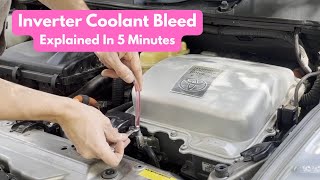
We Have This Part in Stock
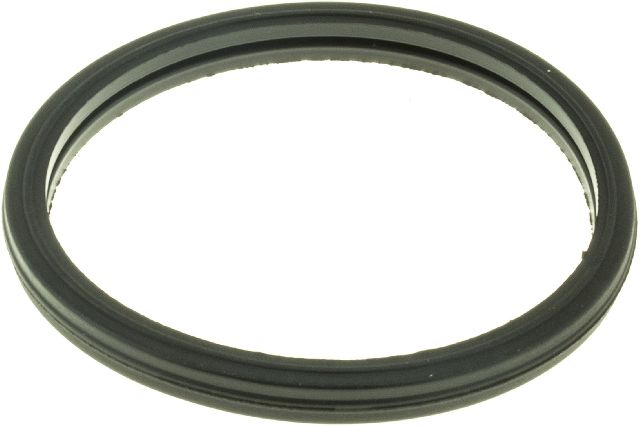

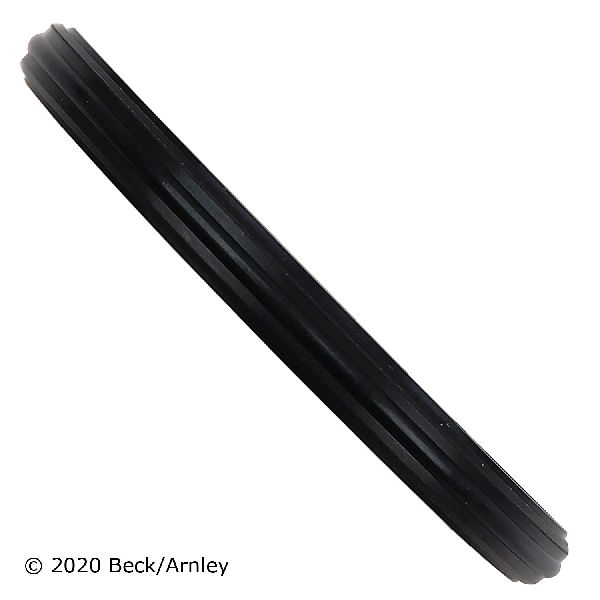

The information in this article is provided for general reference and educational purposes only. Vehicle specifications, procedures, and part compatibility can vary by production date, trim level, and region. Always consult your vehicle's factory service manual and verify part numbers before purchasing or performing repairs. Safety-critical components such as airbags, seat belts, and braking systems should be installed by a qualified professional.
- Toyota Prius:
- 🧭 Diagnostic Flowchart
- 🎬 Helpful Videos
- 🛍️ Shop This Part
- What's Unique About the 2004-2009 Toyota Prius
- Symptoms You May Notice
- Most Likely Causes
- Rare But Worth Checking
- Diagnosis Steps
- Parts You'll Likely Need
- Platform-Specific Known Issues
- Mechanic-Grade Diagnostic Values
- Scan Tool Commands That Help
- Wiring & Ground Locations
- OEM Part Supersession History
- Model Year Variations Within This Range
- Other Known Issues on This Vehicle
- Used vs. New Parts: Buying Guide for This Vehicle
- Real Owner Stories
- 2004-2009 Toyota Prius 1.5L Hybrid
- 2004-2009 Toyota Prius 1.5L Hybrid
- Toyota Owner Report
- Related OBD-II Codes
- Frequently Asked Questions
- 🎟️ Get 5% Off