

P0128 on 2013-2018 Toyota RAV4 2.5L: Coolant Temperature Below Thermostat Regulating Temperature Causes and Fixes
On a 2013-2018 RAV4, code P0128 almost always means the engine thermostat is stuck open and needs to be replaced. This is a common and straightforward DIY repair, with an OEM thermostat costing around $25-$40. The repair involves draining some coolant, accessing the thermostat housing near the alternator, and replacing the part and its gasket.
- P0128 on a 2013-2018 RAV4 means the engine is running too cool, which almost always points to a bad thermostat.
- The most reliable way to diagnose the issue is to monitor the engine temperature with a scan tool while driving; it should reach and hold a steady temperature around 180°F or higher.
- The repair is DIY-friendly but requires moving the alternator to access the thermostat housing.
- Always use the correct pink Toyota Super Long Life coolant when refilling the system.
What's Unique About the 2013-2018 Toyota RAV4
The 2013-2018 (XA40 generation) RAV4 with the 2AR-FE engine is generally very reliable, and P0128 is one of the most common and simple-to-fix codes that owners encounter. The issue is almost universally a mechanical thermostat that has failed in the open position, which is a designed failure mode to prevent overheating. Unlike some other vehicles where this code can be caused by complex electronic thermostats or software glitches, the fix for this RAV4 is typically a straightforward mechanical parts replacement.
Symptoms You May Notice
- Check Engine Light is on.
- Engine takes a very long time to warm up to normal operating temperature.
- Temperature gauge on the dashboard stays low or drops while driving at highway speeds, especially in cold weather.
- Heater blows lukewarm air or takes much longer than usual to get hot.
- Noticeable decrease in fuel economy.
- Replacing the ECT sensor when the thermostat is the actual problem. The thermostat is mechanical and far more likely to fail in a way that causes P0128. Always diagnose the thermostat first.
Most Likely Causes
- Engine Thermostat Stuck Open 🔴 High Probability → Shop Integrated Thermostat Housing Assembly Thermostats are wear-and-tear items designed to fail in the open position to prevent engine overheating. For the P0128 code on this RAV4, a stuck-open thermostat is the cause over 95% of the time.
How to confirm: With a cold engine, start the car and feel the upper radiator hose. It should remain cool for several minutes. If it starts to get warm almost immediately, coolant is flowing past the thermostat, confirming it's stuck open. You can also monitor the live coolant temperature data with an OBD-II scanner; if it fails to reach and maintain a stable temperature of around 176-183°F (80-84°C) and instead drops at highway speeds, the thermostat is the culprit.
Typical fix: Replace the engine thermostat and its gasket/seal. It's recommended to drain and refill the coolant at the same time. The jiggle valve on the new thermostat must be installed in the 12 o'clock (upward) position.
Est. part cost: $25-$60 - Low Engine Coolant Level 🟡 Medium Probability Coolant loss can occur from various sources over time, but the 2AR-FE is not known for a specific chronic leak that would cause this. Low coolant can create air pockets near the ECT sensor, leading to inaccurate readings.
How to confirm: Visually inspect the coolant level in the overflow reservoir and the radiator (only when the engine is completely cool). If the level is low, it can cause air pockets and incorrect temperature readings.
Typical fix: Top off the coolant with Toyota Super Long Life Coolant (pink). If the level drops again, you must find and repair the leak. Common leak points on any vehicle include the radiator, hoses, and water pump.
Est. part cost: $20-$30 for a gallon of coolant - Faulty Engine Coolant Temperature (ECT) Sensor ⚪ Low Probability → Shop Engine Coolant Temperature Sensor While sensor failure is possible, it's much less common than a mechanical thermostat failure for this specific code. Toyota/Denso sensors are generally very reliable.
How to confirm: Use an OBD-II scanner to check the ECT sensor reading when the engine is cold. It should be very close to the ambient air temperature. If the reading is irrational (e.g., -40°F or 250°F on a cold engine), the sensor is bad. A faulty ECT sensor often triggers other codes as well, such as P0116.
Typical fix: Replace the engine coolant temperature sensor. It is recommended to use an OEM Denso sensor for reliability.
Est. part cost: $20-$50
Rare But Worth Checking
- Cooling Fan Running Constantly: → Shop Engine Cooling Fan Blade If the electric cooling fan is stuck on, it can over-cool the engine, especially at low speeds or during warm-up. This is usually caused by a failed fan relay or switch, not the thermostat itself.
Diagnosis Steps
- Check for other DTCs. If other codes are present, diagnose them first, especially if they relate to the ECT sensor or cooling fan circuits.
- Inspect Coolant Level. With the engine cold, check the coolant level in the reservoir and radiator. Top off if low with Toyota Super Long Life Coolant.
- Monitor Live Data. Use an OBD-II scanner to watch the Engine Coolant Temperature reading. Start the engine from cold. The temperature should rise steadily to around 180-195°F (82-90°C) and stabilize.
- Test Thermostat Function. If the temperature takes a very long time to rise or drops significantly at highway speeds, the thermostat is almost certainly stuck open.
- Test ECT Sensor. If the temperature reading on the scanner is erratic or clearly incorrect from the start (e.g., reads 200°F on a cold engine), the sensor or its wiring is the likely problem.
- Inspect Cooling Fans. Ensure the cooling fans are not running constantly when the engine is cold and the A/C is off.
Parts You'll Likely Need
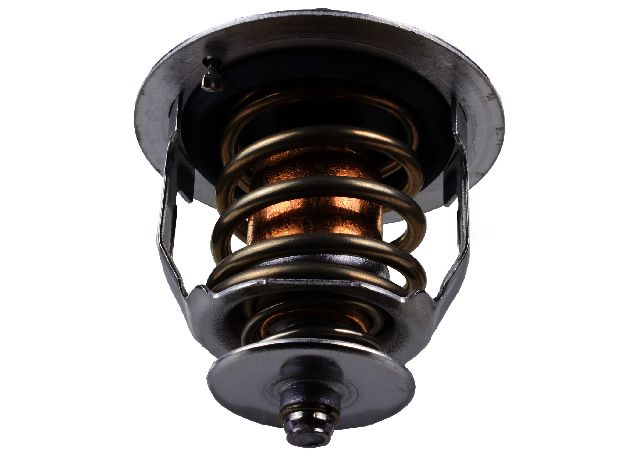
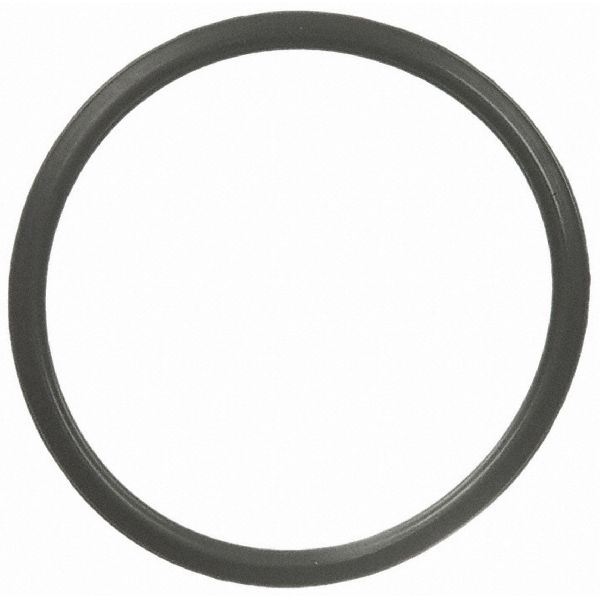
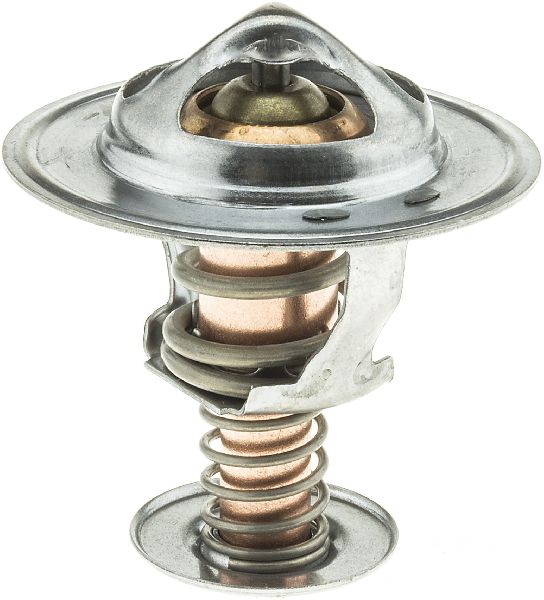
- Engine Coolant Thermostat & Gasket
(OEM #90916-A3003 (replaces 90916-03129))— This is the primary cause of code P0128. The original part fails over time and gets stuck in the open position.
Trusted brands: Toyota (OEM), Aisin, Mahle
OEM price range: $21-$32
Aftermarket price range: $15-$30 - Toyota Super Long Life 50/50 Pre-mixed Coolant
(OEM #00272-SLLC2)— You will lose coolant when replacing the thermostat and must refill the system with the correct type of fluid to prevent corrosion and ensure proper performance.
Trusted brands: Toyota (OEM)
OEM price range: $25-$35 per gallon
Platform-Specific Known Issues
- On the 2AR-FE engine, accessing the thermostat housing can be tight. The alternator is located directly in front of it and must be loosened and moved, or completely removed, to gain sufficient access to the thermostat housing bolts.
- The repair process involves disconnecting the battery, removing the alternator electrical connections, loosening the serpentine belt, and unbolting the alternator to swing it out of the way before the thermostat housing is accessible.
- A manufacturer service bulletin for the same 2AR-FE engine, TSB Bulletin #T-SB-0045-13, notes that vehicles may exhibit a MIL "ON" condition with DTC P0128 due to specific Engine Control Module (ECM) logic regarding the thermostat regulating temperature.
Mechanic-Grade Diagnostic Values
- Engine Coolant Temperature (ECT) Sensor Resistance — expected: Approximately 2,200 - 3,000 Ω at 20°C (68°F) and 250 - 350 Ω at 80°C (176°F).. Failure: A reading that is significantly outside this range, or an open/short circuit, indicates a faulty sensor. Resistance should decrease smoothly as temperature increases.
- Engine Coolant Temperature (ECT) Sensor Voltage (Signal Wire to Ground) — expected: Approximately 3.0 - 3.5V on a cold start (~20°C / 68°F), dropping to around 1.0 - 1.3V at normal operating temperature (~80°C / 176°F).. Failure: Voltage that is stuck high (indicating constant cold) or low (indicating constant hot) regardless of actual engine temperature points to a sensor or wiring issue.
- Mode 06 Data - Monitor Result — expected: When the ECM's internal estimate of coolant temperature reaches 75°C (167°F), it checks the actual ECT sensor. A passing test requires the actual ECT to also be at or above 75°C (167°F).. Failure: A failing result in Mode 06 for the thermostat monitor indicates that when the estimated temperature was >= 75°C, the actual sensor reading was < 75°C, confirming the slow-to-warm condition.
Scan Tool Commands That Help
- Toyota Techstream: Freeze Frame Data — When P0128 is stored, reviewing the freeze frame data is critical. It records all sensor values (ECT, IAT, vehicle speed, engine load) at the exact moment the fault was triggered. This helps confirm if the fault occurred during warm-up, at highway speed, or under other specific conditions, which aids in diagnosis.
- Toyota Techstream / Professional Scan Tool: Active Test: Control the Cooling Fan — To rule out a cooling fan that is stuck on (a rare cause of P0128), a bidirectional scan tool can command the fan on and off. This verifies the fan control circuit and relay are working correctly and are not the cause of overcooling.
Wiring & Ground Locations
- Engine Ground Points — On the 2AR-FE, critical ground points for the engine control system are typically located on the cylinder head and on the engine block near the transmission housing. The ECT sensor grounds through the ECM, which in turn relies on these main engine and chassis grounds.. A poor engine-to-chassis ground can introduce voltage offsets in sensor readings. While unlikely to be the primary cause for P0128, verifying that the main ground straps are clean and tight is a good practice if sensor readings are erratic or other electrical issues are present.
- ECT Sensor Connector — The ECT sensor is located on the cylinder head, near the thermostat housing. Its connector is part of the main engine wiring harness.. Corrosion or damage to the ECT sensor connector or its wiring can cause incorrect temperature readings, potentially leading to a P0128 code. This is a rare cause but should be inspected if a new sensor and thermostat do not resolve the issue.
Real Owner Repair Stories
- Reddit user in r/MechanicAdvice (2012 Honda Civic 1.8L (similar P0128 logic)) — Check engine light with code P0128.
❌ Tried (didn't work) Replaced the thermostat with an aftermarket "OEM equivalent" part from an auto parts store.
✅ What actually fixed it The P0128 code returned two months after replacing the thermostat. The discussion pointed towards the possibility of a faulty new aftermarket part, as a second failure in such a short time is unlikely unless the part was of poor quality. The advice was to use a genuine OEM thermostat to avoid premature failure. - NHTSA ODI #11580781 — An owner reported that a dealership detected code P0128 after the vehicle indicated that electronic control of the engine, throttle, or automatic transmission had been detected.
When the Usual Fixes Don't Work
- While P0128 is overwhelmingly caused by a failed thermostat, there are documented cases where the code returned after replacement. In one instance involving a different vehicle, the issue was traced back to a poor-quality aftermarket thermostat that failed within two months. In another case, the electrical connector to the temperature sensor was not fully seated, causing an intermittent connection that mimicked a thermostat problem. These instances highlight the importance of using high-quality OEM or equivalent parts and verifying all connections during the repair.
OEM Part Supersession History
90916-03129→90916-A3003— Standard part evolution and consolidation by Toyota.90916-03084→90916-A3003— Standard part evolution and consolidation by Toyota.
Diagnostic Flowchart
Other Known Issues on This Vehicle
Issues unrelated to this code that are worth knowing about as an owner of this generation:
- Torque Converter Shudder 🟠 Medium — Common on 2013-2015 models, typically between 25-50 mph under light load. Feels like driving over rumble strips. (Ref: T-SB-0023-15 (later revised) and Warranty Enhancement Program (ZH1) were issued. The fix involves replacing the torque converter and reprogramming the ECM.)
- HVAC Evaporator Drain Clog 🟠 Medium — Can occur in any year, especially in humid climates or areas with certain insects. Leads to water leaking into the passenger footwell. (Ref: No specific TSB for XA40, but a known issue. A preventative 'ARINIX' tip is available from Toyota for newer models.)
- Noisy Rear Brakes 🟡 Low — Some 2013-2015 models may exhibit a grinding noise from rear wheels at low speed when braking. (Ref: T-SB-0037-15 was issued to address this with updated brake pads and rotor resurfacing.)
- Bluetooth Connectivity Issues 🟡 Low — Affects various model years, causing intermittent connection failures or difficulty pairing phones. (Ref: T-TT-0578-19 addresses troubleshooting steps for dealers.)
- Water Pump Leaks 🟠 Medium — Not a chronic failure, but water pumps are a potential wear item that can leak after 60,000-90,000 miles.
Used vs. New Parts: Buying Guide for This Vehicle
When a used part is the smart pick: For this repair, using a used part is not recommended. The thermostat is an inexpensive wear-and-tear item with a finite lifespan. The labor involved in replacing it is significant enough that installing a used thermostat with unknown remaining life is a poor value proposition.
What to inspect on the donor part:
- Not applicable as used parts are not advised for this repair.
OEM-only on this vehicle (don't cheap out):
- Engine Coolant Thermostat: While not strictly 'OEM-only', using a genuine Toyota or Aisin (the OEM supplier) thermostat is very strongly recommended. Forum and mechanic experience shows that cheap aftermarket thermostats have a higher rate of premature failure or incorrect temperature calibration, leading to the code returning.
Aftermarket brands forum-validated for this vehicle:
- Aisin (OEM supplier)
- Mahle
- Stant
- Gates
Brands owners have reported issues with on this vehicle:
- Unbranded, 'white-box' parts from online marketplaces or lower-tier parts store lines should be avoided due to inconsistent quality control and potential for premature failure.
Real Owner Stories
Aggregated from forums and TSBs cited above. Mileages and costs reflect what owners reported in those sources.
2013 Toyota RAV4 — 140000 miles
Symptoms: Check engine light illuminates only with sharp acceleration (RPMs reaching 3000-4000). Vehicle otherwise runs perfectly and smoothly. Primarily throws code P0420, but sometimes P0128 as well.
What fixed it: The owner did not report a final fix as the post was archived.
Source hint: r/MechanicAdvice thread 'Help: 2013 Toyota rav4 140k miles P0420 & P0128 error'
2010 Toyota RAV4
Symptoms: P0128 error code present, but the heater is still working fine.
What fixed it: Replacing the thermostat with a quality OEM part.
Source hint: reddit.com/r/MechanicAdvice: A thread titled '2010 Rav4 P0128 Error but Heater is still working fine'
Related OBD-II Codes
Frequently Asked Questions
Is there a TSB for the P0128 code on my 2013-2018 RAV4?
Can I use any coolant to top off my RAV4 if the P0128 is caused by a low level?
Why is the alternator mentioned in the repair process for a thermostat code?
What is the specific temperature my RAV4 should reach to avoid the P0128 code?
Does the thermostat need to be installed in a specific direction on the 2AR-FE?
Is the P0128 code common on other Toyotas with the same engine?
Helpful Videos
We Have This Part in Stock


The information in this article is provided for general reference and educational purposes only. Vehicle specifications, procedures, and part compatibility can vary by production date, trim level, and region. Always consult your vehicle's factory service manual and verify part numbers before purchasing or performing repairs. Safety-critical components such as airbags, seat belts, and braking systems should be installed by a qualified professional.
- Toyota RAV4:
- 🧭 Diagnostic Flowchart
- 🎬 Helpful Videos
- 🛍️ Shop This Part
- What's Unique About the 2013-2018 Toyota RAV4
- Symptoms You May Notice
- Most Likely Causes
- Rare But Worth Checking
- Diagnosis Steps
- Parts You'll Likely Need
- Platform-Specific Known Issues
- Mechanic-Grade Diagnostic Values
- Scan Tool Commands That Help
- Wiring & Ground Locations
- Real Owner Repair Stories
- When the Usual Fixes Don't Work
- OEM Part Supersession History
- Other Known Issues on This Vehicle
- Used vs. New Parts: Buying Guide for This Vehicle
- Real Owner Stories
- 2013 Toyota RAV4 — 140000 miles
- 2010 Toyota RAV4
- Related OBD-II Codes
- Frequently Asked Questions
- 🎟️ Get 5% Off