

P0131 on 2001-2006 Acura MDX: O2 Sensor Low Voltage Causes and Fixes
This code means the rear upstream oxygen sensor (Bank 1, Sensor 1) is sending a low voltage signal. The most likely cause is a failed sensor, but it is critical to first check for a leaking rear valve cover gasket, as dripping oil commonly causes this code on the MDX. Expect to pay $60-$180 for a quality Denso or NTK sensor.
- Before buying any parts, visually inspect the rear upstream O2 sensor (Bank 1, Sensor 1) and its connector for oil contamination. This is a very common failure point.
- If you find oil, the rear valve cover gasket must be replaced. Simply replacing the sensor will not be a permanent fix.
- Only use a Denso or NTK brand replacement sensor. Other brands are known to cause compatibility issues.
- Be aware that the sensor part number is different for 2001-2002 models versus 2003-2006 models.
- The rear sensor is difficult to access, so be prepared for a challenging DIY or higher labor costs at a shop.
What's Unique About the 2001-2006 Acura MDX
On the Honda and Acura J-series V6 engines, P0131 is frequently caused by a secondary issue: a leaking rear valve cover gasket. Due to the engine's layout, oil from a leaking gasket drips directly onto the Bank 1 A/F sensor and its electrical connector below. This oil contamination can short out the wiring or foul the sensor itself, creating the low voltage condition. Owners who replace only the sensor without addressing the oil leak often find the code returns quickly. It is also critical to use an OEM supplier brand like Denso or NTK for the replacement sensor, as these engines are known to be incompatible with many aftermarket sensor brands.
Symptoms You May Notice
- Check Engine Light is on
- Decreased fuel economy
- Rough or unstable idle
- Engine hesitation or stumbling on acceleration
- Smell of burning oil from the engine bay (if caused by a valve cover leak)
- Replacing the O2 sensor without first inspecting for and fixing a leaking valve cover gasket. The new sensor will quickly be contaminated with oil, and the P0131 code will return.
- Installing a cheap, non-OEM brand sensor (e.g., Bosch). Honda/Acura engine management systems are sensitive and often do not work correctly with sensors other than OEM (Acura) or OEM-supplier (Denso, NTK) parts.
- Replacing the wrong sensor. P0131 is specifically for Bank 1 (rear/firewall side) Sensor 1 (upstream/pre-catalytic converter).
Most Likely Causes
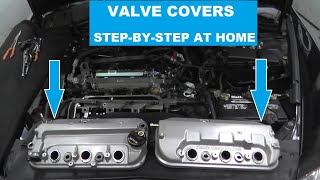
- Leaking Rear Valve Cover Gasket 🔴 High Probability → Shop Engine Valve Cover The rubber gasket material hardens and cracks over time from engine heat cycles. The location of the rear valve cover directly above the Bank 1 A/F sensor makes this a very common cause for P0131 on this platform. This issue is also common on its platform mate, the Honda Pilot.
How to confirm: Visually inspect the Bank 1, Sensor 1 (rear, upstream) A/F sensor and its wiring connector for signs of fresh or caked-on engine oil. You may also see oil residue on the rear of the engine block or the exhaust manifold.
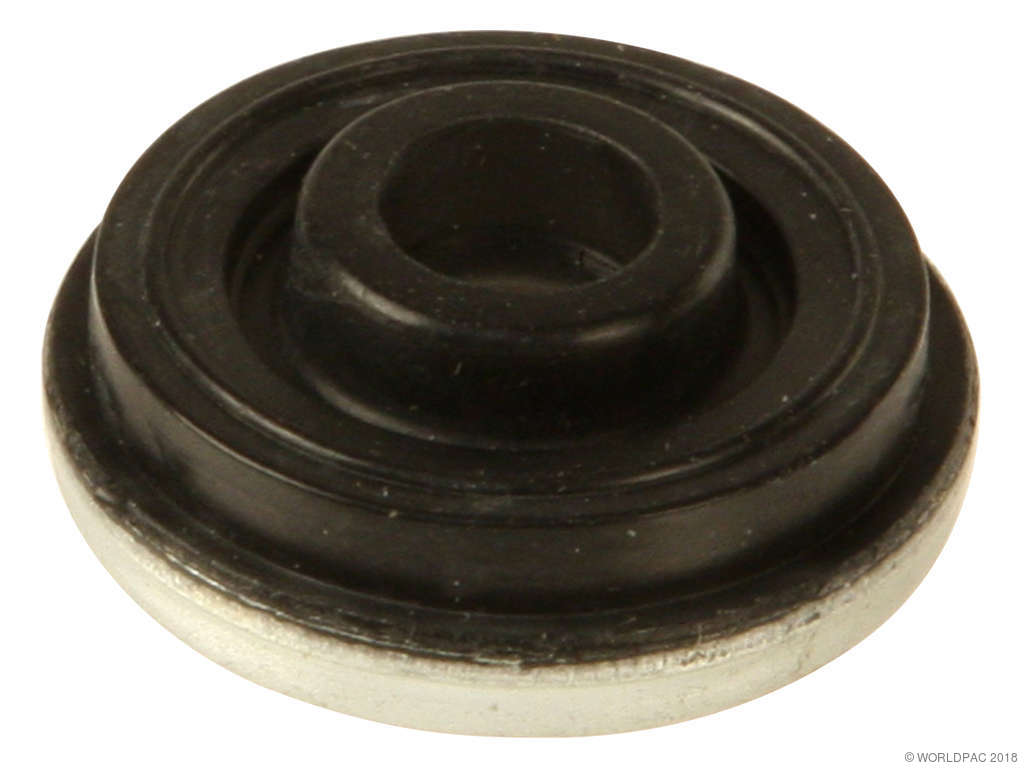
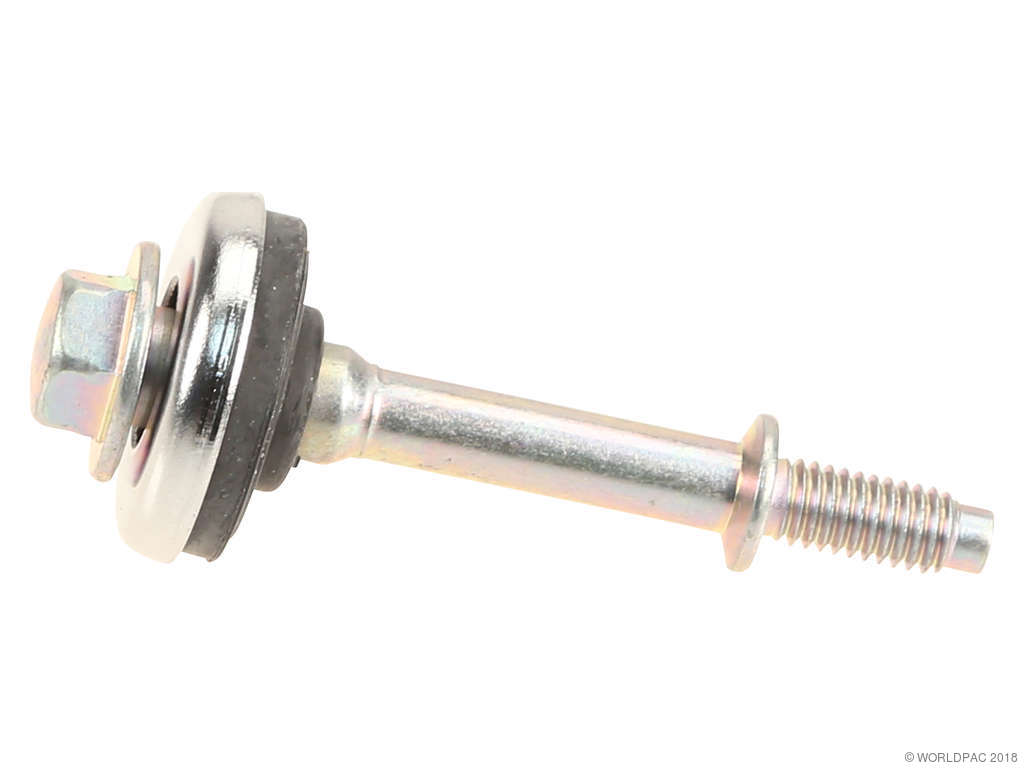
Typical fix: Replace the rear valve cover gasket, the spark plug tube seals, and the bolt grommets. The intake manifold must be removed to access the rear valve cover. Thoroughly clean any oil from the A/F sensor connector with electrical contact cleaner. If the sensor itself is saturated, it should also be replaced.
Est. part cost: $40-$80 for a full gasket kit (e.g., Fel-Pro, Ishino). - Failed Bank 1, Sensor 1 Air/Fuel Ratio Sensor 🔴 High Probability → Shop Oxygen Sensor Oxygen sensors are wear items with a typical lifespan of 70,000-100,000 miles. Failure due to age is very common. Oil contamination from a valve cover leak can also cause premature failure.
How to confirm: After confirming there are no oil leaks, exhaust leaks, or wiring issues, test the sensor's output with an OBD-II scan tool that can display live data. If the sensor's voltage is stuck low (typically < 0.1V) and does not fluctuate during engine operation, it has failed.
Typical fix: Replace the Bank 1, Sensor 1 Air/Fuel Ratio sensor. It is located on the rear exhaust manifold, against the firewall, and can be difficult to access. 🎬 See this walkthrough for replacing the Bank 1 Sensor 1. A specialized 22mm offset oxygen sensor socket or crow's foot wrench is highly recommended for removal.
Est. part cost: $60-$180 for a recommended brand (Denso/NTK). - Exhaust Leak 🟡 Medium Probability
How to confirm: Listen for a ticking or puffing sound from the engine bay, especially when the engine is cold. Visually inspect the rear exhaust manifold and the connection to the cylinder head for black soot marks, which indicate a leak. A smoke test is the most definitive method.
Typical fix: Replace the exhaust manifold gasket or tighten loose manifold bolts. A cracked manifold would require replacement.
Est. part cost: $10-$30 for a gasket.
Rare But Worth Checking
- Damaged Wiring or Connector: This refers to damage not caused by an oil leak, such as from abrasion against other components or heat damage. Inspect the wiring harness from the sensor to where it connects to the main engine harness. A loose or corroded main engine ground (G101 at the thermostat) has also been cited as a rare cause on related Honda platforms.
- Low Fuel Pressure: If the engine is truly running lean due to a weak fuel pump or clogged filter, the sensor is reporting correctly. This would likely be accompanied by other codes or more severe drivability issues. A fuel pressure test can confirm this.
- Faulty Powertrain Control Module (PCM): Extremely rare. The PCM should only be considered as a potential cause after all other possibilities, including wiring and sensor issues, have been exhaustively ruled out.
Diagnosis Steps
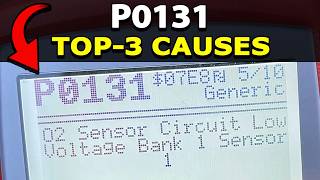
- Connect an OBD-II scanner and confirm that P0131 is the primary code. 🎬 Watch: How to diagnose and fix the P0131 engine code. Check for any other codes.
- Perform a thorough visual inspection of the rear of the engine. Look for signs of an oil leak from the valve cover gasket dripping onto the exhaust manifold and the A/F sensor (Bank 1, Sensor 1).
- If oil contamination is found on the sensor or its connector, the valve cover gasket is the root cause. Plan to replace the valve cover gasket set and the A/F sensor.
- If no oil is present, inspect the exhaust manifold for cracks or black soot trails indicating an exhaust leak upstream of the sensor.
- Inspect the sensor's wiring harness for any signs of melting, chafing, or corrosion. Check the connector for bent or corroded pins.
- If no external issues are found, use a scan tool with live data to monitor the Bank 1 Sensor 1 voltage. At operating temperature, the voltage should fluctuate. If it is stuck low (e.g., below 0.2V), the sensor has likely failed.
- As a final check, you can test for proper fuel pressure to rule out a lean condition caused by the fuel system.
Parts You'll Likely Need
- Air/Fuel Ratio Sensor (Bank 1, Sensor 1)
(OEM #36531-RCA-A02 (2001-2002), 36531-RDM-A01 (2003-2006))— This is the sensor that triggers the code. It often fails due to age or oil contamination. Note the part number difference by year.
Trusted brands: Denso (P/N: 234-4727 for 01-02; 234-5010 for 03-06), NTK (P/N: 24435 for 01-02; 24302 for 03-06)
OEM price range: $180-$250
Aftermarket price range: $60-$180 - Rear Valve Cover Gasket Set
(OEM #12050-RCA-A00 (Full Kit), 12341-RCA-A01 (Gasket Only))— A leaking rear valve cover gasket is a very common root cause of this code on the MDX. A full kit including tube seals (12342-P08-004) and grommets (90441-P8A-A00) is recommended.
Trusted brands: Fel-Pro (P/N: VS50607R), Victor Reinz, Ishino
OEM price range: $70-$90 (Full Kit)
Aftermarket price range: $40-$80 (Full Kit)
Related Codes That Often Appear With This One
- P0171 — System Too Lean (Bank 1). This code can appear alongside P0131 because the low sensor voltage is interpreted by the PCM as a lean condition.
- P0301-P0306 — Cylinder Misfire codes. If the valve cover gasket leak includes the spark plug tube seals, oil can pool in the spark plug wells, causing misfires on the rear bank (Cylinders 1, 2, 3).
- P0132 — O2 Sensor Circuit High Voltage (Bank 1 Sensor 1). It is not uncommon to see both high and low voltage codes for the same sensor as it fails intermittently, as shown in some owner diagnostic videos.
Platform-Specific Known Issues
- Part Number Split: The 2001-2002 MDX uses a 4-wire narrowband O2 sensor (Denso P/N: 234-4727, NTK P/N: 24435). The 2003-2006 MDX uses a 5-wire wideband A/F sensor (Denso P/N: 234-5010, NTK P/N: 24302). Ensure you purchase the correct sensor for your model year as they are not interchangeable.
- Rear Sensor Access: The Bank 1 sensor is located on the rear exhaust manifold against the firewall. It is notoriously difficult to access and may require specialized O2 sensor sockets (offset or with a slit for the wire) and long extensions with a universal joint. Access is typically from the top, after removing the plastic engine covers.
Mechanic-Grade Diagnostic Values
- A/F Sensor (Wideband, 2003-2006) Live Data Voltage — expected: Approximately 3.3V at stoichiometric (ideal) air/fuel ratio. Lower voltage indicates rich, higher voltage indicates lean.. Failure: A voltage signal stuck low (e.g., below 2.0V) or not responding to changes in engine load points to a faulty sensor or circuit issue.
- O2 Sensor (Narrowband, 2001-2002) Live Data Voltage — expected: Fluctuating rapidly between approximately 0.1V (lean) and 0.9V (rich) on a warm engine at idle.. Failure: Voltage is stuck low, below 0.2V, and does not fluctuate.
- A/F Sensor Heater Circuit Resistance (sensor disconnected) — expected: Typically 2 to 4 ohms at room temperature. The reading will be slightly higher in colder temperatures.. Failure: An open circuit (infinite resistance) or a reading far outside the expected range indicates a failed heater element within the sensor.
- Honda-specific Scan Tool Fuel Trim Display (AF FB, AF FB AVE) — expected: Values should hover around 1.00.. Failure: Values above 1.00 represent positive fuel trim (adding fuel), while values below 1.00 represent negative fuel trim (removing fuel). A P0131 code will likely be accompanied by high positive fuel trim values as the PCM tries to compensate for the perceived lean condition.
Scan Tool Commands That Help
- Honda Diagnostic System (HDS): A/F Sensor Test — The HDS can run specific function tests on the A/F sensor circuit that are not available on generic OBD-II scanners. It can also monitor the sensor's internal resistance and current, providing more detailed diagnostic data than just voltage.
- Honda Diagnostic System (HDS): PCM Reset — After replacing a sensor or fixing a wiring issue, a full PCM reset using HDS (or by disconnecting the battery) forces the engine control module to clear learned fuel trims and start a new learning cycle with the new component.
Wiring & Ground Locations
- G101 — Main engine harness ground, typically located on or near the thermostat housing on the side of the engine.. This is a critical ground point for the PCM and many engine sensors. A loose, corroded, or improperly located G101 ground can cause erratic sensor readings, including the low voltage condition of P0131. It is often disturbed during engine or transmission work and can be a hidden cause of the code.
- Bank 1 Sensor 1 Connector — Against the firewall, typically mounted on a bracket. The harness runs from the sensor on the rear exhaust manifold up towards the passenger side of the engine bay.. This connector is the primary point of failure due to oil contamination from a leaking rear valve cover gasket. It is also where voltage and resistance checks are performed. Knowing its location is essential for diagnosis.
Real Owner Repair Stories
- AcuraZine Forum User 'jimbodude' (Acura TL (related platform with same engine architecture)) — P0131 code appeared. Oil was found on the O2 sensor connector.
❌ Tried (didn't work) Replaced the O2 sensor with a new Denso part. Cleaned the oil-contaminated connector with electronics cleaner and applied dielectric grease. Cleared the codes with a scanner. The code returned, now accompanied by P0135 (Heater Circuit Malfunction).
✅ What actually fixed it The first replacement Denso sensor was defective from the factory. Replacing it with a second, new Denso sensor resolved the issue and the codes did not return. - AcuraZine Forum User 'Rejckt' (Acura TL (related platform)) — P0131 code, VSA, and TCS lights on. A/F gauge reading flatline lean.
❌ Tried (didn't work) Replaced the primary O2 sensor with a Bosch universal sensor; the code returned. Replaced the Bosch sensor with a new Denso (234-4727) sensor; the code still returned.
✅ What actually fixed it The user was advised to follow the service manual diagnostic procedure, which includes checking fuel pressure and testing the wiring for a short between the PCM and the sensor connector, as simply replacing the sensor twice did not fix the issue. The final resolution was not posted, but the story highlights that repeated sensor replacement without further diagnosis is a common pitfall.
OEM Part Supersession History
36531-RCA-A01→36531-RCA-A02— Standard part number revision by the manufacturer.
Heads up: These parts are for the 2003-2006 wideband sensor. The -A02 part replaces the -A01 and is backward compatible for the specified model years.
Model Year Variations Within This Range
- 2001-2002: Uses the J35A3 engine with a traditional throttle cable and a 4-wire narrowband O2 sensor (Denso 234-4727).
- 2003-2006: Uses the J35A5 engine with a drive-by-wire (DBW) throttle system and a 5-wire wideband Air/Fuel (A/F) sensor (Denso 234-5010). The bell housing on the J35A5 is also different from the J35A3, making direct engine swaps between these year ranges complex.
Diagnostic Flowchart
Other Known Issues on This Vehicle
Issues unrelated to this code that are worth knowing about as an owner of this generation:
- Automatic Transmission Failure 🔴 High — Very common on 2001-2004 models, typically between 80,000 and 130,000 miles. Often presents as slipping, harsh shifting, or total failure. (Ref: Acura recall #P30/P31 was issued in 2004 for some models to install an oil jet kit, but failures still occurred.)
- Clogged EGR Passages 🟠 Medium — Common across all years, usually appearing after 80,000 miles. Causes rough idle, stalling, and Check Engine Light with code P0401 or P1491. (Ref: No recall, but it's a well-documented issue. The fix requires removing the intake manifold to manually clean out carbon buildup from the EGR port.)
- Worn Front Compliance Bushings 🟠 Medium — Bushings in the front lower control arms often fail prematurely, sometimes before 50,000 miles. Causes clunking noises, vague steering, and uneven tire wear.
- Failing Engine Mounts 🟠 Medium — The hydraulic engine mounts can leak and collapse over time, leading to increased engine vibration felt in the cabin, especially at idle.
- Active Damper System (ADS) Strut Failure 🔴 High — On models equipped with the 'Touring' package, the electronic struts are prone to leaking and failure, resulting in a harsh ride and a 'Check ADS' warning light. Replacement is very expensive.
Used vs. New Parts: Buying Guide for This Vehicle
When a used part is the smart pick: For this repair, using used parts is generally not recommended for the sensor itself. However, if the cause is a cracked exhaust manifold, a used manifold from a reputable salvage yard can be a cost-effective option.
Donor-vehicle mileage cap: roughly under 120000 miles for the part to have meaningful remaining life.
What to inspect on the donor part:
- For an exhaust manifold, inspect thoroughly for any hairline cracks, especially around the welds and mounting flanges.
- Ensure all mounting studs are intact and not stripped.
- Check for extreme rust or pitting that could compromise the gasket sealing surface.
OEM-only on this vehicle (don't cheap out):
- Air/Fuel Ratio Sensor
Aftermarket brands forum-validated for this vehicle:
- Denso (OEM Supplier)
- NTK (OEM Supplier)
Brands owners have reported issues with on this vehicle:
- Bosch (often reported as incompatible with Honda/Acura ECUs)
- Unbranded or generic sensors from online marketplaces
Real Owner Stories
Aggregated from forums and TSBs cited above. Mileages and costs reflect what owners reported in those sources.
2003 Acura MDX
Symptoms: Check Engine Light (CEL) came on with code P0131 (LOW voltage on the O2 sensor 1 bank 1). The code would not go away even after being erased; it returned immediately.
What fixed it: The owner report in the context ends during diagnosis, but forum discussions on AcuraZine and MDXers.org confirm that replacing the rear valve cover gasket and the A/F sensor is the standard permanent fix for this behavior.
Source hint: AcuraZine owner report cited in context
2001-2006 Acura MDX — ~100000 miles
Symptoms: P0131 code triggered by oil contamination. Users noted the rear valve cover gasket leaks oil directly onto the Bank 1 Sensor 1.
What fixed it: Replacing both the rear valve cover gasket and the A/F sensor.
Source hint: MDXers.org forum discussions
Related OBD-II Codes
Frequently Asked Questions
Which specific Air/Fuel sensor do I need for my 2004 Acura MDX?
Why is my MDX smelling like burning oil along with the P0131 code?
Is there a recall for the transmission issues I'm seeing alongside my check engine light?
Can I use any aftermarket brand to replace the oxygen sensor on my MDX?
How difficult is it to reach the Bank 1, Sensor 1 on this vehicle?
Do I need to remove the intake manifold to fix the common cause of P0131?
Helpful Videos
We Have This Part in Stock


The information in this article is provided for general reference and educational purposes only. Vehicle specifications, procedures, and part compatibility can vary by production date, trim level, and region. Always consult your vehicle's factory service manual and verify part numbers before purchasing or performing repairs. Safety-critical components such as airbags, seat belts, and braking systems should be installed by a qualified professional.
- Acura MDX:
- 🧭 Diagnostic Flowchart
- 🎬 Helpful Videos
- 🛍️ Shop This Part
- What's Unique About the 2001-2006 Acura MDX
- Symptoms You May Notice
- Most Likely Causes
- Rare But Worth Checking
- Diagnosis Steps
- Parts You'll Likely Need
- Related Codes That Often Appear With This One
- Platform-Specific Known Issues
- Mechanic-Grade Diagnostic Values
- Scan Tool Commands That Help
- Wiring & Ground Locations
- Real Owner Repair Stories
- OEM Part Supersession History
- Model Year Variations Within This Range
- Other Known Issues on This Vehicle
- Used vs. New Parts: Buying Guide for This Vehicle
- Real Owner Stories
- 2003 Acura MDX
- 2001-2006 Acura MDX — ~100000 miles
- Related OBD-II Codes
- Frequently Asked Questions
- 🎟️ Get 5% Off