

P0131 on 2004-2011 Chevrolet Aveo 1.6L: O2 Sensor Low Voltage Causes and Fixes
This code almost always points to a failed upstream oxygen sensor (Bank 1, Sensor 1). On the Aveo, it's also wise to check for exhaust leaks near the manifold and inspect for oil-fouled spark plugs from a leaking valve cover gasket, a common related issue. Expect to pay $40-$90 for an aftermarket sensor.
- P0131 on your Aveo most likely means you need a new upstream (pre-catalytic converter) oxygen sensor.
- Before buying parts, pull the spark plug wires and check for oil in the tubes. A leaking valve cover gasket is a very common Aveo problem that can cause this code.
- Also, check for obvious exhaust leaks (cracks, soot) at the exhaust manifold, as this can also trigger P0131.
- Do not replace the downstream (post-catalytic converter) sensor; it will not solve this code.
- Continuing to drive with this issue will result in poor gas mileage and can eventually damage your catalytic converter.
What's Unique About the 2004-2011 Chevrolet Aveo
The Chevrolet Aveo, and its rebadged siblings like the Pontiac G3/Wave and Suzuki Swift+, are known for a specific issue that can accompany a P0131 code: leaking valve cover gaskets. These gaskets often fail, allowing engine oil to seep into the spark plug tubes. This can cause engine misfires (codes P0300-P0304), which in turn dump unburned oxygen into the exhaust, potentially causing the O2 sensor to report a lean condition and trigger P0131. Therefore, on an Aveo, a P0131 code warrants an immediate check of the spark plug wells for oil contamination.
Generation note: This guide covers the T200 (2004-2008 hatchback, 2004-2006 sedan) and T250 (2009-2011 hatchback, 2007-2011 sedan) generations of the Chevrolet Aveo. While the underlying causes are the same, the exact oxygen sensor part number may differ between these generations. The most cited OEM part number is 96418965, which generally fits 2006-2011 models, but always verify the part with your vehicle's specific year before purchasing.
Symptoms You May Notice
- Check Engine Light is on
- Reduced fuel economy
- Rough or unstable idle
- Hesitation or loss of power during acceleration
- Engine misfiring, sometimes accompanied by a flashing Check Engine Light
- Strong smell of gasoline or unburned fuel from the exhaust
- Engine stalling, particularly at idle
- Replacing the downstream (Bank 1, Sensor 2) oxygen sensor. This sensor monitors the catalytic converter and will not fix a P0131 code.
- Replacing the catalytic converter. A P0131 code points to an issue before the converter. A failing converter would typically trigger a P0420 code.
Most Likely Causes
- Failed Upstream Oxygen Sensor (Bank 1, Sensor 1) 🔴 High Probability → Shop Oxygen Sensor Oxygen sensors are wear items with a finite lifespan, typically failing after 70,000-100,000 miles from constant exposure to extreme heat and exhaust gases. Contamination from coolant or oil can also shorten their life.
How to confirm: Use an OBD-II scanner to monitor live data for the 'B1S1' O2 sensor. A healthy sensor's voltage should fluctuate rapidly between approximately 0.1V and 0.9V. If the voltage is stuck below 0.4V, the sensor is likely faulty.
Typical fix: Replace the upstream oxygen sensor. It is located on the front of the engine, threaded into the exhaust manifold.
Est. part cost: $40-$90 - Exhaust Leak 🟡 Medium Probability Cracks in the exhaust manifold or failed gaskets can develop over time, allowing outside air to be drawn into the exhaust stream before the O2 sensor. This extra oxygen makes the sensor report a false lean condition.
How to confirm: Visually inspect the exhaust manifold for cracks or black soot trails indicating a leak. A smoke test is the most definitive way to find small leaks. Listen for ticking or hissing noises from the engine bay, especially when the engine is cold.
Typical fix: Replace the leaking exhaust manifold gasket or repair/replace the cracked manifold.
Est. part cost: $15-$150 - Damaged Wiring or Connector ⚪ Low Probability The sensor's wiring harness is close to hot exhaust components and can become brittle, melted, or chafed over time, causing a short or open circuit.
How to confirm: Visually inspect the wiring harness leading to the upstream O2 sensor for any signs of melting, fraying, or corrosion at the connector. Perform a 'wiggle test' on the harness with the engine running while watching live data to see if the voltage reading changes.
Typical fix: Repair the damaged section of wire or replace the connector pigtail.
Est. part cost: $10-$30
Rare But Worth Checking
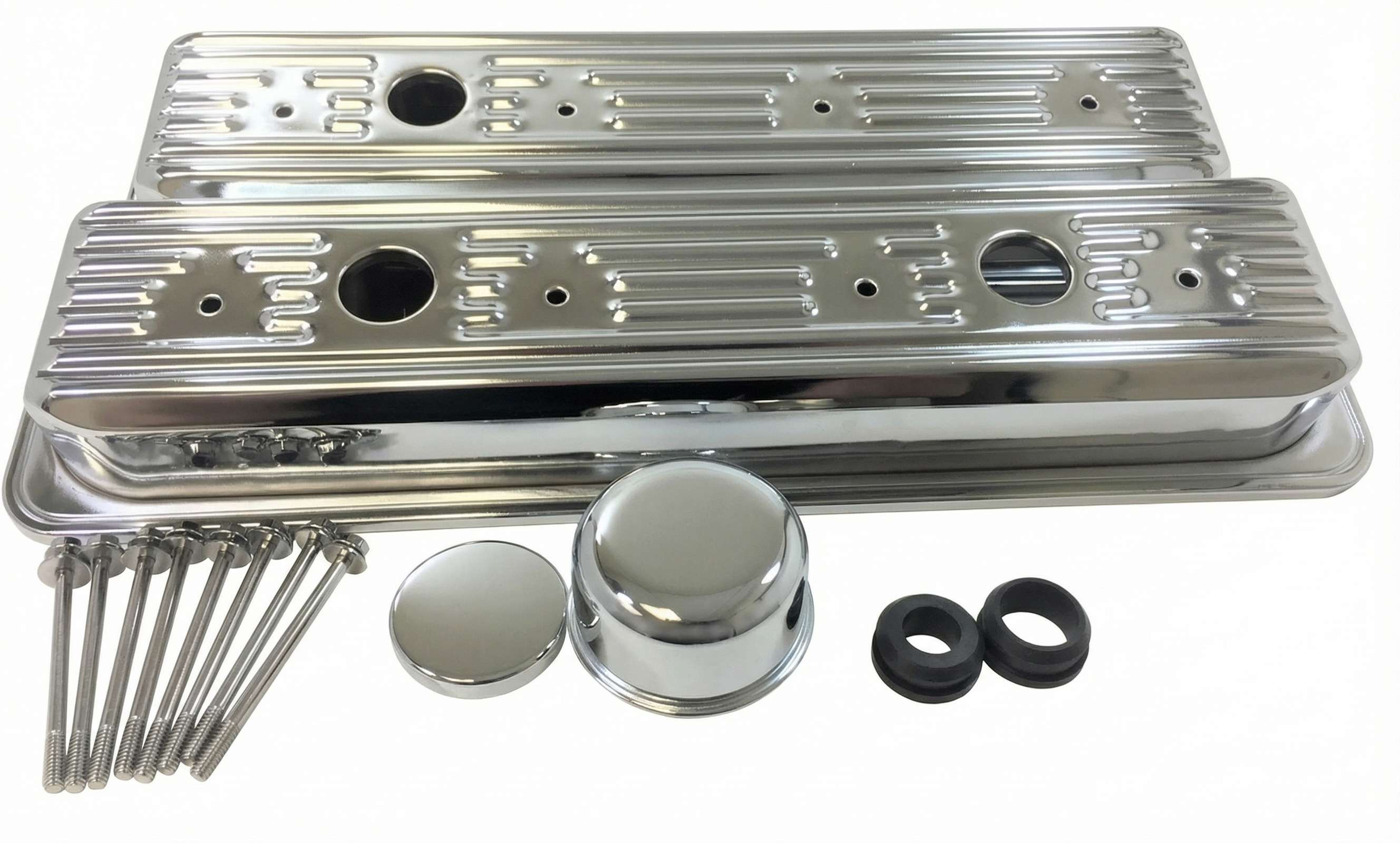
- Leaking Valve Cover Gasket Causing Misfires: → Shop Engine Valve Cover This is a very common issue on the Aveo. Oil leaks into the spark plug tubes, fouling the plugs and causing misfires (P0300, P0301, etc.). The resulting unburnt oxygen in the exhaust can cause the O2 sensor to read lean, triggering P0131 as a secondary code. Always check for oil in the spark plug wells.
- Low Fuel Pressure or Vacuum Leak: Issues like a weak fuel pump or a cracked vacuum hose (including the air intake tube between the filter and throttle body) can cause the engine to genuinely run lean, which the O2 sensor will correctly report as a low voltage condition. This is less common than a sensor failure but should be investigated if a new sensor doesn't fix the code. In a cross-manufacturer report, NHTSA ODI #11581909 describes a vehicle that lost power and threw codes P0131 and P0171 due to loose intake bolts.
- Failing Battery or Charging System Issue: In some forum discussions, owners have noted that erratic codes, including P0131, were resolved after replacing an old or failing battery. Low system voltage can sometimes cause unpredictable sensor readings.
Diagnosis Steps
- Connect an OBD-II scanner and confirm P0131 is the active code. Check for any other codes, especially misfire (P0300-P0304) or lean codes (P0171).
- Pull the ignition coil/wire boots out of the spark plug wells. Inspect for any engine oil, which indicates a leaking valve cover gasket that must be fixed first.
- Observe the live data stream for the Bank 1 Sensor 1 (B1S1) O2 sensor. If the voltage is stuck below 0.4V and does not fluctuate, the sensor or its circuit is faulty.
- Visually inspect the O2 sensor's wiring harness and connector for obvious damage, such as melting on the exhaust manifold or corrosion in the plug.
- Inspect the exhaust manifold and the gasket between it and the cylinder head for any signs of a leak (soot trails, audible ticking). Also check the flexible air intake tube for cracks.
- If the sensor voltage appears stuck lean, you can introduce a fuel source (like propane from an unlit torch) into the intake to see if the sensor responds by showing a rich (high voltage) condition. If it does, the sensor is working and you have a vacuum leak or fuel delivery problem.
- Check the battery and charging system voltage to rule out electrical issues that could cause erroneous sensor readings.
- If all other checks pass, the oxygen sensor itself is the most likely culprit.
Parts You'll Likely Need
- Upstream Oxygen Sensor (Bank 1, Sensor 1)
(OEM #96418965, 25189500)— This is the most frequent failure point for code P0131 due to age and harsh operating conditions.
Trusted brands: ACDelco, Denso, Bosch, NGK/NTK
OEM price range: $80-$150
Aftermarket price range: $40-$90 - Valve Cover Gasket Set
(OEM #96353002)— A very common failure on the 1.6L E-TEC II engine that can lead to misfires and trigger a P0131 code as a secondary fault. The set should include the main gasket and spark plug tube seals.
Trusted brands: Fel-Pro, ACDelco
OEM price range: $30-$50
Aftermarket price range: $15-$30
Related Codes That Often Appear With This One
- P0300 — A random/multiple cylinder misfire code. This can be triggered by the same incorrect air-fuel mixture that P0131 causes, or it can be the root cause (e.g., from oil-fouled plugs) that leads to the P0131 reading.
- P0171 — System Too Lean (Bank 1). This code indicates the ECM has confirmed a lean condition over a longer period, which is what the low voltage signal from the O2 sensor (P0131) is reporting.
- P0301, P0302, P0303, P0304 — Cylinder-specific misfire codes. These often appear alongside P0131 when the root cause is a valve cover gasket leak fouling a specific spark plug.
- P0106 — Manifold Absolute Pressure/Barometer Sensor. As noted in NHTSA ODI #11165031, this code can appear simultaneously with P0131 and P0171, sometimes accompanied by a TCS light.
Platform-Specific Known Issues
- The 1.6L E-TEC II engine is well-known for its valve cover gasket hardening and leaking oil into the spark plug wells, which is a primary cause of misfires that can be associated with code P0131.
- Cracked exhaust manifolds are also a known issue, creating a pre-sensor exhaust leak that directly causes a P0131 code.
Technical Service Bulletins (TSBs) & Recalls
- Bulletin #PIP5529B: This manufacturer bulletin notes that P0131 may occur in combination with other codes such as P0068, P0101, P0106, P0171, P0137, P0324, P0326, P0331, and P0506, requiring specific diagnostic procedures to resolve the malfunction indicator lamp illumination.
- Bulletin #PIP5529A: Similar to later revisions, this bulletin assists in resolving check engine light issues involving P0131 and a variety of intake and performance codes including P0106 and P0171.
Mechanic-Grade Diagnostic Values
- O2 Sensor Heater Circuit Resistance — expected: Approximately 6-9 Ohms.. Failure: A reading outside the 7-9 Ohm range, or an open circuit (infinite resistance), indicates a failed heater element within the sensor.
- O2 Sensor Reference Voltage (at ECM) — expected: 450mV (0.45V) with the sensor connector disconnected, ignition on, and the low signal line grounded.. Failure: A significant deviation from 450mV suggests a problem with the ECM or the wiring between the ECM and the sensor connector.
- O2 Sensor Heater Circuit Voltage (at connector) — expected: Approximately 8.5V between the two heater pins with the engine running.. Failure: A reading of 0V or full battery voltage (12V+) could indicate a wiring issue or a problem with the ECM's control transistor for the heater circuit.
Wiring & Ground Locations
- G101 — Under the ECM (Engine Control Module).. This is a primary ground for the engine control system. A poor connection here can cause erratic behavior from multiple sensors, including the O2 sensor, and may lead to incorrect voltage readings.
- G103 — On the starter mounting bolt.. This ground is critical for the starter but also serves as a major engine block ground point. Corrosion or a loose connection can create system-wide electrical issues that might manifest as sensor codes like P0131.
- G105 — On the engine block, near the starter motor.. This is another key engine ground. Verifying it is clean and tight is a crucial step when diagnosing any electrical or sensor-related fault code, as a bad ground can cause voltage drops that mimic a failing sensor.
Real Owner Repair Stories
- AveoForum.com user 'jessman' (2007 Chevrolet Aveo LS, 92k miles) — Skipping, rough idle, poor acceleration, flashing CEL. Codes P0131 and P0300-P0304.
❌ Tried (didn't work) Replaced the O2 sensor, spark plugs, wires, and ignition coil.
✅ What actually fixed it The user reported the car ran much better after replacing all the parts, but the codes would still return under load (going up hills at 55-60 mph). The final resolution was not posted in the thread, but the experience highlights that even after replacing the most common culprits, an underlying issue (like a vacuum leak, exhaust leak, or fuel delivery problem only apparent under load) can persist. - NHTSA ODI #10257817: An owner reported that their vehicle's Bank 1 O2 sensor failed five times in a four-month period, with the diagnostic system repeatedly throwing codes P0131, P1133, P0300, and P0171.
OEM Part Supersession History
96418965→25189500 (for some applications)— Standard part evolution and consolidation by GM.
Heads up: While 96418965 is specific to the 2006-2008 Aveo, 25189500 is listed for later Aveo models and the Chevy Cruze. Always verify the correct part number for your specific model year, as connector or calibration differences may exist. Using the wrong sensor, even if it fits, can cause the code to persist.
Model Year Variations Within This Range
- 2009-2011: Starting in 2009, the Aveo received an updated 1.6L engine (Gen II Ecotec) with variable valve timing (VVT). While the fundamental causes of P0131 remain the same, this engine has slightly different power output and components. The upstream O2 sensor part number may differ from the earlier T200 models. For example, ACDelco 213-4551 is listed for 2009 models.
- 2004-2008: These earlier T200/T250 models used the original 1.6L E-TEC II engine. The most commonly cited OEM upstream O2 sensor is GM part number 96418965.
Diagnostic Flowchart
Other Known Issues on This Vehicle
Issues unrelated to this code that are worth knowing about as an owner of this generation:
- Premature Timing Belt Failure 🔴 High — Very common. The service interval is 60,000 miles for 2004-2008 models and 100,000 miles for 2009-2011 models. However, failures before the 60k interval on earlier models are widely reported by owners. Since the E-TEC II is an interference engine, a belt failure will cause catastrophic engine damage.
- Cracked Plastic Thermostat Housing 🟠 Medium — Extremely common across all model years. The original plastic housing becomes brittle and cracks, causing a sudden and significant coolant leak, which can lead to engine overheating. Aftermarket metal replacements are widely available and recommended.
- Leaking Valve Cover Gasket 🟠 Medium → Shop Engine Valve Cover — A chronic and well-documented issue. The gasket hardens, allowing oil to leak externally and, more critically, into the spark plug tubes, causing engine misfires (P0300-P0304).
- Failing EVAP Purge Valve 🟡 Low — A common failure that triggers EVAP-related codes like P0441. The most specific symptom is difficulty starting the engine immediately after refueling.
Used vs. New Parts: Buying Guide for This Vehicle
When a used part is the smart pick: A used exhaust manifold from a low-mileage donor car can be a cost-effective solution if yours is cracked, as it is a simple piece of cast iron. A used valve cover can also be a viable option if the original is cracked or warped, though the gasket must always be replaced with a new one.
Donor-vehicle mileage cap: roughly under 70000 miles for the part to have meaningful remaining life.
What to inspect on the donor part:
- For an exhaust manifold, check thoroughly for hairline cracks, especially around the collector and flange welds. Ensure all mounting studs are intact and not stripped.
- For a valve cover, ensure there are no cracks and that the plastic is not excessively brittle. Check that the spark plug tube seal surfaces are clean and undamaged.
OEM-only on this vehicle (don't cheap out):
- While not strictly 'OEM-only', it is highly recommended to use a quality OEM (ACDelco) or reputable OE-equivalent (Denso, Bosch, NTK) brand for the oxygen sensor. Cheaper, no-name sensors are notorious for failing quickly or having incorrect calibration, causing the P0131 code to return.
Aftermarket brands forum-validated for this vehicle:
- Denso
- Bosch
- NGK/NTK
- Fel-Pro (for valve cover gaskets)
Brands owners have reported issues with on this vehicle:
- Unbranded, generic 'eBay/Amazon' oxygen sensors are frequently reported on forums as being unreliable and a common cause of recurring codes.
Real Owner Stories
Aggregated from forums and TSBs cited above. Mileages and costs reflect what owners reported in those sources.
2010 Chevy Aveo LT 1.6L
Symptoms: Codes P0131, P0171, P0300. RPMs jump to 3k on start then descend to 1k and surge. Engine stalls when stopped unless gas is pressed. Loss of power at high speeds and feels like it takes a long time to change gears.
What fixed it: The owner noted replacing a failing battery to address electrical issues, though the discussion also pointed toward vacuum leaks from the valve cover or intake system.
Source hint: AveoForum.com: Thread 'please help me find problem (P0131, P0171, P0300)'
2007 Chevy Aveo LS 1.6L
Symptoms: Simultaneous P0131 and P0300-P0304 codes. Experienced rough idle and poor acceleration. The problem persisted under load even after initial parts replacement.
What fixed it: The owner replaced the O2 sensor, spark plugs, wires, and ignition coil.
Source hint: AveoForum.com: Thread '2007 aveo ls showing p0131 and random/multiple misfire after parts replacement'
2010 Chevy Aveo 1.6L
Symptoms: Received a P0131 error code and noticed a significant drop in fuel economy, even though the check engine light did not come on initially.
What fixed it: Oxygen sensor replacement (Bank 1 Sensor 1).
Source hint: AveoForum.com: Thread 'PO131 error code ?'
Documented NHTSA Reports
NHTSA ODI #11165031
Symptoms: An owner reported several codes appearing simultaneously, including P0171 (System Too Lean Bank 1), P0106 (Manifold Absolute Pressure), P0131 (O2 Circuit Low Voltage Bank 1 Sensor 1), and P1101 (Intake Air Flow System Performance Low), along with the TCS light illuminating.
Related OBD-II Codes
Frequently Asked Questions
Why is my 2010 Chevrolet Aveo stalling at idle and surging when I'm stopped?
Can a leaking valve cover gasket cause the P0131 code on my Aveo?
I hear a ticking noise from the engine bay of my Aveo; could this be related to P0131?
Is there a specific part I should check if I have P0131 and difficulty starting after getting gas?
Where is the sensor located that I need to replace for a P0131 code?
What is the typical lifespan of the oxygen sensor on a Chevrolet Aveo?
Helpful Videos
![How to Fix P0131 Engine Code in 4 Minutes [3 DIY Methods / Only $9.65]](https://img.youtube.com/vi/5a64xpdcVY0/mqdefault.jpg)
Used OEM Parts in Stock
New Aftermarket Parts Available

The information in this article is provided for general reference and educational purposes only. Vehicle specifications, procedures, and part compatibility can vary by production date, trim level, and region. Always consult your vehicle's factory service manual and verify part numbers before purchasing or performing repairs. Safety-critical components such as airbags, seat belts, and braking systems should be installed by a qualified professional.
- Chevrolet Aveo:
- 🧭 Diagnostic Flowchart
- 🎬 Helpful Videos
- 🛍️ Shop This Part
- What's Unique About the 2004-2011 Chevrolet Aveo
- Symptoms You May Notice
- Most Likely Causes
- Rare But Worth Checking
- Diagnosis Steps
- Parts You'll Likely Need
- Related Codes That Often Appear With This One
- Platform-Specific Known Issues
- Technical Service Bulletins (TSBs) & Recalls
- Mechanic-Grade Diagnostic Values
- Wiring & Ground Locations
- Real Owner Repair Stories
- OEM Part Supersession History
- Model Year Variations Within This Range
- Other Known Issues on This Vehicle
- Used vs. New Parts: Buying Guide for This Vehicle
- Real Owner Stories
- 2010 Chevy Aveo LT 1.6L
- 2007 Chevy Aveo LS 1.6L
- 2010 Chevy Aveo 1.6L
- Documented NHTSA Reports
- NHTSA ODI #11165031
- Related OBD-II Codes
- Frequently Asked Questions
- 🎟️ Get 5% Off