

P0131 on 2011-2016 Chevrolet Cruze: O2 Sensor Low Voltage Causes and Fixes
This code most often means the upstream oxygen sensor (Bank 1, Sensor 1) has failed. On the 1.4L and 1.8L Cruze engines, this is a common failure due to age. Expect to pay $40-$90 for an aftermarket sensor and $100-$180 for an OEM part. It's a manageable DIY repair for many home mechanics. However, on the 1.4L engine, it's critical to first rule out vacuum leaks from the PCV system in the valve cover, which is a very common failure that can also cause this code.
- P0131 on a Chevy Cruze points to a low voltage signal from the upstream O2 sensor.
- The most common fix is replacing the upstream O2 sensor (Bank 1, Sensor 1).
- Before replacing the sensor, always check for exhaust leaks and inspect the wiring for damage.
- On the 1.4L turbo engine, a failed PCV system in the valve cover is a very common cause of lean conditions that can trigger this code, often with P0171. Check for a hissing sound from the valve cover.
- Verify the O2 sensor fuse in the engine bay fuse box is not blown.
What's Unique About the 2011-2016 Chevrolet Cruze

On the 2011-2016 first-generation Cruze, particularly the 1.4L turbo model, P0131 can be straightforward but is sometimes linked to other platform-specific issues. While the O2 sensor itself is a frequent culprit, these engines are also known for PCV system failures. A failed check valve in the intake manifold can pressurize the crankcase, which then ruptures a diaphragm in the valve cover. This creates a significant vacuum leak, leading to a lean condition that may trigger a P0131 code, often alongside a P0171 (System Too Lean) code. It's crucial to rule out these related issues before replacing the O2 sensor, as many owners have replaced the sensor multiple times only to have the code return due to the underlying vacuum leak.
Generation note: The 2011-2016 model years primarily cover the first generation of the Chevrolet Cruze (J300 platform). However, in 2016, Chevrolet sold both the new second-generation Cruze and the first-generation model, which was rebranded as the "Cruze Limited." This guide applies to both the 2011-2015 Cruze and the 2016 Cruze Limited.
Symptoms You May Notice
- Check Engine Light is on
- Reduced fuel economy
- Rough or unstable idle
- Engine hesitation or stumbling during acceleration
- Possible black smoke or a rotten egg smell from the exhaust
- Whistling or hissing sound from the engine bay at idle (indicative of PCV failure)
- High-pitched chirping sound from the serpentine belt area at idle (indicative of a failed crankcase seal due to PCV issues)
- Replacing the O2 sensor without first checking for exhaust leaks, vacuum leaks (especially from the PCV system), or wiring issues. An exhaust leak will cause a new sensor to read low voltage as well.
- On the 1.4L engine, replacing only the valve cover without checking the intake manifold for the missing PCV check valve. This will cause the new valve cover diaphragm to rupture and the code to return.
Most Likely Causes

- Failed Upstream Oxygen Sensor (Bank 1, Sensor 1) 🔴 High Probability → Shop Oxygen Sensor Oxygen sensors are wear-and-tear items with a typical lifespan of 70,000-100,000 miles. Contamination from engine oil, coolant, or even power steering fluid leaking from above can shorten their life. Owners on forums recommend using OEM ACDelco or reputable OE-supplier brands like Denso or NGK, as some have reported issues with cheaper aftermarket sensors.
How to confirm: Use a scan tool to monitor the live voltage data for Bank 1 Sensor 1. A healthy sensor's voltage should fluctuate rapidly between approximately 0.1 and 0.9 volts. If the voltage is stuck low (e.g., <0.2V), the sensor is likely bad. A Reddit user confirmed their voltage was stuck at 0.0025V before replacement.
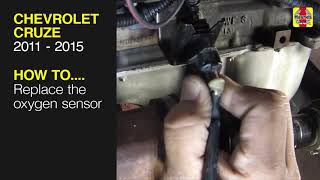
Typical fix: Replace the Bank 1, Sensor 1 oxygen sensor. This sensor is located on the exhaust manifold, easily accessible from the top of the engine bay. A special 22mm slotted socket is required. 🎬 Watch: Step-by-step guide to replacing the upstream oxygen sensor.
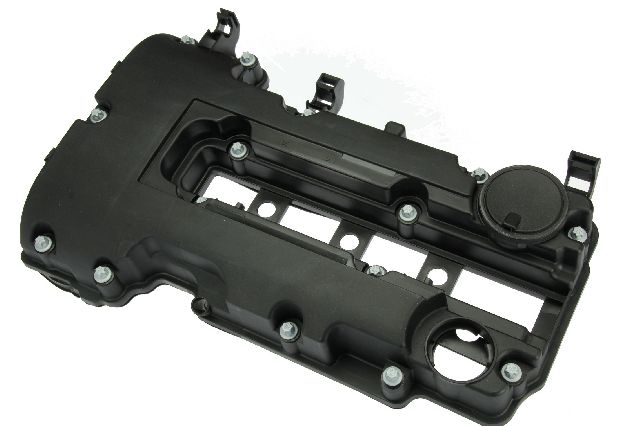
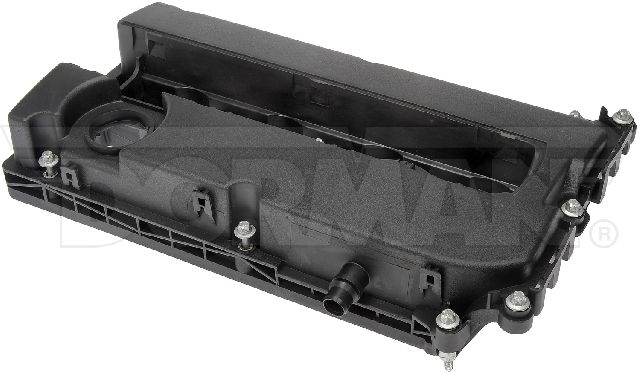
Est. part cost: $40-$180 - Failed PCV Valve/Diaphragm in Valve Cover (1.4L Engine) 🔴 High Probability → Shop Engine Valve Cover The 1.4L turbo engine has a PCV pressure regulator diaphragm built into the valve cover that is known to fail. This is often a consequence of a failed check valve in the intake manifold. The failure creates a significant vacuum leak, causing multiple lean-related codes.
How to confirm: With the engine running, listen for a distinct hissing or whistling sound from the top of the valve cover. A simple test is to try to remove the oil filler cap with the engine running; if there is strong vacuum holding it down, the PCV system has likely failed. Placing a finger over the small hole on the PCV diaphragm will often change the engine idle if it has failed. This issue frequently sets a P0171 code as well.
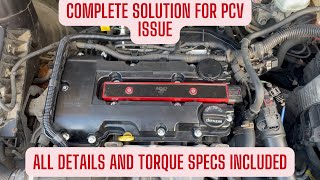
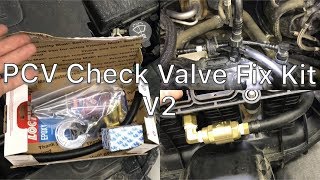
Typical fix: Replace the entire valve cover assembly, as the diaphragm is not serviced separately. 🎬 See how to replace the intake manifold and valve cover. It is also critical to inspect the check valve in the intake manifold; if it is missing or damaged, the new valve cover will fail again quickly.
Est. part cost: $70-$200 - Exhaust Leak 🟡 Medium Probability Cracks in the exhaust manifold or, more commonly, the flexible pipe section of the exhaust downpipe can allow unmetered air to enter the exhaust stream before the sensor. In some GM vehicles, even loose intake bolts have been reported to cause the P0131 and P0171 combination (NHTSA ODI #11581909).
How to confirm: Visually inspect the exhaust manifold and flex pipe for cracks or black soot trails indicating a leak. A smoke test is the most effective way to find small leaks. Listen for ticking or hissing noises from the engine bay, especially when the engine is cold.
Typical fix: Repair the leak by replacing the cracked manifold or the faulty exhaust pipe section.
Est. part cost: $20-$300 - Damaged Wiring or Connector 🟡 Medium Probability GM TSB 18-NA-009 notes that on some vehicles, a power steering fluid hose can leak directly onto the O2 sensor wiring harness, contaminating the connector and causing skewed readings.
How to confirm: Visually inspect the O2 sensor's wiring harness from the sensor to the main engine harness. Look for melted plastic, chafed wires, or corrosion in the connector pins. Specifically check for signs of fluid contamination from above. Check for continuity using a multimeter.
Typical fix: Repair the damaged section of the harness or replace the connector pigtail. If contaminated by power steering fluid, the leak must be fixed, and the TSB may recommend replacing the sensor and harness.
Est. part cost: $15-$50 - Blown Oxygen Sensor Fuse ⚪ Low Probability → Shop Oxygen Sensor
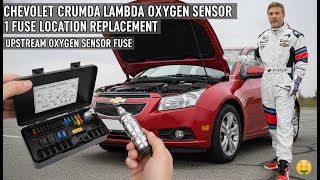
How to confirm: The O2 sensor has a heater circuit that requires power. Check fuse #47 (typically a 10A red fuse) in the under-hood fuse box. A video guide confirms this location for both 1.4L and 1.8L engines. 🎬 Watch: How to find and check the O2 sensor fuse.
Typical fix: Replace the blown fuse. If it blows again, investigate for a short circuit in the heater element or its wiring.
Est. part cost: $1-$5
Rare But Worth Checking
- Low Fuel Pressure: A failing fuel pump or clogged filter can cause a lean condition, which the O2 sensor will report as low voltage. Check fuel pressure if other causes are ruled out.
- Faulty Engine Control Module (ECM): This is extremely rare. The ECM should only be considered after all other possibilities, including wiring, sensors, and mechanical issues, have been exhaustively checked. On the Cruze, other codes like P0606 are more indicative of an ECM processor fault.
Diagnosis Steps
- Read all diagnostic trouble codes with an OBD-II scanner. Note any other codes present, especially P0171 and P1101, as they strongly point towards a vacuum leak.
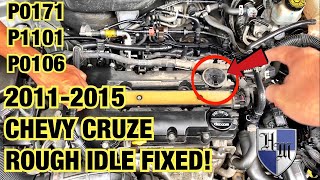
- For the 1.4L engine, perform a PCV system check. With the engine idling, listen for a hissing/whistling sound from the valve cover. Check for strong vacuum at the oil cap. If present, the PCV system has failed and is the most likely root cause.
- If no PCV issue is apparent, visually inspect the Bank 1 Sensor 1 (upstream) oxygen sensor's wiring harness and connector for any signs of melting, chafing, fluid contamination, or corrosion. Pay attention to the power steering hoses above the harness per TSB 18-NA-009.
- Inspect the exhaust manifold and the flex pipe for cracks or black soot, which indicate an exhaust leak.
- Check fuse #47 (10A) for the upstream O2 sensor in the engine bay fuse box.
- Use a scan tool to observe the live data stream for the Bank 1 Sensor 1 voltage. At operating temperature, it should fluctuate rapidly between ~0.1V and ~0.9V. If it is stuck below 0.2V, it confirms the low voltage condition.
- If the sensor voltage is stuck low and no leaks or wiring faults are found, the sensor itself is the most likely cause of the problem.
Parts You'll Likely Need
- Upstream Oxygen Sensor (Bank 1, Sensor 1)
(OEM #55572216)— This is the most common failure point for code P0131. It is a critical sensor for fuel control and is exposed to extreme heat and exhaust gases.
Trusted brands: ACDelco (OEM), Bosch, Denso, NGK/NTK
OEM price range: $100-$180
Aftermarket price range: $40-$90 - Valve Cover (with integrated PCV)
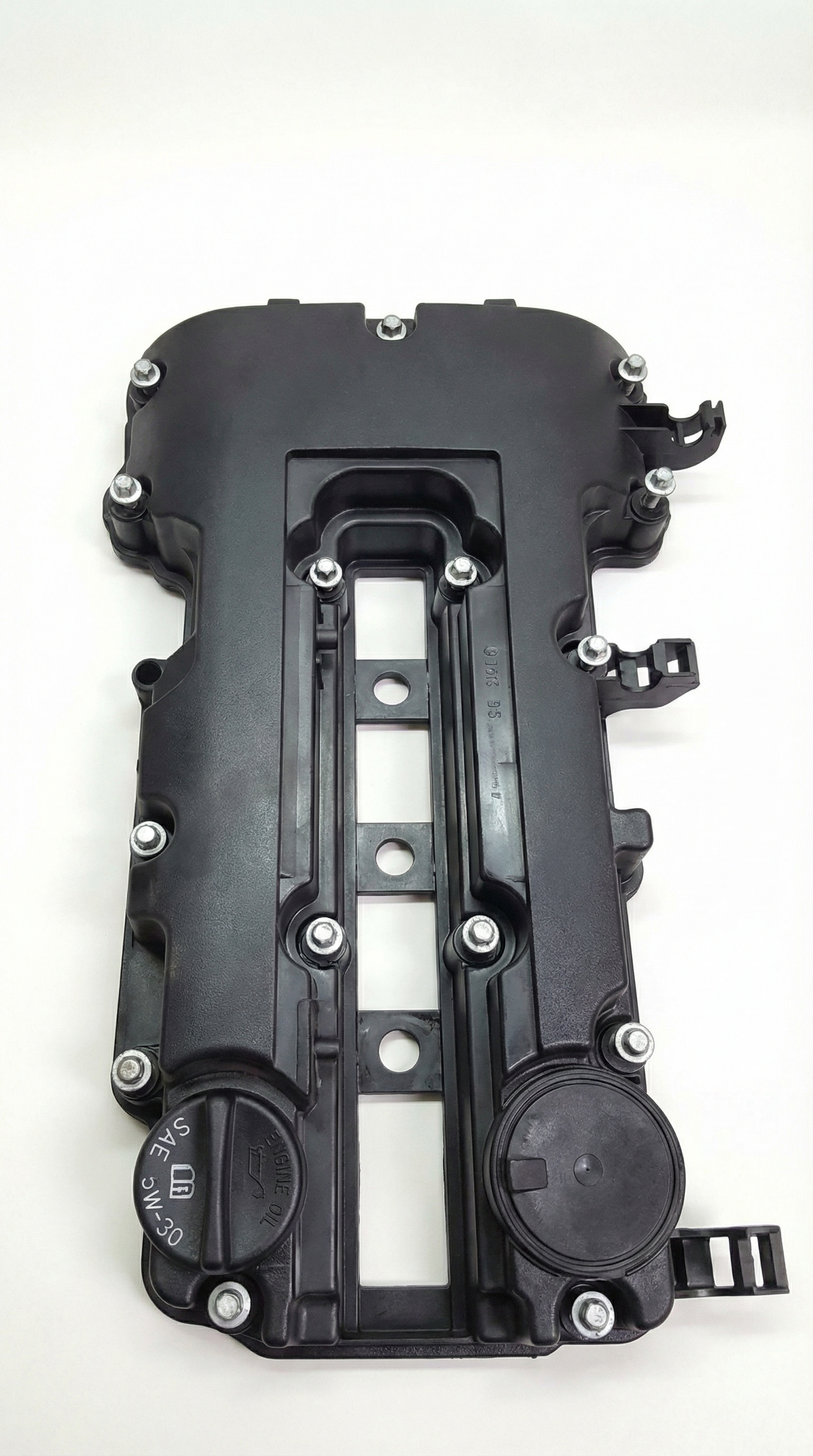
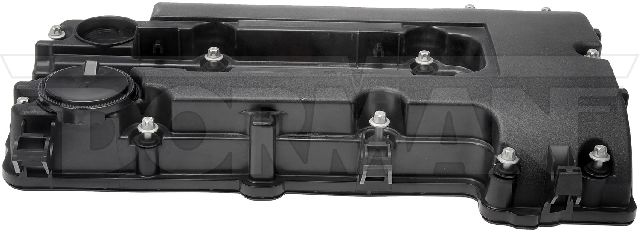
(OEM #25198874 (Superseded by 25202179))— On the 1.4L engine, the integrated PCV diaphragm commonly fails, creating a large vacuum leak that can set a P0131 code.
Related Codes That Often Appear With This One
- P0171 — P0171 (System Too Lean) is often triggered with P0131. The low voltage from the O2 sensor is the primary indicator the ECM uses to determine that the system is running lean. This combination is very common with PCV-related vacuum leaks.
- P0135 — P0135 (O2 Sensor Heater Circuit Malfunction) can appear if the internal heating element of the sensor fails or if its fuse blows. A sensor that isn't properly heated can't produce an accurate voltage reading.
- P1101 — P1101 (Intake Airflow System Performance) is often seen alongside P0171 and P0131 when a major vacuum leak from the PCV system is present.
Technical Service Bulletins (TSBs) & Recalls
- 18-NA-009: Details P0131 and other O2 sensor codes caused by power steering fluid leaking onto the sensor's wiring harness. This TSB applies to multiple GM vehicles, including platform mates like the Sonic.
- N192285420: This is a Special Coverage Adjustment from GM, not a standard TSB, extending warranty coverage for PCV-related failures including the valve cover and intake manifold on certain models.
- Bulletin #PIP5529A: A manufacturer service bulletin notes that P0131 may appear in combination with codes like P0068, P0101, P0106, and P0171 to assist in resolving malfunction indicator lamp illumination.
- Bulletin #PIP5529B: This updated bulletin provides diagnostic and repair assistance for resolving illumination of the malfunction indicator lamp due to combinations of codes including P0131, P0171, and P0324.
Platform-Specific Known Issues

- PCV System Failure (1.4L Turbo): The most significant issue on this platform. A failed check valve inside the intake manifold allows boost pressure into the crankcase, rupturing the diaphragm in the valve cover. This causes a massive vacuum leak. GM issued special coverage adjustments for this issue. It is critical to check both the valve cover and the intake manifold check valve.
- ECM Reprogram for Emissions (1.4L): GM issued a voluntary emissions recall (14801) for some 2011-2013 Cruze models with the 1.4L engine to reprogram the ECM for a revised fuel enrichment strategy. While not a direct fix for P0131, ensuring your vehicle's software is up-to-date is good practice.
- Power Steering Fluid Contamination: TSB 18-NA-009 describes how a leaking power steering hose can drip fluid onto the O2 sensor harness, causing various O2 sensor codes, including P0131. The fix requires replacing the hose, the sensor, and potentially the engine wiring harness.
Mechanic-Grade Diagnostic Values

- Low-Side Fuel Pressure (KOEO - Key On, Engine Off) — expected: 345–650 kPa (50–94 psi). Failure: Pressure below 50 psi after commanding the fuel pump on multiple times with a scan tool indicates a potential fuel delivery issue.
- Low-Side Fuel Pressure (KOER - Key On, Engine Running) — expected: Approximately 400 kPa (58 PSI) at idle.. Failure: A user reported only achieving 40 psi at idle, which is low and prompted further diagnosis of the fuel system.
- Long Term Fuel Trim (LTFT) at Idle — expected: Close to 0% (+/- 5%). Failure: Freeze frame data from a Cruze with a vacuum leak showed LTFT at 31-35% at idle (735 RPM). Another diagnostic video showed LTFT at 40% at idle due to a vacuum leak.
- Crankcase Vacuum (1.4L Engine) — expected: 11 to 18 inches of water. Failure: Excessive vacuum, often indicated by difficulty removing the oil cap while the engine is running, points to a ruptured PCV diaphragm in the valve cover.
Scan Tool Commands That Help
- GDS2 / Tech2: Fuel Pump On/Off Command — Used during KOEO (Key On, Engine Off) fuel pressure testing to cycle the fuel pump and build pressure in the rail to check for pump health and leaks without starting the engine.
- Generic OBD-II Scanner with Live Data: View Live Data for O2 Sensor B1S1 and Long/Short Term Fuel Trims — This is the primary diagnostic step. A voltage stuck low (<0.2V) for B1S1 combined with high positive fuel trims (e.g., >25%) strongly indicates a lean condition or failed sensor.
Wiring & Ground Locations
- G103 — Located at the left rear of the engine compartment on the cowl, above the brake booster.. This ground serves the Engine Control Module (ECM) and the Data Link Connector (DLC). A poor ground here can cause erratic ECM behavior and incorrect sensor readings, including from the O2 sensor circuit.
- G105 — Located at the left front of the engine compartment, often behind the cooling fan relays.. This is a primary engine harness ground point. While not directly tied to the O2 sensor signal, a poor connection can introduce electrical noise and issues with various engine components controlled by the ECM.
- O2 Sensor Heater Fuse #47 — In the under-hood fuse box. It is typically a 10A red mini-fuse.. This fuse powers the heater element for the upstream O2 sensor (Bank 1, Sensor 1). If this fuse is blown, the sensor will not heat up correctly and will not produce an accurate voltage, which can lead to a P0131 code, often accompanied by a P0135 heater circuit code.
Real Owner Repair Stories
- Reddit user on r/cruze (2015 Chevy Cruze 1.4L Turbo) — High positive fuel trims (long-term at 30%), indicating unmetered air.
❌ Tried (didn't work) Replacing the valve cover due to excess crankcase vacuum.
✅ What actually fixed it The user discovered the intake manifold's internal PCV check valve was faulty, even though it appeared to be present. The flap portion of the valve had eroded away, rendering it useless. Replacing the intake manifold (or installing an external check valve kit) was the final solution. - YouTube diagnostic video (Chevy Cruze 1.8L) — Codes P0171 (System Too Lean) and P0300 (Random Misfire). Live data showed LTFT at +40% and the upstream O2 sensor stuck lean at idle.
❌ Tried (didn't work) Initial diagnosis pointed to a vacuum leak, but the source was not immediately obvious.
✅ What actually fixed it The technician found the EVAP purge solenoid was stuck open, creating a significant vacuum leak. After disconnecting and plugging the purge line, fuel trims immediately began to drop towards normal, confirming it as the root cause. - NHTSA ODI #11165031 — An owner reported several codes appearing together, including P0171, P0106, P0131 (O2 circuit low voltage), and P1101 (intake air flow system performance low), which also caused the traction control system (TCS) to turn on.
- NHTSA ODI #10257817 — In a cross-manufacturer reference, a GM owner reported the O2 sensor in bank one failed five times in a four-month period, with codes P0131, P1133, P0300, and P0171 appearing repeatedly.
OEM Part Supersession History
25198874→25202179— Standard part revision by the manufacturer for the valve cover assembly.55562206→55572216— Standard part revision by the manufacturer for the heated oxygen sensor.
Heads up: Part number 55572216 is listed for the downstream (Position 2) sensor on some parts sites, but also as the upstream sensor in other contexts. It is critical to verify the correct part for the specific position (Upstream/Sensor 1) using the vehicle's VIN.
Model Year Variations Within This Range
- 2014-2015: For the 2014 and 2015 model years, a 2.0L turbodiesel engine option was available, which has a different emissions system and is not covered by the 1.4L/1.8L specific advice in this guide.
- 2011-2016 (1.4L vs 1.8L): The complex PCV system failure involving the intake manifold check valve and valve cover diaphragm is specific to the 1.4L Turbo engine. The 1.8L naturally aspirated engine has a different PCV design and is not prone to this specific failure cascade, though its O2 sensors can still fail conventionally.
Diagnostic Flowchart
Real Owner Stories
Aggregated from forums and TSBs cited above. Mileages and costs reflect what owners reported in those sources.
Chevrolet Cruze
Symptoms: Experienced a P0131 code along with oil-fouled spark plugs.
What fixed it: Confirmed the failure cascade from the intake manifold check valve to the valve cover diaphragm and addressed the PCV system.
Source hint: Reddit r/cruze - P0131 O2 sensor bank 1
Chevrolet Cruze
Symptoms: Repeatedly replaced the upstream O2 sensor, but lean codes kept returning.
What fixed it: Stopped replacing the sensor and addressed the root cause, which was an underlying PCV vacuum leak.
Source hint: Reddit r/cruze - Need Advice for Upstream O2 Sensor
Chevrolet Cruze 1.4L
Symptoms: Triggered both P0131 and P0455 codes simultaneously.
What fixed it: Diagnosed and repaired the 1.4L PCV system failure, differentiating it from the 1.8L engine setup.
Source hint: Reddit r/cruze - P0131 and P0455
Related OBD-II Codes
Frequently Asked Questions
Does GM have any special warranty coverage for the PCV failure that causes P0131 on the 1.4L Cruze?
I have a P0131 code and hear a whistling sound from the engine bay. What does this mean?
Why does TSB 18-NA-009 mention power steering fluid for an oxygen sensor code?
Should I replace just the valve cover if the PCV diaphragm is blown on my 1.4L Cruze?
Which brand of oxygen sensor is recommended for the 2011-2016 Cruze?
Is there a recall for the engine computer related to emissions on the Cruze?
Where is the fuse for the upstream oxygen sensor located on the Cruze?
Helpful Videos
Used OEM Parts in Stock
New Aftermarket Parts Available


The information in this article is provided for general reference and educational purposes only. Vehicle specifications, procedures, and part compatibility can vary by production date, trim level, and region. Always consult your vehicle's factory service manual and verify part numbers before purchasing or performing repairs. Safety-critical components such as airbags, seat belts, and braking systems should be installed by a qualified professional.
- Chevrolet Cruze:
- 🧭 Diagnostic Flowchart
- 🎬 Helpful Videos
- 🛍️ Shop This Part
- What's Unique About the 2011-2016 Chevrolet Cruze
- Symptoms You May Notice
- Most Likely Causes
- Rare But Worth Checking
- Diagnosis Steps
- Parts You'll Likely Need
- Related Codes That Often Appear With This One
- Technical Service Bulletins (TSBs) & Recalls
- Platform-Specific Known Issues
- Mechanic-Grade Diagnostic Values
- Scan Tool Commands That Help
- Wiring & Ground Locations
- Real Owner Repair Stories
- OEM Part Supersession History
- Model Year Variations Within This Range
- Real Owner Stories
- Chevrolet Cruze
- Chevrolet Cruze
- Chevrolet Cruze 1.4L
- Related OBD-II Codes
- Frequently Asked Questions
- 🎟️ Get 5% Off