

P0131 on 2011-2023 Dodge Durango 3.6L: O2 Sensor Low Voltage Causes & Fixes
This code almost always means the Bank 1, Sensor 1 (upstream) oxygen sensor has failed or its wiring is damaged. Bank 1 is the passenger side of the 3.6L Pentastar engine. Expect to pay $40-$90 for a quality aftermarket sensor (NTK/Denso recommended) and $130-$190 for an OEM Mopar part. It's a DIY-possible job, but access is notoriously tight, often requiring a special O2 sensor socket and patience.
- P0131 on your Durango points to the upstream oxygen sensor on the passenger side (Bank 1).
- The most likely fix is replacing the sensor itself, but always inspect the wiring for heat damage or shorts first.
- Access to this sensor is tight; it's a more challenging DIY job than on many other vehicles.
- Do not ignore this code. It will decrease your fuel economy and can lead to costly catalytic converter damage over time.
- If you also have a P0171 (System Lean) code, fixing the P0131 issue will almost certainly resolve it as well.
What's Unique About the 2011-2023 Dodge Durango
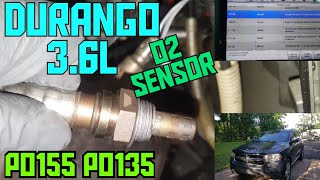
For the Dodge Durango with the 3.6L Pentastar V6, Bank 1 is the passenger side of the engine. The Sensor 1 (upstream) O2 sensor is located on the exhaust manifold before the catalytic converter. Accessing this specific sensor is known to be difficult due to tight spacing between the engine block, firewall, and components like the transmission dipstick bracket. While the code's cause is usually a simple sensor failure, the tight quarters can make what should be a straightforward replacement a challenging job for DIY mechanics. 🎬 Watch: This clever hack makes removing the Bank 1 sensor easier. A specialized 7/8" (or 22mm) O2 sensor socket with a slit for the wire is considered essential.
Symptoms You May Notice
- Check Engine Light is on
- Poor fuel economy
- Rough or unstable idle
- Engine hesitation or stumbling during acceleration
- A strong smell of exhaust or fuel
- Ticking or puffing noise from the engine bay, especially when cold (if caused by an exhaust leak)
- Replacing the O2 sensor without checking the wiring first. A new sensor will not fix a short or break in the harness, leading to the code returning.
- Replacing the catalytic converter. P0131 points to an issue with the upstream sensor's circuit, not the efficiency of the converter itself. A bad converter is typically indicated by a P0420 or P0430 code.
- Ignoring an exhaust leak. If a small exhaust leak is the root cause, a new O2 sensor will still read the lean condition caused by the leak and the code will persist.
Most Likely Causes
- Failed Bank 1, Sensor 1 Oxygen Sensor 🔴 High Probability → Shop Oxygen Sensor Oxygen sensors are wear-and-tear items that degrade over time due to constant exposure to high heat and exhaust gases. With the age and mileage of this vehicle range, sensor failure is very common. Chrysler/Dodge electronics can be sensitive, and using OEM (Mopar) or OEM-supplier brands like NTK or Denso is highly recommended by owners to avoid compatibility issues.
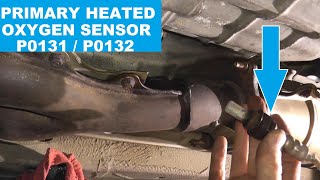
How to confirm: Use an OBD-II scanner to monitor the live data for the 'O2S11' or 'B1S1 O2' voltage. If the voltage is stuck below 0.2V and does not fluctuate rapidly between ~0.1V and ~0.9V when the engine is warm, the sensor has likely failed. 🎬 See how to test and replace a heated oxygen sensor.
Typical fix: Replace the Bank 1, Sensor 1 (upstream, passenger side) oxygen sensor.
Est. part cost: $40-$180 - Damaged O2 Sensor Wiring or Connector 🟡 Medium Probability → Shop Oxygen Sensor The wiring harness for the O2 sensor is routed close to hot exhaust components. Over time, the protective loom can become brittle, and wires can melt, chafe, or break, causing a short to ground. This is a known issue across various Dodge/Chrysler models. A Reddit user with a 2012 Durango reported P0131 returning after sensor replacement, pointing towards a likely wiring or PCM issue.
How to confirm: Visually inspect the entire wiring harness from the O2 sensor to the main engine harness. Look for melted plastic, bare wires, or corrosion in the connector. Use a multimeter to check for continuity and to ensure the signal wire is not shorted to ground 🎬 Watch: A breakdown of P0131 circuit causes and fixes., as detailed in service manuals.
Typical fix: Repair the damaged section of the wiring harness or replace the connector pigtail. In some cases for other models, Chrysler has issued TSBs involving the installation of an overlay harness to bypass problematic wiring.
Est. part cost: $15-$50 - Exhaust Leak Before the O2 Sensor ⚪ Low Probability → Shop Oxygen Sensor Exhaust manifold gaskets can fail or the manifold itself can develop cracks over time due to thermal stress. This allows unmetered outside air to be drawn into the exhaust stream, which fools the O2 sensor into thinking the engine is running lean.
How to confirm: Listen for a distinct ticking or puffing noise from the passenger side of the engine, which is often more pronounced on a cold start and may quiet down as the engine warms up and the metal expands. A visual inspection may reveal black soot marks around the manifold gasket or visible cracks in the manifold. A smoke test is a definitive way to pinpoint leaks.
Typical fix: Replace the exhaust manifold gasket or the entire exhaust manifold if it is cracked.
Est. part cost: $20-$400
Rare But Worth Checking
- Low Fuel Pressure: A failing fuel pump, clogged filter, or faulty fuel pressure regulator can cause a genuinely lean condition, which the O2 sensor will correctly report as low voltage. This is less common but should be considered if other codes related to lean conditions (like P0171) or fuel system issues are also present.
- Failing Powertrain Control Module (PCM): This is extremely rare. The PCM's internal circuits for the O2 sensor can fail, but all other possibilities, especially wiring and the sensor itself, should be exhaustively ruled out before considering PCM replacement. A forum user with a 2012 Durango suspected a bad PCM after replacing the sensor and coils without success.
Diagnosis Steps
- Confirm code P0131 is present using an OBD-II scanner. Check for any other codes and review freeze frame data.
- Using the scanner's live data function, monitor the voltage for 'O2S11' (Bank 1, Sensor 1) with the engine fully warmed up.
- A healthy sensor's voltage should rapidly fluctuate between approximately 0.1V and 0.9V. If the voltage is stuck low (e.g., <0.2V), this confirms the fault condition.
- Perform a thorough visual inspection of the O2 sensor's wiring harness and connector. Look for any signs of melting, chafing, corrosion, or loose pins from the sensor up to the main harness.
- Inspect the exhaust manifold and gasket on the passenger side for signs of leaks (black soot, audible ticking noise).
- If wiring and exhaust appear intact, the most probable cause is a failed O2 sensor.
- For advanced diagnosis, use a multimeter to test the sensor's heater circuit. With the sensor disconnected and ignition off, check for a short to ground on the signal wire circuit between the sensor connector and the PCM, as outlined in the service manual.
Parts You'll Likely Need
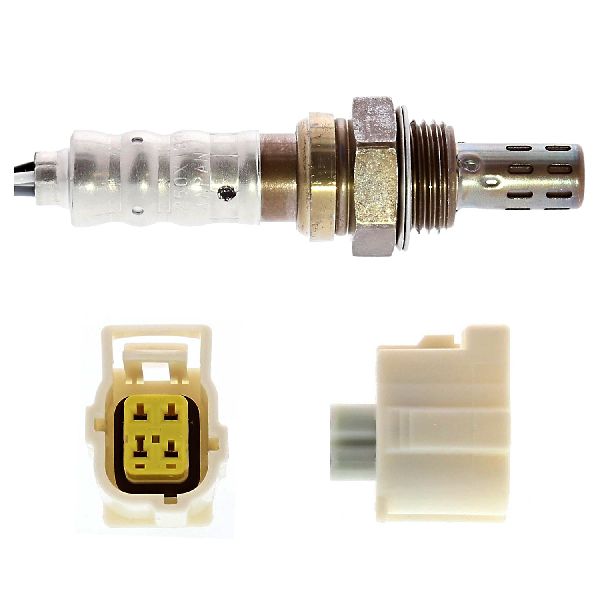
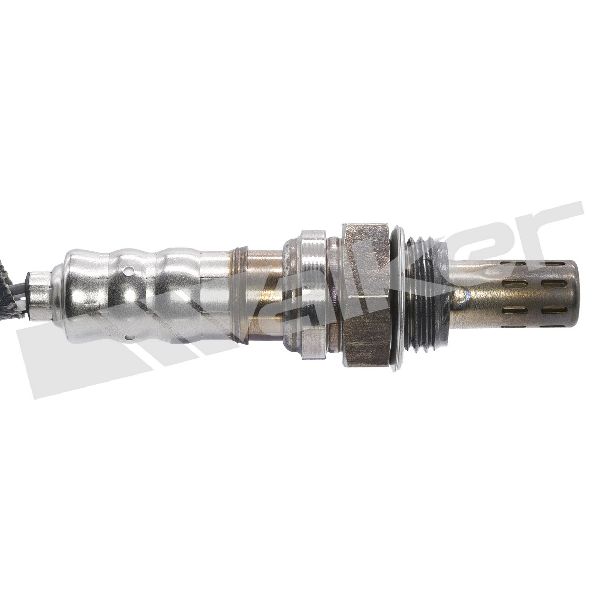
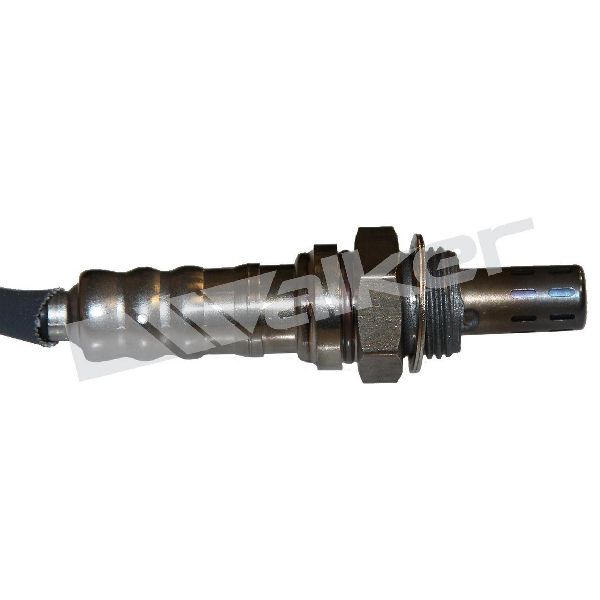
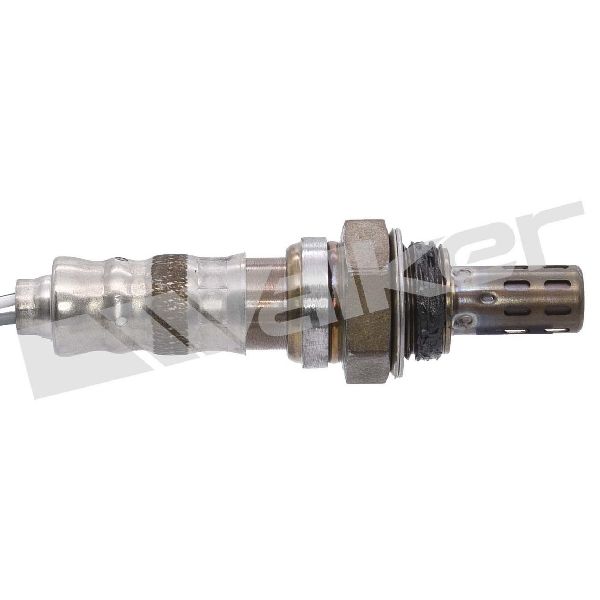
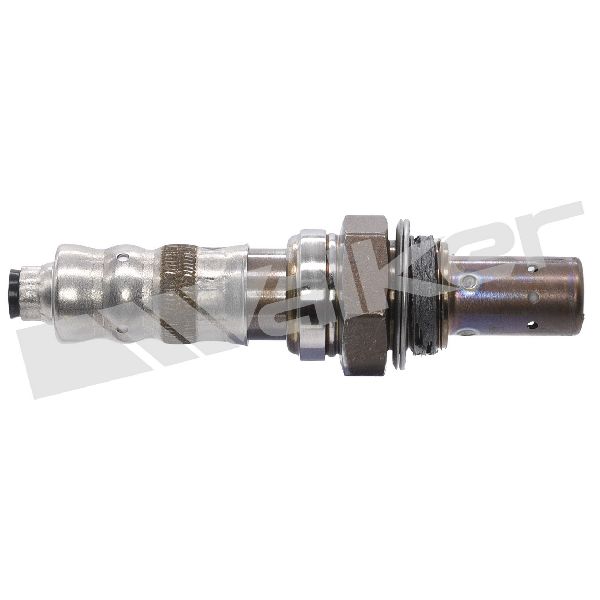
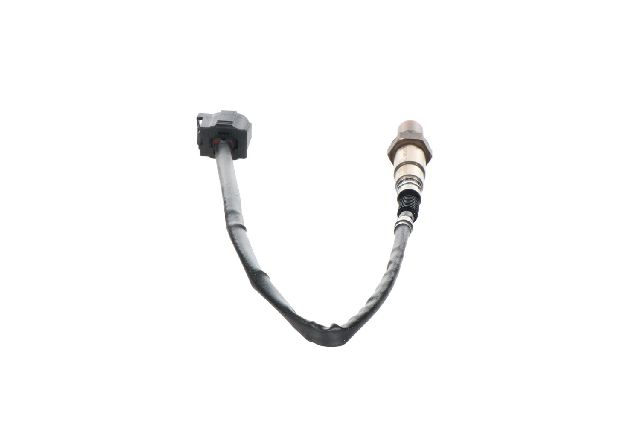
- Oxygen Sensor (Bank 1, Sensor 1)
(OEM #05149171AB)— This is the upstream sensor on the passenger side. It is the most common failure point for a P0131 code due to age and heat exposure. The original part number 5149171AA has been superseded by 05149171AB.
Trusted brands: Mopar, NTK (OEM Supplier), Denso (OEM Supplier), Bosch
OEM price range: $130-$190
Aftermarket price range: $40-$90
Related Codes That Often Appear With This One
- P0171 — P0171 (System Too Lean Bank 1) often appears with P0131. The low voltage from the O2 sensor is what the PCM interprets as a lean condition, so it's a direct cause-and-effect relationship. A forum post for a 2011 Durango showed P0131 appearing alongside P0171 and P0300.
- P0300, P0301, P0303, P0305 — If the air-fuel mixture is incorrect due to the faulty sensor data, it can lead to misfires on Bank 1 (cylinders 1, 3, 5), triggering random (P0300) or specific cylinder misfire codes.
Technical Service Bulletins (TSBs) & Recalls
- While no specific TSB for the Durango and P0131 was found, Dodge TSB #25-003-13 for Ram trucks with the Cummins engine defines P0131 as '1/1 O2 Sensor Shorted To Ground' and details a repair procedure involving replacing connector terminals with gold-plated ones, highlighting the importance of checking wiring integrity. This TSB was later superseded.
- A related TSB, 25-004-13, also for Ram trucks, involves replacing the entire O2 sensor connectors with new pigtails to resolve various O2 sensor DTCs, further emphasizing that wiring and connectors are a known failure point in the wider Dodge/Chrysler family.
- Manufacturer TSB Bulletin #25-002-14 and Bulletin #25-004-12 also explicitly list P0131 as "1/1 O2 Sensor Shorted To Ground," reinforcing that this code specifically indicates a short-to-ground condition in the upstream sensor circuit across several platforms in the manufacturer's lineup.
Platform-Specific Known Issues
- The 3.6L Pentastar engine had some known issues in its early years (2011-2013) with cylinder head failures, particularly on the left head (Bank 2), which could cause misfires and various codes. While not directly causing P0131, it's a notable issue for this engine family that can present with similar symptoms like rough idle.
- Rocker arm failure is another known weakness, leading to ticking noises and misfires, which can sometimes be confused with fuel control issues.
Mechanic-Grade Diagnostic Values
- Upstream O2 Sensor Signal Voltage (Warmed Up, Closed Loop) — expected: Rapidly fluctuates between ~100 mV and 900 mV (0.1V - 0.9V).. Failure: Voltage is consistently below 200 mV (0.2V). The PCM may set the code if the voltage is below a minimum acceptable value for a set period.
- O2 Sensor 1/1 Signal Circuit (K41) Resistance to Ground — expected: Infinite resistance (Open circuit).. Failure: Resistance is below 100 Ohms, indicating a short to ground in the signal circuit.
- O2 Return Upstream Circuit (K902) Voltage at PCM Connector — expected: Approximately 2.5 Volts.. Failure: Voltage is not 2.5V, indicating a potential issue with the PCM or wiring.
- Fuel Pressure (3.6L Pentastar) — expected: Approximately 58 psi.. Failure: Significantly lower fuel pressure can cause a true lean condition, leading the O2 sensor to correctly report low voltage.
Wiring & Ground Locations
- G907A — Lower right front of the engine compartment (for 3.6L engine).. This is a primary engine ground. A poor connection here can cause various sensor reading issues, including erratic or biased O2 sensor voltages.
- G904 / G905 — Lower left side of the engine.. These are additional engine block ground points. Ensuring they are clean and tight is crucial for stable sensor performance.
- (K41) O2 Sensor 1/1 Signal Circuit — This wire carries the signal to the PCM. As noted in manufacturer TSB Bulletin #25-003-13, a P0131 specifically indicates this 1/1 O2 sensor circuit is shorted to ground.
- (K902) O2 Return Upstream Circuit — This wire also runs between the O2 sensor connector and the PCM connector.. This is the sensor's ground reference or return circuit provided by the PCM. A fault on this wire can cause the signal voltage to be skewed.
OEM Part Supersession History
5149171AA→05149171AB— Part revision or supplier change.
Heads up: The part number 05149171AB is listed for a wide range of Chrysler/Dodge/Jeep engines, including the 3.6L V6 and various V8s, serving as both upstream and downstream sensors in different applications. It is crucial to verify fitment for the specific position (Bank 1, Sensor 1) on the Durango.
Model Year Variations Within This Range
- 2011-2013: Early 3rd generation Durangos with the 3.6L Pentastar were paired with a 5-speed automatic transmission.
- 2014-2023: For the 2014 model year, the Durango received a facelift which included a new 8-speed automatic transmission across all trims, improving efficiency and performance.
- 2016+: For 2016, the 3.6L Pentastar engine received an update (sometimes called PUG - Pentastar Upgrade). It featured a two-stage variable valve lift (VVL), higher compression ratio (11.3:1 from 10.2:1), and cooled EGR. While not directly impacting the P0131 cause, these changes affect overall engine operation and component specifications, such as requiring 0W-20 oil instead of 5W-20.
Diagnostic Flowchart
Real Owner Stories
Aggregated from forums and TSBs cited above. Mileages and costs reflect what owners reported in those sources.
2012 Dodge Durango 3.6L — 224000 miles
Symptoms: Check Engine Light with codes P0300, P2097, P0171, and P0131. Experienced an occasional misfire that eventually became consistent, mostly on cylinders 5, 1, and 3.
What fixed it: Diagnosed as the Bank 1 valve cover dripping oil onto the O2 sensor and wire harness, causing the sensor to fault. The fix was replacing the valve cover gasket on that side.
Source hint: ScannerDanner Forum
Related OBD-II Codes
Frequently Asked Questions
Does Dodge TSB #25-003-13 or #25-004-13 apply to my Durango for code P0131?
What brand of oxygen sensor should I use for my 3.6L Pentastar Durango?
I have a ticking noise and code P0131 on my 3.6L Durango. Could this be the known rocker arm issue?
Why is it so hard to reach the Bank 1 Sensor 1 O2 sensor on my Durango?
I replaced the Bank 1 Sensor 1 O2 sensor on my 2012 Durango, but P0131 came back. What's next?
Helpful Videos
We Have This Part in Stock

The information in this article is provided for general reference and educational purposes only. Vehicle specifications, procedures, and part compatibility can vary by production date, trim level, and region. Always consult your vehicle's factory service manual and verify part numbers before purchasing or performing repairs. Safety-critical components such as airbags, seat belts, and braking systems should be installed by a qualified professional.
- Dodge Durango:
- 🧭 Diagnostic Flowchart
- 🎬 Helpful Videos
- 🛍️ Shop This Part
- What's Unique About the 2011-2023 Dodge Durango
- Symptoms You May Notice
- Most Likely Causes
- Rare But Worth Checking
- Diagnosis Steps
- Parts You'll Likely Need
- Related Codes That Often Appear With This One
- Technical Service Bulletins (TSBs) & Recalls
- Platform-Specific Known Issues
- Mechanic-Grade Diagnostic Values
- Wiring & Ground Locations
- OEM Part Supersession History
- Model Year Variations Within This Range
- Real Owner Stories
- 2012 Dodge Durango 3.6L — 224000 miles
- Related OBD-II Codes
- Frequently Asked Questions
- 🎟️ Get 5% Off