

P0131 on 2011-2012 Dodge RAM 3500: O2 Sensor Shorted to Ground Fixes
This code means the upstream oxygen sensor (Bank 1, Sensor 1) is sending a low voltage signal. On this truck, it's often a faulty O2 sensor or a damaged wiring harness, especially on the 6.7L Cummins. Expect to pay $50-$150 for a new sensor and it's a manageable DIY job for many.
- P0131 on a 2011-2012 Ram 3500 means the upstream O2 sensor on Bank 1 is reading a low voltage.
- Dodge TSBs specifically define this as a potential "short to ground," making a wiring inspection crucial, especially on the 6.7L Cummins.
- The most common fixes are replacing the Bank 1, Sensor 1 O2 sensor or repairing its wiring harness.
- On 6.7L Cummins models, check for TSB 25-004-12 and its successors, which recommend replacing the sensor connectors or installing an overlay harness as the primary fix.
What's Unique About the 2011-2012 Dodge RAM 3500
While P0131 is a generic code, Dodge has issued specific technical service bulletins for the 2011-2012 RAM 3500, particularly for the 6.7L Cummins engine. These bulletins highlight that the code often points to a sensor that is "shorted to ground" rather than just a simple low voltage reading. TSB 25-004-12 specifically recommends replacing the O2 sensor connectors with new pigtails as a primary repair step for a range of O2 sensor codes, including P0131, 🎬 Watch: Troubleshooting common Cummins 6.7 O2 sensor wiring codes. suggesting that wiring harness issues near the connectors are a more common cause on these trucks compared to others where the sensor itself might just fail from age. A key point of failure on the 6.7L is the O2 Sensor Module located on the frame rail, which is susceptible to damage and corrosion.
Diagnostic Flowchart
Tap your situation to follow the diagnostic path that matches what you're seeing on this vehicle.
Symptoms You May Notice
- Check Engine Light is on
- Reduced fuel economy
- Rough or uneven idle
- Engine hesitation or poor performance
- Black smoke from the exhaust (if running rich)
- Strong or rotten egg smell from exhaust
- Replacing the O2 sensor without checking the wiring first. Given the TSBs pointing to shorts and connector failures, a new sensor will not fix a wiring problem.
- Replacing the catalytic converter. A P0131 code indicates an issue with the upstream sensor, not the converter's efficiency. Other codes, like P0420, point to converter issues.
Most Likely Causes
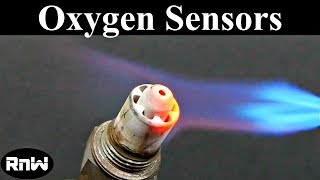
- Faulty Bank 1, Sensor 1 Oxygen Sensor 🔴 High Probability → Shop Oxygen Sensor Oxygen sensors have a finite lifespan (often 70-100k miles) and can fail from age, contamination, or internal shorts. On the 6.7L Cummins, soot from the diesel exhaust can also be a contributing factor to premature failure.
How to confirm: Use an OBD-II scanner to watch the live data for the B1S1 O2 sensor. If the voltage is stuck low (near 0.1V) and doesn't fluctuate, the sensor is likely bad. You can also test the sensor's internal resistance with a multimeter.
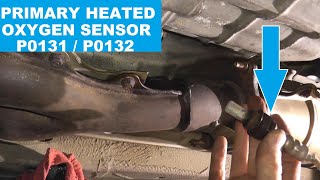
Typical fix: Replace the Bank 1, Sensor 1 oxygen sensor. An O2 sensor socket is recommended for removal.
Est. part cost: $50-$150 - Damaged Wiring or Connector 🔴 High Probability The manufacturer TSB 25-004-12 specifically calls out replacing sensor connectors as the fix for O2 sensor DTCs on the 6.7L Cummins, indicating wiring is a known weak point. The harness is routed near hot exhaust components and can be subject to melting, chafing, or corrosion in the connector pins. Some TSB revisions even involve installing a complete overlay harness.
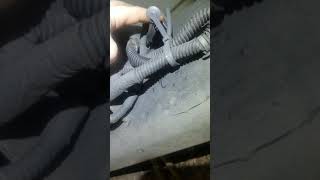
How to confirm: Visually inspect the entire wiring harness for the B1S1 O2 sensor from the sensor to the main engine harness. Look for melted plastic, bare wires, or green corrosion in the connector pins. Use a multimeter to check for a short to ground on the signal wire.
Typical fix: Repair the damaged section of the wire or replace the connector pigtail per TSB 25-004-12. In some cases, an overlay harness may be required.
Est. part cost: $15-$75 - Exhaust Leak 🟡 Medium Probability Leaks from a cracked exhaust manifold or a bad gasket before the O2 sensor can allow unmetered oxygen into the exhaust stream, fooling the sensor into reading a lean (low voltage) condition.
How to confirm: Listen for a ticking or tapping noise from the engine area that gets louder with RPM. You can also use a smoke machine to pressurize the exhaust and look for leaks.
Typical fix: Replace the failed gasket or repair/replace the cracked exhaust component.
Est. part cost: $20-$500
Rare But Worth Checking
- Low Fuel Pressure: If the engine runs lean due to a weak fuel pump or clogged filter, the O2 sensor will correctly report a low voltage. This can trigger a P0131, but the root cause is the fuel system, not the sensor.
- Faulty Powertrain Control Module (PCM): A TSB for the 6.7L Cummins mentions an internal PCM processor fault (P064D) in conjunction with O2 sensor codes, indicating that a faulty PCM, while rare, is a possibility. Another TSB, 18-005-13, notes that a PCM software update may be required to improve robustness for various DTCs, and that if O2 sensor codes are present, TSB 25-004-12 must also be performed.
- Vacuum Leak: A leak in the intake system after the mass airflow sensor can allow unmetered air into the engine, creating a lean condition that the O2 sensor will detect, causing a low voltage reading.
- Faulty O2 Sensor Module (6.7L Cummins): → Shop Oxygen Sensor On the 6.7L Cummins, a separate O2 sensor module is mounted to the frame rail. This module is known to fail due to its location, where it is susceptible to damage from rocks and water ingress into the connector, causing corrosion and shorts. Outdated module part numbers (ending in AE or AF) are known to be problematic and should be updated.
Diagnosis Steps
- Use an OBD-II scanner to confirm P0131 is the primary code. Note any other codes present, especially heater circuit or PCM-related codes.
- View live data on the scanner. Watch the voltage for 'Bank 1 Sensor 1'. A healthy sensor fluctuates rapidly between approximately 0.1 and 0.9 volts. A reading stuck below 0.2 volts confirms the fault.
- Turn the engine off and let it cool. Locate the Bank 1 Sensor 1 O2 sensor. On the 5.7L Hemi, Bank 1 is the passenger side. On the 6.7L Cummins (an inline engine), there is only one bank, and Sensor 1 is the upstream sensor before the catalytic converter.
- Crucial Step for 6.7L Cummins: Thoroughly inspect the sensor's wiring harness and connector for any signs of melting, chafing, corrosion, or loose pins, as highlighted in TSB 25-004-12. This is the most likely culprit after the sensor itself.
- Crucial Step for 6.7L Cummins: Locate the O2 Sensor Module on the frame rail. Inspect the module and its connector for physical damage, water intrusion, and green corrosion on the pins.
- If wiring looks good, check for exhaust leaks before the sensor. Listen for a ticking sound or use a smoke machine.
- If no leaks or wiring faults are found, the most likely cause is a failed O2 sensor. You can test the sensor with a multimeter to be certain before replacing it. A specific test is to measure resistance between the signal circuit (K41) and ground; a reading below 100 Ohms indicates a short.
- If a new sensor and good wiring do not fix the issue, investigate the possibility of a required PCM software update (per TSB 18-005-13) or, more rarely, a faulty PCM.
- After repair, clear the codes and perform a drive cycle or the manufacturer's 'Powertrain Verification Test' to ensure the fix was successful and the sensors have relearned.
Parts You'll Likely Need
- Upstream Oxygen Sensor (Bank 1, Sensor 1)
(OEM #6.7L Cummins: 5149263AA; 5.7L Hemi: 56029050AA (verify by VIN))— This is the most common failure point that causes the P0131 code.
Trusted brands: Mopar, Bosch, Denso, NTK/NGK
OEM price range: $100-$180
Aftermarket price range: $50-$120 - Oxygen Sensor Connector Pigtail
(OEM #Check with dealer for TSB 25-004-12 kit.)— Specifically recommended by a TSB for the 6.7L Cummins to fix recurring O2 sensor codes caused by faulty connectors.
Trusted brands: Mopar, Dorman
OEM price range: $25-$50
Aftermarket price range: $15-$30 - O2 Sensor Overlay Harness (6.7L Cummins)
(OEM #68250763AA)— A later TSB revision specifies this complete overlay harness as the definitive fix for persistent wiring issues between the O2 sensors and the O2 module.
Trusted brands: Mopar
OEM price range: $200-$250
Aftermarket price range: N/A
Related Codes That Often Appear With This One
- P0132 — This code is for 'O2 Sensor Circuit High Voltage'. Seeing it with P0131 can indicate an intermittent short or a failing sensor that is fluctuating wildly.
- P0030 / P0031 / P0032 — These codes relate to the O2 sensor's internal heater circuit. A failure in the heater can cause the sensor to respond slowly and trigger other voltage-related codes like P0131.
- P064D — This code, 'Internal Control Module O2 Sensors Processor Performance - Bank 1', is specifically mentioned in a TSB for the 6.7L Cummins alongside P0131, suggesting a potential PCM issue.
Technical Service Bulletins (TSBs) & Recalls
- 25-003-13: Lists P0131 as '1/1 02 Sensor Shorted To Ground'.
- 25-004-12: The key TSB for 6.7L Cummins models. It instructs technicians to replace the O2 sensor connectors with new pigtails for any O2 sensor DTC, including P0131, before replacing the sensor itself.
- 18-005-13: A PCM software update for the 6.7L Cummins that notes if any O2 sensor DTCs are present, TSB 25-004-12 must also be performed.
- RRT 13-014 / 25-003-13 Revision: Supersedes earlier TSBs and specifies the installation of a complete O2 sensor overlay harness to resolve wiring issues.
Platform-Specific Known Issues
- For the 6.7L Cummins engine, TSB 25-004-12 (later superseded by 25-003-13 and others) is critical. It addresses MIL illumination for various O2 sensor codes, including P0131. The bulletin explicitly states to replace the oxygen sensor connectors for *any* O2 sensor related DTC before replacing any parts. The repair involves installing new pigtails with staggered splice points to prevent harness bulk. Later TSB revisions mention a full overlay harness (P/N 68250763AA) as the service part.
- On the 5.7L Hemi, while wiring can still be an issue, the cause is more often a standard failure of the O2 sensor itself due to age or contamination. The passenger side location of Bank 1 makes the wiring less susceptible to the same specific issues as the Cummins.
Mechanic-Grade Diagnostic Values
- B1S1 O2 Sensor Signal Voltage (Live Data) — expected: Rapidly fluctuates between ~0.1V (lean) and ~0.9V (rich) on a warm, running engine.. Failure: Voltage is stuck consistently below 0.2V. The code sets when voltage is below ~0.156V for over 28 seconds.
- O2 Sensor 1/1 Signal Circuit to Ground Resistance — expected: High resistance (well above 100 Ohms).. Failure: Resistance is below 100 Ohms, indicating a short to ground.
- O2 Sensor Heater Circuit Resistance — expected: Typically between 4 and 20 Ohms, depending on the specific sensor.. Failure: Infinite resistance (open circuit) or zero resistance (shorted). A bad heater can prevent the sensor from reaching operating temperature, causing a low voltage reading.
Hidden / Shadow Codes Worth Checking
- P064D: Internal Control Module O2 Sensors Processor Performance - Bank 1. Its presence alongside P0131 strongly suggests a deeper electrical or module-level problem, as noted in official TSBs. (see via Standard OBD-II scanner, but its significance is highlighted in manufacturer TSBs.)
Scan Tool Commands That Help
- wiTECH or equivalent professional scan tool: Powertrain Verification Test — After a repair is completed, this test is run to verify the fix and ensure the O2 sensor systems are relearned and functioning correctly.
- wiTECH or equivalent professional scan tool: O2 Sensor Live Data Graphing — Used during initial diagnosis to visually confirm if the B1S1 sensor voltage is stuck low instead of fluctuating, which is a primary symptom of P0131.
Wiring & Ground Locations
- O2 Sensor Module (6.7L Cummins) — Mounted to the frame rail.. This module is a central point for the O2 sensor wiring. Its exposed location makes it vulnerable to physical damage from road debris and corrosion from water and salt, leading to shorts and various O2 sensor codes, including P0131.
- (K41) O2 Sensor 1/1 Signal circuit — The signal wire running between the B1S1 O2 sensor connector and the Powertrain Control Module (or O2 Sensor Module).. This is the specific circuit that the PCM monitors for voltage. A short to ground on this wire is the direct electrical cause of a P0131 code. Technicians can back-probe this wire for diagnosis.
- (K902) O2 Return Upstream circuit — The sensor return (ground) wire running from the O2 sensor connector to the PCM.. A fault in the return circuit can also cause incorrect voltage readings. A service manual procedure involves checking for shorts between the K41 signal and K902 return circuits.
Real Owner Repair Stories
- Turbo Diesel Register forum user (2010-2012 Ram 6.7L Cummins (exact year not specified, but issue applies to this range)) — Recurring Check Engine Light with O2 sensor codes (P2A00, P2A01, U011A).
❌ Tried (didn't work) Clearing codes., Performing G30 recall., Replacing both O2 sensors.
✅ What actually fixed it The user found a hole in the O2 Sensor Module on the frame rail, caused by rocks kicked up by the tires. Water and mud entered the module, shorting it out. Replacing the module and cleaning the corroded connector pins permanently resolved the issue. The user noted this happened multiple times due to water/salt intrusion. - STAR Diagnostics YouTube Channel (2010-2013 Ram 6.7L Cummins) — Various oxygen sensor codes (e.g., P241A, P2196).
❌ Tried (didn't work) Cleaning and swapping O2 sensors., Replacing O2 sensors.
✅ What actually fixed it The underlying problem was an outdated O2 Sensor Module and faulty harness. The fix is to replace the module if its part number ends in 'AE' or 'AF' with an updated version (e.g., ending in 'AG') and install the overlay jumper harness.
When the Usual Fixes Don't Work
- In many documented cases for the 2011-2012 Ram 3500 with the 6.7L Cummins, simply replacing the P0131-indicated O2 sensor does not fix the problem. The code often returns because the root cause is not the sensor itself, but a fault in the wiring harness, connectors, or the separate O2 sensor module mounted on the frame rail. The official fix evolved from replacing connector pigtails (TSB 25-004-12) to installing a complete overlay harness (P/N 68250763AA), which confirms that a simple sensor swap is frequently insufficient.
OEM Part Supersession History
O2 Sensor Module P/N ending in 'AE' or 'AF'→Module P/N ending in 'AG' or later— The original modules were prone to failure, causing a wide range of O2 sensor codes.
Heads up: Using an old-stock 'AE' or 'AF' module will likely result in the code returning. The updated module should be used in conjunction with the overlay harness fix.N/A (individual wire repair)→68250763AA (Overlay Harness)— Individual wire or pigtail repairs as per early TSBs were often not a permanent solution. The full overlay harness was released as a more robust and reliable fix for the known wiring issues.
Model Year Variations Within This Range
- 2011.5-2012: For the 6.7L Cummins, models built from mid-2011 onward often have the High Output (HO) version of the engine, which features 800 lb-ft of torque, a stronger torque converter, and different PCM programming compared to early 2011 models.
- 2011-2012 (pre-Oct 4, 2012 build date): TSB 25-004-12, which details the critical O2 sensor connector replacement procedure for the 6.7L Cummins, specifically applies to vehicles built before October 4, 2012, indicating a potential change in parts or wiring after this date.
Helpful Videos
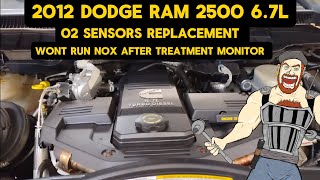

The information in this article is provided for general reference and educational purposes only. Vehicle specifications, procedures, and part compatibility can vary by production date, trim level, and region. Always consult your vehicle's factory service manual and verify part numbers before purchasing or performing repairs. Safety-critical components such as airbags, seat belts, and braking systems should be installed by a qualified professional.
- Dodge RAM 3500:
- 🧭 Diagnostic Flowchart
- 🎬 Helpful Videos
- What's Unique About the 2011-2012 Dodge RAM 3500
- Symptoms You May Notice
- Most Likely Causes
- Rare But Worth Checking
- Diagnosis Steps
- Parts You'll Likely Need
- Related Codes That Often Appear With This One
- Technical Service Bulletins (TSBs) & Recalls
- Platform-Specific Known Issues
- Mechanic-Grade Diagnostic Values
- Hidden / Shadow Codes Worth Checking
- Scan Tool Commands That Help
- Wiring & Ground Locations
- Real Owner Repair Stories
- When the Usual Fixes Don't Work
- OEM Part Supersession History
- Model Year Variations Within This Range
- 🎟️ Get 5% Off