

P0131 on 2012-2014 Ford Edge 2.0L EcoBoost: Causes and Fixes for O2 Sensor Low Voltage
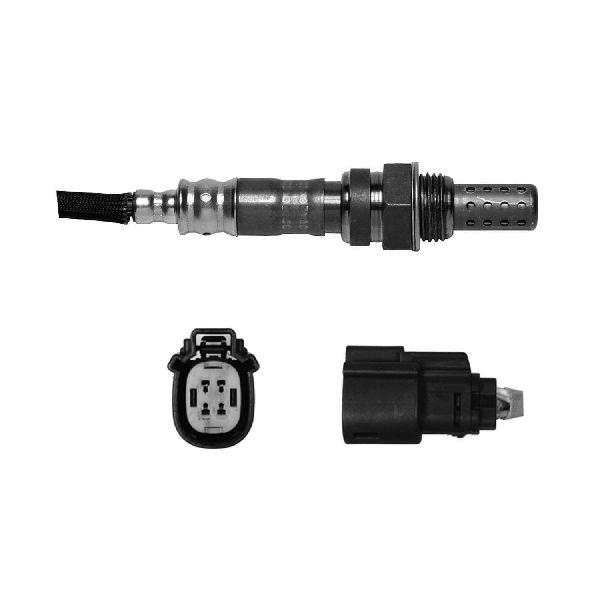
This code almost always indicates a failed upstream oxygen (O2) sensor. On the 2.0L EcoBoost, this is 'Bank 1, Sensor 1'. Replacing the sensor is the most common fix. Expect to pay $50-$100 for an aftermarket sensor or up to $180 for an OEM Motorcraft part. It's a moderately difficult DIY job due to the sensor's tight location, where it often seizes in the exhaust manifold.
- P0131 on a 2012-2014 Edge 2.0L points directly to the upstream oxygen sensor (Bank 1, Sensor 1).
- The most probable fix is to replace this sensor. It's a common failure part.
- Before replacing the sensor, perform a quick visual check for obvious exhaust leaks or damaged wiring, as these can also cause the code.
- The sensor is located in a tight spot behind the engine near the firewall, making replacement a moderately difficult DIY job.
- Ignoring this code will lead to poor fuel mileage and can cause damage to the catalytic converter over time.
What's Unique About the 2011-2014 Ford Edge
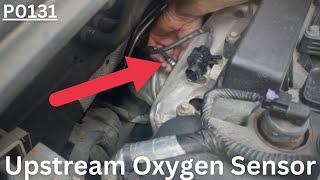
The 2.0L EcoBoost I4 engine was available on the Ford Edge from 2012-2014. On this inline four-cylinder engine, 'Bank 1' is the only bank of cylinders, so 'Bank 1, Sensor 1' refers to the single upstream O2 sensor. This sensor is located on the back of the engine near the firewall, just after the turbocharger outlet. Its position can make it difficult to access and remove without the proper tools, often requiring work from underneath the vehicle. Owners and mechanics frequently report the sensor becomes 'welded' or seized in the exhaust manifold due to heat cycles and corrosion, requiring significant force and penetrating oil to remove.
Symptoms You May Notice
- Check Engine Light is on
- Decreased fuel economy
- Rough engine idle or hesitation
- Reduced engine power and sluggish acceleration
- "Rotten egg" or sulfur smell from the exhaust
- Replacing the downstream (Sensor 2) oxygen sensor. P0131 specifically refers to Sensor 1, the upstream sensor before the catalytic converter.
- Replacing the catalytic converter. While a bad sensor can eventually damage the converter, the converter itself does not cause this code.
Most Likely Causes
- Failed Upstream Oxygen Sensor (Bank 1, Sensor 1) 🔴 High Probability → Shop Oxygen Sensor Oxygen sensors are wear-and-tear items operating in a harsh exhaust environment. On the 2.0L EcoBoost, the sensor is known to seize in the exhaust manifold, making removal difficult. Contamination and age are the most common reasons for failure.
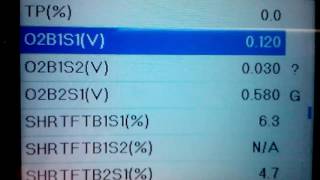
How to confirm: Use an OBD-II scanner to monitor the live data for the 'O2S11' voltage. A healthy sensor's voltage should fluctuate rapidly between approximately 0.1V and 0.9V. 🎬 See how to monitor O2 sensor live data with a scanner. If the voltage is stuck low (e.g., below 0.4V), the sensor is likely faulty.
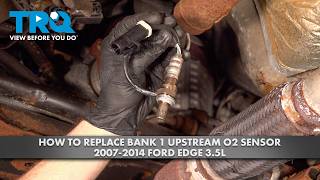
Typical fix: Replace the Bank 1, Sensor 1 oxygen sensor. The sensor is located on the exhaust manifold/turbo outlet before the catalytic converter. Access is tight, typically from underneath the vehicle. An oxygen sensor socket and significant leverage are often required. 🎬 Watch: Step-by-step guide to replacing the Edge upstream O2 sensor. Pre-soaking the sensor with penetrating oil is highly recommended.
Est. part cost: $50-$180 - Exhaust Leak Before the Sensor 🟡 Medium Probability Leaks can occur at the exhaust manifold gasket or turbocharger connections. An exhaust leak allows outside air into the exhaust stream, which the O2 sensor reads as a lean condition (low voltage), triggering the code.
How to confirm: Perform a visual inspection of the exhaust manifold and all connections between the engine and the O2 sensor. Listen for an audible ticking or hissing sound that changes with engine RPM. A smoke test can also be used to pinpoint the location of a leak.
Typical fix: Repair the source of the leak. This may involve replacing a gasket or tightening flange bolts.
Est. part cost: $10-$150 - Damaged Wiring or Connectors ⚪ Low Probability The wiring harness for the O2 sensor is close to hot exhaust components and can become brittle, melted, or corroded over time. Manufacturer service bulletin TSB 16-0163 notes that various drivability issues and P0131 can be associated with wiring harness concerns on similar Ford platforms.
How to confirm: Visually inspect the entire wiring harness and connector for the upstream O2 sensor. Check for any signs of melting, chafing, or broken wires. Check the connector pins for corrosion or damage. A technician may find that the harness is pulled too tight, causing an intermittent connection.
Typical fix: Repair the damaged section of the wiring harness or replace the connector pigtail.
Est. part cost: $15-$50
Rare But Worth Checking
- Low Fuel Pressure: If the engine is genuinely running lean due to a weak fuel pump or clogged filter, the O2 sensor will correctly report a low voltage. This would typically be accompanied by other codes like P0171 (System Too Lean).
- Vacuum Leak: A significant vacuum leak can cause a lean condition that the O2 sensor detects. This is usually accompanied by a P0171 code and a rough or high idle.
- Faulty Powertrain Control Module (PCM): In very rare cases, the PCM itself can be faulty, causing it to misinterpret the O2 sensor signal or fail to provide the correct reference voltage. This should only be considered after all other possibilities have been exhausted.
- Environmental Contamination: Manufacturer bulletins TSB 19-2091 and TSB 17-0014 describe instances where undesired water entry into the engine compartment directly over power-train components can lead to an illuminated MIL and code P0131.
Diagnosis Steps
- Connect an OBD-II scanner to confirm the P0131 code and check for any other related codes.
- View the live data stream for the Bank 1, Sensor 1 O2 sensor (O2S11). Observe the voltage at idle and while driving.
- A healthy sensor will show voltage rapidly fluctuating between ~0.1V and ~0.9V. If the voltage is stuck consistently below 0.4V, proceed with further diagnosis.
- Perform a thorough visual inspection of the exhaust system from the engine to the catalytic converter. Look and listen for any signs of an exhaust leak.
- Inspect the O2 sensor's wiring harness and connector for any signs of melting, chafing, corrosion, or loose connections.
- If no exhaust leaks or wiring issues are found, the oxygen sensor itself is the most likely culprit. For this vehicle, it is highly recommended to apply penetrating oil to the base of the sensor and let it soak before attempting removal.
- Before replacing, you can test the sensor's heater circuit by checking for resistance between the two heater wires on the sensor side. An open circuit (no reading) or a reading outside of the typical 2-14 ohm range indicates a failed heater.
- Replace the Bank 1, Sensor 1 oxygen sensor using a proper O2 sensor socket.
- Clear the trouble codes and perform a test drive to ensure the repair was successful.
Parts You'll Likely Need
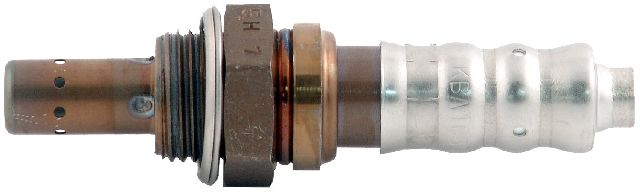
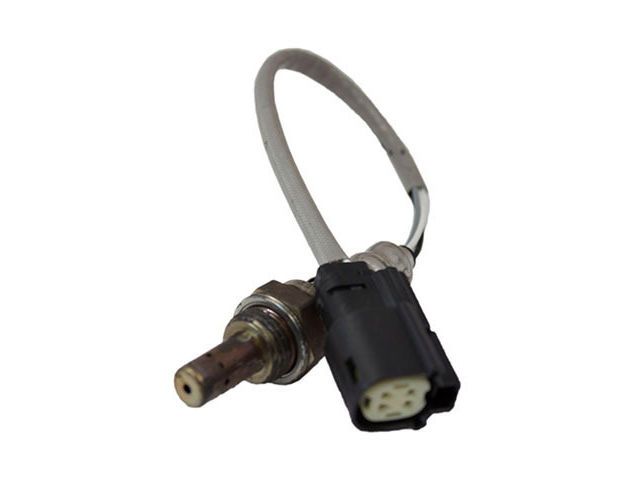
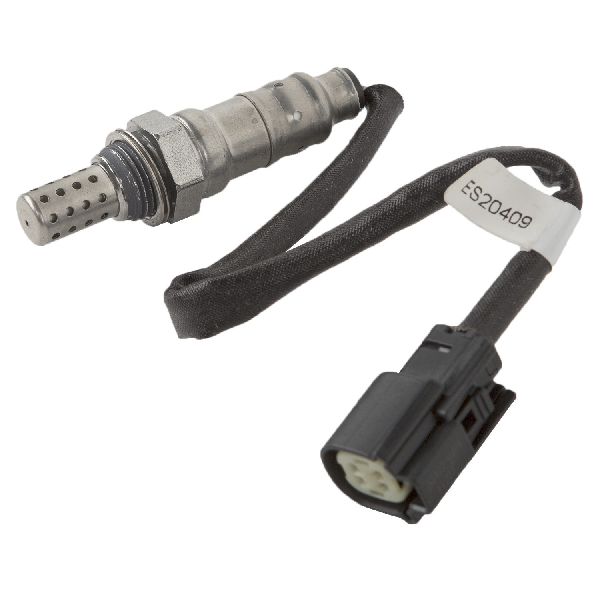
- Upstream Oxygen Sensor (Air/Fuel Ratio Sensor)
(OEM #DY-1182 (Motorcraft) or 8F9Z-9F472-H (Motorcraft, per Focus TSB))— This is the primary sensor responsible for the signal that triggers code P0131. It is a common wear item and the most frequent cause of the fault. The original equipment supplier is NTK.
Trusted brands: Motorcraft, NTK (OEM Supplier, Part #27014), Bosch, Denso
OEM price range: $110-$180
Aftermarket price range: $50-$100
Related Codes That Often Appear With This One
- P0171 — This code for 'System Too Lean (Bank 1)' can appear with P0131 if there is a legitimate lean condition (like a vacuum or exhaust leak) that the O2 sensor is correctly detecting.
- P0030 — This code indicates a fault in the heater circuit of the same O2 sensor. Seeing them together strongly suggests the sensor itself has failed and needs replacement.
Technical Service Bulletins (TSBs) & Recalls
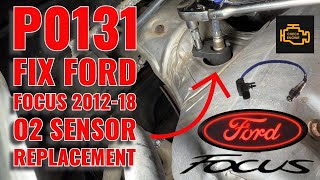
- TSB for 2012-2013 Ford Focus (platform mate) with 2.0L GDI engine: Addresses codes P0131/P0132 and recommends replacement of the upstream heated oxygen sensor with part number 8F9Z-9F472-H. This strongly corroborates the sensor itself as the likely failure point for the same engine family in the Edge. 🎬 Watch: Fixing P0131 on the 2.0L engine platform.
- TSB 17-0014 and TSB 19-2091: These bulletins note that P0131 can be triggered by undesired water entry into the engine compartment, which may affect electrical connections or sensor performance.
- TSB 16-0163: Highlights that P0131 may be stored in the PCM memory alongside various drivability issues, often linked to wiring harness integrity on related Ford models.
Mechanic-Grade Diagnostic Values
- O2 Sensor Heater Circuit Resistance — expected: Between 2 and 14 Ohms when measured across the two heater circuit pins (often same-colored wires) on the sensor connector.. Failure: A reading of infinity or 'OL' (Open Loop) indicates a broken heater element. A reading of zero or near-zero indicates a short. Both require sensor replacement.
- Mode $06, Test ID $81, Component ID $11 — expected: This test monitors the O2 sensor's voltage amplitude (how high and low it swings). The raw data must be compared to the manufacturer's MIN/MAX limits for a pass/fail result.. Failure: A test result that falls outside the specified MIN/MAX range indicates the sensor is not switching properly, even if it hasn't yet set a hard P0131 code. This confirms a degraded sensor.
Hidden / Shadow Codes Worth Checking
- Mode $06, Test ID $81: This is not a DTC, but a non-continuous monitor test result for 'O2 Sensor Monitor Bank 1'. Specifically, Component ID $11 (sometimes listed as 0x11) tracks the upstream sensor's signal amplitude. A failure here is a strong indicator that the sensor is failing and is the root cause of the P0131 code. (see via A professional scan tool or advanced DIY tool like FORScan that can display Mode $06 test results.)
Scan Tool Commands That Help
- FORScan / Professional Scan Tool: Live Data Graphing (PID: O2S11) — This is the primary diagnostic step. Graphing the Bank 1 Sensor 1 voltage allows a technician to visually confirm if the sensor is stuck low (bad sensor), biased low (possible exhaust leak), or fluctuating correctly. A healthy sensor should produce a wave-like pattern oscillating between approximately 0.1V and 0.9V.
- FORScan / Ford IDS: Clear All Adaptations / KAM Reset — After replacing the oxygen sensor, it is good practice to reset the Keep Alive Memory (KAM). This forces the PCM to relearn the fuel trims with the new, accurate sensor data, which can resolve rough idle or poor performance issues more quickly.
Wiring & Ground Locations
- G103 / G104 — On the first generation Edge, key engine bay grounds are located on the front left side of the engine compartment, near the battery and battery junction box.. The O2 sensor heater circuit relies on a solid ground connection. While a dedicated ground wire is used, that wire ultimately terminates at a chassis ground. A corroded or loose main ground in this area can cause intermittent and difficult-to-diagnose electrical issues, including sensor codes.
- Upstream O2 Sensor Connector — The connector for the upstream O2 sensor is located at the back of the engine, near the firewall, attached to a bracket.. The wiring harness in this location is susceptible to being pulled too taut, which can cause intermittent open circuits and trigger a P0131. It is also exposed to heat, which can make the connector brittle and difficult to unplug without breaking the locking tab.
Real Owner Repair Stories
- YouTube channel 'Carl's Garage' (2012 Ford Focus 2.0L (platform mate with identical engine and sensor)) — Intermittent P0131 code that would come and go.
❌ Tried (didn't work) Initial scan showed the code was not currently active, and live data looked fine at that moment.
✅ What actually fixed it The wiring harness for the upstream O2 sensor was too short and was being pulled taut, causing an intermittent connection. Replacing the faulty sensor with a new one that had a slightly longer harness provided the necessary slack and permanently resolved the code.
OEM Part Supersession History
Unknown→DY-1182 (Motorcraft Service Part Number)— Standard part lifecycle updates.
Heads up: While DY-1182 is the correct service part, some forum users report preferring NTK (the OEM supplier) or Denso over aftermarket Bosch sensors for Ford applications, citing better longevity and compatibility.
Diagnostic Flowchart
Other Known Issues on This Vehicle
Issues unrelated to this code that are worth knowing about as an owner of this generation:
- Coolant Intrusion into Cylinders 🔴 High — More common on the updated 2015+ 2.0L EcoBoost, but a known issue for the engine family. Can occur due to a porous engine block design. (Ref: TSB 19-2346, TSB 22-2229)
- Cracked Flexplate 🔴 High — A known issue on 2.0L EcoBoost engines, causing a rattling noise from the bellhousing area at idle. Can lead to no-start or loss of power. (Ref: TSB 20-2212; Customer Satisfaction Program 22N12)
- Power Transfer Unit (PTU) Failure (AWD Models) 🔴 High — Common on AWD models. The PTU is located near the hot exhaust, which can cook the gear oil, leading to seal failure, fluid leaks, and eventual unit failure. Often requires full replacement. (Ref: No specific recall, but widely documented in owner forums.)
- Cracked Fuel Line Pulse Damper 🔴 High — Subject to a recall. The damper housing can crack, leading to a fuel leak and increasing the risk of a fire. (Ref: NHTSA Recall 12V438000 (Ford Recall 12S33))
- Halfshaft Disengagement 🔴 High — Subject to a recall. An improperly installed halfshaft retention circlip can allow the halfshaft to disengage, causing a loss of motive power. (Ref: NHTSA Recall 14V293000 (Ford Recall 14S10))
Used vs. New Parts: Buying Guide for This Vehicle
When a used part is the smart pick: Never. An oxygen sensor is a sensitive wear-and-tear item with a finite lifespan. The cost savings of a used sensor are minimal compared to the labor required for replacement and the high risk of installing a part that is already near the end of its life or has hidden damage.
What to inspect on the donor part:
- Not applicable as used sensors are not recommended.
OEM-only on this vehicle (don't cheap out):
- While not strictly 'OEM-only', using the OEM Motorcraft part or a sensor from the original equipment supplier (NTK) is highly recommended to ensure proper fitment, harness length, and performance.
Aftermarket brands forum-validated for this vehicle:
- NTK (OEM supplier)
- Denso
Brands owners have reported issues with on this vehicle:
- Some owners on Ford forums have reported premature failures or incompatibility with Bosch aftermarket sensors on Ford vehicles, despite Bosch being a major OEM supplier for other brands.
Documented NHTSA Reports
NHTSA ODI #11443669
Symptoms: An owner reported P0131 (O2 Circuit Low Voltage Bank 1, Sensor 1) occurring alongside EVAP codes P144A and P1450. The vehicle would stall after refueling and hesitate at low speeds.
NHTSA ODI #10219019
Symptoms: A report describes the Check Engine Light revealing P0131 alongside lean codes P0171 and P0174. The owner attempted repairs by replacing isolator bolts and various port and clamshell seals.
Real Owner Stories
Aggregated from forums and TSBs cited above. Mileages and costs reflect what owners reported in those sources.
2012 Ford Edge 2.0L EcoBoost — 45000 miles
Symptoms: High fuel trims and concerns about potential MAF or low fuel pressure issues.
What fixed it: Diagnostic path suggested oxygen sensor replacement based on related readings.
Source hint: Ford Edge Forum - O2 sensor bad at 45k miles
2012 Ford Focus 2.0L (Platform Mate)
Symptoms: Check engine light for P0131; owner described the sensor as being 'completely welded in there' when attempting removal.
What fixed it: Replacement of the upstream O2 sensor.
Source hint: Reddit r/FordFocus - 'My first check engine scare'
2016 Ford Edge 2.0L EcoBoost
Symptoms: Sensor failure; owner noted the sensor is 'buried behind the engine near the firewall' and difficult to torque from above.
What fixed it: Replacement of the upstream oxygen sensor, noting the difficulty of access.
Source hint: Ford Edge Forum - Upstream Oxygen Sensor Replacement on 2.0L Edge
Related OBD-II Codes
Frequently Asked Questions
Is there a specific TSB for the P0131 code on the 2.0L EcoBoost engine?
Why is the oxygen sensor so difficult to remove on my 2011-2014 Ford Edge?
Where is the Bank 1, Sensor 1 oxygen sensor located on the 2.0L Edge?
Can an exhaust leak cause a P0131 code on my Ford Edge?
Are there other common mechanical issues on the 2.0L EcoBoost that I should check while diagnosing this?
What should the voltage reading be for a healthy 'O2S11' sensor on my Edge?
Helpful Videos
We Have This Part in Stock

The information in this article is provided for general reference and educational purposes only. Vehicle specifications, procedures, and part compatibility can vary by production date, trim level, and region. Always consult your vehicle's factory service manual and verify part numbers before purchasing or performing repairs. Safety-critical components such as airbags, seat belts, and braking systems should be installed by a qualified professional.
- Ford Edge:
- 🧭 Diagnostic Flowchart
- 🎬 Helpful Videos
- 🛍️ Shop This Part
- What's Unique About the 2011-2014 Ford Edge
- Symptoms You May Notice
- Most Likely Causes
- Rare But Worth Checking
- Diagnosis Steps
- Parts You'll Likely Need
- Related Codes That Often Appear With This One
- Technical Service Bulletins (TSBs) & Recalls
- Mechanic-Grade Diagnostic Values
- Hidden / Shadow Codes Worth Checking
- Scan Tool Commands That Help
- Wiring & Ground Locations
- Real Owner Repair Stories
- OEM Part Supersession History
- Other Known Issues on This Vehicle
- Used vs. New Parts: Buying Guide for This Vehicle
- Documented NHTSA Reports
- NHTSA ODI #11443669
- NHTSA ODI #10219019
- Real Owner Stories
- 2012 Ford Edge 2.0L EcoBoost — 45000 miles
- 2012 Ford Focus 2.0L (Platform Mate)
- 2016 Ford Edge 2.0L EcoBoost
- Related OBD-II Codes
- Frequently Asked Questions
- 🎟️ Get 5% Off