

P0131 on 1997-2004 Ford F-150 4.6L V8: Causes, Symptoms, and Fixes
This code indicates a low voltage signal from the upstream oxygen sensor on the passenger side (Bank 1). The most common fix is replacing the O2 sensor itself, which is a DIY-friendly job with parts costing between $50 and $180. Before replacing, it's wise to check for exhaust leaks near the manifold, as this is another common cause.
- P0131 on your F-150 means the passenger-side upstream O2 sensor is reading a low voltage.
- The most likely cause is a failed O2 sensor, which is a standard wear item.
- Before replacing the sensor, do a quick visual check for obvious exhaust leaks (soot marks) or damaged wiring near the sensor.
- This is a DIY-friendly repair for most home mechanics with the right tool (an O2 sensor socket).
- Ignoring this code will lead to poor gas mileage and can eventually damage your expensive catalytic converter.
What's Unique About the 1997-2004 Ford F-150
On the 10th generation F-150 with the 4.6L V8, the P0131 code is a very straightforward fault that almost always points to a common wear-and-tear part. Unlike some other vehicles where this code could be caused by complex software or electrical issues, on this truck, the cause is typically a failed sensor or a simple physical problem like an exhaust leak. The location of the sensor on the passenger side (Bank 1) can be tight to access, but it's a well-documented repair in owner communities. It's crucial to confirm Bank 1 is the passenger side for this specific vehicle to avoid replacing the wrong sensor.
Generation note: This range covers the 10th generation (1997-2003) and the 2004 "Heritage" model, which was a carryover of the 10th gen. The all-new 11th generation also launched in 2004. While the engine and code meaning are the same, sensor locations and wiring may differ slightly between the 10th and 11th generation designs. This guide primarily focuses on the 10th generation.
Symptoms You May Notice
- Check Engine Light is on
- Poor fuel economy
- Rough or unstable idle
- Hesitation or loss of power during acceleration
- Strong smell of gasoline from the exhaust
- In some cases, no noticeable symptoms other than the Check Engine Light
- Replacing the catalytic converter. A P0131 code points to the upstream sensor, which is responsible for fuel trim, not the downstream sensor that monitors converter efficiency (which would set a P0420 code).
- Replacing the fuel injectors without proper diagnosis. While a clogged injector can cause a lean condition, it's less common than a simple sensor failure and would usually present with a misfire code for a specific cylinder.
- Replacing the wrong O2 sensor. It is critical to confirm that Bank 1 is the passenger side and Sensor 1 is the upstream (pre-catalyst) sensor.
Most Likely Causes
- Failed Bank 1, Sensor 1 Oxygen Sensor 🔴 High Probability → Shop Oxygen Sensor Oxygen sensors are wear items exposed to extreme heat and exhaust gases. They typically have a finite lifespan (around 100,000 miles) and fail due to age and contamination from carbon, oil, or coolant.
How to confirm: Use an OBD-II scanner with live data capability. A healthy upstream O2 sensor's voltage should fluctuate rapidly between ~0.1V and ~0.9V. If the voltage for 'O2S11' is stuck flat near 0.1V or is very slow to respond, the sensor has failed.
Typical fix: Replace the upstream oxygen sensor on the passenger side. This requires a 22mm or 7/8" O2 sensor socket and penetrating oil for the threads. Access can be tight; some owners find it easier after removing the passenger-side front wheel and wheel well liner.
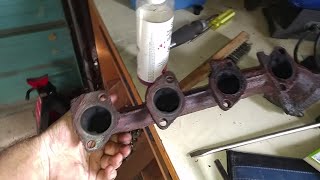
Est. part cost: $50-$180 - Exhaust Leak 🟡 Medium Probability The cast iron exhaust manifolds on the 4.6L V8 are known to develop cracks or the manifold studs can rust and break, causing a leak. A leak before the O2 sensor allows outside air into the exhaust stream, which the sensor reads as a lean condition (low voltage).
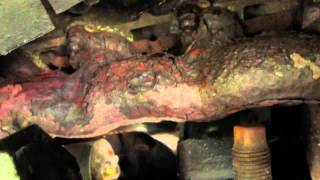
How to confirm: Perform a visual inspection of the exhaust manifold and downpipe on the passenger side for black soot trails or broken studs, which indicate a leak. A common sign is a 'ticking' noise from the engine bay, especially when cold. A smoke machine test is the most definitive way to find leaks.
Typical fix: Replace the leaking exhaust manifold gasket or the entire manifold if it is cracked. This can range from a simple gasket swap to a more involved repair requiring extraction of broken studs. 🎬 Watch: Pro tips for fixing a leaking exhaust manifold
Est. part cost: $20-$300 - Damaged Wiring or Connector ⚪ Low Probability The O2 sensor wiring is routed near hot exhaust components and can become melted, brittle, or chafed over time, leading to a short or open circuit. Rodents can also chew on the wiring.
How to confirm: Visually inspect the entire length of the O2 sensor's wiring harness and its 4-pin connector for signs of melting, burning, corrosion, or physical damage. Check for secure connections at both the sensor and the main harness.
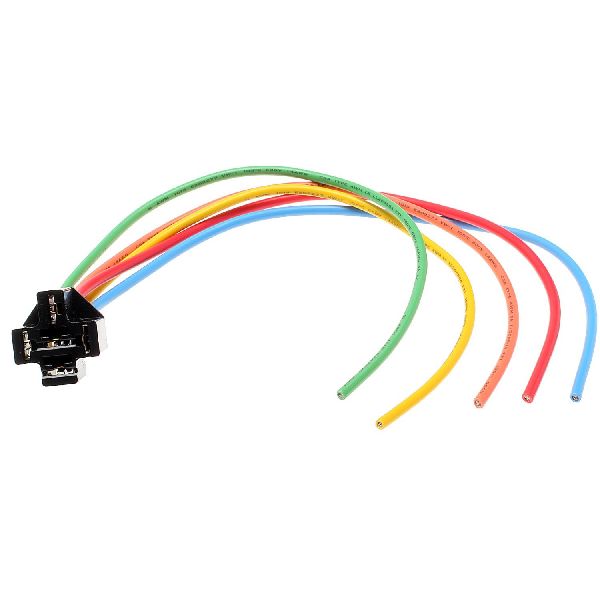
Typical fix: Repair the damaged section of wire or replace the pigtail connector. Ensure the repaired harness is secured away from heat sources using zip ties.
Est. part cost: $15-$50 - Vacuum Leak ⚪ Low Probability The 4.6L 2V engine has several rubber and plastic vacuum lines that can become brittle and crack with age. A common failure point is the PCV hose elbow located at the back of the intake manifold, 🎬 See how to replace a leaking PCV hose and valve which can collapse or split.
How to confirm: A significant vacuum leak can cause a genuinely lean condition that the O2 sensor correctly reports. This is often accompanied by a P0171 code. Check for cracked or disconnected vacuum hoses, particularly the PCV lines and intake manifold gaskets. A smoke test is the most effective way to find leaks.
Typical fix: Replace the leaking vacuum hose or gasket. The PCV elbow is an inexpensive part and a common maintenance item.
Est. part cost: $5-$100
Rare But Worth Checking
- Low Fuel Pressure: If the engine is truly running lean due to a weak fuel pump or clogged filter, the O2 sensor will correctly report a low voltage. This would likely be accompanied by other codes like P0171 and noticeable performance issues under load.
- Faulty Powertrain Control Module (PCM): This is extremely rare. The PCM itself can fail, but all other potential causes should be exhaustively ruled out before considering PCM replacement. This should be the absolute last resort.
Diagnosis Steps
- Read the code(s) with an OBD-II scanner and check for any other pending or stored codes. Note any freeze frame data.
- Visually inspect the passenger-side exhaust manifold and downpipe for signs of an exhaust leak (black soot, broken studs, audible ticking noise).
- Inspect the O2 sensor's wiring harness and connector for any signs of melting, chafing, or corrosion.
- Using a scanner with live data, monitor the voltage for 'O2S11' (Bank 1, Sensor 1) with the engine warm and at a steady idle. A healthy sensor will show voltage fluctuating rapidly between 0.1V and 0.9V.
- If the voltage is stuck below 0.2V and does not respond to changes in throttle, the sensor is likely bad.
- If the voltage is fluctuating but you also have a P0171 code, suspect a vacuum leak or exhaust leak.
- If you suspect a vacuum leak, perform a smoke test on the intake system, paying close attention to the PCV hoses at the rear of the intake manifold.
- If all other checks are normal, replace the Bank 1, Sensor 1 oxygen sensor. It is advisable to use a Motorcraft or other high-quality OEM-style replacement part.
Parts You'll Likely Need
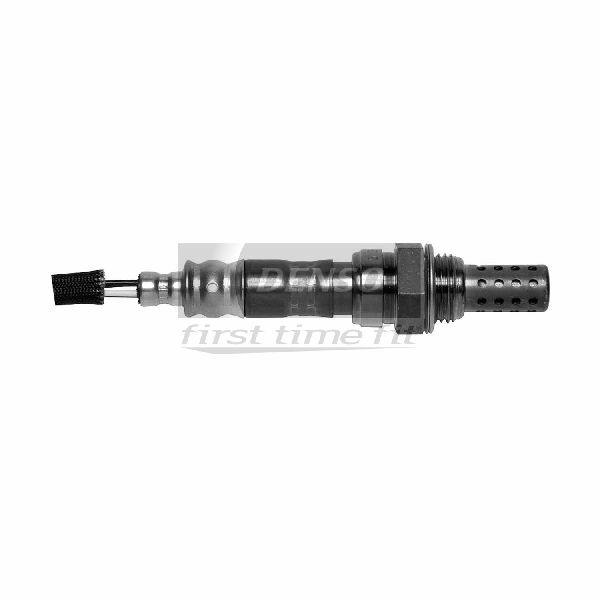
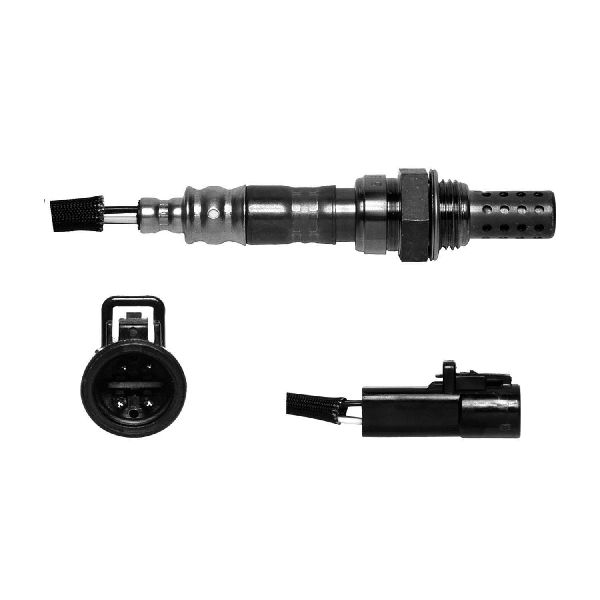
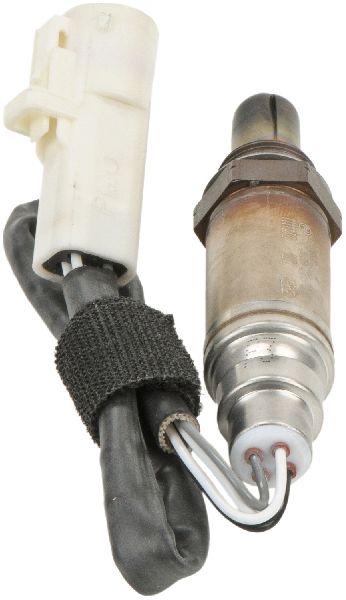
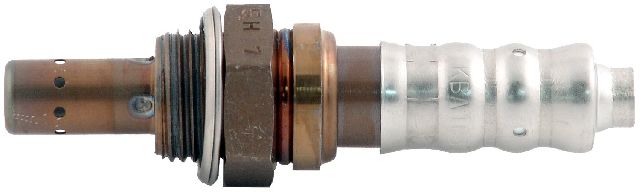
- Upstream Oxygen Sensor (Bank 1, Sensor 1)
(OEM #XC2Z-9F472-AA)— This sensor is a common wear-and-tear item and is the most frequent cause of a P0131 code. It is located on the passenger side, before the catalytic converter. The OEM part number XC2Z-9F472-AA has been superseded by GU2Z-9G444-A.
Trusted brands: Motorcraft, Bosch, Denso, NGK/NTK
OEM price range: $100-$180
Aftermarket price range: $30-$100
Related Codes That Often Appear With This One
- P0171 — System Too Lean (Bank 1). This code often appears with P0131. If there is a real vacuum or exhaust leak, the O2 sensor is correctly detecting the lean condition, triggering both codes. If the sensor itself has failed and is stuck low, the PCM may interpret this as a lean condition and trigger P0171 as a result.
- P0151 — O2 Sensor Circuit Low Voltage (Bank 2, Sensor 1). If both P0131 and P0151 appear together, it strongly suggests a problem common to both engine banks, such as a large vacuum leak, low fuel pressure, or a faulty Mass Airflow (MAF) sensor, rather than two independent sensor failures.
Platform-Specific Known Issues
- A user on F150online Forums with a 1997 4.6L experienced O2 sensor codes and a rough idle. After replacing the sensors with Motorcraft parts, the Bank 2 (driver's side) sensors still showed issues on a live data graph, indicating that even new parts can be faulty or that a wiring issue might be the underlying cause. URL: https://www.f150online.com/forums/1997-2003-f-150/512932-o2-sensor-issues-97-4-6-a.html
Mechanic-Grade Diagnostic Values
- O2 Sensor Heater Resistance — expected: 3 to 30 Ohms. Failure: A reading outside this range indicates a failed internal heater element.
- PCM Low Voltage Trigger Threshold — expected: Voltage should fluctuate. PCM sets P0131 if voltage stays below 0.4V for over 20 seconds.. Failure: Live data on a scan tool shows O2S11 voltage stuck below 0.4V.
- Mode 6, Test ID $01, Comp ID $11 — expected: Voltage amplitude should be greater than 0.5 volts.. Failure: A reported value below the minimum threshold indicates the sensor is not switching properly.
Scan Tool Commands That Help
- Ford IDS, FORScan, or high-end OBD-II scanner: Clear/Reset Keep Alive Memory (KAM) — This should be performed after replacing the oxygen sensor. It forces the PCM to erase the long-term fuel trim adjustments it 'learned' from the faulty sensor and start fresh with the new one. Skipping this can lead to poor running until the system re-learns on its own.
Wiring & Ground Locations
- PCM Connector Pin 60 — At the 104-pin PCM connector, located in the engine bay, typically on the driver's side near the firewall.. This is the pin for the Bank 1 Sensor 1 (HO2S11) signal. The wire color is typically Gray/Light Blue (GRY/LT BLU). This is the specific pin to test for continuity back from the sensor connector.
- PCM Connector Pin 93 — At the 104-pin PCM connector.. This is the control circuit for the Bank 1 Sensor 1 heater. The wire color is typically Red/White (RED/WHT). A fault in this circuit can cause the sensor to be slow to respond, contributing to codes.
- PCM Connector Pin 91 — At the 104-pin PCM connector.. This is the Signal Return (Sensor Ground) for multiple sensors, including the O2 sensor. The wire is typically Gray/Red (GRY/RED). A poor connection here can affect sensor readings.
- G104 — Located on the LH (driver's side) rear of the engine compartment.. This is a primary engine bay ground point. A loose or corroded G104 can introduce electrical noise and voltage drops that may affect sensor readings and cause intermittent or false codes.
Real Owner Repair Stories
- F150online Forums (2003 Ford F-150) — Check Engine Light with codes P0171 (System Too Lean Bank 1) and P0174 (System Too Lean Bank 2).
❌ Tried (didn't work) Initial diagnosis focused on a general vacuum leak affecting both banks.
✅ What actually fixed it The root cause was a cracked rubber elbow on the PCV hose assembly at the back of the intake manifold. Replacing the two small rubber elbows resolved the unmetered air leak and cleared both lean codes.
OEM Part Supersession History
XC2Z-9F472-AA→GU2Z-9G444-A— Standard part number update and consolidation by Ford.
Heads up: The new part number is the correct service replacement for the original. No known incompatibility issues.XC2Z-9F472-BB→N/A— This is another valid OEM part number for upstream sensors in this application, sometimes specified for the 5.4L but often cross-compatible.
Heads up: Always verify fitment with VIN. Connectors (round vs. gray) can vary. XC2Z-9F472-BB is noted as having a round connector.
Model Year Variations Within This Range
- 1997-1998 (and some early 1999): These trucks were equipped with the Non-PI (NPI) 4.6L V8 engine. While the P0131 code and diagnosis are fundamentally the same, the intake manifold and some vacuum routing differ from the later PI engines.
- 1999-2004: These trucks have the PI ('Performance Improved') 4.6L V8, which features different cylinder heads and intake manifold. This change is significant for any diagnosis involving vacuum leaks, as the intake manifold gaskets and PCV hose routing (a common leak point) are different from NPI engines.
Diagnostic Flowchart
Other Known Issues on This Vehicle
Issues unrelated to this code that are worth knowing about as an owner of this generation:
- Spark Plug Blowout 🔴 High — Common on 2-valve engines, especially pre-2003 models. Caused by insufficient thread engagement in the aluminum cylinder heads. Often occurs without warning. (Ref: No official recall, but a well-known issue. Repair involves installing a thread insert like a Time-Sert.)
- Cracked Plastic Intake Manifold 🔴 High → Shop Engine Intake Manifold — Very common on 1996-2001 models with the all-plastic intake manifold. The front coolant crossover is prone to cracking, causing a major coolant leak. (Ref: Subject of a class-action lawsuit and an extended warranty program (now expired) for certain model years.)
- Exhaust Manifold Warping and Stud Failure 🟠 Medium → Shop Exhaust Manifold — Common across all years. The cast iron manifolds can warp, and the steel studs securing them to the head can rust and break, causing an exhaust leak recognized by a ticking sound.
- Timing Chain Guide and Tensioner Wear 🟠 Medium — The plastic timing chain guides and tensioners can wear out or break, typically after 100,000-150,000 miles, leading to chain rattle on startup or, in severe cases, timing jump.
Used vs. New Parts: Buying Guide for This Vehicle
When a used part is the smart pick: For this repair, a used part is generally not recommended for the oxygen sensor itself. However, if the cause is a cracked exhaust manifold, a used manifold from a reputable salvage yard can be a cost-effective alternative to a new OEM part.
Donor-vehicle mileage cap: roughly under 100000 miles for the part to have meaningful remaining life.
What to inspect on the donor part:
- For an exhaust manifold: check for hairline cracks, especially around the collector and mounting flanges.
- Ensure all mounting studs are intact or can be easily removed.
- Verify the mating surface is not excessively warped or pitted.
OEM-only on this vehicle (don't cheap out):
- While not strictly 'OEM-only', using a Motorcraft oxygen sensor is highly recommended by forum veterans to avoid compatibility and premature failure issues sometimes seen with budget aftermarket brands.
Aftermarket brands forum-validated for this vehicle:
- NTK (NGK)
- Denso
- Bosch
Brands owners have reported issues with on this vehicle:
- Unnamed, no-brand sensors from online marketplaces are frequently reported to fail quickly or provide inaccurate readings.
Real Owner Stories
Aggregated from forums and TSBs cited above. Mileages and costs reflect what owners reported in those sources.
1997 Ford F-150 4.6L V8
Symptoms: The owner experienced O2 sensor codes and a rough idle.
What fixed it: Replaced the sensors with Motorcraft parts, though the owner noted that even new parts or underlying wiring issues could cause persistent live data graph issues.
Source hint: f150online.com thread titled 'o2-sensor-issues-97-4-6-a.html' cited in vehicle_specific_issues
1999 Ford F-150 4.6L V8
Symptoms: The owner reported a P0131 code specifically.
What fixed it: The diagnostic process involved using live data graphs to troubleshoot faulty sensor readings.
Source hint: f150online.com forum citation
Related OBD-II Codes
Frequently Asked Questions
Where is the Bank 1, Sensor 1 oxygen sensor located on my 4.6L V8 F-150?
I hear a ticking noise from the engine bay of my F-150; could this be related to the P0131 code?
Is there a specific vacuum line on the 4.6L engine known to cause lean codes like P0131?
What tools do I need to replace the O2 sensor on my 1997-2004 F-150?
Should I use a specific brand of replacement sensor for my Ford?
Could a cracked intake manifold be causing my P0131 code?
Helpful Videos

We Have This Part in Stock


The information in this article is provided for general reference and educational purposes only. Vehicle specifications, procedures, and part compatibility can vary by production date, trim level, and region. Always consult your vehicle's factory service manual and verify part numbers before purchasing or performing repairs. Safety-critical components such as airbags, seat belts, and braking systems should be installed by a qualified professional.
- Ford F-150:
- 🧭 Diagnostic Flowchart
- 🎬 Helpful Videos
- 🛍️ Shop This Part
- What's Unique About the 1997-2004 Ford F-150
- Symptoms You May Notice
- Most Likely Causes
- Rare But Worth Checking
- Diagnosis Steps
- Parts You'll Likely Need
- Related Codes That Often Appear With This One
- Platform-Specific Known Issues
- Mechanic-Grade Diagnostic Values
- Scan Tool Commands That Help
- Wiring & Ground Locations
- Real Owner Repair Stories
- OEM Part Supersession History
- Model Year Variations Within This Range
- Other Known Issues on This Vehicle
- Used vs. New Parts: Buying Guide for This Vehicle
- Real Owner Stories
- 1997 Ford F-150 4.6L V8
- 1999 Ford F-150 4.6L V8
- Related OBD-II Codes
- Frequently Asked Questions
- 🎟️ Get 5% Off