

P0131 on 2012-2018 Ford Focus: O2 Sensor Low Voltage Causes and Fixes
On a 2012-2018 Ford Focus with the 2.0L GDI engine, P0131 almost always means the upstream oxygen sensor (Bank 1, Sensor 1) has failed. This sensor is critical for fuel mixture and its failure leads to poor fuel economy. Replacing this sensor is the most common and effective fix. Expect to pay $40-$80 for an aftermarket sensor or $100-$150 for an OEM Motorcraft part. It's a very accessible and DIY-friendly repair located at the back of the engine on the exhaust manifold.
- P0131 on a 2012-2018 Focus points directly to a problem with the upstream oxygen sensor (Bank 1, Sensor 1).
- The most probable fix is to replace the upstream O2 sensor. This is a common wear item and a DIY-friendly job.
- Before replacing parts, check the sensor's wiring for damage and the exhaust manifold for leaks.
- Do not confuse the upstream (Sensor 1) with the downstream (Sensor 2) sensor.
- Be aware that a faulty canister purge valve (CPV) can cause similar symptoms, which is a known issue on these cars with an associated recall (18S32).
What's Unique About the 2012-2018 Ford Focus
The 2012-2018 Ford Focus (Mk3) primarily uses a 2.0L four-cylinder GDI engine, which has only one bank of cylinders, making 'Bank 1' the only bank. Sensor 1 is the easily accessible upstream sensor right on the exhaust manifold. While the code points directly to the O2 sensor circuit, this generation of Focus is also known for issues with its canister purge valve (CPV). A faulty, stuck-open CPV can cause a rough idle, stalling, and other drivability problems that can sometimes be misdiagnosed as a sensor issue. Ford issued a recall (18S32) related to the purge valve due to its potential to cause vacuum issues in the fuel tank.
🎬 See how to replace the canister purge valve yourself.Symptoms You May Notice
- Check Engine Light is on
- Decreased fuel economy
- Rough or uneven idle
- Engine hesitation or misfires
- Failed emissions test
- Sluggishness from a stop
- Replacing the downstream (Sensor 2) oxygen sensor instead of the upstream (Sensor 1) sensor.
- Replacing the oxygen sensor when the actual problem is a faulty canister purge valve (CPV), a common issue on this Focus model that can cause similar symptoms like rough idle and stalling.
- Replacing the catalytic converter. A P0131 code is almost never caused by a bad converter; in fact, running with a P0131 for a long time can damage the converter.
Most Likely Causes
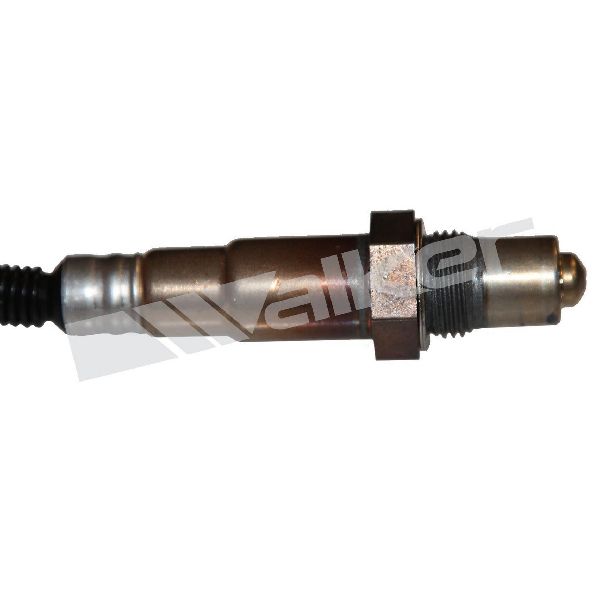
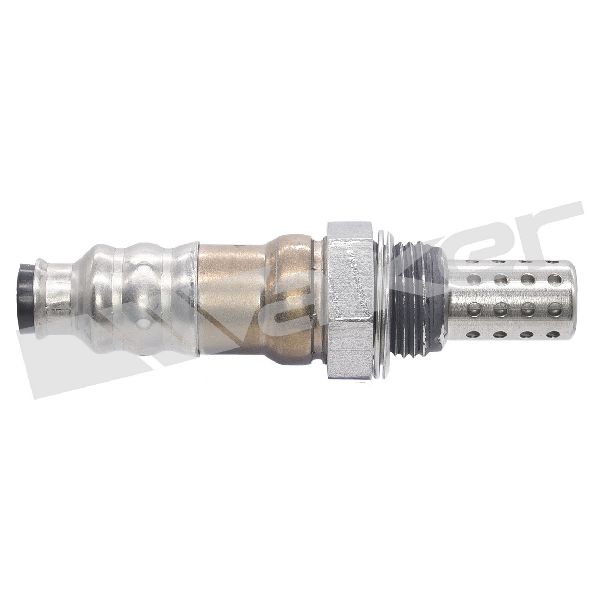
- Failed Upstream Oxygen Sensor (Bank 1, Sensor 1) 🔴 High Probability → Shop Oxygen Sensor Oxygen sensors are wear-and-tear items that degrade over time due to constant exposure to high-temperature exhaust gases. It is the most common reason for this code, and replacement is the most frequent successful repair.
How to confirm: Use a scan tool to monitor the live voltage data from the Bank 1 Sensor 1 O2 sensor. If the voltage is stuck below 0.4V (often near 0.1V) and does not fluctuate rapidly on a warm engine, the sensor is likely faulty. Visually inspect for contamination or physical damage. Replacement is often performed based on the code alone due to the high failure rate.
Typical fix: Replace the upstream oxygen sensor. The Motorcraft part number is often cited as DY1185 or CV6A9G444A.
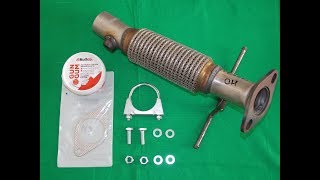
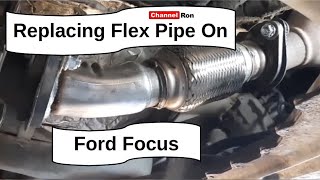
Est. part cost: $40-$150 - Exhaust Leak Before the O2 Sensor 🟡 Medium Probability → Shop Oxygen Sensor Cracks in the exhaust manifold or a failed gasket can allow fresh air to be drawn into the exhaust stream. This extra oxygen will cause the sensor to read a lean condition (low voltage), triggering the code. The flex pipe on these vehicles is also a common failure point that can cause leaks. 🎬 Watch this walkthrough on how to replace a damaged flex pipe.
How to confirm: Perform a visual inspection of the exhaust manifold and gaskets for black soot trails, indicating a leak. A common diagnostic technique is to use a smoke machine to pressurize the exhaust system (when cold) and watch for smoke escaping near the manifold or flex pipe.
Typical fix: Replace the leaking gasket or repair/replace the cracked exhaust manifold or flex pipe.
Est. part cost: $20-$300 - Damaged Wiring or Connectors ⚪ Low Probability The wiring harness to the O2 sensor can be damaged by heat from the exhaust, road debris, or improper repairs, leading to a short or open circuit. The connector itself can also suffer from corrosion. In one documented case, the wiring harness was too short and under tension, eventually causing an intermittent connection failure.
How to confirm: Visually inspect the entire wiring harness from the O2 sensor to its connection point for any signs of melting, chafing, corrosion, or loose connections. Use a multimeter to check for continuity and proper voltage at the connector.
Typical fix: Repair the damaged section of wiring or replace the connector pigtail.
Est. part cost: $15-$50
Rare But Worth Checking
- Faulty Powertrain Control Module (PCM): This is extremely rare. Before condemning the PCM, all other possibilities, including the sensor, wiring, and exhaust leaks, must be exhaustively ruled out. A PCM failure is a last resort diagnosis.
- Low Fuel Pressure: A legitimate lean condition caused by a weak fuel pump or clogged injectors could cause the O2 sensor to correctly read low voltage. This would typically be accompanied by other codes like P0171 or P219A and more severe drivability issues.
- Environmental Contamination: Manufacturer service bulletins, such as TSB Bulletin #TSB 19-2091 and TSB Bulletin #TSB 17-0014, note that P0131 can be triggered by undesired water entry into the engine compartment directly over powertrain components.
Diagnosis Steps
- Connect an OBD-II scanner and confirm that P0131 is the primary code. Check for any other codes (like P0171 or P219A) and review the freeze frame data to see the engine conditions when the code was set.
- Use the scanner's live data function to monitor the Bank 1 Sensor 1 (upstream) O2 sensor voltage. The voltage should fluctuate rapidly between approximately 0.1V and 0.9V on a warm, running engine. If it is stuck below 0.4V, the sensor or its circuit is faulty.
- Perform a thorough visual inspection of the oxygen sensor's wiring harness and connector. Look for melting, chafing, corrosion in the pins, or a loose connection.
- Inspect the exhaust manifold and the area around the sensor for black soot, which indicates an exhaust leak. Listen for any hissing or ticking sounds from the area when the engine is running. A cold-start is often the best time to hear an exhaust leak.
- If the sensor signal is stuck low and there are no visible wiring issues or exhaust leaks, the oxygen sensor itself is the most likely culprit and should be replaced.
- After replacing the sensor, you must clear the code with the scanner. The Check Engine Light will not turn off on its own immediately. Take the vehicle for a test drive to ensure the code does not return.
Parts You'll Likely Need
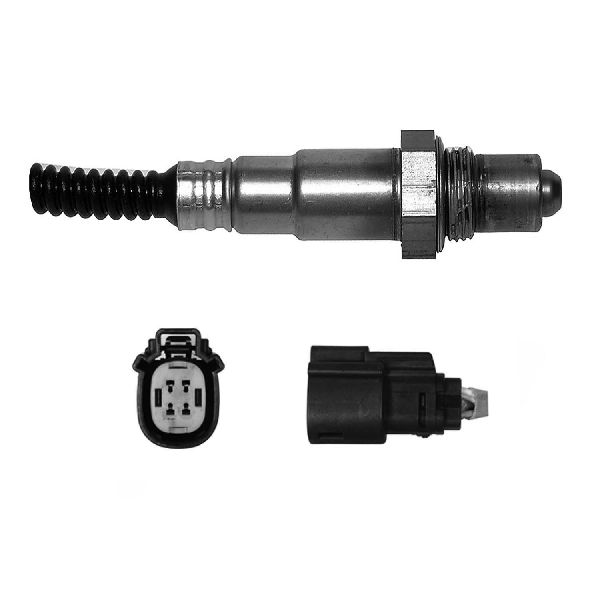
- Upstream Oxygen Sensor
(OEM #F1FZ-9G444-A (Superseded by other numbers like F1FZ-9G444-C, F1FZ-9G444-G, F1FZ-9G444-H))— This is the sensor that measures the air-fuel ratio for engine management. It is a common wear item and the most frequent cause of code P0131.
Trusted brands: Motorcraft, Bosch, Denso, NGK/NTK
OEM price range: $100-$150
Aftermarket price range: $40-$80
Related Codes That Often Appear With This One
- P0171 — This code for 'System Too Lean (Bank 1)' can appear with P0131 if there is a legitimate lean condition (like a vacuum or exhaust leak) that the O2 sensor is correctly detecting.
- P219A — This code for 'Bank 1 Air-Fuel Ratio Imbalance' can sometimes accompany P0131, suggesting a more complex fuel delivery or air measurement issue that the O2 sensor is detecting.
- P0135 — This code for 'O2 Sensor Heater Circuit Malfunction' can appear alongside P0131, indicating a failure of the sensor's internal heating element, which is a common failure mode for the entire sensor unit.
Technical Service Bulletins (TSBs) & Recalls
- A TSB was mentioned in a forum for older Ford models where a PCM software update was required along with a modified sensor to cure P0131, suggesting that in some cases a simple part swap might not be enough if a software update is also available.
- Recall 18S32 / NHTSA Ref: 18V735: While not directly for P0131, this important recall addresses a faulty canister purge valve (CPV) that can stick open. This can cause a vacuum in the fuel tank, leading to stalling, rough idle, and an inaccurate fuel gauge. The fix involves a PCM reprogram and, if necessary, replacement of the CPV. This is a key misdiagnosis point for P0131 symptoms.
- TSB Bulletin #TSB 16-0163: A manufacturer service bulletin notes that vehicles may exhibit a constant or intermittent MIL with various drivability issues and DTC P0131 stored in the PCM memory.
Platform-Specific Known Issues
- source — A user on Reddit's r/FordFocus forum reported getting a P0131 code, replacing the upstream O2 sensor with a Bosch part, but the Check Engine Light remained on. Other users advised that the code must be manually cleared with a scan tool after the repair, as it will not clear itself immediately. Driving for 10-15 minutes after clearing will confirm if the fix was successful.
- source — Another Reddit user reported a persistent P0131 even after replacing the upstream sensor. A Ford mechanic suggested the issue was due to using a non-OEM part. While the owner was skeptical, using genuine Motorcraft sensors is often recommended to avoid compatibility issues.
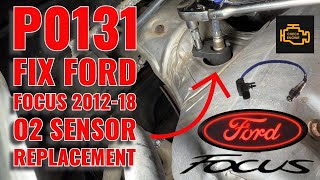
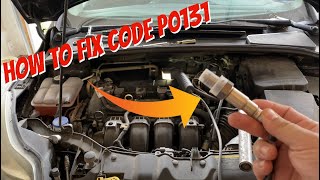
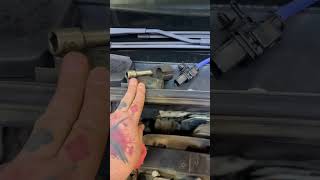
- source — Multiple YouTube videos provide a step-by-step guide for replacing the upstream O2 sensor on a 2012-2018 Focus. They confirm the sensor's easy accessibility at the rear of the engine and demonstrate the use of a special O2 sensor socket. One video from 'Blue Collar Garage' specifically addresses fixing P0131 and confirms the Motorcraft part number as DY-1185.
Mechanic-Grade Diagnostic Values
- Upstream O2 Sensor (B1S1) Voltage — expected: Rapidly fluctuating between ~0.1V and ~0.9V on a warm engine in closed loop.. Failure: Voltage is stuck low, below 0.4V (often near 0.1V), and does not fluctuate.
- O2 Sensor Heater Circuit Resistance — expected: Between 2 and 10 ohms when measured across the two heater pins (often same-colored wires) on the sensor connector.. Failure: A reading of 'OL' (Open Loop) or infinite resistance indicates a broken internal heater.
- Long Term Fuel Trim (LTFT) — expected: Close to 0%, typically within +/- 5%.. Failure: Consistently high positive value (e.g., +18% or more) indicates the PCM is adding excessive fuel to compensate for a perceived lean condition, which can be caused by a faulty O2 sensor reading low voltage.
Scan Tool Commands That Help
- Ford IDS (Integrated Diagnostic System): Datalogger - Live Data for O2 Sensor Voltage and Fuel Trims — This is the primary function used to confirm a P0131 fault. The technician observes the live voltage graph of the B1S1 sensor to see if it is switching properly or is stuck in a low state.
- Ford IDS (Integrated Diagnostic System): Clear KAM (Keep Alive Memory) — After replacing the O2 sensor, clearing the KAM resets the adaptive fuel learning tables in the PCM. This is more thorough than just clearing DTCs and forces the PCM to re-learn fuel strategy with the new, functional sensor.
Wiring & Ground Locations
- Main Engine Grounds under Airbox — Underneath the air filter box, on the chassis frame rail, in front of the battery. There are typically two ground points here.. These are primary ground points for the engine harness. Poor contact here due to paint or corrosion can cause a host of electrical issues, including erratic sensor readings. Cleaning these grounds is a common preventative maintenance and diagnostic step for many Focus electrical problems.
- Upstream O2 Sensor Connector (C144) — Mounted on a bracket at the rear of the engine, near the top, easily accessible from above.. This is the connection point for the B1S1 sensor. The 5 wires in the 6-pin connector for this application are typically: Pin 1 (Red), Pin 2 (Yellow), Pin 3 (White), Pin 4 (Gray), Pin 6 (Black). Checking for voltage, ground, and signal integrity happens at this connector.
- PCM Ground — A ground point is typically located on the chassis very close to where the Powertrain Control Module (PCM) is mounted.. The PCM relies on a clean ground reference to accurately interpret the low-voltage signals from sensors like the O2 sensor. A faulty PCM ground can introduce noise or a voltage offset, potentially triggering a P0131 code even with a good sensor.
Real Owner Repair Stories
- YouTube channel 'Carl's Garage' (2012 Ford Focus 2.0L) — Intermittent P0131 code, Check Engine Light comes and goes.
❌ Tried (didn't work) Initial scan showed no active code, live data looked fine at the time of testing.
✅ What actually fixed it The wiring harness for the upstream O2 sensor was stretched extremely tight and was about an inch shorter than the new replacement OEM sensor's harness. This tension was likely causing an intermittent open in the wiring as the engine moved. Replacing the sensor with the proper length OEM part, which provided more slack, resolved the issue. - Reddit user on r/FordFocus (2012 Ford Focus) — P0131 code, Check Engine Light on.
❌ Tried (didn't work) Replacing the upstream O2 sensor with a new Bosch part did not turn off the Check Engine Light.
✅ What actually fixed it The code needed to be manually cleared with an OBD-II scanner after the part was replaced. The light does not always clear itself immediately. After clearing the code and driving for 10-15 minutes, the light stayed off, confirming the fix. - NHTSA ODI #11443669 — An owner reported symptoms of P0131, P144A, and P1450, noting the vehicle started stalling after putting in new gas and hesitating at low speeds.
OEM Part Supersession History
CV6Z-9G444-A / DY-1185→F1FZ-9G444-A, which was then superseded by F1FZ-9G444-C, F1FZ-9G444-G, and F1FZ-9G444-H.— Standard part revisions for cost, material, or manufacturing process improvements.
Heads up: While aftermarket sensors are available, some owners and technicians report persistent codes until a genuine Motorcraft sensor is installed, suggesting the PCM can be sensitive to the specific response characteristics of the OEM part.
Model Year Variations Within This Range
- 2012-2018: The Ford Focus received a significant facelift for the 2015 model year, including revised styling and interior. However, for the 2.0L GDI engine, the location and function of the upstream oxygen sensor (B1S1) and the common causes for code P0131 remained consistent across the entire 2012-2018 generation.
Diagnostic Flowchart
Other Known Issues on This Vehicle
Issues unrelated to this code that are worth knowing about as an owner of this generation:
- PowerShift (DPS6) Dual-Clutch Automatic Transmission Failure 🔴 High — Extremely common on 2012-2016 models. Symptoms include shuddering, hesitation, jerky shifts, and complete transmission failure. (Ref: Multiple class-action lawsuits, warranty extensions (e.g., to 7yr/100k miles), and numerous TSBs were issued. Ford was aware of design flaws pre-production.)
- Faulty Canister Purge Valve (CPV) 🟠 Medium — Common across 2012-2018 models. Causes engine stalling at low speeds, rough idle, and hard starting after refueling. (Ref: Ford Recall 18S32 (NHTSA 18V735) was issued to reprogram the PCM and replace the valve if needed to prevent fuel tank deformation.)
- Loss of Power Steering Assist 🔴 High — Reported in some models, particularly around the 2012 model year. Can result in a sudden and complete loss of power steering while driving. (Ref: Often requires replacement of the entire electronic steering rack assembly.)
- Faulty Door Latch 🟠 Medium — A recall was issued for a faulty door latch spring that could break, preventing the door from latching securely or causing it to open while driving. (Ref: Ford Recall 15S16 / NHTSA 15V-246)
Used vs. New Parts: Buying Guide for This Vehicle
When a used part is the smart pick: Never. Oxygen sensors are wear-and-tear items with a finite lifespan, exposed to extreme heat and contaminants. Installing a used O2 sensor is not recommended as its remaining life is unknown, and it may fail shortly after installation, wasting time and money.
What to inspect on the donor part:
- Not applicable as used O2 sensors should not be purchased.
OEM-only on this vehicle (don't cheap out):
- Oxygen Sensor (Recommended): While many aftermarket sensors work, the Ford PCM can be sensitive. To avoid potential compatibility issues and repeat repairs, using a genuine Motorcraft sensor is the safest bet.
Aftermarket brands forum-validated for this vehicle:
- NTK/NGK
- Denso
- Bosch (Though some users report mixed results compared to OEM)
Brands owners have reported issues with on this vehicle:
- Unbranded, no-name sensors from online marketplaces. These often have poor quality control and may fail quickly or not perform to OE specifications, causing the code to return.
Real Owner Stories
Aggregated from forums and TSBs cited above. Mileages and costs reflect what owners reported in those sources.
2012 Ford Focus 2.0L GDI
Symptoms: Check Engine Light for P0131 and P219A with a no-start condition.
What fixed it: The owner's diagnostic path pointed towards a potential fuel pump issue as the root cause.
Source hint: 2CarPros Forum
2012 Ford Focus
Symptoms: P0131 code present; replaced the upstream O2 sensor with a Bosch part but the Check Engine Light remained on.
What fixed it: The code had to be manually cleared with a scan tool; it does not clear itself immediately after the part is replaced.
Source hint: Reddit r/FordFocus forum titled 'Help Ford Focus 2012 code P0131'
2012-2018 Ford Focus
Symptoms: Persistent P0131 issues even after replacing the upstream sensor.
What fixed it: A Ford mechanic suggested the issue was the use of a non-OEM sensor and recommended switching to a genuine Motorcraft part.
Source hint: Reddit r/FordFocus forum titled 'Anyone have persistent P0131 issues on their'
2012-2018 Ford Focus 2.0L
Symptoms: P0131 code triggered.
What fixed it: Replacement of the upstream O2 sensor using Motorcraft part number DY-1185.
Source hint: YouTube video from 'Blue Collar Garage'
Related OBD-II Codes
Frequently Asked Questions
I replaced my upstream O2 sensor on my 2012 Focus but the Check Engine Light is still on. Is the new sensor bad?
Which specific oxygen sensor do I need for my 2012-2018 Ford Focus 2.0L GDI?
Could my Focus's stalling and rough idle be related to P0131 or something else?
Is there a TSB for P0131 that involves more than just a sensor replacement?
Where is the Bank 1 Sensor 1 located on the 2012-2018 Focus?
Can an exhaust leak cause P0131 on this vehicle?
Helpful Videos




We Have This Part in Stock



The information in this article is provided for general reference and educational purposes only. Vehicle specifications, procedures, and part compatibility can vary by production date, trim level, and region. Always consult your vehicle's factory service manual and verify part numbers before purchasing or performing repairs. Safety-critical components such as airbags, seat belts, and braking systems should be installed by a qualified professional.
- Ford Focus:
- 🧭 Diagnostic Flowchart
- 🎬 Helpful Videos
- 🛍️ Shop This Part
- What's Unique About the 2012-2018 Ford Focus
- Symptoms You May Notice
- Most Likely Causes
- Rare But Worth Checking
- Diagnosis Steps
- Parts You'll Likely Need
- Related Codes That Often Appear With This One
- Technical Service Bulletins (TSBs) & Recalls
- Platform-Specific Known Issues
- Mechanic-Grade Diagnostic Values
- Scan Tool Commands That Help
- Wiring & Ground Locations
- Real Owner Repair Stories
- OEM Part Supersession History
- Model Year Variations Within This Range
- Other Known Issues on This Vehicle
- Used vs. New Parts: Buying Guide for This Vehicle
- Real Owner Stories
- 2012 Ford Focus 2.0L GDI
- 2012 Ford Focus
- 2012-2018 Ford Focus
- 2012-2018 Ford Focus 2.0L
- Related OBD-II Codes
- Frequently Asked Questions
- 🎟️ Get 5% Off