

P0131 on 2013-2018 Ford Focus ST: O2 Sensor Low Voltage Causes and Fixes
For a 2013-2018 Focus ST, code P0131 almost always means the upstream oxygen (O2) sensor has failed. This is a common wear item. Before replacing the sensor, it is critical to inspect the engine wiring harness, especially on 2013-2014 models, for a faulty splice repair related to Ford Safety Recall 14S17, as this is a known cause of this code. Replacing the sensor with an OEM Motorcraft part (DY-1182 or DY-1185) is the most likely fix, costing about $90-$150.
- P0131 on your Focus ST almost always points to the upstream O2 sensor (Bank 1, Sensor 1).
- The most likely fix is replacing the sensor, which is a DIY-friendly job with the correct O2 sensor socket.
- If you replace the sensor and the code comes back, immediately suspect a wiring issue, especially the harness splice related to recall 14S17.
- Do not ignore this code; it will hurt your fuel economy and can eventually damage your expensive catalytic converter.
What's Unique About the 2013-2018 Ford Focus ST
While P0131 is a generic code, the 2013-2014 Focus ST has a specific, well-documented history that is a direct cause. Ford Safety Recall 14S17 was issued to repair improperly crimped splices in the engine wiring harness that could cause high resistance. These splices (specifically S132 and S133) affect multiple sensor circuits, including the O2 sensor. Many owners have reported that a poor dealer repair of this recall, or the recall not being performed, directly leads to code P0131 returning even after sensor replacement. A thorough inspection of this splice area is a critical diagnostic step unique to this platform.
Symptoms You May Notice
- Check Engine Light (CEL) illuminated
- Decreased fuel economy
- Rough or unstable idle, especially when warm or on cold starts
- Engine stalling or hesitating when coming to a stop or shifting into neutral
- "Engine Fault, Service Now" message on the dashboard, sometimes accompanied by other codes
- Noticeable smell of gasoline from the exhaust, indicating a rich condition
- Immediately replacing the catalytic converter. The P0131 code points to the sensor, not the converter. A faulty sensor can harm the converter over time, but the sensor itself should be diagnosed and replaced first.
- Replacing the O2 sensor without checking the wiring. If the code returns immediately after sensor replacement, the fault is very likely in the wiring or connector, especially related to the 14S17 recall splice on 2013-2014 models.
- Forgetting to clear the code after the repair. The Check Engine Light will not turn off by itself immediately; the code must be cleared with a scan tool, or by disconnecting the battery, to reset the PCM's keep-alive memory.
- Using a cheap, universal O2 sensor. Owners on forums frequently report that non-OEM sensors can cause persistent issues or fail quickly. Sticking with Motorcraft or a direct-fit Bosch/NTK is highly recommended.
Most Likely Causes
- Faulty Upstream Oxygen Sensor 🔴 High Probability → Shop Oxygen Sensor O2 sensors are a normal wear-and-tear item with a finite lifespan, typically failing between 70,000 and 100,000 miles. Given the performance nature of the ST, they can be subjected to high exhaust temperatures.
How to confirm: Using a scan tool with live data, observe the Bank 1 Sensor 1 voltage. A healthy sensor will fluctuate rapidly between approximately 0.1V and 0.9V at idle on a warm engine. A faulty sensor will often be stuck at a low voltage (e.g., under 0.2V) or respond very slowly.
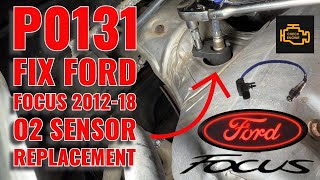
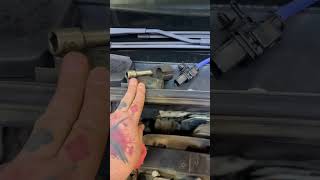
Typical fix: Replace the upstream (pre-cat) oxygen sensor. A 22mm or 7/8" oxygen sensor socket is required for removal. 🎬 Watch: Step-by-step guide to replacing the upstream O2 sensor.
Est. part cost: $90-$180 - Damaged Wiring or Poor Connection (Recall 14S17) 🟡 Medium Probability A known issue on 2013-2014 models is an improper repair related to the '14S17 - Engine Wiring Splice' safety recall. A poorly crimped or corroded splice in the harness (specifically splices S132 and S133) can cause voltage issues for various sensors, including the O2 sensor. Owners have fixed P0131 by finding the dealer's crimp connector, cutting it out, and properly soldering the wires.
How to confirm: Visually inspect the entire O2 sensor wiring harness from the sensor connector to the main engine loom. Pay extremely close attention to the harness section near the battery where the recall repair was performed. Look for bulky heat shrink or tape indicating a splice. Check for continuity and shorts using a multimeter.
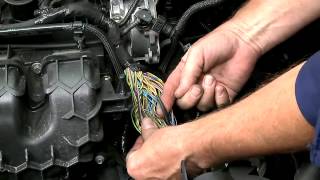
Typical fix: Repair the damaged section of the wiring harness. If a bad splice from the 14S17 recall is found, it should be properly soldered and sealed with heat shrink tubing. 🎬 See how to identify and fix the 14S17 recall wiring issue.
Est. part cost: $5-$50 - Exhaust Leak ⚪ Low Probability Leaks can occur at the exhaust manifold or downpipe gasket, especially on modified vehicles. An exhaust leak before the O2 sensor allows extra oxygen into the exhaust stream, fooling the sensor into reading a lean condition (low voltage).
How to confirm: Visually inspect the exhaust manifold and downpipe for cracks or black soot trails indicating a leak. You can also have a helper briefly block the tailpipe with a rag while the engine is running to make leaks more audible or visible.
Typical fix: Replace the leaking gasket or repair the cracked exhaust component.
Est. part cost: $20-$200
Rare But Worth Checking
- Low Fuel Pressure: If the engine is genuinely running lean due to a weak fuel pump or clogged filter, the O2 sensor will correctly report low voltage. This would typically be accompanied by other codes (like P0171 or fuel pressure codes) and more severe drivability issues like hesitation under load.
- PCM Software Issue: In some cases, a vehicle's software may be too sensitive or have an outdated calibration. A Ford dealer can check if any PCM software updates (TSBs) are available for your vehicle's VIN, which can sometimes resolve persistent, erroneous codes. An older TSB for a different Focus model noted a new sensor required a PCM update to prevent premature failure.
- Vacuum Leak: A significant vacuum leak (e.g., a disconnected hose on the intake manifold) can introduce unmetered air, causing a lean condition that the O2 sensor correctly detects. This is often accompanied by code P0171.
- Environmental Contamination: Manufacturer service bulletins, such as TSB 19-2091 and TSB 17-0014, note that P0131 and other codes can be stored in the PCM due to undesired water entry into the engine compartment directly over powertrain components.
Diagnosis Steps
- Connect an OBD-II scanner and confirm P0131 is the active code. Note any other codes present, especially P0106 or P0171.
- Use the scanner's live data feature to monitor the 'O2S11' (Bank 1, Sensor 1) voltage with the engine fully warmed up and idling. A healthy sensor fluctuates rapidly between ~0.1V and ~0.9V. A reading stuck below 0.2V points to a problem.
- For 2013-2014 models, prioritize inspecting the engine wiring harness for the 14S17 splice repair. Locate the harness section near the battery/airbox and look for evidence of a repair (tape, crimp connectors). This is a very common point of failure.
- Perform a thorough visual inspection of the upstream O2 sensor's wiring harness and connector. Look for any signs of melting on the exhaust, chafing, or corrosion in the connector pins. TSB 16-0163 highlights that various drivability issues and P0131 can be associated with wiring harness concerns.
- Inspect the exhaust manifold and downpipe for any signs of an exhaust leak upstream of the sensor (soot, audible hissing).
- If the wiring and exhaust system appear intact and the live data shows a stuck low voltage, the O2 sensor itself is the most likely culprit.
- Replace the upstream O2 sensor. Using an OEM Motorcraft sensor is strongly recommended to prevent compatibility issues. Apply anti-seize to the threads if not pre-applied.
- After replacement, clear the codes with the scanner and perform a test drive to ensure the code does not return.
Parts You'll Likely Need
- Upstream Oxygen Sensor
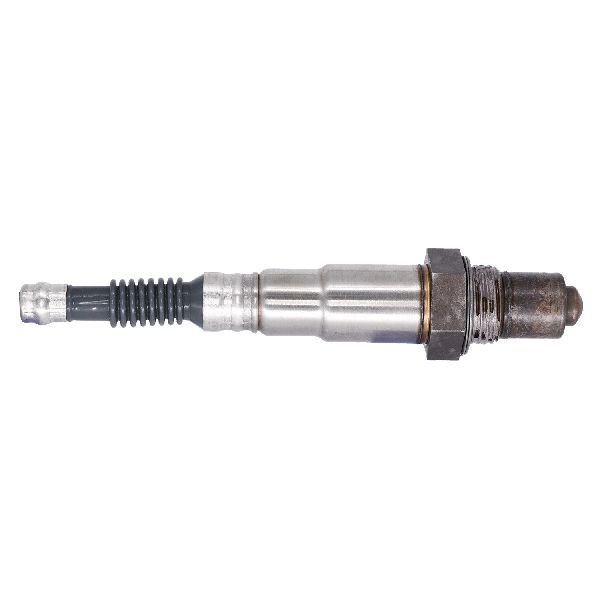
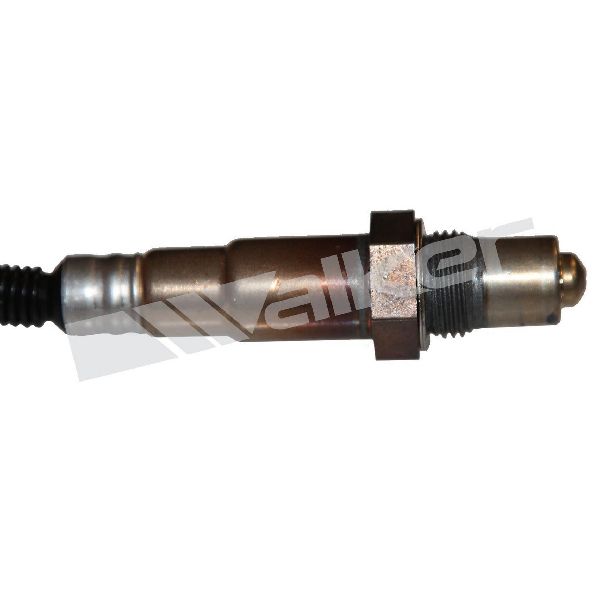
(OEM #DY-1182 (superseded by DY-1185))— This is the primary sensor responsible for the reading that triggers code P0131. It is a common wear item and the most frequent point of failure.
Trusted brands: Motorcraft, Bosch, Denso, NGK/NTK
OEM price range: $90-$150
Aftermarket price range: $50-$100
Related Codes That Often Appear With This One
- P0106 — This MAP sensor code has been reported by Focus ST owners in conjunction with P0131. Since the sensors share circuits within the main harness, this combination strongly points towards the 14S17 wiring splice issue as the root cause.
- P0171 — This code for 'System Too Lean' can appear if there is a legitimate vacuum or exhaust leak that the O2 sensor is correctly detecting, causing the low voltage reading. NHTSA ODI #10219019 notes that P0171 and P0131 often appear together when seals or isolator bolts fail.
- P2196 — This code means 'O2 Sensor Signal Stuck Rich'. While the opposite of P0131, it can sometimes appear alongside it or be caused by related EVAP system issues, like a faulty purge valve, which is another common problem on the Focus ST.
Technical Service Bulletins (TSBs) & Recalls
- Recall 14S17 / NHTSA 14V-597: 🎬 Watch: Official Ford procedures for the engine wiring harness recall. Not a TSB, but a critical safety recall for 2013-2014 models for improperly crimped wiring harness splices that can cause stalling and various sensor codes, including P0131.
- TSB 16-0163: Notes that vehicles may exhibit a constant or intermittent MIL with drivability issues and DTC P0131, often requiring a detailed inspection of the engine wiring.
- TSB 19-2091 & TSB 17-0014: These bulletins address instances where P0131 is stored in the PCM due to water entry into the engine compartment affecting electrical components.
Platform-Specific Known Issues
- A faulty repair of the '14S17 - Engine Wiring Splice' safety recall has been identified by owners as a direct cause of code P0131. A poorly executed splice can corrode or fail, leading to incorrect voltage readings from the O2 sensor. The affected splices are S132 (Yellow/Green wires) and S133 (Yellow/Violet wires).
- Some owners report that even after replacing the sensor with an aftermarket brand like Bosch, the code can persist, recommending the use of an OEM Motorcraft sensor to guarantee compatibility.
Mechanic-Grade Diagnostic Values
- Upstream O2 Sensor (HO2S11) Signal Wire Integrity Test — expected: With sensor unplugged and a test light connected from B+ to the signal wire pin on the harness connector, the scan tool live data for O2S11 voltage should jump to its maximum readable value (approx. 1.6V).. Failure: If the voltage does not change, it indicates an open or short-to-ground in the signal wire between the connector and the PCM.
- Mode $06 - O2 Sensor Voltage Amplitude (Bank 1, Sensor 1) — expected: The test value should be above the minimum threshold. The raw value from the scan tool must be multiplied by 0.00098 to convert to Volts.. Failure: A calculated voltage amplitude of less than 0.5 volts indicates a slow or failing sensor.
- O2 Sensor Heater Circuit Ground Control — expected: With the engine running and sensor connected, backprobing the heater ground wire should show a pulse-width modulated (PWM) voltage signal when viewed on a scope, or a fluctuating voltage on a multimeter.. Failure: A steady 0V or 12V indicates a problem with the PCM driver or the wiring.
Hidden / Shadow Codes Worth Checking
- Mode $06, TID:$01, CID:$11: This refers to the On-Board Monitor Test Result for the upstream O2 sensor's (HO2S11) voltage amplitude. It's a non-continuous monitor that checks if the sensor is responding quickly enough by measuring its peak-to-peak voltage during a specific fuel control test. A failing value here can precede a P0131 code. (see via A professional scan tool that can access Mode $06 diagnostic data.)
Scan Tool Commands That Help
- Ford IDS / Professional Scan Tool: HO2S Response Rate Test — This is a PCM-commanded routine that forces the fuel mixture to oscillate at a set frequency (e.g., 1.5 Hz). By observing the O2 sensor's voltage amplitude in Mode $06 during this test, a technician can definitively confirm if the sensor is slow to respond, which is a direct cause of P0131.
Wiring & Ground Locations
- Main Engine Ground — On the chassis/frame rail underneath the airbox assembly, with a cable connecting to a threaded bolt hole on the transmission bell housing.. A poor ground connection at this primary point can introduce electrical noise and voltage offsets affecting multiple sensors, including the O2 sensor. Owners have reported no-start conditions after transmission work due to forgetting this ground, indicating its importance. Cleaning the contact surfaces is critical.
- Upstream O2 Sensor Connector (C134 - typical Ford designation) — At the top rear of the engine, clipped to a silver bracket. The harness routes over the top of the engine. It is easily accessible after removing the engine cover and airbox.. This is the primary connection point for testing. Verifying power, ground, and signal integrity at this connector is a key diagnostic step before condemning the sensor or PCM.
Real Owner Repair Stories
- YouTube user 'Tips From A Wrench' (2013 Ford Focus ST) — Check Engine Light, P0131.
❌ Tried (didn't work) Using a generic, non-Motorcraft oxygen sensor from eBay.
✅ What actually fixed it The generic sensor failed in less than a year. The problem was permanently resolved by replacing it with a genuine OEM Motorcraft oxygen sensor. The user explicitly advises against using cheap generic sensors for this car. - Reddit user 'MountainsAndMinis' (2017 Ford Focus (similar engine bay layout)) — Car would not start after transmission work.
❌ Tried (didn't work) Initial reassembly.
✅ What actually fixed it Found a forgotten ground wire that bolts to the chassis under the airbox and connects to the transmission bell housing. Another user confirmed that simply tightening this ground wasn't enough; they had to remove it and clean the cable end and transmission surface with a brass brush to fix their intermittent no-start, which highlights the sensitivity of this ground point. - NHTSA ODI #11443669 — An owner reported symptoms of P0131 alongside P144A and P1450. The vehicle started stalling specifically after refueling and would hesitate at low speeds.
"I Checked Everything" — The Actual Cause
- On 2013-2014 models, a technician may replace the O2 sensor and check for exhaust/vacuum leaks (which would come back clean), yet the P0131 code returns. The actual cause is often not a leak, but high electrical resistance in the engine wiring harness from a poorly-executed dealer repair for Safety Recall 14S17. The crimp connectors used in the recall fail over time, but this failure is invisible to a smoke test and requires a specific wiring inspection to find.
OEM Part Supersession History
DY-1182 (Ford Engineering PN: BA5Z-9F472-A)→DY-1185— Likely an internal revision for improved durability, performance, or to address a known issue. This is a common practice for wear items.
Heads up: None found. DY-1185 is a direct, backward-compatible replacement for DY-1182.
Model Year Variations Within This Range
- 2013-2014 only: These model years were subject to Safety Recall 14S17 for faulty wiring harness splices. A poor dealer repair of this recall is a primary cause of P0131 that does not affect 2015-2018 models, which have a revised wiring harness design.
Diagnostic Flowchart
Other Known Issues on This Vehicle
Issues unrelated to this code that are worth knowing about as an owner of this generation:
- EVAP Purge Valve Failure 🟠 Medium — Extremely common. Often fails, causing rough idle after refueling, stalling, and codes like P1450 or P2196. (Ref: Recall 18S32 (for some models/years, involved a PCM reflash and possible valve replacement))
- Low-Speed Pre-Ignition (LSPI) 🔴 High — A risk on early models, especially when modified or 'lugged' (high gear, low RPM). Can cause catastrophic engine damage. Mitigated by using correct API SN+ oil and proper driving habits.
- Weak Factory Motor Mounts 🟠 Medium — The passenger side and rear motor mounts (RMM) are known to be soft and fail, causing harsh shifting, wheel hop, and a 'bang' noise on acceleration. Upgrading is a very common modification.
- Intermittent Overheating at Idle 🟠 Medium — Often caused by a failing radiator fan control module, thermostat, or low coolant. Temperature spikes when stationary and drops when moving.
- Intake Valve Carbon Buildup 🟡 Low — As a direct-injection engine, fuel doesn't wash over the intake valves, leading to carbon buildup over time (50k-80k miles). Can cause reduced performance. Walnut blasting is the typical cleaning procedure.
- Transmission Mount Bolt Failure 🔴 High — Less common but severe; the main transmission mount bolt can back out or snap, causing the transmission to drop, difficulty shifting, and loud noises.
Used vs. New Parts: Buying Guide for This Vehicle
When a used part is the smart pick: A used section of the main engine wiring harness from a 2015-2018 model is a smart choice if your 2013-2014 harness is damaged near the 14S17 splice area. This avoids the problematic splice design entirely.
Donor-vehicle mileage cap: roughly under 80000 miles for the part to have meaningful remaining life.
What to inspect on the donor part:
- For a wiring harness, inspect for any signs of previous repairs, melted conduit, or corrosion in the connectors.
- Ensure the donor vehicle was not in a front-end collision that could have stressed the harness.
- Verify the donor is a 2015 or newer model to get the updated harness design.
OEM-only on this vehicle (don't cheap out):
- Upstream Oxygen Sensor
Aftermarket brands forum-validated for this vehicle:
- Motorcraft (OEM)
- Bosch (often the OEM supplier)
- NGK/NTK
- Denso
Brands owners have reported issues with on this vehicle:
- Generic, unbranded parts from online marketplaces like eBay or Amazon. Forum members and repair videos explicitly warn that these parts often fail prematurely or are dead on arrival.
Real Owner Stories
Aggregated from forums and TSBs cited above. Mileages and costs reflect what owners reported in those sources.
2013-2014 Ford Focus ST 2.0L EcoBoost
Symptoms: Codes P0131 and P0106 persisted even after a repair attempt. The car experienced stalling and engine faults.
What fixed it: Found the dealer's 14S17 recall crimp connector in the wiring harness, cut it out, and properly soldered the wires.
Source hint: r/FocusST - [SOLVED] Codes P0131 and P0106 after I thought I fixed them...
2013-2018 Ford Focus ST 2.0L EcoBoost — ~85000 miles
Symptoms: Check Engine Light, decreased fuel economy, and a rough idle when the engine was warm.
What fixed it: Replacement of the upstream (pre-cat) oxygen sensor with a Motorcraft unit.
Source hint: FocusST.org Forums
Related OBD-II Codes
Frequently Asked Questions
Does the 14S17 safety recall apply to my 2013-2014 Ford Focus ST?
I already had the recall repair done, but P0131 is back. What should I check?
Which oxygen sensor should I buy for my Focus ST to avoid compatibility issues?
What are the specific wire colors I should look for when inspecting the harness splices?
Can an exhaust leak cause a P0131 code on this vehicle?
What size tool do I need to replace the upstream O2 sensor on my 2.0L EcoBoost?
Helpful Videos

We Have This Part in Stock



The information in this article is provided for general reference and educational purposes only. Vehicle specifications, procedures, and part compatibility can vary by production date, trim level, and region. Always consult your vehicle's factory service manual and verify part numbers before purchasing or performing repairs. Safety-critical components such as airbags, seat belts, and braking systems should be installed by a qualified professional.
- Ford Focus ST:
- 🧭 Diagnostic Flowchart
- 🎬 Helpful Videos
- 🛍️ Shop This Part
- What's Unique About the 2013-2018 Ford Focus ST
- Symptoms You May Notice
- Most Likely Causes
- Rare But Worth Checking
- Diagnosis Steps
- Parts You'll Likely Need
- Related Codes That Often Appear With This One
- Technical Service Bulletins (TSBs) & Recalls
- Platform-Specific Known Issues
- Mechanic-Grade Diagnostic Values
- Hidden / Shadow Codes Worth Checking
- Scan Tool Commands That Help
- Wiring & Ground Locations
- Real Owner Repair Stories
- "I Checked Everything" — The Actual Cause
- OEM Part Supersession History
- Model Year Variations Within This Range
- Other Known Issues on This Vehicle
- Used vs. New Parts: Buying Guide for This Vehicle
- Real Owner Stories
- 2013-2014 Ford Focus ST 2.0L EcoBoost
- 2013-2018 Ford Focus ST 2.0L EcoBoost — ~85000 miles
- Related OBD-II Codes
- Frequently Asked Questions
- 🎟️ Get 5% Off