

P0131 on 2010-2019 Ford Taurus 3.5L EcoBoost: O2 Sensor Low Voltage Causes and Fixes
On a 2010-2019 Ford Taurus with the 3.5L EcoBoost engine, code P0131 almost always points to a failed upstream oxygen sensor on Bank 1 (the firewall side). The most likely fix is replacing the sensor. Before replacing, it is wise to inspect for exhaust leaks near the manifold or turbo, which are also known to cause this code. Expect to pay around $60-$120 for an aftermarket sensor or $110-$165 for an OEM Motorcraft part. DIY difficulty is 3/5 due to tight access.
- P0131 on your Taurus points directly to the upstream O2 sensor on the rear (firewall side) cylinder bank.
- The most common fix is to replace the sensor itself, but always check for exhaust leaks and wiring damage first, as these are also known issues.
- Accessing the Bank 1 sensor is difficult due to its location. Be prepared for a more time-consuming repair.
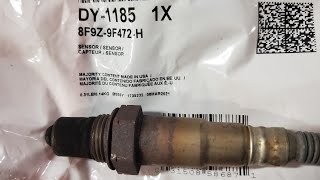
- Using an OEM Motorcraft sensor (DY-1185) is highly recommended to ensure compatibility and avoid repeat failures.
What's Unique About the 2010-2019 Ford Taurus
The 3.5L EcoBoost V6 is a transverse (sideways) mounted engine in the Taurus. This places Bank 1 (the rear cylinder bank) against the firewall, making access to its upstream O2 sensor (Sensor 1) significantly more challenging than accessing the Bank 2 sensor at the front of the vehicle. While the cause of P0131 is usually a straightforward sensor failure, the labor involved in replacing the Bank 1 sensor on this specific platform is greater due to the tight space. Owners should be prepared for a more involved repair compared to the same job on a longitudinally mounted engine like in an F-150.
Symptoms You May Notice
- Check Engine Light is illuminated
- Reduced fuel economy
- Rough or surging idle
- Engine hesitation or misfires
- A 'rotten egg' or sulfur smell from the exhaust
- Black smoke from the tailpipe under certain conditions.
- Replacing the wrong sensor. P0131 is for Bank 1, Sensor 1. On the Taurus 3.5L EcoBoost, Bank 1 is the cylinder bank near the firewall, and Sensor 1 is the upstream sensor before the catalytic converter. It is easy to mistakenly replace the more accessible Bank 2 sensor at the front of the vehicle.
- Ignoring an exhaust leak. Many owners replace the O2 sensor only to have the code return because the root cause was an exhaust leak introducing excess air, which the new sensor correctly detects as a low voltage condition.
Most Likely Causes
- Failed Bank 1, Sensor 1 Oxygen Sensor 🔴 High Probability → Shop Oxygen Sensor Oxygen sensors are wear-and-tear items with a finite lifespan, typically needing replacement every 60,000 to 90,000 miles. Contamination from engine byproducts like oil or coolant, or simply high mileage, can cause them to fail. On EcoBoost engines, oil or coolant leaks from the turbochargers can also contaminate and prematurely fail the sensors.
How to confirm: Use an OBD-II scanner with live data capability to monitor the 'O2S11' voltage. A healthy sensor's voltage should fluctuate rapidly between approximately 0.1V and 0.9V. If the voltage is stuck consistently below 0.4V, and especially if it's flatlined near 0.1V, the sensor is likely faulty. Another strong indicator is the presence of a heater circuit code like P0053 for the same sensor.
Typical fix: Replace the upstream oxygen sensor on Bank 1 (firewall side). Using an OEM Motorcraft sensor is often recommended by forum users to avoid compatibility issues.
Est. part cost: $60-$165 - Exhaust Leak 🟡 Medium Probability Exhaust manifolds on EcoBoost engines can be prone to warping or developing cracked/broken studs, creating a leak. This allows outside air to be sucked into the exhaust stream, which makes the O2 sensor incorrectly read a lean condition (low voltage).
How to confirm: Perform a visual inspection of the exhaust manifold and surrounding pipes for black soot trails, which indicate a leak. Listen for a ticking or hissing noise, especially when the engine is cold. A professional smoke test is the most definitive way to find a leak. 🎬 See this guide on identifying exhaust manifold leaks and sounds.
Typical fix: Repair the exhaust leak by replacing the faulty gasket or tightening connections. In cases of a warped or cracked manifold, the manifold itself will need to be replaced.
Est. part cost: $20-$400+ - Damaged Wiring or Connectors ⚪ Low Probability The wiring harness for the Bank 1 sensor is in a hot, tight area near the firewall and exhaust components. It can be susceptible to heat damage (melting), chafing against other components, or corrosion in the connector pins.
How to confirm: Visually inspect the O2 sensor's wiring harness from the sensor to the main engine harness. Look for any signs of melting, chafing, or corrosion in the connector. Use a multimeter to check for continuity and for shorts to ground on the signal and heater circuits.
Typical fix: Repair or replace the damaged section of the wiring harness or clean the connector. In severe cases, a new harness pigtail may be needed.
Est. part cost: $10-$50 for repair, $200+ for harness replacement
Rare But Worth Checking
- Low Fuel Pressure: A failing fuel pump or clogged filter can cause a lean condition that the O2 sensor correctly reports. This would likely be accompanied by other codes like P0171 (System Too Lean) and would typically affect both banks.
- Failing Powertrain Control Module (PCM): This is extremely rare. The PCM itself could be malfunctioning, but all other possibilities should be exhausted before considering PCM replacement. This should be diagnosed by a professional.
- Blown Fuse: The O2 sensor heater circuit is protected by a fuse. If this fuse blows, it can cause the sensor to operate incorrectly and may trigger a P0131 code, often alongside a heater circuit code like P0053.
- Environmental Contamination: Manufacturer service bulletins TSB 19-2091 and TSB 17-0014 note that P0131 can be triggered by undesired water entry into the engine compartment directly over powertrain components, leading to MIL illumination.
Diagnosis Steps
- Connect an OBD-II scanner and confirm that P0131 is the active code. Note any other codes present, as they can provide critical clues (e.g., a P0053 heater code points directly to the sensor).
- Use the scanner's live data function to observe the voltage from 'O2S11' (Oxygen Sensor, Bank 1, Sensor 1). It should fluctuate rapidly between ~0.1V and ~0.9V. If it stays consistently low (e.g., under 0.4V), it confirms the fault condition.
- Perform a thorough visual and auditory inspection of the exhaust system from the engine to the catalytic converter. Look for black soot marks or listen for ticking/hissing sounds that indicate an exhaust leak, especially around the exhaust manifold and turbocharger.
- Visually inspect the wiring harness and connector for the Bank 1, Sensor 1 O2 sensor. Check for any signs of melting, chafing, or corrosion. The sensor is on the firewall side of the engine. Trace the harness as far back as possible.
- Check the fuse for the O2 sensor heater circuit. Consult your owner's manual or a wiring diagram for the specific fuse location.
- If no exhaust leaks or wiring damage are found, the most likely cause is a faulty O2 sensor.
- Replace the Bank 1, Sensor 1 oxygen sensor. This will require a special 22mm O2 sensor socket 🎬 Watch: A walkthrough of the rear sensor replacement on a Taurus. to accommodate the wire. Applying heat to the sensor bung may be necessary for removal.
- After replacement, clear the codes with the scanner and perform a test drive, including multiple warm-up cycles, to ensure the code does not return.
Parts You'll Likely Need
- Upstream Oxygen Sensor (Bank 1, Sensor 1)
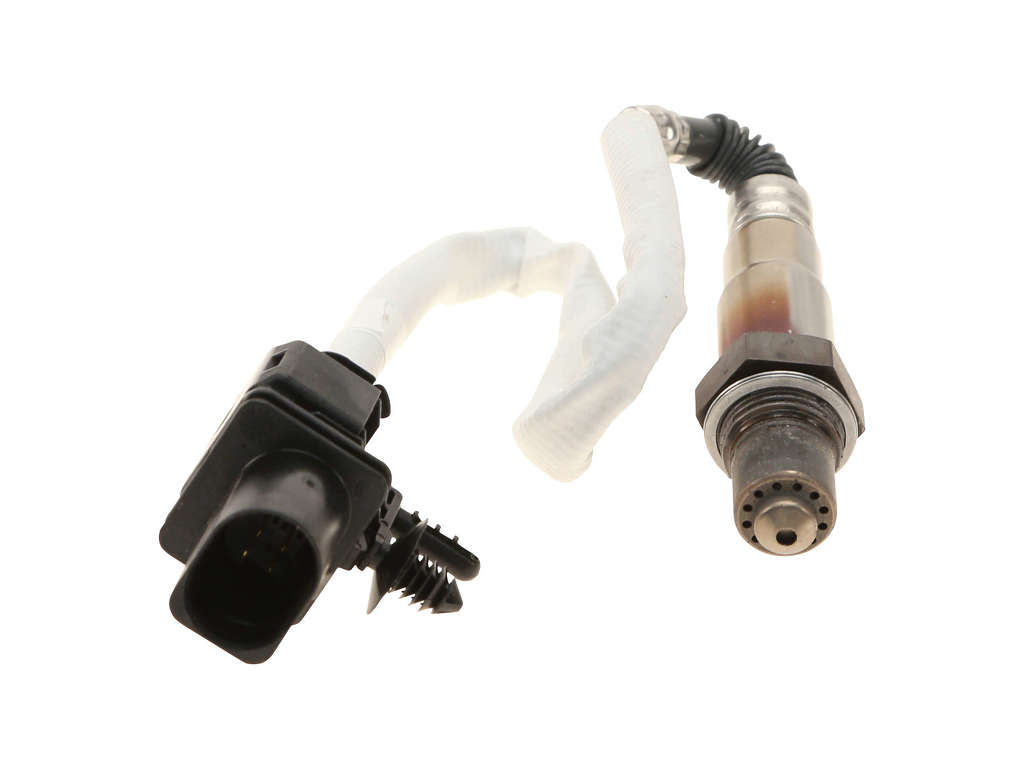
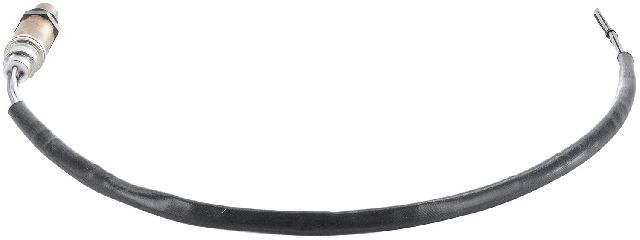
(OEM #8F9Z-9F472-H (Motorcraft DY-1185))— This is the primary component that fails and causes the P0131 code. It is a wear item that degrades over time. Both upstream sensors (Bank 1 and Bank 2) are often the same part number.
Trusted brands: Motorcraft, Bosch, Denso, NGK/NTK
OEM price range: $110-$165
Aftermarket price range: $60-$120
Related Codes That Often Appear With This One
- P0171 — This code for 'System Too Lean (Bank 1)' can be triggered alongside P0131 because the low voltage from the O2 sensor is interpreted by the PCM as a lean condition.
- P0151 — This is the equivalent code for Bank 2 (front side). If both P0131 and P0151 appear, it could point to a common issue affecting both banks, such as low fuel pressure, a major vacuum leak, or burnt wiring harness affecting both sensor circuits, rather than two simultaneously failed sensors.
- P0053 — This code for 'HO2S Heater Resistance (Bank 1, Sensor 1)' points to a failure in the sensor's internal heater circuit. Seeing this code with P0131 is a very strong confirmation that the O2 sensor itself has failed and needs to be replaced.
- P219B — An 'Air-Fuel Ratio Imbalance' code can appear when sensor readings are skewed. One forum user with a 3.5L EcoBoost reported P0131, P0151, and P219B together, which pointed to a wiring harness issue.
- P144A & P1450 — An owner reported P0131 appearing alongside P144A (EVAP purge line restricted) and P1450 (unable to bleed fuel tank vacuum), which resulted in stalling after refueling (NHTSA ODI #11443669).
Technical Service Bulletins (TSBs) & Recalls
- While no TSBs directly address P0131 on the Taurus specifically, TSBs for other 3.5L EcoBoost vehicles exist for related issues. For example, TSB 18-2310 and 18-2324 for the F-150 address MIL illumination with various DTCs, sometimes caused by wiring harness issues. This highlights the importance of checking for wiring damage as a potential cause.
- TSB 16-0163 notes that vehicles may exhibit a constant or intermittent illuminated MIL with various drivability issues and DTC P0131 among others.
Platform-Specific Known Issues
- Turbo Oil/Coolant Leak Contamination: On some EcoBoost platforms, failing turbocharger seals can leak oil or coolant directly onto the downstream O2 sensor, causing it to fail prematurely. While P0131 is for the upstream sensor, this highlights the harsh environment and potential for fluid contamination in the turbo area that can affect wiring and sensors.
Mechanic-Grade Diagnostic Values
- O2 Sensor Heater Circuit Resistance — expected: Between 3 and 30 Ohms across the two heater pins (usually same-colored wires).. Failure: An open circuit (infinite resistance) or a direct short (near 0 Ohms) indicates a failed heater element.
- Short-Term Fuel Trim (STFT) for Bank 1 — expected: Close to 0% (+/- 10%) on a healthy, warm engine.. Failure: Consistently high positive values (e.g., +25% or higher) as the PCM attempts to add fuel to correct the false lean signal from the failing O2 sensor.
- Forced Rich Test Response — expected: When an artificial rich condition is created (e.g., by adding propane to the intake), the O2 sensor voltage should quickly rise to ~0.9V.. Failure: If the voltage remains low (below 0.4V) even with added propane, it strongly confirms the sensor or its signal wire is faulty and unable to read the rich condition.
- P0131 Set Condition — expected: N/A. Failure: The PCM will trigger the P0131 code when it detects the sensor voltage has remained below 400mV (0.4V) for more than 20 seconds.
Hidden / Shadow Codes Worth Checking
- Mode $06, TID $81: This Test ID within Mode $06 specifically monitors the O2 Sensor Heater for Bank 1, Sensor 1. A failure in this monitor test can indicate an issue with the heater circuit even before a dedicated heater code like P0053 appears. (see via An advanced OBD-II scanner capable of displaying Mode $06 data.)
Scan Tool Commands That Help
- Ford IDS or equivalent (FORScan): Datalogger PID: 'O2S11' — This is the primary function used to monitor the live voltage output of the Bank 1, Sensor 1 O2 sensor. It is essential for confirming if the sensor voltage is stuck low, which is the core of the P0131 fault.
- Ford IDS or equivalent (FORScan): Datalogger PID: 'SHRTFT1' — Monitoring Short-Term Fuel Trim for Bank 1 shows how the PCM is reacting to the O2 sensor's signal. A high positive percentage confirms the PCM is trying to compensate for a perceived lean condition.
Wiring & Ground Locations
- Engine Harness Ground (Firewall Side) — There is a critical engine-to-chassis ground located on a stud on the back of the Bank 1 (firewall side) cylinder head.. A poor ground at this location can cause erratic voltage readings and reference issues for multiple sensors on that bank, including the O2 sensor, potentially leading to a P0131 code.
- O2 Sensor Signal Wire — In the 4-wire connector for the sensor, the signal wire is typically black (following Bosch universal colors), while the two heater wires are often white.. Knowing the correct wire is essential for performing advanced diagnostics, such as checking for a short to ground or testing the signal circuit's integrity back to the PCM.
- PCM Connector C175B — This is one of the main connectors at the Powertrain Control Module (PCM).. Technicians may need to test for continuity or voltage directly at the PCM connector pins for the O2 sensor signal and heater circuits to rule out a wiring break somewhere in the harness.
Real Owner Repair Stories
- Ford Flex Forum (similar platform/engine) (2013 Ford Flex 3.5L EcoBoost) — Check Engine Light with code P0131. Engine running fine otherwise.
❌ Tried (didn't work) Replaced the Bank 1, Sensor 1 O2 sensor twice, with the code returning each time.
✅ What actually fixed it A detailed inspection found the O2 sensor wiring harness had been rubbing against a metal A/C line near the firewall. The insulation wore through, causing the signal wire to intermittently short to ground. Repairing the chafed wires and securing the harness away from the A/C line permanently resolved the code. - NHTSA ODI #10219019: An owner reported that a CEL revealed P0171, P0174, and P0131 codes. The resolution involved replacing isolator bolts, port seals, and the clamshell seal to address the lean condition.
"I Checked Everything" — The Actual Cause
- In some cases, an exhaust manifold may have a hairline crack that only opens up and leaks when the engine is hot and the metal has expanded. A standard smoke test performed on a cold engine may not reveal this type of leak, leading a technician to incorrectly rule out an exhaust leak as the cause.
Model Year Variations Within This Range
- 2017-2019: Forum reports indicate that cylinder heads on later model year 3.5L EcoBoost engines feature an extra exhaust manifold stud hole. This design change helps to better secure the manifold and reduces the likelihood of it warping and causing an exhaust leak, which is a common cause of P0131 on earlier models.
- 2010-2012 vs 2013+: The 2013 model year marked a significant facelift for the Taurus. While the core engine remained the same, some ancillary components and wiring routing may differ slightly. The harmonic balancer was also changed on models with the introduction of the electric power steering rack.
Diagnostic Flowchart
Other Known Issues on This Vehicle
Issues unrelated to this code that are worth knowing about as an owner of this generation:
- Internal Water Pump Failure 🔴 High — Common at higher mileage (typically 80k-120k miles). Failure can be catastrophic as the pump is chain-driven and located inside the engine. A leak will mix coolant with engine oil.
- Power Transfer Unit (PTU) Failure 🔴 High — Common on AWD models, often failing between 60k-100k miles. Ford considers the fluid a 'lifetime' fill, but overheating and fluid breakdown lead to failure.
- Timing Chain Stretch 🟠 Medium — Primarily affects first-generation 3.5L EcoBoost engines (2010-2016), often appearing after 70k miles. Can be exacerbated by long oil change intervals.
- Carbon Buildup on Intake Valves 🟠 Medium — An inherent issue with all direct-injection engines, becoming noticeable after 50k-80k miles.
- Cracked Rear Suspension Toe Links 🔴 High — Affects specific model years and is subject to a recall. (Ref: NHTSA Recall 18V471000)
Used vs. New Parts: Buying Guide for This Vehicle
When a used part is the smart pick: For this repair, buying used parts is not recommended. The primary failure component, the oxygen sensor, is a wear-and-tear item with a finite lifespan. A used sensor has unknown remaining life and is a poor value. Used wiring harnesses or connectors could be considered if a specific, undamaged section is needed for a repair.
Donor-vehicle mileage cap: roughly under 15000 miles for the part to have meaningful remaining life.
What to inspect on the donor part:
- For a wiring harness pigtail: check for any signs of melting, brittleness, or previous repairs.
- Ensure connector locking tabs are intact and pins are free of corrosion.
OEM-only on this vehicle (don't cheap out):
- Oxygen Sensor: While not strictly 'OEM-only', many professional technicians and forum veterans strongly recommend using the OEM Motorcraft sensor (DY-1185) to guarantee correct performance and avoid compatibility issues that can arise with some aftermarket brands.
Aftermarket brands forum-validated for this vehicle:
- NTK
- Denso
- Bosch
Brands owners have reported issues with on this vehicle:
- Ultra-Power
- Unbranded or generic 'white-box' parts from online marketplaces.
Real Owner Stories
Aggregated from forums and TSBs cited above. Mileages and costs reflect what owners reported in those sources.
2017 Ford Explorer Sport 3.5L EcoBoost
Symptoms: Check engine light illuminated with code P0131.
What fixed it: Replaced the oxygen sensor, which successfully turned off the light.
Source hint: Reddit r/AskMechanics
2012 Ford F-150 3.5L EcoBoost
Symptoms: P0131 code appearing in conjunction with a timing-related code.
What fixed it: The owner reported P0131 along with P054A, illustrating that O2 sensor codes can appear alongside other timing issues.
Source hint: Ford F150 Forum
2010-2019 Ford Taurus SHO 3.5L EcoBoost
Symptoms: P0131 often appearing in conjunction with P0151 (the code for the other bank); owners noted extreme difficulty accessing the Bank 1 sensor.
What fixed it: Replacement of the Bank 1, Sensor 1 oxygen sensor.
Source hint: SHO Forum (shoforum.com)
Related OBD-II Codes
Frequently Asked Questions
Which oxygen sensor do I need to replace for a P0131 code on my Taurus SHO?
Could a ticking noise from my EcoBoost engine be related to the P0131 code?
Are there any Ford TSBs for wiring issues that might cause this code on my Taurus?
Can a turbocharger leak cause my O2 sensor to fail?
Is the P0131 code related to the common internal water pump failure on the 3.5L EcoBoost?
What tools do I need to change the Bank 1 Sensor 1 on my Taurus?
Helpful Videos

We Have This Part in Stock


The information in this article is provided for general reference and educational purposes only. Vehicle specifications, procedures, and part compatibility can vary by production date, trim level, and region. Always consult your vehicle's factory service manual and verify part numbers before purchasing or performing repairs. Safety-critical components such as airbags, seat belts, and braking systems should be installed by a qualified professional.
- Ford Taurus:
- 🧭 Diagnostic Flowchart
- 🎬 Helpful Videos
- 🛍️ Shop This Part
- What's Unique About the 2010-2019 Ford Taurus
- Symptoms You May Notice
- Most Likely Causes
- Rare But Worth Checking
- Diagnosis Steps
- Parts You'll Likely Need
- Related Codes That Often Appear With This One
- Technical Service Bulletins (TSBs) & Recalls
- Platform-Specific Known Issues
- Mechanic-Grade Diagnostic Values
- Hidden / Shadow Codes Worth Checking
- Scan Tool Commands That Help
- Wiring & Ground Locations
- Real Owner Repair Stories
- "I Checked Everything" — The Actual Cause
- Model Year Variations Within This Range
- Other Known Issues on This Vehicle
- Used vs. New Parts: Buying Guide for This Vehicle
- Real Owner Stories
- 2017 Ford Explorer Sport 3.5L EcoBoost
- 2012 Ford F-150 3.5L EcoBoost
- 2010-2019 Ford Taurus SHO 3.5L EcoBoost
- Related OBD-II Codes
- Frequently Asked Questions
- 🎟️ Get 5% Off