

P0131 on 2013-2017 GMC Acadia: O2 Sensor Low Voltage Causes and Fixes
P0131 on a GMC Acadia almost always means the Bank 1, Sensor 1 oxygen sensor has failed. This is the upstream sensor on the firewall side of the engine. Access is extremely difficult and requires working from underneath the vehicle. Before replacing, check for a blown 'Emission 1' fuse and inspect for a power steering fluid leak dripping on the sensor wiring, a known issue. Expect to pay $40-$80 for an aftermarket sensor and $100-$150 for an OEM part.
- P0131 on a 2013-2017 Acadia points to a low voltage signal from the upstream oxygen sensor on the rear (firewall side) cylinder bank.
- The most common fix is to replace the Bank 1, Sensor 1 O2 sensor, but be prepared for a difficult job due to its location.
- Before replacing the sensor, always check for simpler causes: inspect for exhaust leaks and check the 'EMISSION 1' fuse in the underhood fuse box.
- If you have a 2017 model, inspect the area above the rear O2 sensor for signs of a power steering fluid leak that could be contaminating the wiring.
What's Unique About the 2013-2017 Gmc ACADIA
For the GMC Acadia's 3.6L V6, the Bank 1 sensors are notoriously difficult to access as they are on the firewall side of the engine; replacement is not possible from the top of the engine bay. A YouTube repair video humorously describes the idea of accessing it from the top as "laughable". A key vehicle-specific issue to check is a blown "Emission 1" fuse, which can cause this code, as noted in GM Technical Service Bulletin #PIT5336. Additionally, particularly on 2016-2017 models, a leaking power steering fluid hose can drip onto the Bank 1 O2 sensor wiring, contaminating the connector and causing repeat failures, as detailed in TSB #PIP5516.
Diagnostic Flowchart
Tap your situation to follow the diagnostic path that matches what you're seeing on this vehicle.
Generation note: This range covers the end of the first generation (2013-2016) and the first year of the second generation (2017). A 2017 model could also be a first-generation "Acadia Limited". The 3.6L V6 engine is common across these models, and the causes of P0131 are largely the same. However, TSBs regarding a power steering fluid leak (PIP5516, 18-NA-009) affecting the sensor are specific to some 2016-2017 models.
Symptoms You May Notice
- Check Engine Light is on
- Reduced fuel economy
- Rough or unstable idle
- Hesitation during acceleration
- Strong fuel or 'rotten egg' smell from the exhaust
- Replacing the catalytic converter. The P0131 code relates to the sensor *before* the converter. A bad converter would typically set a P0420 or P0430 code.
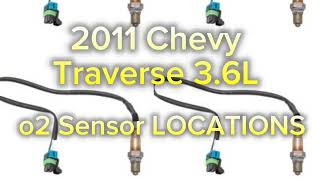
- Replacing the wrong oxygen sensor. The Acadia V6 has four O2 sensors. 🎬 Watch: Locate all four O2 sensors on the 3.6L engine. P0131 is specifically for Bank 1 (rear, firewall side) Sensor 1 (upstream, before the catalytic converter). Bank 2 is the easier-to-access front bank near the radiator.
Most Likely Causes
- Failed Bank 1, Sensor 1 Oxygen Sensor 🔴 High Probability → Shop Oxygen Sensor Oxygen sensors are wear-and-tear items. The Bank 1 sensor on the Acadia is in a high-heat, extremely tight area on the firewall side, making it susceptible to failure and very difficult to replace.
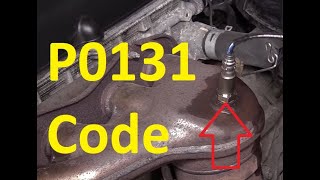
How to confirm: Use a scan tool to monitor the live voltage data for Bank 1, Sensor 1. A healthy sensor's voltage will fluctuate rapidly between approximately 0.1 and 0.9 volts. A sensor that is stuck low (e.g., below 0.2V) is faulty. 🎬 Watch: How to diagnose P0131 low voltage circuit codes.
Typical fix: Replace the Bank 1, Sensor 1 (upstream, rear) oxygen sensor. This requires raising the vehicle and working from underneath, typically from the passenger side. A special compact O2 sensor socket is required due to clearance issues.
Est. part cost: $40-$150 - Damaged Wiring or Contaminated Connector 🟡 Medium Probability The wiring harness for the Bank 1 sensor is in a tight, hot area. On 2016-2017 models, TSB #PIP5516 identifies a common issue where the power steering inlet hose leaks fluid directly onto the O2 sensor wiring harness, contaminating the connector and causing skewed readings and repeat sensor failures. A DIY video shows a mechanic discovering his sensor plug is "dripping power steering fluid".
How to confirm: Visually inspect the wiring harness leading to the sensor for any signs of melting, chafing, or corrosion. On 2016-2017 models, specifically look for an oily residue on the harness and connector originating from the power steering hoses above.
Typical fix: If contaminated with fluid, the TSB recommends replacing the leaking power steering hose, the oxygen sensor, and potentially the entire engine wiring harness to prevent recurrence. If simply chafed or melted, repair the damaged section of the harness.
Est. part cost: $10-$50 for wire repair, but can be much higher if the hose and harness need replacement. - Exhaust Leak 🟡 Medium Probability Leaks in the exhaust manifold or pipes before the O2 sensor can allow outside air to be drawn in, which makes the sensor read a false lean condition (low voltage). Gaskets can fail over time due to heat cycles.
How to confirm: Visually inspect the exhaust manifold and downpipe for cracks or loose bolts. Listen for a ticking or puffing sound from the engine bay, especially when the engine is cold. A mechanic can use a smoke machine to pinpoint leaks.
Typical fix: Repair the leak. This may involve replacing a gasket or the entire exhaust manifold.
Est. part cost: $20-$400 - Blown Fuse ⚪ Low Probability TSB #PIT5336 specifically mentions that an open "Emission 1" fuse can be associated with code P0131 on these vehicles, often along with heater circuit codes. This indicates a short in the circuit.
How to confirm: Locate the underhood fuse block and check the fuse labeled "EMISSION 1". If it is blown, there is a short circuit that needs to be found, possibly in the O2 sensor's internal heater element or its wiring.
Typical fix: Replace the fuse and diagnose the underlying short circuit. If the fuse blows immediately after replacing the O2 sensor, the new sensor may be faulty or there is a short in the harness.
Est. part cost: $1-$5
Rare But Worth Checking
- Low Fuel Pressure: If the engine is genuinely running lean due to a weak fuel pump or clogged filter, the O2 sensor will correctly report low voltage. This would typically be accompanied by other codes like P0171 (System Too Lean).
- Engine Vacuum Leak: A significant leak in the intake manifold or a vacuum hose allows unmetered air into the engine, causing a lean condition. TSB #PIP5529B notes that loose intake manifold bolts can cause a combination of codes including P0131 and P0171 on these vehicles, requiring re-torquing the bolts with threadlocker.
Diagnosis Steps
- Read all stored trouble codes with an OBD-II scanner.
- Check the 'EMISSION 1' fuse in the underhood fuse block, as per TSB #PIT5336.
- For 2016-2017 models, carefully inspect the power steering hoses above the Bank 1 (rear) side of the engine for any signs of wetness. Follow the O2 sensor wiring harness up to its connector and check for oily fluid contamination per TSB #PIP5516.
- Inspect the exhaust manifold and downpipe for any signs of cracks or black soot, which indicate an exhaust leak.
- Use a scan tool to view live data for 'O2 Sensor Voltage B1S1'. A healthy sensor fluctuates rapidly from ~0.1V to ~0.9V. If it's stuck below 0.3V, the sensor or its circuit is faulty.
- If voltage is stuck low, you can create a false rich condition (e.g., by feeding propane into the intake) to see if the voltage responds by going high. If it stays low, the sensor or wiring is confirmed bad. If it responds, look for a fuel delivery or vacuum leak issue.
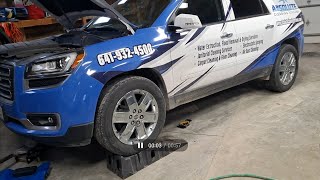
- If all other checks pass, the oxygen sensor itself is the most likely culprit. Prepare for a difficult replacement from underneath the vehicle. 🎬 See this walkthrough for replacing the difficult Bank 1 sensor.
Parts You'll Likely Need
- Oxygen Sensor (Bank 1, Sensor 1)
(OEM #12609457)— This is the upstream sensor on the rear bank. It is the most common failure point for code P0131. The original GM part number often corresponds to ACDelco part 213-4229. The original manufacturer is often Denso, with the equivalent part being Denso 234-4668.
Trusted brands: ACDelco (GM Genuine), Denso (Often the OEM supplier), Bosch, NGK/NTK
OEM price range: $100-$150
Aftermarket price range: $40-$80 - Compact Oxygen Sensor Socket (22mm or 7/8") — Due to extremely tight clearance around the Bank 1 sensor, a standard O2 sensor socket is often too tall. A compact or crow's foot style socket is considered essential for the DIY replacement.
Trusted brands: Lisle, OEMTools, GearWrench
Aftermarket price range: $10-$25
Related Codes That Often Appear With This One
- P0171 — If there is a legitimate lean condition (like a vacuum or exhaust leak), the O2 sensor will correctly report low voltage (P0131) and the ECM will flag the overall lean condition (P0171). TSBs PIP5529B and PIP5516 both list these codes together.
- P0137 — This code is for low voltage on the downstream sensor (Bank 1, Sensor 2). If both appear, it could point to a shared issue like a major exhaust leak or a wiring problem affecting the entire bank.
- P0030, P0050, P0132 — These are heater circuit and high voltage codes for the O2 sensors. TSB #PIT5336 notes that a blown "Emission 1" fuse can cause P0131 along with these codes. TSB #PIP5516 also groups P0131 with P0132, suggesting a wiring issue (like fluid contamination) can cause erratic signals.
Technical Service Bulletins (TSBs) & Recalls
- PIP5516: Details repeat O2 sensor failure on Bank 1 due to power steering fluid leaks contaminating the wiring harness.
- PIP5529B: Notes P0131 as one of several codes that can be caused by loose intake manifold bolts creating a vacuum leak.
- PIT5336: Links P0131 and other O2 sensor codes to a potentially open 'Emission 1' fuse due to a short circuit.
Platform-Specific Known Issues
- TSB #PIP5516: Power Steering Fluid Contamination: On 2016-2017 models, a leak from the power steering inlet hose can drip directly onto the Bank 1 O2 sensor wiring harness. This contaminates the connector, causing skewed readings, repeat sensor failures, and codes like P0131, P0132, and P0171. The official fix requires replacing the hose, the sensor, and the entire engine wiring harness.
- TSB #PIT5336: Blown 'Emission 1' Fuse: An open 'EMISSION 1' fuse in the underhood fuse block can cause P0131, often accompanied by heater circuit codes (P0030, P0050, etc.). This points to a short in the heater circuit of one of the O2 sensors or its wiring.
Mechanic-Grade Diagnostic Values
- O2 Sensor Heater Circuit Resistance — expected: 3 to 10 ohms between the two same-colored wires on the sensor connector.. Failure: Very high resistance or an open circuit (infinite ohms) indicates a failed internal heater.
- O2 Sensor Heater Circuit Voltage — expected: Approximately 12V (battery voltage) at the harness-side connector with Key On, Engine Off.. Failure: No voltage indicates a problem with the fuse (e.g., 'Emission 1') or the power supply circuit.
- GM DTC Set Condition for P0131 — expected: The ECM will trigger P0131 if the Bank 1 Sensor 1 voltage remains below 400 millivolts for more than 20 seconds.. Failure: Live data on a scan tool showing voltage consistently under 0.4V for a prolonged period confirms the fault condition.
- Short-Term Fuel Trim (STFT) and Long-Term Fuel Trim (LTFT) — expected: Ideally around 0%. Positive values indicate the ECM is adding fuel; negative values indicate it's subtracting fuel.. Failure: With a P0131 (false lean signal), the ECM will command more fuel, resulting in high positive fuel trim values (e.g., > +10%) as it tries to compensate. This can lead to a P0171 (System Too Lean) code if the trims exceed their limits.
Scan Tool Commands That Help
- GDS2 (GM Global Diagnostic System): Oxygen Sensor Heater Test — This bidirectional command allows a technician to manually activate the O2 sensor's internal heater. It is used to verify the integrity of the heater element and its control circuit (power and ground) independently of the sensor's signal circuit.
- GDS2 (GM Global Diagnostic System): Fuel Trim Reset — After a repair, especially one for a vacuum or exhaust leak, resetting the fuel trims forces the ECM to immediately relearn the engine's fueling needs. This can help confirm the fix is effective and clear the P0131 code faster.
Wiring & Ground Locations
- ECM Connector X1 — The Engine Control Module (ECM) is located on the left side of the engine. Connector X1 is one of the main harness connectors to the ECM.. This connector contains the signal and control wires for the oxygen sensors. Technicians may need to test for continuity or voltage at specific pins on this connector to diagnose a wiring issue between the sensor and the ECM.
- Bank 1 Sensor 1 Heater Control Circuit — On a 2011 Acadia, a wiring diagram shows the HO2S heater low control wire for Bank 1 Sensor 1 is a Purple wire going to Pin 50 of ECM connector X3.. If the 'Emission 1' fuse is good but the sensor heater isn't working, a technician would test this specific wire for a break or short to ground between the ECM and the sensor.
- Underhood Fuse Block — Located in the engine compartment on the passenger side of the vehicle.. This is the location of the 'EMISSION 1' fuse mentioned in TSB #PIT5336. A blown fuse here is a critical first check, as it supplies power to the O2 sensor heater circuits.
Real Owner Repair Stories
- YouTube video from channel '2015-2017 GMC Acadia Bank 1 Sensor 1 Oxygen Sensor Replacement' (2017 GMC Acadia Limited (First generation body style)) — Check Engine Light with code P0131.
❌ Tried (didn't work) The owner noted that accessing the sensor from the top of the engine bay was 'laughable' and not possible.
✅ What actually fixed it The owner replaced the Bank 1, Sensor 1 oxygen sensor by working from underneath the vehicle on the passenger side. They confirmed the need for a compact, crow's foot style O2 sensor socket due to extreme clearance issues.
OEM Part Supersession History
12609457 (GM)→213-4229 (ACDelco)— This is the standard service part number from GM's official parts division, ACDelco.
Heads up: Denso is often the original equipment manufacturer for GM. The equivalent Denso part is 234-4668. While many aftermarket brands exist, sticking to ACDelco or Denso is often recommended to avoid compatibility or premature failure issues.
Model Year Variations Within This Range
- 2017: 2017 was a transition year. The first-generation body style continued as the 'Acadia Limited', using the 3.6L LFX V6. The all-new, smaller second-generation 2017 Acadia introduced the updated 3.6L LGZ V6 engine. While the P0131 code applies to both, part numbers for sensors and other engine components may differ between an 'Acadia Limited' and a standard 'Acadia' from 2017. Always verify parts by VIN for this model year.
Helpful Videos
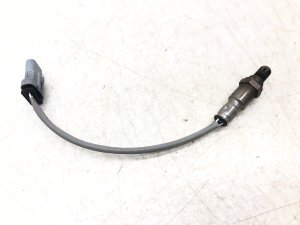
Used OEM Parts in Stock
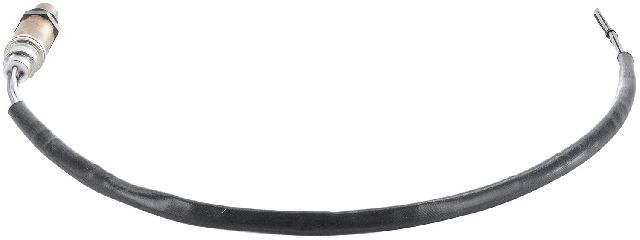
New Aftermarket Parts Available

The information in this article is provided for general reference and educational purposes only. Vehicle specifications, procedures, and part compatibility can vary by production date, trim level, and region. Always consult your vehicle's factory service manual and verify part numbers before purchasing or performing repairs. Safety-critical components such as airbags, seat belts, and braking systems should be installed by a qualified professional.
- Gmc ACADIA:
- 🧭 Diagnostic Flowchart
- 🎬 Helpful Videos
- 🛍️ Shop This Part
- What's Unique About the 2013-2017 Gmc ACADIA
- Symptoms You May Notice
- Most Likely Causes
- Rare But Worth Checking
- Diagnosis Steps
- Parts You'll Likely Need
- Related Codes That Often Appear With This One
- Technical Service Bulletins (TSBs) & Recalls
- Platform-Specific Known Issues
- Mechanic-Grade Diagnostic Values
- Scan Tool Commands That Help
- Wiring & Ground Locations
- Real Owner Repair Stories
- OEM Part Supersession History
- Model Year Variations Within This Range
- 🎟️ Get 5% Off