

P0131 on 2013-2017 GMC Acadia 3.6L: O2 Sensor Low Voltage Causes and Fixes
On a 2013-2017 Acadia, P0131 almost always points to a failed upstream oxygen sensor on the rear cylinder bank (Bank 1). Before replacing it, check for a known power steering fluid leak dripping on the sensor's wiring (TSB 18-NA-009) and for a blown 'EMISSION 1' fuse in the underhood fuse block. The sensor itself is a difficult DIY job due to its location against the firewall, requiring work from underneath the vehicle and a special crow's foot style O2 sensor socket.
- P0131 on the 3.6L Acadia refers to the upstream O2 sensor on the rear (firewall side) bank.
- Before buying any parts, inspect for a power steering fluid leak dripping onto the sensor's wiring harness, a known issue covered by a TSB.
- Also, check the 'EMISSION 1' fuse in the underhood fuse block.
- If no leaks or fuse issues are found, the sensor itself has likely failed, but be aware that replacement is difficult due to its location.
- Do not confuse Bank 1 (rear) with the much easier-to-access Bank 2 (front).
What's Unique About the 2013-2017 GMC Acadia
For this generation of Acadia and its platform mates, the P0131 code is frequently more than just a simple sensor failure. The Bank 1 sensor is notoriously difficult to access, located on the firewall side of the engine, making replacement from the top of the engine bay impossible. There are also two significant factory-documented issues: a power steering hose that can leak fluid directly onto the O2 sensor's wiring harness, causing signal faults (TSB 18-NA-009), and a specific 'EMISSION 1' fuse that can blow, cutting power to the sensor's heater circuit (TSB PIT5336). Diagnosing these platform-specific issues first can prevent the unnecessary replacement of a perfectly good sensor.
Generation note: The 2013-2017 year range covers the first generation (which ended with the 'Limited' model in 2017) and the start of the second generation (2017-present). The GM Lambda platform, which includes the first-gen Acadia, is known for difficult engine service. The TSB regarding a power steering fluid leak (18-NA-009, which supersedes PIP5516) specifically applies to 2016-2017 models, making it a key check for late first-gen and early second-gen vehicles. Because the 2017 model year included both the first-gen 'Acadia Limited' (LFX V6) and the all-new second-gen Acadia (LGX V6), it is critical to verify parts by VIN for this specific year.
Symptoms You May Notice
- Check Engine Light is on
- Reduced fuel economy
- Rough or unstable idle
- Engine hesitation during acceleration
- Strong fuel or 'rotten egg' smell from the exhaust
- Low engine power
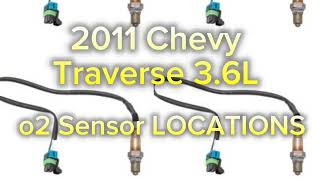
- Replacing the wrong oxygen sensor (e.g., Bank 2 Sensor 1 on the front/radiator side, which is much easier to access). 🎬 Watch: See exactly where each O2 sensor is located.
- Replacing the catalytic converter. A P0131 code points to the sensor *before* the converter; a bad converter would typically trigger a P0420 or P0430 code.
Most Likely Causes
- Failed Bank 1, Sensor 1 Oxygen Sensor 🔴 High Probability → Shop Oxygen Sensor Oxygen sensors are wear-and-tear items that degrade over time from heat and contaminants, typically lasting 70,000-100,000 miles. The location on the rear bank subjects it to high temperatures and extremely difficult access.
How to confirm: After ruling out wiring and fuse issues, the sensor itself is the most likely failure point. A scan tool can monitor the sensor's voltage; a reading that is stuck low (e.g., <0.2V) and does not fluctuate confirms the issue. 🎬 See how to diagnose a low voltage sensor reading.
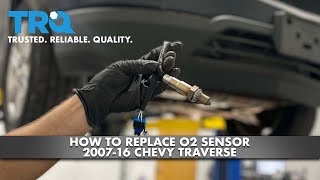
Typical fix: Replace the Bank 1, Sensor 1 (upstream, rear/firewall side) oxygen sensor. This is a difficult repair due to extremely limited access and must be done from underneath the vehicle. 🎬 Watch this walkthrough for replacing the difficult Bank 1 sensor. A special compact, crow's foot style O2 sensor socket is often required.
Est. part cost: $40-$150 - Power Steering Fluid Leak on Wiring (TSB 18-NA-009) 🟡 Medium Probability A specific power steering inlet hose is routed above the Bank 1 O2 sensor harness. On 2016-2017 models, this hose can leak, dripping fluid that contaminates the O2 sensor connector and wiring, causing skewed signals and repeat failures. This TSB supersedes the older PIP5516.
How to confirm: Visually inspect the wiring harness and connector for the rear O2 sensor. Look for signs of oily, reddish-brown residue consistent with power steering fluid originating from above.
Typical fix: Per TSB 18-NA-009, the official repair is extensive: replace the leaking power steering hose (P/N 22912855), the contaminated oxygen sensor (P/N 12634064), and the entire engine wiring harness to prevent a repeat failure. This is a significant job with a book time of 7.2 hours for FWD and 9.0 hours for AWD.
Est. part cost: $50-$200 for hose and sensor, but much higher if the full TSB procedure including the harness is followed. - Blown 'EMISSION 1' Fuse (TSB PIT5336) ⚪ Low Probability This fuse, located in the underhood fuse block on the passenger side, powers the heater circuits for the oxygen sensors. A short circuit in the wiring or within the heater element of any O2 sensor can cause it to blow. Manufacturer bulletin TSB Bulletin #PIT5336 notes that a technician may find this fuse open in conjunction with P0131 and other O2 sensor codes.
How to confirm: Locate and inspect the 'EMISSION 1' fuse in the underhood fuse block. If it is blown, it confirms an electrical short in the O2 sensor heater circuit, which will often be accompanied by a heater circuit code like P0030.
Typical fix: Find and repair the short circuit in the O2 sensor wiring harness, which may be melted or chafed on an exhaust component. After the repair, replace the fuse.
Est. part cost: $1-$5 for a fuse, plus labor for diagnosis - Exhaust Leak ⚪ Low Probability Exhaust manifold gaskets or the pipe itself can develop cracks or leaks over time, allowing outside air to enter the exhaust stream before the sensor.
How to confirm: Listen for hissing or ticking sounds from the exhaust manifold area, especially when the engine is cold. A visual inspection may reveal soot trails near gaskets or cracks. This fools the sensor into reading a false lean condition.
Typical fix: Repairing the exhaust leak. This could involve replacing a gasket or welding a crack in the manifold or pipe.
Est. part cost: $20-$300 depending on the source of the leak
Rare But Worth Checking
- Damaged Wiring or Connector: Even without a fluid leak, the wiring harness can be damaged by heat from the exhaust or chafing against other components, leading to a short or open circuit.
- Failing Powertrain Control Module (PCM): This is extremely rare. The PCM should only be considered after all other possibilities, including the sensor, wiring, fuses, and exhaust leaks, have been definitively ruled out.
- Vacuum Leak: A vacuum leak from sources like loose intake manifold bolts (per TSB PIP5529B) or a bad brake booster can introduce unmetered air, causing a true lean condition that triggers P0131. TSB Bulletin #PIP5529A also notes that P0131 can occur in combination with codes like P0101 or P0171 due to intake-related issues.
Diagnosis Steps
- Read the code with an OBD-II scanner to confirm P0131 is present and check for any other codes.
- Visually inspect the area around the Bank 1 (rear) O2 sensor. Specifically look for signs of a power steering fluid leak from above, as noted in TSB 18-NA-009. This is a critical first check, especially on 2016-2017 models.
- Check the 'EMISSION 1' fuse in the underhood fuse block on the passenger side of the engine bay. If it's blown, diagnose the heater circuit for a short to ground, as described in TSB Bulletin #PIT5336.
- Inspect the O2 sensor wiring harness and connector for any signs of melting, chafing, corrosion, or fluid contamination.
- Check for exhaust leaks between the cylinder head and the O2 sensor. Listen for unusual ticking noises and look for soot trails.
- Use a scan tool to observe the live data for the Bank 1, Sensor 1 voltage. If it is stuck low (under 0.2V) and does not fluctuate, and all wiring/fuses are good, the sensor has failed.
- If the sensor is confirmed bad, replace the Bank 1, Sensor 1 oxygen sensor. Be prepared for a difficult job requiring a special O2 sensor socket.
Parts You'll Likely Need
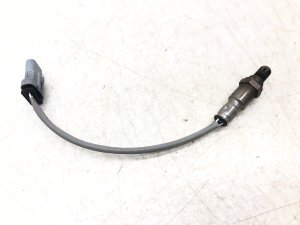
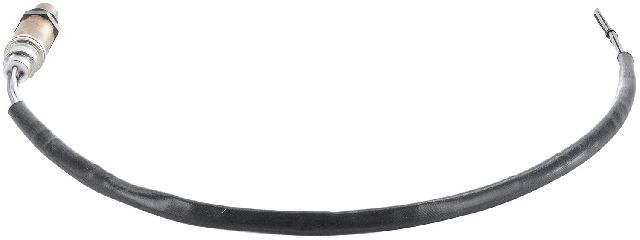
- Oxygen Sensor (Bank 1, Sensor 1)
(OEM #12663317)— This is the upstream sensor on the rear bank. It is the most common part to fail and cause the P0131 code after ruling out external factors. The OEM part number has been superseded by 12701634.
Trusted brands: ACDelco, Denso, NGK/NTK, Bosch
OEM price range: $100-$150
Aftermarket price range: $40-$80 - Power Steering Gear Inlet Hose
(OEM #22912855)— If TSB 18-NA-009 is diagnosed, this hose must be replaced to stop the leak that contaminates the O2 sensor wiring.
Trusted brands: ACDelco (OEM)
OEM price range: $50-$80
Related Codes That Often Appear With This One
- P0171 — System Too Lean (Bank 1). A faulty O2 sensor reporting a false low voltage (lean) signal can cause the ECM to add too much fuel, but if the sensor is truly detecting a lean condition (like a vacuum or exhaust leak), both codes can appear. TSB 18-NA-009 lists P0171 as a possible companion code to P0131 from the power steering fluid issue.
- P0030 — HO2S Heater Control Circuit (Bank 1, Sensor 1). This code often appears with P0131 if there is a blown 'EMISSION 1' fuse or a wiring issue, as both the sensor signal and heater circuit can be affected.
- P0132 — HO2S Circuit High Voltage (Bank 1, Sensor 1). TSB 18-NA-009 notes that power steering fluid contamination can cause erratic signals, leading to either low voltage (P0131) or high voltage (P0132) codes.
Technical Service Bulletins (TSBs) & Recalls
- 18-NA-009: Malfunction Indicator Lamp (MIL) Illuminated - DTC's P0032, P0131, P0132, P0133, P0137, P0171 or P2096.
- PIP5516: (Superseded by 18-NA-009) Details repeat O2 sensor failure on Bank 1 due to power steering fluid leaks.
- PIT5336: Blown 'EMISSION 1' Fuse Causing O2 Sensor Codes.
- PIP5529B: Notes P0131 as one of several codes that can be caused by loose intake manifold bolts creating a vacuum leak.
- PIP5529A: Provides diagnostic and repair assistance for MIL illumination involving codes P0131, P0137, and P0171.
Platform-Specific Known Issues
- TSB 18-NA-009 (supersedes PIP5516): A power steering fluid leak from the inlet hose (P/N 22912855) can contaminate the Bank 1 O2 sensor wiring, causing this code. This is a critical first check on 2016-2017 models. The full repair is extensive, requiring replacement of the hose, sensor, and engine wiring harness.
Mechanic-Grade Diagnostic Values
- O2 Sensor Heater Circuit Resistance — expected: 3 to 10 Ohms (tested across the two same-colored wires on the sensor-side connector).. Failure: An open circuit (infinite resistance) or a reading significantly outside the expected range indicates a failed internal heater element.
- O2 Sensor Heater Circuit Voltage — expected: ~12 Volts / Battery Voltage (tested at the harness-side connector with Key On, Engine Off).. Failure: Zero or very low voltage indicates a blown fuse (e.g., 'EMISSION 1') or an open in the power supply wire.
- GM DTC P0131 Set Condition — expected: The ECM triggers the code when the B1S1 voltage signal remains below 400 millivolts (0.4V) for more than 20 seconds during closed-loop operation.. Failure: Observing this condition on a scan tool's live data graph confirms the fault the ECM is seeing.
- Long Term Fuel Trim (LTFT) - Bank 1 — expected: Ideally close to 0%, but generally acceptable within +/- 10%.. Failure: A highly positive LTFT (e.g., > +15%) can indicate the ECM is trying to compensate for a false lean signal from the failing O2 sensor. A code is typically set when trims exceed +25%.
Hidden / Shadow Codes Worth Checking
- Mode 6, OBDMID $21, TID $84: This refers to the On-Board Diagnostic Monitor ID for the Bank 1 Oxygen Sensor. A technician can use a scan tool that displays Mode 6 data to view the raw test results and limits for the O2 sensor's response rate and other parameters, which can confirm a marginal sensor before it fails completely. (see via A professional-grade scan tool with Mode 6 data display capabilities.)
Scan Tool Commands That Help
- GDS2 (GM Global Diagnostic System): Oxygen Sensor Heater Test — This bidirectional command allows a technician to manually turn the O2 sensor's heater on and off. It is used to definitively test the integrity of the heater, its fuse, and the wiring circuit, separating a heater failure from a signal circuit failure.
- GDS2 (GM Global Diagnostic System): Fuel Trim Reset — After replacing an O2 sensor or fixing an exhaust/vacuum leak, using this function will erase the ECM's learned long-term fuel adjustments. This forces the computer to relearn immediately, which helps verify that the repair was successful if the fuel trims quickly return to a normal range.
Wiring & Ground Locations
- G104 — On the left (rear/firewall side) cylinder head. It is a primary engine ground, often a braided strap connecting the cylinder head to the chassis/firewall.. This is the main ground for the cylinder bank where Bank 1 Sensor 1 is located. A loose or corroded connection at G104 can create an unstable ground reference for the sensor and ECM, causing a false low voltage signal even if the sensor and its wiring are good.
- B1S1 O2 Sensor Connector — Attached to the rear of the engine, below the exhaust manifold. The harness runs up toward the top of the transmission bellhousing area.. This 4-wire connector is the primary test point. The two same-colored wires are for the heater circuit, one wire is the signal, and the other is the signal ground. Testing for power, ground, and signal continuity should be done here. It is also the component most likely to be contaminated by the power steering fluid leak.
- ECM Connector X1 — The Engine Control Module (ECM) is in the left-front of the engine compartment. X1 is one of the large, multi-pin connectors plugged into it.. If a wiring fault is suspected, this is the termination point for the O2 sensor circuits. Probing for continuity between the O2 sensor connector and the corresponding pins at X1 can definitively identify a broken wire in the harness. For example, on similar GM engines, the injector control wires are a twisted pair in this connector.
Real Owner Repair Stories
- Common failure pattern on GM 3.6L V6 engine family (Traverse, Acadia, Enclave) (2011 Chevrolet Traverse 3.6L V6 (platform mate)) — Severe engine misfire with multiple injector circuit codes (P2149).
❌ Tried (didn't work) Initial diagnosis pointed to a faulty ECM or multiple failed injectors.
✅ What actually fixed it The injector wiring harness had rubbed through on a sharp edge of the engine block, causing a short circuit that disabled an entire bank of injectors. The fix was to repair the damaged wires and re-route the harness with protective loom. This highlights a known vulnerability of harnesses on this engine platform, which could also cause a P0131 if the O2 sensor wires are the ones that chafe through.
OEM Part Supersession History
12663317→12701634— Part design update or manufacturer change.
Heads up: The new part, 12701634, may require 'programming and/or special setup procedures' according to GM documentation, though this is uncommon for O2 sensors. It may refer to a required Fuel Trim Reset after installation.
Model Year Variations Within This Range
- 2017: The 2017 model year is a split-generation year. The 'Acadia Limited' is the older, first-generation body style with the 3.6L LFX V6. The all-new 'Acadia' is the smaller, second-generation body style with the redesigned 3.6L LGX V6. Engine components, including sensors and wiring, are often not interchangeable. Always verify the correct part using the vehicle's VIN.
- 2013-2017 (First Gen LFX) vs. 2017+ (Second Gen LGX): The LFX (first-gen) and LGX (second-gen) are both 3.6L V6 engines but share very few parts. While the P0131 diagnosis is similar, the physical location of grounds, harness routing, and some TSBs (like for loose intake bolts on the LGX) are engine-specific.
Diagnostic Flowchart
Real Owner Stories
Aggregated from forums and TSBs cited above. Mileages and costs reflect what owners reported in those sources.
2015-2017 GMC Acadia 3.6L V6
Symptoms: Needed to replace the Bank 1 Sensor 1 Oxygen Sensor. Noted that trying to access the sensor from the top of the engine bay was 'laughable'.
What fixed it: Replaced the sensor from underneath the vehicle using a compact, crow's foot style O2 sensor socket to navigate the tight clearance.
Source hint: YouTube Repair Story - '2015-2017 GMC Acadia Bank 1 Sensor 1 Oxygen Sensor Replacement'
2016-2017 GMC Acadia 3.6L V6
Symptoms: Repeat O2 sensor failures on Bank 1 due to power steering fluid leaking onto the wiring harness.
What fixed it: Replaced the leaking power steering inlet hose (P/N 22912855), the oxygen sensor (P/N 12634064), and the entire engine wiring harness per the technical service bulletin.
Source hint: TSB 18-NA-009 (supersedes PIP5516)
GM Lambda Platform (Acadia/Enclave/Traverse)
Symptoms: General difficulty of servicing the engine on the Lambda platform.
What fixed it: Noted that engine-out service is often the standard procedure for major repairs on this platform due to packaging constraints.
Source hint: BobIsTheOilGuy Forum Discussion on GM Lambda Platform
Modified Vehicle (CorvetteForum)
Symptoms: Experienced a P0131 code after fixing an exhaust leak.
What fixed it: Noted that changes in exhaust flow and composition can sometimes trigger the code even after a repair is completed.
Source hint: CorvetteForum Discussion on P0131
Related OBD-II Codes
Frequently Asked Questions
Does TSB 18-NA-009 apply to my 2013-2017 GMC Acadia for code P0131?
Why is replacing the Bank 1 Sensor 1 oxygen sensor so difficult on the 3.6L V6 Acadia?
I have a P0131 code and my 'EMISSION 1' fuse is blown. What does this mean?
What parts are required to fix the power steering fluid contamination issue (TSB 18-NA-009)?
Can loose intake manifold bolts cause a P0131 code on this engine?
Are other GM vehicles affected by the same P0131 issues as the Acadia?
Helpful Videos
Used OEM Parts in Stock
New Aftermarket Parts Available

The information in this article is provided for general reference and educational purposes only. Vehicle specifications, procedures, and part compatibility can vary by production date, trim level, and region. Always consult your vehicle's factory service manual and verify part numbers before purchasing or performing repairs. Safety-critical components such as airbags, seat belts, and braking systems should be installed by a qualified professional.
- GMC Acadia:
- 🧭 Diagnostic Flowchart
- 🎬 Helpful Videos
- 🛍️ Shop This Part
- What's Unique About the 2013-2017 GMC Acadia
- Symptoms You May Notice
- Most Likely Causes
- Rare But Worth Checking
- Diagnosis Steps
- Parts You'll Likely Need
- Related Codes That Often Appear With This One
- Technical Service Bulletins (TSBs) & Recalls
- Platform-Specific Known Issues
- Mechanic-Grade Diagnostic Values
- Hidden / Shadow Codes Worth Checking
- Scan Tool Commands That Help
- Wiring & Ground Locations
- Real Owner Repair Stories
- OEM Part Supersession History
- Model Year Variations Within This Range
- Real Owner Stories
- 2015-2017 GMC Acadia 3.6L V6
- 2016-2017 GMC Acadia 3.6L V6
- GM Lambda Platform (Acadia/Enclave/Traverse)
- Modified Vehicle (CorvetteForum)
- Related OBD-II Codes
- Frequently Asked Questions
- 🎟️ Get 5% Off