

P0131 on 1999-2007 GMC Sierra: O2 Sensor Low Voltage Causes and Fixes
Code P0131 on a 1999-2007 GMC Sierra most often means the Bank 1, Sensor 1 (driver's side, upstream) oxygen sensor has failed. Other common causes include exhaust leaks from broken manifold bolts or damaged wiring. Replacing the sensor is the most frequent fix, but a full diagnosis is crucial.
- P0131 points to a problem with the driver's side upstream O2 sensor or its circuit.
- The most common fix is replacing the Bank 1, Sensor 1 oxygen sensor.
- Before replacing the sensor, always inspect the wiring for heat damage and check for exhaust leaks from broken manifold bolts.
- Driving with this code can hurt your fuel economy and eventually damage your catalytic converter.
- This is a DIY-friendly repair for those with basic tools, including a special O2 sensor socket.
What's Unique About the 1999-2007 GMC Sierra
On GMT800 trucks like the 1999-2007 Sierra, the wiring for the oxygen sensors is a common failure point due to age and exposure to high heat from the exhaust. Wires can become brittle, melt, or corrode, leading to the low voltage signal that triggers P0131. Additionally, the exhaust manifold bolts on the V8 engines (4.8L, 5.3L, 6.0L) are notoriously prone to rusting and breaking, especially the rearmost bolt on the driver's side and the foremost on the passenger side. This creates an exhaust leak before the O2 sensor, introducing unmetered air into the exhaust stream, which causes the sensor to read a false lean condition and set the code. The issue is so common that aftermarket clamp-style repair kits (e.g., Dorman 917-107) exist to fix the leak without extracting the broken bolt.
Generation note: This guide covers the first generation (GMT800) of the GMC Sierra, which includes model years 1999-2006 and the 2007 'Classic' body style. The all-new GMT900 platform was also introduced in 2007, and while the code's meaning is the same, specific part numbers and diagnostic details may differ.
Symptoms You May Notice
- Check Engine Light is on
- Poor fuel economy
- Rough or unstable idle
- Engine hesitation or stumbling on acceleration
- Engine misfires (may be accompanied by code P0300)
- Black smoke from the exhaust (if PCM overcompensates with fuel)
- Audible ticking or puffing noise from the engine bay, especially when cold, indicating an exhaust leak
- Replacing the O2 sensor without checking for exhaust leaks or wiring damage first. The sensor may be correctly reporting a problem caused by another component.
- Ignoring other codes. If P0171 (System Too Lean) is also present, the root cause is more likely a vacuum leak, fuel delivery issue, or MAF problem, not the O2 sensor itself.
Most Likely Causes
- Failed Bank 1, Sensor 1 Oxygen Sensor 🔴 High Probability → Shop Oxygen Sensor Oxygen sensors are wear items with a finite lifespan, typically around 70,000-100,000 miles. Given the age of this vehicle range, sensor failure due to normal wear is very common. Contamination from oil or coolant can also shorten its life.
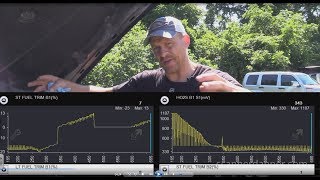
How to confirm: Use an OBD-II scanner with live data to monitor the B1S1 voltage. A healthy sensor 🎬 Watch: Diagnostic walkthrough for P0131 and related lean codes. fluctuates rapidly between approximately 0.1V and 0.9V. If the voltage is stuck below 0.2V (200mV) for extended periods, the sensor is likely bad or reporting a legitimate lean condition.
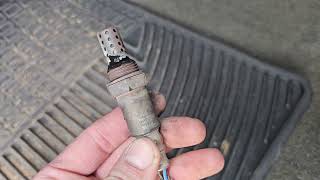
Typical fix: Replace the Bank 1, Sensor 1 oxygen sensor. This sensor is located on the driver's side, in the exhaust manifold or pipe, before the catalytic converter.
Est. part cost: $40-$120 - Damaged O2 Sensor Wiring or Connector 🟡 Medium Probability → Shop Oxygen Sensor The wiring harness runs close to the hot exhaust and is exposed to road debris. Over time, wires can melt, chafe against the frame or transmission bellhousing, or the connector pins can corrode, causing a short to ground or an open circuit.
How to confirm: Visually inspect the entire length of the wiring from the sensor to the main harness. Check for melted plastic, frayed wires, and corrosion inside the connector plug. Use a multimeter to check for continuity and for shorts to ground on the signal wire.
Typical fix: Repair the damaged section of the wire or replace the connector pigtail. Ensure the harness is properly secured away from heat sources and sharp edges.
Est. part cost: $15-$40 - Exhaust Leak Before the O2 Sensor 🟡 Medium Probability → Shop Oxygen Sensor The bolts securing the exhaust manifold to the cylinder head are known to rust and break on these GM trucks. A broken bolt creates a leak that allows outside air to be sucked into the exhaust, causing a false lean reading (low voltage) from the O2 sensor. This is often heard as a 'tick' that may disappear as the engine warms up and the metal expands.
How to confirm: Listen for a ticking or puffing noise from the engine bay, especially when the engine is cold. A visual inspection may reveal black soot trails around the manifold-to-head mating surface. A mechanic can use a smoke machine to pressurize the exhaust and pinpoint the leak.
Typical fix: Replace the broken exhaust manifold bolts and the manifold gasket. This can be a difficult job due to rusted and seized bolts. In some cases, an aftermarket clamp bracket can be used as a less invasive fix.
Est. part cost: $50-$200 - Low Fuel Pressure ⚪ Low Probability A failing fuel pump, clogged fuel filter, or a faulty fuel pressure regulator can cause the engine to run lean. The O2 sensor will accurately report this lean condition with a low voltage, triggering P0131. The fuel system design changed around 2004, affecting the location of the regulator (see Model-Year Variations).
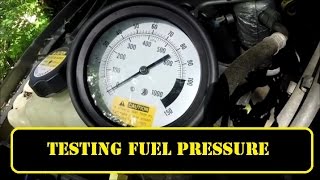
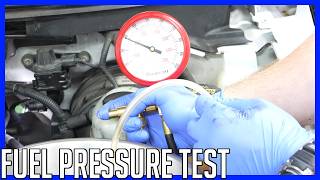
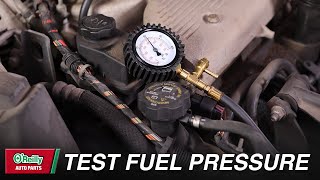
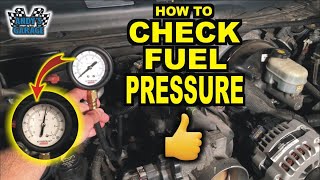
How to confirm: Connect a fuel pressure gauge to the fuel rail's Schrader valve. For most V8s, pressure should be 55-62 psi with the key on, engine off. If pressure is low, suspect the pump, filter, or regulator. On pre-2004 models, also check the vacuum line on the rail-mounted regulator for the presence of raw fuel.
Typical fix: On pre-2004 models, replace the frame-mounted fuel filter or rail-mounted fuel pressure regulator. On 2004+ models, the fix is typically replacing the entire in-tank fuel pump module, which contains the filter and regulator.
Est. part cost: $20-$350
Rare But Worth Checking
- Intake Manifold Vacuum Leak: → Shop Engine Intake Manifold A significant vacuum leak from a cracked hose or bad intake manifold gasket can cause a lean condition across the entire engine, which the B1S1 sensor will detect. This is often accompanied by a P0171 (Fuel System Too Lean Bank 1) code.
- Contaminated or Faulty Mass Air Flow (MAF) Sensor: → Shop Fuel Injection Air Flow Meter If the MAF sensor is dirty (especially from over-oiled aftermarket air filters) or failing, it can under-report the amount of air entering the engine. The PCM then commands less fuel, creating a lean condition that P0131 reflects. GM issued an information-only bulletin (04-06-04-001) about issues caused by over-oiled air filters.
- Faulty Powertrain Control Module (PCM): In very rare cases, the internal circuitry of the PCM that reads the O2 sensor signal can fail. This should only be considered after all other possibilities have been exhaustively ruled out.
Diagnosis Steps
- Read the code with an OBD-II scanner and note any other codes present (especially P0171, P0300, P0151).
- Use the scanner's live data feature to observe the Bank 1 Sensor 1 voltage at idle and while driving. It should fluctuate rapidly between ~0.1V and ~0.9V. If it's stuck low (e.g., <0.2V), the issue is confirmed.
- Perform a thorough visual inspection of the O2 sensor's wiring harness and connector. Look for any signs of melting, chafing, or corrosion.
- Inspect the exhaust manifold and downpipe for signs of leaks (soot trails) or listen for an audible ticking sound, especially on a cold start.
- Check for engine vacuum leaks by listening for hissing sounds or by using a smoke machine to introduce smoke into the intake system.
- Test fuel pressure at the fuel rail to ensure the fuel pump, filter, and regulator are functioning correctly. Pressure should be 55-62 psi for V8 models.
- Clean the MAF sensor with a dedicated MAF sensor cleaner. Inspect the air filter and intake tube for issues.
- If all other checks pass, the oxygen sensor itself is the most likely cause of the problem.
Parts You'll Likely Need
- Oxygen Sensor (Bank 1, Sensor 1)
(OEM #ACDelco 213-2825 (cross-references to GM 88974015))— This is the most common failure point for code P0131. It is a wear-and-tear component that degrades over time.
Trusted brands: ACDelco (OEM), Denso (often the OE manufacturer), Bosch, NGK/NTK
OEM price range: $80-$120
Aftermarket price range: $40-$90
Related Codes That Often Appear With This One
- P0171 — This code for 'System Too Lean (Bank 1)' often appears with P0131 because the underlying causes, like vacuum leaks, low fuel pressure, or exhaust leaks, result in a lean condition that the O2 sensor detects.
- P0300 — A 'Random/Multiple Cylinder Misfire' code can be triggered by the same lean conditions that cause P0131, as an improper air-fuel ratio can lead to incomplete combustion.
- P0151 — This is the same low voltage code but for Bank 2, Sensor 1. If both P0131 and P0151 appear together, it strongly suggests a common cause affecting both banks, such as a faulty MAF sensor, low fuel pressure, or a large vacuum leak at the intake manifold.
Technical Service Bulletins (TSBs) & Recalls
- TSB #03-06-04-030F: Details issues with clogged fuel injectors causing various driveability symptoms and lean/misfire codes. Recommends a specific cleaning procedure (AFIT) and using Top Tier gasoline.
- TSB #04-06-04-051I: An informational bulletin about fuel additives (GM Fuel System Treatment PLUS) and the benefits of Top Tier gasoline for preventing injector deposits.
- GM Information Bulletin #04-06-04-001C: Warns technicians that an excessively over-oiled aftermarket air filter can contaminate the MAF sensor, leading to skewed readings, driveability concerns, and setting various DTCs. This is not a repair bulletin but provides diagnostic context.
Platform-Specific Known Issues
- Broken Exhaust Manifold Bolts: → Shop Exhaust Manifold Extremely common on all GMT800 V8s. The bolts, especially at the rear of the driver's side head, rust and snap. This creates a pre-O2 sensor exhaust leak, drawing in air and causing a false lean (low voltage) reading. The fix is either bolt extraction and replacement or using an aftermarket clamp bracket.
- Clogged Fuel Injectors: GM TSB #03-06-04-030F addresses driveability issues caused by clogged fuel injectors, which can lead to lean conditions (P0171/P0174) and misfires (P0300). While not directly for P0131, a severely clogged injector on Bank 1 could cause a localized lean condition that triggers P0131 before setting other codes.
Mechanic-Grade Diagnostic Values
- O2 Sensor Heater Circuit Resistance — expected: A new OEM-style (Denso) sensor should read approximately 5.3 - 5.4 Ohms across the two heater wires (typically same color). General spec is 2-30 Ohms, but values can vary significantly by brand.. Failure: An open circuit (infinite resistance) indicates a failed heater. A reading that is significantly different from the opposing bank's sensor can also indicate a problem.
- O2 Sensor Voltage (Live Data) — expected: A healthy upstream sensor fluctuates rapidly between ~100 mV (0.1V) and ~900 mV (0.9V) once the engine is in closed loop.. Failure: Voltage stuck below 200-400 mV for an extended period triggers the code.
- O2 Sensor Bias Voltage (Key On, Engine Off) — expected: Approximately 440-450 mV (0.44-0.45V). This is a reference voltage supplied by the PCM before the sensor heats up.. Failure: A reading of 0V or significantly different from the reference may indicate a wiring issue or short.
- Fuel Pressure (V8 Engines) — expected: 55-62 PSI with key on, engine off.. Failure: Pressure below this range indicates a fuel delivery problem (pump, filter, or regulator). Pressure that drops rapidly after the pump primes may indicate a leak or faulty check valve.
Scan Tool Commands That Help
- Tech2 / HP Tuners / High-End Scanners: Live Data Graphing - O2 Sensor Voltage (B1S1 vs B2S1) — This is the primary diagnostic function. Use it to visually confirm if the B1S1 sensor is 'lazy' or stuck low compared to the known-good B2S1 sensor on the opposite bank. A flat line under 200mV on B1S1 while B2S1 is actively switching confirms the fault condition.
Wiring & Ground Locations
- O2 Sensor Heater Fuses — In the underhood fuse block. On 2005 models, these are typically 15-amp fuses in slots #3 and #4.. A blown fuse will disable the O2 sensor's heater circuit, preventing it from reaching operating temperature. This can cause slow response and may trigger heater circuit codes (like P0135) in addition to P0131.
- G102 / G104 — On the rear of the cylinder heads (G102 on driver's side, G104 on passenger's side). These are common failure points due to heat and vibration.. These grounds provide the reference for ignition coils and various engine control module functions. A poor ground here can introduce electrical noise or voltage offsets that affect sensor readings, including the O2 sensor signal.
- G103 — On the firewall/cowl, typically above the brake booster on the driver's side.. This is a critical ground for the Body Control Module (BCM) and the Data Link Connector (DLC). While not directly for the O2 sensor, a fault here can cause bizarre communication issues and phantom codes.
- Wiring Harness Chafe Point — Inspect the harness where it may contact the transmission bellhousing, front driveshaft (on 4WD models), or exhaust components.. Vibrations and heat can cause the harness to rub through, shorting the O2 sensor signal wire to ground, which would directly cause a persistent low voltage reading and trigger P0131.
Real Owner Repair Stories
- GM-Trucks.com forum user (2005 Silverado 5.3L) — Repeatedly getting code P0053 (HO2S Heater Resistance), which is closely related to P0131.
❌ Tried (didn't work) Clearing the code (it came back after a few starts)., Replacing the left upstream O2 sensor with a new Bosch sensor.
✅ What actually fixed it The user diagnosed that the new Bosch sensor had a heater resistance of 12.7 ohms, while the working OEM sensor on the other bank was 4 ohms. The significant difference in resistance, despite being a new part, was the likely cause for the code returning. The implied fix is to use a sensor (like Denso or ACDelco) with the correct OEM resistance specification.
"I Checked Everything" — The Actual Cause
- A ruptured fuel pressure regulator diaphragm (on pre-2004 return-style fuel systems). A smoke test of the intake and exhaust would show no leaks, but the internal diaphragm in the regulator fails, allowing raw fuel to be sucked into the intake manifold through its vacuum line. While this typically causes a rich condition, a faulty regulator can also fail to hold proper pressure, contributing to a lean condition that the O2 sensor reports as low voltage. The definitive test is to pull the vacuum hose off the regulator; if gasoline is present, the regulator is bad.
OEM Part Supersession History
Denso 234-4668 (Aftermarket)→N/A— N/A
Heads up: Be cautious with cross-references. The Denso 234-4668 is widely cited as the correct upstream sensor for 1999-2007 models. However, some parts catalogs cross-reference it to ACDelco 213-4228. The ACDelco 213-4228 is for the next generation 2008-2013 (GMT900) trucks and may have different heater resistance or response characteristics. Using it on a GMT800 may cause codes to persist.
Model Year Variations Within This Range
- 1999-2003 (and some early 2004): These models use a 'return-style' fuel system. The fuel pressure regulator is located on the fuel rail in the engine bay and is referenced to engine vacuum. The fuel filter is a separate, serviceable part located on the frame rail. A failure of the rail-mounted regulator is a possible cause of P0131.
- 2004-2007: These models use a 'returnless' (deadhead) fuel system. The fuel pressure regulator and fuel filter are integrated into the fuel pump module inside the fuel tank. A fuel pressure problem on these trucks almost always requires replacing the entire in-tank assembly. The diagnostic path for low fuel pressure is therefore completely different from earlier models.
Diagnostic Flowchart
Used vs. New Parts: Buying Guide for This Vehicle
When a used part is the smart pick: A used part is a smart choice for replacing a damaged O2 sensor connector pigtail or a section of the engine wiring harness. These parts do not wear out mechanically and a clean donor part from a lower-mileage vehicle can be a cost-effective fix.
Donor-vehicle mileage cap: roughly under 120000 miles for the part to have meaningful remaining life.
What to inspect on the donor part:
- For wiring, check for flexible, non-brittle insulation.
- Ensure there are no signs of melting or heat damage, especially on the plastic connector.
- Look inside the connector for clean, shiny pins with no green or white corrosion.
- Avoid any harness sections with previous repairs (electrical tape, butt connectors).
OEM-only on this vehicle (don't cheap out):
- Powertrain Control Module (PCM) - Aftermarket/reman units can be problematic, and a used one requires a VIN flash by a dealer or specialist shop.
Aftermarket brands forum-validated for this vehicle:
- Denso (often the original equipment manufacturer)
- NGK / NTK
- ACDelco (GM's own brand)
Brands owners have reported issues with on this vehicle:
- Unnamed 'white box' sensors from online marketplaces.
- While Bosch is a major brand, be aware that some users have reported issues with heater resistance values not matching GM's specifications on these specific trucks, potentially causing heater circuit codes to persist.
Real Owner Stories
Aggregated from forums and TSBs cited above. Mileages and costs reflect what owners reported in those sources.
GMT800 V8 (e.g., 5.3L, 6.0L)
Symptoms: Audible ticking noise from the engine bay when cold, accompanied by a Check Engine Light for P0131.
What fixed it: The root cause was a broken exhaust manifold bolt. The fix involved extracting the broken bolt and replacing it along with the manifold gasket. In some cases, an aftermarket clamp bracket is used as an alternative repair.
Source hint: Vehicle Specific Issue: Broken Exhaust Manifold Bolts
2002 Chevrolet Tahoe (Platform Mate)
Symptoms: Check Engine Light with codes P0131 and P0151, engine running in open loop, and no power when accelerating hard.
What fixed it: The problem was traced to low fuel pressure (42 PSI). The fix was replacing the weak in-tank fuel pump, which restored proper pressure and resolved the lean condition on both banks.
Source hint: Chevy Tahoe Forum - 'P0131 & P0151, open loop, no power when floored'
GMC Sierra / Chevrolet Silverado with LS V8
Symptoms: Check Engine Light on with only codes P0131 and P0151 present, indicating a lean condition on both engine banks.
What fixed it: After investigating, the actual culprit was found to be a faulty Mass Air Flow (MAF) sensor, which was causing the entire engine to run lean. Replacing the MAF sensor fixed the issue.
Source hint: LS1TECH.com - 'For those of you who have codes P0131 & P0151 only'
Related OBD-II Codes
Frequently Asked Questions
I hear a ticking noise from the engine bay, especially when it's cold. Is this related to my P0131 code?
My truck is showing codes P0131, P0171, and P0300 all at once. What's the connection?
I have both P0131 (Bank 1) and P0151 (Bank 2) codes. What could cause both upstream sensors to fail at the same time?
Where is the Bank 1, Sensor 1 oxygen sensor located on my 1999-2007 Sierra?
Can a dirty or over-oiled aftermarket air filter cause a P0131 code?
What does GM TSB #03-06-04-030F have to do with my P0131 code?
Helpful Videos

We Have This Part in Stock


The information in this article is provided for general reference and educational purposes only. Vehicle specifications, procedures, and part compatibility can vary by production date, trim level, and region. Always consult your vehicle's factory service manual and verify part numbers before purchasing or performing repairs. Safety-critical components such as airbags, seat belts, and braking systems should be installed by a qualified professional.
- GMC Sierra:
- 🧭 Diagnostic Flowchart
- 🎬 Helpful Videos
- 🛍️ Shop This Part
- What's Unique About the 1999-2007 GMC Sierra
- Symptoms You May Notice
- Most Likely Causes
- Rare But Worth Checking
- Diagnosis Steps
- Parts You'll Likely Need
- Related Codes That Often Appear With This One
- Technical Service Bulletins (TSBs) & Recalls
- Platform-Specific Known Issues
- Mechanic-Grade Diagnostic Values
- Scan Tool Commands That Help
- Wiring & Ground Locations
- Real Owner Repair Stories
- "I Checked Everything" — The Actual Cause
- OEM Part Supersession History
- Model Year Variations Within This Range
- Used vs. New Parts: Buying Guide for This Vehicle
- Real Owner Stories
- GMT800 V8 (e.g., 5.3L, 6.0L)
- 2002 Chevrolet Tahoe (Platform Mate)
- GMC Sierra / Chevrolet Silverado with LS V8
- Related OBD-II Codes
- Frequently Asked Questions
- 🎟️ Get 5% Off