

P0131 on 1996-2000 Honda Civic: Causes, Fixes, and O2 Sensor Guide
On a 1996-2000 Honda Civic, P0131 is almost always caused by a failing primary (upstream) oxygen sensor. Replacing the sensor is the most likely fix. Expect to pay $40-$90 for a quality aftermarket direct-fit sensor (like Denso or NTK) and around $150+ for an OEM part. It's a DIY-friendly job with the right O2 sensor socket, but watch for cracked exhaust manifolds, another common culprit.
- P0131 on your 1996-2000 Civic almost always means the primary (upstream) oxygen sensor has failed.
- Before buying parts, check for obvious exhaust leaks between the engine and the sensor, especially cracks in the exhaust manifold.
- Use a direct-fit replacement sensor from a quality brand like Denso or NGK. Avoid universal sensors that require splicing wires.
- You will likely need a special 7/8" (22mm) O2 sensor socket to remove the old sensor, as it is often seized in place.
- Verify the sensor's location on your specific Civic trim; it may be on the manifold or under the car.
What's Unique About the 1996-2000 Honda Civic
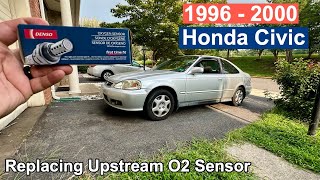
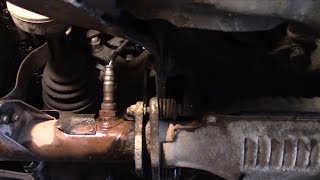
For the sixth-generation (1996-2000) Civic with D-series engines (D16Y7, D16Y8), this code is straightforward and overwhelmingly points to the O2 sensor itself. A key platform-specific detail is the location of this sensor can vary by trim level. On models like the DX and LX (D16Y7 engine), it's typically easy to access on the front exhaust manifold. However, on the 1999-2000 EX trim (D16Y8 engine), the sensor is located further down the exhaust system underneath the car, which can make access slightly more difficult. 🎬 Watch: How to replace the upstream sensor on EX models Cracked exhaust manifolds are also a very common failure on this platform that can trigger P0131.
Symptoms You May Notice
- Check Engine Light (CEL) is on
- Decreased fuel economy
- Rough or unstable idle
- Engine may run rich, causing a fuel smell from the exhaust
- Failed emissions test
- Audible ticking or hissing sound from the engine bay, especially when cold (indicates exhaust leak)
- CEL appears only under heavy engine load, like climbing a hill or hard acceleration
- Replacing the downstream (Sensor 2) oxygen sensor. P0131 specifically refers to Sensor 1, which is the upstream sensor before the catalytic converter.
- Replacing the catalytic converter. A bad converter typically sets a P0420 code. P0131 is almost always an issue with the sensor, its wiring, or an exhaust leak before the sensor.
- Immediately blaming the ECU. While an ECU can fail, it is extremely rare and should only be considered after all other possibilities (sensor, wiring, exhaust leaks, fuel delivery) have been exhaustively ruled out.
Most Likely Causes
- Failing Primary Oxygen Sensor (Sensor 1) 🔴 High Probability → Shop Oxygen Sensor Oxygen sensors are a normal wear-and-tear item with a finite lifespan. On these high-mileage Civics, sensor failure is the most common cause of P0131.
How to confirm: Use a scan tool to monitor live data for the 'O2S B1S1' voltage. A healthy sensor's voltage should fluctuate rapidly between approximately 0.1V and 0.9V. If the voltage is stuck low (e.g., <0.2V) or is very slow to respond, the sensor is likely bad. A common failure mode is the sensor appearing to work when the engine is cold, but then the signal drops to zero and stays there after 10-15 minutes of driving as it heats up.
Typical fix: Replace the primary (upstream) oxygen sensor. It is highly recommended to use a direct-fit sensor from an OEM supplier like Denso or NTK rather than a universal one that requires splicing wires. Splicing can introduce resistance and is a common point of failure.
Est. part cost: $40-$90 - Exhaust Leak 🟡 Medium Probability Cast iron exhaust manifolds on the D-series engines are notoriously prone to cracking over time due to constant heat cycles. Gaskets also degrade. A leak before the O2 sensor allows unmetered air into the exhaust, which the sensor reads as a lean condition (low voltage), triggering the code.
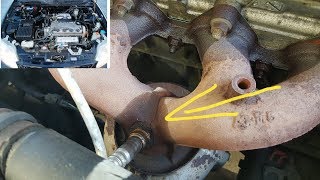
How to confirm: Visually inspect the exhaust manifold for cracks, especially in the middle between the runners. 🎬 See what a typical cracked D-series manifold looks like Look for black soot trails around the manifold or gaskets. Listen for a distinct ticking/hissing sound from the exhaust when the engine is cold that may quiet down as the metal expands when hot.
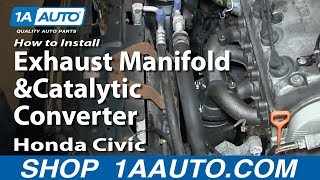
Typical fix: Repair the leak. This may involve replacing a gasket or replacing the entire cracked exhaust manifold. Welding the cast iron manifold is often attempted but is not a reliable long-term fix. 🎬 Watch: Step-by-step guide to replacing the exhaust manifold Aftermarket replacements are available.
Est. part cost: $15-$250 - Wiring or Connector Issue ⚪ Low Probability The wiring harness is exposed to significant heat and vibration, which can cause wires to become brittle, frayed, or shorted over time. The connector pins can also fill with oil or other contaminants, causing a poor connection.
How to confirm: Visually inspect the entire wiring harness from the O2 sensor to the engine harness connector. Look for melted insulation, chafed wires, or corrosion inside the connector pins. In one documented case, the shielded ground wire within the main harness was shorting against the signal wire, causing the P0131 code. Check for continuity on the signal and ground wires between the sensor connector and the ECU.
Typical fix: Repair the damaged section of the wiring harness or clean/replace the connector. Ensure wires are not crossed or shorting, especially if a universal sensor was previously spliced in.
Est. part cost: $5-$50
Rare But Worth Checking
- Low Fuel Pressure / Genuine Lean Condition: The O2 sensor may be working correctly and reporting a genuine lean condition. This can be caused by a weak fuel pump, clogged fuel filter, or dirty fuel injectors. This would typically be accompanied by other symptoms like hesitation under load and may trigger the code only during high-load situations.
- Blown Fuse: The oxygen sensor's heater circuit is protected by a fuse. While a blown fuse more commonly triggers a heater circuit code (like P0135), it's a quick and easy check. On many 96-00 Civics, this is the 7.5A 'Backup' fuse in the under-hood fuse box. Pulling this fuse for 30 seconds is also the standard procedure to reset the ECU after a repair.
- Incorrectly Wired Secondary O2 Sensor: → Shop Oxygen Sensor In a documented case on Honda-Tech, a user found that the signal and ground wires for the *secondary* (downstream) O2 sensor had been swapped. This caused the secondary sensor to interfere with the primary sensor's voltage, pulling it down and triggering P0131. This is a rare but possible cause if transmission work has been done recently.
Diagnosis Steps
- Check for other stored trouble codes. If codes for misfires, fuel system, or MAP sensor are present, address them first.
- Visually inspect the oxygen sensor's wiring harness and connector for any signs of melting, chafing, or corrosion. Check for fluid contamination inside the connector.
- Inspect the exhaust system from the manifold to the catalytic converter for any signs of leaks. Pay close attention to the cast iron manifold for hairline cracks. Listen for ticking sounds when the engine is cold.
- With a scan tool, observe the live data for Bank 1 Sensor 1 voltage ('O2S B1S1'). Warm the engine up completely (wait for cooling fans to cycle). A healthy sensor fluctuates rapidly between ~0.1V and ~0.9V. If it is stuck below 0.2V, or works when cold but flatlines to 0V when hot, the sensor is the primary suspect.
- To test for a genuine lean condition, you can artificially enrich the mixture (e.g., by carefully introducing a small amount of propane into the intake). If the O2 sensor voltage jumps up, the sensor is likely working, and you have a fuel delivery or vacuum leak issue. If it stays low, the sensor or its wiring is faulty.
- If the sensor is suspected, test the wiring. Check for continuity of the signal wire (and ground) back to the ECU. Check for shorts between the signal wire and ground.
- If wiring is good and the sensor signal is stuck low, replace the primary O2 sensor with a quality direct-fit part.
Parts You'll Likely Need
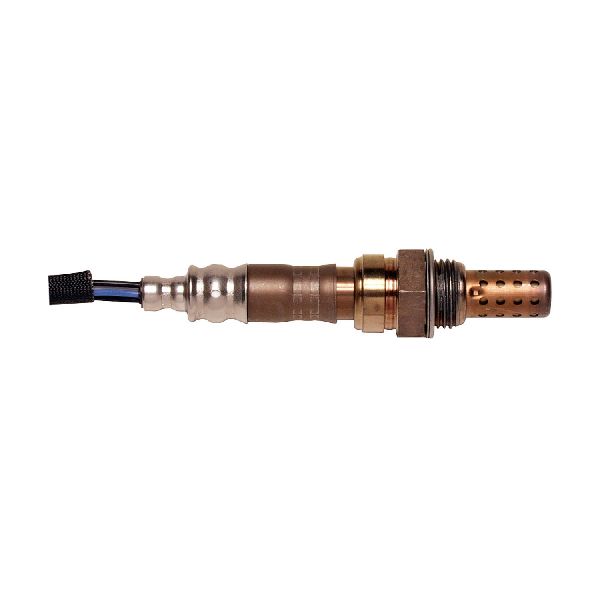
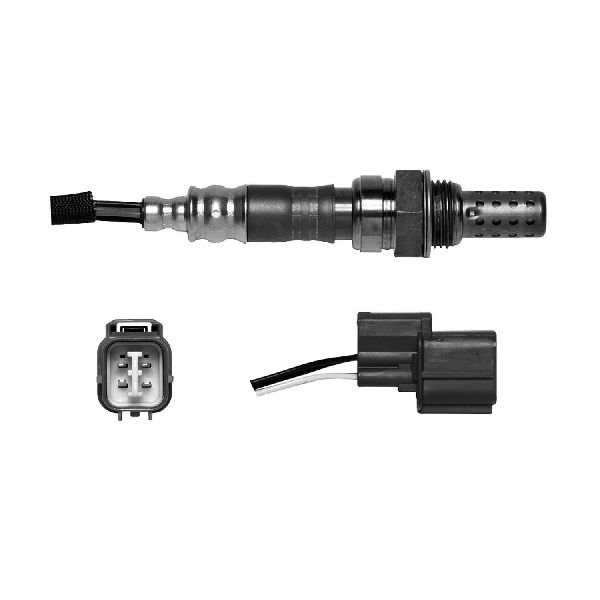
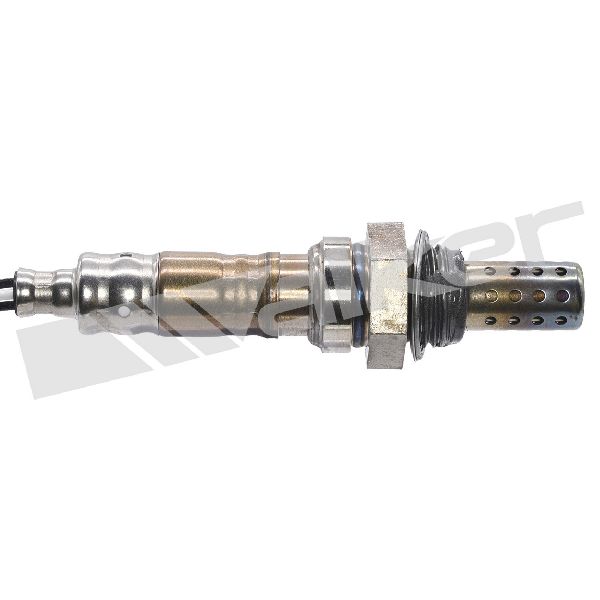
- Primary Oxygen Sensor (Upstream / Bank 1 Sensor 1)
(OEM #36531-P2E-A01)— This is the most common failure part for code P0131 on this vehicle. This part number is specific to many D-series SOHC engines.
Trusted brands: Denso (OEM supplier), NGK/NTK (OEM supplier)
OEM price range: $150-$200
Aftermarket price range: $40-$90 - Exhaust Manifold Gasket
(OEM #18115-P2A-003)— Often replaced when servicing a cracked exhaust manifold or if the gasket itself is the source of an exhaust leak.
Trusted brands: Honda (OEM), Fel-Pro
OEM price range: $20-$30
Aftermarket price range: $5-$15
Related Codes That Often Appear With This One
- P0171 — System Too Lean (Bank 1). P0131 is a direct cause of P0171. The low voltage from the O2 sensor tells the ECU the system is lean, so the ECU logs both the sensor fault and the resulting lean condition. A cracked exhaust manifold is a common cause for both codes appearing together.
- P0135 — O2 Sensor Heater Circuit Malfunction (Bank 1, Sensor 1). The internal heating element of the O2 sensor can fail at the same time as the sensing element, or a wiring issue can affect both circuits. It's common to see P0135 appear first, and after replacing the sensor, P0131 appears due to a separate wiring issue.
Platform-Specific Known Issues
- The location of the primary O2 sensor can be on the exhaust manifold (most models like DX/LX) or under the car before the catalytic converter (some models like the '99-'00 EX). Always verify the location on your specific vehicle before starting.
- Cracked exhaust manifolds are extremely common on D-series engines and can cause this code by creating an exhaust leak. A user on YouTube fixed his P0131 and P0171 codes by replacing his cracked manifold.
Mechanic-Grade Diagnostic Values
- Primary O2 Sensor (B1S1) Heater Resistance — expected: 10-40 Ohms. Failure: A reading outside this range indicates a faulty internal heater element, which can affect sensor performance and trigger codes.
- Primary O2 Sensor (B1S1) Signal Voltage at ECU — expected: Fluctuating between 0.1V and 0.9V when warm and in closed loop.. Failure: A voltage that is stuck below 0.2V for more than a few seconds.
- Unplugged O2 Sensor Signal Wire Voltage (Bias Voltage) — expected: ~4.0-5.0V. Failure: If this voltage is not present at the harness connector (ECU side) with the key on, it indicates a wiring problem between the ECU and the sensor connector, not a bad sensor.
Wiring & Ground Locations
- G101 — Bolted to the thermostat housing on the engine block.. This is a critical ground point for the ECU and several engine sensors. A poor connection here due to corrosion or looseness can cause a variety of sensor-related codes, including P0131, by creating a floating ground and incorrect voltage readings.
- ECU Pin C16 (1999-2000) — On the 'C' connector (31-pin) at the Engine Control Unit (ECU), typically located behind the passenger side kick panel.. This is the specific pin that receives the analog signal from the primary O2 sensor. Technicians can test for continuity or voltage directly at this pin to isolate a wiring problem from a sensor problem.
- ECU Pin B10 (1999-2000) — On the 'B' connector (24-pin) at the Engine Control Unit (ECU).. This is a power ground pin for the ECU. Verifying a good ground here is part of a comprehensive electrical diagnosis.
Real Owner Repair Stories
- Honda-Tech forum user (2000 Honda Civic Si) — No Check Engine Light, no fuel pump prime, cranks but no spark. OBD2 scanner could not detect the ECU.
❌ Tried (didn't work) Replacing main relay, Replacing battery, Visual fuse inspection
✅ What actually fixed it The user found the G101 ground wire on the thermostat housing was bad. Four wires are crimped together at this point, and the connection had failed somewhere in the harness, preventing the ECU and main relay from grounding properly. - MOTOR Magazine tech article (1999 Honda Civic) — P0131 code. On scan tool, O2 sensor signal appeared normal at idle but would flatline to 0V after 10-15 minutes of steady fast-idle operation.
❌ Tried (didn't work) Initial scan at idle did not show a definitive failure, leading to confusion., Wiggling the harness had no effect.
✅ What actually fixed it The primary oxygen sensor was failing only when held at a high temperature for an extended period. Replacing the primary O2 sensor fixed the issue. The key was diagnosing the car under the specific load/time condition that caused the failure.
When the Usual Fixes Don't Work
- While P0131 is most commonly a bad oxygen sensor, several documented cases show that assuming this can lead to wasted time and money. A critical, but often overlooked, cause is a faulty G101 ground connection on the thermostat housing. This ground is essential for the ECU, and a poor connection can mimic a failed sensor perfectly. One owner experienced a no-start and no-communication issue that was traced back to a bad wire at the G101 crimp, not the sensor itself. Another case showed a sensor that tested perfectly at idle but would only fail after 15 minutes of sustained high RPMs, a condition rarely tested in a typical shop diagnosis. These stories emphasize that before replacing the sensor, one should always verify the integrity of the G101 ground with a voltage drop test and, if possible, monitor sensor data under various load and temperature conditions to rule out intermittent failures.
OEM Part Supersession History
36531-P07-L01, 36531-P07-L02→36531-P2E-A01— Part consolidation and updates for D-series engines.
Heads up: While these part numbers are often interchangeable for this application, always using the latest revision (36531-P2E-A01) or a quality cross-referenced aftermarket part (like Denso 234-4099) is recommended.
Model Year Variations Within This Range
- 1996-2000: The Civic HX trim, particularly with a CVT transmission, may use a 5-wire wideband primary O2 sensor (ECU P2N) instead of the standard 4-wire narrowband sensor found on DX, LX, and EX models. Swapping to a manual transmission on an HX requires changing to the manual ECU (P2M) and wiring in the correct 5-wire sensor.
- 1999-2000: On EX models (D16Y8 engine) from 1999-2000, the primary O2 sensor is located under the car, just before the catalytic converter, rather than on the exhaust manifold itself. This makes access slightly more difficult than on DX/LX models.
Diagnostic Flowchart
Real Owner Stories
Aggregated from forums and TSBs cited above. Mileages and costs reflect what owners reported in those sources.
1996-2000 Honda Civic with D16Y8
Symptoms: Check Engine Light with code P0131 appeared after swapping a B18C engine back to a SOHC VTEC D16Y8.
What fixed it: The user did not report a final fix in the thread, but hit diagnostic dead ends after reinspecting wires and rewiring a known-good B18C1 O2 sensor with the Civic connector.
Source hint: Honda-Tech forum thread 'p0131 code'
1996-2000 Honda Civic
Symptoms: P0131 code persisted even after replacing the primary oxygen sensor.
What fixed it: Found and repaired a short between the signal wire and the shielded ground within the main wiring harness.
Source hint: Honda-Tech thread 'P0131 -> the SOLUTION'
1996-2000 Honda Civic
Symptoms: Primary sensor reading low voltage, triggering a stubborn P0131 code.
What fixed it: Discovered the secondary (downstream) O2 sensor wires were accidentally swapped during a transmission job. Correcting the wiring restored the primary sensor's proper voltage reading.
Source hint: Honda-Tech thread 'p0131 problem *fixed*'
1996-2000 Honda Civic
Symptoms: P0131 error only triggered when working the engine hard, such as climbing a hill.
What fixed it: Diagnosed as either a fuel delivery issue or a small exhaust leak that only becomes apparent under high exhaust pressure.
Source hint: ClubCivic.com thread 'P0131 error when working engine hard'
2000 Honda Civic EX
Symptoms: Check Engine Light illuminated with code P0131.
What fixed it: Replaced the primary O2 sensor with a direct-fit unit (avoiding universal spliced sensors) and pulled the 7.5A BACKUP fuse to reset the CEL.
Source hint: HondaCivicForum.com thread 'Code p0131?'
Related OBD-II Codes
Frequently Asked Questions
Where is the primary oxygen sensor located on my 1996-2000 Honda Civic?
Can I use a cheaper universal O2 sensor to fix the P0131 code on my Civic?
Why does my D-series engine make a ticking sound when cold, and could it be related to my P0131 code?
My Civic only throws the P0131 code when I am driving uphill or accelerating hard. What does this mean?
I replaced the primary O2 sensor on my Civic, but the P0131 code came back. What else should I check?
How do I reset the Check Engine Light after fixing the P0131 issue on my 2000 Civic EX?
Helpful Videos
We Have This Part in Stock


The information in this article is provided for general reference and educational purposes only. Vehicle specifications, procedures, and part compatibility can vary by production date, trim level, and region. Always consult your vehicle's factory service manual and verify part numbers before purchasing or performing repairs. Safety-critical components such as airbags, seat belts, and braking systems should be installed by a qualified professional.
- Honda Civic:
- 🧭 Diagnostic Flowchart
- 🎬 Helpful Videos
- 🛍️ Shop This Part
- What's Unique About the 1996-2000 Honda Civic
- Symptoms You May Notice
- Most Likely Causes
- Rare But Worth Checking
- Diagnosis Steps
- Parts You'll Likely Need
- Related Codes That Often Appear With This One
- Platform-Specific Known Issues
- Mechanic-Grade Diagnostic Values
- Wiring & Ground Locations
- Real Owner Repair Stories
- When the Usual Fixes Don't Work
- OEM Part Supersession History
- Model Year Variations Within This Range
- Real Owner Stories
- 1996-2000 Honda Civic with D16Y8
- 1996-2000 Honda Civic
- 1996-2000 Honda Civic
- 1996-2000 Honda Civic
- 2000 Honda Civic EX
- Related OBD-II Codes
- Frequently Asked Questions
- 🎟️ Get 5% Off