

P0131 on 2000-2006 Hyundai Elantra: O2 Sensor Low Voltage Causes and Fixes
On a 2000-2006 Elantra, code P0131 almost always points to a failing upstream oxygen sensor (Bank 1, Sensor 1). Expect to pay $40-$90 for an aftermarket sensor or $100-$180 for an OEM part. It's a common DIY fix with the right socket, but the sensor can be difficult to remove due to rust and heat cycling. Before replacing, always check the sensor's wiring and fuse.
- P0131 on your Elantra most likely means the upstream oxygen sensor (the one on the exhaust manifold) has failed.
- Before buying a new sensor, perform a quick visual check of the sensor's wiring for any obvious damage and check for a blown fuse in both the engine and cabin fuse boxes.
- If you also have a P0135 code, it's almost certain the sensor itself is bad.
- When replacing the sensor, use a special 22mm O2 sensor socket and penetrating oil to make the job easier and avoid damaging the part or the manifold.
- Do not confuse the upstream (Sensor 1) with the downstream (Sensor 2); they are not interchangeable and only replacing the upstream sensor will fix this code.
What's Unique About the 2000-2006 Hyundai Elantra
For the 2000-2006 Elantra (XD generation) with the 2.0L Beta II engine, this code is a very common and straightforward issue. The inline 4-cylinder engine only has one cylinder bank, so 'Bank 1' is the only one. 'Sensor 1' is the critical upstream sensor that helps control the air-fuel mixture. Owners often find this code appears alongside P0135 (heater circuit fault), which strongly suggests the sensor itself has failed, as the heating element is internal. The most common mistake is replacing the wrong sensor (downstream instead of upstream) or failing to check for simple issues like a blown fuse or damaged wiring first.
Symptoms You May Notice
- Check Engine Light is on
- Worse than usual fuel economy
- Rough or unstable idle
- Engine hesitation or lack of power during acceleration
- Noticeable smell of gasoline or a "rotten egg" (sulfur) smell from the exhaust
- Failing a state emissions test
- Replacing the downstream (Bank 1, Sensor 2) oxygen sensor. This sensor is located after the catalytic converter and is used to monitor its efficiency; it will not fix a P0131 code.
- Immediately replacing the sensor without first checking for damaged wiring, exhaust leaks, or blown fuses.
- Replacing the Mass Airflow (MAF) sensor. While a faulty MAF can cause lean conditions, it's less likely to be the root cause of an isolated P0131 code on this vehicle.
Most Likely Causes
- Faulty Upstream Oxygen Sensor (Bank 1, Sensor 1) 🔴 High Probability → Shop Oxygen Sensor Oxygen sensors are a normal wear-and-tear part with a typical lifespan of 60,000-100,000 miles. Given the age of this Elantra generation, many are on their original, failing sensor. Contamination and simple age are the primary failure modes.
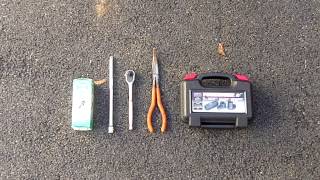
How to confirm: Use an OBD-II scanner with live data capability. A healthy sensor's voltage should fluctuate rapidly between approximately 0.1V and 0.9V. If the voltage is stuck below 0.2V, the sensor is likely bad. 🎬 Watch: How to diagnose P0131 low voltage on your Elantra. You can also test the internal resistance of the heater circuit with a multimeter; an open circuit indicates a failed heater, which often accompanies a P0131 code.
Typical fix: Replace the upstream (Bank 1, Sensor 1) oxygen sensor. A special 22mm O2 sensor socket is highly recommended for removal, as the sensor is often seized in the exhaust manifold. Applying penetrating oil beforehand can help.
Est. part cost: $40-$180 - Damaged Wiring or Connector 🟡 Medium Probability The sensor wiring is located near the hot exhaust manifold and can become brittle, melt, or corroded over time. The harness can also be damaged by road debris or improper servicing.
How to confirm: Visually inspect the wiring harness leading to the upstream O2 sensor. Look for any signs of melting, frayed wires, or corrosion on the connector pins. Check for continuity on each wire with a multimeter. 🎬 See this guide on testing oxygen sensors with a multimeter.
Typical fix: Repair the damaged section of the wiring harness or replace the connector pigtail. Ensure the repaired wire is secured away from the hot exhaust.
Est. part cost: $10-$30 - Exhaust Leak ⚪ Low Probability Gaskets on the exhaust manifold can fail over time, allowing outside air to be sucked into the exhaust stream before the sensor. This introduces extra oxygen, causing the sensor to send a false lean (low voltage) signal.
How to confirm: Listen for a ticking or puffing noise from the engine bay, especially when the engine is cold. You can also spray soapy water on the exhaust manifold flanges (when cold) and look for bubbles when the engine is started. A visual inspection may reveal black soot around the leak.
Typical fix: Replace the leaking exhaust manifold gasket or tighten loose flange bolts.
Est. part cost: $15-$50
Rare But Worth Checking
- Blown O2 Sensor Fuse: → Shop Oxygen Sensor A blown fuse, often labeled 'SENSOR 1' or similar in the fuse box, can cause the sensor's heater circuit to fail, leading to incorrect operation and this code. Always check the fuse box in the engine bay and under the driver's side dash before buying parts.
- Low Fuel Pressure or Engine Vacuum Leak: In this scenario, the O2 sensor is working correctly and reporting a genuine lean condition. The P0131 code is a symptom of another problem, such as a weak fuel pump, clogged fuel filter, or a cracked vacuum hose. This is often accompanied by a P0171 (System Too Lean) code.
- Failing Powertrain Control Module (PCM): This is extremely rare, but the PCM itself can fail and be unable to correctly read the voltage from the sensor. This should only be considered after all other possibilities have been exhaustively ruled out.
Diagnosis Steps
- Connect an OBD-II scanner to check for any other codes, paying close attention to P0135 and P0171.
- Visually inspect the wiring and connector for the upstream O2 sensor, which is located on the exhaust manifold at the front of the engine bay. Look for any melting, chafing, or corrosion.
- Check the relevant fuses. In the 2000-2006 Elantra, check both the interior fuse panel (driver's side dash) and the engine compartment fuse box for fuses labeled 'SENSOR' or 'O2'.
- Start the engine and listen for any hissing (vacuum leak) or puffing/ticking (exhaust leak) sounds near the exhaust manifold.
- Using the live data function on your scanner, monitor the voltage for 'O2S11' (Oxygen Sensor, Bank 1, Sensor 1). A healthy, warm sensor should show voltage rapidly switching between ~0.1V and 0.9V. If it stays consistently low (e.g., under 0.2V), the sensor is either bad or there is a significant exhaust/vacuum leak.
- If you suspect an exhaust leak, spray the manifold gasket area with soapy water (when the engine is cool) and start it. Look for bubbles forming.
- If the wiring, fuses, and exhaust system are all confirmed to be good, the oxygen sensor itself is the faulty component and should be replaced.
Parts You'll Likely Need
- Upstream Oxygen Sensor
(OEM #39210-23700 (Verify with VIN, may supersede))— This is the most common failure point for code P0131. The sensor wears out over time and stops producing the correct voltage signal.
Trusted brands: Bosch (e.g., 15733), Denso (e.g., 234-4852), NTK/NGK
OEM price range: $100-$180
Aftermarket price range: $40-$90
Related Codes That Often Appear With This One
- P0135 — This code indicates a fault in the O2 sensor's heater circuit. Since the heater is part of the sensor itself, seeing P0131 and P0135 together is a very strong indicator that the oxygen sensor has failed and needs to be replaced.
- P0171 — This code means 'System Too Lean (Bank 1)'. It can appear with P0131 if there is a legitimate lean condition (like a vacuum or exhaust leak) that the O2 sensor is correctly reporting.
- P0420 — This code means 'Catalyst System Efficiency Below Threshold'. If the P0131 code is ignored for too long, the resulting incorrect air-fuel mixture can damage the catalytic converter, leading to this code.
Technical Service Bulletins (TSBs) & Recalls
- While no TSB directly addresses only P0131 for this model, Hyundai has issued TSBs for related engine management and throttle body issues on the 2.0L Beta II engine that could indirectly relate to drivability symptoms. For example, TSBs related to throttle body cleaning (which can affect air intake) exist for similar engines. Always check for the latest TSBs with a dealer or professional service.
Platform-Specific Known Issues
- Seized Sensor in Manifold: Due to age and constant heat cycles, the original oxygen sensor can become extremely difficult to remove from the cast iron exhaust manifold. It is highly recommended to apply a quality penetrating oil (like PB Blaster) and let it soak before attempting removal. Using a proper 22mm slotted oxygen sensor socket is crucial to avoid stripping the sensor body. 🎬 Watch: A step-by-step walkthrough for replacing the upstream sensor.
- Fuse Location: Owners should check two fuse locations. The primary fuse box is in the engine compartment, but a secondary panel is located behind a cover on the driver's side of the dashboard. The fuse for the O2 sensor heater circuit, which can cause this code, may be in either location.
Mechanic-Grade Diagnostic Values
- Upstream O2 Sensor (B1S1) Voltage — expected: Rapidly fluctuates between ~0.1V and 0.9V at idle after warm-up, switching at least 3 times in 10 seconds.. Failure: Voltage remains consistently below 0.2V. The ECM may set P0131 if voltage is < 0.02V for a sustained period (e.g., 60 seconds).
- O2 Sensor Heater Circuit Resistance — expected: Typically between 3 and 25 Ohms when measured across the two heater wires (often same color) on a disconnected sensor. Specific OEM sensors may have tighter specs (e.g., 9 Ohms cold for some Bosch types).. Failure: An open circuit (infinite resistance) or a dead short (near zero resistance) indicates a failed heater element.
- Long-Term Fuel Trim (LTFT) — expected: Should be close to 0% (+/- 5%) on a healthy engine.. Failure: Consistently high positive values (e.g., +15% to +39%) indicate the ECM is adding significant fuel to compensate for a perceived lean condition, which can be caused by a faulty low-reading O2 sensor.
Scan Tool Commands That Help
- Hyundai GDS (Global Diagnostic System): Data Analysis / Current Data — This is the primary function on the OEM scan tool used to monitor the live voltage graph of the B1S1 O2 sensor. It allows a technician to verify if the sensor is stuck low or switching properly, which is the most critical diagnostic step for P0131.
Wiring & Ground Locations
- Main Engine/Transmission Ground — The main negative battery cable typically grounds to a bolt on the transmission bell housing or the engine block itself, often near the starter motor.. A corroded or loose main engine ground can create a voltage potential difference between the engine block (where the sensor is grounded) and the chassis/battery. This can cause the ECM to read an artificially low voltage from the O2 sensor, mimicking a sensor failure.
Real Owner Repair Stories
- Hyundai-Forums.com user 'MIke Popko' (2005 Hyundai Elantra) — Check Engine Light with codes P0131, P2626, P0171, P0420, P0455 after 2+ years of failed diagnosis by other shops.
❌ Tried (didn't work) Replacing the upstream O2 sensor, Replacing the MAF sensor, Sealing an exhaust leak at the muffler flange
✅ What actually fixed it The issue was identified as a wiring problem. The presence of code P2626 (O2 Sensor Pumping Current Trim Circuit/Open Bank 1 Sensor 1) alongside P0131 strongly pointed to an open circuit in the harness between the O2 sensor and the ECM, which was the ultimate root cause.
OEM Part Supersession History
39210-23700→39210-23900 (Likely supersession, verify with VIN)— The original part 39210-23700 is listed as discontinued. The change likely corresponds with the 2004 model year facelift.
Heads up: Part 39210-23700 is specified for vehicles 'From 07/01/03' and 'Exc. Calif.' (Excluding California emissions). This indicates that pre-facelift (2000-2003) models and/or California emissions models may use a different part number. Always verify with VIN before purchasing.
Model Year Variations Within This Range
- 2004-2006 (post-facelift): The upstream oxygen sensor part number likely changed for the 2004 model year refresh. The common OEM part number 39210-23700 is specified for vehicles built from July 2003 onward, excluding California emissions models. Pre-2004 models may require a different sensor.
Diagnostic Flowchart
Real Owner Stories
Aggregated from forums and TSBs cited above. Mileages and costs reflect what owners reported in those sources.
2000 Hyundai Elantra
Symptoms: Check engine light on with codes P0131 and P0135.
What fixed it: The owner realized they were replacing the wrong (downstream) oxygen sensor. The issue was resolved by addressing the correct (upstream) sensor.
Source hint: 2000 Hyundai Elantra My Vehicle Has Two Codes P0131, and P0135 - 2CarPros
2005 Hyundai Elantra
Symptoms: Multiple codes including P0131, P0171, and P0420.
What fixed it: The discussion confirmed the upstream sensor as the primary culprit for P0131.
Source hint: Hyundai-Forums.com - In a thread titled 'o2 sensor code'
2005 Hyundai Elantra
Symptoms: Getting codes P0131 and P0171.
What fixed it: Advised that the upstream O2 sensor was the likely cause for both and that a visual inspection of wiring should be the first step.
Source hint: Reddit r/Cartalk
Related OBD-II Codes
Frequently Asked Questions
Where is the fuse for the O2 sensor on my 2000-2006 Elantra?
Why is the oxygen sensor so hard to remove from my Elantra's exhaust manifold?
Are there any TSBs for the P0131 code on the 2.0L Beta II engine?
I have codes P0131, P0171, and P0420 on my 2005 Elantra. Are they related?
How long do the original oxygen sensors last on this generation Elantra?
Can an exhaust leak cause a P0131 on my Elantra?
Helpful Videos


We Have This Part in Stock


The information in this article is provided for general reference and educational purposes only. Vehicle specifications, procedures, and part compatibility can vary by production date, trim level, and region. Always consult your vehicle's factory service manual and verify part numbers before purchasing or performing repairs. Safety-critical components such as airbags, seat belts, and braking systems should be installed by a qualified professional.
- Hyundai Elantra:
- 🧭 Diagnostic Flowchart
- 🎬 Helpful Videos
- 🛍️ Shop This Part
- What's Unique About the 2000-2006 Hyundai Elantra
- Symptoms You May Notice
- Most Likely Causes
- Rare But Worth Checking
- Diagnosis Steps
- Parts You'll Likely Need
- Related Codes That Often Appear With This One
- Technical Service Bulletins (TSBs) & Recalls
- Platform-Specific Known Issues
- Mechanic-Grade Diagnostic Values
- Scan Tool Commands That Help
- Wiring & Ground Locations
- Real Owner Repair Stories
- OEM Part Supersession History
- Model Year Variations Within This Range
- Real Owner Stories
- 2000 Hyundai Elantra
- 2005 Hyundai Elantra
- 2005 Hyundai Elantra
- Related OBD-II Codes
- Frequently Asked Questions
- 🎟️ Get 5% Off