

P0131 on 1997-2001 Jeep Cherokee 4.0L: O2 Sensor Low Voltage Causes and Fixes
On a 1997-2001 Jeep Cherokee 4.0L, code P0131 is most often a failed upstream oxygen (O2) sensor or its wiring shorting out on the intake manifold. Expect to pay $35-$75 for a quality aftermarket sensor and about $120 for an OEM one. It's a common DIY fix with a difficulty of 2/5.
- P0131 on your Cherokee 4.0L almost always points to the upstream O2 sensor or its wiring.
- Before buying any parts, carefully inspect the O2 sensor's wiring harness for damage where it runs over the top of the intake manifold. This is a very common and free fix.
- Verify if your Cherokee has the two-sensor (1997-1999 Federal) or four-sensor (2000-2001 California) emissions system to ensure you buy the correct replacement sensor.
- An exhaust leak from a cracked manifold can also cause this code, so listen for any ticking noises from the engine.
- Replacing the upstream O2 sensor is a manageable DIY job that usually requires a special slotted socket.
What's Unique About the 1997-2001 Jeep Cherokee
The 1997-2001 Jeep Cherokee XJ is known for its robust 4.0L engine, but it has a specific vulnerability related to this code: the oxygen sensor wiring harness is often routed in a way that it can rub against the hot intake manifold, eventually chafing through and shorting the signal wire to ground. This creates a direct low-voltage signal that perfectly matches the code's definition. Additionally, the 2000-2001 models introduced a more complex California-spec emissions system with four O2 sensors and two pre-catalytic converters integrated into the exhaust manifold, a change from the two-sensor setup on 1997-1999 models. This is crucial when ordering parts, as the sensors are different.
Symptoms You May Notice
- Check Engine Light is on
- Reduced fuel economy
- Rough or unstable idle
- Engine hesitation or stumbling on acceleration
- Black smoke from the exhaust 🎬 Watch: How to install a new O2 sensor on your XJ under certain conditions
- A sulfur or "rotten egg" smell from the exhaust
- Engine stalling unexpectedly
- Replacing the downstream (post-catalytic converter) O2 sensor. This sensor only monitors catalyst efficiency and does not affect the air-fuel mixture.
- Replacing the catalytic converter. A bad converter typically causes a P0420 code, not a P0131.
- Replacing fuel injectors without first confirming low fuel pressure or a lean condition via live data.
- Using a Bosch oxygen sensor. Many owners report that the Jeep 4.0L PCM is sensitive and often does not work well with Bosch sensors, leading to persistent or new codes. NTK (an NGK brand) is the original equipment manufacturer and the recommended replacement.
Most Likely Causes
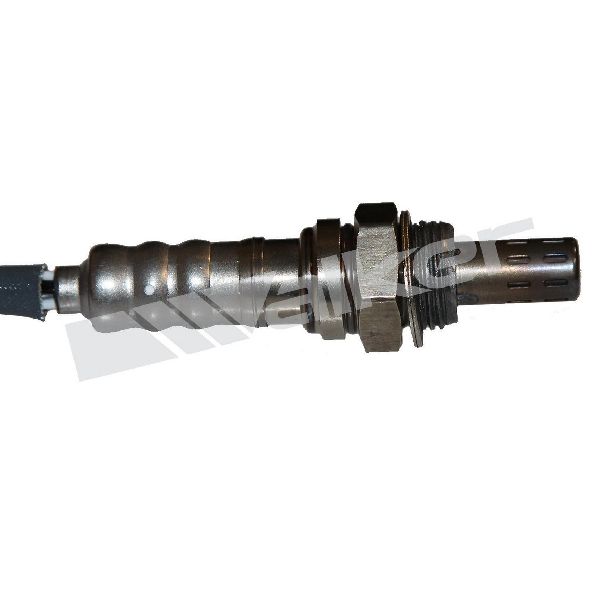
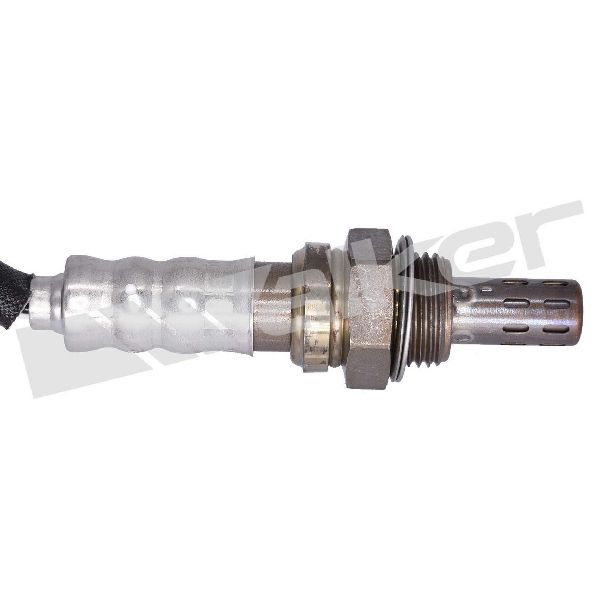
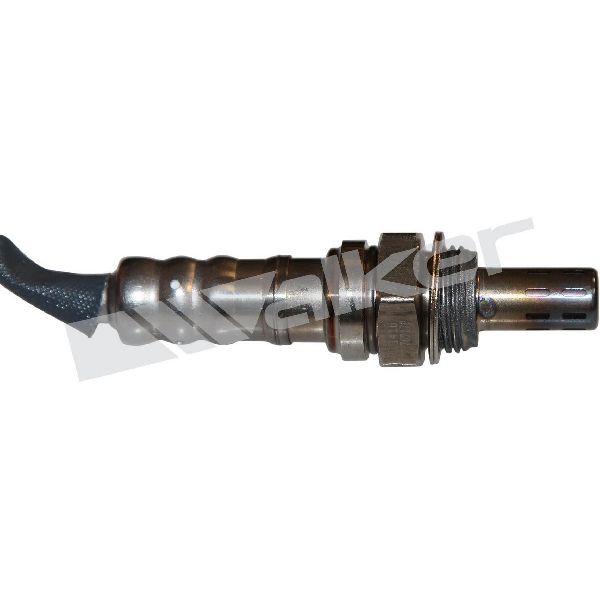
- Failed Upstream Oxygen Sensor (Bank 1, Sensor 1) 🔴 High Probability → Shop Oxygen Sensor Oxygen sensors are wear items and typically fail after 60,000-90,000 miles from exposure to heat and exhaust gases. Using incorrect brands like Bosch instead of the OEM-preferred NTK can lead to premature failure or incorrect readings on this platform.
How to confirm: Using a scan tool with live data, monitor the Bank 1 Sensor 1 voltage 🎬 Watch: How to diagnose a faulty Jeep O2 sensor at operating temperature. If the voltage is stuck below 0.2V and does not fluctuate rapidly between ~0.1V and ~0.9V when the engine is revved, the sensor is likely bad.
Typical fix: Replace the upstream oxygen sensor. Ensure you purchase the correct NTK or Mopar sensor for your vehicle's year and emissions type (Federal or California).
Est. part cost: $35-$75 - Damaged O2 Sensor Wiring or Connector 🔴 High Probability → Shop Oxygen Sensor The wiring harness for the upstream O2 sensor is frequently routed over the intake manifold, where engine vibration and heat can cause it to chafe and short to ground. This is a very common failure point specific to the XJ Cherokee.
How to confirm: Visually inspect the entire length of the O2 sensor's wiring harness from the sensor to the main engine harness. Pay close attention to the area where it passes over the top of the intake manifold. Look for melted insulation, exposed wires, or signs of rubbing against the manifold's sharp edges.
Typical fix: Repair the damaged section of wire using solder and heat-shrink tubing. Reroute and secure the harness away from the manifold using zip ties to prevent future damage. If the connector is damaged, it may need to be replaced.
Est. part cost: $5-$25 - Exhaust Leak Before the O2 Sensor 🟡 Medium Probability → Shop Oxygen Sensor The 4.0L engine's stock exhaust manifold is made of cast iron and is notorious for developing cracks over time, especially near the collector weld. 🎬 See this walkthrough on fixing a cracked exhaust manifold A leak here allows unmetered oxygen into the exhaust stream, which the O2 sensor reads as a lean condition (low voltage).
How to confirm: Listen for a rhythmic ticking or puffing sound from the driver's side of the engine bay, especially when the engine is cold. The sound may diminish as the metal heats up and expands. Visually inspect the exhaust manifold and the downpipe gasket for black soot trails, which are a clear indicator of a leak.
Typical fix: Replace the cracked exhaust manifold with an aftermarket flexible or bellows-style manifold to prevent recurrence. Replace the manifold and downpipe gaskets at the same time.
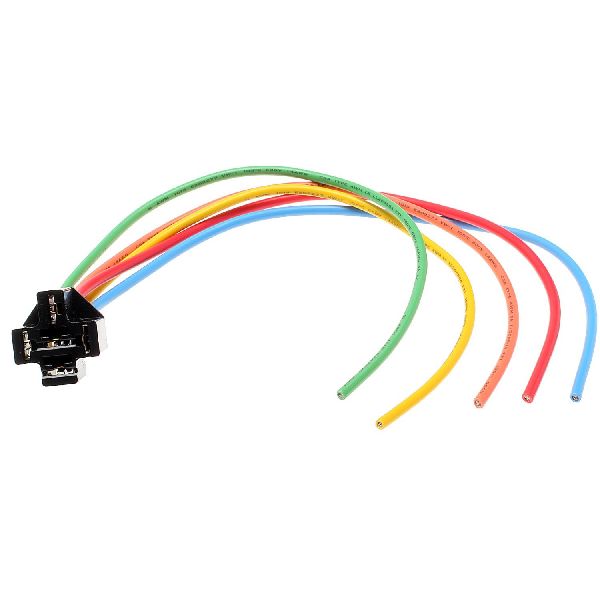
Est. part cost: $100-$300 - Blown O2 Sensor Heater Fuse ⚪ Low Probability → Shop Oxygen Sensor
How to confirm: In the Power Distribution Center (PDC) under the hood, locate the fuse for the O2 sensor heater circuit. For 2000-2001 models, this is often a 20A fuse in slot F21 labeled 'O2S Relays'. Visually inspect the fuse. A blown fuse often points to a short in the O2 sensor's internal heater or its wiring, which may also trigger heater circuit codes like P0135.
Typical fix: Replace the blown fuse. If the fuse blows again immediately, it confirms a short circuit. This is often caused by using an incorrect (low resistance) aftermarket O2 sensor or a wiring short.
Est. part cost: $1-$5
Rare But Worth Checking
- Low Fuel Pressure: A weak fuel pump or clogged filter can cause a genuine lean condition, which the O2 sensor will accurately report as low voltage. If a new sensor doesn't fix the code, check fuel pressure. For the 4.0L engine, it should be 49 PSI +/- 5 PSI.
- Faulty Powertrain Control Module (PCM): This is extremely rare. The PCM's internal driver for the O2 sensor circuit can fail, causing it to read low voltage when there is none. This should only be considered after all other possibilities, especially wiring and the sensor itself, have been exhaustively ruled out.
Diagnosis Steps
- Read the code with an OBD-II scanner and check for any other related codes, especially P0171 or P0135.
- Perform a detailed visual inspection of the upstream O2 sensor wiring harness. Pay extremely close attention to where it routes over the intake manifold for signs of melting, chafing, or exposed wires shorting to the engine block.
- Check the O2 sensor heater fuse in the Power Distribution Center (under the hood). For 2000-2001 models, this is typically a 20A fuse in slot 21.
- With the engine running (especially when cold), inspect the exhaust manifold and downpipe connection for audible leaks (ticking sounds) or visible black soot trails.
- Use a scan tool to view live data for the 'O2S B1S1' voltage. At operating temperature and a steady 2000 RPM, the voltage should fluctuate rapidly between approximately 0.1V and 0.9V.
- If the voltage is stuck low (e.g., below 0.2V), and the wiring is confirmed to be good, the O2 sensor has most likely failed.
- If the sensor appears to be reading correctly but you also have a P0171 code, check for vacuum leaks (e.g., cracked hoses, bad intake gasket) and verify fuel pressure is within spec (49 PSI +/- 5 PSI for this model).
- Before replacing the sensor, confirm you are buying the correct part for your year and emissions package (Federal vs. California). It is highly recommended to use an NTK or Mopar branded sensor.
Parts You'll Likely Need
- Upstream Oxygen Sensor (Bank 1, Sensor 1)
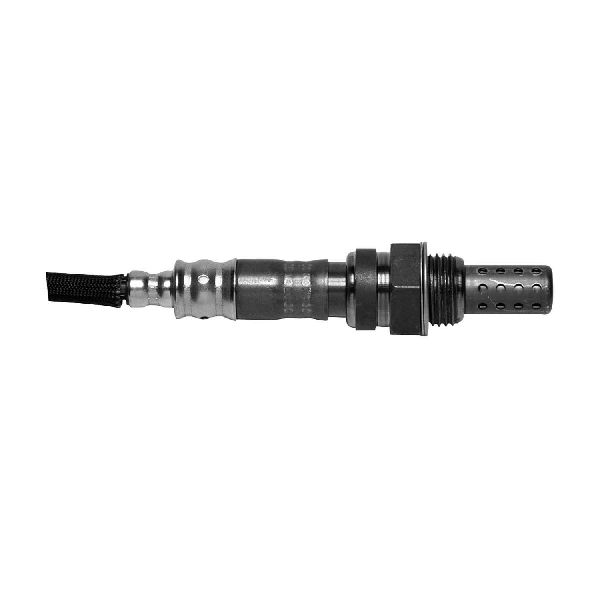
(OEM #56041213AG (For 1997-1999 Federal & 2000-2001 CA); 56041212AE (For 2000 Federal))— This is the most common failure point for code P0131. The sensor degrades over time or fails due to a shorted heater circuit. It is critical to use the correct part for the vehicle's specific emissions system.
Trusted brands: NTK (OEM), Mopar, Denso
OEM price range: $100-$145
Aftermarket price range: $35-$75
Related Codes That Often Appear With This One
- P0171 — System Too Lean (Bank 1). This code indicates the engine is running lean, which P0131 is a direct measurement of. They often appear together when there is a vacuum leak, exhaust leak, or fuel delivery issue.
- P0135 — O2 Sensor Heater Circuit Malfunction (Bank 1, Sensor 1). If the internal heater element of the O2 sensor fails or its circuit has a problem (like a blown fuse or shorted wiring), the sensor won't reach operating temperature correctly and can trigger P0131 as well.
Platform-Specific Known Issues
- The O2 sensor wiring harness is known to rub against the intake manifold, causing a short to ground that triggers P0131. This is arguably the most common cause besides the sensor itself failing.
- Exhaust manifolds on the 4.0L engine are prone to cracking, which can cause an exhaust leak that leads to a P0131 code.
- The PCM is sensitive to the brand of O2 sensor used. Owners widely report that Bosch sensors often do not work correctly with the 4.0L engine's computer, recommending NTK or Denso instead.
Mechanic-Grade Diagnostic Values
- O2 Sensor Heater Element Resistance — expected: 4 to 7 Ohms at 70°F (21°C). Some sources cite a wider range of 5 to 25 Ohms depending on the specific sensor design.. Failure: A reading of OL (infinite resistance) or 0 Ohms indicates a failed heater circuit inside the sensor.
- Long Term Fuel Trim (LTFT) at Idle — expected: Close to 0%, within +/- 5%.. Failure: A high positive fuel trim (e.g., +10% or higher) indicates the PCM is adding fuel to compensate for a perceived lean condition, which supports the P0131 code.
- O2 Sensor Signal Wire Voltage (at harness, sensor unplugged, Key On Engine Off) — expected: Approximately 0.45V (this is the bias voltage supplied by the PCM).. Failure: A reading of 0V could indicate a short to ground in the harness. A reading near 5V or 12V would indicate a short to power.
Scan Tool Commands That Help
- DRB III: O2 Heater Test — This function on the dealer-level scan tool for this era allows a technician to manually command the O2 sensor heaters on and monitor the sensor's voltage response. This is useful for confirming the heater circuit (power, ground, and the heater element itself) is functioning correctly, which is critical for the sensor to provide accurate readings.
Wiring & Ground Locations
- G101 — On the engine block, near the alternator and motor mount on the passenger side. It often consists of two studs on the bracket that formerly held the ignition coil on pre-2000 models.. This is the primary engine ground point where the main battery cable connects to the block. Crucially, it is also the designated ground point for the O2 sensor heaters. A loose or corroded connection here can cause heater circuit codes (like P0135) and prevent the sensor from reaching operating temperature, leading to a P0131.
- Upstream O2 Sensor Connector (1997-1999) — A 4-pin connector, typically black, located near the back of the intake manifold on the driver's side.. Knowing the pinout is critical for testing. For a '97 model, Pin 2 (Black wire) is the heater ground that runs to G101. Pin 4 (Black/Dark Green wire) is the O2 sensor signal wire that goes to the PCM. A short between these wires or from Pin 4 to the chassis will cause P0131.
- PCM Connector A (Black), Pin A24 — The black 32-pin connector on the Powertrain Control Module (PCM) located on the driver's side firewall.. For 1997+ models, the signal from the upstream O2 sensor (Bank 1, Sensor 1) is received by the PCM at pin A24. This is the final test point to verify if the signal from the sensor is reaching the computer. If voltage is correct at the sensor connector but not at pin A24, there is a break in the wire.
Real Owner Repair Stories
- NAXJA Forums user 'weebur' (Jeep Cherokee 4.0L (year not specified, but behavior is common)) — Persistent #3 cylinder misfire code, rough idle.
❌ Tried (didn't work) Wrapping the #3 fuel injector with insulation to prevent heat soak., Blocking off spaces in the intake manifold.
✅ What actually fixed it The user replaced the fuel injector O-rings. They noted that the old O-ring on the #3 injector was likely allowing a vacuum leak, causing a lean condition on that cylinder. Replacing the O-rings for all injectors ($10 in parts) resolved the misfire and rough idle. This is a key example of a vacuum leak causing lean symptoms that could be misinterpreted as a primary O2 sensor fault. - CherokeeForum user (1999 Jeep Cherokee SE 4.0L) — Check Engine Light with code P0131.
❌ Tried (didn't work) Replacing the upstream O2 sensor (initial fix attempt)., Replacing the downstream O2 sensor after the code returned.
✅ What actually fixed it The root cause was found to be the O2 sensor wiring harness chafing on the intake manifold and shorting to ground. The forum response explicitly stated this is a common issue and to inspect that specific area, which is the confirmed platform-specific failure pattern.
"I Checked Everything" — The Actual Cause
- A common scenario for the 4.0L engine is a smoke test showing no vacuum leaks, yet a lean condition (P0171) and low O2 voltage (P0131) persist. The cause can be leaking fuel injector O-rings. These small seals harden and crack over time, creating a small, unmetered air leak directly into the intake port for a specific cylinder. This leak is often too small or localized to be easily found with a smoke test but is significant enough to lean out the mixture. Dribbling water on the base of each injector while the engine is running can sometimes identify the leak when the engine note changes as water is sucked in.
Model Year Variations Within This Range
- 2000-2001: These models switched from a distributor to a coil-on-plug ignition system. More importantly for this code, 2000 was a split year for emissions, offering both a 2-sensor Federal setup and a 4-sensor California setup with pre-catalytic converters. All 2001 models received the 4-sensor California emissions package. The upstream O2 sensors are different between the Federal and California systems, making it critical to order the correct part for the specific vehicle configuration.
- 1999 (mid-year) - 2001: In mid-1999, the 4.0L engine received an improved, higher-flow intake manifold. While not a direct cause of P0131, it's a notable running change in the platform during this period.
Diagnostic Flowchart
Used vs. New Parts: Buying Guide for This Vehicle
When a used part is the smart pick: For a P0131 code, a used part is generally only a smart choice for a cracked exhaust manifold, which is a common cause. A good, crack-free manifold from a junkyard can be a cost-effective alternative to a new one.
Donor-vehicle mileage cap: roughly under 150000 miles for the part to have meaningful remaining life.
What to inspect on the donor part:
- For an exhaust manifold, inspect it meticulously when cold. Check for hairline cracks, especially around the collector and where the tubes merge.
- Ensure all mounting studs are intact and not broken off.
- Look for a donor vehicle that appears well-maintained and is from a dry, salt-free climate to minimize rust and corrosion.
OEM-only on this vehicle (don't cheap out):
- Oxygen Sensor: This is a wear item. Never install a used oxygen sensor. Always buy a new one from a reputable brand.
Aftermarket brands forum-validated for this vehicle:
- NTK (for Oxygen Sensors - this is the OEM supplier)
- Denso (for Oxygen Sensors)
- APN or Banks (for aftermarket exhaust manifolds/headers)
Brands owners have reported issues with on this vehicle:
- Bosch (for Oxygen Sensors): Many owners in Jeep forums report persistent issues, incorrect readings, and premature failures when using Bosch sensors on the 4.0L engine, as the PCM is very sensitive to the sensor's specific resistance and response characteristics.
Real Owner Stories
Aggregated from forums and TSBs cited above. Mileages and costs reflect what owners reported in those sources.
1997-2001 Jeep Cherokee 4.0L
Symptoms: Check Engine Light on with code P0131, which on this Jeep can specifically mean 'O2 SENSOR SHORTED TO GROUND'.
What fixed it: Found and repaired the O2 sensor wiring harness where it had chafed through and was shorting to ground on the intake manifold.
Source hint: Jeep Cherokee Forum thread titled 'p0131'
2000 Jeep Wrangler TJ 4.0L
Symptoms: Persistent Check Engine Light with an O2 sensor-related code after installing a non-OEM sensor.
What fixed it: The issue was resolved by replacing the incorrect aftermarket (e.g., Bosch) oxygen sensor with the OEM-recommended NTK brand sensor.
Source hint: Reddit /r/Wrangler thread titled 'Question about o2 sensors on a 2000 tj please'
2001 Jeep Cherokee (XJ) 4.0L
Symptoms: Check Engine Light on with an O2 sensor code, possibly P0131 or a heater code like P0135.
What fixed it: After struggling to locate it, the owner found and replaced the blown 20A 'O2S Relays' fuse in the Power Distribution Center, which restored power to the sensor circuit.
Source hint: Jeep Cherokee Forum thread titled 'o2 sensor fuse location'
Related OBD-II Codes
Frequently Asked Questions
I'm getting a P0131 code. What brand of O2 sensor should I buy for my 4.0L Cherokee?
My mechanic replaced the O2 sensor, but the P0131 code came back. What's the most likely cause on these Jeeps?
I hear a ticking noise from the engine bay and have a P0131 code. Could these be related?
Where is the O2 sensor fuse on my 2001 Cherokee?
Why does my Cherokee run rough and smell like rotten eggs with a P0131 code?
I have both a P0131 and a P0171 code. What should I check?
Does this P0131 wiring issue also affect Jeep Wranglers with the 4.0L engine?
Helpful Videos
We Have This Part in Stock


The information in this article is provided for general reference and educational purposes only. Vehicle specifications, procedures, and part compatibility can vary by production date, trim level, and region. Always consult your vehicle's factory service manual and verify part numbers before purchasing or performing repairs. Safety-critical components such as airbags, seat belts, and braking systems should be installed by a qualified professional.
- Jeep Cherokee:
- 🧭 Diagnostic Flowchart
- 🎬 Helpful Videos
- 🛍️ Shop This Part
- What's Unique About the 1997-2001 Jeep Cherokee
- Symptoms You May Notice
- Most Likely Causes
- Rare But Worth Checking
- Diagnosis Steps
- Parts You'll Likely Need
- Related Codes That Often Appear With This One
- Platform-Specific Known Issues
- Mechanic-Grade Diagnostic Values
- Scan Tool Commands That Help
- Wiring & Ground Locations
- Real Owner Repair Stories
- "I Checked Everything" — The Actual Cause
- Model Year Variations Within This Range
- Used vs. New Parts: Buying Guide for This Vehicle
- Real Owner Stories
- 1997-2001 Jeep Cherokee 4.0L
- 2000 Jeep Wrangler TJ 4.0L
- 2001 Jeep Cherokee (XJ) 4.0L
- Related OBD-II Codes
- Frequently Asked Questions
- 🎟️ Get 5% Off