

P0131 on 2013-2016 Mazda CX-5: Upstream O2 Sensor Low Voltage Causes and Fixes
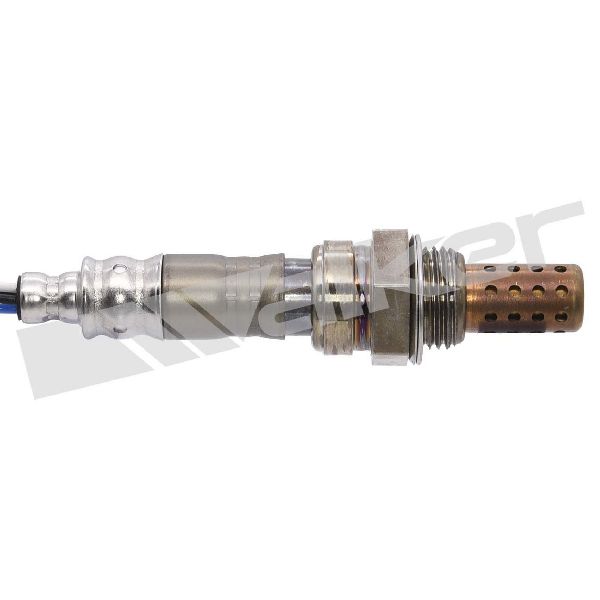
On a 2013-2016 Mazda CX-5, code P0131 almost always indicates a failed upstream oxygen sensor (also called an Air/Fuel Ratio sensor). Replacing this sensor is the most common fix, with quality aftermarket parts from brands like Denso or NGK costing between $100 and $180. The correct OEM part number is typically PE20-18-861A (or PE21-18-861 for some 2.5L models), with Denso 234-5060 being a common aftermarket replacement. It's a DIY-friendly job with the right O2 sensor socket.
- P0131 on your CX-5 points almost exclusively to a failed upstream Air/Fuel Ratio sensor (Bank 1, Sensor 1).
- This is a common wear-and-tear item, and replacement is the standard fix.
- While driving is possible, it will cause poor fuel economy and can damage the catalytic converter over time.
- The OEM part is PE20-18-861A or PE21-18-861, and a trusted aftermarket alternative is Denso 234-5060.
- Before replacing, do a quick visual check of the sensor's wiring for any obvious melting or damage.
What's Unique About the 2013-2016 Mazda CX-5
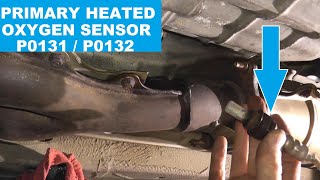
The SKYACTIV-G engines in the first-generation CX-5 (2013-2016) are generally reliable, and the P0131 code does not point to a widespread, unique design flaw. The issue is typically standard wear-and-tear on the upstream A/F sensor. Unlike some other vehicles where wiring issues are a very common chafe-point (though still possible), on the CX-5 the leading cause is simply the sensor reaching the end of its service life. The upstream sensor is conveniently located at the rear of the engine bay, 🎬 See this quick guide to locate both oxygen sensors. making it more accessible for replacement compared to sensors on V-type engines or those located under the vehicle.
Symptoms You May Notice
- Check Engine Light is on
- Decreased fuel economy
- Rough or uneven idle
- Engine hesitation or stumbling during acceleration
- Strong smell of gasoline or unburned fuel from the exhaust
- Black smoke from exhaust
- Replacing the downstream (Sensor 2) oxygen sensor. This code specifically points to Sensor 1, the upstream sensor.
- Replacing the catalytic converter. A P0131 code can lead to converter damage if ignored, but it is not the cause of the code.
- Replacing spark plugs or ignition coils without addressing the lean/rich condition first. While misfires can occur with P0131, they are a symptom, not the root cause.
Most Likely Causes
- Failed Upstream Air/Fuel Ratio Sensor (Bank 1, Sensor 1) 🔴 High Probability → Shop Oxygen Sensor Oxygen sensors are wear items that typically have a lifespan of 70,000 to 100,000 miles. Contamination and age are the primary reasons for failure. This is the most common resolution reported by owners.
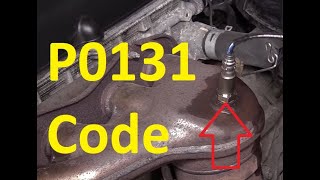
How to confirm: Use an OBD-II scanner with live data capability to monitor the Bank 1 Sensor 1 A/F current (Mazda PID O2S11). A healthy sensor will show specific current values at idle (approx. -39 µA) and during fuel cut (approx. 3.84 mA). A sensor that is stuck, unresponsive, or shows readings far outside these specs is likely faulty. The sensor's internal heater resistance should also be between 1 and 10 ohms when measured 🎬 Watch: How to test and replace a faulty sensor. at room temperature across terminals A and E.
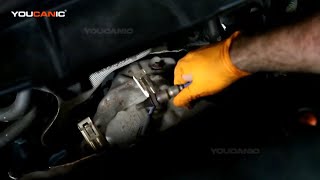
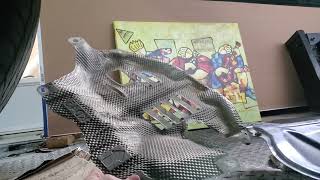
Typical fix: Replace the upstream Air/Fuel Ratio sensor. The sensor is located in the exhaust manifold at the rear of the engine. Using penetrating oil on the threads beforehand is highly recommended, as they can seize. A special slotted O2 sensor socket is required 🎬 Watch: This step-by-step walkthrough shows the upstream sensor replacement. for removal and installation. Be careful not to let penetrant spray enter the sensor's airflow holes.
Est. part cost: $100-$250 - Exhaust Leak Before the Sensor 🟡 Medium Probability Gaskets and welds in the exhaust manifold can degrade over time from heat cycles and corrosion, allowing outside air to be drawn into the exhaust stream. This unmetered air causes the A/F sensor to read a false lean condition (low voltage/current).
How to confirm: Perform a visual inspection of the exhaust manifold for cracks or black soot trails indicating a leak. You can also use a smoke machine to pressurize the exhaust system (when cold) and look for escaping smoke. A ticking noise from the engine bay that gets louder with acceleration is also a common sign.
Typical fix: Repairing the leak is necessary. This may involve replacing the exhaust manifold gasket or, in more severe cases, repairing or replacing the entire exhaust manifold.
Est. part cost: $20-$300 - Damaged Wiring or Connectors ⚪ Low Probability
How to confirm: Visually inspect the wiring harness for the upstream O2 sensor from the sensor itself to the main connector. Look for any signs of melting, chafing, corrosion, or breaks. The A/F sensor signal is very low current, so even minor corrosion on connector pins can create high resistance and trigger the code. Test for continuity and shorts to ground on the heater circuit (Terminals A and E) and signal wires.
Typical fix: Repair or replace the damaged section of the wiring harness or the connector.
Est. part cost: $10-$50
Rare But Worth Checking
- Low Fuel Pressure: If the engine is genuinely running lean due to a weak fuel pump or clogged injectors, the O2 sensor will correctly report low voltage. This would typically be accompanied by other codes (like P0171) or more severe drivability issues.
- Vacuum Leak: A significant leak in the intake system (e.g., a cracked intake hose or bad gasket) can introduce unmetered air, causing a lean condition and triggering the P0131 code. This is often accompanied by a high, erratic idle and a hissing sound.
- Dirty Mass Airflow (MAF) Sensor: → Shop Fuel Injection Air Flow Meter A contaminated MAF sensor can under-report the amount of air entering the engine. The PCM then commands less fuel, creating a true lean condition which the A/F sensor correctly reports. Cleaning the MAF with a dedicated electronic parts cleaner may resolve the issue.
- PCM Malfunction: In very rare cases, the Powertrain Control Module itself can be faulty, misinterpreting the sensor's signal. This should only be considered after all other possibilities have been exhaustively ruled out.
Diagnosis Steps
- Connect an OBD-II scanner to confirm the P0131 code and check for any other stored codes. Record the freeze frame data to see the engine conditions when the code was set.
- Using a scan tool capable of reading Mazda-specific PIDs (like the M-MDS), view the live data for 'O2S11' (A/F sensor current). At warm idle, the value should be approximately -39 µA. During deceleration from over 4,000 RPM, it should be approximately 3.84 mA. If the sensor readings are stuck or do not respond correctly, it is likely faulty.
- With the engine off and cool, disconnect the A/F sensor and measure the resistance between terminals A and E. The reading should be between 1 and 10 ohms. If it is outside this range, the sensor's internal heater is bad and the sensor must be replaced.
- Inspect the exhaust manifold and the area around the upstream O2 sensor for any signs of black soot or cracks that would indicate an exhaust leak. Listen for any abnormal ticking sounds from this area when the engine is running.
- Thoroughly inspect the O2 sensor's wiring harness for any signs of melting on the exhaust, chafing against brackets, or corrosion in the connector. Check for power at Terminal A (heater circuit) and check for a short to ground on Terminal E (heater control from PCM).
- If the wiring and exhaust system are intact and the sensor tests bad, replace the upstream A/F sensor.
- After the repair, clear the codes using the scanner and perform a complete drive cycle to ensure the Check Engine Light does not return and the emissions monitors are set to 'Ready'.
Parts You'll Likely Need
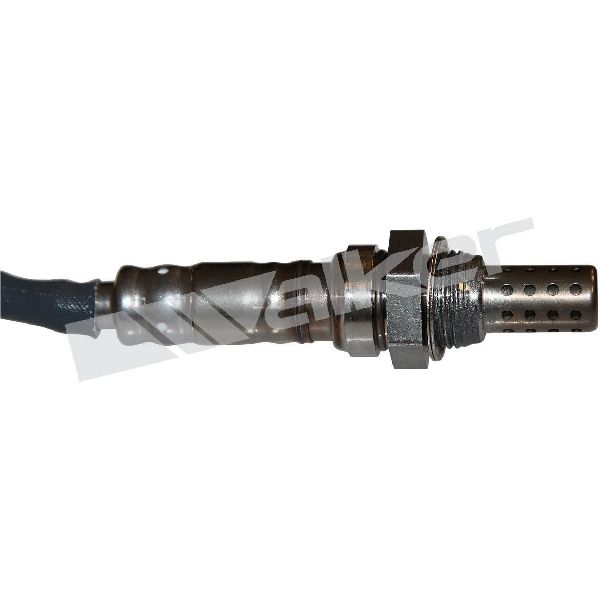
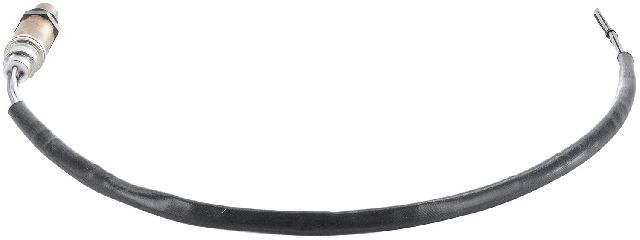
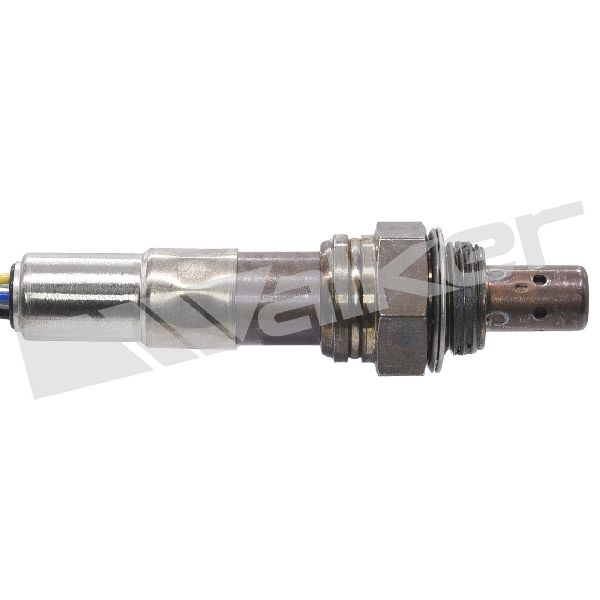
- Upstream Air/Fuel Ratio Sensor (Bank 1, Sensor 1)
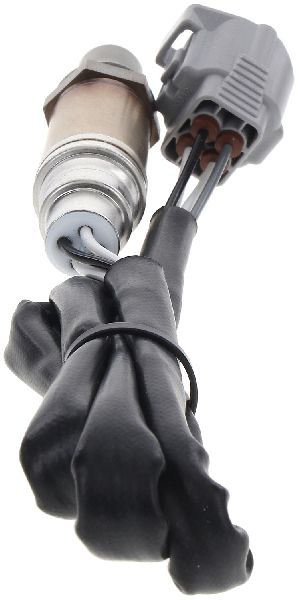
(OEM #PE20-18-861A (for 2.0L and some 2.5L) or PE21-18-861 (for some 2.5L). Always verify with VIN.)— This sensor is the most common failure point for code P0131 on the CX-5. It is a critical component for fuel mixture calculation and is a standard wear item.
Trusted brands: Denso (OEM supplier), NGK/NTK
OEM price range: $180-$250
Aftermarket price range: $100-$180
Related Codes That Often Appear With This One
- P2177 — P2177 means 'System Too Lean Off Idle'. A faulty A/F sensor giving a false lean signal (P0131) can cause the PCM to overcompensate, but if another issue like a vacuum leak is the true cause, both codes can appear as the PCM struggles to maintain the correct fuel trim.
- P0300-P0304 — These are random or specific cylinder misfire codes. An incorrect air-fuel mixture caused by the P0131 fault can lead to poor combustion and trigger misfires.
- P0134 / P2251 — P0134 (No Activity Detected) and P2251 (Negative Current Control Circuit Open) often appear with P0131 when the sensor has completely failed or there is an open circuit in the wiring.
Technical Service Bulletins (TSBs) & Recalls
- TSB 01-015/10: While for a Mazda3, this TSB is relevant as it describes P0131 being caused by the A/F sensor harness chafing on a bracket. This highlights a potential, though less common, cause to investigate on the CX-5.
Mechanic-Grade Diagnostic Values
- A/F Sensor Heater Resistance — expected: 1 - 10 Ω (at room temperature). Failure: Reading is open (infinite) or outside the specified range.
- A/F Sensor Current (PID O2S11) at warm idle — expected: Approx. -39 µA. Failure: Value is stuck, zero, or significantly different.
- A/F Sensor Current (PID O2S11) during deceleration fuel cut (>4,000 RPM) — expected: Approx. 3.84 mA. Failure: Value does not rise to this level or remains low.
Hidden / Shadow Codes Worth Checking
- P0131:00: This is the Mazda-specific format for the code, indicating the PCM has detected a short to ground on the A/F sensor's internal circuit terminals (B, D, or F). (see via Mazda M-MDS (dealer-level scan tool) or equivalent advanced scanner.)
Scan Tool Commands That Help
- Mazda M-MDS: PID/DATA Monitor for O2S11 — This is not a bidirectional command, but a specific monitoring function used in a guided diagnostic test. It's used to verify if the A/F sensor is responding correctly to changing engine conditions (idle vs. fuel cut) by observing its current output in mA/µA.
Wiring & Ground Locations
- A/F Sensor Connector (Harness Side) — At the end of the sensor pigtail, clipped to a bracket at the rear of the engine.. This is the primary point for electrical testing. Pin A is heater power, Pin E is the PCM-controlled ground for the heater, and Pins B, D, F are for the sensor signal and reference.
- G07 — Engine compartment, left rear of engine.. This is a primary ground point for the engine performance systems. A poor connection here could potentially cause erratic sensor readings.
- G01 — Engine compartment, under the left headlight assembly.. Another key chassis ground in the engine bay that supports various electronic components.
Real Owner Repair Stories
- PNI Atlantic News, 'Ask the Auto Mechanic' Column (2014 Mazda CX-5) — Check Engine Light with code P0131.
❌ Tried (didn't work) Replacing the upstream O2 sensor at the Mazda dealership.
✅ What actually fixed it The article explains the likely remaining causes are either a subtle exhaust leak before the sensor OR high resistance in the wiring/connectors between the sensor and the PCM. It highlights that since the sensor operates on very low current, even minor corrosion can disrupt the signal and re-trigger the code, a fact often missed after a part replacement.
"I Checked Everything" — The Actual Cause
- If an exhaust smoke test comes back clean, the next most likely cause for a persistent P0131 (especially after sensor replacement) is high electrical resistance in a connector pin for the A/F sensor. The signal is very low current, making it sensitive to even minor corrosion that wouldn't affect a higher power circuit.
When the Usual Fixes Don't Work
- In a documented case for a 2014 CX-5, the code P0131 returned even after a dealership replaced the upstream O2 sensor. This indicates that simply replacing the sensor is not a guaranteed fix. The root cause can be more subtle, such as minor corrosion in a wiring connector causing a voltage drop, or a hairline crack in the exhaust manifold that doesn't produce an obvious noise.
OEM Part Supersession History
PE20-18-861A→PE20-18-861A remains the common part number.— N/A
Heads up: Be careful not to confuse with part number PE20-18-100A. This is an ignition coil for the same engine and the part numbers are visually similar, which can lead to incorrect ordering.
Diagnostic Flowchart
Other Known Issues on This Vehicle
Issues unrelated to this code that are worth knowing about as an owner of this generation:
- Leaking Serpentine Belt Tensioner 🟠 Medium — Very common issue on 2013-2019 models. The hydraulic tensioner leaks fluid, causing squealing noises and loss of belt tension. (Ref: TSB 01-019/19 (superseded by later versions like R074/18A). The part has been redesigned multiple times.)
- Infotainment System Rebooting/Freezing 🟡 Low — A widespread annoyance where the Mazda Connect system gets stuck in a boot loop, freezes, or randomly restarts. (Ref: No recall, but firmware updates from a dealer can sometimes resolve the issue. The most common cause is a failing or corrupted internal SD card in the Connectivity Master Unit (CMU).)
- Prematurely Cracked Windshields 🟠 Medium — Numerous owner complaints about windshields cracking easily from small impacts or even temperature changes.
- Daytime Running Light (DRL) Failure 🟡 Low — Specific to 2016 models, the LED DRLs can fail or flicker. (Ref: Mazda Safety Recall 4320A was issued to address this, involving the replacement of the headlamp sealing gasket or the entire unit.)
- Vehicle Fails to Shut Off (Stays in Accessory Mode) 🟠 Medium — Common on 2013-2015 models, a faulty park/shifter switch prevents the vehicle from recognizing it's in Park, leaving accessory power on and draining the battery.
Used vs. New Parts: Buying Guide for This Vehicle
When a used part is the smart pick: For this code, a used part is only recommended for a cracked exhaust manifold. A part from a low-mileage, non-corroded donor vehicle can be a cost-effective alternative to a new manifold.
Donor-vehicle mileage cap: roughly under 80000 miles for the part to have meaningful remaining life.
What to inspect on the donor part:
- For an exhaust manifold, inspect thoroughly for hairline cracks, especially around the welds and flange.
- Ensure all mounting studs are intact and not stripped.
- Check for severe rust or pitting that could prevent a good gasket seal.
OEM-only on this vehicle (don't cheap out):
- While not strictly 'OEM-only', it is highly recommended to use either a genuine Mazda A/F sensor or one from the original equipment supplier (Denso).
Aftermarket brands forum-validated for this vehicle:
- Denso (OEM)
- NGK / NTK
Brands owners have reported issues with on this vehicle:
- Unnamed 'white-box' or generic eBay/Amazon sensors. These often have incorrect calibration or heater resistance, causing the code to return or leading to poor fuel economy.
Real Owner Stories
Aggregated from forums and TSBs cited above. Mileages and costs reflect what owners reported in those sources.
2014 Mazda CX-5
Symptoms: The check-engine light is on. The owner had the O2 sensor replaced three times by the dealer, but the light remains on.
What fixed it: The context indicates the sensor was replaced multiple times without resolution, suggesting the need to investigate wiring or exhaust leaks as outlined in the diagnostic steps.
Source hint: PNI Atlantic News
2013-2015 Mazda CX-5
Symptoms: Vehicle fails to shut off and stays in accessory mode, draining the battery.
What fixed it: Replacing the park/shifter switch which prevents the vehicle from recognizing it is in Park.
Source hint: vehicle_specific_issues
2012-present Mazda3 (SKYACTIV-G 2.0L/2.5L) — ~85000 miles
Symptoms: P0131 code triggered by wiring issues.
What fixed it: Repairing the A/F sensor harness where it was chafing on a bracket.
Source hint: TSB 01-015/10
Mazda5 (SKYACTIV architecture)
Symptoms: P0131 and P2177 codes present simultaneously.
What fixed it: Cleaning the MAF/throttle body and replacing the upstream O2 sensor.
Source hint: Mazdas247.com - Thread 'SOLVED P0131 and P2177'
2008 Mazda 3 2.3L
Symptoms: P0131 and P0134 codes; difficulty removing the old sensor.
What fixed it: Replacement of the upstream sensor using penetrating oil and a proper O2 sensor socket.
Source hint: Reddit r/mazda3 - '2008 2.3l Mazda 3 - P0131 Code - O2 Sensor?'
Related OBD-II Codes
Frequently Asked Questions
Does TSB 01-015/10 apply to my Mazda CX-5 if I have code P0131?
What are the specific Mazda PID values I should look for when testing the Bank 1 Sensor 1 A/F sensor?
Can I test the resistance of the upstream sensor myself to see if it's failed?
Is there a recall for the LED lights on my 2016 CX-5 that might be related to electrical codes?
Why does my CX-5 stay in Accessory Mode after I shut it off, and is it related to P0131?
Where is the upstream Air/Fuel Ratio sensor located on the SKYACTIV-G engine?
Helpful Videos
We Have This Part in Stock

The information in this article is provided for general reference and educational purposes only. Vehicle specifications, procedures, and part compatibility can vary by production date, trim level, and region. Always consult your vehicle's factory service manual and verify part numbers before purchasing or performing repairs. Safety-critical components such as airbags, seat belts, and braking systems should be installed by a qualified professional.
- Mazda CX-5:
- 🧭 Diagnostic Flowchart
- 🎬 Helpful Videos
- 🛍️ Shop This Part
- What's Unique About the 2013-2016 Mazda CX-5
- Symptoms You May Notice
- Most Likely Causes
- Rare But Worth Checking
- Diagnosis Steps
- Parts You'll Likely Need
- Related Codes That Often Appear With This One
- Technical Service Bulletins (TSBs) & Recalls
- Mechanic-Grade Diagnostic Values
- Hidden / Shadow Codes Worth Checking
- Scan Tool Commands That Help
- Wiring & Ground Locations
- Real Owner Repair Stories
- "I Checked Everything" — The Actual Cause
- When the Usual Fixes Don't Work
- OEM Part Supersession History
- Other Known Issues on This Vehicle
- Used vs. New Parts: Buying Guide for This Vehicle
- Real Owner Stories
- 2014 Mazda CX-5
- 2013-2015 Mazda CX-5
- 2012-present Mazda3 (SKYACTIV-G 2.0L/2.5L) — ~85000 miles
- Mazda5 (SKYACTIV architecture)
- 2008 Mazda 3 2.3L
- Related OBD-II Codes
- Frequently Asked Questions
- 🎟️ Get 5% Off