

P0131 on 2005 Saab 9-2X 2.5i: Causes and Fixes for O2 Sensor Low Voltage
On a 2005 Saab 9-2X 2.5i, code P0131 almost always indicates a failed front oxygen (A/F) sensor. This is the most common fix. Expect to pay between $100 and $180 for a quality OEM-grade replacement part from a brand like Denso or NTK. The repair is DIY-friendly, with a difficulty of 2/5, unless the old sensor is seized in the exhaust, which is a common issue.
- P0131 on your 2005 Saab 9-2X 2.5i points to a problem with the front oxygen sensor (Bank 1, Sensor 1).
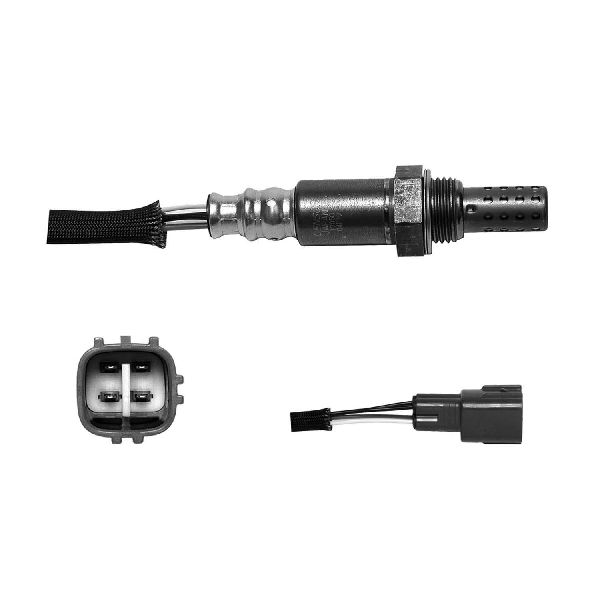
- The most likely cause is a failed sensor. Replacing it with a quality part from Denso (part # 234-9120) or NTK (part # 24329) is the recommended fix.
- Before replacing the sensor, quickly check for exhaust leaks ahead of the sensor and inspect the sensor's wiring and fuse.
- Be prepared for a difficult removal of the old sensor, as it is often seized in the exhaust manifold.
What's Unique About the 2005-2005 Saab 9-2X
The 2005 Saab 9-2X is fundamentally a rebadged Subaru Impreza, a result of GM's 20% stake in Fuji Heavy Industries (Subaru's parent company) at the time. The 2.5i 'Linear' model uses a Subaru EJ25 naturally aspirated engine. Therefore, all diagnostics, parts, and common failures for this code are identical to those for a 2005 Subaru Impreza 2.5RS. It's crucial to use parts specified for the Subaru, as Saab-branded parts can be rare. The front sensor is a wideband Air/Fuel (A/F) sensor, which is more sensitive and expensive than a conventional oxygen sensor. Subaru ECUs are known to be sensitive, and using OEM-supplier brands like Denso or NTK is highly recommended to avoid compatibility issues.
Symptoms You May Notice
- Check Engine Light is on
- Decreased fuel economy
- Rough or surging idle
- Engine hesitation or poor performance
- Strong smell of gasoline or rotten eggs from the exhaust
- Failing an emissions test
- Vibrations felt in the cabin
- Replacing the rear (downstream) O2 sensor. The code P0131 specifically refers to Sensor 1, which is the front (upstream) sensor.
- Replacing the catalytic converter. A bad converter typically throws codes like P0420, not P0131. P0131 is a cause, not an effect, of converter issues.
- Using a cheap, universal oxygen sensor. Subaru ECUs are notoriously picky and often do not work well with non-OEM brands, leading to the code returning.
Most Likely Causes
- Failed Front Air/Fuel (O2) Sensor 🔴 High Probability Oxygen sensors are wear items with a finite lifespan (typically 80k-100k miles) and are exposed to extreme heat and exhaust gases. This is the most common failure point for this code on the Subaru EJ25 engine.
How to confirm: Use an OBD-II scanner to monitor live data for Bank 1, Sensor 1. If the voltage is stuck below 0.2V and does not fluctuate rapidly during operation, the sensor is likely bad. Disconnecting the sensor may cause the engine to run better (on a default fuel map), further indicating a faulty sensor. A user on Reddit with a similar Subaru confirmed getting both P0131 and P0031 codes, which strongly pointed to a single failed sensor unit.
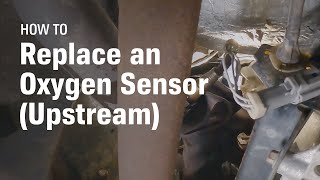
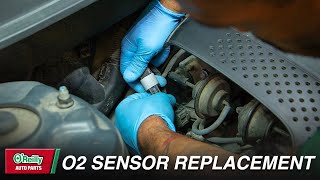
Typical fix: Replace the front (upstream) Air/Fuel ratio sensor. It is highly recommended to use an OEM-quality brand like Denso or NTK/NGK. Be sure to apply anti-seize compound to the threads of the new sensor. 🎬 See this walkthrough on how to replace an upstream sensor.
Est. part cost: $100-$180 - Exhaust Leak 🟡 Medium Probability Gaskets on the Subaru EJ-series exhaust manifolds, particularly the header-to-block and header-to-crossover pipe gaskets, can degrade over time, causing leaks. A leak before the O2 sensor allows unmetered air into the exhaust stream, causing a false lean reading (low voltage).
How to confirm: Perform a visual inspection for black soot trails near exhaust flanges and gaskets. A smoke test is the most reliable method to find small leaks. You may also hear a ticking or hissing sound from the engine bay, especially when the engine is cold, which disappears as the metal expands and seals the leak.
Typical fix: Replace the leaking exhaust gasket(s). The most common are the manifold to cylinder head gaskets.
Est. part cost: $15-$50 - Damaged Wiring or Connector ⚪ Low Probability The sensor wiring is routed near hot exhaust components and can become brittle, melted, or frayed over time, causing a short or open circuit. The connector itself can also accumulate moisture and corrode.
How to confirm: Visually inspect the entire wiring harness from the sensor to the main engine harness. Check for melted insulation, corrosion in the connector pins, or frayed wires. Use a multimeter to check for continuity and for a short to ground on the signal wire.
Typical fix: Repair the damaged section of the harness or clean/replace the connector.
Est. part cost: $10-$40 - Engine Vacuum Leak ⚪ Low Probability Aging vacuum hoses and intake gaskets can crack and leak, introducing unmetered air into the engine and causing a true lean condition that the sensor correctly reports.
How to confirm: Use a smoke machine to test the intake system for leaks. Alternatively, carefully spray brake cleaner around the intake manifold and vacuum lines while the engine is running and listen for a change in idle speed.
Typical fix: Replace the leaking vacuum hose or gasket.
Est. part cost: $5-$100
Rare But Worth Checking
- Low Fuel Pressure: A failing fuel pump or clogged fuel filter can cause a lean condition that the O2 sensor correctly reports. This should be investigated if no other causes are found and you also have a P0171 code.
- Faulty Powertrain Control Module (PCM): This is extremely rare. The PCM should only be considered after all other possible causes, including wiring, have been exhaustively ruled out.
Diagnosis Steps
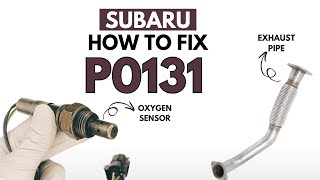
- Connect an OBD-II scanner and confirm the presence of the P0131 code. 🎬 Watch: Three DIY methods to fix the P0131 code quickly. Check for other codes like P0031 or P0171.
- Observe the live data stream for the Bank 1, Sensor 1 voltage. It should fluctuate rapidly. If it is stuck low (e.g., <0.2V), proceed with diagnosis.
- Perform a thorough visual inspection of the front O2 sensor's wiring harness and connector for any signs of melting, chafing, or corrosion.
- Check the fuse for the O2 sensor heater circuit, often located in the engine bay fuse box.
- Inspect the exhaust manifold and the connection to the catalytic converter for signs of leaks, such as black soot or audible ticking when cold.
- If no exhaust leaks are apparent, test for intake vacuum leaks using a smoke machine.
- If the wiring, fuse, and exhaust system are confirmed to be intact, the front A/F sensor is the most likely culprit and should be replaced.
- After replacement, disconnect the battery for 10-15 minutes to reset the ECU's learned fuel trims, allowing it to adapt to the new sensor correctly.
Parts You'll Likely Need
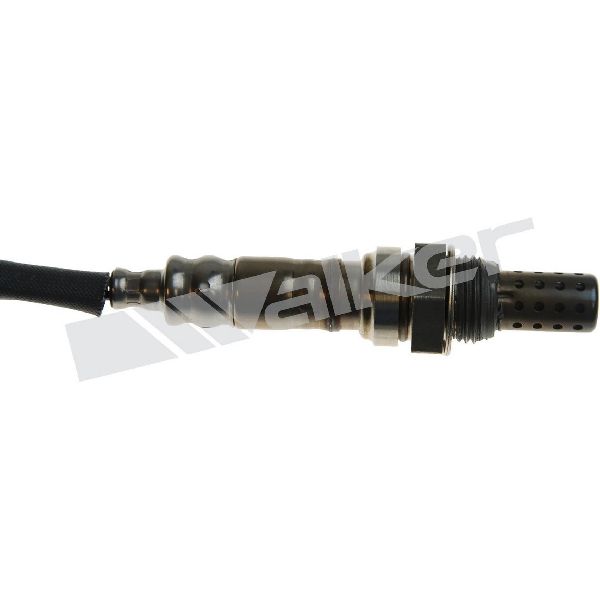
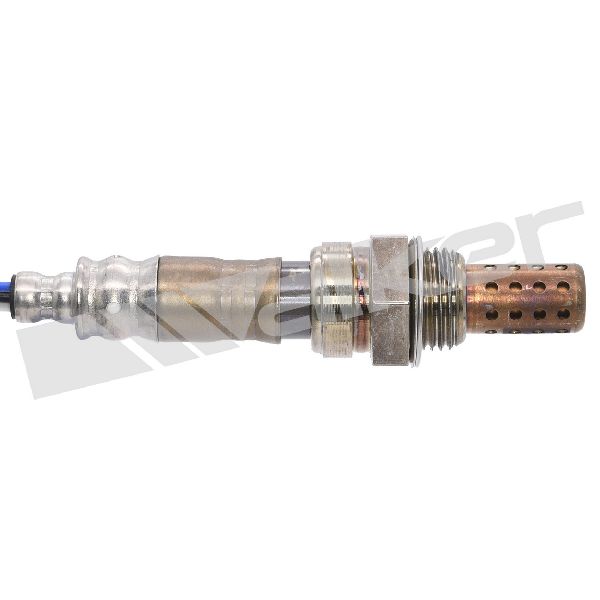
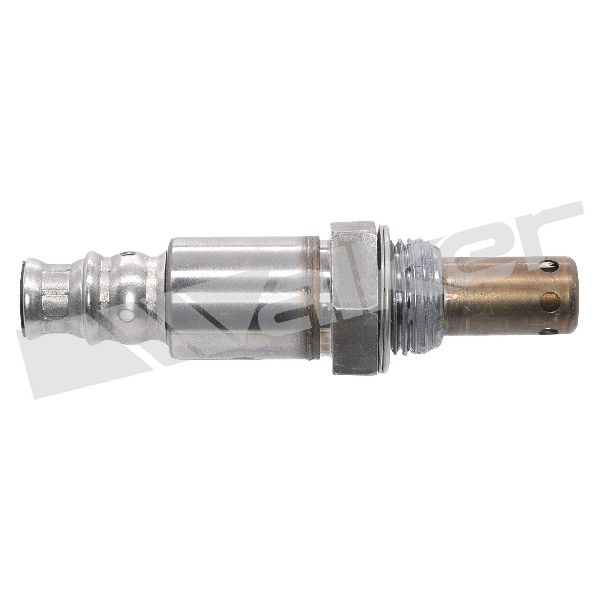
- Front Air/Fuel Ratio Sensor
(OEM #22641AA280 (may be superseded by 22641AA211 or 22641AA140))— This is the most common failure point for code P0131 on this vehicle. It is a wear item.
Trusted brands: Denso (P/N: 234-9120), NTK/NGK (P/N: 24329)
OEM price range: $150-$220
Aftermarket price range: $100-$180
Related Codes That Often Appear With This One
- P0171 — System Too Lean (Bank 1). This code may appear alongside P0131 if there is a significant vacuum or exhaust leak causing a genuine lean condition that the sensor is correctly detecting.
- P0031 — HO2S Heater Control Circuit Low (Bank 1, Sensor 1). This code relates to the heater circuit within the same sensor. The heater brings the sensor to operating temperature quickly. If you see both P0131 and P0031, it's almost certainly a problem with the sensor itself or its wiring/fuse. A blown fuse in the engine bay fuse box has been noted as a cause for this code on Subarus.
Technical Service Bulletins (TSBs) & Recalls
- While no TSB is specifically for P0131 alone, Subaru TSB 11-202-21 lists P0131 among a large group of DTCs related to A/F and O2 sensors, providing a diagnostic procedure for technicians. 🎬 Watch: A mechanic's guide to three ways to fix P0131. This indicates it's a commonly monitored code.
Platform-Specific Known Issues
- The front O2 sensor on the naturally aspirated EJ25 engine can be very difficult to remove. It is often seized in the exhaust manifold due to rust and heat cycling. A high-quality 22mm (or 7/8") flare nut or O2 sensor socket, significant penetrating oil (applied to a warm, not hot, exhaust), and sometimes a breaker bar or hammer are required. One owner on the Ultimate Subaru Message Board noted they had to warm the engine slightly and then use a box-end wrench and a hammer to break it loose.
- Subaru ECUs are very sensitive to the signal from the A/F sensor. Using off-brand or 'universal' sensors that require splicing is strongly discouraged, as they often fail to work correctly and cause the P0131 code to return. Sticking to Denso or NTK is critical for a successful repair.
Mechanic-Grade Diagnostic Values
- A/F Sensor Heater Circuit Resistance — expected: 2.0 to 5.0 Ohms. Failure: A reading of 0 Ohms (short circuit), infinite resistance / OL (open circuit), or a value significantly outside the expected range indicates a faulty heater element within the sensor.
- A/F Sensor Live Data Voltage (Scan Tool) — expected: Approximately 2.2V at idle for a healthy sensor.. Failure: A voltage that is stuck low (consistently below 0.5V) will trigger the P0131 code.
- P0131 Fault-Triggering Threshold — expected: N/A. Failure: The ECM will set code P0131 when it sees the sensor voltage remain below approximately 0.2V - 0.4V for an extended period (e.g., more than 20 seconds).
Scan Tool Commands That Help
- Subaru Select Monitor (SSM) or equivalent: O2 Heater Diagnosis — This is a self-test function accessible via the dealer scan tool to specifically check the integrity of the heater circuit within the A/F sensor. It will return a 'Complete' or 'Incomplete' status, which can quickly confirm or rule out a heater failure often associated with codes like P0031 or P0131.
Wiring & Ground Locations
- Front A/F Sensor Connector — On the passenger side of the engine bay, near the top corner of the engine. There are two connectors; the front A/F sensor is the one with the orange wire, not the all-gray connector (which is for the rear sensor).. This is the primary connection point to test the sensor's heater resistance (pins 4 and 6) and to check for power and signal continuity back to the ECM.
- ECM Connector B134 — At the Engine Control Module (ECM).. For advanced diagnosis, you can test for a short to ground in the harness between the ECM and the sensor. A diagnostic procedure involves checking for resistance between pin #33 of connector B134 and chassis ground, and pin #26 and chassis ground. Resistance should be greater than 1 MΩ; if not, a short in the harness is likely.
Real Owner Repair Stories
- Reddit user verone3784 (2007 Subaru Legacy (similar EJ25 engine and sensor system)) — Check engine light with code P0031 (HO2S Heater Control Circuit).
❌ Tried (didn't work) Clearing the code. The code would stay off in warm weather but would return during the winter.
✅ What actually fixed it Replacing the front A/F (O2) sensor. The user noted that the heater element's failure was temperature-dependent initially, but eventually, the car would start to enter limp mode and run poorly until the sensor was replaced.
OEM Part Supersession History
22641AA140→22641AA280— Standard part revision and update by the manufacturer.
Model Year Variations Within This Range
- 2005: The 2005 Saab 9-2X was a single-year model based on the Subaru Impreza. There are no known variations within this model year for the 2.5i engine that would affect the diagnosis of P0131.
Diagnostic Flowchart
Used vs. New Parts: Buying Guide for This Vehicle
When a used part is the smart pick: For this code, buying used parts only makes sense if the root cause is an exhaust leak. A used exhaust manifold or crossover pipe from a reputable auto recycler is a viable, cost-effective option. Do NOT buy a used oxygen sensor.
Donor-vehicle mileage cap: roughly under 120000 miles for the part to have meaningful remaining life.
What to inspect on the donor part:
- For exhaust components, inspect for cracks, especially near welds and flanges.
- Check for excessive rust that could compromise the sealing surfaces.
- Ensure all mounting studs are intact and not broken off.
OEM-only on this vehicle (don't cheap out):
- Air/Fuel Ratio Sensor: While not strictly OEM-only, using the OEM supplier (Denso or NTK) is critical. Generic or off-brand sensors are known to cause compatibility issues with the Subaru ECU.
Aftermarket brands forum-validated for this vehicle:
- Denso (for the A/F sensor)
- NTK/NGK (for the A/F sensor)
Brands owners have reported issues with on this vehicle:
- Universal oxygen sensors that require splicing wires.
- No-name or house-brand sensors from discount online retailers.
Real Owner Stories
Aggregated from forums and TSBs cited above. Mileages and costs reflect what owners reported in those sources.
2005 Subaru Outback 2.5i
Symptoms: The owner first got a P0131 code, which was later joined by a P0031 (heater circuit fault) code.
What fixed it: Replacing the single upstream (front) Air/Fuel O2 sensor resolved both codes.
Source hint: Reddit r/Cartalk
2005 Subaru Impreza OBS
Symptoms: Check Engine Light with code P0131.
What fixed it: The owner replaced the front O2 sensor. They noted the old sensor was seized and shared a specific removal tip: warm the engine, then use a 7/8" box end wrench and a hammer to break it loose.
Source hint: Ultimate Subaru Message Board
Related OBD-II Codes
Frequently Asked Questions
I'm getting a P0131 code on my Saab 9-2X. Can I use a cheaper universal oxygen sensor instead of the expensive OEM one?
The front oxygen sensor on my 2.5i is completely seized. What's the best way to remove it?
Is the Saab 9-2X 2.5i the same as a Subaru Impreza for this P0131 repair?
I hear a ticking noise from my engine bay when it's cold. Could this be related to my P0131 code?
Does Subaru TSB 11-202-21 mean there is a recall for the P0131 code?
After replacing the front O2 sensor, is it necessary to disconnect the battery?
Helpful Videos
![How to Fix SUBARU P0131 Engine Code in 4 Minutes [3 DIY Methods / Only $9.65]](https://img.youtube.com/vi/sYlEpYTbrsw/mqdefault.jpg)
We Have This Part in Stock


The information in this article is provided for general reference and educational purposes only. Vehicle specifications, procedures, and part compatibility can vary by production date, trim level, and region. Always consult your vehicle's factory service manual and verify part numbers before purchasing or performing repairs. Safety-critical components such as airbags, seat belts, and braking systems should be installed by a qualified professional.
- Saab 9-2X:
- 🧭 Diagnostic Flowchart
- 🎬 Helpful Videos
- 🛍️ Shop This Part
- What's Unique About the 2005-2005 Saab 9-2X
- Symptoms You May Notice
- Most Likely Causes
- Rare But Worth Checking
- Diagnosis Steps
- Parts You'll Likely Need
- Related Codes That Often Appear With This One
- Technical Service Bulletins (TSBs) & Recalls
- Platform-Specific Known Issues
- Mechanic-Grade Diagnostic Values
- Scan Tool Commands That Help
- Wiring & Ground Locations
- Real Owner Repair Stories
- OEM Part Supersession History
- Model Year Variations Within This Range
- Used vs. New Parts: Buying Guide for This Vehicle
- Real Owner Stories
- 2005 Subaru Outback 2.5i
- 2005 Subaru Impreza OBS
- Related OBD-II Codes
- Frequently Asked Questions
- 🎟️ Get 5% Off