

P0131 on 2007 Saab 9-3: O2 Sensor Circuit Low Voltage Causes and Fixes
On a 2007 Saab 9-3, code P0131 almost always points to a failing front (upstream) oxygen sensor. Replacing this sensor is the most common fix. Expect to pay between $60-$120 for a quality aftermarket sensor (Bosch or Denso) and around $180 for an OEM part. It's a DIY-friendly job with the right O2 sensor socket, but the sensor can be seized in the exhaust housing, requiring penetrating oil and heat.
- P0131 on a 2007 Saab 9-3 most often means the front oxygen sensor has failed and needs replacement.
- Before replacing the sensor, perform a quick visual check for obvious exhaust leaks before the sensor and cracks in the large plastic intake pipe, as these are also common causes.
- Use a quality replacement sensor from a brand like Bosch or Denso for best results.
- You will need a special O2 sensor socket (usually 22mm or 7/8") to perform the replacement.
- After the repair, consider disconnecting the battery for 30 minutes to reset the ECM's fuel adaptations.
What's Unique About the 2007-2007 Saab 9-3
The 2007 Saab 9-3 uses the Trionic 8 (T8) engine management system, which is highly sensitive to sensor inputs for its turbocharging and fuel strategies. When P0131 occurs, the system's reaction is immediate and significant: it disables closed-loop fuel control, shuts off the heaters for both O2 sensors, and resets and stops all fuel adaptation. This is a more aggressive failsafe than on many other vehicles and directly leads to noticeable drops in fuel economy and performance. While the root cause is often a simple sensor failure, the T8's sensitivity means that underlying issues like vacuum leaks from the well-known plastic 'cobra' intake pipe can also easily trigger this code. The ECM itself, located near the hot exhaust components, can also be a point of failure, though this typically presents with injector circuit codes (P0201-P0204) as well.
Symptoms You May Notice
- Check Engine Light is on.
- Noticeably reduced fuel economy.
- Rough or unstable idle.
- Hesitation or stumbling during acceleration.
- A strong smell of exhaust fumes.
- Possible random engine misfires, which may or may not trigger a separate code like P0300.
- Replacing the rear (downstream) oxygen sensor. The code P0131 specifically refers to Sensor 1, which is the front/upstream sensor.
- Replacing the Mass Airflow (MAF) sensor without proper diagnosis. While a faulty MAF can cause fuel trim issues, it's less likely to be the direct cause of P0131 compared to the O2 sensor itself or a leak.
Most Likely Causes
- Failing Front (Upstream) Oxygen Sensor 🔴 High Probability → Shop Oxygen Sensor Oxygen sensors have a finite lifespan, typically wearing out after 70,000-100,000 miles due to constant exposure to extreme heat and exhaust gases. Given the vehicle's age, sensor failure is the most probable cause.
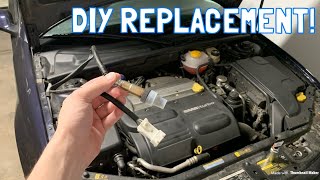
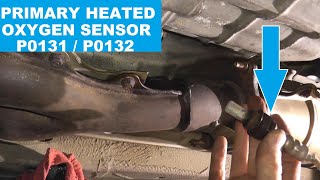
How to confirm: Use an OBD-II scanner to monitor the live voltage data from 'Bank 1, Sensor 1'. A healthy sensor's voltage should fluctuate rapidly between approximately 0.1 and 0.9 volts. If the voltage is stuck low (e.g., below 0.2V) or responds very slowly, the sensor is likely bad. 🎬 See how to test and replace a faulty O2 sensor.
Typical fix: Replace the front oxygen sensor. It is located in the exhaust downpipe just after the turbocharger and is accessible from the top of the engine bay after removing a small heat shield held by two 10mm bolts. An O2 sensor socket (22mm or 7/8") is required. The sensor can be very seized; applying penetrating oil beforehand and heating the exhaust housing can aid removal. Apply anti-seize to the new sensor's threads.
Est. part cost: $60-$120 - Exhaust Leak Before the Sensor 🟡 Medium Probability Exhaust manifold or downpipe gaskets can degrade and fail over time, allowing unmetered outside air to be sucked into the exhaust stream. This extra oxygen fools the sensor into reading a lean condition (low voltage).
How to confirm: Visually inspect the exhaust manifold and the downpipe connection for black soot trails, which indicate a leak. You can also perform a smoke test on the exhaust system to pinpoint the source of the leak. A hissing or ticking sound from the engine bay that changes with RPM can also be a clue.
Typical fix: Replace the leaking gasket or tighten the loose connection. In some cases, a cracked exhaust manifold may need to be replaced.
Est. part cost: $15-$150 - Vacuum Leak 🟡 Medium Probability The plastic and rubber components in the engine bay become brittle with age. On the 9-3's B207 2.0T engine, the large plastic intake pipe running from the airbox to the turbo, known as the 'cobra pipe', is notorious for cracking or not sealing properly at the turbo inlet, creating a significant unmetered air leak.
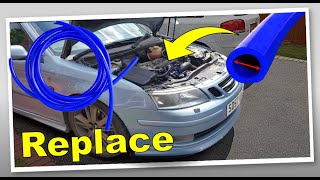
How to confirm: With the engine running, listen for a hissing sound. You can also carefully spray brake cleaner or starting fluid around vacuum lines and intake gaskets; a change in engine idle indicates you've found the leak. A professional smoke test is the most definitive way to find a vacuum leak. 🎬 Watch: How to quickly test for vacuum leaks.
Typical fix: Replace the cracked vacuum hose or leaking intake pipe/gasket. Upgraded silicone intake pipes are available and are more durable than the original plastic part.
Est. part cost: $10-$100 - Damaged Wiring or Connector ⚪ Low Probability The wiring harness for the O2 sensor is routed close to hot exhaust components and can become brittle, chafed, or melted over time, causing a short to ground or an open circuit. Moisture intrusion in the connector can also cause issues.
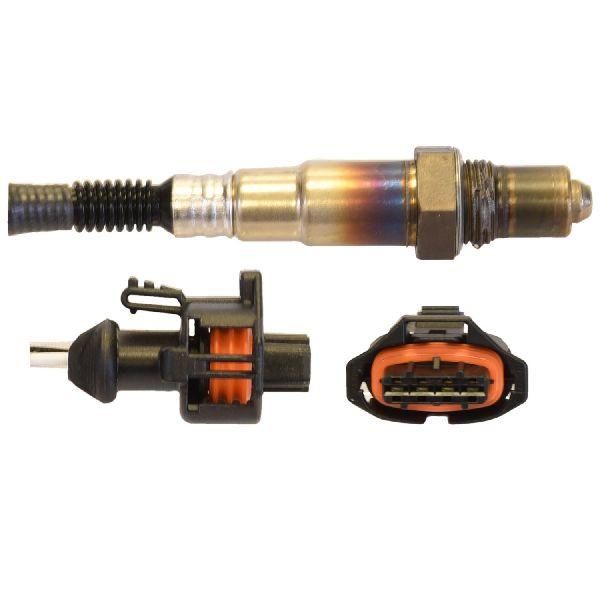
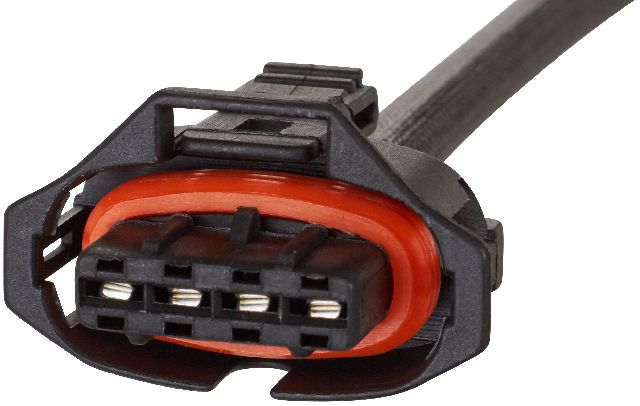
How to confirm: Visually inspect the wiring leading to the front O2 sensor for any signs of damage, melting, or corrosion on the connector pins. The connector is blue and located on a bracket between the power steering pump and vacuum pump. Use a multimeter to check for continuity and ensure there is no short to ground on the signal wire between the sensor connector and the ECM. Jiggling the harness while observing a multimeter can help find intermittent faults.
Typical fix: Repair the damaged section of the wiring harness or clean/replace the connector. The connector has a red slide-out lock that can be brittle.
Est. part cost: $5-$50
Rare But Worth Checking
- Low Fuel Pressure: If the engine is genuinely running lean due to a weak fuel pump or clogged filter, the O2 sensor will correctly report low voltage. This would typically be accompanied by other codes or more severe drivability issues like stalling or difficulty starting.
- Faulty Engine Control Module (ECM): In very rare cases, the internal circuitry of the Trionic 8 ECM that processes the O2 sensor signal can fail. This is more commonly associated with injector circuit codes (P0201-P0204) due to heat soak from its location. This should only be considered after all other possibilities have been exhaustively ruled out.
Diagnosis Steps
- Use an OBD-II scanner to confirm P0131 is the active code and check for any other stored codes like P0171 or P0300.
- Observe the live data stream for the Bank 1 Sensor 1 O2 sensor. Verify if the voltage is stuck low (under 0.2V) and not fluctuating as expected (0.1V-0.9V).
- Perform a thorough visual inspection of the engine bay. Look for cracked or disconnected vacuum hoses, paying close attention to the large intake 'cobra' pipe and its connection to the turbocharger.
- Inspect the exhaust manifold and downpipe for signs of leaks (black soot trails). Listen for an audible ticking or hissing sound from the exhaust.
- Trace the wiring from the front O2 sensor back to the main harness. Look for any signs of melting, chafing, or corrosion at the connector. The connector is located near the power steering pump.
- If no leaks or wiring issues are found, the O2 sensor itself is the most likely culprit.
- If replacing the sensor does not fix the issue, perform a fuel pressure test and a professional smoke test to rule out hard-to-find leaks or fuel delivery problems.
Parts You'll Likely Need
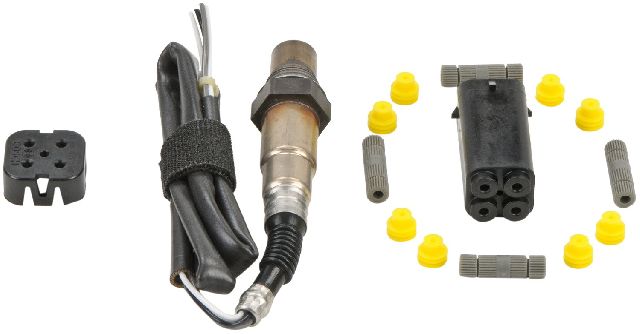
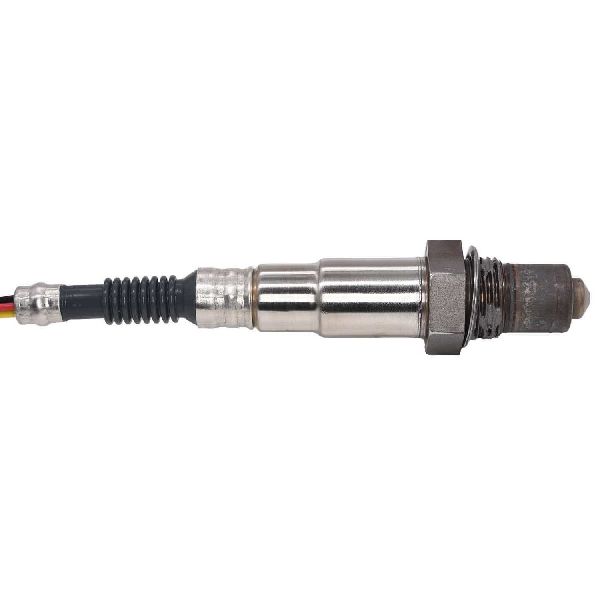
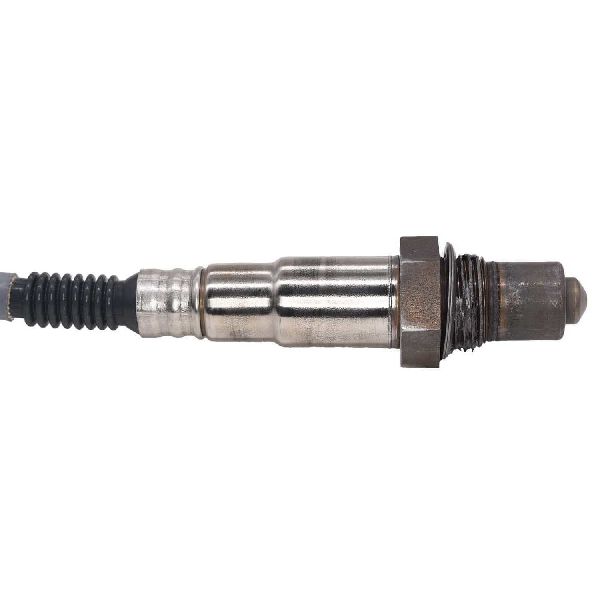
- Front Oxygen Sensor (Bank 1, Sensor 1)
(OEM #55562205)— This sensor is the most common failure point for code P0131. It is a critical component for fuel management that wears out over time.
Trusted brands: Bosch (e.g., 17011), Denso, NTK
OEM price range: $150-$200
Aftermarket price range: $60-$120
Related Codes That Often Appear With This One
- P0171 — P0171 means 'System Too Lean (Bank 1)'. This code often appears with P0131 because they both relate to the same condition: too much oxygen in the exhaust. A significant vacuum leak or a fuel delivery issue is a common cause for both codes to appear simultaneously.
- P0300 — P0300 indicates random or multiple cylinder misfires. A lean condition caused by a vacuum leak or faulty O2 sensor data can lead to an unstable air-fuel mixture, causing misfires and triggering this code alongside P0131.
Platform-Specific Known Issues
- The plastic/rubber intake pipe, known as the 'cobra pipe', is a common failure point that can crack or have a poor seal at the turbo, causing a vacuum leak and leading to lean
Mechanic-Grade Diagnostic Values
- Front O2 Sensor (Sensor 1) Voltage — expected: Rapidly fluctuating between 0.1V and 0.9V (100-900 mV) in closed loop.. Failure: Stuck below 100 mV (0.1V) for more than 30 seconds while the rear sensor is high (>700 mV).
- Fuel Pressure at Idle (B207 Engine) — expected: Approximately 42 PSI with vacuum hose connected to regulator.. Failure: Significantly lower pressure, indicating a weak pump or faulty regulator.
- Fuel Pressure at Idle (Vacuum Disconnected) — expected: Jumps to approximately 51-52 PSI when the regulator's vacuum hose is disconnected and plugged.. Failure: Pressure does not rise, indicating a faulty fuel pressure regulator.
- O2 Sensor Heater Circuit Resistance — expected: Between 2 and 15 ohms at room temperature.. Failure: Infinite resistance (open circuit) or zero resistance (short circuit), indicating a bad heater element within the sensor.
Scan Tool Commands That Help
- Saab Tech 2: Clear Fuel Adaptation — After replacing a component that affects the air-fuel mixture (like an O2 sensor, fuel injectors, or fixing a major vacuum leak), resetting the fuel adaptation forces the Trionic 8 ECM to relearn the long-term and short-term fuel trims from a baseline. The system automatically resets adaptation when P0131 is set, but a manual reset is good practice after a repair.
- Saab Tech 2: Forced Ethanol Adaptation — On BioPower (E85 compatible) models, if the fuel composition is unknown or suspected to be causing issues, a forced ethanol adaptation can be performed. This is especially relevant if fuel contamination is a suspected cause of the lean code.
Wiring & Ground Locations
- Front O2 Sensor Connector (592) — A blue connector located on a bracket between the power steering pump and the vacuum pump.. This is the primary connection point for the sensor. It's exposed to heat and vibration, making it a potential point for corrosion or loose pins causing a low voltage signal.
- ECM Pin B5 (Signal) — Pin 5 on connector 'B' of the Trionic 8 Engine Control Module (589).. This is the specific pin where the O2 sensor's voltage signal is received. It is the endpoint for checking signal wire continuity from the sensor connector.
- ECM Pin B6 (Ground) — Pin 6 on connector 'B' of the Trionic 8 Engine Control Module (589).. The sensor is grounded through the ECM. A fault in this circuit can cause incorrect voltage readings. This is the endpoint for checking the ground wire continuity.
- Ground Point G2 — On the side of the left-hand structural member/strut tower by the connector bracket, near the battery.. This is a main chassis ground point. While the O2 sensor grounds through the ECM, the ECM itself relies on solid chassis grounds. Corrosion or looseness here can cause a variety of difficult-to-diagnose electrical issues.
- Ground Point G7 — For Trionic 8, this ground is on the engine control module's top right attachment lug.. This is the direct ground for the ECM casing. A poor connection here can introduce electrical noise and unstable sensor readings, including the O2 sensor signal.
Real Owner Repair Stories
- Reddit user in r/saab (2006 Saab 9-3 2.0T (B207R)) — O2 sensor readiness monitor would not complete after a repair.
❌ Tried (didn't work) Standard drive cycles, including deceleration from 55 mph.
✅ What actually fixed it The user cleared all DTCs with a Tech 2 (including two unrelated, persistent codes for a passenger seatbelt issue) to reset all monitors. They then drove at a flat 55 mph for about 15 minutes, which allowed all readiness monitors, including the O2 sensor monitor, to finally set as 'ready'.
OEM Part Supersession History
55353040→55562205— Standard part update/revision by the manufacturer.
Diagnostic Flowchart
Used vs. New Parts: Buying Guide for This Vehicle
When a used part is the smart pick: For this repair, used parts are generally not recommended for the sensor itself. However, if the cause is a cracked 'cobra' intake pipe or a faulty wiring connector, a used part from a low-mileage donor car can be a cost-effective solution.
Donor-vehicle mileage cap: roughly under 80000 miles for the part to have meaningful remaining life.
What to inspect on the donor part:
- For intake pipes: Inspect carefully for any hairline cracks, especially around the turbo inlet and PCV connection points. Ensure the plastic is not overly brittle.
- For wiring connectors: Check for intact locking tabs, absence of corrosion on pins, and flexible, non-brittle wires leading into the connector.
- Verify the donor vehicle was not involved in a front-end collision that could have stressed these components.
Aftermarket brands forum-validated for this vehicle:
- Bosch (often the OEM supplier)
- Denso
- NTK
Brands owners have reported issues with on this vehicle:
- No-name, unbranded 'universal' oxygen sensors that require splicing wires. These often have incorrect heater resistance or slow response times, leading to persistent codes on the sensitive Trionic 8 system.
Related OBD-II Codes
Frequently Asked Questions
Where exactly is the front oxygen sensor (Bank 1, Sensor 1) on my 2007 Saab 9-3?
I'm planning to replace the O2 sensor myself. Are there any common problems I should expect on this car?
What is the 'cobra pipe' and how does it relate to code P0131 on my Saab 9-3?
What specific tools are needed to replace the front oxygen sensor on a 2007 9-3?
I replaced the front O2 sensor, but the P0131 code returned. What should I check next?
Are there any recommended brands for a replacement oxygen sensor for my Saab?
Helpful Videos

We Have This Part in Stock

The information in this article is provided for general reference and educational purposes only. Vehicle specifications, procedures, and part compatibility can vary by production date, trim level, and region. Always consult your vehicle's factory service manual and verify part numbers before purchasing or performing repairs. Safety-critical components such as airbags, seat belts, and braking systems should be installed by a qualified professional.
- Saab 9-3:
- 🧭 Diagnostic Flowchart
- 🎬 Helpful Videos
- 🛍️ Shop This Part
- What's Unique About the 2007-2007 Saab 9-3
- Symptoms You May Notice
- Most Likely Causes
- Rare But Worth Checking
- Diagnosis Steps
- Parts You'll Likely Need
- Related Codes That Often Appear With This One
- Platform-Specific Known Issues
- Mechanic-Grade Diagnostic Values
- Scan Tool Commands That Help
- Wiring & Ground Locations
- Real Owner Repair Stories
- OEM Part Supersession History
- Used vs. New Parts: Buying Guide for This Vehicle
- Related OBD-II Codes
- Frequently Asked Questions
- 🎟️ Get 5% Off