

P0131 on 2014-2019 Toyota Corolla: Air/Fuel Sensor Low Voltage Causes and Fixes
For a 2014-2019 Corolla, P0131 almost always means the upstream Air/Fuel Ratio (A/F) sensor has failed. This is also called Bank 1, Sensor 1. Replacing it with an OEM-quality part from a brand like Denso is the most common fix. The sensor is located behind the engine and can be difficult to remove if seized.
- P0131 on your Corolla almost certainly points to the upstream Air/Fuel Ratio sensor (Bank 1, Sensor 1).
- Do not confuse it with the downstream sensor (Sensor 2), which serves a different purpose.
- Replacing the sensor is a DIY-friendly job with the right tool (an O2 sensor socket), but the part can be difficult to access and remove at the back of the engine if seized.
What's Unique About the 2014-2019 Toyota Corolla
On this generation of Toyota Corolla, the P0131 code is straightforward and overwhelmingly points to a failed upstream A/F sensor. Unlike some vehicles where this code could be triggered by various complex issues, the 1.8L 2ZR-FE engine's reputation for high reliability means the sensor itself is the most common point of failure after many miles. Denso is the original equipment manufacturer (OEM) for Toyota's sensors, so a Denso-branded replacement is often identical to the part sold at a Toyota dealership and is the most recommended choice for a lasting repair.
Symptoms You May Notice
- Check Engine Light is on
- Decreased fuel economy
- Rough or unstable idle
- Sluggish acceleration and reduced engine power
- Black smoke from the exhaust or a strong smell of fuel
- Failing an emissions test
- Replacing the downstream (Bank 1, Sensor 2) oxygen sensor. The P0131 code specifically refers to Sensor 1, which is the upstream A/F sensor.
Most Likely Causes
- Failed Upstream Air/Fuel Ratio Sensor (Bank 1, Sensor 1) 🔴 High Probability → Shop Oxygen Sensor A/F sensors are wear items that typically have a lifespan of around 100,000 miles. Contamination and age are the primary reasons for failure. It is the most common cause for this code on Corollas.
How to confirm: Use an OBD-II scanner to monitor the live data for 'O2S11' or 'A/F Sensor B1S1'. A healthy sensor shows fluctuating voltage. A failed sensor will often be stuck at a very low, unchanging voltage (e.g., below 0.2V). If code P0031 (Heater Circuit Fault) is also present, it is a near-certain confirmation that the sensor itself has failed.
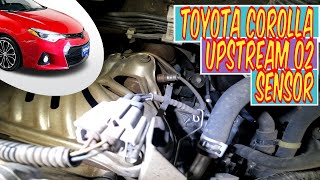
Typical fix: Replace the upstream Air/Fuel Ratio sensor. It is located at the back of the engine in the exhaust manifold. 🎬 Watch: See the exact location of the Bank 1 sensor. This may require a special O2 sensor socket.
Est. part cost: $100-$220 - Exhaust Leak 🟡 Medium Probability Gaskets and welds on the exhaust manifold can degrade over time, allowing unmetered air into the exhaust stream before the sensor, which fools the sensor into sending a low voltage signal.
How to confirm: Visually inspect the exhaust manifold and listen for a 'ticking' or 'puffing' sound, especially when the engine is cold. A shop can perform a smoke test to pinpoint the leak.
Typical fix: Replace the leaking gasket or repair the cracked manifold.
Est. part cost: $20-$300 - Damaged Wiring or Connector ⚪ Low Probability The sensor wiring is located in a high-heat area near the back of the engine, making it susceptible to becoming brittle, melted, or frayed over time.
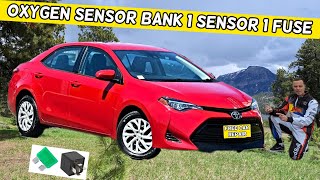
How to confirm: Visually inspect the wiring harness leading to the A/F sensor for any signs of melting, chafing, or corrosion on the connector pins. Check the fuse for the A/F sensor heater circuit, as a blown fuse can also trigger this code. 🎬 Check out this guide to find your oxygen sensor fuses.
Typical fix: Repair the damaged section of the harness or replace the connector pigtail. Replace the blown fuse if necessary.
Est. part cost: $15-$50
Rare But Worth Checking
- Low Fuel Pressure: A weak fuel pump or clogged filter can create a genuinely lean condition, which the A/F sensor will accurately report. This is less common than a sensor failure but should be considered if other fuel-related codes are present.
- Intake/Vacuum Leak: A leak in a vacuum hose or intake manifold gasket allows unmetered air into the engine, creating a lean condition that the sensor correctly detects. This would typically be accompanied by a P0171 (System Too Lean) code.
Diagnosis Steps
- Read the codes with an OBD-II scanner to confirm P0131 is the primary code. Check for other codes like P0031 or P0171.
- Inspect the A/F sensor's wiring harness and connector for any visible damage, melting, or corrosion.
- Check the fuse box for a blown A/F Heater fuse or a faulty relay.
- Inspect the exhaust manifold and the area around the sensor for black soot, which indicates an exhaust leak. Listen for ticking noises on a cold start.
- Use the live data function on a scan tool to observe the Bank 1, Sensor 1 voltage. A healthy A/F sensor on a warm engine should have a reading that fluctuates. If the voltage is stuck low (e.g., <0.2V) and does not respond, the sensor is likely faulty.
- If the sensor appears to be reading correctly but the code persists, check for vacuum leaks using a smoke machine or by carefully spraying brake cleaner around the intake manifold gaskets and vacuum lines while monitoring engine RPM.
- If no leaks are found, check fuel pressure to ensure it is within specification.
- If all other possibilities are ruled out, the A/F sensor is the most probable cause. Replace it.
Parts You'll Likely Need
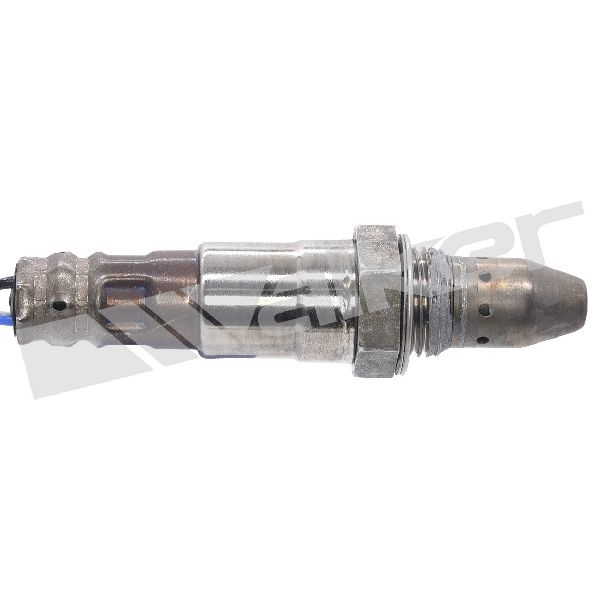
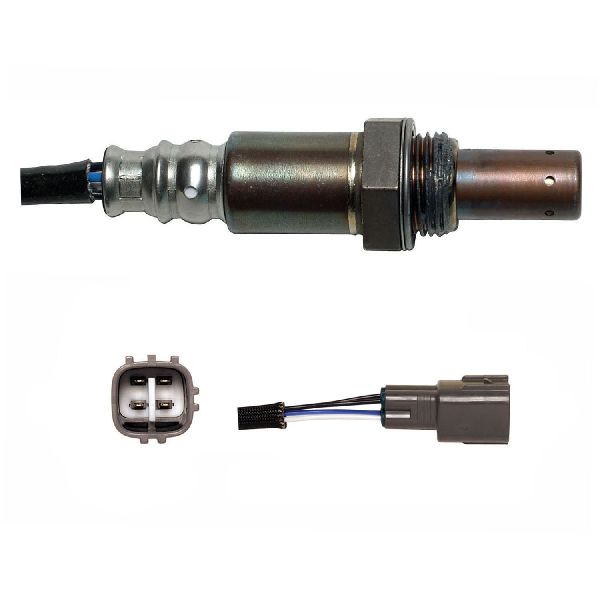
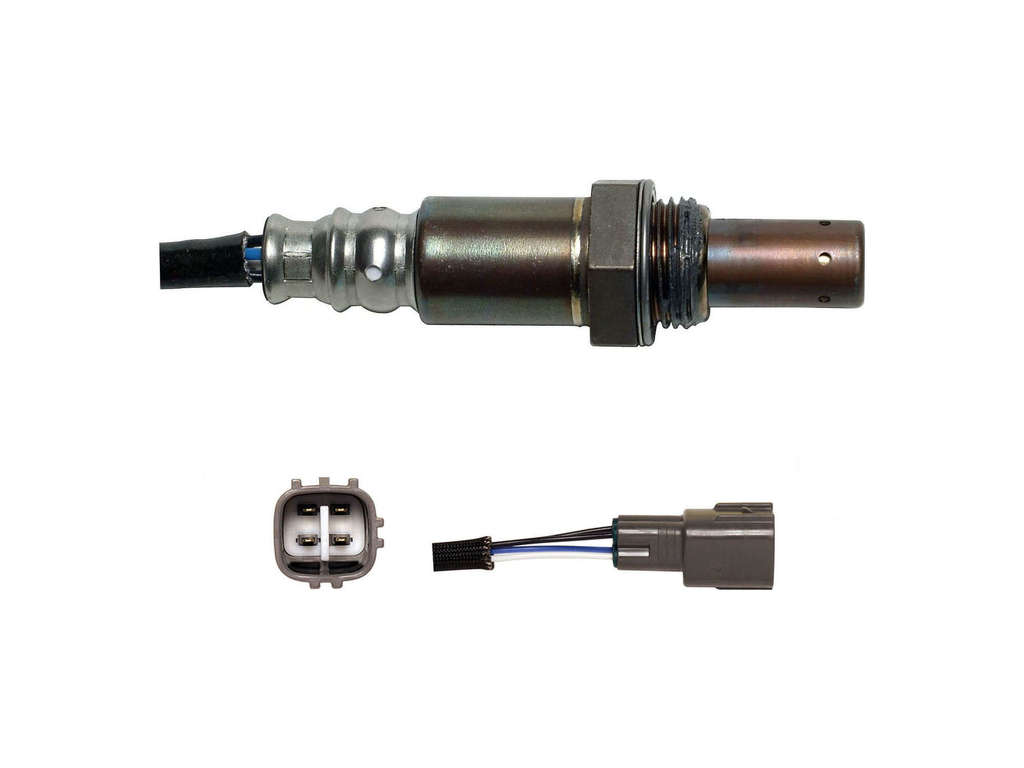
- Upstream Air/Fuel Ratio Sensor (Bank 1, Sensor 1)
(OEM #89467-02090)— This is the primary sensor used by the engine computer to manage the air-fuel mixture. It is a wear item and the most common cause of code P0131. Note: Always verify the part number with your vehicle's VIN before purchasing.
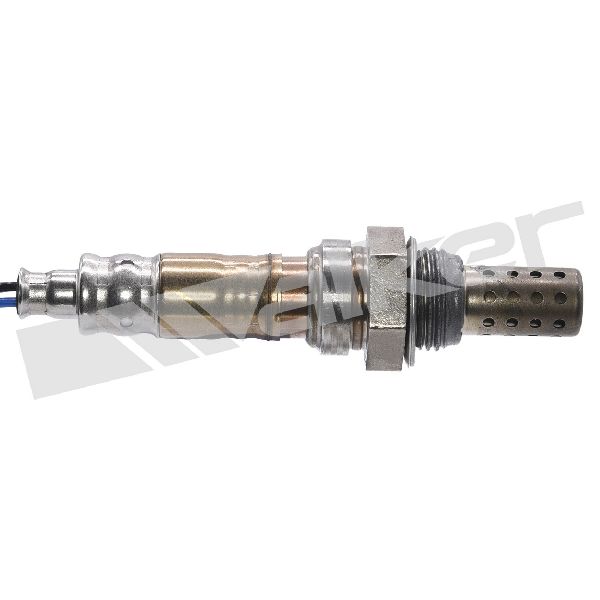
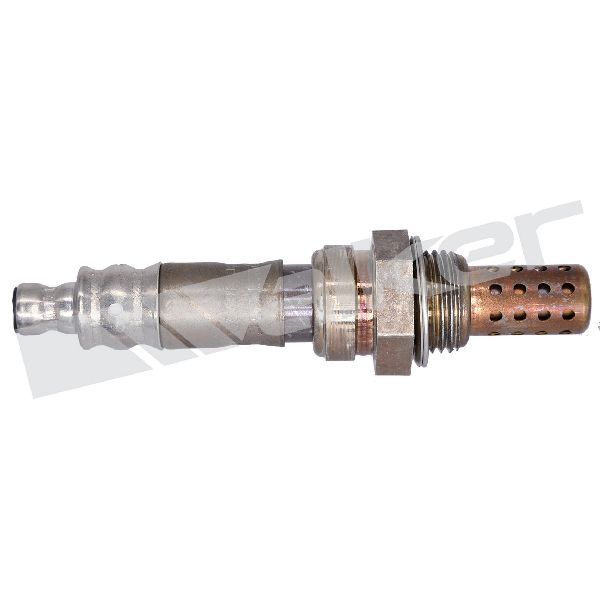
Trusted brands: Denso (OEM Supplier, Part #234-9135 is a common direct-fit), NGK/NTK
OEM price range: $180-$270
Aftermarket price range: $100-$180
Related Codes That Often Appear With This One
- P0171 — If there is a true vacuum leak or fuel delivery issue, the system will run lean, and the A/F sensor will correctly report this low voltage, triggering both P0131 and P0171.
- P0031 — This code indicates a problem with the heater circuit inside the A/F sensor. If you see both P0031 and P0131, it's a very strong confirmation that the sensor itself has failed and needs to be replaced. A user on Reddit confirmed this exact scenario on their vehicle.
Technical Service Bulletins (TSBs) & Recalls
- Toyota Safety Recall 20TA03 / NHTSA 20V-024: While not for P0131, this is a critical safety recall for 2011-2019 Corollas regarding a faulty airbag control module that may fail to deploy airbags in a crash.
Platform-Specific Known Issues
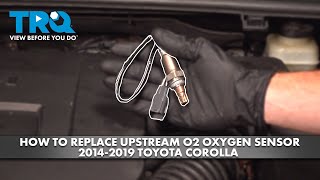
- Sensor Location and Removal: The upstream A/F sensor is located on the exhaust manifold, tucked between the back of the engine and the firewall. Access can be tight. The sensor can become seized in the manifold due to heat and corrosion, often requiring significant force and a special O2 sensor socket to remove without damaging the wiring. 🎬 See this walkthrough for replacing the upstream sensor yourself.
Mechanic-Grade Diagnostic Values
- A/F Sensor (B1S1) Voltage at Idle — expected: 2.8V - 3.8V (fluctuating around a 3.3V center point). Failure: A voltage stuck low (lean) or high (rich) outside of this range. A P0131 indicates a stuck low condition.
- A/F Sensor (B1S1) Voltage during Active Test (Forced Lean, -12.5% fuel) — expected: Voltage rises to > 3.35V. Failure: Voltage fails to rise, indicating a non-responsive sensor.
- A/F Sensor (B1S1) Voltage during Active Test (Forced Rich, +25% fuel) — expected: Voltage drops to < 3.0V. Failure: Voltage fails to drop, indicating a non-responsive sensor.
- A/F Sensor (B1S1) Voltage during Fuel Cut (deceleration from ~4000 RPM) — expected: Voltage spikes to > 3.8V. Failure: Voltage does not spike, indicating a slow or faulty sensor.
Hidden / Shadow Codes Worth Checking
- P2195 / P2197: These codes indicate 'A/F Sensor Signal Stuck Lean Bank 1'. While P0131 indicates a general low voltage circuit fault, these codes can be set if the ECM determines the sensor is stuck lean for a prolonged period (e.g., >10 seconds) under specific conditions, confirming the sensor's reading is the issue. (see via Advanced OBD-II scan tool with manufacturer-specific code reading capabilities.)
Scan Tool Commands That Help
- Toyota Techstream (or equivalent professional scanner): Active Test: 'A/F CONTROL' — This bidirectional command is used to actively test the A/F sensor's response. The technician can command the fuel injection volume to be richer (+25%) or leaner (-12.5%) and observe the live A/F sensor voltage data to confirm if the sensor responds correctly. A lack of response confirms a faulty sensor.
Wiring & Ground Locations
- Ground Points EA, EB — On the 2ZR-FE engine, these are primary engine block ground points located on the left side of the cylinder head (transmission side).. A poor engine ground can cause a floating reference voltage for various sensors, including the A/F sensor, leading to incorrect readings and fault codes. Ensuring these ground connections are clean and tight is a critical step in diagnosing electrical faults.
- A/F Sensor Connector — On the back of the engine, clipped to a bracket on the valve cover, near the firewall.. This 4-pin connector is the primary interface for the sensor's power, ground, and signal wires. It is exposed to high heat and vibration, making it a potential point of failure due to corrosion or damaged pins.
Real Owner Repair Stories
- Go-Parts Repair Database / Real-world case study (Toyota/Lexus vehicle (demonstrating a common platform issue)) — Initially had a P0031 (heater circuit fault). After replacing with a cheap sensor, P0131 and P0171 (System Lean) appeared months later, accompanied by hard starting.
❌ Tried (didn't work) Replacing the original failed A/F sensor with a low-cost, non-OEM (cheap Amazon) sensor.
✅ What actually fixed it The cheap replacement sensor failed prematurely or was improperly calibrated, causing the new codes. The ultimate fix is to use a high-quality, OEM-spec sensor (like Denso) to resolve the P0131 and P0171 codes permanently.
OEM Part Supersession History
89467-02090→N/A— No supersession history found. This part number appears to be stable for the 2014-2019+ model years.
Diagnostic Flowchart
Other Known Issues on This Vehicle
Issues unrelated to this code that are worth knowing about as an owner of this generation:
- CVT Transmission Hesitation and Shudder 🟠 Medium — More common on 2014-2016 models. Owners report jerking, hesitation from a stop, or a 'rubber-band' feeling. A recall for potential torque converter failure was issued for some 2019 Corolla Hatchbacks. (Ref: Software updates were released by Toyota to improve CVT performance. A recall (NHTSA 18V-883) was issued for the 2019 Hatchback.)
- Airbag Control Module Failure Recall 🔴 High — Affects all 2011-2019 Corollas. The airbag ECU may malfunction in a crash, potentially disabling the deployment of airbags and seat belt pretensioners. (Ref: Toyota Safety Recall 20TA03 / NHTSA Campaign ID 20V024000. The fix involves installing an electrical noise filter.)
- Melting / Sticky Dashboard 🟡 Low — Common in vehicles exposed to high heat and humidity. The dashboard material can degrade, becoming shiny and sticky, which causes a dangerous glare on the windshield. (Ref: Toyota initiated a Warranty Enhancement Program (ZLD) for this issue on many models, though its applicability may vary.)
- Excessive Oil Consumption 🟠 Medium — The 2ZR-FE engine can be prone to consuming oil as it accumulates high mileage (typically over 100,000 miles), often due to piston ring wear. It is more of a wear characteristic than a sudden failure.
- Premature Front Suspension Bushing Wear 🟡 Low — Some owners report hearing clunking noises over bumps at relatively low mileage (under 60,000 miles), often traced to worn front lower control arm bushings. (Ref: TSB T-SB-0049-19 addresses a squeak noise from the front lower suspension arm rear bushing on 2014-2019 models.)
Used vs. New Parts: Buying Guide for This Vehicle
When a used part is the smart pick: For this specific repair, a used part is almost never a smart choice. The A/F sensor is a sensitive electronic component and a known wear item with a finite lifespan.
What to inspect on the donor part:
- Not applicable. Avoid used sensors.
OEM-only on this vehicle (don't cheap out):
- Air/Fuel Ratio Sensor
Aftermarket brands forum-validated for this vehicle:
- Denso (OEM supplier)
- NGK / NTK
Brands owners have reported issues with on this vehicle:
- Unbranded, 'white box' parts from online marketplaces (e.g., Amazon, eBay). Real-world cases show these can be improperly calibrated or fail quickly, causing repeat issues.
Real Owner Stories
Aggregated from forums and TSBs cited above. Mileages and costs reflect what owners reported in those sources.
2014-2019 Toyota Corolla 1.8L — ~100000 miles
Symptoms: The user initially had a P0131 code and later received a P0031 heater circuit code.
What fixed it: The combination of P0131 and P0031 confirmed the upstream sensor had failed, requiring replacement of the sensor.
Source hint: Reddit r/Cartalk: P0131 -- Bad 02 sensor, can it wait a couple weeks?
Related OBD-II Codes
Frequently Asked Questions
Is there a recall for the 2014-2019 Toyota Corolla that covers the P0131 code?
Where is the Bank 1, Sensor 1 A/F sensor located on my Corolla?
Should I use a Denso or a Toyota-branded sensor for the replacement?
Can I use a used A/F sensor from a donor vehicle to save money?
My Corolla has a ticking sound on cold starts along with the P0131 code; what does that mean?
Is the P0131 code related to the CVT transmission hesitation I'm feeling?
Helpful Videos
We Have This Part in Stock


The information in this article is provided for general reference and educational purposes only. Vehicle specifications, procedures, and part compatibility can vary by production date, trim level, and region. Always consult your vehicle's factory service manual and verify part numbers before purchasing or performing repairs. Safety-critical components such as airbags, seat belts, and braking systems should be installed by a qualified professional.
- Toyota Corolla:
- 🧭 Diagnostic Flowchart
- 🎬 Helpful Videos
- 🛍️ Shop This Part
- What's Unique About the 2014-2019 Toyota Corolla
- Symptoms You May Notice
- Most Likely Causes
- Rare But Worth Checking
- Diagnosis Steps
- Parts You'll Likely Need
- Related Codes That Often Appear With This One
- Technical Service Bulletins (TSBs) & Recalls
- Platform-Specific Known Issues
- Mechanic-Grade Diagnostic Values
- Hidden / Shadow Codes Worth Checking
- Scan Tool Commands That Help
- Wiring & Ground Locations
- Real Owner Repair Stories
- OEM Part Supersession History
- Other Known Issues on This Vehicle
- Used vs. New Parts: Buying Guide for This Vehicle
- Real Owner Stories
- 2014-2019 Toyota Corolla 1.8L — ~100000 miles
- Related OBD-II Codes
- Frequently Asked Questions
- 🎟️ Get 5% Off