

P0132 on 2012-2018 Audi A6 3.0T: O2 Sensor High Voltage Causes and Fixes
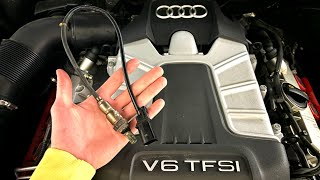
For a 2012-2018 Audi A6 3.0T, code P0132 almost always means the Bank 1, Sensor 1 (passenger side, upstream) oxygen sensor has failed. A quality direct-fit replacement from Bosch costs about $100-$180. It's a DIY-friendly fix (2/5 difficulty) that requires an O2 sensor socket. Before replacing, inspect the valve cover for oil leaks that can contaminate the sensor's wiring connector.
- P0132 on your A6 3.0T points to a problem with the passenger-side upstream O2 sensor.
- The most likely fix is to replace the sensor itself. A direct-fit Bosch sensor is a reliable and cost-effective choice over expensive dealer parts.
- Before replacing the sensor, inspect its wiring harness for oil contamination from a potential valve cover gasket leak, a known issue on this engine.
- This is a manageable DIY repair with a 22mm O2 sensor socket and basic hand tools, potentially saving you hundreds in labor costs.
- Do not ignore this code, as it will cause you to fail emissions tests, decrease fuel economy, and can eventually damage your catalytic converter.
What's Unique About the 2012-2018 Audi A6
On the Audi C7 platform with the 3.0T supercharged V6, the oxygen sensors are a known wear item. While the sensor itself is the most common point of failure, these engines can also suffer from oil leaks from the valve cover gaskets. This oil can drip down onto the O2 sensor's wiring harness, saturating the connector and causing electrical faults that trigger a P0132 code. It's a crucial check before assuming the sensor alone is bad, a scenario frequently discussed by owners in forums.
Symptoms You May Notice
- Check Engine Light is on
- Reduced fuel economy
- Rough or uneven idle
- Engine hesitation or loss of power during acceleration
- Black smoke from the exhaust in severe cases
- Smell of raw fuel from the exhaust
- Whistling or hissing sound from the engine bay (if caused by a vacuum leak or PCV issue)
- Replacing the O2 sensor without checking for oil leaks from the valve cover gasket. If oil contamination is the root cause, the new sensor will likely fail prematurely.
- Assuming the sensor is bad when it is accurately reporting a rich condition caused by a separate fuel system issue, like a bad PCV valve or leaking injector.
- Replacing the wrong sensor (e.g., Bank 2 on the driver's side, or the downstream Sensor 2 after the catalytic converter).
Most Likely Causes
- Failed Upstream Oxygen Sensor (Bank 1, Sensor 1) 🔴 High Probability → Shop Oxygen Sensor Oxygen sensors are wear-and-tear components that degrade over time from heat and contaminants, with a typical lifespan of 80,000-100,000 miles. The internal heating element is a common failure point, which can lead to incorrect voltage signals and often triggers a separate heater circuit code like P0135.
How to confirm: Use an OBD-II scanner to monitor live data for the Bank 1, Sensor 1 voltage. If it is stuck high (e.g., >0.9V) and does not fluctuate rapidly during engine operation, the sensor has likely failed. You can also measure the resistance of the sensor's heater circuit; an open or very high resistance reading indicates failure.
Typical fix: Replace the Bank 1, Sensor 1 oxygen sensor. This is the upstream sensor on the passenger side.
Est. part cost: $90-$250 - Damaged Wiring or Corroded/Contaminated Connector 🟡 Medium Probability The wiring harness for the O2 sensor is routed in a hot, tight engine bay. A common and well-documented issue on the 3.0T engine is an oil leak from the passenger-side valve cover gasket, which can drip directly onto and saturate the O2 sensor connector, causing a short circuit that results in a high voltage reading.
How to confirm: Visually inspect the wiring harness leading to the Bank 1, Sensor 1 O2 sensor. Look for signs of melting, chafing, or oil contamination. Disconnect the sensor and check the connector pins for corrosion or a significant amount of oil residue.
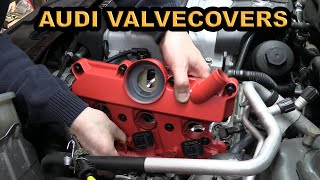
Typical fix: If the wiring is damaged, it must be repaired. If the connector is contaminated with oil, clean it thoroughly with electrical contact cleaner and fix the source of the oil leak (e.g., replace the valve cover gasket) to prevent a repeat failure. 🎬 See this walkthrough on replacing your 3.0T valve cover gaskets.
Est. part cost: $10-$200 (depending on whether a gasket replacement is needed) - Rich Running Condition ⚪ Low Probability While less common for a 'circuit high' code, a mechanical fault can cause the engine to actually run rich, which the O2 sensor will accurately report as high voltage. Common causes on this platform include a failing PCV valve creating a vacuum leak or leaking fuel injectors.
How to confirm: Check for other fault codes, especially P0172 (System Too Rich). Test fuel pressure to see if it is within specification. Investigate the PCV system for failure (e.g., excessive vacuum at the oil fill cap). A fuel injector balance test can identify a leaking injector.
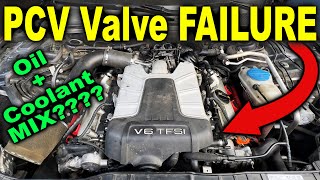
Typical fix: Diagnose and repair the underlying fuel system or emissions issue, such as replacing a faulty PCV valve or a leaking fuel injector. 🎬 Watch: How to replace a failing PCV valve on this engine.
Est. part cost: $100-$500+
Rare But Worth Checking
- Faulty Engine Control Module (ECM): → Shop Engine Control Module (ECM) This is very rare. The ECM should only be considered after all other possibilities, including the sensor and its entire circuit, have been thoroughly tested and ruled out.
- Exhaust Leak Before the O2 Sensor: → Shop Oxygen Sensor An exhaust leak before the sensor can sometimes, counter-intuitively, affect sensor readings. While it more commonly causes a lean code, it can disrupt the sensor's environment and should be ruled out by listening for leaks.
Diagnosis Steps
- Connect an OBD-II scanner and confirm that P0132 is the active code. Check for any other codes, such as P0172 or P0135, which provide valuable diagnostic clues.
- View live data on the scanner. Observe the voltage for 'O2S1 B1' (Oxygen Sensor 1, Bank 1). A healthy upstream sensor's voltage should fluctuate rapidly between approximately 0.1V and 0.9V. If the voltage is stuck high (e.g., >0.9V), the fault is confirmed.
- Turn off the engine and allow it to cool.
- Visually inspect the Bank 1, Sensor 1 (passenger side, pre-catalyst) wiring harness and connector. Look for any signs of melting, fraying, or physical damage. Pay close attention to any fresh oil residue dripping from the valve cover above.
- If oil is present, disconnect the harness, clean the connector and sensor plug thoroughly with electrical contact cleaner, and plan to replace the valve cover gasket to fix the root cause.
- Listen for any whistling or hissing sounds at idle, which could indicate a vacuum leak or a failed PCV valve diaphragm, which would need to be addressed as the potential root cause.
- If the wiring appears clean and intact, the sensor is the most likely culprit. Consider swapping the upstream sensors between Bank 1 and Bank 2. If the code changes to P0152 (Bank 2, Sensor 1 High Voltage), the sensor is confirmed to be faulty.
- If the code does not change after swapping sensors, the issue lies within the wiring harness or the ECM. Perform a continuity test on the signal wire and check for a short to power.
- If all wiring tests pass, the ECM may be at fault, but this is extremely unlikely and should be the last consideration.
Parts You'll Likely Need
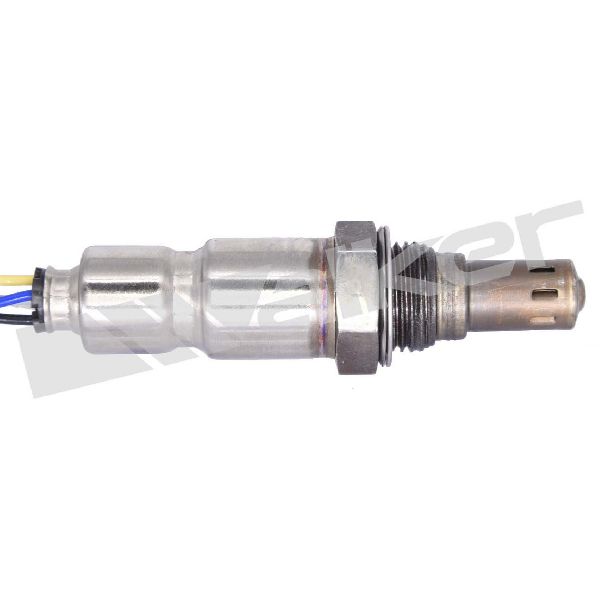
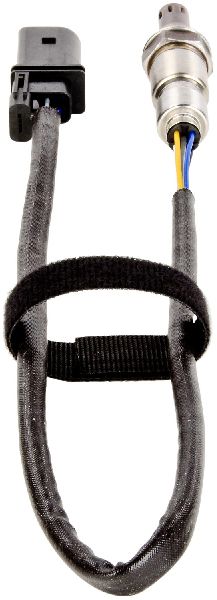
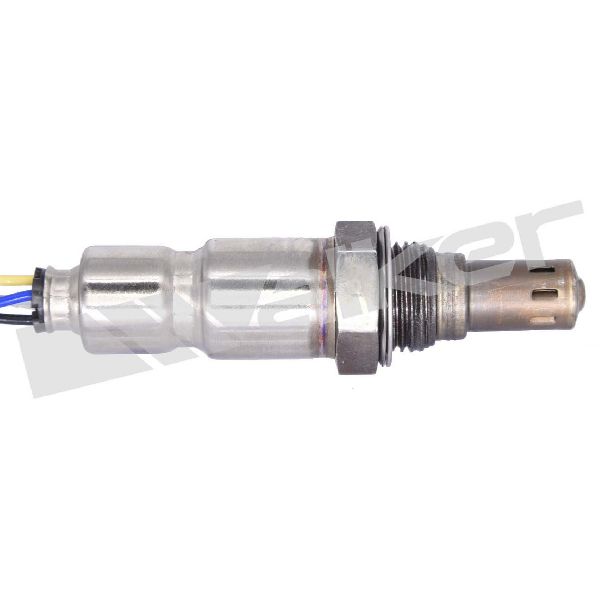
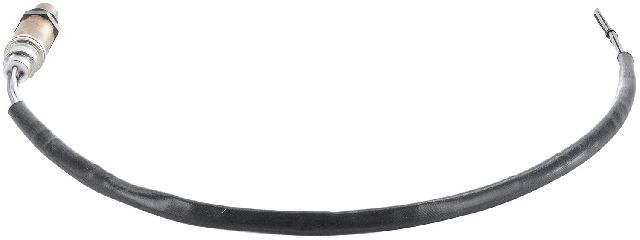
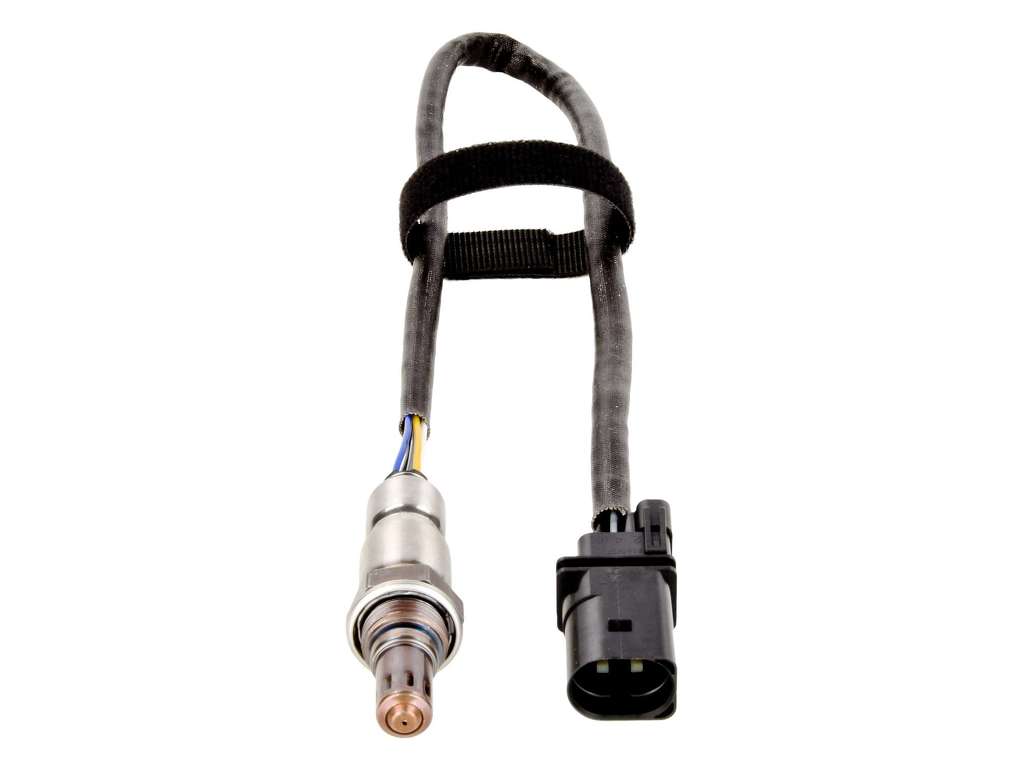
- Upstream Oxygen Sensor (Bank 1, Sensor 1)
(OEM #06E906265AJ)— This is the most common failure part for code P0132. It is the pre-catalyst sensor on the passenger side. The same part number is often used for the driver's side (Bank 2) as well.
Trusted brands: Bosch (OEM supplier, part #17360 is a common direct-fit), NGK/NTK
OEM price range: $180-$250
Aftermarket price range: $90-$180
Related Codes That Often Appear With This One
- P0172 — System Too Rich (Bank 1). This code indicates the ECM has confirmed a rich condition on Bank 1, which could be the root cause that P0132 is reporting.
- P0135 — O2 Sensor Heater Circuit Malfunction (Bank 1, Sensor 1). This code points specifically to a failure in the sensor's internal heater, which often fails along with the sensing element, causing the P0132 code.
- P052E — Positive Crankcase Ventilation Regulator Valve Performance. A failing PCV system is a common issue on the 3.0T and can cause air/fuel mixture problems that might be interpreted by the O2 sensor.
Technical Service Bulletins (TSBs) & Recalls
- While no TSB was found specifically for P0132, a related TSB (#01139020337671) exists for heater circuit codes (like P0135) on this engine, confirming that O2 sensor failure is a known issue recognized by the manufacturer.
Platform-Specific Known Issues
- The 3.0T engine is known for potential oil leaks from the valve cover gaskets. A leak on the passenger side can drip directly onto the Bank 1 O2 sensor's wiring, causing electrical shorts that trigger this code. This is a frequent topic in owner forums and should be the first visual inspection performed.
- A failing PCV valve is another common platform issue that can lead to a rich-running condition, which the O2 sensor would accurately report with a high voltage signal.
Mechanic-Grade Diagnostic Values
- O2 Sensor Heater Element Resistance (cold) — expected: 5-20 Ohms. Failure: A reading of 'OL' (open circuit), 0 Ohms (short circuit), or a value significantly outside the expected range indicates a failed heater element.
- Harness-Side Connector Heater Power (Key On, Engine Off) — expected: ~12V (Battery Voltage). Failure: 0V or significantly low voltage points to a problem upstream of the sensor, such as a blown fuse, faulty relay, or wiring break.
- VCDS Live Data - O2 Sensor Voltage (Bank 1 Sensor 1) — expected: Rapidly fluctuating between ~0.1V and ~0.9V in closed loop.. Failure: Stuck high, near or above 0.9V, confirms the P0132 fault condition.
- VCDS Live Data - O2 Heater Resistance (dynamic) — expected: Value will rise as the sensor heats up. A cold reading might be ~15 Ohms, while a hot reading could be over 40 Ohms.. Failure: A static reading or one that is extremely high (e.g., 25.5 kOhms) as reported by the ECU indicates a fault.
Scan Tool Commands That Help
- VCDS (VAG-COM): [01 - Engine] -> [Basic Settings] -> Group for "Throttle Body Adaptation (TBA)" — Recommended after cleaning or replacing a throttle body, but also useful after resolving a significant air/fuel mixture fault like P0132 to ensure the ECU relearns idle and part-throttle positions correctly.
- VCDS (VAG-COM): [01 - Engine] -> [Adaptation - 10] -> Channel for "Reset learned values" or "Lambda control adaptation" — After replacing an O2 sensor or fixing a fuel mixture issue, this forces the ECU to clear its long-term fuel trim adjustments and start learning anew with the corrected hardware, leading to faster stabilization of the air/fuel ratio.
- OBDeleven / VCDS: [02 - Auto Trans] -> [Basic Settings] -> "Erase system-specific adaptation values" — While not directly related to the engine code, if the vehicle exhibits erratic shifting along with engine performance issues, resetting transmission adaptations after the engine fault is fixed can restore smooth operation. The ECU and TCU share data, and a long-term engine fault can affect learned shift patterns.
Wiring & Ground Locations
- Engine Ground Strap — Main strap connecting the engine block to the vehicle's chassis/body, typically on the driver's or passenger's side of the engine bay.. A corroded or loose main engine ground can create a floating ground, causing voltage offsets on all sensor readings, including the O2 sensor. This can lead to erroneously high voltage readings even with a perfectly good sensor.
- Earth point, in engine compartment, right (13) — On the passenger side of the engine compartment, near the alternator area.. This is a primary grounding point for harnesses on the passenger side (Bank 1) of the engine. Corrosion or a loose connection here can directly affect the O2 sensor circuit's ground reference, leading to signal voltage errors that can trigger P0132.
- Earth connection (ignition coils), in engine pre-wiring harness (306) — Integrated within the engine wiring harness, providing a ground path for ignition components.. While for ignition coils, a fault in this part of the harness can introduce electrical noise or ground issues that may affect nearby sensor circuits, including the O2 sensor wiring that is often routed alongside it.
Real Owner Repair Stories
- SEATCupra.net forum user (2010 SEAT (VAG sister brand) 1.6CR TDi) — Flashing coil light, limp mode, P0132 code returned after replacing the O2 sensor.
❌ Tried (didn't work) Replacing the O2 Lambda sensor.
✅ What actually fixed it The P0132 code was a 'red herring'. A scan with a more advanced tool (VCDS instead of a generic SnapOn) revealed the true root cause was a common EGR fault. The fix was to map out the EGR system and blank it off. - AliExpress Review/Guide (2006 Audi A4) — Persistent P0132 code after multiple O2 sensor replacements.
❌ Tried (didn't work) Replacing the O2 sensor three times with low-quality, non-certified aftermarket parts.
✅ What actually fixed it The root cause was not the sensor, but a cracked PCV hose near the intake manifold creating a vacuum leak. This forced the ECU to run rich, which the O2 sensor correctly reported as high voltage. Replacing the cracked PCV hose resolved the issue.
OEM Part Supersession History
6E906265R→06E906265AJ— Standard part evolution, likely for improved materials, manufacturing process, or reliability.
Model Year Variations Within This Range
- 2012-2015 (Gen 1): Early C7 models used the first generation 3.0T (e.g., CGXB engine code) which had known issues with thermostats and a higher-pressure PCV system. While not directly causing P0132, failures in these related systems (overheating, oil consumption) could contribute to premature sensor failure or oil contamination of the harness.
- 2016-2018 (Gen 2 / Facelift): Later models received the updated 'Gen 2' or 'CREC' version of the 3.0T engine. This version featured significant changes, including dual injection (direct + port), a redesigned and more reliable PCV system, and an electromagnetic clutch on the supercharger. These changes reduced the likelihood of some issues (like oil consumption from the PCV) that could indirectly lead to O2 sensor faults.
Diagnostic Flowchart
Other Known Issues on This Vehicle
Issues unrelated to this code that are worth knowing about as an owner of this generation:
- Timing Chain Tensioner Rattle 🔴 High — Commonly reported between 80,000 and 150,000 km. A brief metallic rattle for 1-2 seconds on a cold start is the primary symptom. Not all engines are affected. (Ref: Audi TSB 2039995/2 addresses rattling noises by recommending the replacement of updated upper chain tensioners.)
- Water Pump & Thermostat Failure 🔴 High — A well-known weak spot, especially on 2010-2012 models. Failure can lead to coolant leaks and overheating. Updated parts were used in later model years. (Ref: Related service actions were issued for some models to replace thermostats and perform software updates.)
- PCV Valve (Oil Separator) Failure 🟠 Medium — Common failure item. Symptoms include high oil consumption, rough idle, whistling noises, and lean-related fault codes. Failure can cause pressure buildup and lead to other oil leaks. (Ref: Fault code P052E is often associated with this failure.)
- Active Engine Mount Failure 🟠 Medium — The fluid-filled electronic engine mounts commonly fail between 60,000 and 100,000 miles, causing significant vibration at idle. Leaking hydraulic fluid is a key indicator.
Used vs. New Parts: Buying Guide for This Vehicle
When a used part is the smart pick: For this specific P0132 repair, using used parts is generally not recommended for the sensor itself. However, if the cause is a related component, a used part can be a viable option for items like the engine wiring harness or a replacement connector pigtail, provided they are in excellent condition.
Donor-vehicle mileage cap: roughly under 80000 miles for the part to have meaningful remaining life.
What to inspect on the donor part:
- For wiring: Check for any signs of cracking, brittleness, or previous repairs. Ensure all connector housings are intact with no broken locking tabs.
- For connectors: Inspect pins for any green or white corrosion. Ensure the weather seal is still pliable and not dried out.
- Avoid parts from vehicles with signs of major engine fires, floods, or significant front-end damage.
OEM-only on this vehicle (don't cheap out):
- Engine Control Module (ECM) - Must be programmed to the vehicle's specific VIN and immobilizer system.
Aftermarket brands forum-validated for this vehicle:
- Bosch (often the Original Equipment Manufacturer)
- NGK / NTK
- Denso
Brands owners have reported issues with on this vehicle:
- Generic, unbranded 'universal' sensors that require splicing. These often have incorrect heater resistances or response times, leading to the code returning.
Real Owner Stories
Aggregated from forums and TSBs cited above. Mileages and costs reflect what owners reported in those sources.
2012 Audi A6 3.0T
Symptoms: The owner experienced a diagnostic challenge involving engine vibrations and timing issues, highlighting the platform's specific quirks.
What fixed it: The context notes this owner was investigating motor mounts and timing issues as potential sources of engine trouble.
Source hint: Car Talk Community thread from a 2012 A6 owner
Related OBD-II Codes
Frequently Asked Questions
Where is the Bank 1, Sensor 1 oxygen sensor located on my 3.0T A6?
Is there a TSB for O2 sensor issues on the 2012-2018 Audi A6 3.0T?
Can an oil leak cause the P0132 code on my Audi A6?
Could a whistling sound from my engine bay be related to P0132?
How can I tell if the O2 sensor itself is bad versus a wiring issue?
What is the typical lifespan of the oxygen sensors on this platform?
Helpful Videos
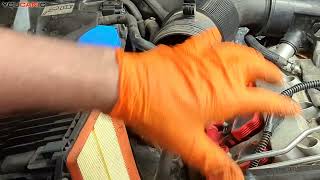
We Have This Part in Stock

The information in this article is provided for general reference and educational purposes only. Vehicle specifications, procedures, and part compatibility can vary by production date, trim level, and region. Always consult your vehicle's factory service manual and verify part numbers before purchasing or performing repairs. Safety-critical components such as airbags, seat belts, and braking systems should be installed by a qualified professional.
- Audi A6:
- 🧭 Diagnostic Flowchart
- 🎬 Helpful Videos
- 🛍️ Shop This Part
- What's Unique About the 2012-2018 Audi A6
- Symptoms You May Notice
- Most Likely Causes
- Rare But Worth Checking
- Diagnosis Steps
- Parts You'll Likely Need
- Related Codes That Often Appear With This One
- Technical Service Bulletins (TSBs) & Recalls
- Platform-Specific Known Issues
- Mechanic-Grade Diagnostic Values
- Scan Tool Commands That Help
- Wiring & Ground Locations
- Real Owner Repair Stories
- OEM Part Supersession History
- Model Year Variations Within This Range
- Other Known Issues on This Vehicle
- Used vs. New Parts: Buying Guide for This Vehicle
- Real Owner Stories
- 2012 Audi A6 3.0T
- Related OBD-II Codes
- Frequently Asked Questions
- 🎟️ Get 5% Off