

P0132 on 2009-2017 Chevrolet Traverse 3.6L: Causes and Fixes for O2 Sensor High Voltage
P0132 on a 3.6L Traverse almost always indicates a failed upstream oxygen sensor on Bank 1 (the firewall side). However, check for two known platform issues before replacing it: a leaking power steering hose dripping fluid onto the sensor's wiring, or a wiring harness chafing against an A/C line. A new sensor costs $40-$90.
- P0132 means the upstream O2 sensor on the firewall side (Bank 1) is sending a constant high voltage signal.
- Before replacing the sensor, you MUST inspect for two known Traverse issues: a power steering leak dripping on the sensor's wiring and the harness chafing against an A/C line.
- The most likely part to fail is the Bank 1, Sensor 1 O2 sensor itself, but only after confirming the wiring is intact.
- Driving with this code will hurt your gas mileage and can eventually cause expensive damage to your catalytic converter.
- Accessing the Bank 1 sensor is difficult due to its location on the firewall side of the engine.
What's Unique About the 2009-2017 Chevrolet Traverse
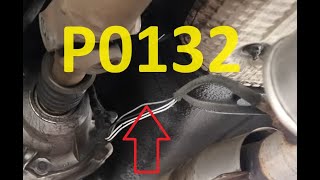
On the 3.6L V6 in the Traverse, Bank 1 is the cylinder bank located against the firewall, making access to its O2 sensor more difficult than Bank 2. This platform has two documented issues that can cause P0132 and related O2 sensor codes. The first is a power steering hose that can leak fluid directly onto the Bank 1 O2 sensor harness, contaminating the connector and causing signal faults, as detailed in TSB 18-NA-009. The second is a known chafe point where the engine harness can rub against an A/C hose coupling or stud at the back of the engine, shorting out the O2 sensor wires, referenced in TSB PIT5336.
Symptoms You May Notice
- Check Engine Light illuminated
- Decreased fuel economy
- Rough or unstable idle
- Engine hesitation or stumbling on acceleration
- Black smoke from exhaust (in cases of a true rich condition)
- Sulfur or 'rotten egg' smell from the exhaust
- Replacing the catalytic converter. The P0132 code points to a problem with the sensor *before* the converter; the converter itself is not the cause.
- Replacing the wrong oxygen sensor. The code is specific to Bank 1 (firewall side) and Sensor 1 (upstream/pre-catalytic converter). Replacing any of the other three sensors will not resolve the issue.
Most Likely Causes
- Failed Bank 1, Sensor 1 Oxygen Sensor 🔴 High Probability → Shop Oxygen Sensor Oxygen sensors are wear items and fail over time due to constant exposure to high exhaust temperatures and contaminants. They are a very common failure point.
How to confirm: Using a scan tool, observe the live data for the B1S1 O2 sensor. If the voltage is stuck high (e.g., >0.8V) and does not fluctuate rapidly, the sensor has likely failed. A special 22mm (or 7/8") offset oxygen sensor socket is required for removal.
Typical fix: Replace the Bank 1, Sensor 1 oxygen sensor. This sensor is located on the rear exhaust manifold, near the firewall.
Est. part cost: $40 - $90 - Power Steering Fluid Leaking onto O2 Sensor Harness 🟡 Medium Probability → Shop Oxygen Sensor GM issued Technical Service Bulletin (TSB) 18-NA-009 for this specific issue. A power steering hose located above the Bank 1 O2 sensor can leak, and the fluid contaminates the sensor's wiring harness connector, causing skewed readings.
How to confirm: Visually inspect the power steering hoses routed near the firewall for any signs of fluid leaks. Check the Bank 1 O2 sensor connector and wiring for oily residue. The TSB explicitly states this can be a repeat concern if not fixed properly.
Typical fix: Repair the power steering hose leak first. Then, replace the contaminated Bank 1 O2 sensor. In severe cases, the TSB recommends the entire engine wiring harness be replaced as fluid can wick deep into the wires.
Est. part cost: $20 - $200 (for hose and sensor) - Wiring Harness Chafing on A/C Line 🟡 Medium Probability GM issued Preliminary Information bulletin PIT5336 indicating the engine harness for the Bank 1 O2 sensor can chafe against the A/C hose coupling at the back of the engine, causing a short circuit. This can also blow the 'EMISSION 1' fuse.
How to confirm: Inspect the engine wiring harness near the firewall, specifically where it passes the A/C lines. Look for worn insulation or exposed wires at the point of contact with metal lines or studs.
Typical fix: Repair the damaged wires using solder and heat shrink. Insulate the harness with protective conduit or tape to prevent future contact. Secure the harness away from the A/C line with a zip tie.
Est. part cost: $0 - $20 (for repair materials) - Engine Running Rich ⚪ Low Probability While less common, a rich condition can cause a true high voltage reading. This can be from a leaking fuel injector, faulty fuel pressure regulator, or a failing Mass Airflow (MAF) sensor.
How to confirm: This is usually accompanied by other codes, such as P0172 (System Too Rich). Diagnosis involves checking fuel trims, testing fuel pressure, and inspecting injectors.
Typical fix: Address the root cause of the rich condition, which will vary depending on the specific fault.
Est. part cost: $50 - $500+
Rare But Worth Checking
- Exhaust Leak: An exhaust leak before the O2 sensor can sometimes draw in outside air and disrupt sensor readings, though it more commonly causes lean (low voltage) codes.
- Faulty Powertrain Control Module (PCM): → Shop Engine Control Module (ECM) This is extremely rare. In some cases, a failed driver in the PCM can cause a 5V reference to be present on the sensor's ground wire, holding the signal voltage high. This should only be considered after all other possibilities have been exhaustively ruled out.
Diagnosis Steps
- Connect an OBD-II scanner and confirm P0132 is the active code. Check for any other codes, especially P0172 or other O2 sensor codes.
- View live data on the scanner. Watch the voltage for 'O2 B1S1'. A healthy sensor fluctuates rapidly between ~0.1V and ~0.9V. If it's stuck high (e.g., 0.9V or higher), the fault is confirmed.
- Perform a thorough visual inspection at the rear of the engine bay. Look for signs of an oily sheen on the wiring harness below the power steering lines, indicating a leak as described in TSB 18-NA-009.
- Carefully inspect the entire engine wiring harness at the back of the engine. Look for chafing against the metal A/C hose coupling or any sharp metal edges, as described in TSB PIT5336.
- If wiring issues are suspected, disconnect the O2 sensor connector. Check for 5V on the ground wire at the harness connector with the key on; if present, this may indicate a bad PCM. Check for a short to voltage on the signal wire.
- If no wiring or leak issues are found, the Bank 1 Sensor 1 O2 sensor is the most likely culprit.
- Before replacing, you can test the sensor's heater circuit for proper resistance (typically 5-8.6 Ohms on this engine) and check the signal wire for a short to voltage using a multimeter.
- Replace the Bank 1, Sensor 1 O2 sensor using a 22mm or 7/8" O2 sensor socket. Clear the code and perform a test drive to ensure the fix is complete.
Parts You'll Likely Need
- Oxygen Sensor (Bank 1, Sensor 1)
(OEM #12634064)— This is the upstream sensor on the firewall side that directly triggers the P0132 code. It is the most common failure point after wiring issues are ruled out. The original part number 12637250 has been superseded by 12634064. ACDelco aftermarket equivalent is 213-4575.
Trusted brands: ACDelco, Denso, Bosch, NGK/NTK
OEM price range: $70-$110
Aftermarket price range: $40-$90 - Power Steering Gear Inlet Pipe/Hose
(OEM #22912855)— If this hose is found to be leaking onto the O2 sensor harness, it must be replaced to prevent repeat failure of the new sensor, as per TSB 18-NA-009.
Trusted brands: ACDelco, Gates
OEM price range: $50-$80
Aftermarket price range: $25-$50
Related Codes That Often Appear With This One
- P0172 — If the engine has an actual rich-running condition (like a leaking injector), the O2 sensor will correctly report high voltage (P0132) and the ECM will also flag the rich condition itself (P0172).
- P0008 — The 3.6L LLT engine is known for timing chain issues that can set a P0008 code. While not directly related, owners working on engine issues may encounter both, and it's important to understand they are separate problems requiring different diagnostics.
- P0131, P0133, P0171, P2096 — TSB 18-NA-009 lists P0132 along with this group of codes, as power steering fluid contamination can cause a variety of erratic signal faults on Bank 1, not just high voltage.
Technical Service Bulletins (TSBs) & Recalls
- 18-NA-009: Malfunction Indicator Lamp (MIL) Illuminated - DTC's P0032, P0131, P0132, P0133, P0137, P0171 or P2096
- PIT5336: SES Lamp O2 Sensor Or Purge Solenoid Valve DTCs And/Or Emission 1 Fuse Open
Platform-Specific Known Issues
- TSB 18-NA-009: A leaking power steering hose can drip fluid onto the Bank 1 O2 sensor harness, contaminating the connector and causing signal faults like P0132. The official fix can require replacing the hose, sensor, and the entire engine wiring harness.
- TSB PIT5336: The engine wiring harness may chafe against an A/C hose coupling at the rear of the engine, shorting the O2 sensor wires and triggering multiple codes, including P0132. This can also cause the 'EMISSION 1' fuse to blow.
Mechanic-Grade Diagnostic Values
- O2 Sensor Heater Circuit Resistance — expected: 5 to 8.6 Ohms. Failure: An open circuit (infinite resistance) or a reading far outside the expected range indicates a failed heater element.
- ECM Bias Voltage (Harness Integrity Test) — expected: ~450 mV (0.45V). Failure: With the sensor unplugged and ignition on, the scan tool PID for the B1S1 signal should show a steady ~450mV. A different or fluctuating reading indicates a wiring issue between the ECM and the sensor connector.
- O2 Sensor Installation Torque — expected: 42 Nm (31 lb ft). Failure: N/A - This is an installation specification.
Scan Tool Commands That Help
- GDS2 (GM Global Diagnostic System 2): HO2S Heater Test — This bidirectional control allows a technician to command the O2 sensor's internal heater on and off to verify the integrity of the heater circuit, helping to distinguish between a sensor failure and a wiring problem.
Wiring & Ground Locations
- G110 — Located on the right rear of the engine, mounted to the back of the cylinder head on a bracket directly above the power steering pressure hose.. This is a primary ground point for the Engine Control Module (ECM). A loose or corroded G110 can cause a wide range of intermittent electrical problems and fault codes, including erratic sensor readings, as the ECM may not have a stable ground reference.
- Bank 1 Sensor 1 HO2S Connector — At the rear of the engine near the firewall, connected to the upstream oxygen sensor on the rear exhaust manifold.. This is the primary connection point for the sensor. It is the location where power steering fluid contamination occurs (per TSB 18-NA-009) and where voltage/resistance tests are performed.
Real Owner Repair Stories
- Reddit user comment (2011 Chevrolet Traverse) — Multiple DTCs for communication loss between modules, intermittent no crank/no start.
❌ Tried (didn't work) Initial diagnosis was difficult due to multiple, seemingly unrelated communication codes.
✅ What actually fixed it The G110 ground bolt on the back of the cylinder head had been cross-threaded during a previous transmission replacement and was not tight. This caused an intermittent loss of ground for the ECM and other modules. Tightening the ground bolt resolved the issues.
OEM Part Supersession History
12637250→12634064— Standard part update for design, material, or manufacturing process improvements.
Heads up: The new part number (12634064) is the correct service replacement for the original. No known incompatibilities exist.
Model Year Variations Within This Range
- 2013-2017: The Traverse received a facelift for the 2013 model year which included revised front and rear-end styling (new grille, headlights, and rear liftgate design). However, the 3.6L LLT engine, powertrain, and the underlying causes of P0132 (wiring chafe, PS fluid leak) remained the same as the 2009-2012 models.
Diagnostic Flowchart
Other Known Issues on This Vehicle
Issues unrelated to this code that are worth knowing about as an owner of this generation:
- Premature Timing Chain Stretch 🔴 High — Very common on 2009-2012 LLT engines, typically between 70,000-120,000 miles. Often triggered by extended oil change intervals. Less common on post-2013 LFX engines but still possible. (Ref: GM Special Coverage #11340C / #14582 (Now Expired))
- Cracked 3-5-R Transmission Wave Plate 🔴 High — Primarily affects 2009 models with the 6T75 transmission, leading to sudden loss of 3rd, 5th, and Reverse gears. (Ref: GM Special Coverage #14404B (Now Expired))
- Water Pump Failure / Coolant Leak 🟠 Medium — Common failure item, often identified by a coolant leak from the pump's weep hole on the passenger side of the engine.
- Power Steering Pump Failure / Leaks 🟠 Medium — Common on 2009-2012 models, causing whining noises and loss of power assist, especially at low speeds. Can be caused by fluid thickening in extreme cold per TSB 13-02-32-001G. (Ref: 13-02-32-001G)
- Intake Valve Carbon Buildup 🟠 Medium — A known issue for the direct-injection LLT engine, causing cold-start misfires, rough idle, and reduced performance. Acknowledged in TSB PIP5029. (Ref: PIP5029)
Used vs. New Parts: Buying Guide for This Vehicle
When a used part is the smart pick: Sourcing an engine wiring harness from a junkyard is a viable option if yours is severely contaminated with power steering fluid, as a new harness can be expensive. A used connector pigtail is also a good choice for repairing localized damage.
Donor-vehicle mileage cap: roughly under 80000 miles for the part to have meaningful remaining life.
What to inspect on the donor part:
- For a wiring harness, inspect for any signs of previous repairs, cuts, or abrasions.
- Ensure the donor vehicle was not in a front-end collision that could have stressed the harness.
- Check the specific O2 sensor connector for any signs of oil contamination or melted plastic.
- Verify the donor vehicle does not show signs of the same power steering leak issue.
OEM-only on this vehicle (don't cheap out):
- Engine Control Module (ECM) - Aftermarket or used ECMs often have programming and compatibility issues.
Aftermarket brands forum-validated for this vehicle:
- ACDelco (Professional or GM Genuine)
- Denso
- NGK/NTK
- Bosch
Brands owners have reported issues with on this vehicle:
- Ultra-cheap, unbranded sensors from online marketplaces often have high failure rates, incorrect heater resistances, or slow response times, leading to the code returning.
Real Owner Stories
Aggregated from forums and TSBs cited above. Mileages and costs reflect what owners reported in those sources.
2010 Chevrolet Traverse 3.6L V6
Symptoms: Bank 1 O2 sensor wiring harness was found saturated with power steering fluid.
What fixed it: Repaired the power steering hose leak and replaced the contaminated O2 sensor.
Source hint: traverseforum.com thread 'P0132 and P0152'
2012 GMC Acadia 3.6L V6
Symptoms: Multiple O2 sensor codes including P0132; found the engine harness chafed through against a metal bracket near the firewall.
What fixed it: Repaired the damaged wires and secured the harness to prevent further contact.
Source hint: acadiaforum.net thread 'Multiple O2 sensor codes including P0132'
Related OBD-II Codes
Frequently Asked Questions
My 2012 Traverse has P0132; could this be related to the power steering leak I noticed?
Where is the Bank 1, Sensor 1 oxygen sensor located on the 3.6L V6 LLT engine?
I have P0132 and my 'EMISSION 1' fuse keeps blowing. What should I check?
What special tools do I need to replace the O2 sensor on my Traverse?
Is it true that I might need to replace my entire engine wiring harness for an O2 sensor code?
Can a timing chain issue cause P0132 on the 2009-2012 LLT engines?
Helpful Videos

We Have This Part in Stock


The information in this article is provided for general reference and educational purposes only. Vehicle specifications, procedures, and part compatibility can vary by production date, trim level, and region. Always consult your vehicle's factory service manual and verify part numbers before purchasing or performing repairs. Safety-critical components such as airbags, seat belts, and braking systems should be installed by a qualified professional.
- Chevrolet Traverse:
- 🧭 Diagnostic Flowchart
- 🎬 Helpful Videos
- 🛍️ Shop This Part
- What's Unique About the 2009-2017 Chevrolet Traverse
- Symptoms You May Notice
- Most Likely Causes
- Rare But Worth Checking
- Diagnosis Steps
- Parts You'll Likely Need
- Related Codes That Often Appear With This One
- Technical Service Bulletins (TSBs) & Recalls
- Platform-Specific Known Issues
- Mechanic-Grade Diagnostic Values
- Scan Tool Commands That Help
- Wiring & Ground Locations
- Real Owner Repair Stories
- OEM Part Supersession History
- Model Year Variations Within This Range
- Other Known Issues on This Vehicle
- Used vs. New Parts: Buying Guide for This Vehicle
- Real Owner Stories
- 2010 Chevrolet Traverse 3.6L V6
- 2012 GMC Acadia 3.6L V6
- Related OBD-II Codes
- Frequently Asked Questions
- 🎟️ Get 5% Off