

P0132 on 2004-2008 Chrysler Pacifica 3.5L: O2 Sensor High Voltage Causes and Fixes
On a 2004-2008 Pacifica 3.5L, code P0132 is almost always a failed upstream oxygen sensor on the rear cylinder bank (Bank 1). Use an OEM (Mopar), Denso, or NTK sensor, as these vehicles are known to reject aftermarket brands like Bosch. Expect to pay $40-$80 for a quality aftermarket part or $90-$150 for an OEM sensor. Before replacing, visually inspect the wiring harness for melting or damage, as this is another common failure point.
- P0132 points to the upstream O2 sensor on the rear (firewall side) of the engine.
- The most likely fix is replacing this sensor. However, you MUST use a Mopar, Denso, or NTK brand sensor to avoid issues.
- Before replacing the sensor, always inspect the wiring harness for visible damage like melting or chafing, as this is another common cause.
- If a new, quality sensor doesn't fix the code, the problem is likely a short in the wiring harness or, more rarely, a true rich-running condition.
What's Unique About the 2004-2008 Chrysler Pacifica
The Chrysler 3.5L V6 platform and its relatives are notoriously sensitive to the brand of oxygen sensor used. Many owners and technicians report that using common aftermarket sensors, particularly from Bosch, can cause the P0132 code to appear immediately after installation, even if the sensor is new. One owner on chryslerforum.com shared their experience of getting a P0132 code immediately after installing a Bosch sensor, which was resolved after switching to an OEM part. For a lasting repair, it is strongly recommended to use an OEM Mopar sensor or a direct equivalent from trusted OE suppliers like Denso or NTK. Attempting to save a few dollars on an off-brand sensor often leads to repeated repairs and frustration.
Symptoms You May Notice
- Check Engine Light is on
- Decreased fuel efficiency
- Rough or erratic idle
- Engine hesitation or stalling, sometimes with an unresponsive gas pedal
- Black smoke from the exhaust if the engine is truly running rich
- Slight stumble on initial acceleration
- Replacing the sensor with an incompatible aftermarket brand (e.g., Bosch), which often fails to resolve the code on Chrysler vehicles.
- Replacing the wrong oxygen sensor, such as the downstream sensor (Sensor 2) or the sensor on the front bank (Bank 2, Sensor 1).
Most Likely Causes
- Failed Bank 1, Sensor 1 Oxygen Sensor 🔴 High Probability → Shop Oxygen Sensor Oxygen sensors are wear items that degrade over time from heat and contaminants. Internal shorts are a common failure mode, causing them to send a constant high voltage signal. This is the most frequent cause of P0132. 🎬 Watch: A guide to diagnosing and fixing P0132 high voltage codes.
How to confirm: Use an OBD-II scanner to monitor live data for 'O2S B1S1'. If the voltage is stuck above 0.8-0.9V and does not fluctuate after the engine is warm, the sensor has likely failed. Unplugging the sensor should cause the voltage reading on the scanner to drop to a low default value; if it does, this confirms the sensor is the source of the high voltage. 🎬 Watch: How to test for a faulty high voltage sensor signal.
Typical fix: Replace the upstream oxygen sensor on the rear exhaust manifold. Ensure the use of an OEM (Mopar), Denso, or NTK branded sensor to avoid compatibility issues.
Est. part cost: $40-$150 - Wiring Harness Damage 🟡 Medium Probability The O2 sensor wiring is routed near hot exhaust and transmission components. The harness can melt, chafe, or corrode, causing the signal wire to short to a power or reference voltage source, resulting in a constant high voltage reading.
How to confirm: Visually inspect the entire wiring harness for the rear upstream O2 sensor, from the connector to where it enters the main loom. Look for melted plastic, exposed wires, or corrosion in the connector pins. A multimeter can be used to check for a short to voltage on the signal wire with the sensor unplugged and the key on.
Typical fix: Repair the damaged section of the wiring harness and secure it away from heat sources using high-temp loom and zip ties. If the connector is damaged, it may need to be replaced with a pigtail connector kit.
Est. part cost: $10-$50 - Rich Running Condition ⚪ Low Probability While less common for this specific code, issues like a leaking fuel injector or a faulty fuel pressure regulator can force too much fuel into the engine, which the O2 sensor will correctly report as a high-voltage (rich) signal.
How to confirm: Look for other symptoms like the smell of raw fuel from the exhaust or black smoke. Check fuel pressure to see if it is within spec. Other codes, such as P0172 (System Too Rich Bank 1), would likely be present.
Typical fix: Diagnose and repair the underlying fuel system issue, such as replacing a leaking fuel injector or faulty fuel pressure regulator.
Est. part cost: $50-$300
Rare But Worth Checking
- Powertrain Control Module (PCM) Fault: → Shop Engine Control Module (ECM) This is very rare. The PCM should only be considered after the sensor and wiring have been definitively ruled out. One owner on a Chrysler Forum considered this after replacing sensors with OEM parts and checking wiring did not resolve the issue, with voltage stuck at 1.270V.
- Exhaust Leak Before Sensor: An exhaust leak before the O2 sensor can sometimes cause erratic readings. One forum user questioned if a leak at the flex pipe before the sensor could be the culprit for their persistent P0132 code, even after replacing the sensor.
Diagnosis Steps
- Connect an OBD-II scanner and confirm P0132 is the active code. Note any other codes, like P0138 or P0135.
- View live data for the 'O2S B1S1' (Bank 1, Sensor 1) voltage. With the engine fully warmed up, it should fluctuate rapidly between approximately 0.1V and 0.9V. If it is stuck high (e.g., >0.9V), there is a fault.
- Locate the Bank 1 Sensor 1 O2 sensor. It is the upstream sensor on the rear exhaust manifold, near the firewall. Access is typically from underneath the vehicle. 🎬 See this walkthrough on how to replace an oxygen sensor.
- Carefully inspect the sensor's connector and wiring harness for any signs of melting, chafing, corrosion, or loose connections. Pay close attention to where the harness may rest on the transmission or exhaust components.
- If the wiring looks good, unplug the sensor. Watch the live data on the scanner. The voltage for B1S1 should drop to a low, default value. If it does, the sensor itself is faulty and is sending the high voltage signal.
- If the voltage stays high even with the sensor unplugged, there is a short-to-power in the wiring harness between the PCM and the sensor connector. You will need a wiring diagram to trace the signal wire and find the short.
- If a new, high-quality sensor (OEM/Denso/NTK) and verified good wiring do not fix the code, investigate potential causes of a true rich condition, such as testing fuel pressure and checking for leaking fuel injectors.
- In very rare cases where all else fails, a faulty PCM driver circuit could be the cause.
Parts You'll Likely Need
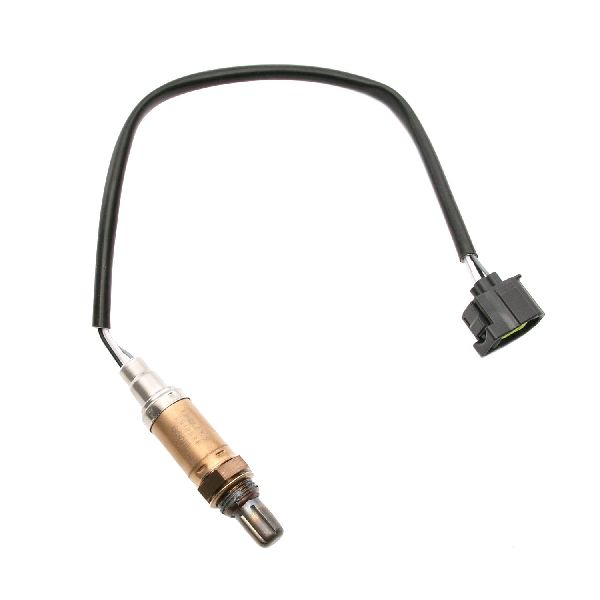
- Upstream Oxygen Sensor (Bank 1, Sensor 1)
(OEM #Mopar 4727446AC)— This is the most common cause of P0132. It is a standard wear-and-tear component that fails internally, causing it to send a constant high voltage signal.
Trusted brands: Mopar, Denso (e.g., 234-4756), NTK
OEM price range: $90-$150
Aftermarket price range: $40-$80
Related Codes That Often Appear With This One
- P0138 — This is 'O2 Sensor Circuit High Voltage (Bank 1, Sensor 2)'. Seeing both P0132 and P0138 together strongly suggests a shared wiring problem, such as a short in the harness affecting both sensors on Bank 1. A forum member with a 2005 Pacifica reported having both codes simultaneously, which persisted even after replacing both sensors with Mopar parts, pointing towards a wiring or PCM issue.
- P0172 — This code means 'System Too Rich (Bank 1)'. If P0132 is being caused by a true rich condition (like a leaking injector) rather than a sensor fault, P0172 may also be triggered.
- P0135 — This code is for 'O2 Sensor Heater Circuit (Bank 1, Sensor 1)'. A failure in the sensor's internal heater element can sometimes accompany the signal circuit failure, triggering both codes. One owner reported getting both P0132 and P0135 together.
Technical Service Bulletins (TSBs) & Recalls
- Chrysler Service Bulletin 25-004-13: While not specific to the Pacifica, this TSB addresses numerous O2 sensor-related DTCs (including P0132) on other Chrysler vehicles. It points to issues with the sensor connectors and advises checking them before replacing parts, indicating a known issue with wiring integrity in the broader Chrysler family.
Platform-Specific Known Issues
- High sensitivity to oxygen sensor brands. Owners frequently report that using non-OEM brands, especially Bosch, does not fix the P0132 code and can even cause it. Sticking to Mopar, Denso, or NTK is highly advised.
- Wiring harness prone to melting on exhaust or transmission components, which can cause shorts that trigger P0132 and other related codes.
Mechanic-Grade Diagnostic Values
- O2 Sensor Heater Circuit Resistance — expected: 4 to 10 Ohms when measured cold across the two heater wires (often same color) on the sensor connector.. Failure: A reading of infinite resistance (open circuit) or near zero Ohms (short circuit) indicates a failed heater element within the sensor.
- O2 Sensor Signal Circuit Reference Voltage (KOEO) — expected: ~5.0 Volts. Failure: With the sensor unplugged and ignition on (engine off), probing the signal wire in the harness-side connector should show a steady reference voltage from the PCM. Significantly lower or no voltage points to a wiring issue or a PCM fault.
- O2 Sensor Heater Circuit Voltage (KOEO) — expected: ~5.0 Volts. Failure: Unlike the more common 12V heater circuits, this platform may use a 5V supply from the PCM. No voltage indicates a bad PCM driver or an open in the supply wire.
- Scan Tool Live Data - All O2 Sensors — expected: Each sensor should report its own fluctuating or steady voltage.. Failure: If a signal circuit shorts to voltage, a scan tool may display all O2 sensor voltages at approximately 5.0V, even those on different banks.
Hidden / Shadow Codes Worth Checking
- Mode 6, Test ID ($80-$83), Component ID ($01-$04): While not a 'hidden code', Mode 6 provides raw data from the PCM's self-tests. For O2 sensors, this can include test results for sensor response time and heater circuit current that are more detailed than a simple P-code. A failure here can pinpoint an issue even if the P-code is intermittent. (see via Requires an OBD-II scan tool with Mode 6 functionality, such as a BlueDriver Pro or higher-end professional scanner.)
Scan Tool Commands That Help
- Professional OBD-II Scanner: Live Data Graphing (O2S B1S1) — This is the primary function for diagnosing P0132. Graphing the voltage allows you to visually confirm if the sensor signal is stuck high (>0.9V) instead of fluctuating, which is the core condition of this code.
- Professional OBD-II Scanner: Fuel Trim Reset — After replacing a faulty oxygen sensor or fixing a rich condition, resetting the long-term fuel trims can help the PCM adapt to the new, correct sensor readings more quickly and confirm the fix.
Wiring & Ground Locations
- G103 — At the left front of the engine compartment, on the frame rail, often near or under the battery tray.. This is a major chassis ground for multiple systems. Corrosion here, especially inside the wire's crimped ring terminal, is a well-documented cause of widespread, difficult-to-diagnose electrical issues on the Pacifica, which can manifest as incorrect sensor readings.
- G102 — On the left side of the engine compartment.. This is another primary engine bay ground point listed in the vehicle's ground distribution diagram that is tied to engine management components, including O2 sensors.
- PCM Connector C2 (Black w/ Orange strip) — The Powertrain Control Module (PCM) is located at the rear of the engine bay, near the firewall. C2 is the second connector from the bottom.. This is the termination point for the O2 sensor circuits. Advanced diagnostics require testing at this connector.
- Circuit K41 (Upstream O2 Sensor Signal) — This wire runs from the Bank 1 Sensor 1 connector to its pin at the PCM. The wire color is typically Black with a Dark Green stripe (BK/DG).. This is the specific signal wire that carries the high voltage reading. It must be tested for continuity and shorts to power or the heater circuit.
- B1S1 Heater Circuit (PCM Pin) — Pin 18 on the C2 PCM connector. The wire is typically Brown with a Tan stripe.. Knowing the specific pin for the heater circuit allows for precise testing of the PCM's output and wiring integrity, helping to rule out a PCM fault.
Real Owner Repair Stories
- forabodiesonly.com / chryslerforum.com user reports (2005 Chrysler Pacifica) — Widespread electrical failure: no audio, windows, wipers, etc. Car stuck in Park.
❌ Tried (didn't work) Checking battery connections, visually searching for a broken ground wire.
✅ What actually fixed it The root cause for these widespread electrical issues is frequently a corroded G103 ground connection on the frame rail. One owner found the wires were corroded and breaking *inside* the ring terminal, a detail missed on the first inspection. Cleaning the wires and installing a new terminal resolved the issues.
OEM Part Supersession History
Mopar 4727446AC→Current— This part number appears to be current for the 3.5L V6 application.
Heads up: Do not use part number 56029049AA; while it is an OEM Mopar O2 sensor for the Pacifica platform, it is specified for the 4.0L V6 engine found in 2007-2008 models and may not function correctly with the 3.5L's PCM calibration.
Model Year Variations Within This Range
- 2005-2008: Starting in 2005, a 3.8L V6 was offered, and in 2007, a 4.0L V6 was added. These engines use different oxygen sensors and may have slight variations in wiring locations compared to the 3.5L V6. Always verify part numbers and diagnostic procedures against the specific engine in the vehicle.
Diagnostic Flowchart
Other Known Issues on This Vehicle
Issues unrelated to this code that are worth knowing about as an owner of this generation:
- Engine Cradle / Subframe Rust and Corrosion 🔴 High — Very common, especially in 'salt belt' states. Can occur on any 2004-2008 model. Numerous complaints and a class-action lawsuit were filed. The corrosion can be severe enough to allow the engine to shift or, in extreme cases, detach from the vehicle. (Ref: Chrysler issued TSBs and limited warranty extensions, but they were controversially restricted to very specific build dates and regions, leaving many owners without coverage.)
- Engine Ticking / Broken Rocker Arm Retaining Pin 🟠 Medium — Commonly reported on the 3.5L V6, typically appearing around 100,000 miles. A retaining pin for the rocker arm shaft breaks, allowing the shaft to rotate and block oil flow, causing a distinct ticking noise.
- Failed Engine Mounts 🟠 Medium — The hydraulic engine mounts are prone to tearing and leaking fluid, causing excessive engine vibration, clunking noises on acceleration, and potential for breaking electrical ground straps due to engine movement. Some owners report replacing them multiple times.
- Carbon Buildup on Valves 🟡 Low — Can occur on higher-mileage engines (average 130,000 miles), leading to misfire codes (like P0300) and a lit check engine light. A combustion chamber cleaning is the typical fix.
Used vs. New Parts: Buying Guide for This Vehicle
When a used part is the smart pick: For this repair, a used part is only recommended for the wiring harness connector (pigtail). If the original connector is melted or corroded, a used connector cut from a harness at a salvage yard is a cost-effective solution.
Donor-vehicle mileage cap: roughly under 120000 miles for the part to have meaningful remaining life.
What to inspect on the donor part:
- For a used connector pigtail, inspect for any signs of melting or heat damage.
- Ensure the plastic is not brittle and the locking tab is intact.
- Check the wire insulation for cracking or exposed copper.
- Look for any green or white corrosion on the metal pins inside the connector.
OEM-only on this vehicle (don't cheap out):
- Oxygen Sensor
Aftermarket brands forum-validated for this vehicle:
- NTK (also known as NGK)
- Denso
Brands owners have reported issues with on this vehicle:
- Bosch (Frequently reported to cause immediate or recurring codes on this platform)
Real Owner Stories
Aggregated from forums and TSBs cited above. Mileages and costs reflect what owners reported in those sources.
2005 Chrysler Pacifica 3.5L V6
Symptoms: The owner experienced both P0132 and P0138 codes persisting even after replacing sensors with Mopar parts. Live data showed the voltage stuck at 1.270V.
What fixed it: The diagnosis pointed toward a wiring harness short or a PCM issue after new Mopar sensors failed to clear the high voltage reading.
Source hint: Chrysler Forum - chryslerforum.com thread titled '2005 Pacifica P0132 P0138'
2004-2008 Chrysler Pacifica 3.5L V6
Symptoms: Installing a Bosch oxygen sensor immediately caused a P0132 code and poor running conditions.
What fixed it: Replacing the Bosch sensor with a Denso or NTK sensor, as Bosch sensors 'usually does not work in Chrysler' according to technicians.
Source hint: Chrysler Forum - chryslerforum.com thread named 'P0132 after replacing O2 Sensor'
2005 Chrysler Pacifica 3.5L V6
Symptoms: The owner received a P0132 code immediately after installing a new NTK sensor.
What fixed it: The owner suspected an exhaust leak located before the sensor as the potential cause for the code's return.
Source hint: Chrysler Forum - chryslerforum.com thread '2005 Chrysler Pacifica P0132'
Related OBD-II Codes
Frequently Asked Questions
Which brand of oxygen sensor should I use for my 2004-2008 Chrysler Pacifica to fix P0132?
Where is the Bank 1 Sensor 1 oxygen sensor located on the 3.5L V6 Pacifica?
Does Chrysler Service Bulletin 25-004-13 apply to my P0132 code?
Could my Pacifica's engine mounts be related to the O2 sensor wiring issues?
Why is my O2 sensor voltage stuck at a high value like 1.27V on my scanner?
Helpful Videos
We Have This Part in Stock


The information in this article is provided for general reference and educational purposes only. Vehicle specifications, procedures, and part compatibility can vary by production date, trim level, and region. Always consult your vehicle's factory service manual and verify part numbers before purchasing or performing repairs. Safety-critical components such as airbags, seat belts, and braking systems should be installed by a qualified professional.
- Chrysler Pacifica:
- 🧭 Diagnostic Flowchart
- 🎬 Helpful Videos
- 🛍️ Shop This Part
- What's Unique About the 2004-2008 Chrysler Pacifica
- Symptoms You May Notice
- Most Likely Causes
- Rare But Worth Checking
- Diagnosis Steps
- Parts You'll Likely Need
- Related Codes That Often Appear With This One
- Technical Service Bulletins (TSBs) & Recalls
- Platform-Specific Known Issues
- Mechanic-Grade Diagnostic Values
- Hidden / Shadow Codes Worth Checking
- Scan Tool Commands That Help
- Wiring & Ground Locations
- Real Owner Repair Stories
- OEM Part Supersession History
- Model Year Variations Within This Range
- Other Known Issues on This Vehicle
- Used vs. New Parts: Buying Guide for This Vehicle
- Real Owner Stories
- 2005 Chrysler Pacifica 3.5L V6
- 2004-2008 Chrysler Pacifica 3.5L V6
- 2005 Chrysler Pacifica 3.5L V6
- Related OBD-II Codes
- Frequently Asked Questions
- 🎟️ Get 5% Off