

P0132 on 2017-2024 Chrysler Pacifica 3.6L: O2 Sensor High Voltage Causes and Fixes
This code almost always means the upstream oxygen sensor on the firewall side (Bank 1) has failed. On the 3.6L Pacifica, access is tight. Expect to pay $70-$150 for a quality replacement sensor from a brand like NTK, Denso, or OEM Mopar. DIY difficulty is 3/5 due to the difficult location, which requires working between the engine and firewall.
- P0132 on your Pacifica points directly to the upstream O2 sensor on the firewall side (Bank 1).
- The most likely cause is a failed sensor, but always inspect the wiring for heat damage before replacing parts.
- To ensure a lasting fix, use an OEM Mopar, NTK, or Denso brand oxygen sensor.
- While you can drive with this code, fixing it promptly prevents poor fuel mileage and protects your expensive catalytic converter from damage.
- Be prepared for a difficult repair if doing it yourself, as the sensor is in a very tight location.
What's Unique About the 2017-2024 Chrysler Pacifica
On the Chrysler Pacifica's transversely mounted 3.6L Pentastar engine, 'Bank 1' is the cylinder bank located against the firewall, making the 'Sensor 1' (upstream) oxygen sensor notoriously difficult to access from both above and below. Furthermore, Chrysler engine computers are known to be sensitive to the brand of oxygen sensor used. Owners and mechanics on forums strongly recommend using OEM Mopar parts or sensors from OEM suppliers like NTK or Denso to avoid compatibility issues, as some aftermarket brands (specifically Bosch) have been reported to cause persistent codes or poor running conditions even after replacement.
Symptoms You May Notice
- Check Engine Light is on
- Decreased fuel economy
- Rough or unstable idle
- Hesitation or stumbling during acceleration, sometimes with an unresponsive gas pedal
- In rare, severe cases, black smoke from the exhaust or a strong smell of raw fuel
- Replacing the oxygen sensor without first checking the wiring harness for damage.
- Using an incompatible, non-OEM equivalent oxygen sensor brand (e.g., Bosch), which is known to cause issues on Chrysler vehicles.
- Replacing the wrong oxygen sensor (e.g., Bank 2 instead of Bank 1, or downstream instead of upstream). Bank 1 is the firewall side.
Most Likely Causes
- Failed Upstream Oxygen Sensor (Bank 1, Sensor 1) 🔴 High Probability → Shop Oxygen Sensor O2 sensors are wear items that live in a harsh exhaust environment. Internal failure of the sensor's heating element or sensing element is the most common cause of P0132, often due to a short in the sensor's internal circuits.
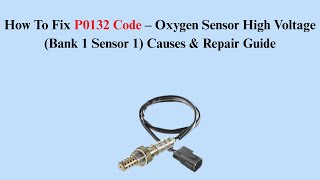
How to confirm: Use an OBD-II scanner to monitor live data for 'O2S11' or 'B1S1 O2 Voltage'. If the voltage is stuck above 0.9V and does not fluctuate rapidly when the engine is warm, the sensor has likely failed. 🎬 Watch: A guide to P0132 causes and repair steps A good sensor will constantly switch between approximately 0.1V and 0.9V.
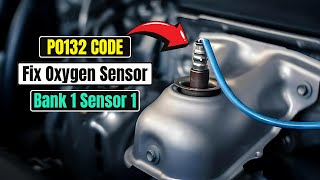
Typical fix: Replace the Bank 1, Sensor 1 oxygen sensor. This sensor is on the rear exhaust manifold (firewall side). Using a specialized O2 sensor socket is highly recommended.
Est. part cost: $70-$190 - Wiring Harness or Connector Damage 🟡 Medium Probability The sensor wiring is routed in a hot, tight space near the exhaust manifold. Wires can become brittle, melt, or chafe, causing a short to a power source which results in a constant high voltage signal. The connector itself can also accumulate corrosion.
How to confirm: Visually inspect the wiring harness leading to the Bank 1 upstream O2 sensor. Look for melted insulation, chafing, or corrosion on the connector pins. With the sensor disconnected and key on (engine off), use a multimeter to check for voltage on the signal wire; it should show a bias voltage of around 0.45V, not battery voltage. A wiring diagram is essential for tracing the circuit correctly.
Typical fix: Repair the damaged section of the wiring harness or clean/replace the connector.
Est. part cost: $10-$50 - Rich Fuel Condition ⚪ Low Probability While less common, issues like a leaking fuel injector or a faulty fuel pressure regulator can force the engine to run rich. The O2 sensor will then correctly report a high voltage. Leaking injectors are a known, albeit less frequent, issue on the 3.6L Pentastar.
How to confirm: Check fuel trim data with a scanner. If long-term fuel trims are highly negative (e.g., -15% or more), the computer is trying to compensate for excess fuel. This would likely be accompanied by a P0172 (System Too Rich) code.
Typical fix: Diagnose the source of the rich condition, such as testing fuel pressure or performing a fuel injector balance test.
Est. part cost: $150-$500
Rare But Worth Checking
- Exhaust Leak (Upstream of O2 Sensor): While an exhaust leak typically introduces extra air and causes a low voltage code (P0131), a significant leak near the sensor can sometimes disrupt readings erratically and, in rare cases, contribute to a high voltage reading by throwing off sensor calibration.
- Powertrain Control Module (PCM) Failure: → Shop Engine Control Module (ECM) In very rare instances, the fault can be internal to the PCM, which may misinterpret a correct sensor signal or have a voltage-regulation fault. This should only be considered after all other possibilities, especially wiring, have been exhaustively ruled out.
Diagnosis Steps
- Connect an OBD-II scanner and confirm P0132 is the active code. 🎬 Watch: How to fix the Bank 1 Sensor 1 code Note any other pending or active codes.
- View live data for the 'B1S1' oxygen sensor. The voltage should fluctuate rapidly between approximately 0.1V and 0.9V on a warm, running engine.
- If the voltage is stuck high (e.g., 0.9V - 1.2V), the problem is confirmed. You can try to induce a lean condition (e.g., creating a small, controlled vacuum leak) to see if the sensor voltage responds by dropping. If it doesn't, the sensor or circuit is faulty.
- Turn off the engine and allow the exhaust to cool completely.
- Locate the Bank 1, Sensor 1 oxygen sensor on the rear exhaust manifold, near the firewall.
- Thoroughly inspect the sensor's wiring harness and connector for any signs of melting, chafing, corrosion, or loose pins. Pay close attention to where the harness might contact the engine or exhaust components.
- If the wiring looks good, the oxygen sensor itself is the most probable cause.
- If a new, quality OEM-equivalent sensor does not resolve the code, further diagnosis of the wiring circuit for a short-to-power and checking for rich-running conditions (fuel pressure, injectors) is necessary.
Parts You'll Likely Need
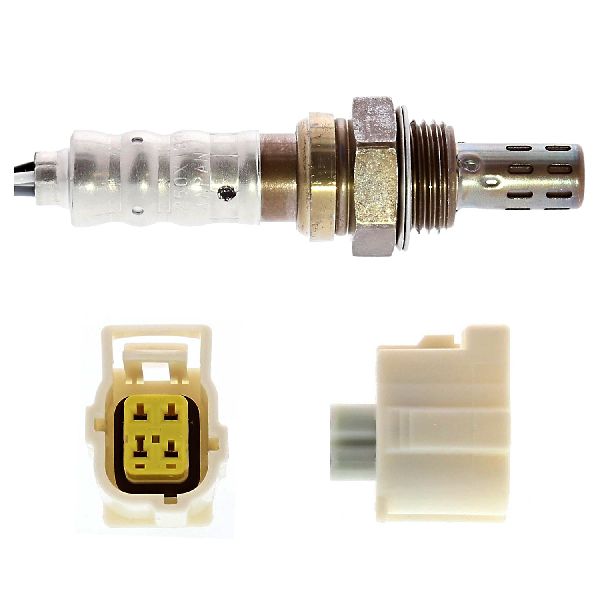
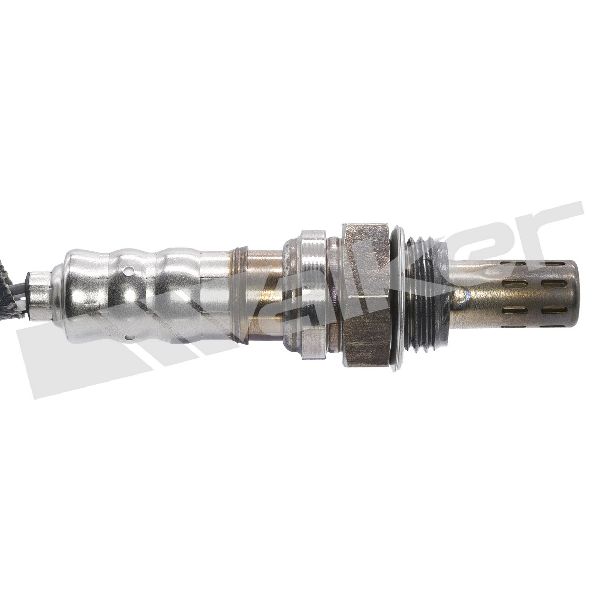
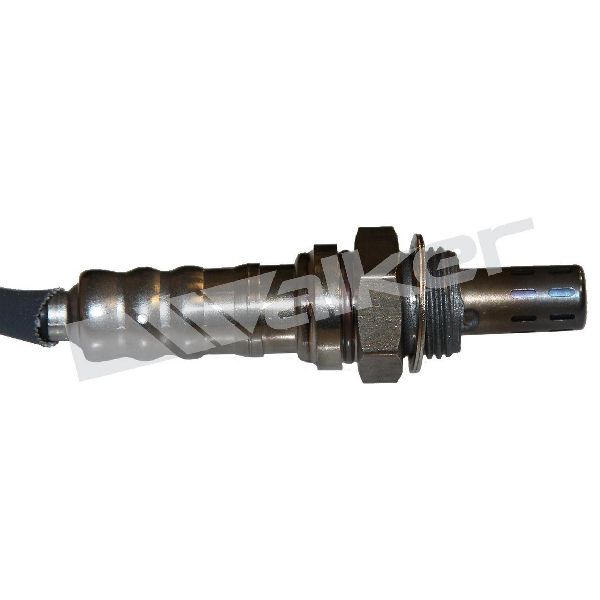
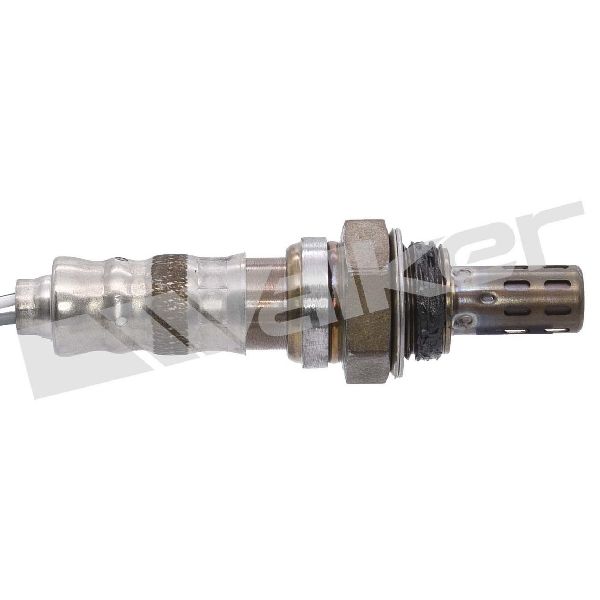
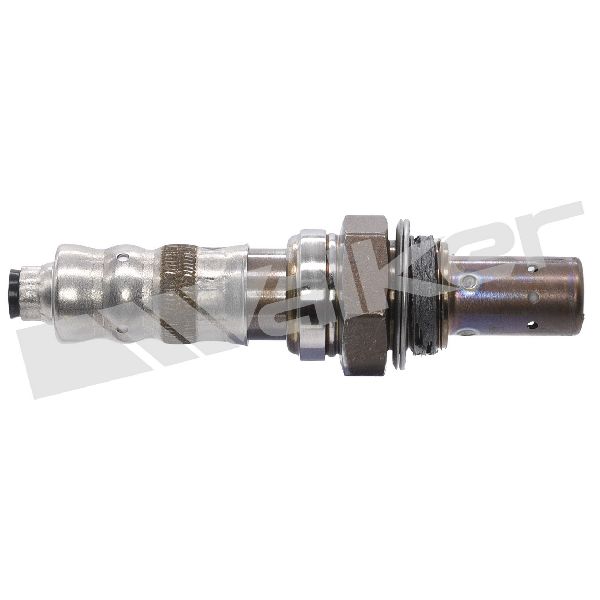
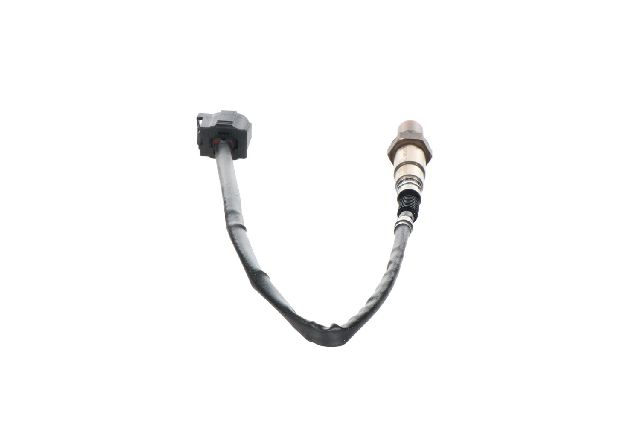
- Upstream Oxygen Sensor (Bank 1, Sensor 1)
(OEM #5149171AB)— This is the most common failure point for code P0132. The sensor is a wear item and fails internally, causing the incorrect high voltage reading. This part number supersedes 5149171AA and 68066160AA.
Trusted brands: Mopar, NTK, Denso
OEM price range: $120-$190
Aftermarket price range: $70-$120
Related Codes That Often Appear With This One
- P0172 — If the engine is genuinely running rich, the PCM will set P0172 (System Too Rich Bank 1) alongside P0132 as it confirms the rich condition through fuel trim adjustments.
- P0138 — This code is for 'O2 Sensor Circuit High Voltage (Bank 1, Sensor 2)'. If a wiring issue is present that affects multiple sensor circuits, or if a severe rich condition is fouling both sensors, they can appear together.
- P0300, P0301, etc. — A rich condition caused by a misfire (e.g., from a bad ignition coil) can lead to unburned fuel in the exhaust, which the O2 sensor will read as a high voltage condition, potentially setting P0132 as a pending code alongside the misfire code.
- P0032 — This code for 'O2 Sensor Heater Control Circuit High (Bank 1 Sensor 1)' often appears with P0132. An internal short in the O2 sensor can cause the heater circuit to draw too much current and simultaneously bleed voltage into the signal wire, triggering both codes at once.
Technical Service Bulletins (TSBs) & Recalls
- While no TSB directly addresses P0132 on the Pacifica, several TSBs exist for PCM software updates to address other diagnostic and system enhancements on the 3.6L Pentastar platform, such as TSB 18-019-17 for the Chrysler 200 and 18-004-17 for the Jeep Wrangler. It's always wise to check if the vehicle's PCM software is up to date, as this can resolve various unexpected codes.
Platform-Specific Known Issues
- Access to the Bank 1 (rear, firewall side) upstream oxygen sensor is significantly restricted, making replacement more time-consuming than for the Bank 2 sensor. A video guide confirms its location and suggests it is accessible, though tight. 🎬 See this walkthrough for accessing the difficult Bank 1 sensor
- The PCM on this platform is sensitive to O2 sensor brand; using non-OEM equivalent brands like Bosch can lead to incorrect readings and failure to resolve the code, a fact corroborated in multiple owner forums.
Mechanic-Grade Diagnostic Values
- O2 Sensor Heater Element Resistance — expected: 4 to 11 Ohms at room temperature.. Failure: A reading of infinity (Open Loop) indicates an open circuit, while near-zero Ohms indicates a shorted heater element.
- O2 Sensor Signal Wire Voltage (Key On, Engine Off, Sensor Disconnected) — expected: Approximately 0.45V (450 mV).. Failure: This is the bias voltage supplied by the PCM. A reading of 0V suggests an open/short to ground, while a reading near 5V or 12V indicates a short to power.
- Long-Term Fuel Trim (LTFT) at Idle — expected: Within +/- 10% of zero.. Failure: If P0132 is caused by a true rich condition, LTFT will be consistently more negative than -20% to -25% as the PCM tries to remove fuel.
- O2 Sensor Harness-to-PCM Signal Wire Resistance — expected: Less than 5.0 Ohms.. Failure: Resistance over 5.0 Ohms indicates excessive resistance in the wiring harness that requires repair.
Scan Tool Commands That Help
- wiTECH or equivalent professional scanner: O2 Sensor Live Data Graphing — Used to visually confirm if the B1S1 sensor voltage is stuck high and not fluctuating as it should during closed-loop operation. A flat line above 0.9V is a clear indicator of a problem with the sensor or its circuit.
- wiTECH or equivalent professional scanner: Check for PCM Updates / Flash PCM — On some Chrysler/Jeep/Dodge products with the 3.6L engine, software glitches can cause false O2 sensor codes. It is a recommended first step, especially if new sensors don't fix the issue, to check if a PCM software update is available to correct sensor monitoring logic.
Wiring & Ground Locations
- PCM Connector C2, Pin 44 — At the Powertrain Control Module (PCM), which is typically located in the engine bay near the firewall.. This is the specific pin for the O2 1/1 (Bank 1, Sensor 1) signal wire. It is the terminal used to test for continuity and shorts between the PCM and the sensor connector.
- PCM Connector C2, Pin 19 — At the Powertrain Control Module (PCM).. This is the pin for the O2 Return (Upstream). A bad ground return path can cause skewed voltage readings.
- PCM Connector C2, Pin 24 — At the Powertrain Control Module (PCM).. This is the pin for the O2 1/1 Heater Control. A short in the heater circuit can sometimes bleed voltage into the signal wire, causing a P0132.
- Engine Ground Strap (e.g., Mopar 68316197AA) — Various locations connecting the engine block/case to the chassis.. A poor or corroded main engine ground can cause erratic behavior and incorrect voltage readings from various sensors, including the O2 sensors, which rely on a stable ground reference.
Real Owner Repair Stories
- Chrysler Forum user (2005 Chrysler Pacifica 3.5L) — Check Engine Light with codes P0132 and P0138. Live data showed both O2 sensors stuck at 1.27V.
❌ Tried (didn't work) Replaced both upstream and downstream O2 sensors with new OEM Mopar parts., Disconnected the battery and cleared codes with a scanner., Cleaned the ground point on the vehicle body.
✅ What actually fixed it The user concluded the next step was to trace the wiring harness between the sensors and the PCM to find a short or open circuit, as replacing the sensors with correct OEM parts did not resolve the issue, indicating a persistent wiring fault. The thread did not have a final confirmation post but pointed definitively away from the parts themselves. - Chrysler Forum user 'momzilla' (2005 Chrysler Pacifica 3.5L) — Initially had a P0420 (catalyst) code. After replacing the O2 sensor, the car would intermittently run rough, the gas pedal would become unresponsive, and it threw a new P0132 code.
❌ Tried (didn't work) Replacing the upstream O2 sensor with a Bosch brand sensor from AutoZone. This immediately caused the P0132 code and poor running.
✅ What actually fixed it The user was advised by a Chrysler technician on the forum that Bosch sensors are known to not work correctly in Chrysler vehicles. The user replaced the Bosch sensor with a proper OEM (Denso or NTK equivalent) part. While this fixed the rough running, the P0132 code still returned, indicating the next step was to investigate the wiring harness for damage.
OEM Part Supersession History
68066160AA→5149171AA, then 5149171AB— Standard part revision and consolidation by the manufacturer.
Heads up: Part number 5149171AB is the current, correct OEM part for this application. Using the older numbers is not recommended as they may be from older stock or have been revised for a reason.
Model Year Variations Within This Range
- 2021-2024: The Pacifica received a significant facelift for the 2021 model year, which included new exterior styling and upgraded interior technology like a larger standard infotainment screen. However, the 3.6L Pentastar V6 engine and its emissions control system remained fundamentally the same, so the diagnosis for P0132 is not affected by the pre- or post-facelift distinction.
Diagnostic Flowchart
Other Known Issues on This Vehicle
Issues unrelated to this code that are worth knowing about as an owner of this generation:
- ZF 9-Speed Automatic Transmission Issues 🟠 Medium — Common on 2017-2019 models. Owners report rough shifting, hesitation, lunging, and sometimes premature failure. Many owners perform a 'transmission reset' procedure periodically to improve shift quality. (Ref: Multiple PCM/TCM software update TSBs have been issued to improve shift quality, such as TSB 18-054-17. A recall (23V-010) was issued for Hybrid models for engine shutdown risk due to a transmission wiring short.)
- Engine Start-Stop (ESS) System Failure 🔴 High — Extremely common across all model years. The small, secondary auxiliary battery fails frequently (often yearly), causing the 'Stop/Start Unavailable' message. This can sometimes lead to no-start conditions if not addressed. (Ref: No recall, but it is a widely documented failure. The fix is to replace the auxiliary battery (Part type: AUX14 AGM).)
- Engine Stalling / Sudden Power Loss 🔴 High — Reported by a notable number of 2017 model year owners. The engine may stall unexpectedly at low speeds or lose power while driving. (Ref: A 2018 recall was issued for a cruise control issue that could prevent it from disengaging, but stalling has been reported separately from this.)
- Blown Head Gasket / Cylinder Misfire 🟠 Medium — An increasing number of reports on higher mileage (60k-80k miles) Pentastar engines in the Pacifica show head gasket leaks, often presenting first as a persistent misfire (e.g., on cylinder #3). (Ref: No recall, but mechanics are reporting it as a recurring problem with the 3.6L engine in this application.)
- Electrical and Infotainment Glitches 🟡 Low — Common complaints include battery drain, Uconnect screen freezing or becoming unresponsive, and issues with Bluetooth connectivity.
Used vs. New Parts: Buying Guide for This Vehicle
When a used part is the smart pick: For this repair, a used part is only recommended for a replacement wiring harness pigtail or connector if the original is melted or damaged. The sensor itself should always be purchased new.
Donor-vehicle mileage cap: roughly under 100000 miles for the part to have meaningful remaining life.
What to inspect on the donor part:
- For a wiring pigtail, ensure the wires are not brittle, cracked, or melted.
- Check that the connector locking tab is intact and not broken.
- Inspect the connector pins for any signs of green or white corrosion.
OEM-only on this vehicle (don't cheap out):
- Oxygen Sensor (OEM Mopar or direct OEM-supplier like NTK/Denso is strongly advised)
Aftermarket brands forum-validated for this vehicle:
- NTK
- Denso
Brands owners have reported issues with on this vehicle:
- Bosch (widely reported in forums to cause compatibility issues, incorrect readings, and persistent codes on Chrysler platforms)
Real Owner Stories
Aggregated from forums and TSBs cited above. Mileages and costs reflect what owners reported in those sources.
2005 Chrysler Pacifica
Symptoms: Installed a Bosch sensor which immediately caused the P0132 code and rough running.
What fixed it: Replacing the Bosch sensor with an NTK, Denso, or OEM sensor as recommended by experts.
Source hint: Chrysler Forum - A thread on a 2005 Pacifica with P0132
2014 Jeep Grand Cherokee 3.6L Pentastar
Symptoms: Pending codes P0132 and P0172 along with a cylinder misfire code (P0301).
What fixed it: Addressing the cylinder misfire which was causing unburned fuel to create a rich condition, leading to the high O2 sensor voltage.
Source hint: 2CarPros Forum - A user with a 2014 Jeep Grand Cherokee (sharing the 3.6L Pentastar)
Related OBD-II Codes
Frequently Asked Questions
Which brand of oxygen sensor should I use for my Chrysler Pacifica to fix P0132?
Where is the Bank 1, Sensor 1 oxygen sensor located on the 3.6L Pentastar V6?
Could a transmission issue be related to my check engine light?
My Pacifica shows 'Stop/Start Unavailable' along with the P0132 code. Are they related?
Is there a PCM software update for my 3.6L Pentastar engine that might address diagnostic codes?
Helpful Videos
We Have This Part in Stock

The information in this article is provided for general reference and educational purposes only. Vehicle specifications, procedures, and part compatibility can vary by production date, trim level, and region. Always consult your vehicle's factory service manual and verify part numbers before purchasing or performing repairs. Safety-critical components such as airbags, seat belts, and braking systems should be installed by a qualified professional.
- Chrysler Pacifica:
- 🧭 Diagnostic Flowchart
- 🎬 Helpful Videos
- 🛍️ Shop This Part
- What's Unique About the 2017-2024 Chrysler Pacifica
- Symptoms You May Notice
- Most Likely Causes
- Rare But Worth Checking
- Diagnosis Steps
- Parts You'll Likely Need
- Related Codes That Often Appear With This One
- Technical Service Bulletins (TSBs) & Recalls
- Platform-Specific Known Issues
- Mechanic-Grade Diagnostic Values
- Scan Tool Commands That Help
- Wiring & Ground Locations
- Real Owner Repair Stories
- OEM Part Supersession History
- Model Year Variations Within This Range
- Other Known Issues on This Vehicle
- Used vs. New Parts: Buying Guide for This Vehicle
- Real Owner Stories
- 2005 Chrysler Pacifica
- 2014 Jeep Grand Cherokee 3.6L Pentastar
- Related OBD-II Codes
- Frequently Asked Questions
- 🎟️ Get 5% Off