

P0132 on 2011-2015 Dodge Durango 3.6L: O2 Sensor Circuit High Voltage Causes and Fixes
This code almost always means the Bank 1, Sensor 1 (Upstream, Passenger Side) oxygen sensor has failed. Replacing the sensor is the most common fix. Expect to pay $40-$80 for an aftermarket part or $100-$180 for an OEM Mopar sensor. It's a DIY-friendly job with the right tool.
- P0132 on your Durango almost always points to a bad upstream oxygen sensor on the passenger side.
- Do not ignore this code, as it will decrease fuel economy and can eventually damage your expensive catalytic converter.
- For a reliable repair, use a high-quality OEM (Mopar) or OEM-supplier (NTK, Denso) sensor. Cheaper parts may not work correctly.
- This is a manageable DIY repair if you have basic tools and a special 22mm (7/8") oxygen sensor socket, but be prepared for the old sensor to be seized.
What's Unique About the 2011-2015 Dodge Durango
On the 3.6L Pentastar V6 engine mounted longitudinally (front-to-back) in the rear-wheel-drive-based Durango, Bank 1 is on the passenger side of the vehicle. The primary cause for P0132 is typically a failed sensor due to age and heat cycles. While many aftermarket brands exist, Chrysler's electronics can be sensitive, and owners often report the most reliable, long-term success using genuine Mopar or OEM-supplier parts like NTK and Denso to avoid compatibility issues and repeat failures.
Symptoms You May Notice
- Check Engine Light is on
- Decreased fuel economy
- Rough or erratic engine idle
- Engine hesitation or sputtering, especially during warm-up
- Black smoke from the exhaust
- Rotten egg or sulfur smell from the exhaust
- Replacing the wrong O2 sensor (e.g., the downstream Sensor 2 or the sensor on Bank 2).
- Replacing the O2 sensor when the actual problem is a damaged wiring harness.
- Using a cheap, poor-quality aftermarket sensor that is incompatible with the vehicle's electronics, causing the code to return. Bosch sensors, in particular, are frequently reported by Dodge owners to cause issues.
Most Likely Causes
- Failed Bank 1, Sensor 1 Oxygen Sensor 🔴 High Probability → Shop Oxygen Sensor Oxygen sensors are wear items that operate in a high-heat environment. They typically fail after 60,000-100,000 miles from contamination and thermal stress.
How to confirm: Use a scan tool to observe the live data for the 'B1S1' O2 sensor. If the voltage is stuck high (e.g., >0.9V) and does not fluctuate rapidly between high and low values when the engine is warm, the sensor is likely bad. Additionally, the sensor's internal heater can be tested with a multimeter; a healthy sensor should have a resistance between 3 and 30 ohms across its heater pins.
Typical fix: Replace the Bank 1, Sensor 1 (Upstream, Passenger Side) oxygen sensor.
Est. part cost: $40-$180 - Wiring Harness Shorted to Voltage 🟡 Medium Probability The sensor wiring is routed close to the hot exhaust manifold and can become brittle, melt, or chafe over time, leading to a short circuit. On related Pentastar platforms, the harness is known to rub through against the passenger side fender liner. Manufacturer service documentation, such as TSB Bulletin #25-004-12 and TSB Bulletin #25-003-13, specifically identifies P0132 as an indicator that the 1/1 O2 sensor is shorted to voltage.
How to confirm: Visually inspect the wiring harness leading to the B1S1 O2 sensor for any signs of melting, chafing, or contact with hot metal, paying close attention to where it passes the fender liner. With the sensor unplugged and key on, use a multimeter to check for voltage on the signal wire in the harness-side connector; there should be none. Also check for voltage on the heater circuit power wire, which should have battery voltage (~12V).
Typical fix: Repair or replace the damaged section of the wiring harness and secure it away from heat sources or chafe points.
Est. part cost: $5-$50 - Engine Running Rich ⚪ Low Probability While less common for this specific code, issues like a leaking fuel injector or a faulty fuel pressure regulator can force the engine into a rich condition, which the O2 sensor will accurately report as high voltage.
How to confirm: This is the correct diagnosis if other codes are present (e.g., fuel trim codes like P0172, injector codes). A professional diagnosis involving checking fuel trims, fuel pressure, and individual injector performance is needed.
Typical fix: Address the root cause of the rich condition, such as replacing a leaking fuel injector.
Est. part cost: $100-$400
Rare But Worth Checking
- Exhaust Leak Before the O2 Sensor: → Shop Oxygen Sensor While more commonly associated with low voltage codes (P0131), a significant exhaust leak near the manifold could potentially disrupt sensor readings and trigger a fault. Check for audible ticking noises from the exhaust manifold, especially when the engine is cold.
- Outdated Powertrain Control Module (PCM) Software: → Shop Engine Control Module (ECM) Chrysler has issued TSBs for other models with the Pentastar engine to correct overly sensitive O2 sensor logic. If a new, high-quality sensor and verified wiring do not fix the code, check with a dealer to see if a PCM software update is available for your VIN before considering PCM replacement.
- Faulty Powertrain Control Module (PCM): → Shop Engine Control Module (ECM) This is extremely rare. The PCM itself can fail, causing it to misinterpret the sensor's signal. This should only be considered after all other possibilities, including the sensor, wiring, and software, have been definitively ruled out. There are documented cases on similar platforms where a faulty PCM was the ultimate cause of persistent O2 sensor codes after parts were replaced.
Diagnosis Steps
- Connect an OBD-II scanner and confirm P0132 is the primary code. If other codes exist, especially P0152 or P0172, diagnose them as a group.
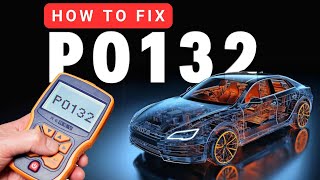
- Use the scanner's live data feature to monitor the 'O2S B1S1' voltage with the engine fully warmed up. A healthy sensor will show voltage rapidly fluctuating between approximately 0.1V and 0.9V. If the voltage is stuck high (e.g., >0.9V), proceed to the next step. 🎬 Watch: A breakdown of P0132 causes and diagnostic fixes.
- Perform a thorough visual inspection of the Bank 1, Sensor 1 (passenger side, upstream) O2 sensor and its wiring harness. Look for any signs of melting, chafing, corrosion, or loose connections. Pay special attention to the harness routing near the fender liner.
- Test the sensor's heater circuit. Disconnect the sensor and use a multimeter to measure the resistance between the two heater circuit pins. A reading between 3 and 30 ohms is expected. An open circuit (OL) or short (near 0 ohms) indicates a failed sensor.
- If the wiring looks good and the sensor tests bad, replace the Bank 1, Sensor 1 O2 sensor. Be aware that the sensor may be seized and require penetrating oil or heat for removal.
- If you suspect a wiring issue, disconnect the sensor and inspect the connector pins for damage. Check for voltage on the signal wire at the harness-side connector (key on, engine off). If voltage is present, there is a short to power in the harness that must be located and repaired.
- After the repair, clear the codes with the scanner and perform a drive cycle to ensure the Check Engine Light does not return.
- If the code returns after replacing the sensor with a quality part, contact a dealership to check for any available PCM software updates for your vehicle's VIN.
Parts You'll Likely Need
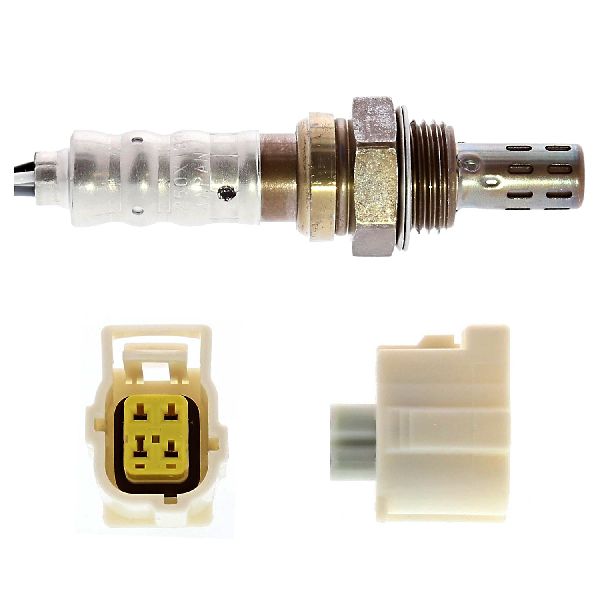
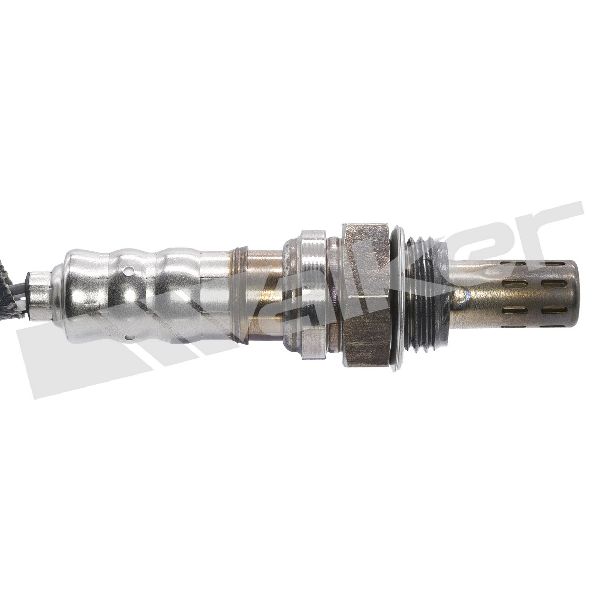
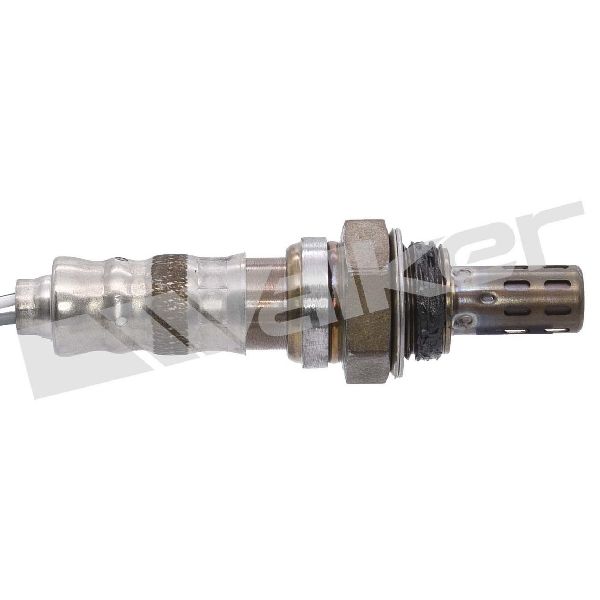
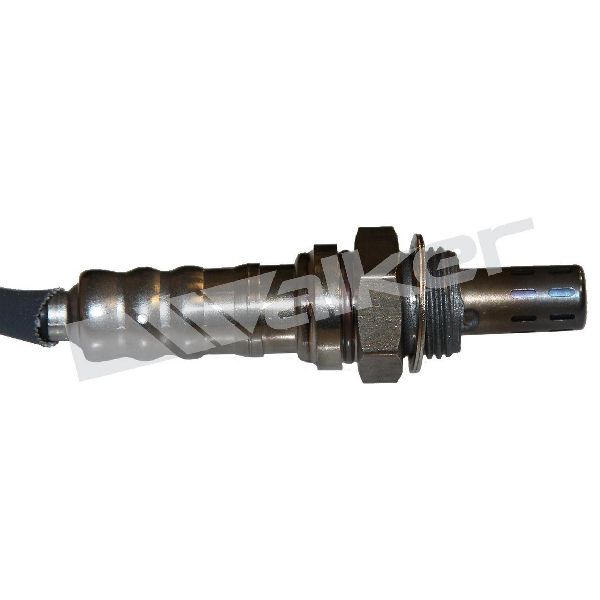
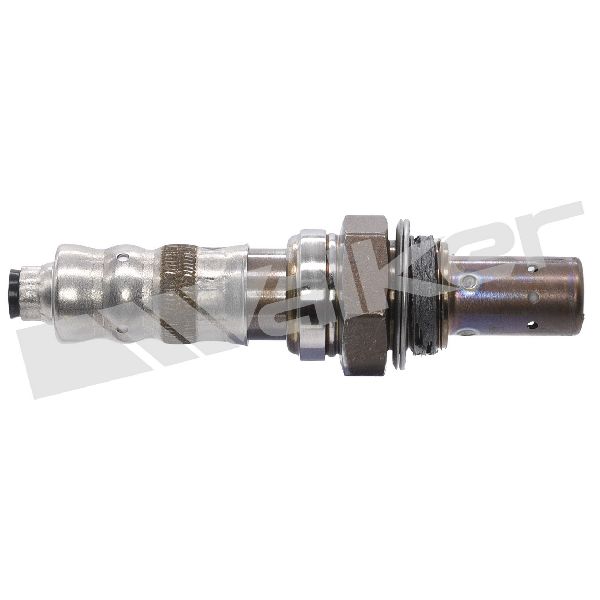
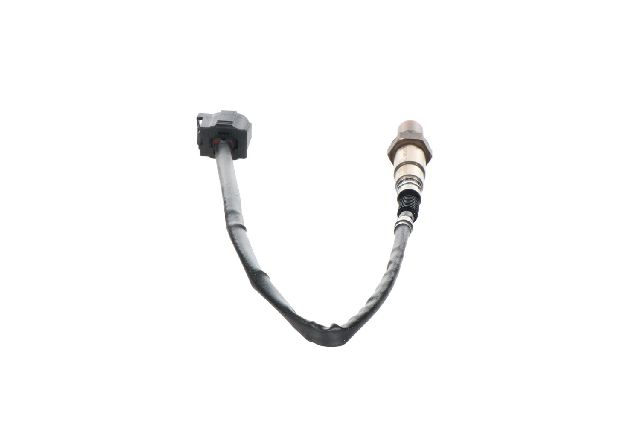
- Oxygen Sensor (Bank 1, Sensor 1)
(OEM #5149180AB (supersedes 5149180AA))— This is the upstream sensor on the passenger side. It is the most common failure point for code P0132 due to its critical role and harsh operating environment.
Trusted brands: Mopar (OEM), NTK (OEM Supplier, P/N: 23162), Denso (OEM Supplier, P/N: 234-4545)
OEM price range: $100-$180
Aftermarket price range: $40-$85
Related Codes That Often Appear With This One
- P0172 — System Too Rich (Bank 1). This code can appear if the O2 sensor is correctly reporting a genuinely rich condition caused by another component, like a leaking fuel injector.
- P1128 — Closed Loop Fueling Not Achieved - Bank 1. This manufacturer-specific code can sometimes accompany P0132, indicating the PCM cannot rely on the faulty sensor's signal to properly manage fuel mixture. 🎬 See how one owner solved both P1128 and P0132 codes.
- P0152 — O2 Sensor Circuit High Voltage (Bank 2, Sensor 1). This is the identical fault for the driver's side sensor. Seeing P0132 and P0152 together strongly suggests a systemic issue like a fuel pressure problem, vacuum leak, or PCM software glitch, rather than two sensors failing simultaneously.
- P0032 — O2 Sensor Heater Circuit High (Bank 1, Sensor 1). This code points specifically to a problem with the sensor's internal heater circuit, often appearing alongside P0132 if the sensor has an internal short.
Technical Service Bulletins (TSBs) & Recalls
- While no TSB is specific to P0132 on this exact model/year range, Chrysler has a documented history of issuing software updates to resolve false or overly sensitive O2 sensor codes on other Pentastar-equipped vehicles (e.g., TSB 18-071-22 REV. B, TSB 18-033-16 Rev. A). This establishes a pattern where a PCM reflash can be a valid fix if parts replacement fails.
- Manufacturer TSB Bulletin #25-002-14 notes that P0132 specifically indicates the 1/1 O2 sensor is shorted to voltage.
Platform-Specific Known Issues
- Seized O2 Sensor: → Shop Oxygen Sensor Due to constant exposure to extreme heat cycles, the oxygen sensor can become seized in the exhaust manifold's threads. Removal may require significant force, penetrating oil, and sometimes heat from a torch. In some cases, cutting the sensor wires to fit a 6-point box-end wrench over the body provides better leverage than a standard O2 sensor socket.
- Early Model Year Engine Concerns (2011-2013): The 2011-2013 3.6L Pentastar engines had a known issue with the left cylinder head that could lead to misfires and other problems. While not a direct cause of P0132, an unhealthy engine can contribute to conditions (like oil burning) that foul O2 sensors, leading to premature failure. Be aware of this possibility on higher-mileage early models.
Mechanic-Grade Diagnostic Values
- O2 Sensor Heater Circuit Resistance — expected: 3 to 30 Ohms at ambient temperature.. Failure: A reading of OL (infinite resistance) for an open circuit or near 0 Ohms for a shorted circuit.
- O2 Sensor Heater Circuit Power Supply — expected: Battery Voltage (approx. 12V) at the harness-side connector pin for the heater power supply.. Failure: Little to no voltage, indicating a problem with the fuse (F25 in TIPM), ASD relay, or wiring.
- O2 Sensor Signal Voltage (Live Data) — expected: Rapidly fluctuating between ~0.1V and ~0.9V on a warm, closed-loop engine.. Failure: Voltage is stuck high, above 0.9V, for an extended period.
Wiring & Ground Locations
- G907a — Lower right front of the engine compartment (for 3.6L engine).. This is a primary engine ground point. A poor connection here can introduce electrical noise or incorrect voltage offsets into sensor circuits, including the O2 sensor, potentially causing incorrect readings.
- G904 — Lower left side of the engine.. Another key engine ground. Verifying that all engine grounds are clean and tight is a critical step when diagnosing any persistent electrical or sensor-related fault code.
- B1S1 O2 Sensor Connector — Upstream on the passenger side exhaust manifold. The connector is located slightly above the sensor, and access is tight from underneath the vehicle, near the control arm.. This is the primary connection point for testing. Knowing its location is essential for checking for power, ground, and signal integrity, as well as for inspecting for physical damage like melting or corrosion.
Real Owner Repair Stories
- Go-Parts.com Blog / 'WrenchTheory501' YouTube Channel (Dodge Durango with 3.6L Pentastar (similar powertrain to subject vehicle)) — Check engine light with multiple O2 sensor heater circuit codes, intermittent severe misfire (P0300), and running rich/lean.
❌ Tried (didn't work) Replacing both upstream O2 sensors (only temporarily fixed a 'circuit high' code), Replacing coil packs
✅ What actually fixed it The ultimate cause was a faulty Powertrain Control Module (PCM) that was internally causing the sensor circuit issues. - ScannerDanner Forum User (2013 Dodge Caravan 3.6L Pentastar) — P0132, P0032, and P2198 as permanent codes. Stumble/stutter at idle only.
❌ Tried (didn't work) Replaced upstream O2 sensors (Bank 1 and 2), Replaced PCV valve, Replaced fuel injectors (with cheap parts, then reinstalled old ones), Replaced MAF sensor, Replaced spark plugs, Replaced purge solenoid, Cleaned throttle body
✅ What actually fixed it The user's issue was unresolved after many part replacements, indicating a complex underlying problem beyond a simple sensor failure. This highlights that P0132 can sometimes be a symptom of a deeper diagnostic challenge, even after common fixes are attempted. - An owner reported in NHTSA ODI #11151379 that their vehicle displayed both P0132 and P0300 error codes, which they presented to a dealership for diagnosis.
- According to NHTSA ODI #10424604, an owner experienced a failure where an OBDII reader indicated P0132, identifying the oxygen sensor as the failing unit, which nearly resulted in an accident.
When the Usual Fixes Don't Work
- In some complex diagnostic cases, replacing the Bank 1 Sensor 1 O2 sensor—even with a high-quality OEM part—does not resolve the P0132 code. Forum documentation shows instances where the code persisted after replacing the sensor, wiring was checked, and other components like injectors and MAF sensors were replaced. In these scenarios, the fault can lie with a more systemic issue, such as an intermittent rich condition from an un-diagnosed source, or in rare cases, a failing Powertrain Control Module (PCM) that is misinterpreting the sensor data.
OEM Part Supersession History
5149180AA→5149180AB— Standard part revision by the manufacturer.
Heads up: The two parts are interchangeable, with 5149180AB being the current replacement.
Model Year Variations Within This Range
- 2011-2015: The upstream oxygen sensors for Bank 1 (passenger) and Bank 2 (driver) are often different part numbers. This is typically due to different wire harness lengths required for each side, not a difference in sensor function. Do not assume they are interchangeable.
- 2011-2013: These early model year 3.6L Pentastar engines are more susceptible to a left cylinder head failure. While this defect typically causes misfire codes, the resulting poor engine health or increased oil consumption could lead to secondary O2 sensor failures from contamination.
Diagnostic Flowchart
Other Known Issues on This Vehicle
Issues unrelated to this code that are worth knowing about as an owner of this generation:
- Cracked Oil Filter / Cooler Housing 🔴 High — Extremely common on 2011-2015 models. The original plastic housing becomes brittle and cracks, causing major oil and/or coolant leaks into the engine valley.
- Rocker Arm / Lifter Failure ('Pentastar Tick') 🔴 High — Very common across all years, causing a distinct ticking/tapping noise from the valve train. Failed rocker arm needle bearings can lead to camshaft damage if not addressed. This is the subject of a class-action lawsuit.
- Totally Integrated Power Module (TIPM) Failure 🔴 High — Common on 2011-2013 models. An internal relay failure (especially for the fuel pump) can cause no-start conditions, battery drain, or other random electrical issues.
- Left Cylinder Head Failure (Early Models) 🟠 Medium — Primarily affected 2011-2013 models. Overheating of the #2 cylinder's valve seats could lead to misfires (P0302) and require cylinder head replacement. (Ref: Covered under an extended warranty for some vehicles.)
Used vs. New Parts: Buying Guide for This Vehicle
When a used part is the smart pick: For this repair, a used part is almost never a smart choice for the sensor itself. However, if the cause is a damaged wiring harness connector, sourcing a used 'pigtail' connector from a junkyard vehicle is a cost-effective and reliable repair method.
Donor-vehicle mileage cap: roughly under 80000 miles for the part to have meaningful remaining life.
What to inspect on the donor part:
- For a wiring pigtail, ensure the wires have at least 4-6 inches of length before they are cut.
- Inspect the connector for any signs of melting, cracked plastic, or corroded pins.
- Check that the locking tab on the connector is intact and functional.
OEM-only on this vehicle (don't cheap out):
- While not strictly 'OEM-only', the Powertrain Control Module (PCM) should always be sourced through reputable channels (OEM or a specialized rebuilder) due to programming requirements.
Aftermarket brands forum-validated for this vehicle:
- NTK (often the OEM supplier)
- Denso (often the OEM supplier)
Brands owners have reported issues with on this vehicle:
- Bosch: Many owners in Chrysler/Dodge forums report that Bosch O2 sensors can be incompatible, causing codes to return immediately or perform poorly.
Real Owner Stories
Aggregated from forums and TSBs cited above. Mileages and costs reflect what owners reported in those sources.
2011-2015 Dodge Durango 3.6L Pentastar V6 — ~80000 miles
Symptoms: The oxygen sensor became seized in the exhaust manifold's threads due to extreme heat cycles, making removal very difficult.
What fixed it: Removal required significant force and penetrating oil; in some cases, cutting the sensor wires to fit a 6-point box-end wrench over the body provided better leverage than a standard O2 sensor socket.
Source hint: vehicle_specific_issues - Seized O2 Sensor
2011-2013 Dodge Durango 3.6L Pentastar V6 — ~100000 miles
Symptoms: Check Engine Light with P0132; wiring harness damaged from heat and contact.
What fixed it: Repairing the damaged section of the wiring harness where it was melting or chafing against the passenger side fender liner and securing it away from heat sources.
Source hint: common_causes - Wiring Harness Shorted to Voltage
Related OBD-II Codes
Frequently Asked Questions
Which brand of oxygen sensor should I use for my 2011-2015 Dodge Durango 3.6L?
Where is the Bank 1, Sensor 1 oxygen sensor located on my Durango 3.6L?
Is there a TSB for false O2 sensor codes on the Pentastar V6?
Could a wiring issue near the fender liner cause P0132?
My 2012 Durango has a ticking noise and P0132; are they related?
What should the resistance be for the O2 sensor heater on this vehicle?
Helpful Videos
We Have This Part in Stock

The information in this article is provided for general reference and educational purposes only. Vehicle specifications, procedures, and part compatibility can vary by production date, trim level, and region. Always consult your vehicle's factory service manual and verify part numbers before purchasing or performing repairs. Safety-critical components such as airbags, seat belts, and braking systems should be installed by a qualified professional.
- Dodge Durango:
- 🧭 Diagnostic Flowchart
- 🎬 Helpful Videos
- 🛍️ Shop This Part
- What's Unique About the 2011-2015 Dodge Durango
- Symptoms You May Notice
- Most Likely Causes
- Rare But Worth Checking
- Diagnosis Steps
- Parts You'll Likely Need
- Related Codes That Often Appear With This One
- Technical Service Bulletins (TSBs) & Recalls
- Platform-Specific Known Issues
- Mechanic-Grade Diagnostic Values
- Wiring & Ground Locations
- Real Owner Repair Stories
- When the Usual Fixes Don't Work
- OEM Part Supersession History
- Model Year Variations Within This Range
- Other Known Issues on This Vehicle
- Used vs. New Parts: Buying Guide for This Vehicle
- Real Owner Stories
- 2011-2015 Dodge Durango 3.6L Pentastar V6 — ~80000 miles
- 2011-2013 Dodge Durango 3.6L Pentastar V6 — ~100000 miles
- Related OBD-II Codes
- Frequently Asked Questions
- 🎟️ Get 5% Off