

P0132 on 2013-2016 Ford Escape 2.5L: O2 Sensor High Voltage Causes and Fixes
For a 2013-2016 Ford Escape with the 2.5L engine, code P0132 is almost always caused by a failed upstream oxygen sensor (Bank 1, Sensor 1). Replacing this sensor is the most common fix, costing between $50 for an aftermarket part and $80 for an OEM Motorcraft part. It's a DIY-friendly repair that can prevent poor gas mileage and future catalytic converter damage. Before replacing, confirm the failure by checking for a voltage stuck above 0.8V using a scan tool's live data function.
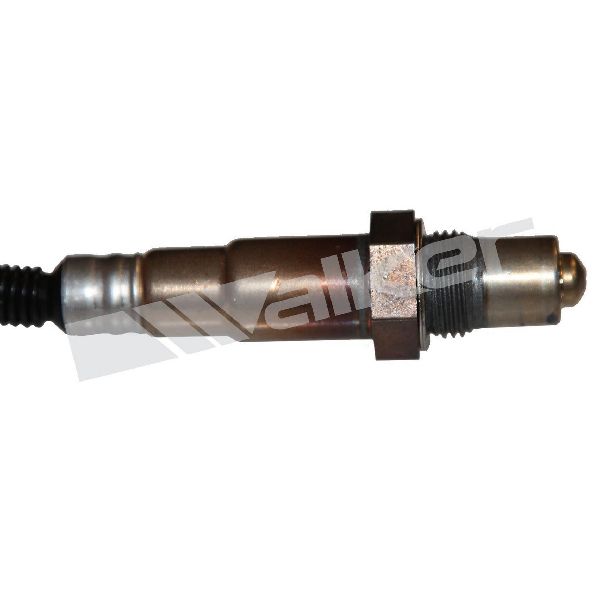
- P0132 on a 2013-2016 Escape 2.5L almost always means the upstream oxygen sensor (Bank 1, Sensor 1) has failed. The OEM part is Motorcraft DY1199.
- Before buying parts, use a scan tool to watch the sensor's live voltage data; if it's stuck high (above 0.8V) and fuel trims are normal, the sensor is the confirmed culprit.
- This is a DIY-friendly repair that requires a 22mm O2 sensor socket, which can often be rented from auto parts stores.
- Do not ignore this code, as it will cause poor fuel economy and can lead to expensive catalytic converter damage over time.
What's Unique About the 2013-2016 Ford Escape
On the 2.5L Duratec I4 engine in this generation of Escape, the P0132 code is a straightforward fault that almost always points to the upstream O2 sensor itself. This engine is considered the most reliable of the options for this vehicle generation. Unlike the turbocharged 1.6L and 2.0L EcoBoost engines in the same chassis, which have more complex systems and a higher rate of engine-related complaints, the naturally aspirated 2.5L has a relatively simple emissions layout. This makes accessing and diagnosing the sensor less complex for a DIY mechanic.
Symptoms You May Notice
- Check Engine Light is on
- Decreased fuel economy
- Rough or unstable idle
- Engine hesitation or stumbling on acceleration
- Smell of raw fuel or a 'rotten egg' odor from the exhaust.
- Replacing the catalytic converter. A P0132 code points to the upstream sensor; a failing converter would typically set downstream sensor codes (e.g., P0420).
- Replacing the O2 sensor when the actual problem is a stuck-open EVAP purge valve. The O2 sensor is correctly reporting a rich condition caused by the valve, making the valve the root cause. Check for code P0172 as a clue.
Most Likely Causes
- Faulty Upstream Oxygen Sensor (Bank 1, Sensor 1) 🔴 High Probability → Shop Oxygen Sensor Oxygen sensors are wear-and-tear items that degrade over time from intense heat and contaminants in the exhaust stream. An internal short circuit is a common failure mode that causes the signal voltage to stick high, which is the direct trigger for code P0132.
How to confirm: Use a scan tool with live data to monitor the Bank 1 Sensor 1 voltage (PID: O2S11). If the voltage is stuck high (e.g., above 0.8V or 0.9V) and isn't switching rapidly between high and low values on a warm engine, the sensor has likely failed.
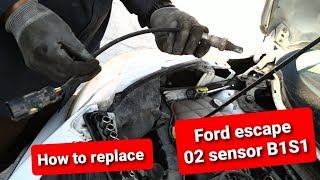
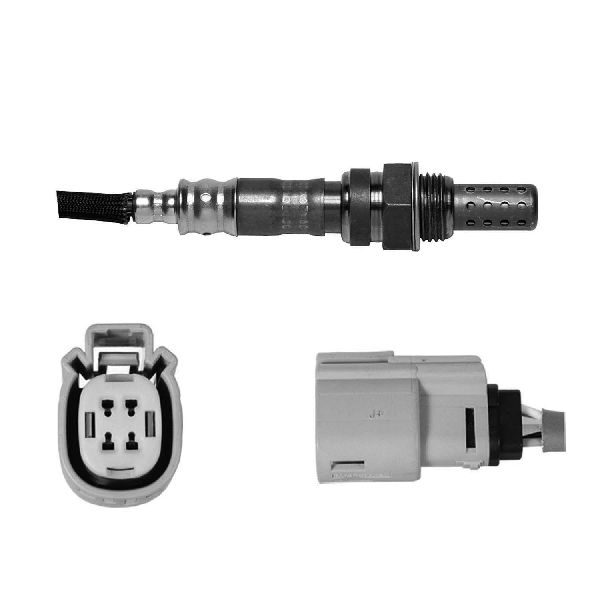
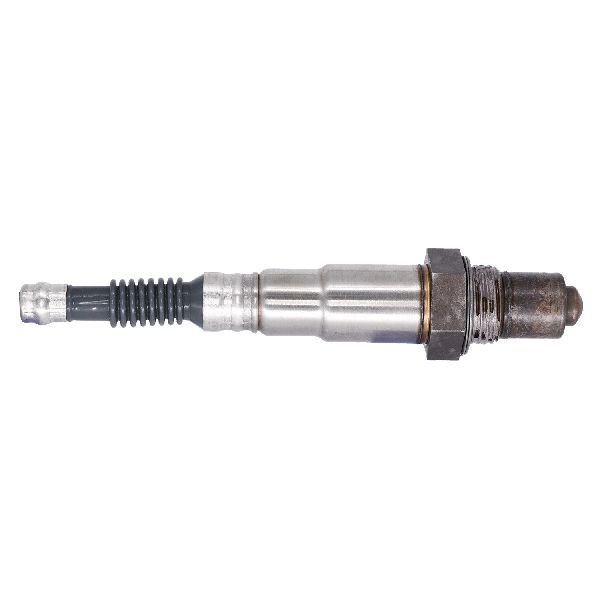
Typical fix: Replace the upstream heated oxygen sensor (HO2S). The sensor is located on the front of the engine in the exhaust manifold and can be replaced using a 22mm (or 7/8") O2 sensor socket. Soaking the threads with penetrating oil beforehand is highly recommended.
Est. part cost: $50-$80 - Wiring or Connector Issue 🟡 Medium Probability The sensor's wiring harness is routed near hot exhaust components, making it susceptible to melting, chafing, or corrosion over time. A short in the signal wire to a power source (like the sensor's own heater circuit wire) can cause a constant high voltage reading.
How to confirm: Visually inspect the wiring harness from the O2 sensor (Connector C134) to the main engine harness. Look for any signs of melting, frayed wires, or corrosion on the connector pins. A multimeter can be used to check for a short to voltage on the signal wire with the sensor disconnected.
Typical fix: Repair or replace the damaged section of the wiring harness or the connector itself.
Est. part cost: $10-$50 - Stuck-Open EVAP Purge Valve ⚪ Low Probability A stuck-open canister purge valve is a known issue on many Ford platforms of this era. This allows un-metered fuel vapors from the gas tank to enter the engine, creating a genuine rich condition that the O2 sensor correctly reports as high voltage.
How to confirm: With the engine running, disconnect the vacuum line from the purge valve. If you can feel suction at the valve's port, it is stuck open and needs to be replaced. You may also see other codes like P0172 (System Too Rich) and notice hard starting after refueling.
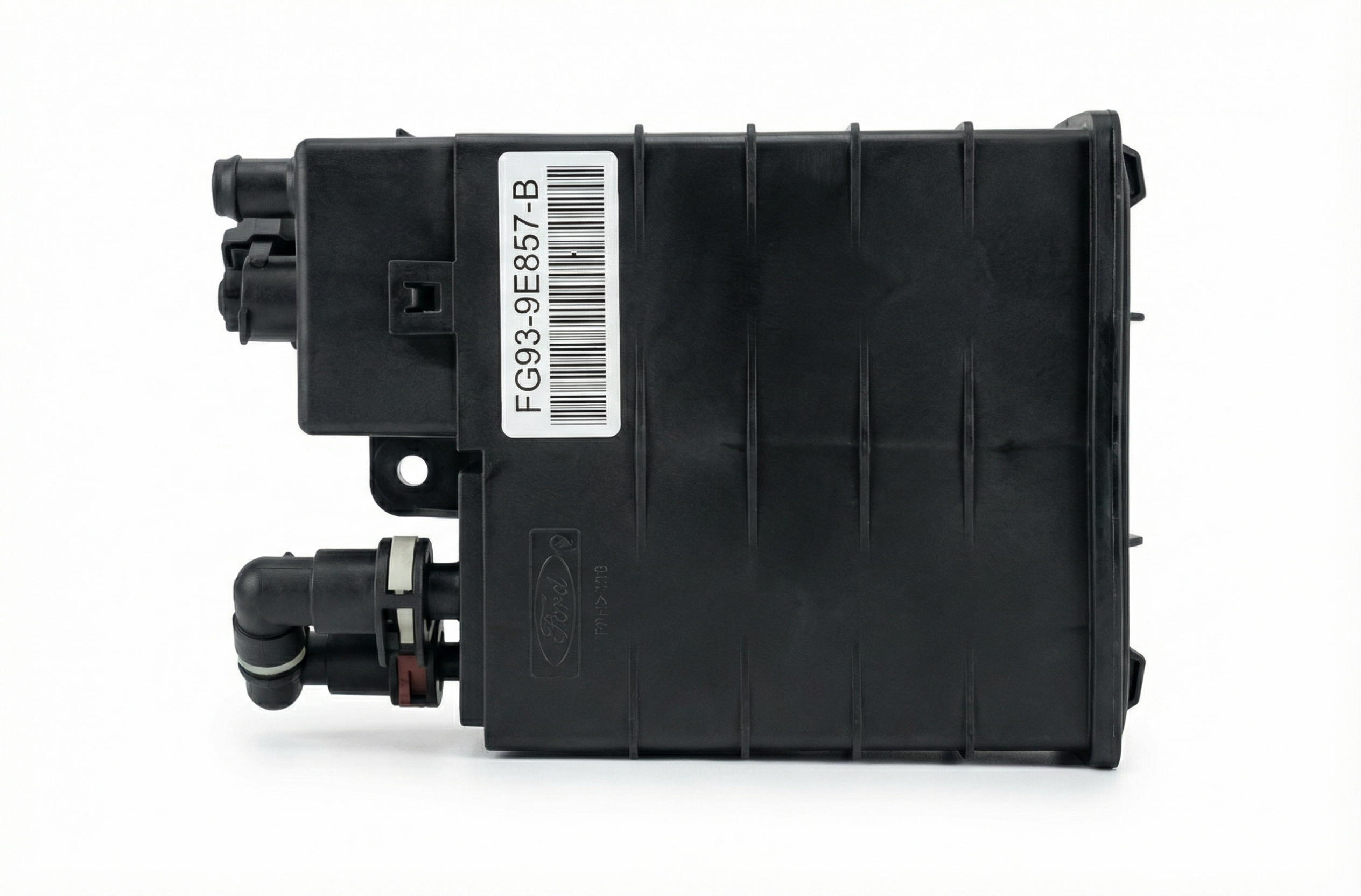
Typical fix: Replace the EVAP canister purge valve. The OEM part number is often AU5Z-9C915-B.
Est. part cost: $30-$60
Rare But Worth Checking
- Loose PCM Ground Wire: A loose or corroded ground wire for the Powertrain Control Module (PCM) can cause various erratic electrical issues, including false sensor codes like P0132. Key grounds to inspect are G105/G106/G108, located near the PCM in the left rear of the engine compartment.
- Exhaust Leak: An exhaust leak before the O2 sensor can sometimes draw in outside air, confusing the sensor and potentially causing erratic readings, although this is less common for a persistent high voltage code compared to a low voltage or slow response code.
- Failing Powertrain Control Module (PCM): → Shop Engine Control Module (ECM) In very rare cases, the internal circuitry of the PCM itself can fail, causing it to misinterpret the O2 sensor signal. This should only be considered after all other possibilities (sensor, wiring, true rich condition) have been exhaustively ruled out. Other seemingly unrelated codes may be present.
Diagnosis Steps
- Connect an OBD-II scanner and confirm that P0132 is the primary code. Note any other codes present, especially P0135, P0172, or P2196.
- Use the scanner's live data feature to monitor the 'O2S11' (Oxygen Sensor Bank 1 Sensor 1) voltage.
- Observe the voltage with the engine warm and running. A healthy sensor's voltage should fluctuate rapidly between approximately 0.1V and 0.9V.
- If the voltage is stuck high (consistently above 0.8V), the sensor is either faulty or is correctly reading a severe rich condition.
- To differentiate, check Long Term Fuel Trim (LTFT). If LTFT is highly negative (e.g., -15% or more), the PCM is trying to correct a real rich condition. Investigate the EVAP purge valve or fuel injectors.
- Turn the engine off and visually inspect the O2 sensor's wiring harness (at connector C134) for signs of melting, damage, or corrosion.
- If the wiring looks good and fuel trims are normal, the next step is to replace the oxygen sensor, as this is the most common failure.
- If a new sensor does not resolve the code, perform a detailed wiring check for a short-to-power between the sensor connector and the PCM.
- As a final check, ensure the main engine and PCM ground connections (G105, G106, G108) are clean and tight.
Parts You'll Likely Need
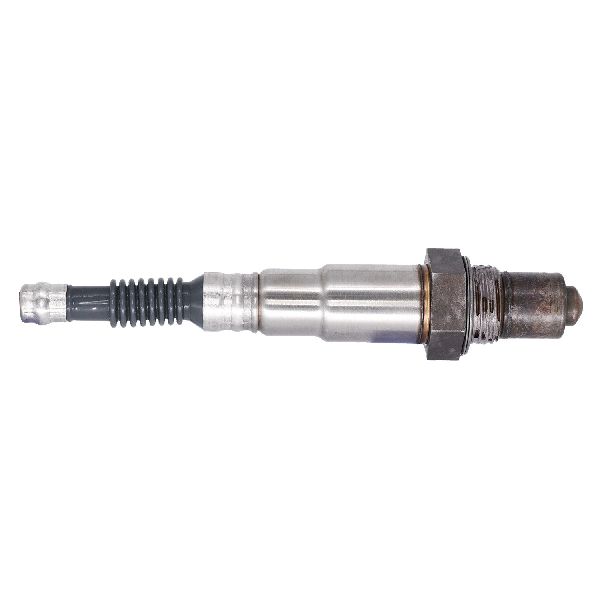
- Upstream Oxygen Sensor (Bank 1, Sensor 1)
(OEM #DY1199)— This is the most frequent cause of P0132. The sensor is a wear item that fails over time, causing its internal circuitry to short and send a constant high voltage signal.
Trusted brands: Motorcraft (OEM), Bosch (e.g., 17261), Denso, NGK/NTK
OEM price range: $70-$80
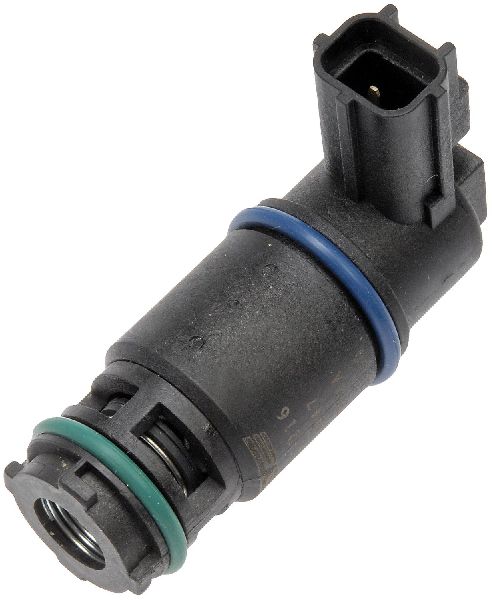
Aftermarket price range: $50-$65 - EVAP Canister Purge Valve
(OEM #AU5Z-9C915-B)— A less common but known failure point on Fords that can cause a true rich condition, triggering P0132. If code P0172 is also present, this part is a strong suspect.
Trusted brands: Motorcraft (OEM), Dorman
OEM price range: $40-$50
Aftermarket price range: $25-$40
Related Codes That Often Appear With This One
- P0135 — This code indicates a fault in the heater circuit of the same O2 sensor (Bank 1, Sensor 1). They often appear together, strongly suggesting the sensor itself has failed internally.
- P0172 — This code means 'System Too Rich (Bank 1)'. If you see this with P0132, it's a strong clue that the O2 sensor is working correctly and reporting a real rich-running condition. In this case, you should investigate fuel delivery issues (like a stuck purge valve or leaking fuel injector) before replacing the O2 sensor.
- P2196 — This code means 'O2 Sensor Signal Biased/Stuck Rich (Bank 1, Sensor 1)'. It is functionally identical to P0132 and points to the exact same set of causes: a bad sensor, a wiring short, or a legitimate rich condition.
Technical Service Bulletins (TSBs) & Recalls
- While no TSBs directly address P0132 on this platform, owners should be aware of major safety recalls like 16S30 (Door Latches) and 18S20 (Shifter Cable Bushing) that affect these model years.
Platform-Specific Known Issues
- On the 2.5L engine, the upstream O2 sensor is located on the exhaust manifold, easily accessible from the front of the engine bay after removing the upper heat shield. This makes it a much easier job than on the EcoBoost models where access is more restricted.
Mechanic-Grade Diagnostic Values
- Upstream O2 Sensor (HO2S11) Heater Circuit Resistance — expected: 3 to 25 Ohms when measured cold across the two same-colored heater wires on the sensor connector.. Failure: A reading of OL (infinite resistance) indicates an open circuit, while near-zero resistance indicates a short. Both confirm a failed sensor.
- O2 Sensor Heater Circuit Power Supply (KOEO) — expected: Battery voltage (approx. 12V) at the heater power pin on the harness-side connector.. Failure: Voltage below 10.5V or 0V points to a blown fuse (check fuse F33 in under-hood fuse box) or a break in the power wire.
- O2 Sensor Signal Circuit Integrity Test — expected: With the sensor unplugged and key on, manually applying a voltage (e.g., via a test light connected to battery positive) to the signal wire pin on the harness side should cause the O2S11 PID on a scan tool to jump to its maximum reading (~1.0V or higher).. Failure: If the scan tool voltage does not change, it indicates an open or short-to-ground in the signal wire between the connector and the PCM.
- Fuel Pressure (KOER - Key On Engine Running) — expected: Approximately 35-45 PSI for the multiport fuel injection system on the 2.5L engine.. Failure: Significantly high pressure could indicate a faulty fuel pressure regulator, forcing a rich condition that the O2 sensor correctly reports.
Hidden / Shadow Codes Worth Checking
- Mode $06, TID $81: This is not a DTC, but a manufacturer-specific diagnostic test result for 'HO2S Switch Time'. A value that is approaching the maximum limit can indicate a sensor is becoming slow and lazy, even before it fails completely and sets a hard code like P0132 or P2196. (see via A professional scan tool or advanced DIY tool (like Forscan) that can display Mode $06 test results.)
Scan Tool Commands That Help
- Forscan / Ford IDS: Keep Alive Memory (KAM) Reset — This should be performed after replacing the O2 sensor or fixing a related fuel system issue. It clears the long-term fuel trim adaptations that the PCM learned while compensating for the fault, allowing for a faster relearn process and verification of the fix.
- Forscan / Ford IDS: O2 Sensor Heater Test — This is a bidirectional command that allows the technician to command the O2 sensor's internal heater on and off to verify the integrity of the heater circuit (power, ground, and control) without having to wait for the PCM to do it automatically.
Wiring & Ground Locations
- G105 — Located in the left (driver's side) front of the engine compartment, often on the inner fender or near the shock tower.. This is a primary PCM and sensor ground point. A loose or corroded connection here can create a floating ground, causing erratic voltage readings for multiple sensors, including the upstream O2 sensor, leading to a false P0132 code.
- G108 — Located in the left rear of the engine compartment, near the PCM.. Serves as another critical ground for the PCM. Like G105, poor contact at this location can cause a wide range of difficult-to-diagnose electrical faults.
- Connector C134 — This is the main inline harness connector for the upstream O2 sensor, situated between the sensor pigtail and the main engine harness.. It is a common point for corrosion, moisture intrusion, or pin damage. All voltage and resistance tests of the sensor vs. the harness should be performed at this connector.
Real Owner Repair Stories
- Go-Parts article citing a dealership repair (2013 Ford Escape 2.0L EcoBoost (shared platform/electricals)) — Check Engine Light with P0132 and other electrical fault codes.
❌ Tried (didn't work) Initial diagnosis at a dealership took four weeks without a resolution.
✅ What actually fixed it The final cause was a loose PCM ground wire located below the air-box. The wire was not making good contact with the vehicle chassis. Tightening the ground connection resolved the P0132 code and all other electrical issues.
OEM Part Supersession History
AU5Z-9C915-B→AU5Z-9C915-E— Standard part lifecycle update, likely for improved durability or material changes.
Heads up: The original part number was also superseded by -A, -C, and -D variants. The latest version, -E, is fully backward compatible.DY1199 (Motorcraft service number)→EJ5Z-9F472-A / DY-1272 (Motorcraft service number) for 2014-2016 models.— Possible mid-generation update to the sensor design or calibration.
Heads up: While an earlier sensor may physically fit, using the specific part number for the vehicle's model year is critical to ensure correct voltage readings and fuel control.
Model Year Variations Within This Range
- 2014-2016: The upstream oxygen sensor part number may have been updated to EJ5Z-9F472-A (Motorcraft DY-1272). Owners of these later models should verify the correct part number for their specific VIN, as it may differ from the part used on 2013 models.
Diagnostic Flowchart
Other Known Issues on This Vehicle
Issues unrelated to this code that are worth knowing about as an owner of this generation:
- 6F35 Transmission Faults 🔴 High — Common, especially in 2013-2014 models. Can manifest as shuddering, harsh shifts, or complete failure. (Ref: NHTSA Recall #18S20 for a detached shifter cable bushing that can cause a rollaway risk.)
- Door Latch Failure 🔴 High — Widespread issue where a pawl spring tab breaks, preventing the door from latching securely or causing it to open while driving. (Ref: NHTSA Recall #16S30.)
- Engine Stalling / Overheating (EcoBoost Engines) 🔴 High — Primarily affects the 1.5L and 1.6L EcoBoost engines, not the 2.5L. Caused by coolant intrusion or other cooling system failures. (Ref: Multiple recalls and TSBs exist, including 13S12 for the 1.6L.)
- Failing EVAP Purge Valve 🟡 Low — A common failure part on many Ford vehicles of this era. Can cause rough idle, hard starting after refueling, and various check engine codes.
- Power Steering Failure 🟠 Medium — Some owners report sudden loss of power steering, often requiring replacement of the entire steering rack.
Used vs. New Parts: Buying Guide for This Vehicle
When a used part is the smart pick: A used EVAP Canister Purge Valve from a reputable salvage yard can be a cost-effective option, as it is a simple solenoid and an OEM used part is often more reliable than a new, non-OEM aftermarket part.
Donor-vehicle mileage cap: roughly under 80000 miles for the part to have meaningful remaining life.
What to inspect on the donor part:
- Inspect the plastic housing for any cracks or signs of heat stress.
- Ensure the electrical connector pins are clean, straight, and free of corrosion.
- Verify the part number on the used component matches the OEM number (e.g., AU5Z-9C915-B/E).
OEM-only on this vehicle (don't cheap out):
- Oxygen Sensor: While not strictly 'OEM-only', it is highly recommended to use the Motorcraft OEM sensor or a direct OE supplier like NTK or Denso. Inexpensive, unbranded aftermarket sensors are a frequent source of compatibility problems and repeat failures.
Aftermarket brands forum-validated for this vehicle:
- O2 Sensors: Bosch, Denso, NTK
- EVAP Purge Valve: Dorman
Brands owners have reported issues with on this vehicle:
- Unbranded 'white-box' oxygen sensors from online marketplaces.
Real Owner Stories
Aggregated from forums and TSBs cited above. Mileages and costs reflect what owners reported in those sources.
2014 Ford Escape 2.5L
Symptoms: Owners discussing the general reliability of the 2.5L engine compared to EcoBoost variants, noting it as a more durable choice which simplifies the diagnosis of engine-related rich conditions.
What fixed it: The 2.5L platform is noted for being more durable, making the P0132 fix typically straightforward sensor replacement rather than complex engine failure repairs.
Source hint: fordescape.org - '2014 2.5L transmission and engine failure rumors'
Related OBD-II Codes
Frequently Asked Questions
Does the 2013-2016 Ford Escape 2.5L have the same O2 sensor access issues as the EcoBoost models?
Are there any recalls for the 2013-2016 Ford Escape that I should check while fixing code P0132?
Which specific brand of oxygen sensor is recommended for the 2.5L Escape to avoid compatibility issues?
Can a problem with my gas tank venting cause a P0132 high voltage code on this vehicle?
Where is the O2 sensor wiring connector located on the 2.5L Escape?
Could a bad ground cause P0132 on my Ford Escape?
Helpful Videos
Used OEM Parts in Stock
New Aftermarket Parts Available


The information in this article is provided for general reference and educational purposes only. Vehicle specifications, procedures, and part compatibility can vary by production date, trim level, and region. Always consult your vehicle's factory service manual and verify part numbers before purchasing or performing repairs. Safety-critical components such as airbags, seat belts, and braking systems should be installed by a qualified professional.
- Ford Escape:
- 🧭 Diagnostic Flowchart
- 🎬 Helpful Videos
- 🛍️ Shop This Part
- What's Unique About the 2013-2016 Ford Escape
- Symptoms You May Notice
- Most Likely Causes
- Rare But Worth Checking
- Diagnosis Steps
- Parts You'll Likely Need
- Related Codes That Often Appear With This One
- Technical Service Bulletins (TSBs) & Recalls
- Platform-Specific Known Issues
- Mechanic-Grade Diagnostic Values
- Hidden / Shadow Codes Worth Checking
- Scan Tool Commands That Help
- Wiring & Ground Locations
- Real Owner Repair Stories
- OEM Part Supersession History
- Model Year Variations Within This Range
- Other Known Issues on This Vehicle
- Used vs. New Parts: Buying Guide for This Vehicle
- Real Owner Stories
- 2014 Ford Escape 2.5L
- Related OBD-II Codes
- Frequently Asked Questions
- 🎟️ Get 5% Off