

P0132 on 2012-2018 Ford Focus 2.0L: Causes for High Voltage O2 Sensor Signal and Fixes
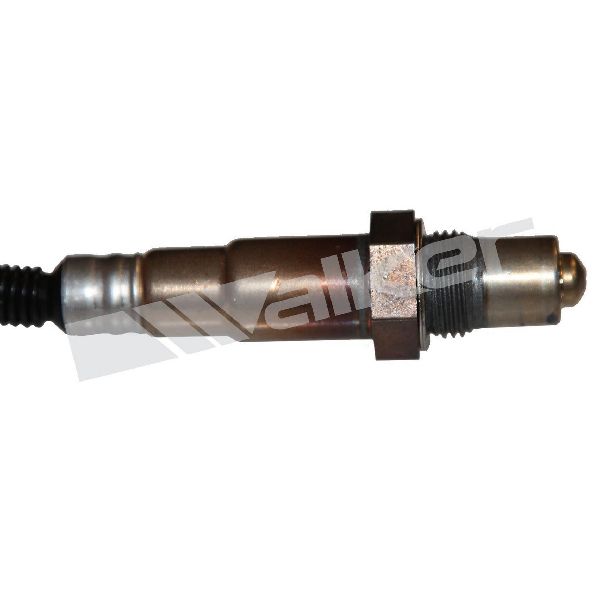
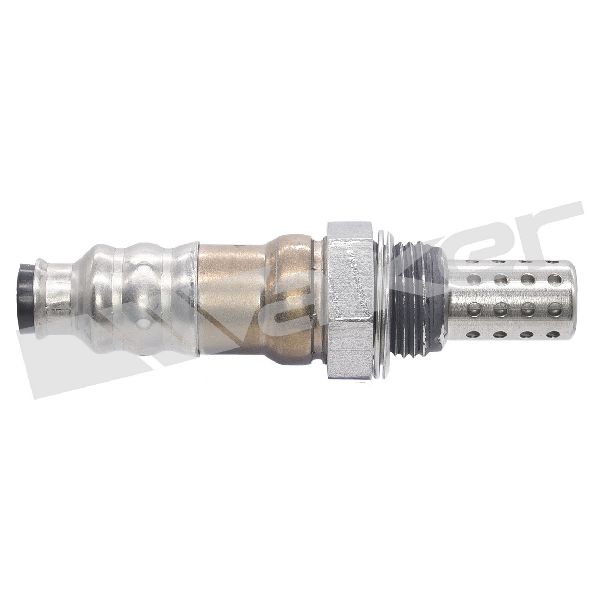
On a 2012-2018 Ford Focus with the 2.0L engine, code P0132 is most often caused by a failed upstream oxygen sensor (Bank 1, Sensor 1). Replacing this sensor is the most common fix, with parts costing between $50 for aftermarket and $120 for an OEM Motorcraft part. It's a straightforward DIY job with the right O2 sensor socket, though the sensor can sometimes be seized in the exhaust manifold.
- P0132 on your Focus almost always points to the upstream O2 sensor (before the catalytic converter).
- Before replacing the sensor, use a scan tool to watch its live data. If the voltage is stuck high and not switching, you've confirmed the fault.
- The replacement is DIY-friendly and located at the back of the engine. You will need a 22mm or 7/8" O2 sensor socket to do the job easily.
- If a new sensor doesn't fix the code, your next step should be to inspect the EVAP purge valve for being stuck open, a known issue on these cars.
What's Unique About the 2012-2018 Ford Focus
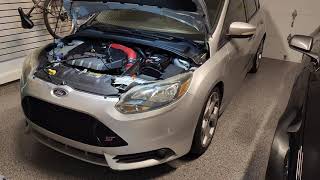
The 2.0L GDI engine in the third-generation Ford Focus has the upstream O2 sensor in a very accessible location at the rear of the engine bay, making diagnosis and replacement easier than on many other vehicles. While the code's direct cause is often the sensor itself, it's worth noting that these engines can also suffer from faulty EVAP purge valves that stick open, creating a rich condition that the O2 sensor correctly reports. This can sometimes lead to misdiagnosis where the sensor is replaced, but the underlying rich condition remains, causing the code to return.
Symptoms You May Notice
- Check Engine Light is on
- Decreased fuel economy
- Rough or hesitant engine performance
- Engine may run rough at idle, especially when cold
- In severe cases, a smell of raw fuel or black smoke from the exhaust
- Failed emissions test
- Replacing the O2 sensor without checking for an underlying rich condition. If a faulty purge valve or leaking injector is the real problem, the P0132 code will return even with a new sensor.
- Assuming the sensor is bad when the issue is a short in the wiring harness or a blown fuse for the heater circuit.
Most Likely Causes
- Faulty Upstream Oxygen Sensor (Bank 1, Sensor 1) 🔴 High Probability → Shop Oxygen Sensor Oxygen sensors are wear items exposed to extreme heat and exhaust gases. Internal failure, contamination, or heater circuit faults are common over the vehicle's life, causing them to send an incorrect, fixed high-voltage signal. A TSB for related codes on this vehicle points directly to sensor replacement.
How to confirm: Use a scan tool to monitor the live data for the 'O2S11' sensor. A healthy sensor's voltage will fluctuate rapidly between ~0.1V and ~0.9V. If the voltage is stuck high (e.g., >0.8V) and does not switch, the sensor has likely failed. A Reddit user with P0132 on their Focus confirmed a new sensor fixed their rough idle and cleared the code.
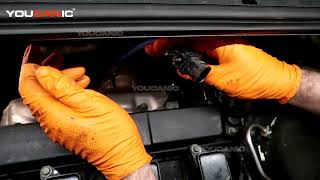
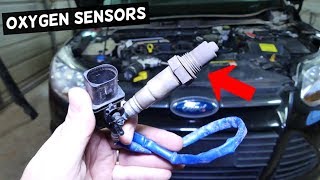
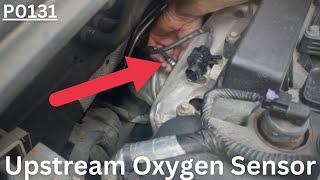
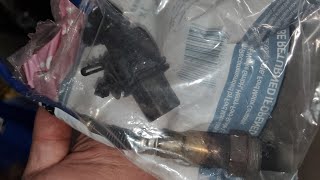
Typical fix: Replace the upstream oxygen sensor. The sensor is located on the exhaust manifold and is accessible from the top of the engine bay. 🎬 Watch: Step-by-step upstream O2 sensor replacement walkthrough. It may be seized and require significant force or penetrating oil to remove.
Est. part cost: $50-$120 - Wiring or Connector Damage 🟡 Medium Probability The sensor's wiring harness is close to the hot exhaust manifold. Over time, the protective loom can degrade, leading to melted wires or a short circuit that can cause a constant high voltage signal. The O2 sensor heater circuit can also be protected by a fuse, which may be labeled 'HTR' or 'ENG SNS' in the fuse box. A manufacturer service bulletin, TSB 21-2090, notes that water intrusion into the heated oxygen sensor connectors can also trigger P0132 and related heater circuit codes.
How to confirm: Visually inspect the entire wiring harness from the O2 sensor to its connection point near the top of the engine. Look for any melted plastic, frayed wires, or corrosion on the connector pins. Check for a blown fuse related to the O2 sensor heater circuit.
Typical fix: Repair the damaged section of the wiring harness or clean the connector. If damage is severe, a new connector pigtail may be needed. Replace any blown fuses.
Est. part cost: $5-$30 - Engine Running Rich ⚪ Low Probability The O2 sensor may be working correctly and accurately reporting a rich condition caused by another component, such as a leaking fuel injector, faulty fuel pressure regulator, or a stuck EVAP purge valve. This is a known issue that can lead to misdiagnosis.
How to confirm: Check for other diagnostic trouble codes, especially P0172 (System Too Rich), P1450 (Unable to Bleed Up Fuel Tank Vacuum), or P2196 (O2 Sensor Signal Stuck Rich). A fuel pressure test can also be performed to ensure it's within spec. Listen for a clicking sound from the EVAP purge valve; if it's silent or stuck open, it may be faulty.
Typical fix: Diagnose and repair the root cause of the rich condition. This most commonly involves replacing the EVAP purge valve, 🎬 See how to replace the purge valve on your Focus. but could also be a leaking injector or faulty fuel pressure regulator.
Est. part cost: $50-$300+
Rare But Worth Checking
- Stuck-Open EVAP Purge Valve: A common failure on this platform is the canister purge valve (solenoid) sticking open. This allows un-metered fuel vapor into the intake manifold, creating a rich condition that the O2 sensor correctly reports, triggering P0132 or the similar P2196 code. The O2 sensor is doing its job, but the purge valve is the root cause.
- Exhaust Leak: An exhaust leak before the O2 sensor can, in some cases, draw in outside air and skew the sensor's readings, though this more commonly causes a low voltage code (P0131). It's worth inspecting the exhaust manifold for any signs of cracks or leaking gaskets.
- PCM Fault: In very rare instances, the Powertrain Control Module (PCM) itself can fail or have a software glitch, causing it to misinterpret the O2 sensor signal. Some forum posts mention that a PCM software update was part of a TSB for older models to go along with a new sensor.
Diagnosis Steps
- Connect an OBD-II scanner and verify P0132 is the active code. Check for any other codes (like P0172, P2196, P0135) and address them first if they relate to fuel trim or other sensors.
- View the live data stream for the Bank 1 Sensor 1 (O2S11) oxygen sensor. At operating temperature, the voltage should switch rapidly between approximately 0.1V and 0.9V.
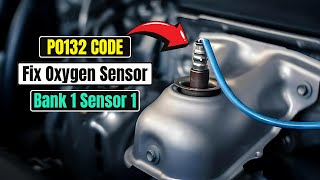
- If the voltage is stuck high (e.g., >0.8V), the issue is confirm 🎬 Watch: Understanding P0132 causes and how to fix them.ed.
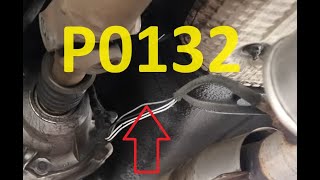
- Turn off the engine and allow the exhaust to cool. Visually inspect the O2 sensor's wiring harness and connector for any signs of melting, chafing, or corrosion. The harness runs near the exhaust manifold and can be damaged by heat.
- Check the vehicle's fuse box for a blown fuse related to the O2 sensor heater circuit. It may be labeled 'HTR' or similar.
- If the wiring and fuse appear intact, the oxygen sensor itself is the most likely culprit. Proceed with replacement. Be aware the sensor can be seized and may require penetrating oil and significant force to remove.
- If replacing the sensor does not resolve the code, further diagnosis is required. Test the EVAP purge valve to see if it's stuck open.
- If the purge valve is functional, check fuel pressure and consider testing for leaking fuel injectors.
Parts You'll Likely Need
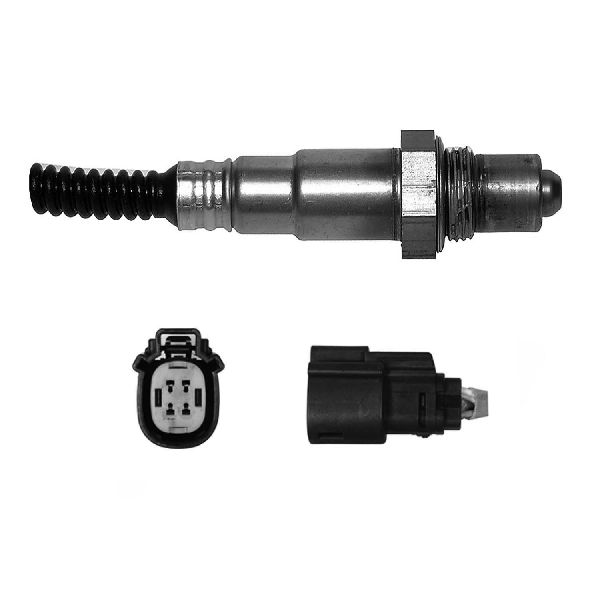
- Upstream Oxygen Sensor (Bank 1, Sensor 1)
(OEM #8F9Z-9F472-H (Motorcraft DY-1185). Note: CJ5Z-9F472-A is for the downstream sensor.)— This is the most common failure point for code P0132 on this vehicle. It is a critical component for fuel mixture control and is a standard wear-and-tear item. A TSB was issued for 2012-2013 models for this exact issue.
Trusted brands: Motorcraft, Bosch (Part No. 0 258 017 357 is a cited cross-reference), NGK/NTK, Denso
OEM price range: $90-$120
Aftermarket price range: $50-$85
Related Codes That Often Appear With This One
- P0131 — P0131 is 'O2 Sensor Circuit Low Voltage'. Seeing both codes intermittently or together can point to an erratic sensor or a wiring issue. A TSB for the 2012-2013 Focus mentions both codes in relation to a faulty sensor.
- P2196 — P2196 means 'O2 Sensor Signal Stuck Rich'. This is very similar to P0132 and often points to the same root causes, such as a bad sensor or a legitimate rich condition from something like a faulty purge valve or leaking fuel injector.
- P0172 — P0172 means 'System Too Rich (Bank 1)'. If you see this code with P0132, it strongly suggests the O2 sensor is accurately reporting a rich condition, and you should investigate fuel delivery issues (injectors, fuel pressure, EVAP system) rather than the sensor itself.
- P0135 — P0135 is 'O2 Sensor Heater Circuit Malfunction (Bank 1, Sensor 1)'. Since the sensor heater is integral to the O2 sensor, seeing this code alongside P0132 almost certainly confirms the sensor itself has failed and needs replacement.
Technical Service Bulletins (TSBs) & Recalls
- A known TSB for P0131/P0132 on 2012-2013 Focus models recommends the replacement of the upstream heated oxygen sensor (Part No. 8F9Z-9F472-H).
- Manufacturer Bulletin #TSB-14-0129 notes that P0132 and P0135 can be stored in the PCM memory, causing the Malfunction Indicator Lamp (MIL) to illuminate.
- Bulletin #TSB 20-2380 describes how water intrusion into the heated oxygen sensor connectors can lead to an illuminated MIL with DTCs including P0132, P0135, and P0152.
Platform-Specific Known Issues
- Seized O2 Sensor: → Shop Oxygen Sensor Owners and mechanics report that the upstream O2 sensor can become 'welded' or seized in the exhaust manifold due to heat and corrosion, making removal very difficult. Using a generous amount of penetrating oil and allowing it to soak, along with a proper O2 sensor socket and a long breaker bar, is often necessary.
- TSB for Early Models: Ford issued a Technical Service Bulletin (TSB) for 2012-2013 Focus models that specifically addresses codes P0131 and P0132, recommending the replacement of the upstream oxygen sensor (part 8F9Z-9F472-H). Some older forum discussions also mention a
Mechanic-Grade Diagnostic Values
- High-Pressure Fuel Rail Pressure (GDI System) — expected: 280-350 PSI at idle, can range from 2,000 to 2,800 PSI under load.. Failure: Significantly lower pressure at idle (e.g., under 100 PSI) indicates a failing high-pressure fuel pump or sensor issue, which can cause a rich condition that triggers P0132.
- Low-Side Fuel Pressure (supplying the HPFP) — expected: 35 - 65 PSI.. Failure: Low pressure from the in-tank pump can starve the high-pressure pump, but is less likely to cause a rich code like P0132.
- Upstream O2 Sensor (HO2S11) Live Data Voltage — expected: Rapidly fluctuating between ~0.1V (lean) and ~0.9V (rich) in closed loop.. Failure: Voltage stuck consistently above 0.8V for an extended period.
Hidden / Shadow Codes Worth Checking
- Mode $06, TID:$01, CID:$11: This is the On-Board Diagnostic Test ID for the Upstream Oxygen Sensor (HO2S11). It monitors the sensor's response and switching characteristics. A failing result in Mode $06 can indicate a degraded sensor even before a constant DTC like P0132 is set. (see via A professional scan tool capable of displaying Mode $06 data. The raw data needs to be converted and compared against manufacturer limits.)
Scan Tool Commands That Help
- Ford IDS (Integrated Diagnostic Software): Datalogger for HO2S11 PID — To graph the live voltage of the upstream O2 sensor to visually confirm if it is switching correctly or stuck high.
- Ford IDS (Integrated Diagnostic Software): Power Balance Test — If a rich condition is suspected, this test can help identify if a specific cylinder is contributing more or less power, pointing towards a potential leaking fuel injector on that cylinder.
- Ford IDS (Integrated Diagnostic Software): Reset KAM (Keep Alive Memory) — After replacing a component like an O2 sensor or fixing a rich condition, resetting the KAM erases the old adaptive fuel trim strategies, allowing the PCM to learn the new parameters immediately.
Wiring & Ground Locations
- G104 — Left side of the engine compartment.. This is a primary engine ground. A poor connection at G104 can cause floating ground references for various sensors, including the O2 sensor, leading to erratic or biased voltage readings.
- C175B — The main engine-to-body harness connector, typically located near the battery junction box.. The O2 sensor signal, heater power, and ground circuits all pass through this large connector. Corrosion or a backed-out pin in C175B can cause the P0132 code and is often overlooked.
- HO2S11 Connector — At the end of the sensor pigtail, clipped to a bracket at the top rear of the engine.. This is the most common point for visual inspection. Corrosion (green crust) on the pins is a clear indicator of a failed connection, which can cause high resistance and trigger a high voltage code.
Real Owner Repair Stories
- Reddit user in r/FordFocus (2012-2018 Ford Focus (exact year not specified)) — Check Engine Light with code P0132, rough idling when cold.
✅ What actually fixed it Replaced the upstream O2 sensor with a Bosch part (0 258 017 357). The mechanic noted the original sensor was completely seized ('welded in') and very difficult to remove. After replacement, the rough idle was gone and the code did not return after a 500km drive. - Focus ST owner on YouTube (2013 Ford Focus ST (2.0L Turbo)) — Check Engine Light with code P2196 (O2 Sensor Stuck Rich), which is functionally similar to P0132.
❌ Tried (didn't work) Replacing the upstream O2 sensor did not fix the problem; the code returned.
✅ What actually fixed it The actual cause was a failed EVAP purge valve. Replacing the purge valve resolved the stuck rich code.
OEM Part Supersession History
8F9Z-9F472-H→No supersession found, this part number remains current.— N/A
Heads up: This part is also listed under the Motorcraft number DY-1185. It is specified for the upstream (front) position. Care must be taken not to confuse it with the downstream sensor.
Model Year Variations Within This Range
- 2015-2018: Following the 2014 facelift, new 1.5L EcoBoost and 1.5L TDCi engines were introduced in 2015, replacing the older 1.6L units. While the 2.0L GDI engine remained the primary non-turbo gasoline option in North America, technicians should be aware that engine bay layouts and component locations may differ on vehicles with these other, less common engines.
Diagnostic Flowchart
Real Owner Stories
Aggregated from forums and TSBs cited above. Mileages and costs reflect what owners reported in those sources.
2013 Ford Focus 2.0L
Symptoms: The vehicle came in for an imbalance fuel air ratio between cylinders and a P0131/P0132 code.
What fixed it: Replaced the heated oxygen sensor based on a TSB for vehicles built between 6/1/2012 and 5/1/2013, using part number 9F9Z 9F472H.
Source hint: YouTube comment 'Ford Boss Me - Auto / Politics / Family'
Ford Focus
Symptoms: Experienced a check engine light scare accompanied by a rough idle.
What fixed it: Replaced the upstream O2 sensor, noting the old one was 'completely welded in there'. Used a Bosch aftermarket part (0 258 017 357) as a successful alternative to the Ford part.
Source hint: Reddit r/FordFocus - 'My first check engine scare' (Feb 2024)
2013 Ford Escape
Symptoms: Triggered a P0132 code on a platform-mate vehicle.
What fixed it: Followed the same diagnostic path as the Focus to address the upstream O2 sensor issue.
Source hint: Reddit r/MechanicAdvice - ''13 Ford Escape P0132 code' (Mar 2021)
Older Ford Focus
Symptoms: Triggered a related P0131 fault code.
What fixed it: Required both a new, modified O2 sensor and a PCM software update to prevent premature failure, as per an older TSB.
Source hint: PassionFord Forums - 'fault code p0131 help' (Apr 2014)
Related OBD-II Codes
Frequently Asked Questions
Is there a TSB for the P0132 code on my 2012-2018 Ford Focus?
Why is the upstream O2 sensor so hard to remove on the 2.0L GDI engine?
Can a bad EVAP purge valve cause a P0132 code on my Focus?
What aftermarket O2 sensor part number works for the Focus to fix P0132?
Which fuse should I check if I suspect a wiring issue for the O2 sensor?
Does the P0132 code affect other Ford models with the 2.0L engine?
Helpful Videos


We Have This Part in Stock



The information in this article is provided for general reference and educational purposes only. Vehicle specifications, procedures, and part compatibility can vary by production date, trim level, and region. Always consult your vehicle's factory service manual and verify part numbers before purchasing or performing repairs. Safety-critical components such as airbags, seat belts, and braking systems should be installed by a qualified professional.
- Ford Focus:
- 🧭 Diagnostic Flowchart
- 🎬 Helpful Videos
- 🛍️ Shop This Part
- What's Unique About the 2012-2018 Ford Focus
- Symptoms You May Notice
- Most Likely Causes
- Rare But Worth Checking
- Diagnosis Steps
- Parts You'll Likely Need
- Related Codes That Often Appear With This One
- Technical Service Bulletins (TSBs) & Recalls
- Platform-Specific Known Issues
- Mechanic-Grade Diagnostic Values
- Hidden / Shadow Codes Worth Checking
- Scan Tool Commands That Help
- Wiring & Ground Locations
- Real Owner Repair Stories
- OEM Part Supersession History
- Model Year Variations Within This Range
- Real Owner Stories
- 2013 Ford Focus 2.0L
- Ford Focus
- 2013 Ford Escape
- Older Ford Focus
- Related OBD-II Codes
- Frequently Asked Questions
- 🎟️ Get 5% Off