

P0132 on 2000-2007 Ford Taurus 3.0L V6: High Voltage O2 Sensor Causes and Fixes
P0132 on a 3.0L V6 Taurus almost always points to a faulty upstream oxygen sensor on Bank 1 (the firewall side). Due to its difficult location, check for wiring issues before replacing the sensor. Expect to pay $40-$80 for an aftermarket sensor and $90-$150 for an OEM Motorcraft part.
- P0132 means the upstream O2 sensor on the firewall side (Bank 1) is sending a high voltage signal.
- The most common cause is a failed sensor itself, but wiring damage is a close second due to its routing.
- Confirm the failure with a scanner's live data before attempting the difficult replacement.
- This code is specific to Bank 1 (rear) and Sensor 1 (upstream); do not replace the wrong sensor.
- The repair is mechanically simple but rated difficult due to the sensor's extremely tight location against the firewall.
What's Unique About the 2000-2007 Ford Taurus
On the 3.0L V6 Duratec engine installed transversely in the Ford Taurus, 'Bank 1' is the cylinder bank located against the firewall, making it the more difficult one to see and access. Consequently, replacing the Bank 1, Sensor 1 O2 sensor is significantly more labor-intensive than replacing the Bank 2 sensor. Owner forums describe various difficult methods for access, including removing the cowl, using long extensions and a swivel socket from the top, or even accessing it from below the vehicle.
Symptoms You May Notice
- Check Engine Light is illuminated
- Decreased fuel economy
- Rough or unstable engine idle
- Engine hesitation or stumbling during acceleration
- Black smoke from the exhaust in severe cases
- Smell of raw fuel
- Replacing the wrong oxygen sensor. The code is specific to Bank 1 (firewall side) and Sensor 1 (upstream). Many people mistakenly replace the easier-to-access front sensor (Bank 2) or the downstream sensor (Sensor 2).
Most Likely Causes
- Faulty Bank 1, Sensor 1 Oxygen Sensor 🔴 High Probability → Shop Oxygen Sensor Oxygen sensors are wear items that degrade over time from heat and contaminants. It's the most frequent failure point for this code. The sensor can fail internally, causing it to be stuck in a high voltage state.
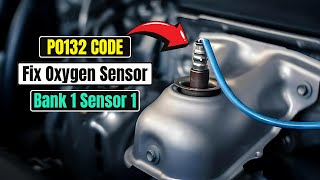
How to confirm: Use an OBD-II scanner with live data. Observe the voltage for B1S1. If it is stuck high (e.g., 0.9V or higher) and not fluctuating rapidly like the B2S1 sensor, the sensor is likely bad. 🎬 Watch: How to diagnose and fix a P0132 code
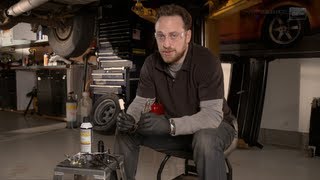
Typical fix: Replace the Bank 1, Sensor 1 (upstream, firewall side) oxygen sensor. This is a challenging DIY job due to the location. Use of a 22mm or 7/8" offset oxygen sensor socket is highly recommended. 🎬 See this walkthrough for replacing a stuck oxygen sensor
Est. part cost: $40-$150 - Wiring Harness or Connector Damage 🟡 Medium Probability The sensor wiring is routed near hot exhaust components and moving parts like the passenger side half-shaft. Over time, the protective loom can degrade, leading to melted wires or a short circuit to a voltage source, which would cause a constant high signal.
How to confirm: Visually inspect the entire wiring harness from the O2 sensor to the main engine harness. Look for melted plastic, chafed wires, or corrosion inside the connector. Test for a short to voltage on the signal wire using a multimeter.
Typical fix: Repair the damaged section of the wiring harness or clean/replace the connector. Ensure the repaired harness is secured away from heat sources with zip ties.
Est. part cost: $5-$50 - Engine Running Rich ⚪ Low Probability While less common than a sensor failure, issues like a leaking fuel injector, faulty fuel pressure regulator, or even a vacuum leak causing the PCM to overcompensate can create a true rich condition, which the O2 sensor correctly reports.
How to confirm: Check for other trouble codes (e.g., fuel trim codes like P0172). Check long-term and short-term fuel trims with a scanner. Negative numbers indicate the PCM is removing fuel to compensate for a rich condition. Test fuel pressure to see if it's within spec.
Typical fix: Diagnose and repair the root cause of the rich condition, such as replacing a leaking fuel injector or faulty fuel pressure regulator.
Est. part cost: $50-$250
Rare But Worth Checking
- Exhaust Leak: An exhaust leak before the O2 sensor can sometimes disrupt sensor readings, though it more commonly causes a lean code (P0131). It's worth checking for audible leaks or soot trails near the exhaust manifold.
- Powertrain Control Module (PCM) Fault: → Shop Engine Control Module (ECM) This is very rare. The PCM should only be considered after all other possibilities, including the sensor and wiring, have been exhaustively tested and ruled out.
Diagnosis Steps
- Connect an OBD-II scanner and confirm P0132 is the active code. Note any other codes present, especially P0172 or P0152.
- View live data on the scanner. Watch the voltage for 'O2S11' (Bank 1, Sensor 1). It should fluctuate rapidly between approximately 0.1 and 0.9 volts. If it's stuck high (above 0.8V) and unresponsive, the problem is confirmed.
- For comparison, observe the voltage for 'O2S21' (Bank 2, Sensor 1), which should be actively fluctuating.
- Turn the engine off. Locate the Bank 1, Sensor 1 connector on the firewall side of the engine.
- Inspect the wiring harness and connector for any signs of melting, corrosion, or physical damage. Pay close attention to where the harness might contact the exhaust or axles.
- If the wiring looks good, the most likely cause is the sensor itself. Due to the difficult access, further electrical testing may be challenging for a DIYer.
- If you suspect an actual rich condition (e.g., you also have a P0172 code), check fuel trims and test the fuel pressure.
- If all other tests fail, the issue could be a rare PCM fault.
Parts You'll Likely Need
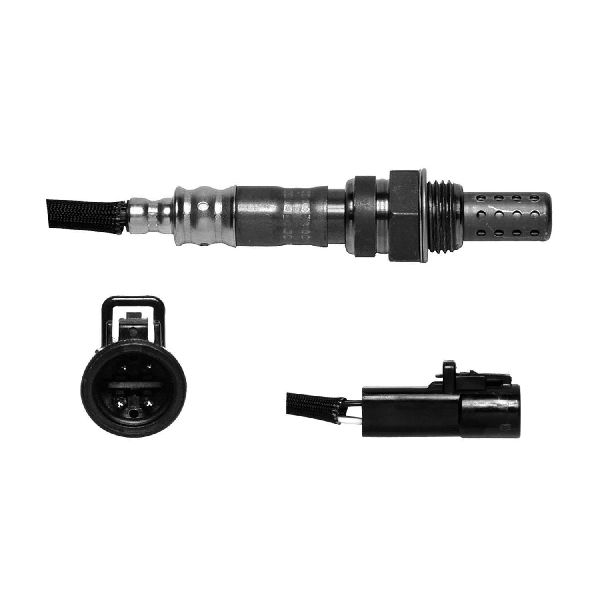
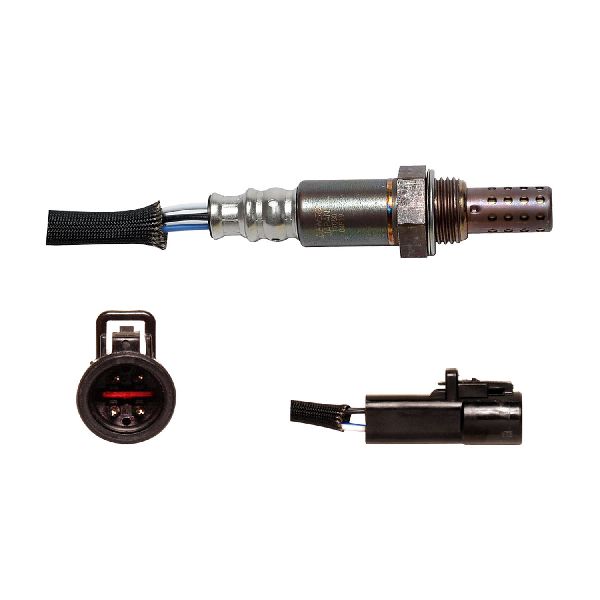
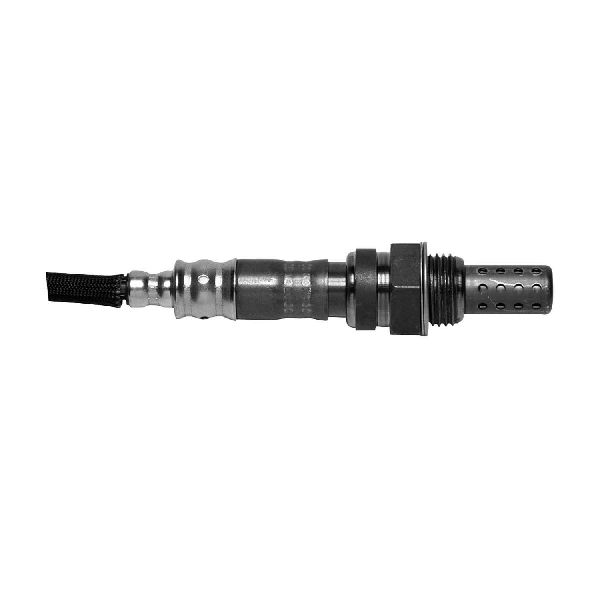
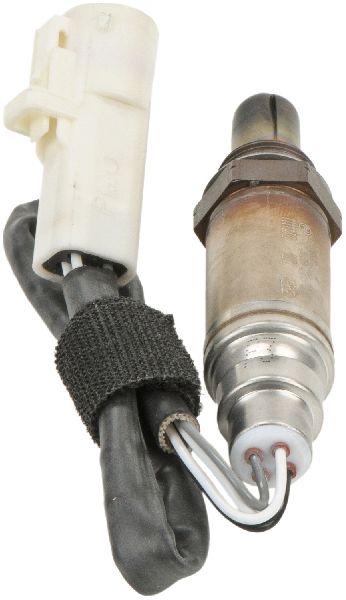
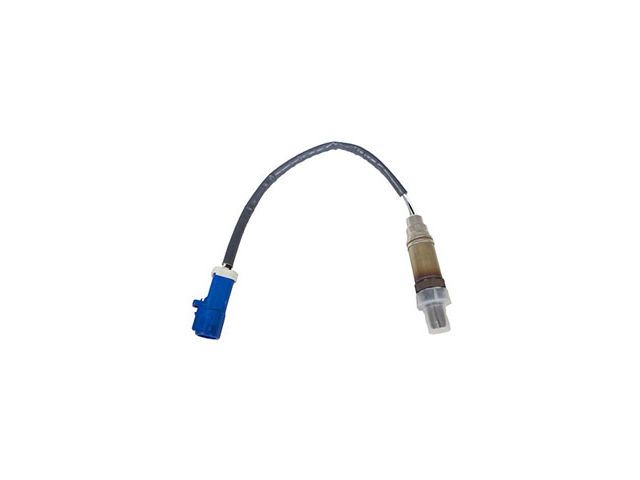
- Upstream Oxygen Sensor (Bank 1)
(OEM #Motorcraft DY-1092 (replaces DY-835))— This is the sensor identified by the code and is the most common failure point. Bank 1 is the firewall side.
Trusted brands: Motorcraft, Bosch (Part #15717), Denso (Part #234-4045), NGK/NTK
OEM price range: $90-$150
Aftermarket price range: $40-$80
Related Codes That Often Appear With This One
- P0172 — System Too Rich (Bank 1). This code indicates the PCM has confirmed a rich condition on the same bank, suggesting the O2 sensor may be reporting a real problem with the air-fuel mixture.
- P0152 — O2 Sensor Circuit High Voltage (Bank 2, Sensor 1). If both upstream sensors fail simultaneously, it could point to a systemic issue like contaminated fuel, excessive fuel pressure, or an issue with the sensor heater circuit fuse.
Technical Service Bulletins (TSBs) & Recalls
- source_type: TSB | id_or_name: TSB 05-14-4 | relevance: While focused on P2106 and P2135 codes related to the throttle body, this TSB involves reprogramming the PCM and updating diagnostic procedures for engine control systems on various 2004-2005 Fords, including the Taurus. It highlights that PCM calibration can be a factor in resolving complex electronic control issues.
Platform-Specific Known Issues
- The primary vehicle-specific issue is the difficult location of the Bank 1 upstream O2 sensor, which is tucked against the firewall. This significantly increases the labor time and difficulty of replacement compared to the front (Bank 2) sensor.
Mechanic-Grade Diagnostic Values
- B1S1 O2 Sensor Signal Voltage (Live Data) — expected: Rapidly fluctuating between ~0.1V (lean) and ~0.9V (rich) on a warm, closed-loop engine.. Failure: Voltage is stuck consistently above 0.8V, often at 0.9V or higher, and does not fluctuate.
- O2 Sensor Signal Wire Voltage (Multimeter, backprobed) — expected: Same as live data: fluctuating between ~0.1V and ~0.9V.. Failure: A steady high voltage (above 0.8V) confirms the sensor is outputting a high signal. If the scanner shows high but the sensor shows fluctuation, a wiring issue between the sensor and PCM is likely.
- O2 Sensor Ground Circuit — expected: Near 0V potential difference between the sensor's ground wire and chassis ground.. Failure: A poor ground connection can introduce voltage into the circuit, leading to an artificially high signal reading at the PCM. This is a counter-intuitive failure, as technicians often associate bad grounds with low or no voltage.
Hidden / Shadow Codes Worth Checking
- Mode $06: While not a 'shadow code' in the typical sense, Ford utilizes Mode $06 data extensively. A technician can view the results of non-continuous monitor tests, including those for the oxygen sensors. A failing test result in Mode $06 can appear before the PCM sets a formal trouble code like P0132, providing an early warning. (see via A professional-grade OBD-II scanner with Mode $06 capability.)
Scan Tool Commands That Help
- Ford IDS (or equivalent professional scanner): Reset KAM (Keep Alive Memory) — After replacing the O2 sensor or fixing a rich condition, resetting the KAM is critical. This command erases the long-term fuel trim adaptations, forcing the PCM to relearn the air/fuel mixture strategy with the new, correctly functioning components. Failing to do so can cause the old, incorrect fuel trims to persist, potentially leading to performance issues or the return of fault codes.
- Ford IDS (or equivalent professional scanner): Power Balance Test — If a true rich condition is suspected (e.g., if code P0172 is also present), this bidirectional test can help isolate a specific cylinder that is misfiring or has a leaking injector by measuring the power contribution of each cylinder.
Wiring & Ground Locations
- PCM Location — Located in the right rear corner of the engine compartment, near the firewall.. This is the termination point for the O2 sensor wiring. All voltage and resistance tests of the circuit culminate here.
- PCM Connector C175E — This is the main engine harness connector at the PCM.. Technicians need the pinout for this connector to test the B1S1 signal wire directly at the PCM, confirming if the high voltage signal is reaching the computer or if there's an issue with the PCM itself. For example, on similar Ford models, the B1S1 signal is on a specific pin (e.g., Pin 89 on a 2012 Focus). A wiring diagram for the specific year is required for an accurate pin number.
- Main Engine/PCM Ground — A key ground strap is located on the transmission case, below the brake booster. Another ground for the PCM harness is also in this vicinity.. A poor main ground for the PCM or its sensor return circuits can cause floating voltages and incorrect readings. A bad ground can cause the O2 sensor signal to read artificially high.
OEM Part Supersession History
DY-835→DY-1092— Standard part update/revision by manufacturer.
Model Year Variations Within This Range
- 2000-2005: The 3.0L DOHC Duratec V6 engine was available as an option on SES trims and standard on SEL trims.
- 2006-2007: The 3.0L DOHC Duratec V6 was discontinued for the Taurus platform. The only engine available was the 3.0L OHV Vulcan V6. Therefore, a P0132 code on a 2006-2007 Taurus applies to the Vulcan engine, not the Duratec.
Diagnostic Flowchart
Other Known Issues on This Vehicle
Issues unrelated to this code that are worth knowing about as an owner of this generation:
- Automatic Transmission Failure (AX4N / 4F50N) 🔴 High — Extremely common. Symptoms include harsh shifting, slipping, shuddering, or complete loss of gear engagement, often occurring between 80,000 and 150,000 miles. Failures are often linked to the torque converter or internal hydraulic issues.
- Broken Front and/or Rear Coil Springs 🔴 High — Widespread, especially in regions using road salt. Springs corrode and fracture, which can puncture a tire and cause a sudden loss of vehicle control. This was common enough to warrant a recall. (Ref: NHTSA Recall 04V332000 (Ford Recall 04S17) for 1999-2001 models, but the problem persists in later years.)
- Timing Chain Driven Water Pump Failure (Duratec 3.0L) 🔴 High — This is a critical design flaw, though less frequent than transmission issues. The water pump is located internally and driven by the timing chain. When the pump's seal fails, it leaks coolant directly into the engine oil, leading to rapid bearing failure and catastrophic engine damage if not caught immediately.
Used vs. New Parts: Buying Guide for This Vehicle
When a used part is the smart pick: For an oxygen sensor, a used part is almost never a smart choice. O2 sensors are wear-and-tear items with a finite lifespan, typically 60,000 to 100,000 miles. A used sensor has unknown remaining life and may fail shortly after installation, wasting time and money.
Donor-vehicle mileage cap: roughly under 20000 miles for the part to have meaningful remaining life.
What to inspect on the donor part:
- If forced to use a donor part, source it from a vehicle with the lowest possible mileage.
- Inspect the sensor tip for heavy carbon fouling, white deposits (from coolant/oil burn), or physical damage.
- Ensure the wiring and connector are intact with no brittleness or signs of melting.
OEM-only on this vehicle (don't cheap out):
- While not strictly 'OEM-only', using a Motorcraft sensor is highly recommended for guaranteed compatibility and performance. Some Ford PCMs can be sensitive to the specific characteristics of aftermarket sensors.
Aftermarket brands forum-validated for this vehicle:
- Bosch (often the original equipment manufacturer for Ford)
- Denso
- NGK / NTK
Brands owners have reported issues with on this vehicle:
- Unnamed or 'white-box' generic brands from online marketplaces. These often have high failure rates, incorrect calibration, or use lower-quality heater elements, leading to the code returning.
Real Owner Stories
Aggregated from forums and TSBs cited above. Mileages and costs reflect what owners reported in those sources.
2002 Ford Taurus 3.0L V6 Duratec
Symptoms: Owner used a video guide to identify the location of all four O2 sensors to address the code.
What fixed it: Confirmed Bank 1 is the firewall side and replaced the sensor.
Source hint: Dave The Mechanic on YouTube
Ford Taurus 3.0L V6 Duratec
Symptoms: The owner experienced both P0132 and P0152 codes simultaneously.
What fixed it: Identified that the sensors were fouled or damaged after the use of a fuel system cleaner.
Source hint: Taurus Car Club of America - 'P0132 and P0152'
Ford Taurus 3.0L V6 Duratec
Symptoms: Checked live data and confirmed the sensor voltage was stuck high and unresponsive.
What fixed it: Successful fix by replacing the Bank 1 Sensor 1.
Source hint: FordForums.com - 'P0132 O2 Sensor'
Related OBD-II Codes
Frequently Asked Questions
Where is the Bank 1, Sensor 1 oxygen sensor located on my 3.0L Duratec Taurus?
Does TSB 05-14-4 apply to my P0132 code on a 2004 Taurus?
Can I use a used O2 sensor from a salvage yard to save money?
What specific tools do I need to replace the firewall-side sensor?
Is there a recall for the coil springs on my 2001 Taurus?
Could a fuel system cleaner cause my P0132 code?
Helpful Videos
We Have This Part in Stock


The information in this article is provided for general reference and educational purposes only. Vehicle specifications, procedures, and part compatibility can vary by production date, trim level, and region. Always consult your vehicle's factory service manual and verify part numbers before purchasing or performing repairs. Safety-critical components such as airbags, seat belts, and braking systems should be installed by a qualified professional.
- Ford Taurus:
- 🧭 Diagnostic Flowchart
- 🎬 Helpful Videos
- 🛍️ Shop This Part
- What's Unique About the 2000-2007 Ford Taurus
- Symptoms You May Notice
- Most Likely Causes
- Rare But Worth Checking
- Diagnosis Steps
- Parts You'll Likely Need
- Related Codes That Often Appear With This One
- Technical Service Bulletins (TSBs) & Recalls
- Platform-Specific Known Issues
- Mechanic-Grade Diagnostic Values
- Hidden / Shadow Codes Worth Checking
- Scan Tool Commands That Help
- Wiring & Ground Locations
- OEM Part Supersession History
- Model Year Variations Within This Range
- Other Known Issues on This Vehicle
- Used vs. New Parts: Buying Guide for This Vehicle
- Real Owner Stories
- 2002 Ford Taurus 3.0L V6 Duratec
- Ford Taurus 3.0L V6 Duratec
- Ford Taurus 3.0L V6 Duratec
- Related OBD-II Codes
- Frequently Asked Questions
- 🎟️ Get 5% Off