

P0132 on 2021-2022 Jeep Gladiator: O2 Sensor Circuit High Causes & Fixes
On a 2021-2022 Jeep Gladiator with the 3.6L engine, code P0132 is most often caused by a faulty upstream oxygen sensor (Bank 1, Sensor 1) or, more critically, outdated Powertrain Control Module (PCM) software. Multiple Technical Service Bulletins (TSBs) confirm a software update is the prescribed fix, so always check with a dealer for software updates before replacing parts.
- For a 2021-2022 Jeep Gladiator, P0132 is very often a software issue that a dealer must fix by updating the PCM.
- Always check for TSBs with a dealer before buying any parts.
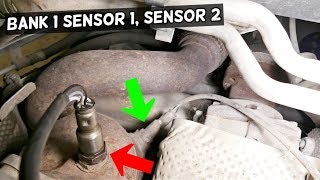
- If software is not the cause, the most likely culprit is a failed Bank 1, Sensor 1 (upstream, passenger side) O2 sensor.
- Thoroughly inspect the sensor's wiring harness for heat damage or oil contamination before replacing the sensor.
What's Unique About the 2021-2022 Jeep GLADIATOR
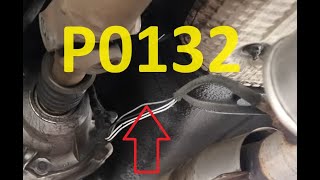
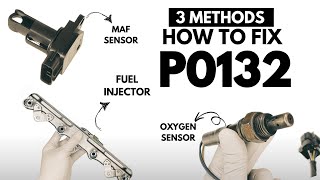
For the 2021-2022 Jeep Gladiator (JT) and its platform mate, the Wrangler (JL), this code is frequently linked to PCM software calibration issues. Jeep has issued multiple Technical Service Bulletins (TSBs), such as #18-071-22 REV. C, indicating that a PCM software update is required to fix an entire suite of O2 sensor circuit high codes, including P0132. This is a 🎬 Watch: Understanding P0132 causes and common fixes crucial distinction, as simply replacing the sensor might not resolve the issue if the underlying cause is the PCM's programming logic being too sensitive.
Diagnostic Flowchart
Tap your situation to follow the diagnostic path that matches what you're seeing on this vehicle.
Symptoms You May Notice
- Check Engine Light (MIL) is on.
- Reduced fuel economy.
- Rough or unstable idle.
- Engine hesitation, stumbling, or loss of power during acceleration.
- Black soot from the exhaust in some cases.
- Engine may run rough, especially at idle or on cold starts.
- Replacing the O2 sensor without first checking for required PCM software updates. Given the numerous TSBs from Jeep, the software should be checked first to avoid unnecessary parts replacement and a recurring check engine light.
- Using cheap, poor-quality aftermarket O2 sensors. Many professional technicians and experienced Jeep owners on forums recommend using the OEM Mopar sensor or a high-quality equivalent from the original supplier, like NTK, to avoid compatibility issues.
Most Likely Causes
- Outdated Powertrain Control Module (PCM) Software 🔴 High Probability → Shop Engine Control Module (ECM) Jeep has released multiple TSBs (e.g., #18-071-22 REV. C, #18-006-26 REV.A) for the 2021-2022 Gladiator that specifically address P0132 and other O2 sensor codes with a PCM software flash. This indicates a known issue from the factory with the software's sensitivity and logic.
How to confirm: A Jeep dealership or a qualified shop with a wiTECH scan tool can check your vehicle's VIN and current software version against the latest available updates cited in the TSBs.
Typical fix: Reprogramming the PCM to the latest software version. This is a non-negotiable first step before any parts are replaced.
Est. part cost: $0 (if under warranty) - $150 (dealer diagnostic/flash fee) - Faulty Bank 1, Sensor 1 Oxygen Sensor 🔴 High Probability → Shop Oxygen Sensor O2 sensors are consumable parts that operate in a harsh exhaust environment. Internal failure can cause the sensor to short to voltage, resulting in a constant high signal. This is the most common hardware failure after software has been ruled out.
How to confirm: Use a scan tool to monitor the live voltage data from the Bank 1 Sensor 1 O2 sensor. A healthy sensor fluctuates rapidly between ~0.1V and ~0.9V. A sensor that is stuck consistently above 0.9V, or even showing 4.99V, is a strong indicator of a faulty sensor or a short to voltage.
Typical fix: Replace the Bank 1, Sensor 1 (upstream, passenger side) oxygen sensor.
Est. part cost: $50-$120 - Wiring Harness or Connector Issue 🟡 Medium Probability The O2 sensor harness is routed near hot exhaust components and can be susceptible to melting or chafing. On similar Jeep platforms, users have reported wiring chafing where it crosses the intake manifold or rubs against the valve cover, causing a short that triggers P0132. Oil leaks from the valve cover can also contaminate the connector and disrupt the signal.
How to confirm: Visually inspect the wiring harness from the sensor all the way back to the main engine harness. Unclip it and look for melted plastic, frayed wires, or corroded pins in the connector. Pay close attention to any areas where the harness makes a sharp turn or is close to a heat source.
Typical fix: Repair the damaged section of the harness with heat-shrink butt connectors or replace the pigtail connector.
Est. part cost: $10-$50 - Rich Running Condition ⚪ Low Probability While less common, issues like a leaking fuel injector or a faulty fuel pressure regulator can cause the engine to run genuinely rich. The O2 sensor will accurately report this as high voltage. This is a valid reading, not a sensor fault.
How to confirm: Check fuel trims with a scan tool. High negative short-term and long-term fuel trims indicate the PCM is actively trying to remove fuel to correct a rich condition. Check for other codes related to the fuel system (e.g., P0172 Rich Condition Bank 1).
Typical fix: Diagnose and repair the underlying fuel system issue (e.g., replace the leaking injector).
Est. part cost: $100-$400+
Rare But Worth Checking
- Faulty Powertrain Control Module (PCM): → Shop Engine Control Module (ECM) A hardware failure in the PCM itself is very rare but possible. This should only be considered after all other possibilities, including software updates, sensor replacement, and thorough wiring checks, have been exhausted.
- Exhaust Leak: An exhaust leak upstream of the O2 sensor can, in some cases, draw in outside air and cause the sensor to give false readings, though this more commonly causes lean codes (P0131). It's worth inspecting the exhaust manifold for cracks or gasket leaks.
Diagnosis Steps
- Scan for all stored trouble codes. Note if P0132 appears with any other O2 sensor or fuel system codes, as this provides important diagnostic clues (e.g., P0152 appearing with P0132 points to a systemic issue).
- CRITICAL: Check for applicable TSBs. Contact a Jeep dealer with your VIN or use an online TSB database to see if your vehicle is covered by TSBs #18-071-22 REV. C, #18-006-26 REV.A, or others that require a PCM software update. This should be your first action.
- If software is current, use a scan tool to observe live data for the Bank 1 Sensor 1 O2 sensor. Confirm if the voltage is stuck high (e.g., >0.9V) while the engine is running in closed loop. A reading stuck at 2.5V or 4.99V indicates a definite sensor or wiring short.
- Visually inspect the O2 sensor's wiring harness and connector. Trace the harness from the sensor (passenger side exhaust manifold) up toward the main engine harness. Look for any signs of melting, chafing against the engine block or valve cover, corrosion, or oil contamination.
- Check for exhaust leaks between the cylinder head and the O2 sensor. A leak can sometimes cause erratic sensor readings.
- If the wiring is intact, the software is current, and the sensor voltage is stuck high, the sensor itself is the most likely culprit and should be replaced with a quality OEM or NTK part.
- If you suspect a true rich condition (e.g., fuel smell, black smoke, other rich codes), check fuel trims, fuel pressure, and for leaking injectors before replacing the O2 sensor.
Parts You'll Likely Need
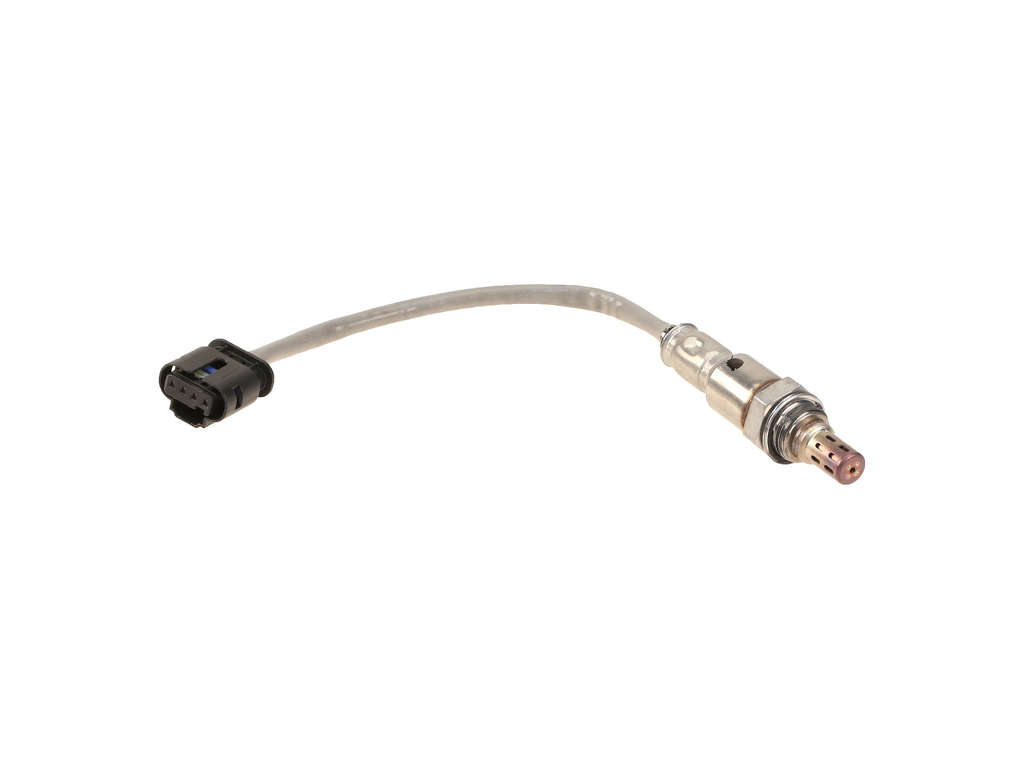
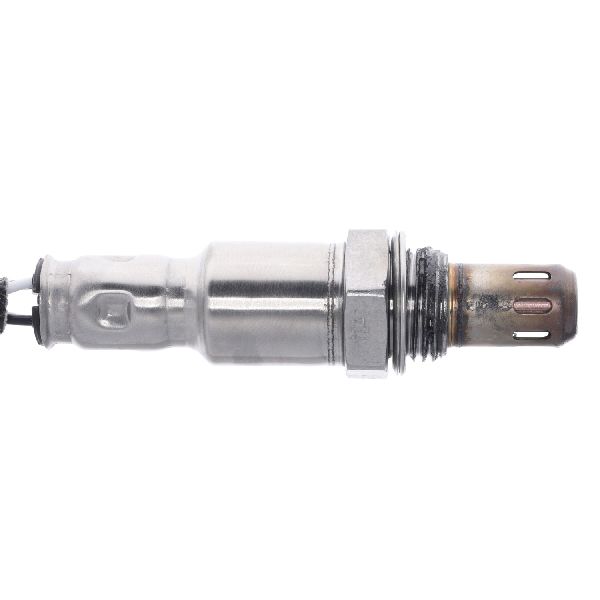
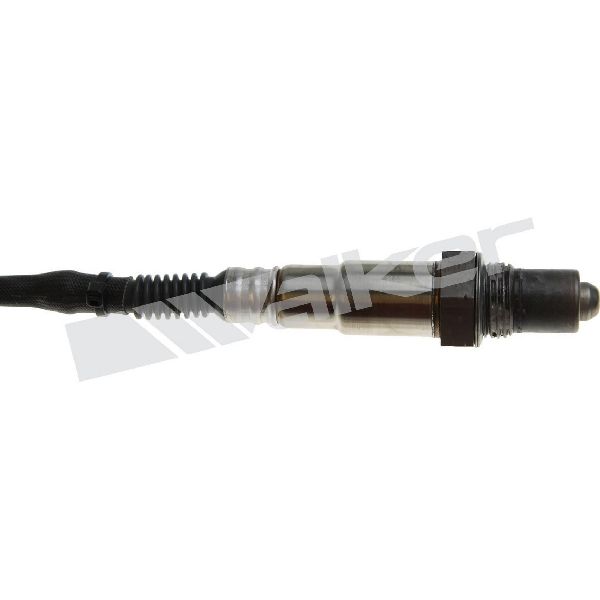
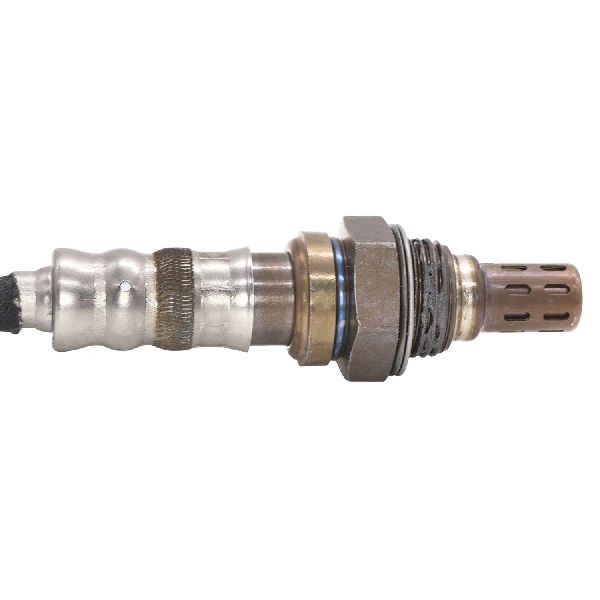
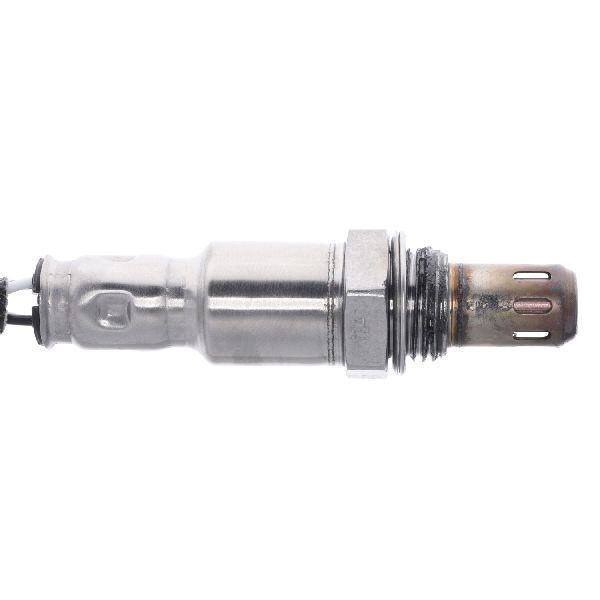
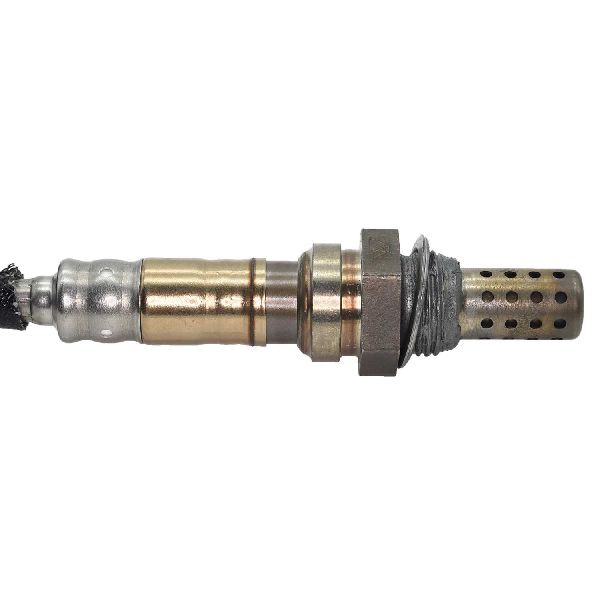
- Oxygen Sensor (Bank 1, Sensor 1, Upstream)
(OEM #68291423AB)— This is the upstream sensor on the passenger side. It is the primary hardware component that fails and causes this specific code when software is not the issue.
Trusted brands: Mopar (OEM), NTK (Often the OEM supplier), Bosch, Walker
OEM price range: $90-$120
Aftermarket price range: $50-$80
Related Codes That Often Appear With This One
- P0152 — This is the identical 'Circuit High' fault but for Bank 2, Sensor 1 (driver's side). Seeing both P0132 and P0152 simultaneously strongly suggests a systemic issue like a PCM software problem, a fuel pressure issue affecting both banks, or a vacuum leak, rather than two sensors failing at once.
- P0032, P0038, P0052, P0058 — These are O2 sensor 'Heater Circuit High' codes. The official Jeep TSBs list these codes alongside P0132, indicating the PCM software update is designed to address a wide range of O2 sensor circuit faults, not just the signal circuit.
- P0138, P0158 — These are 'Circuit High' codes for the downstream O2 sensors (Sensor 2). Their presence with P0132 also points towards a likely PCM software issue as noted in the TSBs.
- P0300 — A general 'Multiple Cylinder Misfire' code. A very rich condition reported by P0132 can lead to poor combustion and misfires. A new Gladiator owner reported getting P0132 and P0300 together at less than 100 miles.
- P1128 — This code means 'Closed Loop Fueling Not Achieved'. It often appears with O2 sensor codes like P0132 because if the sensor is providing a faulty, stuck-high reading, the PCM cannot rely on it to properly adjust fuel mixture and enter closed-loop operation.
Technical Service Bulletins (TSBs) & Recalls
- Bulletin #18-071-22 REV. C (Dec 1, 2022): For 2022 models, lists P0132 in a large group of O2 sensor and other codes to be fixed with a PCM software update.
- Bulletin #18-006-26 REV.A: Also lists P0132 as being resolved by a PCM software update for 2021 models.
- Bulletin #18-042-22 REV. D: Another TSB that includes P0132 in a list of codes fixed by a PCM update.
- Note: These TSBs often apply to vehicles built before a certain date (e.g., TSB 18-071-22 applies to vehicles built on or before March 25, 2022).
Platform-Specific Known Issues
- Multiple Technical Service Bulletins (TSBs) have been issued by Jeep for 2021-2022 Gladiators that involve reprogramming the Powertrain Control Module (PCM) to resolve this and other related O2 sensor fault codes. This indicates a known software sensitivity issue from the factory.
- The issue is common enough that Jeep has issued customer satisfaction notifications for related models like the Wrangler, offering to reprogram the PCM and replace sensors free of charge.
Mechanic-Grade Diagnostic Values
- O2 Sensor Heater Element Resistance — expected: Between 2.0 and 30.0 Ohms at room temperature. A common range for Pentastar engines is 4-10 Ohms.. Failure: A reading of infinity (open circuit) or near-zero (short circuit) indicates a failed heater element within the sensor.
- O2 Sensor Signal Wire Voltage (Key On, Engine Off) — expected: Approximately 450 mV (0.45V). This is the bias voltage supplied by the PCM.. Failure: A reading of 0V could indicate an open circuit, while a reading near 5V suggests a short to voltage.
- O2 Sensor Signal Circuit Resistance (Harness Test) — expected: Less than 5.0 Ohms when measuring between the sensor connector pin and the corresponding PCM connector pin.. Failure: Resistance over 5.0 Ohms indicates excessive resistance or an open in the wiring harness that needs repair.
- Manual Sensor Condemnation Test (Jumper Wire) — expected: With the sensor disconnected and a jumper wire between the signal and ground pins on the harness connector, the scan tool should read between 2.3V and 2.7V.. Failure: If the voltage falls within the 2.3V-2.7V range during this test, the vehicle's wiring and PCM are confirmed to be good, proving the O2 sensor itself is faulty.
Scan Tool Commands That Help
- wiTECH or equivalent professional scanner: O2 Sensor Live Data Graphing — Used to visually confirm if the B1S1 sensor voltage is stuck high and not fluctuating as it should during closed-loop operation. A flat line above 0.9V is a clear indicator of a problem.
- wiTECH: Check for PCM Updates / Flash PCM — This is the first diagnostic step for a P0132 on a 2021-2022 Gladiator due to multiple TSBs. The tool checks the current software calibration ID against the latest available from Jeep and performs the update if needed.
Wiring & Ground Locations
- Engine Bay Grounds — There are several key grounding points in the engine bay next to the battery and on the frame behind the front passenger wheel.. A poor ground connection for the PCM or engine harness can introduce voltage offsets and cause incorrect sensor readings, potentially triggering a high voltage code like P0132.
- Passenger Kick Panel Grounds — Inside the cabin, in the passenger-side kick panel area, there are three ground points, one of which is often unused and available.. These grounds serve various body and control modules. While less likely to cause a specific engine sensor code, verifying all grounds are clean and tight is good practice when diagnosing electrical faults.
- O2 Sensor 1/1 Connector Pins (Harness Side) — At the connector for the Bank 1 Sensor 1 O2 sensor.. For manual testing: Pin 3 is the O2 Return / Sensor Ground, and Pin 4 is the O2 Signal. These are used for resistance checks and voltage tests back to the PCM.
- PCM Connector C2 Pins (for O2 Sensor 1/1) — This is one of the main connectors at the Powertrain Control Module (PCM).. For checking harness continuity: Pin 19 corresponds to the O2 Return circuit (Pin 3 at sensor), and Pin 44 corresponds to the O2 Signal circuit (Pin 4 at sensor). Testing resistance between these points and the sensor connector can isolate a wiring fault.
Real Owner Repair Stories
- jlwranglerforums.com user (2021 Jeep Wrangler JLUR Diesel (similar platform/wiring architecture)) — 19 different codes stored, multiple communication errors displayed on the dash.
❌ Tried (didn't work) Initial diagnosis was difficult due to the sheer number of codes.
✅ What actually fixed it A technician found the transmission control module (TCM) wiring harness, which routes over the transmission, had melted through on the exhaust pipe, causing a major short. The repair involved fixing the melted wires. - JeepGladiatorForum.com user (Jeep Gladiator with Pulsar programmer and Borla exhaust) — Check Engine Light came on while idling in a drive-thru. Scan revealed P0132 and P0152 (Bank 2 Sensor 1 Circuit High) stored as 'permanent' codes.
❌ Tried (didn't work) Clearing the codes with a scan tool turned off the light, but the codes remained in the 'permanent' memory.
✅ What actually fixed it The user suspected the issue was triggered by a long period of high-RPM driving followed by a long idle. While no final fix was posted, the simultaneous appearance of both upstream sensor high voltage codes strongly points to a systemic cause (like a PCM software issue or a problem with the aftermarket programmer) rather than two failed sensors.
OEM Part Supersession History
68291423AA→68291423AB— Standard part revision by the manufacturer. Often indicates minor improvements in materials or construction.
Model Year Variations Within This Range
- 2021 vs 2022: The primary differences between the 2021 and 2022 Gladiator models were not in the 3.6L Pentastar powertrain itself, but in available options and standard features. A 3.0L EcoDiesel was available, but the P0132 code relates to the 3.6L gas engine which remained consistent. The standard infotainment system was upgraded for 2022 from a 5-inch to a 7-inch screen. These changes do not directly affect the diagnosis of P0132.
Helpful Videos

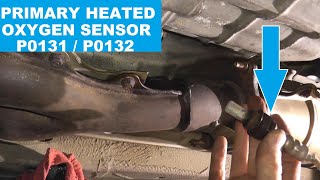
We Have This Part in Stock

The information in this article is provided for general reference and educational purposes only. Vehicle specifications, procedures, and part compatibility can vary by production date, trim level, and region. Always consult your vehicle's factory service manual and verify part numbers before purchasing or performing repairs. Safety-critical components such as airbags, seat belts, and braking systems should be installed by a qualified professional.
- Jeep GLADIATOR:
- 🧭 Diagnostic Flowchart
- 🎬 Helpful Videos
- 🛍️ Shop This Part
- What's Unique About the 2021-2022 Jeep GLADIATOR
- Symptoms You May Notice
- Most Likely Causes
- Rare But Worth Checking
- Diagnosis Steps
- Parts You'll Likely Need
- Related Codes That Often Appear With This One
- Technical Service Bulletins (TSBs) & Recalls
- Platform-Specific Known Issues
- Mechanic-Grade Diagnostic Values
- Scan Tool Commands That Help
- Wiring & Ground Locations
- Real Owner Repair Stories
- OEM Part Supersession History
- Model Year Variations Within This Range
- 🎟️ Get 5% Off