

P0132 on 2014-2018 Kia Forte: O2 Sensor High Voltage Causes and Fixes
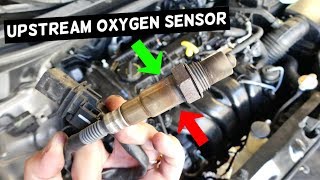
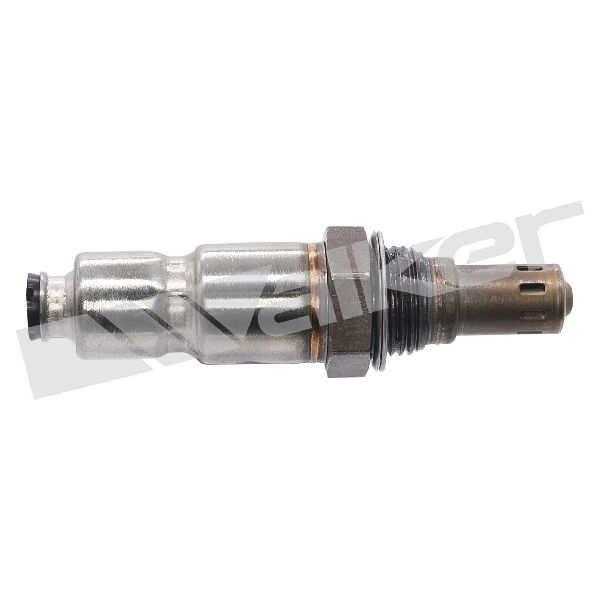
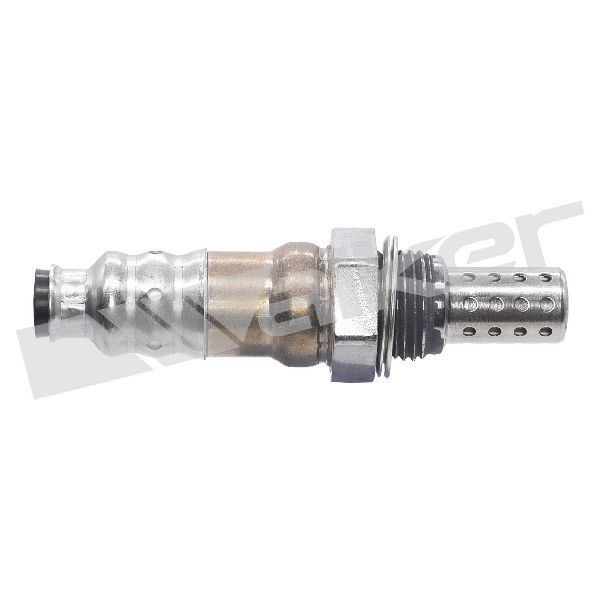
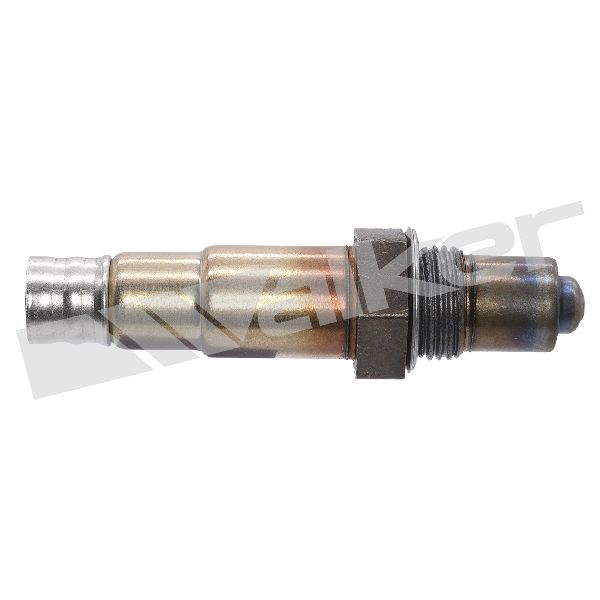
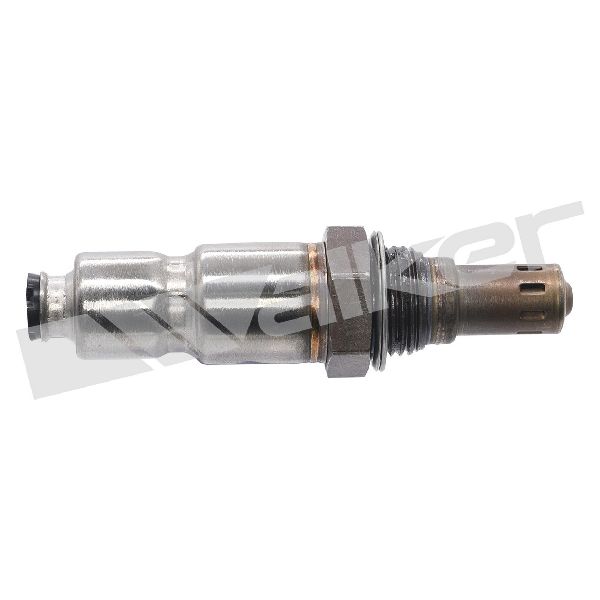
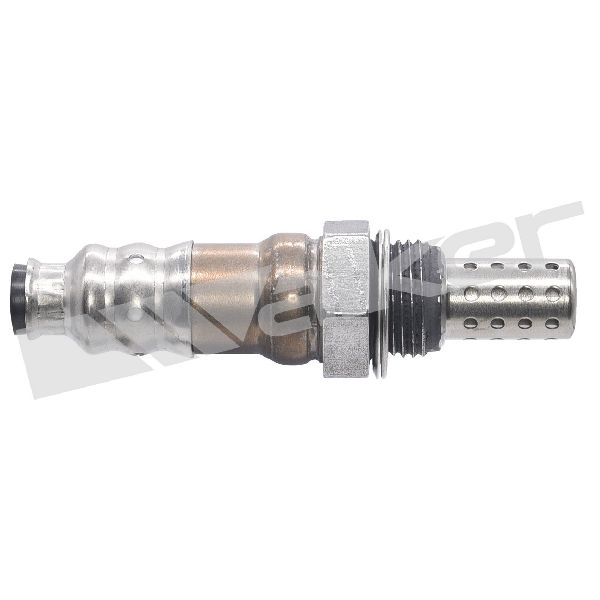
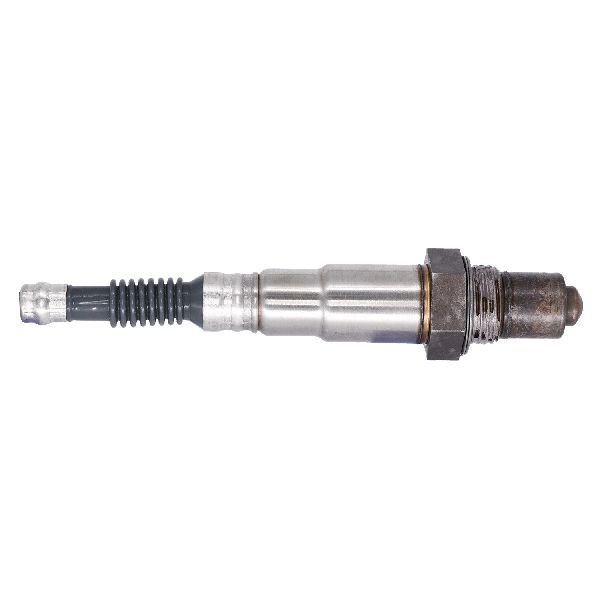
For a 2014-2018 Kia Forte, code P0132 almost always means the upstream oxygen sensor (Bank 1, Sensor 1) has failed. It's a common wear item. Before replacing, check wiring for damage. Use a quality aftermarket sensor from Denso (234-5088) or NTK (24438) for reliability, costing $40-$100. An OEM part (39210-2E200 for 2014-2016, 39210-2E101 for 2017-2018) costs $150-$220. It's a straightforward DIY repair for most owners with a 22mm O2 sensor socket.
- P0132 on your Forte points to a high voltage signal from the upstream O2 sensor (Bank 1, Sensor 1).
- The most probable cause is a failed O2 sensor, which is a common wear item. Use a quality Denso or NTK replacement for best results.
- Symptoms include a Check Engine Light, poor gas mileage, and a rough idle.
- Before replacing the sensor, always perform a quick visual inspection of the wiring and connector for melting or corrosion.
- This issue is not related to the more serious, well-known engine failure problems with the 2.0L Nu engine.
What's Unique About the 2014-2018 Kia Forte
On the 2.0L Nu GDI engine in the second generation (YD) Forte, the P0132 code is a very common and straightforward issue. While this engine platform is notorious for serious internal problems like connecting rod bearing failure and oil consumption which led to class-action lawsuits, the P0132 code is almost always unrelated to these major faults. It is typically a simple component failure of the O2 sensor itself due to age and heat. Unlike some platforms with complex electrical gremlins, the Forte's system is generally reliable in this regard, and diagnosis leads directly to the sensor. Access is also relatively easy from the top of the engine bay.
Generation note: The 2014-2018 year range primarily covers the second generation (YD) of the Kia Forte. This guide is specific to this generation and its 2.0L Nu GDI engine. The diagnostic process and parts are consistent across these years. Note that Kia issued Service Campaign SC180 to update the ECM logic for catalyst heating on 2014-2016 models, so ensuring your vehicle's software is updated is a good practice.
Symptoms You May Notice
- Check Engine Light is on
- Decreased fuel economy
- Rough or unstable idle
- Engine hesitation or stumbling during acceleration
- Strong smell of gasoline or a 'rotten egg' sulfur smell from the exhaust due to a rich fuel mixture.
- Replacing the downstream (Sensor 2) oxygen sensor instead of the upstream (Sensor 1) sensor.
- Replacing the catalytic converter when the issue is just the sensor reporting incorrectly.
- Replacing fuel injectors or other fuel system components without first verifying the O2 sensor's operation with a scan tool.
Most Likely Causes
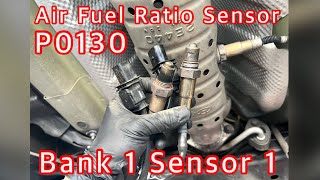
- Failed Upstream Oxygen Sensor (Bank 1, Sensor 1) 🔴 High Probability → Shop Oxygen Sensor Oxygen sensors are wear-and-tear items. Constant exposure to high-temperature exhaust gases causes them to degrade and fail over time, typically becoming sluggish or shorting internally. This is the most common cause by a wide margin.
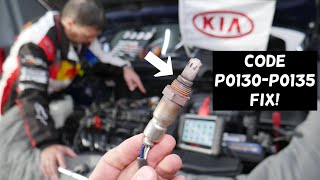
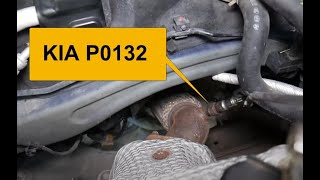
How to confirm: Use an OBD-II scanner with live data. A healthy upstream O2 sensor's voltage should fluctuate rapidly between approximately 0.1V and 0.9V. If the voltage is stuck high (e.g., >0.8V) and does not fluctuate, the sensor has likely failed. 🎬 Watch: How to fix a P0132 high voltage circuit code.
Typical fix: Replace the Bank 1, Sensor 1 oxygen sensor. A special 22mm (or 7/8") slotted O2 sensor socket is highly recommended for removal and installation. Using a penetrating oil on the threads beforehand can prevent damage.
Est. part cost: $40-$100 - Damaged Wiring or Connector 🟡 Medium Probability The O2 sensor wiring is in a hot engine bay. The harness can melt from contact with the exhaust manifold, or the plastic loom can become brittle and crack, exposing wires. The connector pins can also corrode, causing a short to voltage.
How to confirm: Visually inspect the entire wiring harness from the O2 sensor to the main engine harness. Look for melted plastic, chafed wires, or any signs of damage. Unplug the connector and check for corrosion, moisture, or bent pins.
Typical fix: Repair the damaged section of the wiring harness or replace the connector pigtail. Ensure the repaired harness is secured away from hot exhaust components.
Est. part cost: $10-$30
Rare But Worth Checking
- Engine Running Rich: While a faulty sensor is the most common cause of P0132, the sensor could be accurately reporting a high voltage because the engine is genuinely running rich. This is less common but important to consider if a new sensor doesn't fix the code. This condition is often accompanied by other codes like P0172 (System Too Rich). Potential causes include leaking fuel injectors or a faulty fuel pressure regulator.
- Exhaust Leak: An exhaust leak before the O2 sensor can sometimes disrupt sensor readings by allowing outside air into the exhaust stream, though it more commonly causes lean codes. It's worth a quick check, especially if you hear any exhaust noise.
- Faulty Powertrain Control Module (PCM): → Shop Engine Control Module (ECM) A PCM failure is extremely rare but possible. The internal circuits that read the O2 sensor voltage can fail. This should only be considered after all other possibilities have been exhaustively ruled out.
Diagnosis Steps
- Read the codes with an OBD-II scanner and confirm P0132 is present. Note any other codes, especially P0172.
- Use the scanner's live data function to monitor the 'O2S11' (Oxygen Sensor Bank 1 Sensor 1) voltage. With the engine warm and at a steady idle, the voltage should rapidly switch between ~0.1V and ~0.9V.
- If the voltage is stuck high (e.g., 0.9V or higher) and does not switch, this strongly points towards a faulty sensor or a wiring short.
- Turn off the engine and let it cool. Perform a thorough visual inspection of the O2 sensor's wiring harness for any signs of melting, chafing, or damage. Ensure it is not touching the exhaust manifold.
- Inspect the connector for the O2 sensor. Check for corrosion, moisture, or bent/damaged pins.
- If the wiring and connector look good, the oxygen sensor itself is the most likely culprit and should be replaced.
- If you replace the sensor and the code returns, further investigation into a possible rich running condition (leaking fuel injectors, high fuel pressure) or a rare PCM fault may be necessary.
- Before finalizing repairs, check with a Kia dealer if your VIN is eligible for any open service campaigns, like the ECM logic update (SC180), as this can affect emissions system performance.
Parts You'll Likely Need
- Upstream Oxygen Sensor (Bank 1, Sensor 1)
(OEM #39210-2E200)— This is the primary component that fails and causes the P0132 code. It is a standard wear item. Forum members and mechanics strongly recommend using OEM-supplier brands like Denso or NTK for reliability.
Trusted brands: Denso (OEM supplier), NGK/NTK (OEM supplier), Bosch
OEM price range: $150-$220
Aftermarket price range: $40-$100
Related Codes That Often Appear With This One
- P0172 — Stands for 'System Too Rich (Bank 1)'. P0132 indicates a high voltage signal, which the PCM interprets as a rich condition. If the O2 sensor is stuck high for a long time, the PCM may set both codes as it tries to understand the conflicting data.
- P0130 — This is a more general 'O2 Sensor Circuit Malfunction (Bank 1, Sensor 1)' code. The same wiring issues or sensor failure that causes P0132 can also trigger P0130. 🎬 Watch: Troubleshooting common Kia O2 sensor circuit codes.
Technical Service Bulletins (TSBs) & Recalls
- TSB CHA074: Provides repair information for the common steering column flexible coupler 'clicking' noise, an unrelated but very common issue on this vehicle.
- Service Campaign SC180: An ECM software update for 2014-2016 Forte 2.0L GDI SULEV models to improve catalyst heating logic.
Platform-Specific Known Issues
- The 2.0L Nu GDI engine has a well-documented history of severe internal issues, leading to recalls and a major class-action lawsuit that extended engine warranties. These problems include connecting rod bearing failure, engine seizure, and excessive oil consumption. However, the P0132 code is almost always a separate, unrelated issue caused by a simple sensor failure and should not be mistaken as a symptom of the larger engine problems.
- Kia Service Campaign SC180 was issued for 2014-2016 Forte models to update the ECM software for 'catalyst heating logic improvement'. While not directly for P0132, having the latest engine software is important for correct emissions system operation.
Mechanic-Grade Diagnostic Values
- Upstream O2 Sensor (B1S1) Signal Voltage — expected: Rapidly fluctuating between ~0.1V and ~0.9V with engine warm at steady RPM.. Failure: Voltage is stuck consistently high, above 0.8V-0.9V.
- Upstream O2 Sensor Heater Circuit Resistance — expected: Approximately 2.5 - 4.0 Ω at 68°F (20°C). Some sources state a wider range of 4-12 Ω is acceptable.. Failure: Reading of OL (Open Loop/infinite resistance) or near zero ohms indicates a failed heater element inside the sensor.
- O2 Sensor Heater Circuit Power — expected: Battery voltage (~12V) at the power pin on the harness-side connector with Key On, Engine Off.. Failure: 0V indicates a blown fuse (check 'SENSOR 1' fuse in engine bay fuse box) or a break in the power wire.
Scan Tool Commands That Help
- Kia GDS / Advanced Scan Tool: Resetting Adaptive Values — After replacing an O2 sensor or addressing a fuel system issue, this function resets the long-term fuel trims and other learned values, forcing the ECM to relearn with the new components.
- Kia GDS / Advanced Scan Tool: Heated Oxygen Sensor Heater Resistance Learned Values Reset — This specialized function, if available, can be used after sensor replacement to clear stored resistance values from the ECM's memory, which may be necessary if the code persists with a new sensor.
Wiring & Ground Locations
- Engine Ground Wiring Assembly — Main ground strap connecting the engine/transmission assembly to the vehicle chassis.. A corroded or loose main engine ground (OEM P/N 91860-A7130) can create a voltage offset and interfere with the PCM's ability to get an accurate reading from the O2 sensor, potentially causing false high voltage codes.
- O2 Heater Fuse ('SENSOR 1') — Located in the main fuse and relay box in the engine compartment.. This fuse (typically 15A) supplies 12V power to the O2 sensor's internal heater. While a blown fuse typically sets a heater circuit code (P0135), related electrical faults could contribute to voltage issues.
- ECM Ground Pins (E400-AA) — Pins 3, 19, and 22 on connector E400-AA at the Engine Control Module.. These are the direct ground references for the ECM. A poor connection at these specific pins due to corrosion or wire damage can cause the ECM to misinterpret sensor data, including the O2 sensor voltage. This is an advanced check requiring a pinout diagram.
OEM Part Supersession History
39210-2E200→N/A— This part number applies to pre-facelift models.
Heads up: This part is for 2014-2016 Kia Forte 2.0L models. It is not compatible with 2017-2018 models, which use a different part number.39210-2E101→N/A— This part number was introduced for the 2017 model year facelift.
Heads up: This part is for 2017-2018 Kia Forte 2.0L models.
Model Year Variations Within This Range
- 2014-2016: These pre-facelift models use upstream oxygen sensor OEM part number 39210-2E200.
- 2017-2018: Following the 2017 model year facelift, these models use a different upstream oxygen sensor, OEM part number 39210-2E101.
Diagnostic Flowchart
Other Known Issues on This Vehicle
Issues unrelated to this code that are worth knowing about as an owner of this generation:
- Catastrophic Engine Failure (Connecting Rod Bearing) 🔴 High — Widespread enough to trigger multiple class-action lawsuits. Can occur at any mileage, but often reported between 60k-120k miles. (Ref: Not a direct recall, but a class-action settlement (KiaEngineClassSettlement.com) led to warranty extension to 15yr/150k miles and installation of a Knock Sensor Detection System (KSDS) via software update.)
- Steering Column Flexible Coupler Failure 🟠 Medium — Extremely common. Owners typically notice a distinct 'clicking' or 'knocking' sound from the steering column when turning at low speeds, usually starting around 50k-80k miles. (Ref: TSB CHA074 provides repair procedures for replacing the worn rubber coupler with an improved part.)
- Timing Chain Slack / Noise 🟠 Medium — A metal-on-metal rattle at cold startup or under acceleration can indicate a stretched timing chain or failing tensioner, often appearing on higher-mileage (100k+) vehicles. (Ref: No specific recall, but it is a known issue with the Nu engine family. If ignored, it can lead to jumped timing and severe engine damage.)
- Excessive Oil Consumption 🟠 Medium — Many Nu engines consume oil between changes. This is often an early symptom related to the piston ring/cylinder wall issues that can lead to more severe engine problems.
Used vs. New Parts: Buying Guide for This Vehicle
When a used part is the smart pick: For this repair, a used part is NEVER recommended. Oxygen sensors are wear-and-tear items with a finite lifespan determined by heat cycles and mileage. A used sensor from a salvage yard has unknown remaining life and is very likely to fail soon, causing the code to return.
What to inspect on the donor part:
- Not applicable, as used sensors should be avoided.
OEM-only on this vehicle (don't cheap out):
- Oxygen Sensor
Aftermarket brands forum-validated for this vehicle:
- Denso (OEM supplier)
- NTK / NGK (OEM supplier)
- Bosch
Brands owners have reported issues with on this vehicle:
- Generic, unbranded, or 'white-box' sensors sold on marketplace websites. While cheaper, they have a high failure rate and often do not perform to OEM specifications, leading to persistent codes.
Real Owner Stories
Aggregated from forums and TSBs cited above. Mileages and costs reflect what owners reported in those sources.
2014-2016 Kia Forte 2.0L GDI SULEV
Symptoms: The vehicle required an update to the engine control logic to improve catalyst heating performance.
What fixed it: ECM software update via Service Campaign SC180.
Source hint: Service Campaign SC180
Kia Sportage (Platform Mate) 2.0L
Symptoms: Experienced a P0132 code during extreme cold weather conditions.
What fixed it: Checking and repairing brittle or cracked wiring insulation before sensor replacement.
Source hint: kia-club.ru - Error P0132
Related OBD-II Codes
Frequently Asked Questions
Does Service Campaign SC180 apply to my 2014-2016 Kia Forte 2.0L?
Is the P0132 code a sign that my 2.0L Nu GDI engine is about to fail?
Which brand of oxygen sensor should I use for my Kia Forte to avoid compatibility issues?
What tool do I need to replace the Bank 1 Sensor 1 oxygen sensor on this vehicle?
Could the clicking noise in my steering column be related to the P0132 code?
Can extreme cold weather cause a P0132 code on my Kia?
Helpful Videos
We Have This Part in Stock

The information in this article is provided for general reference and educational purposes only. Vehicle specifications, procedures, and part compatibility can vary by production date, trim level, and region. Always consult your vehicle's factory service manual and verify part numbers before purchasing or performing repairs. Safety-critical components such as airbags, seat belts, and braking systems should be installed by a qualified professional.
- Kia Forte:
- 🧭 Diagnostic Flowchart
- 🎬 Helpful Videos
- 🛍️ Shop This Part
- What's Unique About the 2014-2018 Kia Forte
- Symptoms You May Notice
- Most Likely Causes
- Rare But Worth Checking
- Diagnosis Steps
- Parts You'll Likely Need
- Related Codes That Often Appear With This One
- Technical Service Bulletins (TSBs) & Recalls
- Platform-Specific Known Issues
- Mechanic-Grade Diagnostic Values
- Scan Tool Commands That Help
- Wiring & Ground Locations
- OEM Part Supersession History
- Model Year Variations Within This Range
- Other Known Issues on This Vehicle
- Used vs. New Parts: Buying Guide for This Vehicle
- Real Owner Stories
- 2014-2016 Kia Forte 2.0L GDI SULEV
- Kia Sportage (Platform Mate) 2.0L
- Related OBD-II Codes
- Frequently Asked Questions
- 🎟️ Get 5% Off