

P0132 on 2011-2015 Kia Optima 2.4L: Causes and Fixes for O2 Sensor High Voltage
On a 2011-2015 Optima 2.4L, code P0132 almost always means the upstream oxygen sensor (Bank 1, Sensor 1) has failed. Before replacing it, check its wiring harness for melting against the exhaust. An aftermarket sensor costs about $50-$120, and it's a DIY-friendly fix with an O2 sensor socket. The OEM part number is 39210-2G200.
- P0132 on your Optima almost certainly means the upstream O2 sensor (Bank 1, Sensor 1) has failed. The OEM part number is 39210-2G200.
- Before replacing the sensor, carefully inspect its wiring harness for any signs of melting where it passes near the hot exhaust manifold.
- Use a quality replacement sensor from a brand like Denso, NTK, or Mando, as cheap sensors are known to fail quickly or provide inaccurate readings.
- Ignoring this code will hurt your fuel economy and can cause costly damage to your catalytic converter over time.
What's Unique About the 2011-2015 Kia Optima
For this generation of Kia Optima, the P0132 code is straightforward and overwhelmingly points to a component failure rather than a complex system issue. The primary challenge is the physical location of the sensor's wiring, which is routed close to the hot exhaust manifold. This makes the harness susceptible to melting and shorting, which can mimic the symptoms of a failed sensor. While this vehicle's Theta II engine has been subject to major recalls for internal failures, those issues (like rod bearing failure) do not directly cause the P0132 code, which remains an emissions system fault. However, a related issue of high oil consumption can foul and prematurely destroy O2 sensors.
Symptoms You May Notice
- Check Engine Light is on
- Decreased fuel efficiency
- Rough or unstable idle
- Engine hesitation or stumbling during acceleration
- A sulfur or 'rotten egg' smell from the exhaust
- Black smoke from the exhaust if running extremely rich
- Replacing the downstream (Bank 1, Sensor 2) oxygen sensor. P0132 specifically refers to the upstream sensor before the catalytic converter.
- Replacing the catalytic converter. A bad converter typically sets a P0420 code. While a long-term P0132 fault can damage the converter, the converter itself is not the cause of P0132.
Most Likely Causes
- Failed Upstream Oxygen Sensor (Bank 1, Sensor 1) 🔴 High Probability → Shop Oxygen Sensor Oxygen sensors are wear-and-tear items that degrade over time from constant exposure to high-temperature exhaust gases. Their typical lifespan is 60,000-100,000 miles. The Theta II engine's known oil consumption issues can also foul the sensor, causing premature failure.
How to confirm: Use an OBD-II scanner to monitor live data for the B1S1 O2 sensor. If the voltage is stuck high (e.g., >0.8V) and does not fluctuate rapidly during engine operation, the sensor has likely failed. This test should be done after confirming the wiring is intact.
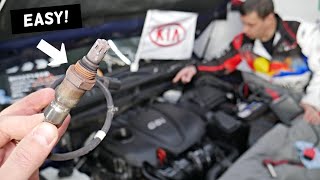
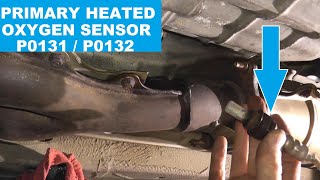
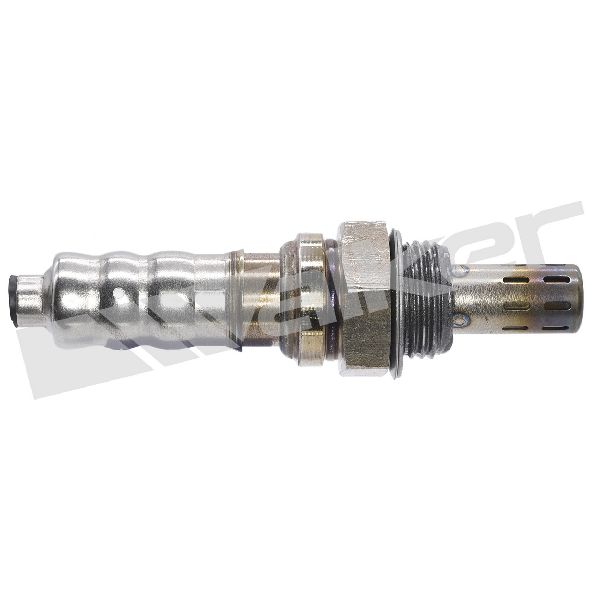
Typical fix: Replace the upstream oxygen sensor. A special slotted 22mm (or 7/8") oxygen sensor socket is required for removal and installation. Use a quality OEM-equivalent brand like Denso, NTK, or Mando for best results.
Est. part cost: $50-$120 - Damaged Wiring Harness or Connector 🟡 Medium Probability The sensor's wiring harness is routed close to the hot exhaust manifold. Over time, clips can break or the protective loom can degrade, allowing wires to touch the manifold, melt, and short circuit. This can cause a short to power, resulting in a constant high voltage signal.
How to confirm: Visually inspect the entire length of the oxygen sensor's wiring harness from the connector to the sensor itself. Look for any signs of melting, chafing, or bare wires, particularly where it passes near the exhaust. Check for corrosion inside the connector.
Typical fix: Repair the damaged section of the wiring harness. If the damage is severe or at the connector, a new pigtail connector may be needed. Secure the repaired harness away from the exhaust manifold using high-temp zip ties.
Est. part cost: $10-$30
Rare But Worth Checking
- Engine Running Rich: While a failed sensor is the most common cause of the code, an actual rich condition from a leaking fuel injector or faulty fuel pressure regulator can cause the O2 sensor to correctly report high voltage. This is more likely if P0132 is accompanied by other codes like P0172 (System Too Rich).
- Blown Fuse: The O2 sensor's heater circuit is protected by a fuse in the engine bay fuse box (often labeled 'SNSR' or 'SENSOR 1'). While a blown fuse typically sets a heater circuit code (P0135), an internal short in the sensor could potentially cause P0132 and is a quick, easy check.
- Exhaust Leak: An exhaust leak before the oxygen sensor can sometimes disrupt sensor readings by allowing outside air into the exhaust stream, confusing the sensor. This is usually accompanied by a ticking noise from the engine bay that increases with RPM.
- Faulty Powertrain Control Module (PCM): → Shop Engine Control Module (ECM) In very rare cases, the PCM itself can fail, causing it to misinterpret the O2 sensor signal. This should only be considered after all other possibilities have been exhaustively ruled out.
Diagnosis Steps
- Read the code with an OBD-II scanner and confirm P0132 is present. Note any other codes, such as P0172 or P2188.
- Visually inspect the Bank 1, Sensor 1 (upstream) oxygen sensor wiring harness. It is located on the exhaust manifold, accessible from the top of the engine bay near the firewall. Look carefully for any signs of melting, chafing, or corrosion on the wires and connector.
- If the wiring looks good, use the scanner to view live data for the 'O2S B1S1' voltage. At idle on a warm engine, a healthy sensor's voltage should fluctuate rapidly between approximately 0.1V and 0.9V. If the voltage is stuck high (e.g., 0.9V or higher) and does not fluctuate, it confirms the fault condition.
- Check the fuse for the O2 sensor heater circuit in the engine compartment fuse box. It may be labeled 'SNSR' or 'SENSOR 1'.
- If the wiring and fuse are good and the live data shows a stuck-high voltage, the upstream oxygen sensor has almost certainly failed and should be replaced.
- If you have other codes like P0172, further diagnosis of the fuel system (fuel injectors, fuel pressure) is needed before replacing the O2 sensor.
Parts You'll Likely Need
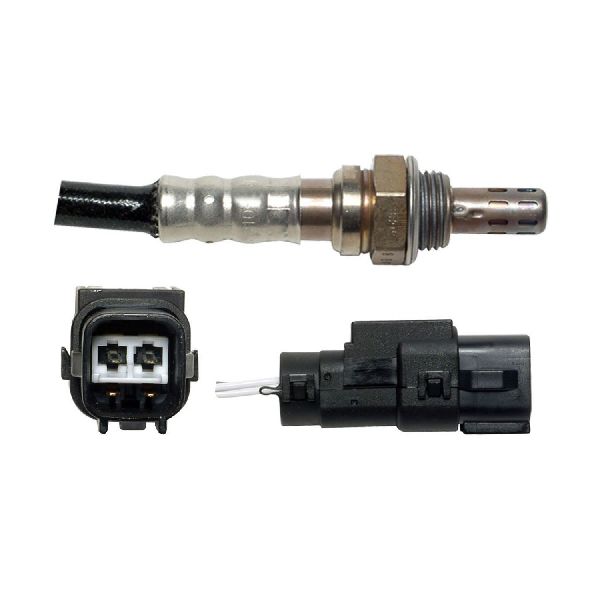
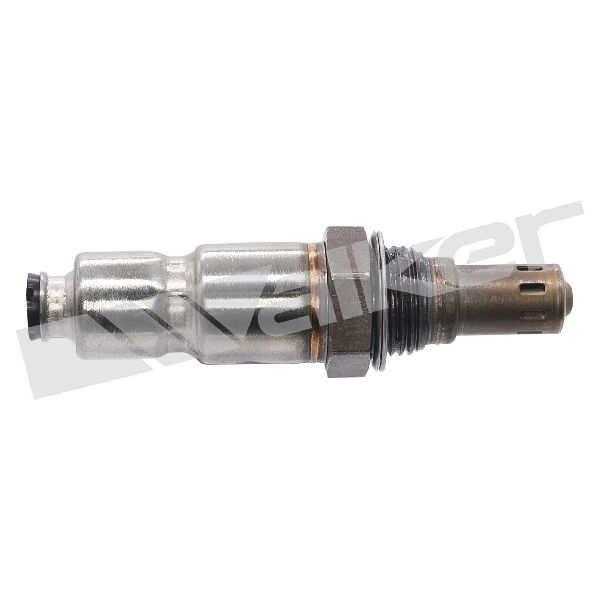
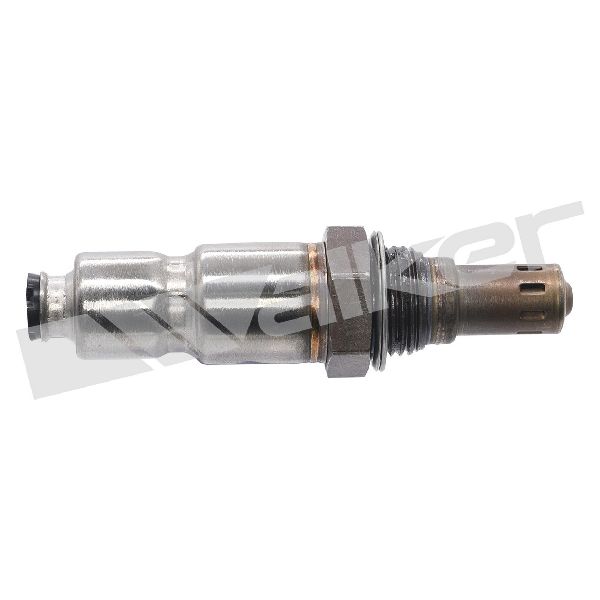
- Upstream Oxygen Sensor (Air/Fuel Ratio Sensor)
(OEM #39210-2G200)— This is the most common cause of P0132. The sensor element fails from age and heat, causing it to send an incorrect, steady high voltage signal. Oil contamination from known engine issues can also accelerate failure.
Trusted brands: Denso (e.g., 234-5029), Bosch, NGK/NTK (e.g., 25201), Mando (OEM Supplier, e.g., 18A1478)
OEM price range: $150-$250
Aftermarket price range: $50-$120
Related Codes That Often Appear With This One
- P0172 — This code for 'System Too Rich' can appear if the O2 sensor is correctly detecting an actual rich condition caused by a fuel system problem, rather than the sensor itself being faulty.
- P0130 — This is a more general O2 sensor circuit malfunction code. It can appear alongside P0132 if the PCM detects multiple or erratic faults from the same sensor.
- P2188 — This code for 'System Too Rich at Idle' often accompanies P0132 on Kia/Hyundai vehicles, pointing towards a condition where the PCM sees a high voltage (rich) signal specifically when the engine is idling.
Technical Service Bulletins (TSBs) & Recalls
- TSB CHA064 / Customer Satisfaction Program CS1604: Addresses a clicking noise from the steering column by replacing the flexible MDPS steering coupler. While not related to P0132, it's a very common issue for this vehicle.
Platform-Specific Known Issues
- The 2.4L GDI Theta II engine in this vehicle was subject to a major safety recall (NHTSA Campaign 17V224000, Kia recall SC147) for premature connecting rod bearing wear, which could lead to engine seizure. This is unrelated to the P0132 code but is critical for owners to be aware of. Contact a Kia dealer with your VIN to check the status of this recall.
- Kia also issued product improvement campaigns (e.g., PI1802, PI1803) to install a Knock Sensor Detection System (KSDS) to monitor for signs of this engine failure. An illuminated P1326 code after this update requires immediate attention.
- A separate recall (NHTSA 21V-218) was issued for a potential fuel leak at the high-pressure fuel pipe connection on engines that were replaced under the previous recall, increasing fire risk.
Mechanic-Grade Diagnostic Values
- O2 Sensor Heater Circuit Resistance — expected: 3.3 to 10 Ohms at room temperature, measured between the two heater pins on the sensor connector.. Failure: A reading of OL (infinite resistance) indicates a broken heater. A reading outside the specified range can also trigger heater circuit faults.
- Heater Circuit Power Supply — expected: Approximately 12V (battery voltage) at the power supply pin in the harness-side connector with Key On, Engine Off.. Failure: No voltage points to a blown 'SENSOR 1' fuse, a bad relay, or a break in the power wire.
- High Pressure Fuel System (GDI) — expected: 290 - 3,626 PSI.. Failure: Consistently high or low fuel pressure can indicate a failing high-pressure fuel pump or regulator, causing a true rich/lean condition that the O2 sensor will report.
- O2 Sensor Installation Torque — expected: 26 to 33 ft-lbs.. Failure: Overtightening can damage the sensor; undertightening can cause an exhaust leak, skewing readings.
Scan Tool Commands That Help
- Kia GDS (Global Diagnostic System): Actuation Test > O2 Sensor Heater (Bank 1, Sensor 1) — This bidirectional command manually activates the sensor's heater. A technician can monitor live data to see if the sensor responds and if the control circuit from the ECM is working. This helps differentiate a failed sensor heater from a wiring or ECM driver problem.
Wiring & Ground Locations
- B1S1 O2 Sensor Connector (E39) — On the back of the engine near the firewall, connecting the upstream O2 sensor to the main engine harness.. This is the primary test point for the sensor circuit. A short between the signal wire (Pin 1 or 2) and the heater power wire (Pin 4) within the harness can cause the P0132 high voltage fault.
- Fuse 'SENSOR 1' — In the main fuse and relay box in the engine compartment, typically a 15A fuse.. This fuse provides the 12V+ power to the O2 sensor's heater circuit. While a blown fuse usually sets a heater code (P0135), an internal sensor short causing P0132 could potentially blow this fuse. It's a critical first check.
- Ground Point G104 — Typically located on the cylinder head or engine block, near the intake manifold.. The ECM, which interprets the O2 sensor signal, relies on this clean engine ground. A loose or corroded G104 can create voltage offsets and electrical noise, potentially leading to incorrect sensor readings and fault codes like P0132.
Real Owner Repair Stories
- optimaforums.com thread summary (2012 Kia Optima 2.4L GDI) — Check Engine Light with code P0132.
❌ Tried (didn't work) Initial diagnosis pointed to a bad sensor.
✅ What actually fixed it Upon visual inspection, the owner found the O2 sensor wiring harness had sagged and melted against the exhaust manifold. Repairing the melted wires and securing the harness away from the heat source resolved the code.
"I Checked Everything" — The Actual Cause
- This code is not diagnosed with a smoke test. The equivalent scenario is when the O2 sensor and its wiring are tested and found to be good, yet the code persists. In these cases, the root cause is often a true 'rich' running condition that the O2 sensor is correctly reporting. A common culprit is a leaking fuel injector, which introduces excess fuel into a cylinder. The technician must then shift diagnosis from the O2 sensor circuit to the fuel system, checking fuel trims, injector balance rates, and fuel pressure.
OEM Part Supersession History
39210-2G200→N/A— This part number appears stable for the specified vehicle and position.
Heads up: Be aware that this part number may be listed for different positions (e.g., downstream) on other Kia/Hyundai models or years. Always verify the part by VIN and specified position (Bank 1, Sensor 1) before purchasing.
Model Year Variations Within This Range
- 2011-2015: No significant variations have been identified within this model year range for the 2.4L GDI engine that would affect the diagnosis or repair of a P0132 code. The engine, sensor location, and primary causes remain consistent across the 2013/2014 facelift.
Diagnostic Flowchart
Other Known Issues on This Vehicle
Issues unrelated to this code that are worth knowing about as an owner of this generation:
- Catastrophic Engine Failure (Rod Bearing Wear) 🔴 High — Widespread across 2011-2019 models with 2.0L & 2.4L Theta II engines. Can occur at any mileage, often under 100k miles. (Ref: NHTSA Recall 17V-224 (Kia SC147), Class-Action Lawsuit Settlement (Lifetime Warranty for short block if KSDS update is done))
- Excessive Oil Consumption 🔴 High — Very common, often begins around 60,000-80,000 miles. Frequently a precursor to rod bearing failure. Many owners report adding 1 quart per 1,000 miles. (Ref: Related to engine warranty extensions and recalls, but no specific recall for consumption alone.)
- Intake Valve Carbon Buildup 🟠 Medium — Inherent to the GDI design. Symptoms (rough idle, misfires) typically appear between 60,000 and 100,000 miles. Requires periodic manual cleaning (e.g., walnut blasting).
- Degraded MDPS Steering Coupler 🟡 Low — Extremely common. Causes a clicking or clunking noise in the steering wheel when turning at low speeds or when stopped. The rubber coupler disintegrates over time. (Ref: Kia TSB CHA064 / Customer Satisfaction Program CS1604 (Warranty Extension))
- Hydraulic Electronic Control Unit (HECU) Fire Risk 🔴 High — Affects a wide range of Kia/Hyundai models. A short circuit in the HECU can cause a fire, even when the vehicle is parked and off. (Ref: NHTSA Recall 21V-137 (Kia SC209))
Used vs. New Parts: Buying Guide for This Vehicle
When a used part is the smart pick: For the oxygen sensor itself, a used part is never recommended as it is a wear item with a finite lifespan. However, if the wiring connector (pigtail) is melted, sourcing a used pigtail from a junkyard is a cost-effective and viable repair strategy, as it provides an OEM-quality connector.
Donor-vehicle mileage cap: roughly under 100000 miles for the part to have meaningful remaining life.
What to inspect on the donor part:
- For a used wiring pigtail, inspect for flexible, non-brittle wire insulation.
- Ensure the connector body has no cracks or signs of melting.
- Check that the connector pins are clean, straight, and free of corrosion.
OEM-only on this vehicle (don't cheap out):
- While not strictly 'OEM-only', it is highly advised to avoid generic, unbranded 'white-box' oxygen sensors. Their failure rate is notoriously high, and they can have incorrect response characteristics that cause persistent issues.
Aftermarket brands forum-validated for this vehicle:
- Denso (e.g., 234-5029)
- NGK / NTK (e.g., 25201)
- Bosch
- Mando (often an OEM supplier)
Brands owners have reported issues with on this vehicle:
- Unbranded, generic parts from online marketplaces without a clear manufacturer or warranty.
Real Owner Stories
Aggregated from forums and TSBs cited above. Mileages and costs reflect what owners reported in those sources.
2011-2015 Kia Optima 2.4L GDI
Symptoms: Owner reported the code and successfully cleared it after a quick repair.
What fixed it: Replaced the upstream O2 sensor with a Denso part; the repair took 30 minutes with a 22mm (7/8") oxygen sensor socket.
Source hint: optimaforums.com
2012 Kia Optima 2.4L GDI
Symptoms: Exact symptoms of P0132 (Check Engine Light, potentially decreased fuel efficiency or rough idle).
What fixed it: Replacing the upstream sensor, which was accessed from the top of the engine bay near the firewall.
Source hint: reddit.com/r/kia
Related OBD-II Codes
Frequently Asked Questions
Is the P0132 code related to the major Kia engine recall SC147 for the 2.4L Theta II?
What brand of oxygen sensor should I use for my 2011-2015 Optima to fix P0132?
Could my Optima's oil consumption issues be causing the P0132 code?
Does TSB CHA064 address the P0132 code or engine performance?
Where is the Bank 1 Sensor 1 oxygen sensor located on the 2.4L Optima?
Could a fuel leak cause this code on my 2011-2015 Kia Optima?
Helpful Videos

We Have This Part in Stock



The information in this article is provided for general reference and educational purposes only. Vehicle specifications, procedures, and part compatibility can vary by production date, trim level, and region. Always consult your vehicle's factory service manual and verify part numbers before purchasing or performing repairs. Safety-critical components such as airbags, seat belts, and braking systems should be installed by a qualified professional.
- Kia Optima:
- 🧭 Diagnostic Flowchart
- 🎬 Helpful Videos
- 🛍️ Shop This Part
- What's Unique About the 2011-2015 Kia Optima
- Symptoms You May Notice
- Most Likely Causes
- Rare But Worth Checking
- Diagnosis Steps
- Parts You'll Likely Need
- Related Codes That Often Appear With This One
- Technical Service Bulletins (TSBs) & Recalls
- Platform-Specific Known Issues
- Mechanic-Grade Diagnostic Values
- Scan Tool Commands That Help
- Wiring & Ground Locations
- Real Owner Repair Stories
- "I Checked Everything" — The Actual Cause
- OEM Part Supersession History
- Model Year Variations Within This Range
- Other Known Issues on This Vehicle
- Used vs. New Parts: Buying Guide for This Vehicle
- Real Owner Stories
- 2011-2015 Kia Optima 2.4L GDI
- 2012 Kia Optima 2.4L GDI
- Related OBD-II Codes
- Frequently Asked Questions
- 🎟️ Get 5% Off