

P0132 on 2016-2020 Kia Sorento: O2 Sensor High Voltage Causes and Fixes
This code almost always points to a faulty upstream oxygen sensor (Bank 1, Sensor 1) on your Sorento. Expect to pay $50-$120 for an aftermarket sensor and $150-$250 for an OEM part. It's a common DIY repair with the right tool, though access on the V6 model is tighter.
- P0132 on a 2016-2020 Sorento means the upstream O2 sensor (Bank 1, Sensor 1) is sending a constant high voltage signal.
- The most likely cause is a failed O2 sensor, which is a standard maintenance item.
- Before replacing the sensor, always inspect the wiring and connector for heat damage or corrosion, as this can mimic a sensor failure.
- Driving with this code will hurt your gas mileage and can eventually damage your catalytic converter, a much more costly repair.
- This is a DIY-friendly repair for many home mechanics, provided you have the special O2 sensor socket.
What's Unique About the 2016-2020 Kia Sorento
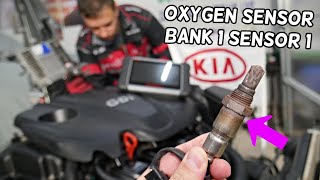
For the 2016-2020 Kia Sorento (third generation), this code is a straightforward diagnostic issue without major platform-specific complexities. The location of Bank 1 Sensor 1 is generally accessible. On the 2.4L and 2.0T 4-cylinder engines, there is only one bank, and the sensor is typically on the exhaust manifold at the rear of the engine bay, visible from the top. 🎬 See this video to help locate the Bank 1 Sensor 1. On the 3.3L V6, Bank 1 is the cylinder bank closer to the firewall, making access to the sensor more challenging and potentially requiring removal of other components for clearance. The most common failure point is simply the sensor itself wearing out, followed by wiring damage from heat.
Symptoms You May Notice
- Check Engine Light is on
- Decreased fuel economy
- Rough or unstable idle
- Engine hesitation during acceleration
- Strong smell of gasoline from the exhaust
- Black smoke from the exhaust
- Replacing the downstream O2 sensor (Bank 1, Sensor 2) will not fix this code, as P0132 specifically refers to the upstream sensor.
- Replacing the catalytic converter. A P0132 code can cause converter damage over time, but it is not the root cause of the code. A bad converter typically sets a P0420 code.
- Assuming a new sensor is good. A user in a diagnostic video for a Kia Sorento with P0132 found that a brand new, aftermarket sensor was faulty out of the box, causing the code to persist.
Most Likely Causes
- Faulty Upstream Oxygen Sensor (Bank 1, Sensor 1) 🔴 High Probability → Shop Oxygen Sensor O2 sensors are wear-and-tear items that degrade over time from extreme heat and exhaust contaminants. It is the most common point of failure for this code on virtually all vehicles, including the Sorento.
How to confirm: Using a scan tool, observe the live data for the B1S1 O2 sensor. If the voltage is stuck above 0.8V and does not fluctuate rapidly between approximately 0.1V and 0.9V, the sensor is likely bad. A healthy sensor will show a constantly oscillating waveform.
Typical fix: Replace the Bank 1, Sensor 1 oxygen sensor. A special slotted 22mm (7/8") oxygen sensor socket is usually required for removal. Applying penetrating oil can help loosen a seized sensor.
Est. part cost: $50-$250 - Damaged Wiring or Connector 🟡 Medium Probability The sensor wiring is close to the hot exhaust manifold and can become brittle, melt, or corrode over time. A short in the signal wire to the heater circuit or another voltage source will cause a constant high voltage reading.
How to confirm: Visually inspect the entire wiring harness from the sensor to the main connector. Look for melted plastic, frayed wires, or green corrosion inside the connector pins. Check for a blown fuse for the O2 sensor heater circuit in the engine bay fuse box.
Typical fix: Repair the damaged section of wire or replace the connector pigtail. Ensure the repaired wiring is secured away from the exhaust using the original clips.
Est. part cost: $10-$40 - Engine Running Rich ⚪ Low Probability Less common, but issues like a leaking fuel injector, a faulty fuel pressure regulator, or even a dirty Mass Airflow (MAF) sensor can force too much fuel into the engine, causing the O2 sensor to correctly report a high-voltage (rich) condition.
How to confirm: Check for other trouble codes related to the fuel system (e.g., P0172 - System Too Rich, P2188 - System Too Rich at Idle). Analyze long-term and short-term fuel trim data with a scan tool; high negative numbers (e.g., -15% or more) indicate the PCM is trying to remove excess fuel.
Typical fix: Diagnose and repair the underlying fuel system issue, such as cleaning or replacing a leaking fuel injector or cleaning the MAF sensor.
Est. part cost: $50-$500+ - Exhaust Leak ⚪ Low Probability
How to confirm: An exhaust leak *before* the O2 sensor can sometimes cause this code. Listen for ticking or hissing sounds from the exhaust manifold area, especially when the engine is cold. Visually inspect the manifold and gaskets for black soot trails, which indicate a leak.
Typical fix: Replace the leaking exhaust manifold gasket or repair the cracked component.
Est. part cost: $20-$200
Rare But Worth Checking
- Faulty Powertrain Control Module (PCM): → Shop Engine Control Module (ECM) This is extremely rare. Before condemning the PCM, all other possibilities (sensor, wiring, fuel system) must be exhaustively ruled out. This is usually accompanied by other, unrelated error codes or a complete lack of communication with the sensor.
Diagnosis Steps
- Connect an OBD-II scanner and confirm P0132 is the primary code. Note any other codes present, especially fuel system codes like P0172 or P2188.
- Using the scanner's live data function, monitor the voltage for 'O2S11' (Oxygen Sensor Bank 1 Sensor 1).
- A healthy sensor's voltage will fluctuate rapidly between ~0.1V and ~0.9V. If the voltage is stuck high (e.g., >0.8V) and does not respond to changes in throttle, proceed with diagnosis.
- Turn off the engine and allow it to cool. Locate Bank 1, Sensor 1 on the exhaust manifold. On the V6, this is the bank closer to the firewall.
- Thoroughly inspect the sensor's wiring harness and connector for any signs of melting, chafing, corrosion, or loose pins. Pay close attention to where the harness may touch the hot exhaust.
- If the wiring appears intact, the oxygen sensor itself is the most likely cause of the failure.
- If other fuel-related codes are present (like P0172 or P2188), further diagnosis of the fuel delivery system (injectors, fuel pressure, MAF sensor) is necessary before replacing the O2 sensor.
- Check for fuses related to 'Sensor' or 'O2 Heater' in the engine compartment fuse box, as a blown fuse can sometimes cause circuit faults.
Parts You'll Likely Need
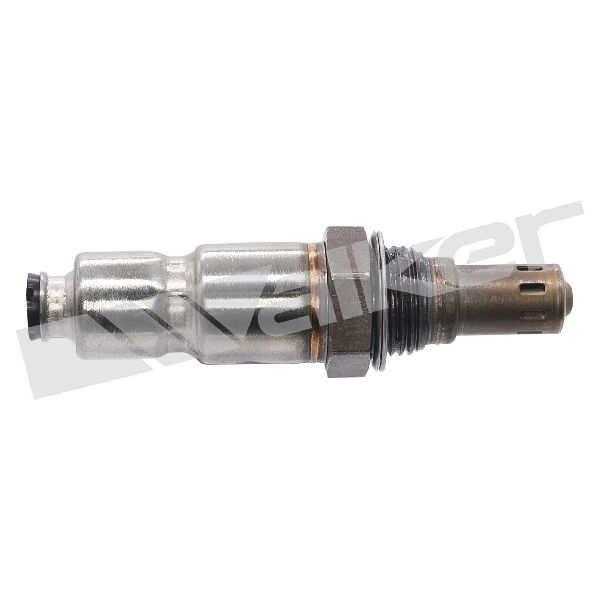
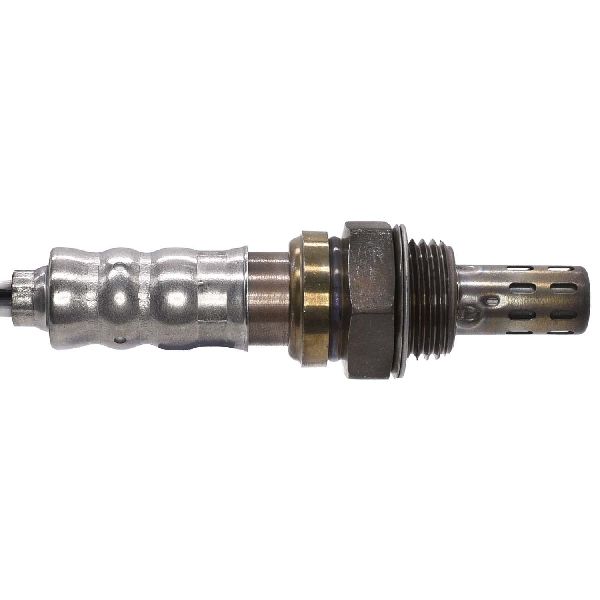
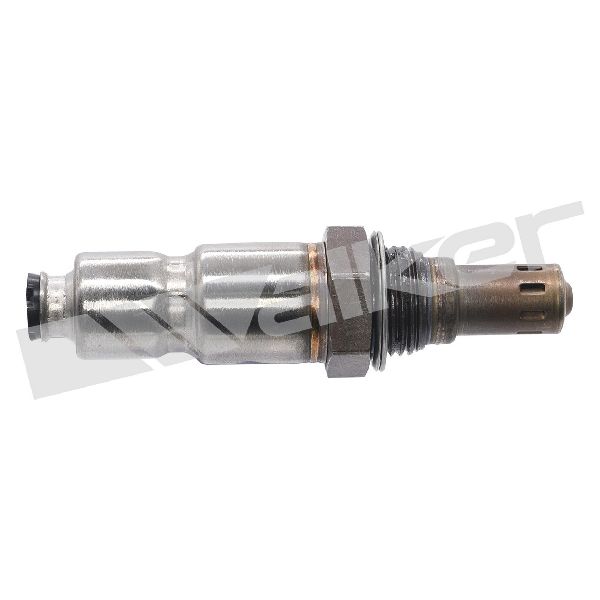
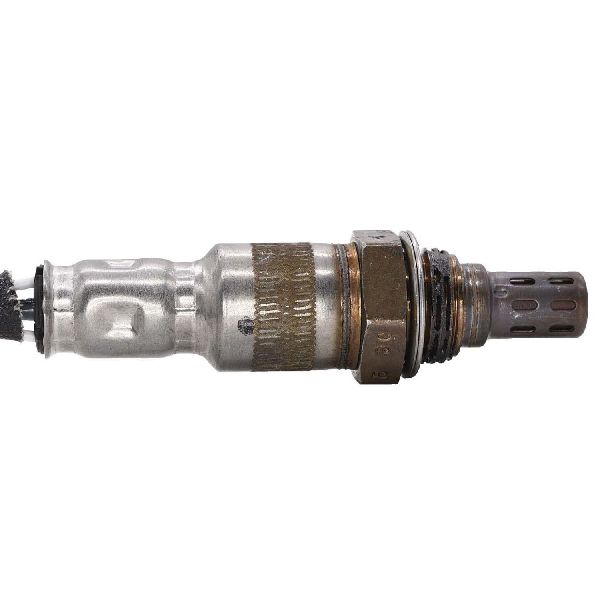
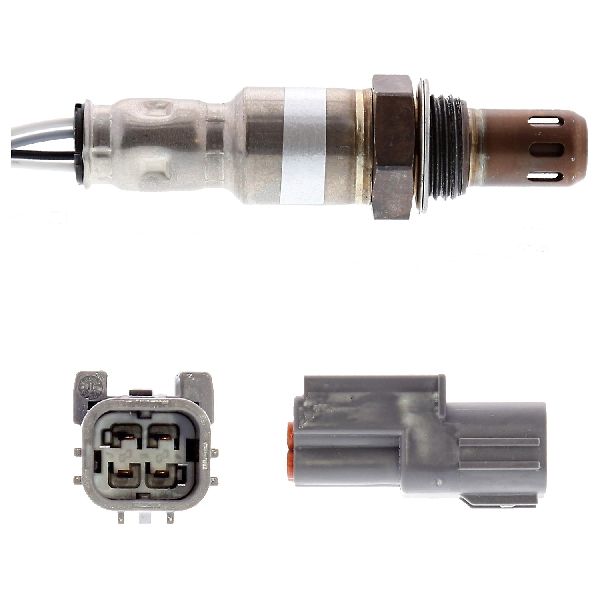
- Upstream Oxygen Sensor (Bank 1, Sensor 1)
(OEM #39210-2G750 (For 2.0T), 39210-2G100 (For 2.4L), 39210-3CGE0 (For 3.3L V6). Note: Always verify with VIN.)— This sensor is the direct subject of the P0132 code and is a common wear item that fails by sending an incorrect, fixed high voltage signal.
Trusted brands: Denso (OEM supplier), NGK / NTK (OEM supplier), Bosch, Delphi
OEM price range: $150-$250
Aftermarket price range: $50-$120 - Oxygen Sensor Socket Set — A special 22mm (7/8 inch) slotted socket is needed to fit over the sensor's wire and remove/install it. A standard socket will not work.
Aftermarket price range: $15-$30
Related Codes That Often Appear With This One
- P2188 — This code means 'System Too Rich at Idle'. It can be triggered along with P0132 if the high voltage reading is caused by an actual rich fuel condition, not just a sensor fault.
- P0172 — This code means 'System Too Rich (Bank 1)'. Similar to P2188, it indicates the engine is genuinely running rich, which would cause the O2 sensor to report high voltage.
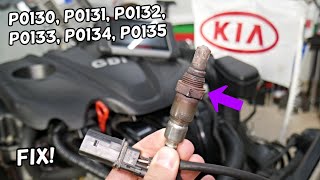
- P0130, P0131, P0133, P0134, P0135 — These are all codes related to the Bank 1, Sensor 1 O2 sensor circuit (performance, low voltage, slow response, heater circuit, etc.). Seeing them together often points to a wiring problem or a completely failed sensor. 🎬 Watch: Diagnostic tips for troubleshooting O2 sensor circuit codes.
Platform-Specific Known Issues
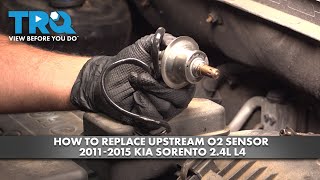
- Engine-Specific Part Numbers: The 2016-2020 Sorento used multiple engines (2.4L I4, 2.0T I4, 3.3L V6), and each has a different OEM part number for the Bank 1 Sensor 1. It is critical to verify the correct part for your specific engine and VIN before purchase. For example, 39210-2G100 is often cited for the 2.4L engine. 🎬 Watch: Step-by-step upstream O2 sensor replacement for the 2.4L engine.
- Access on 3.3L V6: While replacing the sensor on the 4-cylinder models is relatively easy from the top of the engine bay, access on the 3.3L V6 is more difficult. Bank 1 is against the firewall, requiring more time and potentially the removal of other components to reach the sensor.
Mechanic-Grade Diagnostic Values
- B1S1 O2 Sensor Live Data Voltage — expected: Rapidly fluctuating between ~0.1V and ~0.9V at operating temperature.. Failure: Voltage is stuck high, consistently reading above 0.9V.
- Short-Term Fuel Trim (STFT) Bank 1 — expected: Fluctuating between -5% and +5%.. Failure: Stuck at a high negative value, such as -10% to -20%, as the PCM tries to remove fuel to compensate for the false rich signal.
- O2 Sensor Heater Circuit Resistance — expected: Typically between 5 and 15 Ohms when measured across the heater circuit pins on the sensor connector. Some sources suggest a tighter range around 2 Ohms.. Failure: An open loop (infinite resistance) or 0 ohms (short circuit) indicates a failed heater element requiring sensor replacement.
- Fuel Pressure (KOEO) — expected: 45-60 PSI when checked at the fuel rail.. Failure: Significantly higher pressure could indicate a fuel pressure regulator issue, causing a true rich condition.
Scan Tool Commands That Help
- Kia GDS (Global Diagnostic System): Actuation Test & Vehicle S/W Management — The OEM scan tool (for models up to 2017/2018) allows technicians to perform guided troubleshooting, view comprehensive live data, and run actuation tests on various components. The 'Flight Record' function can capture intermittent data during a drive cycle for later analysis, which is useful if the high voltage condition is not constant.
Wiring & Ground Locations
- SENSOR 5 Fuse — Located in the engine compartment fuse block (PCB Block).. A wiring diagram for a 2018 2.4L Sorento indicates this fuse may supply power to the O2 sensor circuit. A blown fuse will cause a circuit fault.
- GC101 / GC102 — Engine bay ground points for the control harness on the 2.4L engine.. A poor ground connection at these points can introduce voltage irregularities into sensor circuits, potentially causing a high voltage reading.
- Harness Routing Clips — Metal clips securing the O2 sensor pigtail to the engine/exhaust components.. It is critical that the wiring harness is secured in these clips to prevent it from touching the hot exhaust manifold, which can melt the insulation and cause a short circuit, leading to a P0132 code.
OEM Part Supersession History
39210-2G100→39210-2G200— Part update or revision.
Heads up: These parts are listed as interchangeable for the 2.4L engine.
Model Year Variations Within This Range
- 2016-2018: The 2.0L Turbo engine was an available option during these years. It was discontinued for the 2019 and 2020 model years.
- 2019-2020: These are facelift models. For the 3.3L V6, the transmission was updated from a 6-speed automatic to a new 8-speed automatic. While not directly linked to P0132, powertrain software logic may differ from earlier years.
Diagnostic Flowchart
Used vs. New Parts: Buying Guide for This Vehicle
When a used part is the smart pick: For this repair, a used part is only advisable for a component like a wiring harness connector pigtail if the original is damaged. The oxygen sensor itself is a wear-and-tear item and should always be purchased new.
What to inspect on the donor part:
- For a wiring pigtail, inspect for any signs of brittleness, melting, or corrosion on the plastic connector and pins.
- Ensure the wires have not been stretched or previously repaired.
OEM-only on this vehicle (don't cheap out):
- While not strictly required, using an OEM or OEM-supplier sensor is highly recommended to avoid issues with faulty-out-of-the-box aftermarket parts, a common complaint on forums.
Aftermarket brands forum-validated for this vehicle:
- NTK (OEM Supplier)
- Denso (OEM Supplier)
Brands owners have reported issues with on this vehicle:
- Unnamed, low-cost sensors from online marketplaces have a higher reported failure rate, sometimes being defective upon arrival.
Real Owner Stories
Aggregated from forums and TSBs cited above. Mileages and costs reflect what owners reported in those sources.
2017 Kia Sorento
Symptoms: The check engine light came on shortly after starting but then turned off by itself several hours later.
What fixed it: The owner was asking for advice and a final repair was not posted.
Source hint: Reddit r/AskMechanics
2016 Kia Sorento 3.3L V6
Symptoms: A pending P0132 code was found during a vehicle diagnostic scan. No specific drivability symptoms were described.
What fixed it: The source was a diagnostic report and did not include information on the repair.
Source hint: Scribd (rehosting a diagnostic report)
Related OBD-II Codes
Frequently Asked Questions
Where is the Bank 1, Sensor 1 oxygen sensor located on my 2016-2020 Sorento?
Do I need a special tool to replace the O2 sensor on my Sorento?
My scanner shows codes P0132 and P0172. Should I replace the O2 sensor first?
How can I tell if the O2 sensor is bad by using a scan tool on my Kia Sorento?
I have a 2.4L Sorento. How do I ensure I buy the correct replacement O2 sensor?
Is it more likely that the P0132 code is caused by a bad sensor or a wiring issue?
Helpful Videos
We Have This Part in Stock


The information in this article is provided for general reference and educational purposes only. Vehicle specifications, procedures, and part compatibility can vary by production date, trim level, and region. Always consult your vehicle's factory service manual and verify part numbers before purchasing or performing repairs. Safety-critical components such as airbags, seat belts, and braking systems should be installed by a qualified professional.
- Kia Sorento:
- 🧭 Diagnostic Flowchart
- 🎬 Helpful Videos
- 🛍️ Shop This Part
- What's Unique About the 2016-2020 Kia Sorento
- Symptoms You May Notice
- Most Likely Causes
- Rare But Worth Checking
- Diagnosis Steps
- Parts You'll Likely Need
- Related Codes That Often Appear With This One
- Platform-Specific Known Issues
- Mechanic-Grade Diagnostic Values
- Scan Tool Commands That Help
- Wiring & Ground Locations
- OEM Part Supersession History
- Model Year Variations Within This Range
- Used vs. New Parts: Buying Guide for This Vehicle
- Real Owner Stories
- 2017 Kia Sorento
- 2016 Kia Sorento 3.3L V6
- Related OBD-II Codes
- Frequently Asked Questions
- 🎟️ Get 5% Off