

P0132 on 2018-2023 Kia Stinger 3.3T: O2 Sensor High Voltage Causes and Fixes
On the Stinger 3.3T, P0132 is most often a failed upstream oxygen sensor on the passenger side (Bank 1, Sensor 1). Replacing the sensor is the typical fix. Before replacement, inspect wiring, especially on 2018 models under recall SC170. If code P0172 (System Too Rich) is also present, investigate fuel system issues like a leaking injector before replacing the sensor. Expect to pay $70-$120 for an aftermarket sensor or $150-$250 for an OEM part. DIY difficulty is 2/5.
- P0132 on your Stinger points to a high voltage signal from the upstream O2 sensor on the passenger side.
- The most likely fix is replacing the sensor itself (OEM Part # 39210-3L000).
- Before buying parts, inspect the sensor's wiring for damage, especially on 2018 models which have a recall (SC170) for a chafing harness.
- If you also have a P0172 'System Too Rich' code, diagnose the fuel system (injectors, HPFP) before replacing the O2 sensor.
What's Unique About the 2018-2023 Kia Stinger
The Stinger's 3.3L twin-turbo GDI (Gasoline Direct Injection) engine is a high-performance system where fuel delivery is complex. While a failed O2 sensor is the most common cause for P0132, this code can also be a symptom of an actual rich-running condition caused by other known platform issues, such as a leaking high-pressure fuel injector or a failing High Pressure Fuel Pump (HPFP). Additionally, 2018 models were subject to a recall (SC170) for a front wiring harness that could chafe and cause a short to power in the O2 sensor circuit, making a wiring inspection critical on that model year.
Symptoms You May Notice
- Check Engine Light is on
- Decreased fuel economy
- Rough or unstable idle
- Strong smell of gasoline from the exhaust
- Black smoke from the tailpipe during acceleration
- Engine hesitation or stumbling on acceleration.
- Immediately replacing the O2 sensor without checking if the engine is actually running rich. If a leaking fuel injector is the real problem, the new O2 sensor won't fix the code and may be damaged by the rich condition.
- Replacing the wrong O2 sensor. P0132 specifically refers to Bank 1 (passenger side) and Sensor 1 (upstream, before the catalytic converter).
Most Likely Causes
- Failed Upstream Oxygen Sensor (Bank 1) 🔴 High Probability → Shop Oxygen Sensor Oxygen sensors are wear-and-tear items. The high heat environment of the twin-turbo engine can shorten their lifespan, and contamination from oil or coolant can cause internal shorts leading to a high voltage reading.
How to confirm: Use an OBD-II scanner with live data. A healthy upstream O2 sensor's voltage should fluctuate rapidly between approximately 0.1V and 0.9V. A sensor that is stuck high (consistently >0.9V) or responds very slowly is faulty.
Typical fix: Replace the Bank 1 (passenger side), Sensor 1 (upstream) oxygen sensor.
Est. part cost: $70-$250 - Wiring or Connector Issue 🟡 Medium Probability For 2018 models, recall SC170 was issued for a front wiring harness that could chafe against a burr on the left fender apron body panel, potentially causing a short to power in the O2 sensor circuit. On all years, proximity to hot exhaust components can make wiring brittle over time.
How to confirm: Visually inspect the O2 sensor's wiring harness and connector for any signs of melting, chafing, corrosion, or loose pins. For 2018 models, specifically check the harness routing near the driver's side fender area as detailed in TSB SC170.
Typical fix: Repair the damaged section of the wiring harness or replace the pigtail connector. For the SC170 recall, dealers inspect and either add a protective grommet or replace the entire front wiring harness if damage is found.
Est. part cost: $20-$50 for a pigtail, potentially more for harness repair. - Engine Running Rich 🟡 Medium Probability As a GDI engine, the Stinger is susceptible to issues like leaking fuel injectors or a failing high-pressure fuel pump (HPFP), which can create a rich condition that the O2 sensor correctly reports. A recall was issued for the HPFP on 2018-2021 models for potential failure.
How to confirm: Check for other trouble codes, especially P0172 (System Too Rich) or P0088 (Fuel Rail Pressure Too High). A strong smell of gasoline on the engine oil dipstick is a key indicator of a leaking fuel injector. Monitoring fuel trim values with a scan tool can also confirm a rich condition.
Typical fix: This is a more complex diagnosis. If a rich condition is confirmed, the root cause (e.g., leaking injector, faulty HPFP, bad fuel pressure regulator) must be identified and repaired.
Est. part cost: $100-$600+
Rare But Worth Checking
- Exhaust Leak: An exhaust leak before the O2 sensor can introduce outside air into the exhaust stream. While this often causes a lean code, it can sometimes disrupt sensor readings erratically and trigger various codes. Check for soot marks or audible ticking noises from the exhaust manifolds.
- PCM Malfunction: A failure of the Powertrain Control Module is extremely rare but possible. This could manifest as an internal voltage regulation fault. This should only be considered after all other possibilities (sensor, wiring, fuel system) have been exhaustively ruled out by a professional.
Diagnosis Steps
- Scan for Codes: Use an OBD-II scanner to confirm P0132 and check for any other related codes, like P0172 or P0088.
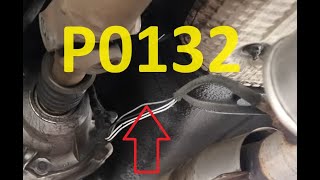
- Inspect Wiring: Visually inspect the Bank 1 Sensor 1 (passenger side, upstream) O2 sensor connector and wiring for damage, melting, or corrosion. On a 2018 model, pay close attention to the front wiring harness near the left fender apron for signs of chafing related to recall SC170.
- Analyze Live Data: Use the scanner's live data function to monitor the 'O2S11' voltage. At operating temperature and a steady idle, the voltage should fluctuate rapidly between ~0.1V and ~0.9V. If it is stuck high (e.g., >0.9V), the sensor or its circuit is likely at fault.
- Check for Rich Condition: If codes like P0172 are present or the voltage is high but not completely static, investigate a potential rich condition. Carefully smell the engine oil on the dipstick for a strong gasoline odor, which points to a leaking injector. Check long-term and short-term fuel trims; consistently high negative numbers confirm the ECM is trying to correct a rich mixture.
- Test for Exhaust Leaks: With the engine cool, start it and listen for any ticking or hissing sounds from the exhaust manifolds that would indicate a leak before the sensor.
- Isolate the Fault: If live data shows a stuck-high voltage, the wiring appears intact, and there are no other codes indicating a rich condition, the most likely cause is the sensor itself.
- Replace and Retest: Replace the Bank 1 Sensor 1 O2 sensor. Clear the codes and perform a drive cycle to ensure the code does not return.
Parts You'll Likely Need
- Upstream Oxygen Sensor (Bank 1, Passenger Side)
(OEM #39210-3L000)— This is the sensor that generates the P0132 code and is the most common failure point. It is a critical component for air-fuel ratio management. Part number may also be listed as 39210-3L010.
Trusted brands: Kia (OEM) / Kefico, Bosch, NGK/NTK, Denso
OEM price range: $150-$250
Aftermarket price range: $70-$120
Related Codes That Often Appear With This One
- P0172 — P0172 means 'System Too Rich (Bank 1)'. If P0132 appears with P0172, it strongly suggests the O2 sensor is correctly detecting a real rich condition, pointing the diagnosis towards fuel system components like injectors or the HPFP.
- P0088 — P0088 means 'Fuel Rail/System Pressure - Too High'. This code appearing with P0132 is a strong indicator that the rich condition is being caused by a failing High Pressure Fuel Pump (HPFP) or its regulator.
Technical Service Bulletins (TSBs) & Recalls
- SC170 / NHTSA 18V754000 - Recall for potential front wiring harness chafing on 2018 model year Kia Stingers produced from July 20, 2017, through June 8, 2018.
Platform-Specific Known Issues
- On 2018 models, Kia issued recall SC170 (NHTSA ID: 18V754000) for a front wiring harness that could chafe against a sharp metal edge on the left fender apron. This could damage wires for the O2 sensor circuit, causing a short to power and triggering codes like P0132. The fix involves inspection and installation of a protective grommet, or full harness replacement if damage is found.
Mechanic-Grade Diagnostic Values
- Upstream O2 Sensor (B1S1) Heater Circuit Resistance — expected: 3.3 - 4.1 Ω at 69.8°F (21°C).. Failure: An Open Loop (OL) or infinite resistance reading indicates a failed heater element.
- High-Pressure Fuel System (GDI) Pressure — expected: Up to 200 bar (2,900 psi) under load.. Failure: Pressure that is significantly too high or too low can indicate HPFP issues and cause a rich condition that triggers P0132.
- Upstream O2 Sensor (B1S1) Signal Wire Color — expected: The signal wire is RED at the sensor connector on the 3.3T engine harness.. Failure: N/A - This is for wire identification during testing.
Scan Tool Commands That Help
- Kia GDS (Global Diagnostic System): Live Data / Sensor Data Analysis — Use the GDS tool to view live data for Bank 1 Sensor 1 voltage. A healthy sensor will show voltage fluctuating rapidly between ~0.1V and 0.9V. A value stuck high (above 0.9V) confirms the fault condition and helps differentiate between a sensor/wiring fault and an actual rich condition.
- Kia GDS (Global Diagnostic System): DTC Scan & Clear — After performing a repair, use the GDS or a compatible OBD-II scanner to clear the P0132 code and reset the Check Engine Light. A subsequent drive cycle is needed to confirm the fix is successful and the code does not return.
Wiring & Ground Locations
- Engine Compartment Fuse 'SENSOR 3' — Located in the main fuse box in the engine compartment.. This 15A fuse protects the upstream oxygen sensor circuit on the Lambda II 3.3L T-GDI engine. A blown fuse will cause a loss of heater function and can trigger related fault codes.
- Bank 1 Sensor 1 Connector — On the passenger side of the engine, plugged into the upstream O2 sensor located on the exhaust manifold before the catalytic converter.. This is the primary connection point to inspect for corrosion, damage, or a short to power, which can directly cause a P0132 high voltage reading. The signal wire at this connector is red.
- Main Engine Ground Strap — Connects the engine block to the vehicle's chassis.. A loose, corroded, or broken main ground strap can cause erratic voltage readings across multiple engine sensors, including the O2 sensor. This can lead to a P0132 code that is difficult to trace, as the sensor and its direct wiring may appear fine.
Real Owner Repair Stories
- Aggregated from multiple repair databases and forum discussions (2018-2023 Kia Stinger 3.3T) — Check Engine Light on, rough idle, poor fuel economy.
❌ Tried (didn't work) Clearing the code without diagnosis (code returned immediately), Replacing the wrong sensor (downstream or Bank 2), Checking for exhaust leaks when none were present
✅ What actually fixed it In the majority of documented cases where P0132 was not accompanied by rich-running codes (like P0172), the definitive fix was replacing the Bank 1, Sensor 1 (passenger side, upstream) oxygen sensor. After replacement and clearing the code, the issue was resolved.
OEM Part Supersession History
39210-3L000→39210-3L010— Standard part number revision or change in manufacturer. Functionality remains the same.
Model Year Variations Within This Range
- 2018: The 2018 model year is specifically affected by recall SC170 (NHTSA 18V754000) for a front wiring harness that can chafe on the fender apron. This creates a unique, model-year-specific likelihood of a wiring short causing P0132 that is less probable on later years.
- 2022-2023: The 2022 facelift model introduced a new variable exhaust system which resulted in a minor horsepower increase. While the core O2 sensor part numbers and function remain the same, the physical exhaust components and routing around the sensor may have minor differences from the 2018-2021 models.
Diagnostic Flowchart
Other Known Issues on This Vehicle
Issues unrelated to this code that are worth knowing about as an owner of this generation:
- High-Pressure Fuel Pump (HPFP) Failure 🔴 High — Common enough on 2018-2021 models to warrant a recall. Can cause stalling and loss of power. (Ref: NHTSA 23V634000 / Kia SC196)
- Left Turbocharger Oil Feed Pipe Leak 🔴 High — Common across all 2018-2023 3.3T models, posing a fire risk from oil leaking onto hot exhaust components. (Ref: NHTSA 24V169000 / Kia SC300)
- Intake Valve Carbon Buildup 🟠 Medium — A common characteristic of all GDI engines, not just the Stinger. Typically becomes noticeable after 60,000 miles, causing rough idle or misfires (e.g., P0301).
- Brake Judder / Warped Rotors 🟡 Low — A very common complaint from owners, often appearing within 20,000-30,000 miles due to undersized or soft OEM rotors and pads.
- Hydraulic Electronic Control Unit (HECU) Fire Risk 🔴 High — Affects 2018-2021 models. An electrical short within the HECU can occur, potentially causing an engine compartment fire while parked or driving. (Ref: NHTSA 20V518000 (Expanded))
Used vs. New Parts: Buying Guide for This Vehicle
When a used part is the smart pick: A used part is generally NOT recommended for the oxygen sensor itself, as it is a wear-and-tear item with a finite lifespan. However, sourcing a used wiring harness pigtail from a junkyard is a smart, cost-effective choice if only the connector is damaged.
Donor-vehicle mileage cap: roughly under 50000 miles for the part to have meaningful remaining life.
What to inspect on the donor part:
- For a wiring pigtail, ensure there are no signs of melting, brittleness, or corrosion on the pins.
- Check that the locking tab on the connector is intact and clicks securely.
- Verify the donor vehicle was not in a front-end collision that could have stressed the engine wiring harness.
OEM-only on this vehicle (don't cheap out):
- While not a direct cause, if a PCM replacement is ever considered, OEM is the only reliable option due to the need for VIN-specific programming.
Aftermarket brands forum-validated for this vehicle:
- NTK/NGK
- Denso
- Bosch
Brands owners have reported issues with on this vehicle:
- Unbranded, no-name sensors from online marketplaces often have poor quality control, leading to incorrect readings, premature failure, and a quick return of the trouble code.
Real Owner Stories
Aggregated from forums and TSBs cited above. Mileages and costs reflect what owners reported in those sources.
2018 Kia Stinger 3.3T
Symptoms: Check engine light triggered by a front wiring harness chafing against a sharp metal edge on the left fender apron, causing a short to power in the O2 sensor circuit.
What fixed it: Dealer inspection and installation of a protective grommet (or full harness replacement) as per recall SC170.
Source hint: vehicle_specific_issues / SC170 / NHTSA 18V754000
2018-2021 Kia Stinger 3.3T
Symptoms: Engine running rich, potential stalling, and loss of power associated with a failing high-pressure fuel pump.
What fixed it: Replacement of the high-pressure fuel pump (HPFP) under recall SC196.
Source hint: known_issues / NHTSA 23V634000 / Kia SC196
Related OBD-II Codes
Frequently Asked Questions
I have a 2018 Kia Stinger and the P0132 code just popped up. Is there a specific recall I should check for?
My Stinger is showing P0132 along with a 'System Too Rich' code. Could this be the high-pressure fuel pump?
Which specific sensor do I need to replace for a P0132 code on my 3.3T V6?
Could carbon buildup cause my O2 sensor to report high voltage?
Is the P0132 code common on other vehicles besides the Stinger?
Helpful Videos
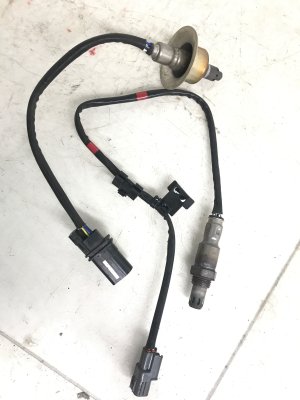
Used OEM Parts in Stock
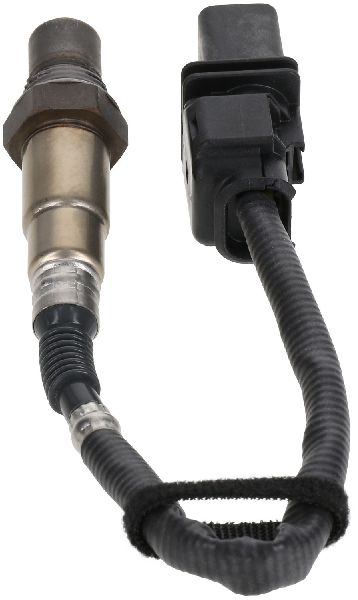
New Aftermarket Parts Available

The information in this article is provided for general reference and educational purposes only. Vehicle specifications, procedures, and part compatibility can vary by production date, trim level, and region. Always consult your vehicle's factory service manual and verify part numbers before purchasing or performing repairs. Safety-critical components such as airbags, seat belts, and braking systems should be installed by a qualified professional.
- Kia Stinger:
- 🧭 Diagnostic Flowchart
- 🎬 Helpful Videos
- 🛍️ Shop This Part
- What's Unique About the 2018-2023 Kia Stinger
- Symptoms You May Notice
- Most Likely Causes
- Rare But Worth Checking
- Diagnosis Steps
- Parts You'll Likely Need
- Related Codes That Often Appear With This One
- Technical Service Bulletins (TSBs) & Recalls
- Platform-Specific Known Issues
- Mechanic-Grade Diagnostic Values
- Scan Tool Commands That Help
- Wiring & Ground Locations
- Real Owner Repair Stories
- OEM Part Supersession History
- Model Year Variations Within This Range
- Other Known Issues on This Vehicle
- Used vs. New Parts: Buying Guide for This Vehicle
- Real Owner Stories
- 2018 Kia Stinger 3.3T
- 2018-2021 Kia Stinger 3.3T
- Related OBD-II Codes
- Frequently Asked Questions
- 🎟️ Get 5% Off