

P0132 on 2020-2024 Kia Telluride 3.8L V6: O2 Sensor High Voltage Causes and Fixes
This code almost always means the Bank 1 Upstream oxygen sensor has failed. Bank 1 is the firewall-side of the engine. Expect to pay $150-$300 for an OEM sensor and about one hour of labor. It's a moderately easy DIY replacement for those with the right tools.
- P0132 on your Telluride points to a high voltage signal from the upstream O2 sensor on the firewall side of the engine (Bank 1).
- The most common fix by a large margin is to replace the Bank 1, Sensor 1 oxygen sensor itself.
- Before buying parts, always perform a quick visual inspection of the sensor's wiring and connector for obvious damage like melting or corrosion, and check the related fuse.
- Driving with this code can hurt your fuel economy and eventually damage your catalytic converter, a much more expensive repair.
- The OEM part number for the correct sensor is 39210-3L110.
What's Unique About the 2020-2024 Kia Telluride
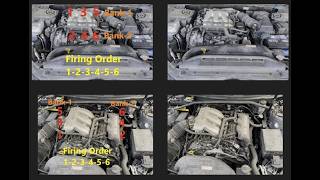
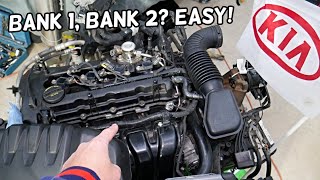
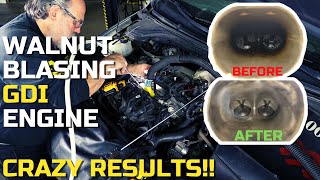
For the 2020-2024 Kia Telluride, the 3.8L V6 engine is mounted transversely. This means 'Bank 1' is the cylinder bank located closer to the firewall, while Bank 2 is closer to the radiator. Therefore, 'Sensor 1' in this code refers to the upstream oxygen sensor on the rear exhaust manifold. Access can be tighter than on longitudinally mounted engines, but otherwise, the function and failure modes of this sensor are typical for modern GDI engines. 🎬 Learn how to clean intake valves on Kia GDI engines There are no widespread, documented issues or TSBs for this specific code on the Telluride, suggesting failures are standard wear-and-tear rather than a platform defect. The identical Hyundai Palisade shares this characteristic.
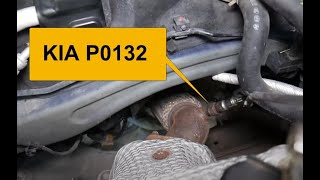
🎬 Watch: Identify Bank 1 and Bank 2 on this engineSymptoms You May Notice
- Check Engine Light is on
- Reduced fuel economy
- Engine may run rough, hesitate, or stumble on acceleration
- Possible black smoke from the exhaust if the engine is actually running very rich
- Unstable or choppy idle
- Replacing the wrong oxygen sensor (e.g., Bank 2 instead of Bank 1, or the downstream sensor instead of the upstream).
- Replacing the catalytic converter when the issue is just a sensor or wiring.
- Replacing the O2 sensor without first checking the wiring and fuse for damage or faults.
Most Likely Causes
- Failed Bank 1, Sensor 1 Oxygen Sensor 🔴 High Probability → Shop Oxygen Sensor Oxygen sensors are wear-and-tear items that degrade over time from heat and contaminants. There is no specific proneness for the Telluride, but it is the most common failure point for this code on any vehicle.
How to confirm: Use an OBD-II scanner to monitor live data for the 'O2S B1S1' voltage. If the voltage is stuck above 0.8V-0.9V and does not fluctuate rapidly during engine operation, the sensor has likely failed internally.
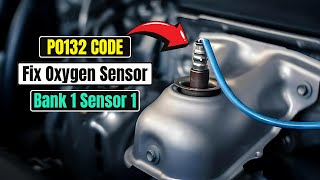
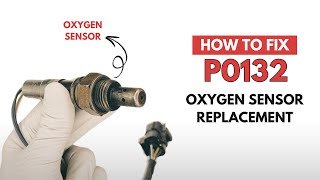
Typical fix: Replace the Bank 1, Sensor 1 (Upstream, firewall side) oxygen sensor. A special slotted oxygen sensor socket is often required 🎬 See this walkthrough for fixing the P0132 code for removal and installation.
Est. part cost: $80-$310 - Wiring or Connector Issue 🟡 Medium Probability The Bank 1 sensor is on the firewall side of the engine, where heat can be trapped. The wiring harness could potentially become brittle, melt, or corrode over time, causing a short to voltage. While not directly linked to P0132, the major recall (NHTSA 22V-626) for the tow hitch harness highlights potential wiring vulnerabilities on the platform.
How to confirm: Visually inspect the sensor's wiring harness from the sensor itself back to the main engine harness. Look for any signs of melting, chafing against other components, corrosion in the connector, or broken wires. Check for a short to power using a multimeter.
Typical fix: Repair the damaged section of the wiring harness or clean/replace the connector.
Est. part cost: $5-$50 - Engine Running Rich ⚪ Low Probability While not a platform-specific issue, a rich condition can be caused by a leaking fuel injector or a faulty fuel pressure regulator. In this case, the O2 sensor is working correctly and reporting the rich condition it sees.
How to confirm: Check for other codes, especially P0172 (System Too Rich Bank 1). Analyze fuel trim data with a scan tool. A professional may need to test fuel pressure or perform a fuel injector balance test.
Typical fix: Diagnose and repair the root cause of the rich condition, such as replacing a leaking fuel injector.
Est. part cost: $100-$400+
Rare But Worth Checking
- Exhaust Leak: An exhaust leak before the O2 sensor can sometimes draw in outside air, confusing the sensor and potentially causing erratic readings, though it more commonly causes a lean code (P0131).
- Blown O2 Sensor Fuse: → Shop Oxygen Sensor The oxygen sensor heater circuit is protected by a fuse. If this fuse blows, it can sometimes cause erratic voltage readings, including a high voltage fault. Check the fuse box in the engine compartment for a fuse labeled 'SENSOR 1' or similar.
- PCM Failure: It is extremely rare, but the Powertrain Control Module (PCM) itself can fail and misinterpret the sensor's signal. This should only be considered after all other possibilities have been exhaustively ruled out.
Diagnosis Steps
- Connect an OBD-II scanner and confirm P0132 is the active code. Note any other codes present.
- View live data on the scanner. Watch the voltage for 'O2S B1S1' (Bank 1, Sensor 1). It should fluctuate rapidly between approximately 0.1V and 0.9V. If it is stuck high (e.g., 0.9V or higher), the problem is confirmed.
- Turn off the engine and let the exhaust cool completely.
- Locate the Bank 1, Sensor 1 O2 sensor. It is on the exhaust manifold on the side of the engine closer to the firewall.
- Inspect the sensor's electrical connector and wiring harness for any signs of damage, melting, corrosion, or loose connections.
- Check the fuse for the O2 sensor heater circuit in the engine bay fuse box to ensure it is not blown.
- If the wiring and fuse appear intact, the oxygen sensor itself is the most likely cause of the failure.
- If replacing the sensor does not resolve the code, further diagnosis is needed to check for exhaust leaks, high fuel pressure, or leaking fuel injectors on Bank 1.
Parts You'll Likely Need
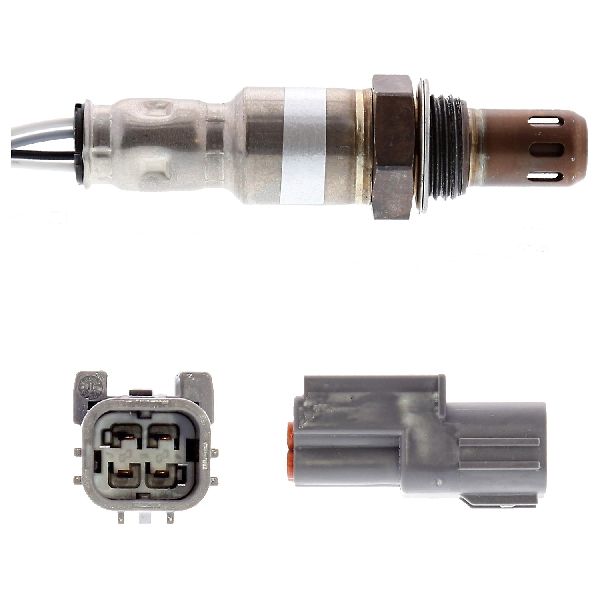
- Oxygen Sensor, Bank 1 Sensor 1 (Upstream Left)
(OEM #39210-3L110)— This is the sensor that generates the signal monitored by the P0132 code. It is a common wear item and the most frequent cause of the fault.
Trusted brands: Kia (OEM), Bosch, NGK/NTK, Denso
OEM price range: $295-$311
Aftermarket price range: $80-$180
Related Codes That Often Appear With This One
- P0172 — If the engine is genuinely running rich, the O2 sensor will correctly report high voltage, and the PCM may also set a code for 'System Too Rich (Bank 1)'.
- P0300, P0301, P0303, P0305 — A severe air/fuel imbalance on Bank 1 can lead to misfires on the cylinders of that bank (1, 3, and 5), triggering random or specific misfire codes.
Technical Service Bulletins (TSBs) & Recalls
- TSB SA380: Service Action for intermittent/inoperative Daytime Running Lamps on early 2020 models.
- TSB ELE242: TSB for inoperative LED low beams or DRLs on 2020-2021 models due to internal headlamp connections.
- TSB ENG228: Software update to address cold-start misfires on 2020 models.
Mechanic-Grade Diagnostic Values
- O2 Sensor (B1S1) Signal Voltage — expected: Rapidly fluctuating between 0.1V and 0.9V at operating temperature.. Failure: Voltage is stuck high, typically above 0.9V, for a sustained period (e.g., more than 20-60 seconds).
- O2 Sensor Heater Circuit Resistance — expected: Approximately 3.0 to 15.0 Ohms when measured across the two heater circuit pins on the sensor connector at ambient temperature.. Failure: A reading of 0 Ohms (short circuit) or infinite/OL (open circuit) indicates a failed heater element within the sensor.
- DTC Set Condition (Example from a similar ECU) — expected: Heated oxygen sensor (front) output voltage has continued to be 1.8 volts or higher for 2 seconds.. Failure: This specific, high threshold being met for the specified duration will trigger the fault code in the ECM.
Scan Tool Commands That Help
- Kia GDS (Global Diagnostic System): DTC Analysis & Data Analysis — Used at the dealer level to read proprietary fault codes, view live sensor data streams (including O2 sensor voltage graphs), and perform actuation tests on related components like the fuel pump relay.
- Professional OBD-II Scanner (e.g., Autel, BlueDriver): Live Data Graphing & Mode 6 — Graphing the B1S1 voltage is the primary method to confirm a stuck-high condition. Mode 6 can provide underlying test results from the ECU's last self-test cycle for the O2 sensor monitor, which can reveal issues before a code is set.
OEM Part Supersession History
39210-3L110→No supersession found. This part number appears to be current for the entire 2020-2024 model year range.— N/A
Model Year Variations Within This Range
- 2020-2025: The Kia Telluride received a facelift for the 2023 model year, which included revised styling and new interior tech like a larger infotainment screen. However, the powertrain, a 3.8L V6 with an 8-speed automatic transmission, remained unchanged. Therefore, the causes, diagnosis, and repair for a P0132 code are identical across the 2020-2024+ model years.
Diagnostic Flowchart
Other Known Issues on This Vehicle
Issues unrelated to this code that are worth knowing about as an owner of this generation:
- Spontaneous Windshield Cracking 🟠 Medium — A widely reported issue across 2020-2023 models where the windshield seems to crack or chip with little to no impact. Hundreds of complaints have been filed with the NHTSA. (Ref: Kia issued a 'Customer Satisfaction Initiative' in late 2019 for some 2020 models, but issues are reported across later years as well.)
- Tow Hitch Wiring Harness Fire Risk 🔴 High — Affects 2020-2022 models with the specific, accessory 4-pin genuine Kia tow harness. Moisture can enter the module, causing a short circuit and fire risk, even when parked. (Ref: NHTSA Recall 22V-626 (Kia Campaign SC247).)
- Daytime Running Light (DRL) Failure 🟡 Low — Affects some early-production 2020-2021 models where the DRLs (amber or white) may become intermittent or fail completely due to an internal headlamp connection fault. (Ref: TSB SA380 and TSB ELE242 provide inspection and repair procedures.)
- Excessive Oil Consumption 🟠 Medium — Some owners of the 3.8L V6 report oil consumption rates as high as 1 quart per 1,000-3,000 miles, which can lead to low oil levels and trigger other engine-related trouble codes if not monitored closely.
- Carbon Buildup on Intake Valves 🟠 Medium — As a Gasoline Direct Injection (GDI) engine, the 3.8L V6 is prone to carbon accumulation on intake valves over time (typically after 60,000+ miles), which can lead to misfires (P0300 series codes) and rough running. (Ref: TSB ENG228 was issued for 2020 models to fix cold-start misfires via a software update, but does not address the mechanical buildup.)
- Power Seat Motor Fire Risk 🔴 High — A stuck power seat slide knob can cause the motor to overheat, creating a fire risk. This affects over 460,000 vehicles from 2020-2024. (Ref: Recall SC316.)
Used vs. New Parts: Buying Guide for This Vehicle
When a used part is the smart pick: It is almost never a smart choice to buy a used oxygen sensor. They are wear-and-tear items with a finite lifespan, and their performance degrades over time. The labor to install the part is significant enough that saving a small amount on a used sensor with unknown remaining life is poor economy. A used part should only be considered in an emergency to get the vehicle running temporarily.
Donor-vehicle mileage cap: roughly under 30000 miles for the part to have meaningful remaining life.
What to inspect on the donor part:
- Verify the part number on the sensor itself matches the required OEM number (39210-3L110).
- Inspect the sensor tip for heavy carbon fouling, oil residue, or white, chalky deposits, which indicate contamination and likely failure.
- Check the wiring and connector for any signs of melting, brittleness, or corrosion.
- Ask for the donor vehicle's VIN to check its history for related issues if possible.
OEM-only on this vehicle (don't cheap out):
- While not strictly required, using an OEM Kia/Hyundai sensor (Part No. 39210-3L110) is highly recommended. Some modern ECUs are sensitive to the precise voltage curves and heater characteristics of the original sensor, and using an aftermarket part can sometimes lead to the code returning or other performance issues.
Aftermarket brands forum-validated for this vehicle:
- Denso
- NGK/NTK
- Bosch
Brands owners have reported issues with on this vehicle:
- Avoid unbranded, "white-box" sensors from online marketplaces. While inexpensive, they have a high failure rate and may not meet the required specifications, causing the P0132 code to return.
Real Owner Stories
Aggregated from forums and TSBs cited above. Mileages and costs reflect what owners reported in those sources.
2020 Kia Telluride 3.8L V6
Symptoms: Engine experiencing cold-start misfires.
What fixed it: Applied software update per TSB ENG228.
Source hint: TSB ENG228: Software update to address cold-start misfires on 2020 models.
2020-2021 Kia Telluride
Symptoms: Amber or white Daytime Running Lights (DRL) becoming intermittent or failing completely.
What fixed it: Inspection and repair of internal headlamp connections per TSB SA380 and TSB ELE242.
Source hint: TSB SA380 and TSB ELE242 provide inspection and repair procedures.
2020-2024 Kia Telluride 3.8L V6 — ~60000 miles
Symptoms: Misfires and rough running due to carbon accumulation on intake valves.
What fixed it: Mechanical cleaning of carbon buildup (noted as a GDI-specific maintenance need).
Source hint: Carbon Buildup on Intake Valves section
Related OBD-II Codes
Frequently Asked Questions
Which specific oxygen sensor needs to be replaced for a P0132 code on my Telluride?
Could the P0132 code be related to the major tow hitch recall on my 2022 Telluride?
Is there a specific Kia part number I should use for the replacement sensor?
Could the cold-start misfires addressed in TSB ENG228 be causing my O2 sensor code?
Does the 3.8L Lambda II GDI engine have any known issues that might mimic a bad O2 sensor?
Can I use an aftermarket sensor like Denso or Bosch for my Telluride?
Helpful Videos

We Have This Part in Stock

The information in this article is provided for general reference and educational purposes only. Vehicle specifications, procedures, and part compatibility can vary by production date, trim level, and region. Always consult your vehicle's factory service manual and verify part numbers before purchasing or performing repairs. Safety-critical components such as airbags, seat belts, and braking systems should be installed by a qualified professional.
- Kia Telluride:
- 🧭 Diagnostic Flowchart
- 🎬 Helpful Videos
- 🛍️ Shop This Part
- What's Unique About the 2020-2024 Kia Telluride
- Symptoms You May Notice
- Most Likely Causes
- Rare But Worth Checking
- Diagnosis Steps
- Parts You'll Likely Need
- Related Codes That Often Appear With This One
- Technical Service Bulletins (TSBs) & Recalls
- Mechanic-Grade Diagnostic Values
- Scan Tool Commands That Help
- OEM Part Supersession History
- Model Year Variations Within This Range
- Other Known Issues on This Vehicle
- Used vs. New Parts: Buying Guide for This Vehicle
- Real Owner Stories
- 2020 Kia Telluride 3.8L V6
- 2020-2021 Kia Telluride
- 2020-2024 Kia Telluride 3.8L V6 — ~60000 miles
- Related OBD-II Codes
- Frequently Asked Questions
- 🎟️ Get 5% Off