

P0132 on 2004-2009 Mazda 3 2.3L: O2 Sensor High Voltage Causes and Fixes
On a 2004-2009 Mazda 3 with the 2.3L engine, code P0132 is most often caused by a failed upstream oxygen sensor (Bank 1, Sensor 1). Replacing the sensor is the likely fix, costing around $60-$120 for an aftermarket part or $170-$270 for an OEM part. DIY difficulty is 2/5. It is critical to verify if your car has California (PZEV) or Federal emissions, as they use different sensors.
- P0132 on your Mazda 3 almost always points to the upstream O2 sensor (the one on the exhaust manifold).
- The most likely fix is to replace the sensor. It's a DIY-friendly job with the right tool (an O2 sensor socket).
- Before buying a new sensor, use a scan tool to watch its live voltage. If it's stuck high (>0.9V), the sensor is the prime suspect.
- Crucially, you must buy the correct sensor for your car's emissions system (Federal or California/PZEV). Check your VIN to be sure, as they are not interchangeable.
- If you have other codes like P0172 (System Too Rich), diagnose that problem first, as the O2 sensor may just be doing its job correctly.
What's Unique About the 2004-2009 Mazda 3
The first-generation Mazda 3 (BK) with the 2.3L MZR engine is generally reliable, but like many vehicles of this era, the upstream O2 sensor is a common failure point that leads to code P0132. A key detail for this platform is the distinction between Federal (FED) and California (PZEV) emissions standards, which use different oxygen sensors. It is critical to get the correct sensor for your specific vehicle's emissions type, which can be verified using the VIN or by checking the emissions sticker under the hood. PZEV vehicles often use a more expensive, 5-wire wideband Air/Fuel Ratio sensor, while Federal emissions vehicles may use a 4-wire conventional O2 sensor. Installing the wrong type will cause immediate new error codes.
Symptoms You May Notice
- Check Engine Light is on
- Decreased fuel economy
- Rough or unstable idle
- Engine hesitation or stumbling during acceleration
- Black smoke from the exhaust, especially on a cold start
- Failed emissions test
- Strong smell of gasoline from the exhaust
- Replacing the downstream (Sensor 2) oxygen sensor. This code specifically points to Sensor 1, the upstream sensor.
- Replacing the catalytic converter. A P0132 code is a cause of catalytic converter failure, not a symptom of it. A bad converter typically sets a P0420 code.
- Assuming any aftermarket sensor will work. Owners frequently report that cheap, non-brand sensors (especially from eBay) either fail quickly or are dead on arrival, sometimes causing new codes like P0030 (Heater Circuit Fault).
Most Likely Causes
- Failed Upstream Oxygen Sensor (Bank 1, Sensor 1) 🔴 High Probability → Shop Oxygen Sensor Oxygen sensors are wear-and-tear items that degrade over time from heat and contaminants in the exhaust. It is the most common reason for P0132 on this vehicle. Using a cheap, non-OEM sensor from sources like eBay is a common cause of repeat failure or new codes.
How to confirm: Using an OBD-II scanner with live data, observe the Bank 1 Sensor 1 voltage. If it is stuck high (e.g., >0.9V) and does not fluctuate rapidly during operation, the sensor is likely faulty. Unplugging the sensor should cause the voltage reading to drop; if it does, this points strongly to a bad sensor.
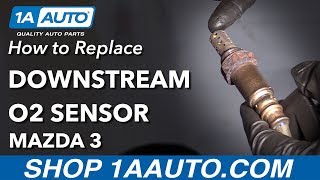
Typical fix: Replace the upstream oxygen sensor. Ensure you purchase the correct sensor for your vehicle's emissions type (Federal or California/PZEV). Soaking the old sensor threads with a penetrating catalyst like PB Blaster the night before removal is highly recommended.
Est. part cost: $60-$120 - Wiring Harness or Connector Damage 🟡 Medium Probability The sensor wiring is located in the hot engine bay and can become brittle, melt, or chafe over time, leading to a short circuit. The harness can rub against the exhaust manifold if not properly secured.
How to confirm: Visually inspect the oxygen sensor's wiring harness and connector from the sensor itself back to the main engine harness. Look for any signs of melting, chafing on the exhaust manifold, corrosion in the connector, or broken wires. A short to the heater circuit power wire can cause a constant high voltage signal.
Typical fix: Repair the damaged section of the wiring harness or clean/replace the connector. Ensure the wiring is properly routed away from hot exhaust components.
Est. part cost: $5-$50 - Engine Running Rich ⚪ Low Probability While less common than a sensor failure, other issues can force the engine to run rich, causing the O2 sensor to report high voltage correctly. This can be notoriously difficult to diagnose.
How to confirm: Check for other trouble codes that may indicate a rich condition (e.g., codes for a MAF sensor, ECT sensor, or fuel system). Use a scan tool to check long-term and short-term fuel trim values. High negative fuel trims (e.g., -15% or more) indicate the PCM is trying to remove excess fuel. Investigate for leaking fuel injectors, a faulty fuel pressure regulator, or a contaminated Mass Airflow (MAF) sensor.
Typical fix: Diagnose and repair the root cause of the rich condition, which could be a leaking fuel injector, faulty fuel pressure regulator, dirty Mass Airflow (MAF) sensor, or a bad Engine Coolant Temperature (ECT) sensor.
Est. part cost: $50-$300
Rare But Worth Checking
- Exhaust Leak: An exhaust leak before the oxygen sensor can introduce outside air, confusing the sensor and potentially causing incorrect readings. This is worth checking, especially if you hear an exhaust leak.
- PCM (Engine Computer) Fault: In very rare cases, the Powertrain Control Module itself can fail. This should only be considered after all other possibilities, including the sensor and wiring, have been thoroughly ruled out.
Diagnosis Steps
- Connect an OBD-II scanner and confirm that P0132 is the primary code. Note any other codes present, especially P0172.
- View the live data stream for the Bank 1, Sensor 1 O2 sensor (B1S1).
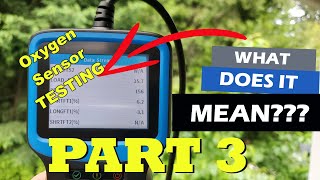
- With the engine warm and at idle, observe the B1S1 voltage. A healthy 🎬 See how to read O2 sensor live data on your scanner sensor will fluctuate rapidly between approximately 0.1V and 0.9V. If the voltage is stuck high (e.g., 0.9V or higher), there is a problem.
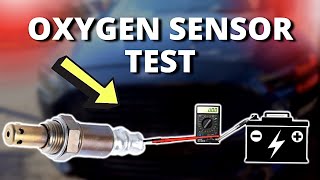
- To isolate the sensor, unplug its electrical connector. The voltage on the scan tool should drop to a low, default value. If it does, the wiring is likely okay and the sensor itself has failed. 🎬 Watch: A pro mechanic shows you how to test oxygen sensors
- If the voltage stays high after unplugging the sensor, you have a short-to-power in the wiring harness that must be found and repaired. Check for voltage on the signal wire at the harness connector with the sensor unplugged.
- Thoroughly inspect the sensor's wiring and connector for any physical damage, melting on the exhaust manifold, or corrosion in the pins.
- If no wiring issue is found and the sensor seems to be reporting correctly (i.e., fuel trims are highly negative), investigate potential causes of a rich condition, such as leaking fuel injectors, a faulty fuel pressure regulator, or a dirty MAF sensor.
- Check for any exhaust leaks between the cylinder head and the upstream O2 sensor.
Parts You'll Likely Need
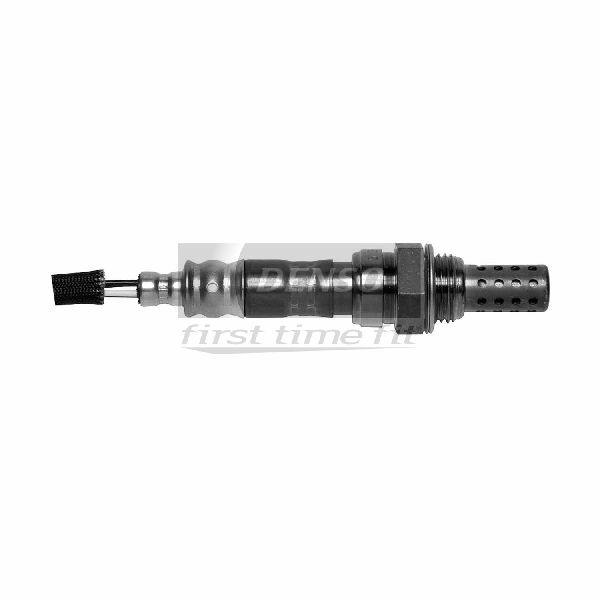
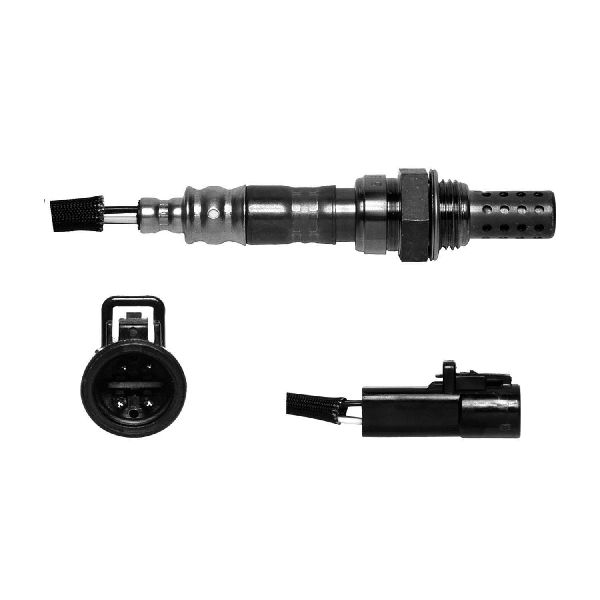
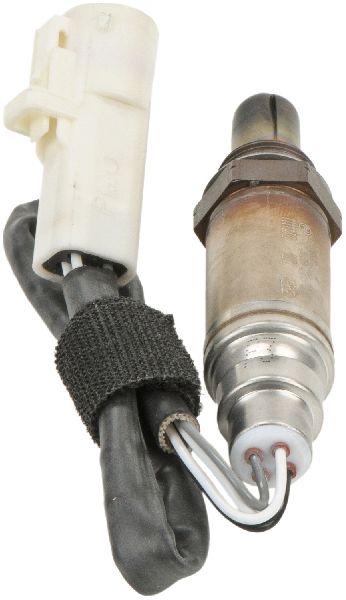
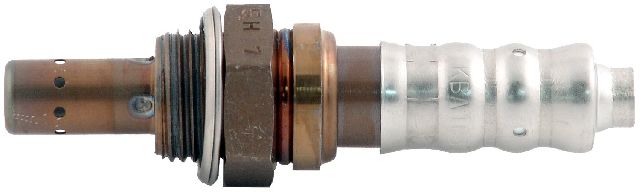
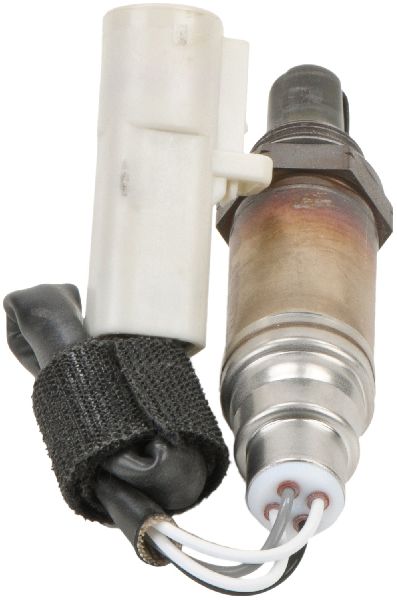
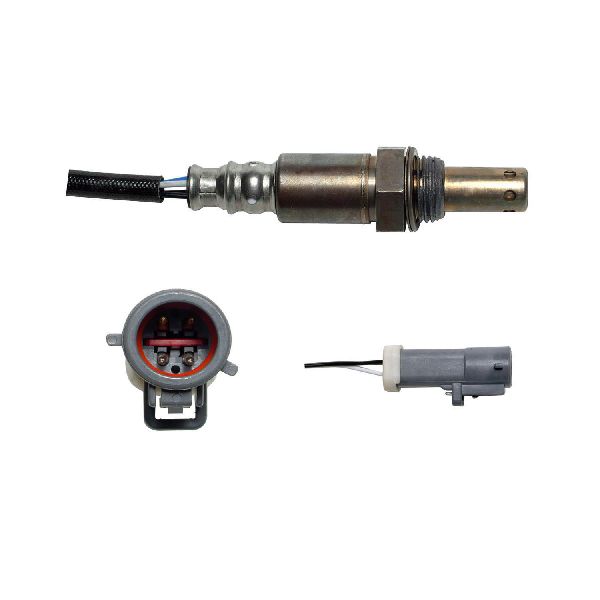
- Upstream Oxygen Sensor (Air/Fuel Ratio Sensor)
(OEM #LFH2-18-862, Z601-18-861A, LF66-18-861B, L33L-18-8G1E-9U, LFL7-18-8G1C)— This is the most common failure part for code P0132. Note: Part numbers vary based on year and emissions (Federal vs. California/PZEV). Always verify with your vehicle's VIN. PZEV models often use a 5-wire sensor while Federal models use a 4-wire.
Trusted brands: Denso (OEM supplier), NGK / NTK
OEM price range: $170-$270
Aftermarket price range: $60-$120
Related Codes That Often Appear With This One
- P0172 — P0172 means "System Too Rich (Bank 1)". If you see both codes, it's a strong indication that the P0132 is being caused by an actual rich running condition, not just a faulty sensor.
- P0131, P0134, P2251 — These are other codes related to the Bank 1 Sensor 1 circuit (Low Voltage, No Activity, Negative Current Control Circuit Open). Seeing a cluster of B1S1 codes strongly points to a failed sensor or a significant wiring problem near the sensor.
Platform-Specific Known Issues
- PZEV vs. Federal Emissions Part Confusion: A major issue for this platform is the use of two different types of upstream O2 sensors depending on whether the vehicle was built to Federal or PZEV (California) emissions standards. PZEV vehicles typically use a 5-wire wideband Air/Fuel Ratio sensor (e.g., Denso 234-5012), while Federal vehicles may use a 4-wire conventional O2 sensor (e.g., Denso 234-4329). They are not interchangeable. Installing the wrong one will not fix the P0132 and will likely set new codes related to the heater circuit or sensor performance. Always verify the correct part using the VIN.
Mechanic-Grade Diagnostic Values
- Upstream O2 Sensor (B1S1) Signal Voltage — expected: Fluctuating rapidly between 0.1V and 0.9V on a healthy, warm engine at idle (for conventional 4-wire sensors).. Failure: Stuck consistently above 0.9V, or above 450mV for an extended period.
- Fuel Injector Resistance — expected: Typically 12-17 ohms for Mazda models.. Failure: A resistance reading outside of the specified range indicates a faulty injector coil.
- PCM Voltage Test (Sensor Unplugged) — expected: With the sensor unplugged and key on, the signal wire at the PCM connector should show a specific bias voltage, typically around 450mV.. Failure: If the voltage at the PCM pin is high (e.g., 5V or 12V) with the sensor disconnected, it indicates a short to power in the harness.
Scan Tool Commands That Help
- Mazda Modular Diagnostic System (M-MDS) or MDARS: PCM Reprogramming — In some cases, Mazda has issued PCM software updates to correct overly sensitive diagnostic logic that can falsely trigger codes like P0132. If all hardware checks out, checking for an available software update with a dealer-level tool is a valid next step.
Wiring & Ground Locations
- PCM Pin 2Z — At the Powertrain Control Module connector.. This is the pin for the Front O2 Sensor signal. Probing this pin allows you to test the signal directly at the computer, bypassing the entire engine harness to confirm if the high voltage is reaching the PCM.
- PCM Pin 2AD / 2BG — At the Powertrain Control Module connector.. These are pins for the Front O2 Sensor. Pin 2AD is a signal wire and 2BG is another circuit wire. Testing here can help isolate wiring faults.
- PCM Pins 1AZ, 1BB, 1BH — At the Powertrain Control Module connector.. These are primary ground pins for the PCM. A poor ground here can cause floating voltages and erratic behavior across multiple sensors, including the O2 sensor.
- Transmission Grounds — On the top and front of the transmission case, there are typically two to three ground straps connecting the harness to the chassis/transmission.. These are major engine harness grounding points. Corrosion or looseness at these points can cause a variety of electrical issues, including incorrect sensor readings. While not specific to P0132, they are a common source of difficult-to-diagnose electrical problems.
- Upstream O2 Sensor Connector Wires — On the harness side of the upstream O2 sensor connector.. For a P0138 code (downstream sensor, but wiring is often similar), a technician identified the signal wires as a black wire with an orange tracer and a white wire with a blue tracer going to the computer. Knowing these colors helps in back-probing the correct wires for voltage tests.
Real Owner Repair Stories
- YouTube video comment section (2008 Mazda 3 2.3L) — P0132 and P0172 (System Too Rich)
❌ Tried (didn't work) Replacing the upstream O2 sensor, Replacing the MAF sensor, Replacing the purge solenoid valve
✅ What actually fixed it The user reported that the root cause was a leaking fuel injector. After replacing the injector, both codes were resolved. - Reddit r/MechanicAdvice (2011 Mazda 3 (similar platform)) — Check Engine Light on, O2 sensor code
❌ Tried (didn't work) Installing a Federal emissions Denso O2 sensor in a California emissions car.
✅ What actually fixed it The problem persisted until the correct California-spec (PZEV) sensor was installed. The user noted that even though both were 5-wire sensors, the electrical outputs are different and not interchangeable, causing the code to return. - NHTSA ODI #11472060 (Cross-model reference) — An owner of a similar Mazda powertrain reported that the vehicle immediately would not accelerate and quickly lost speed, causing a dangerous situation on the road. The engine light was triggered by code P0132, though the light eventually went off after an hour, allowing the vehicle to maintain a safe speed.
Model Year Variations Within This Range
- 2004-2009: The primary variation within this generation is not by year, but by the emissions standard (Federal vs. PZEV) the vehicle was built to. This determined whether a 4-wire conventional O2 sensor or a 5-wire Air/Fuel Ratio sensor was used. This distinction is critical and exists across the entire generation.
Diagnostic Flowchart
Real Owner Stories
Aggregated from forums and TSBs cited above. Mileages and costs reflect what owners reported in those sources.
2004 Mazda 3
Symptoms: Vehicle threw codes p0132, p0138, p0134, p2195. It misfires while driving and pressing down on the accelerator; the vehicle will surge after some hesitation.
What fixed it: A shop initially replaced a runner in the intake manifold for a suspected vacuum leak, but the issue returned. The owner suspected the O2 sensor had failed.
Source hint: Reddit r/MechanicAdvice
2007 Mazda 3
Symptoms: Attempted to fix an O2 sensor issue by installing a cheap eBay sensor.
What fixed it: The cheap sensor failed to resolve the issue and instead replaced the original codes with new heater circuit codes (P0030, P0134), highlighting the necessity of using correct OEM-style sensors.
Source hint: OzBargain Forums - O2 Oxygen Sensor Tips? (Mazda 3)
2009 Mazda 3
Symptoms: Check engine light illuminated with code P0132.
What fixed it: Replacing the upstream oxygen sensor directly fixed the check engine light.
Source hint: iATN - Automotive Technicians Technical Discussion
2006 Mazda 3
Symptoms: Check engine light on with codes P0131, P0134, and P2251, all pointing to the B1S1 sensor.
What fixed it: Replaced the 5-wire upstream Air/Fuel ratio sensor using a 7/8" offset O2 sensor socket and cleared the codes.
Source hint: YouTube - 2006 MAZDA3 P0131 P0134 P2251 - UPSTREAM OXYGEN SENSOR REPLACEMENT
Related OBD-II Codes
Frequently Asked Questions
How do I know if my 2004-2009 Mazda 3 needs a 4-wire or 5-wire oxygen sensor for P0132?
Can I use a cheap aftermarket oxygen sensor from eBay to fix P0132 on my Mazda 3?
What tools do I need to replace the upstream O2 sensor on my 2.3L Mazda 3?
My Mazda 3 has P0132 and the engine is running rich. What else could cause this besides the O2 sensor?
Where should I check for wiring damage on my Mazda 3 if the O2 sensor isn't the problem?
Helpful Videos
We Have This Part in Stock

The information in this article is provided for general reference and educational purposes only. Vehicle specifications, procedures, and part compatibility can vary by production date, trim level, and region. Always consult your vehicle's factory service manual and verify part numbers before purchasing or performing repairs. Safety-critical components such as airbags, seat belts, and braking systems should be installed by a qualified professional.
- Mazda 3:
- 🧭 Diagnostic Flowchart
- 🎬 Helpful Videos
- 🛍️ Shop This Part
- What's Unique About the 2004-2009 Mazda 3
- Symptoms You May Notice
- Most Likely Causes
- Rare But Worth Checking
- Diagnosis Steps
- Parts You'll Likely Need
- Related Codes That Often Appear With This One
- Platform-Specific Known Issues
- Mechanic-Grade Diagnostic Values
- Scan Tool Commands That Help
- Wiring & Ground Locations
- Real Owner Repair Stories
- Model Year Variations Within This Range
- Real Owner Stories
- 2004 Mazda 3
- 2007 Mazda 3
- 2009 Mazda 3
- 2006 Mazda 3
- Related OBD-II Codes
- Frequently Asked Questions
- 🎟️ Get 5% Off