

P0132 on 1999-2003 Mazda Protege: O2 Sensor High Voltage Causes and Fixes
On a 1999-2003 Mazda Protege, code P0132 almost always points to a failed upstream oxygen sensor (Bank 1, Sensor 1). Before replacing the sensor, always inspect its wiring harness for melting or damage where it passes near the exhaust manifold. A quality aftermarket sensor from a brand like Denso or NTK costs between $40 and $90.
- P0132 on a 1999-2003 Protege means the upstream O2 sensor signal is stuck high.
- The most likely cause is a failed O2 sensor, but you must inspect the wiring for heat damage and the air intake hose for cracks before replacing any parts.
- Ignoring this code will cause poor fuel mileage and can eventually damage your catalytic converter.
- This is a DIY-friendly repair with the right tool (an O2 sensor socket) and careful inspection.
What's Unique About the 1999-2003 Mazda Protege
For the third-generation Mazda Protege, the P0132 code is a straightforward issue without significant platform-specific complexities. The inline four-cylinder engines (1.6L, 1.8L, and 2.0L) have a simple, single-bank exhaust layout, making diagnosis less complicated than on V-type engines. The most common failure is the sensor itself due to age and mileage, but it's crucial to inspect the wiring harness near the hot exhaust manifold, as shorts or melting can mimic sensor failure. The sensor is generally easy to access on the front of the engine.
Symptoms You May Notice
- Check Engine Light is on
- Decreased fuel economy
- Rough or unstable idle
- Engine hesitation or stumbling during acceleration
- Black smoke from the exhaust or a bad smell (less common)
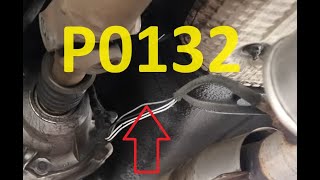
- Engine running rough or misfiring 🎬 Watch: Understanding the P0132 code causes and fixes
- Replacing the oxygen sensor without first inspecting the wiring harness. A short in the harness can mimic a sensor failure, and the new sensor will not fix the problem.
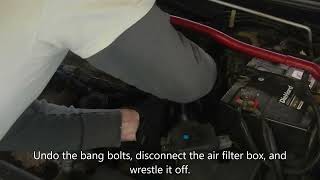
- Replacing the O2 sensor when the actual problem is a vacuum leak from a cracked intake hose, which is a known issue on this platform. 🎬 See: How to replace a cracked air intake hose
Most Likely Causes
- Failed Upstream Oxygen Sensor (Bank 1, Sensor 1) 🔴 High Probability → Shop Oxygen Sensor Oxygen sensors are wear items and typically have a lifespan of around 60,000 to 100,000 miles. Failure from age is very common on these vehicles.
How to confirm: Use an OBD-II scanner to watch live data from the B1S1 O2 sensor. If the voltage is stuck above 0.8V-0.9V and does not fluctuate, the sensor has likely failed. You can also test the sensor's internal resistance and heater circuit with a multimeter. A good sensor's voltage should fluctuate rapidly between ~0.1V and ~0.9V.
Typical fix: Replace the upstream oxygen sensor. It is highly recommended to use a quality OEM-supplier brand like Denso or NGK/NTK for Japanese vehicles to ensure compatibility and longevity.
Est. part cost: $40-$90 - Damaged O2 Sensor Wiring or Connector 🟡 Medium Probability → Shop Oxygen Sensor The wiring harness is routed near the hot exhaust manifold, making it susceptible to heat damage, melting, or becoming brittle and cracking over time, which can cause a short circuit to voltage.
How to confirm: Visually inspect the entire wiring harness from the O2 sensor to the main engine harness. Look for melted plastic, frayed wires, or corrosion in the connector pins. Test for a short to voltage on the signal wire using a multimeter. With the sensor unplugged and key on, the signal wire should not show 12V.
Typical fix: Repair the damaged section of the wiring harness or replace the connector pigtail. Use heat-resistant loom and secure the wiring away from the exhaust manifold.
Est. part cost: $10-$30 - Exhaust Leak Upstream of the Sensor ⚪ Low Probability Gaskets on the exhaust manifold can degrade over time, causing leaks. A cracked exhaust manifold has also been reported on these models.
How to confirm: Listen for a ticking or puffing noise from the engine bay, especially when the engine is cold. Visually inspect the exhaust manifold and the gasket between it and the cylinder head for black soot trails, which indicate a leak. An exhaust leak can draw in outside air, confusing the sensor and potentially causing a high voltage reading.
Typical fix: Replace the faulty exhaust gasket or manifold.
Est. part cost: $15-$40
Rare But Worth Checking
- High Fuel Pressure: A faulty fuel pressure regulator can cause the engine to run rich, which the O2 sensor will correctly report as a high voltage condition. If a new sensor doesn't fix the code, fuel system testing is a logical next step.
- Leaking Fuel Injector: → Shop Fuel Injector A fuel injector stuck open will create a rich condition, leading to a P0132 code. This is often accompanied by other codes like P0172 (System Too Rich) or misfire codes.
- Faulty Powertrain Control Module (PCM): → Shop Engine Control Module (ECM) This is extremely rare. The PCM itself can fail, but all other potential causes must be exhaustively ruled out before considering PCM replacement.
- Cracked Air Intake Hose: A crack in the flexible, ribbed air intake hose between the mass airflow (MAF) sensor and the throttle body is a common issue on older Mazdas. This creates a vacuum leak, letting in unmetered air. The PCM may overcompensate with fuel, leading to a rich condition that can trigger P0132, though it more commonly causes lean codes.
Diagnosis Steps
- Read the Code: Use an OBD-II scanner to confirm P0132 is the only code present. If other codes exist (especially fuel trim or misfire codes), diagnose them first.
- Analyze Live Data: With the scanner, view the live data stream for the 'O2S11' (Oxygen Sensor Bank 1 Sensor 1) voltage. At operating temperature and idle, the voltage should rapidly fluctuate between approximately 0.1V and 0.9V. If it is stuck high (e.g., >0.8V), it confirms the fault condition.
- Inspect Wiring and Connector: Perform a thorough visual inspection of the O2 sensor's wiring harness and connector. Look for any signs of melting, chafing, corrosion, or loose pins. This is a critical step, as heat damage is common.
- Inspect Air Intake Hose: Carefully inspect the entire flexible air intake hose between the air filter box and the throttle body for cracks, especially in the ribbed sections.
- Check for Exhaust Leaks: With the engine running, listen and feel for any leaks from the exhaust manifold or the gasket between the manifold and cylinder head.
- Test the Sensor Circuit: If the wiring looks good, unplug the sensor. With the key on and engine off, check the harness connector for the proper reference voltage (around 0.45V) and ground from the PCM. Check for 12V at the heater circuit wires.
- Isolate the Sensor: A definitive test is to unplug the sensor while watching live data. If the voltage drops from its stuck-high reading to a default bias voltage (e.g., ~450mV), the sensor itself is very likely the problem. If the high voltage remains, there is a short in the wiring harness.
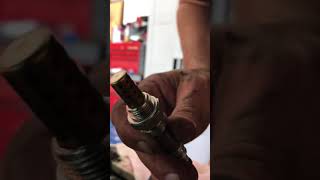
- Replace the Sensor: If the sensor is confirmed to be faulty, replace it. Use a proper 22mm O2 sensor socket and apply 🎬 Watch: Step-by-step upstream O2 sensor replacement guide anti-seize compound to the threads of the new sensor if not pre-applied.
- Clear Code and Test Drive: After replacement, clear the code with the scanner and perform a test drive to ensure the code does not return.
Parts You'll Likely Need
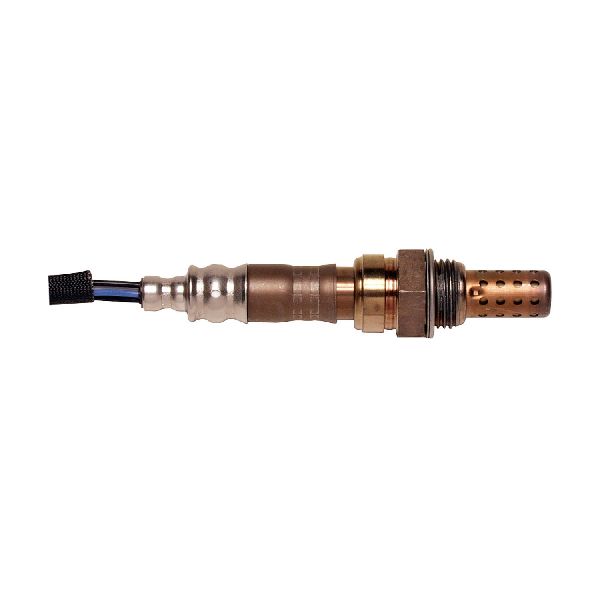
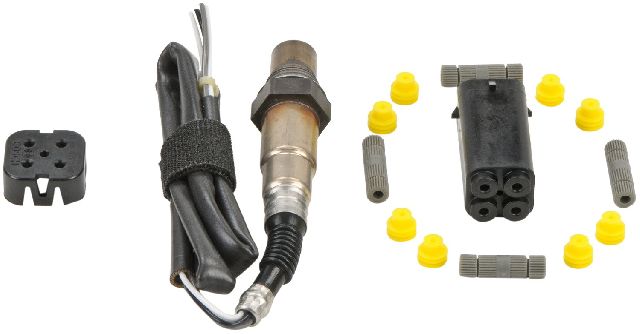
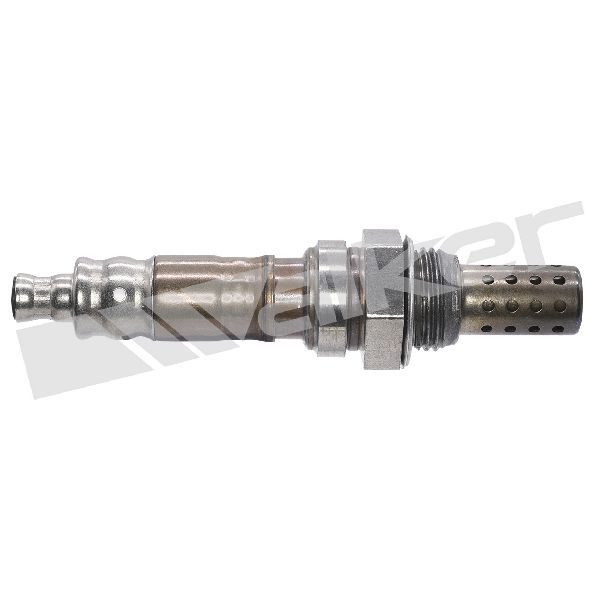
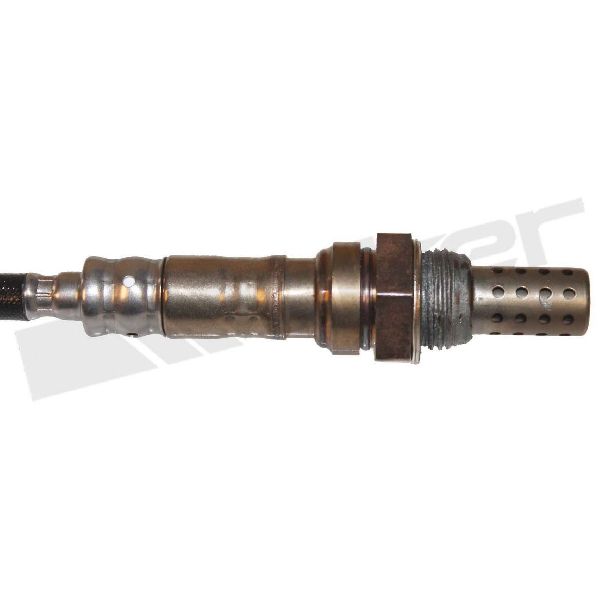
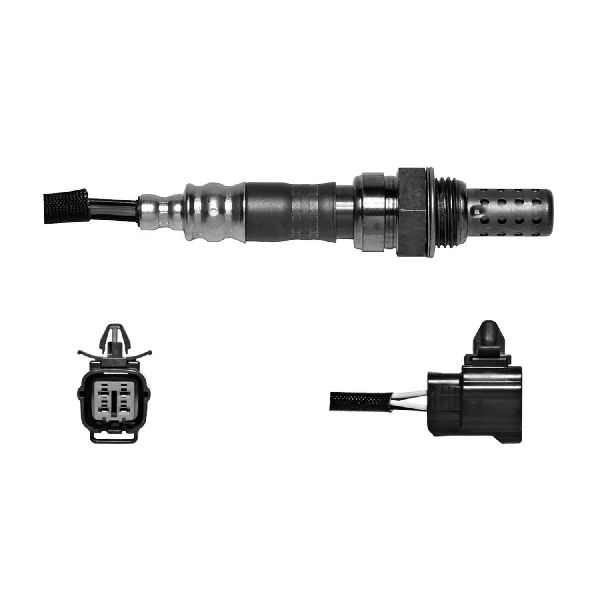
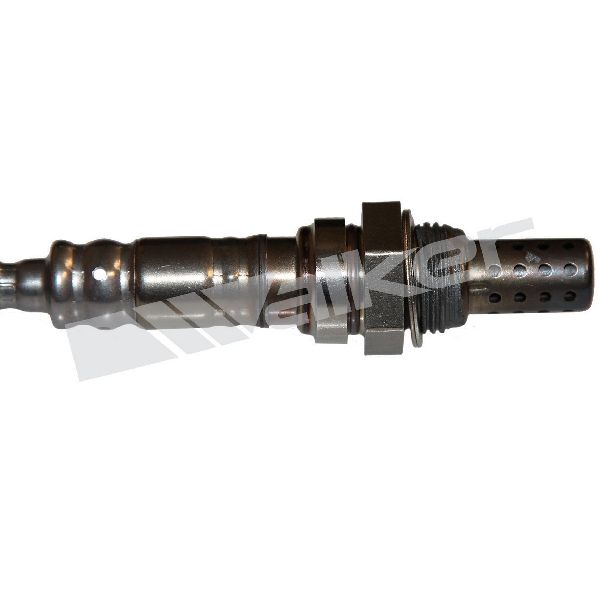
- Upstream Oxygen Sensor
(OEM #FSN5-18-861B (2.0L), ZL01-18-861A (1.6L), FS7N-18-861-9U (2.0L supersession))— This sensor is the most common cause of failure for the P0132 code due to its age and exposure to extreme heat cycles.
Trusted brands: Denso (e.g., 234-4721 for 2.0L), NGK/NTK, Bosch (e.g., 13887 for 1.6L)
OEM price range: $120-$180
Aftermarket price range: $40-$90
Related Codes That Often Appear With This One
- P0172 — If the engine is genuinely running rich due to a fuel system issue (like a bad fuel pressure regulator or leaky injector), P0172 (System Too Rich Bank 1) may appear alongside P0132.
- P0133 — P0133 (O2 Sensor Circuit Slow Response) can sometimes accompany P0132 as the sensor begins to fail and becomes both biased and slow to respond.
Technical Service Bulletins (TSBs) & Recalls
- TSB 01-006/08 - 'MULTI MODEL - OXYGEN SENSOR REMOVAL CAUTION': While not specific to P0132, Mazda issued a general TSB reminding technicians about proper procedures for removing O2 sensors to avoid thread damage.
Platform-Specific Known Issues
- The upstream O2 sensor is generally easy to access on the front of the exhaust manifold, making replacement relatively simple for a DIYer.
- A cracked flexible air intake hose is a common failure point on this generation of Protege and can cause a variety of fuel trim and O2 sensor-related codes. A user on Mazda-Forum.com reported that taping up a large crack in this hose resolved their O2 sensor codes and rough idle.
Mechanic-Grade Diagnostic Values
- O2 Sensor Heater Circuit Resistance — expected: 2-4 Ohms at room temperature.. Failure: A reading of infinite resistance (OL) indicates an open circuit, while a reading of zero ohms indicates a short. Both conditions require sensor replacement.
- O2 Sensor Heater Circuit Power Supply — expected: 12V (Battery Voltage) at the harness-side connector with the key on, engine off.. Failure: No voltage indicates a blown fuse or a break in the power supply wire.
- PCM Reference Voltage at O2 Sensor Connector — expected: ~0.45V on the signal wire with the sensor unplugged and key on, engine off.. Failure: A reading of 0V or significantly different voltage suggests a PCM or wiring fault. A reading of 12V indicates a short to power in the harness.
Wiring & Ground Locations
- Main Engine Ground — A primary ground cable runs from the negative battery terminal to a bracket on top of the transmission.. A poor main engine ground can cause a variety of electrical issues and erratic sensor readings. Ensuring this connection is clean and tight is a fundamental step in diagnosing any electrical fault.
- Passenger Side Ground — There is a ground point on the passenger side motor mount.. This ground serves various components in the engine bay. Corrosion or a loose connection here can affect sensor performance.
- O2 Sensor Heater Fuse — A 10A 'ENGINE' fuse located in the interior fuse panel in the driver's side footwell (position 14). An 'EFI' or 'A/F HEATER' fuse may also be present in the under-hood fuse box.. While P0132 is a high voltage code, a shorted sensor can sometimes blow the heater circuit fuse, leading to multiple O2 sensor-related codes. It's a quick check to rule out power supply issues.
- O2 Sensor Connector — The electrical connector for the upstream O2 sensor is located under the intake manifold.. This location can be difficult to access and makes visual inspection for damage or corrosion challenging. A video for the similar Mazdaspeed Protege suggests twisting the connector 180 degrees to access the release tab more easily.
Real Owner Repair Stories
- Reddit user Panda85m in r/MazdaProtege (2000 Mazda Protege) — Persistent check engine light with a heater circuit code (P1135, functionally related to P0132 issues).
❌ Tried (didn't work) Online searches provided conflicting information about the correct wiring.
✅ What actually fixed it The problem was an incorrect pinout at the sensor connector. The user manually re-pinned the connector wires to match the sensor's requirements, which resolved the code without needing to replace the sensor itself.
Model Year Variations Within This Range
- 1999-2000: The top-line ES model came standard with a 1.8L FP-DE four-cylinder engine. The DX and LX models used a 1.6L ZM-DE engine.
- 2001-2003: For the 2001 model year facelift, the 1.8L engine was replaced by a more powerful 2.0L FS-DE four-cylinder in the ES trim and as an option on the LX. The 1.6L remained the base engine. While the O2 sensor function is the same, the specific part numbers differ between the 1.6L, 1.8L, and 2.0L engines.
Diagnostic Flowchart
Other Known Issues on This Vehicle
Issues unrelated to this code that are worth knowing about as an owner of this generation:
- Automatic Transmission Failure 🔴 High — Common on 1999 and 2000 models, with reports of hesitation, jerky shifting, and complete failure.
- Sticking/Failing EGR Valve 🟠 Medium — The EGR valve is prone to sticking due to carbon buildup or internal moisture causing rust, leading to rough idle, stalling, and misfire codes (P0300). (Ref: TSB 01-028/05 (US), TSB 01-07-17 (Canada))
- Body Rust 🟠 Medium — Significant rust is common, especially in regions that use road salt. It typically starts in the rear wheel arches and rocker panels.
- Cracked Air Intake Hose 🟡 Low — The flexible ribbed section of the intake hose between the MAF sensor and throttle body frequently cracks with age, causing vacuum leaks that lead to rough idling and various engine codes.
- Faulty Ignition Coils (1.8L) 🟠 Medium — The 1.8L engine was subject to an emissions recall for failing ignition coils that could cause misfires. (Ref: Emission Recall Campaign #0702F)
- Variable Tumble Control System (VTCS) Screw Ingestion (2.0L) 🔴 High — Screws holding the butterfly valves in the intake manifold can loosen and fall into the engine, potentially causing catastrophic damage. An owner on Mazdas247.com recommended removing and reinstalling them with Loctite. (Ref: Emission Recall #3005C)
Used vs. New Parts: Buying Guide for This Vehicle
When a used part is the smart pick: For a P0132 code, a used part only makes sense for the wiring harness connector (pigtail). If the original connector is cracked, melted, or corroded, a clean pigtail from a junkyard vehicle is a cost-effective and reliable repair. Never buy a used oxygen sensor.
Donor-vehicle mileage cap: roughly under 150000 miles for the part to have meaningful remaining life.
What to inspect on the donor part:
- For a wiring pigtail, ensure the plastic connector body is not brittle, cracked, or showing signs of heat damage.
- Check that the connector's locking tab is intact and functional.
- Inspect the wire insulation for any signs of melting, chafing, or oil contamination.
- Look at the metal pins inside the connector to ensure they are straight, clean, and free of green or white corrosion.
Aftermarket brands forum-validated for this vehicle:
- Denso
- NTK (part of NGK)
Brands owners have reported issues with on this vehicle:
- Bosch (While a major OEM supplier for European cars, some forum users report more issues with Bosch aftermarket O2 sensors on Japanese vehicles compared to Denso or NTK).
- Unbranded or 'white-box' sensors from online marketplaces often have high failure rates or incorrect calibration, leading to the code returning.
Real Owner Stories
Aggregated from forums and TSBs cited above. Mileages and costs reflect what owners reported in those sources.
1999 Mazda Protege
Symptoms: The user experienced O2 sensor codes and a rough idle. Upon inspection, they found the hose extending from the air filter was cracked almost all the way around.
What fixed it: Taping up the large crack in the air intake hose between the MAF and the throttle body.
Source hint: Mazda-Forum.com thread titled 'Changed BOTH o2 sensors - still problems'
Mazdaspeed Protege
Symptoms: The owner reported a melted O2 sensor and a damaged wiring harness.
What fixed it: Repairing or replacing the melted wiring harness and sensor, as heat damage from the exhaust manifold is a known risk.
Source hint: Reddit r/MechanicAdvice
2.0L Mazda Protege
Symptoms: Potential for catastrophic engine damage due to screws holding butterfly valves in the intake manifold loosening.
What fixed it: Removing the Variable Tumble Control System (VTCS) screws and reinstalling them with Loctite to prevent them from falling into the engine.
Source hint: Mazdas247.com
Documented NHTSA Reports
Cross-Manufacturer Reference: Mazda CX-9
Symptoms: An owner reported that the vehicle immediately would not accelerate and quickly lost speed. NHTSA ODI #11472060 describes how the engine light triggered code P0132, though the light eventually went off after an hour, allowing the vehicle to maintain a safe speed.
Related OBD-II Codes
Frequently Asked Questions
Is there a specific brand of oxygen sensor I should use for my Mazda Protege to fix P0132?
I heard Mazda issued a TSB regarding oxygen sensor replacement; does it apply to my P0132 repair?
Could a rough idle and P0132 on my 1999 Protege be caused by something other than the sensor?
Where is the Bank 1, Sensor 1 oxygen sensor located on this vehicle?
Can an exhaust leak cause a P0132 code on a Mazda Protege?
Are there any recalls for the 1.8L Protege engine that might relate to engine performance issues?
Helpful Videos
We Have This Part in Stock

The information in this article is provided for general reference and educational purposes only. Vehicle specifications, procedures, and part compatibility can vary by production date, trim level, and region. Always consult your vehicle's factory service manual and verify part numbers before purchasing or performing repairs. Safety-critical components such as airbags, seat belts, and braking systems should be installed by a qualified professional.
- Mazda Protege:
- 🧭 Diagnostic Flowchart
- 🎬 Helpful Videos
- 🛍️ Shop This Part
- What's Unique About the 1999-2003 Mazda Protege
- Symptoms You May Notice
- Most Likely Causes
- Rare But Worth Checking
- Diagnosis Steps
- Parts You'll Likely Need
- Related Codes That Often Appear With This One
- Technical Service Bulletins (TSBs) & Recalls
- Platform-Specific Known Issues
- Mechanic-Grade Diagnostic Values
- Wiring & Ground Locations
- Real Owner Repair Stories
- Model Year Variations Within This Range
- Other Known Issues on This Vehicle
- Used vs. New Parts: Buying Guide for This Vehicle
- Real Owner Stories
- 1999 Mazda Protege
- Mazdaspeed Protege
- 2.0L Mazda Protege
- Documented NHTSA Reports
- Cross-Manufacturer Reference: Mazda CX-9
- Related OBD-II Codes
- Frequently Asked Questions
- 🎟️ Get 5% Off