

P0132 on 2005-2010 Pontiac G6: O2 Sensor High Voltage Causes and Fixes
On a 2005-2010 Pontiac G6, code P0132 is most often caused by a failed upstream oxygen sensor (Bank 1, Sensor 1). Replacing the sensor is a common DIY fix, with parts costing between $40 for an aftermarket sensor and $90 for an OEM ACDelco part. Always verify the correct sensor for your specific engine (2.4L, 3.5L, 3.6L, or 3.9L) before purchasing.
- P0132 on a Pontiac G6 almost always means the upstream oxygen sensor (Bank 1, Sensor 1) has failed.
- Identify your engine (4-cylinder or V6) to locate Bank 1 correctly before buying or replacing parts. For V6 models, Bank 1 is near the firewall.
- This is a DIY-friendly repair, especially on the 2.4L engine. You'll need an O2 sensor socket or a 22mm (7/8-inch) wrench.
- Always inspect the wiring for melting or damage before spending money on a new sensor.
- Ignoring this code will hurt your fuel economy and can eventually damage your expensive catalytic converter.
What's Unique About the 2005-2010 Pontiac G6
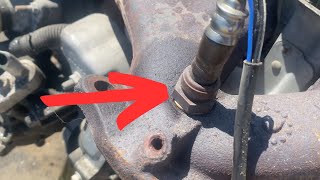
For the Pontiac G6, the location of 'Bank 1' depends on the engine. On the 2.4L 4-cylinder engine, there is only one bank, so 'Bank 1' is the only exhaust manifold. On the V6 engines (3.5L, 3.6L, 3.9L), 'Bank 1' is the cylinder bank located closer to the firewall (the rear of the engine bay). 🎬 See this video for V6 sensor locations and replacement steps. 'Sensor 1' is always the upstream sensor, located in the exhaust manifold before the catalytic converter. There are no widespread, unique design flaws on the G6 that cause this code, which typically points to normal component wear. However, owners report the upstream sensor on the 2.4L engine is relatively easy to access from the top of the engine bay, behind the engine.
Symptoms You May Notice
- Illuminated Check Engine Light
- Reduced fuel economy
- Rough or unstable idle
- Engine hesitation or stumbling on acceleration
- Possible exhaust odor (often smelling of sulfur or rotten eggs)
- Black smoke from the exhaust in some cases
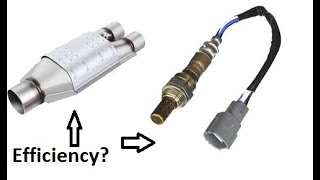
- Replacing the catalytic converter. A P0132 code is almost never caused by a bad catalytic converter. A bad converter would typically set a P0420 (Catalyst System Efficiency Below Threshold) code.
- Replacing the wrong oxygen sensor. The code specifically points to Bank 1, Sensor 1 (upstream). Replacing the downstream sensor (Sensor 2) or a sensor on Bank 2 (on V6 models) will not fix the issue.
Most Likely Causes
- Failed Bank 1, Sensor 1 Oxygen Sensor 🔴 High Probability → Shop Oxygen Sensor Oxygen sensors are wear items that degrade over time due to constant exposure to high-temperature exhaust gases. After many years and miles (typically 60,000-90,000 miles), internal failure of the sensing element or heater circuit is common.
How to confirm: Use an OBD-II scanner with live data capabilities. Observe the voltage for 'O2S B1S1'. If the voltage is stuck at or near 1.0V and does not fluctuate during idle and light throttle, the sensor is almost certainly faulty. A good sensor will oscillate rapidly. If you create a vacuum leak, a good sensor's voltage should drop; if it stays high, it has failed.
Typical fix: Replace the Bank 1, Sensor 1 oxygen sensor. Allow the exhaust to cool completely. Use a specialized 22mm (or 7/8") O2 sensor socket and a ratchet to remove and install the new sensor. Apply anti-seize compound to the threads of the new sensor if not pre-applied.
Est. part cost: $40-$90 - Damaged Wiring or Connector 🟡 Medium Probability The sensor wiring is routed near hot exhaust components and moving engine parts. Over time, the plastic loom can become brittle and break, exposing wires to melting on the exhaust manifold or chafing against the engine block.
How to confirm: Visually inspect the entire wiring harness from the O2 sensor to its connection point. Look for frayed wires, melted insulation, or corrosion in the connector pins. Use a multimeter to check for a short to voltage on the signal wire, which would cause a constant high reading. Also check the heater circuit wires for continuity and power/ground.
Typical fix: Repair the damaged section of wiring using solder and heat-shrink tubing or replace the connector pigtail. Ensure the repaired wiring is properly secured with zip ties away from heat sources and moving parts.
Est. part cost: $15-$40 - Rich Running Condition ⚪ Low Probability While not specific to the G6, issues like a leaking fuel injector, a faulty fuel pressure regulator, or a malfunctioning EVAP purge valve can cause too much fuel to enter the engine. In this case, the O2 sensor is correctly reporting a rich condition with high voltage.
How to confirm: Check fuel trim data on a scanner. If Short Term (STFT) and Long Term (LTFT) fuel trims for Bank 1 are significantly negative (e.g., -15% or more), it confirms the PCM is trying to remove excess fuel. This indicates the O2 sensor is likely working correctly and reporting a separate problem. This would often be accompanied by code P0172 (System Too Rich).
Typical fix: Diagnose the source of the rich condition. This may involve testing fuel pressure, checking for leaking injectors, or inspecting the EVAP system. Repair the root cause.
Est. part cost: $50-$500+
Rare But Worth Checking
- Exhaust Leak Before the Sensor: An exhaust leak from a cracked manifold or bad gasket before the O2 sensor can draw in outside air. This can confuse the sensor, and while it more commonly causes a lean code (P0131), it can sometimes lead to an incorrect high voltage reading as the PCM overcompensates.
- Faulty Powertrain Control Module (PCM): → Shop Engine Control Module (ECM) This is very rare. The PCM's internal driver circuit for the sensor can fail, causing it to read a constant high voltage. This should only be considered after all other possibilities (sensor, wiring, fuel system) have been exhaustively ruled out.
Diagnosis Steps
- Connect an OBD-II scanner and confirm the P0132 code is present. Note any other codes, especially P0172 or P0135.
- View live data on the scanner, focusing on the Bank 1 Sensor 1 (B1S1) voltage. Confirm it is stuck high, near or above 0.9V, and not oscillating.
- Perform a thorough visual inspection of the B1S1 O2 sensor's wiring harness and connector. Look for any signs of melting, chafing, corrosion, or loose pins. Ensure it is secured away from the exhaust manifold.
- If wiring looks good, the most common and direct fix is to replace the Bank 1, Sensor 1 O2 sensor. Ensure the exhaust is cool before attempting.
- Clear the codes with the scanner and perform a test drive, including city and highway conditions, to see if the code returns.
- If the code returns, a more advanced diagnosis is needed. Check for a rich running condition by observing long-term and short-term fuel trims. Significantly negative numbers indicate a rich condition that needs further investigation (e.g., fuel pressure test, injector leak-down test).
- If fuel trims are normal and a new sensor didn't fix it, test the sensor's wiring circuit more thoroughly with a multimeter for a short to voltage. Check for proper ground and reference voltage from the PCM.
- Check for exhaust leaks between the cylinder head and the upstream O2 sensor.
Parts You'll Likely Need
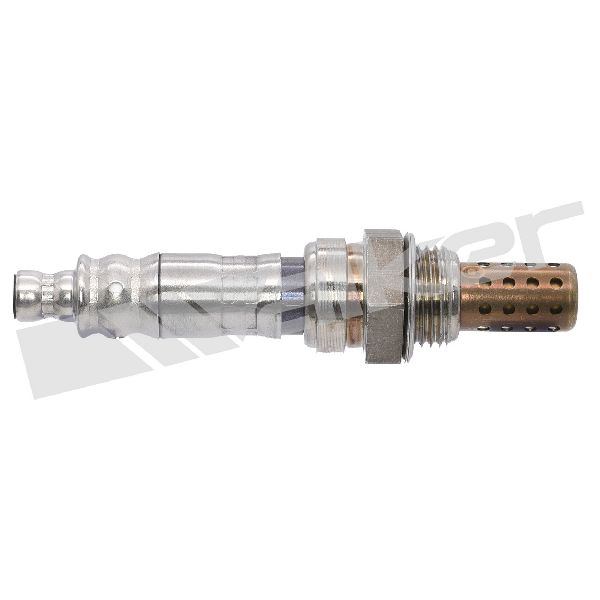
- Bank 1 Sensor 1 Oxygen Sensor
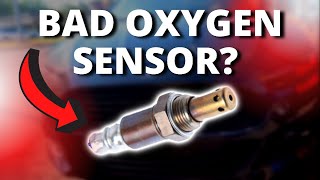
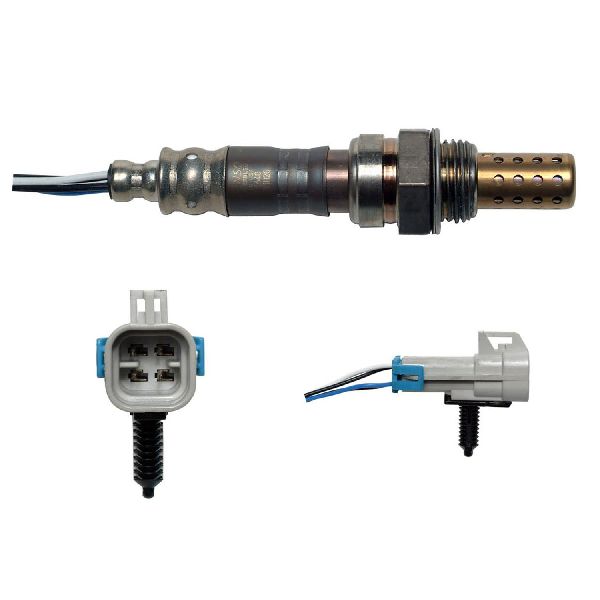
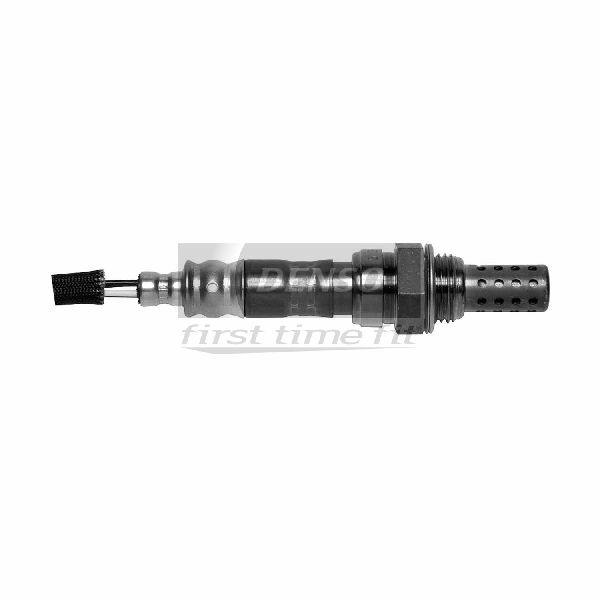
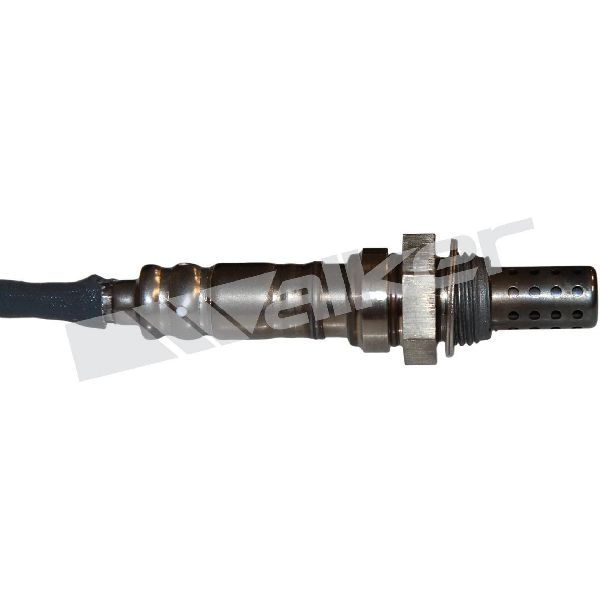
(OEM #ACDelco 213-1574 (GM 12589321) for 2.4L; ACDelco 213-4668 (GM 12576131) for V6 models. Always verify with VIN.)— This is the primary upstream sensor responsible for providing crucial air-fuel ratio feedback. It is the most common failure point for code P0132.
Trusted brands: ACDelco (OEM), Denso (often OEM supplier), Bosch, NTK/NGK
OEM price range: $70-$95
Aftermarket price range: $35-$75
Related Codes That Often Appear With This One
- P0172 — System Too Rich (Bank 1). This code often appears with P0132 because the high sensor voltage is the primary indicator the PCM uses to determine a rich condition exists.
- P0300 — Random/Multiple Cylinder Misfire Detected. A severe rich condition can foul spark plugs and lead to misfires.
- P0135 — O2 Sensor Heater Circuit Malfunction (Bank 1, Sensor 1). The heater inside the O2 sensor can fail, which often happens along with the failure of the sensing element itself, triggering both codes.
Technical Service Bulletins (TSBs) & Recalls
- TSB 09-06-04-023: While not directly for P0132, this bulletin addresses incorrect ECM/TCM ground locations for some 2009 G6 models. A poor ground can cause erratic sensor readings and various DTCs, making it a relevant document to check if wiring issues are suspected.
Platform-Specific Known Issues
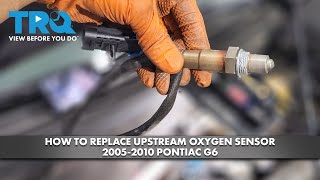
- Easy Access on 2.4L Engine: On the 2.4L 4-cylinder engine, the upstream O2 sensor (Bank 1, Sensor 1) is located on the exhaust manifold behind the engine block. It is generally accessible from the top of the engine bay, making replacement a straightforward DIY job 🎬 Watch: Step-by-step guide to replacing the upstream sensor. without needing to lift the vehicle.
Mechanic-Grade Diagnostic Values
- O2 Sensor Heater Element Resistance — expected: 3 to 15 Ohms when measured at ambient temperature across the two heater circuit pins (often the two same-colored wires) on the sensor connector.. Failure: A reading of infinite resistance (open circuit) or zero resistance (short circuit) indicates a failed heater element. A reading outside the 3-15 Ohm range also suggests a faulty sensor.
- O2 Sensor Heater Circuit Power Supply — expected: Approximately 12 volts (battery voltage) at the harness-side connector on the power feed wire with the key in the ON position.. Failure: No voltage suggests a blown fuse (check underhood fuse block for 'O2' or 'EMISS' fuses) or a break in the power wire.
Wiring & Ground Locations
- G101 / G106 — G101 is located at the front of the engine on the lower block. It provides a ground for the Engine Control Module (ECM). It often jumpers to G106. G106 is located on the front center of the frame cross rail, under the crank pulley.. A poor ECM ground can cause a wide range of erratic sensor readings, including incorrect O2 sensor voltages. Verifying these grounds are clean and tight is a crucial step when diagnosing persistent or unusual electrical issues.
- G102 — Located at the left rear of the engine.. This ground point serves various engine components. While not a primary ECM ground, corrosion or looseness here can introduce electrical noise that may affect sensor performance.
- O2 Heater Fuse — In the underhood fuse block. The specific fuse number can vary, but it is often labeled 'O2 HTR', 'O2A', or similar.. The O2 sensor heater has its own power circuit, protected by a fuse. If this fuse blows, the sensor won't heat up properly, which can lead to performance issues and related codes like P0135. While P0132 is a high voltage signal code, a related heater circuit failure is common.
Model Year Variations Within This Range
- 2006-2009: The majority of 2.4L 4-cylinder Pontiac G6 models in this range are equipped with the LE5 engine variant. While other variants like the LE9 (E85 capable) existed, the LE5 is the most common, and parts are generally interchangeable for this specific repair.
Diagnostic Flowchart
Used vs. New Parts: Buying Guide for This Vehicle
When a used part is the smart pick: It is strongly NOT recommended to buy a used oxygen sensor from a junkyard or private seller. O2 sensors are wear items with a finite lifespan (typically 60k-90k miles) and are highly sensitive to contamination. The remaining life of a used sensor is unknown, making it a poor value proposition.
Donor-vehicle mileage cap: roughly under 15000 miles for the part to have meaningful remaining life.
What to inspect on the donor part:
- If forced to use one in an emergency, look for a donor vehicle with extremely low mileage.
- Ensure the sensor tip is not physically damaged, coated in oil, or has a heavy, thick black soot buildup.
- The wiring pigtail and connector must be fully intact with no cuts, melting, or corrosion.
OEM-only on this vehicle (don't cheap out):
- While not strictly 'OEM-only', sticking to the OEM brand (ACDelco) or a known OEM supplier is the most reliable choice to avoid compatibility issues that are common with generic, no-name sensors.
Aftermarket brands forum-validated for this vehicle:
- ACDelco (OEM)
- Denso (OEM supplier, highly recommended)
- NTK / NGK (OEM supplier, highly recommended)
- Bosch (Inventor of the O2 sensor and OEM supplier)
Brands owners have reported issues with on this vehicle:
- Unnamed or 'white-box' generic brands from online marketplaces. While cheaper, they have a high rate of premature failure or incorrect voltage signaling, which can cause the code to return or create new driveability problems.
Real Owner Stories
Aggregated from forums and TSBs cited above. Mileages and costs reflect what owners reported in those sources.
2009 Pontiac G6 GT 3.5L V6
Symptoms: Check Engine Light was on with both P0132 and P0172 codes stored.
What fixed it: Replacing the upstream oxygen sensor (Bank 1, Sensor 1) resolved both fault codes.
Source hint: g6ownersclub.com - 'P0132 and P0172'
Related OBD-II Codes
Frequently Asked Questions
Where is the Bank 1, Sensor 1 oxygen sensor located on my Pontiac G6?
Is replacing the P0132 oxygen sensor a difficult DIY job on the G6?
What brand of oxygen sensor is best for my 2005-2010 G6?
My scanner shows the O2 sensor voltage is stuck high, around 1.0V. Does this confirm the sensor is bad?
I have a P0172 (System Too Rich) code along with P0132. Are they related?
Is there a TSB for the P0132 code on my 2009 Pontiac G6?
Can I save money by installing a used oxygen sensor from a junkyard?
Helpful Videos

We Have This Part in Stock


The information in this article is provided for general reference and educational purposes only. Vehicle specifications, procedures, and part compatibility can vary by production date, trim level, and region. Always consult your vehicle's factory service manual and verify part numbers before purchasing or performing repairs. Safety-critical components such as airbags, seat belts, and braking systems should be installed by a qualified professional.
- Pontiac G6:
- 🧭 Diagnostic Flowchart
- 🎬 Helpful Videos
- 🛍️ Shop This Part
- What's Unique About the 2005-2010 Pontiac G6
- Symptoms You May Notice
- Most Likely Causes
- Rare But Worth Checking
- Diagnosis Steps
- Parts You'll Likely Need
- Related Codes That Often Appear With This One
- Technical Service Bulletins (TSBs) & Recalls
- Platform-Specific Known Issues
- Mechanic-Grade Diagnostic Values
- Wiring & Ground Locations
- Model Year Variations Within This Range
- Used vs. New Parts: Buying Guide for This Vehicle
- Real Owner Stories
- 2009 Pontiac G6 GT 3.5L V6
- Related OBD-II Codes
- Frequently Asked Questions
- 🎟️ Get 5% Off