

P0132 on 2008-2013 Subaru Forester: Front O2 Sensor High Voltage Causes and Fixes
On a 2008-2013 Subaru Forester, code P0132 almost always indicates a failed front oxygen sensor (also called an Air/Fuel Ratio sensor). The most reliable fix is replacing it with an OEM-quality Denso sensor (Part No. 234-9120), which costs about $120-$180. This is a DIY-friendly job with a difficulty of 2/5, but using cheaper brands often leads to the code returning.
- P0132 on your Forester almost certainly means the front oxygen sensor has failed.
- To avoid having the code come back, you must use an OEM Subaru or Denso-branded sensor (part #234-9120). Do not use universal or Bosch sensors.
- Before replacing the sensor, inspect the wiring and the connector on the passenger strut tower for damage.
- Driving with the code will hurt your gas mileage and can ruin your catalytic converter over time.
What's Unique About the 2008-2013 Subaru Forester
The 2008-2013 Subaru Forester (SH generation) with the EJ25 engine is known to be particularly sensitive to the brand and quality of its front oxygen sensor. While the P0132 code itself is standard, the solution is often platform-specific. Many owners on forums like subaruforester.org and Reddit report that using cheaper, universal, or non-OEM brand sensors (especially Bosch) causes the code to return quickly or never clear at all. To ensure a lasting repair, it is highly recommended to use the original equipment supplier, which is Denso for this vehicle.
Symptoms You May Notice
- Check Engine Light is on
- Reduced fuel economy, sometimes by 10-15% or more.
- Rough or unstable idle
- Engine hesitation or stumbling during acceleration.
- Possible smell of raw fuel from the exhaust
- Sputtering or misfiring under load.
- Replacing the sensor with a cheap, non-Denso brand (especially universal or Bosch), which often fails to fix the problem or fails prematurely.
- Replacing the rear oxygen sensor (Sensor 2) by mistake. P0132 is specifically for the front sensor (Sensor 1).
- Assuming the sensor is bad without checking for wiring damage first, particularly near the exhaust and at the strut tower connector.
- Mistaking a genuine rich condition (e.g., from a leaky injector) for a sensor failure. If code P0172 is also present, the sensor may be reporting correctly.
Most Likely Causes
- Failed Front Air/Fuel Ratio Sensor 🔴 High Probability → Shop Oxygen Sensor The heating element within the sensor is a common failure point, and the sensor's location exposes it to extreme heat cycles. Subarus are also notoriously sensitive to the specific electronic characteristics of the sensor, making OEM-quality parts essential. Aftermarket brands like Bosch are frequently reported by owners to not work correctly on this platform.
How to confirm: Using an OBD-II scanner with live data, observe the voltage for 'Bank 1, Sensor 1'. If the voltage is stuck above 0.9V and does not fluctuate during engine operation (once warmed up), the sensor has likely failed.
Typical fix: Replace the front oxygen sensor (Bank 1, Sensor 1). It is strongly recommended to use an OEM Subaru part or the direct-fit Denso-branded sensor (Part No. 234-9120).
Est. part cost: $120-$200 - Damaged Wiring or Connector 🟡 Medium Probability The sensor wiring is routed near hot exhaust components and the front CV axle. Wires can become melted, frayed, or damaged from contact. The main connector, located on the passenger side strut tower, can also become corroded or filled with debris.
How to confirm: Visually inspect the entire length of the wiring harness from the sensor to the main engine harness connector on the strut tower. Check for melted plastic, chafing, or breaks. Unplug the connector and inspect the pins for corrosion or damage. A multimeter can be used to check for a short to power on the signal wire.
Typical fix: Repair the damaged section of wire or clean/replace the connector. In some cases, a harness overlay may be required.
Est. part cost: $10-$50 - Engine Running Rich ⚪ Low Probability While less common for this specific code, an actual rich condition can be accurately reported by the sensor. Causes can include a leaking fuel injector, a faulty fuel pressure regulator, or even a dirty Mass Airflow (MAF) sensor causing incorrect fuel calculations.
How to confirm: This requires more in-depth diagnostics. Check fuel trims with a scan tool. If other codes like P0172 (System Too Rich) are present, investigate the fuel system. A fuel pressure test or injector balance test may be necessary.
Typical fix: Repair the underlying fuel system issue, such as replacing a leaking fuel injector or faulty fuel pressure regulator.
Est. part cost: $50-$400
Rare But Worth Checking
- Exhaust Leak Before the Sensor: While an exhaust leak typically causes a lean code (P0131), a significant leak near the sensor could potentially disrupt readings in a way that triggers a fault. It's worth a quick check for audible leaks or soot trails near manifold gaskets.
- Faulty Engine Control Module (ECM): → Shop Engine Control Module (ECM) This is extremely rare. The ECM should only be considered as the cause after all other possibilities, including the sensor and wiring, have been exhaustively ruled out.
Diagnosis Steps
- Connect an OBD-II scanner and confirm that P0132 is the active code. Note any other codes present, especially P0172, P0032, or P0131.
- Access the live data stream on the scanner and monitor the 'O2 Sensor B1S1' voltage and 'Short Term Fuel Trim'.
- Start the engine and let it warm up to enter closed-loop operation. Observe the sensor voltage. For a P0132, it will likely be stuck high, at or above 0.9 volts, and will not fluctuate.
- Perform a thorough visual inspection of the front oxygen sensor, which is located on the exhaust manifold. Check its wiring harness for any signs of melting, chafing, or physical damage all the way to its connector.
- Locate the electrical connector on the passenger-side strut tower. Unplug it and inspect the pins for corrosion, moisture, or bent/loose pins.
- If the wiring and connector appear to be in good condition, the front oxygen sensor itself is the most probable cause of the fault.
- If replacing the sensor does not resolve the code, perform a detailed check of the wiring harness for a short-to-power between the sensor connector and the ECM using a multimeter.
- If wiring is confirmed good, investigate other potential causes for a rich condition, such as leaking fuel injectors or a faulty fuel pressure regulator, especially if code P0172 is present.
Parts You'll Likely Need
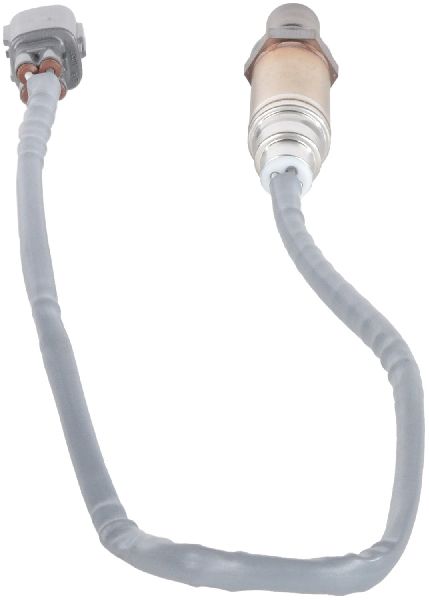
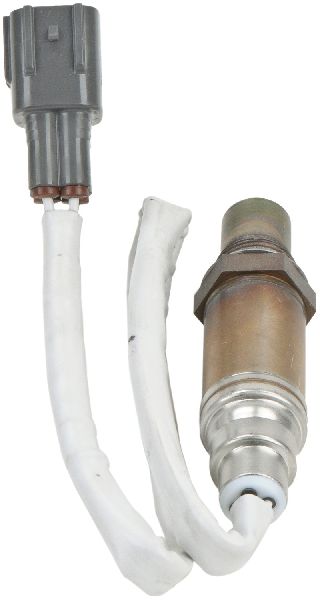
- Front Air/Fuel Ratio Sensor (Bank 1, Sensor 1)
(OEM #22641AA480)— This is the primary component responsible for the signal that triggers code P0132. Internal failure is the most common cause.
Trusted brands: Denso (OEM Equivalent, Part No. 234-9120), NGK/NTK
OEM price range: $160-$220
Aftermarket price range: $120-$180
Related Codes That Often Appear With This One
- P0172 — If the engine is genuinely running rich due to a fuel system problem, the P0132 (high voltage reading) may be accompanied by a P0172 (System Too Rich) code as the ECM confirms the rich condition.
- P0032 — This code indicates a fault in the sensor's internal heater circuit (Heater Control Circuit High). Since the heater and signal circuits are in the same component, an internal failure can cause both codes to appear, pointing definitively to a bad sensor.
- P0131 — O2 Sensor Circuit Low Voltage. It's not uncommon to see P0131 and P0132 appear together when a sensor is failing intermittently or there is a wiring issue causing the signal to swing between extreme high and low readings.
- P0420 — Catalyst System Efficiency Below Threshold. This is a common long-term consequence of ignoring a P0132 code. The persistent rich condition overheats and eventually damages the catalytic converter, leading to this expensive-to-fix code.
Technical Service Bulletins (TSBs) & Recalls
- TSB 02-170-17R: Addresses oil leaks from the AVCS oil control solenoid valve, a known issue on EJ and FB engines.
- TSB 11-131-13R / 02-157-14R: Relates to excessive oil consumption, which can indirectly affect O2 sensor readings and catalytic converter life. These TSBs outline oil consumption testing and, in some cases, short block replacement.
Platform-Specific Known Issues
- Owners and mechanics widely report that the EJ25 engine in this Forester generation is very picky about the front A/F sensor. Using brands other than the OEM supplier (Denso) is a frequent cause of repeat failures or the code not clearing.
- The main electrical connector for the front A/F sensor is located on the passenger side strut tower, which can be a point of failure due to corrosion or damage and should be inspected carefully during diagnosis.
Mechanic-Grade Diagnostic Values
- A/F Sensor Heater Circuit Resistance — expected: 2 to 5 ohms. Failure: A reading of OL (infinite) or significantly higher than 5 ohms indicates a failed heater element within the sensor.
- A/F Sensor #1 Current (Live Data) — expected: Fluctuating around 0.00 mA at stable idle.. Failure: Large, erratic current readings or a value that is stuck can indicate a failing sensor.
- A/F Sensor #1 Voltage (Live Data) — expected: Approximately 2.79 V at idle (Note: This is for a wideband A/F sensor, not a traditional O2 sensor which fluctuates 0.1-0.9V).. Failure: A voltage stuck significantly higher than the typical operating voltage, such as the 3.9V seen in one failure case, points to a fault.
- Harness Continuity (ECM to Sensor Connector) — expected: Less than 5 ohms.. Failure: Resistance greater than 5 ohms indicates excessive resistance or a break in the wiring harness.
Scan Tool Commands That Help
- Subaru Select Monitor (SSM) or equivalent professional scanner: A/F Sensor Compensation Reset / Clear Memory 2 — After replacing the front A/F sensor, it is recommended to perform this function to clear the old learned fuel trim values and force the ECM to relearn with the new sensor's data. This can prevent the code from returning due to old adaptation values.
Wiring & Ground Locations
- E23 / B18 — The main connector for the front A/F sensor is a 4-pin connector located on the passenger side strut tower in the engine bay.. This is the primary point for testing the sensor versus the engine harness. It is exposed to the elements and can be a source of corrosion or pin damage, causing high resistance or shorts.
- ECM Main Ground — The ECU grounds through the top of the intake manifold to the engine block.. A poor ground connection at the intake manifold, sometimes disturbed during other repairs, can create a voltage differential and cause incorrect sensor readings, potentially triggering a P0132 code even with a good sensor and harness.
- GB-2 — A chassis ground point located at the left front of the engine compartment.. This is a key chassis ground referenced in wiring diagrams. Corrosion or looseness at this point can affect the sensor's circuit path and lead to erratic voltage readings.
Real Owner Repair Stories
- AliExpress Product Review / Story (2008 Forester XT (EJ25 Turbo)) — Stubbornly recurring P0132 code.
❌ Tried (didn't work) Replacing the front A/F sensor twice with aftermarket parts.
✅ What actually fixed it The final fix involved two hidden issues: 1) A corroded ground connection between the intake plenum bracket and the firewall bulkhead connector. 2) A cracked PCV hose that was causing an unmetered air leak, which the ECM misinterpreted as a sensor fault. - LegacyGT.com forum user (4th Gen Subaru Legacy GT (similar EJ engine and platform)) — Initially a P0131 (low voltage), then after a sensor change, a persistent P0132 (high voltage).
❌ Tried (didn't work) Replacing the original front A/F sensor with a universal 4-wire Bosch sensor.
✅ What actually fixed it The user was advised by other forum members that the problem was the non-OEM universal sensor. The consensus was that Subarus of this era are extremely finicky and often reject non-OEM (specifically non-Denso) front A/F sensors, causing codes like P0132 to appear immediately after installation.
OEM Part Supersession History
22641AA381→22641AA480— Standard part evolution and supplier updates.
Heads up: While 22641AA480 is the correct replacement for this generation, ensure the replacement is specified for your vehicle's emissions type (PZEV vs. Federal), as there can be differences.
Model Year Variations Within This Range
- 2008-2013: Vehicles sold in California and other states following CARB regulations may be PZEV (Partial Zero-Emission Vehicle) models. PZEV and non-PZEV (Federal emissions) vehicles can sometimes use different A/F sensors with slight calibration or connector differences. It is critical to order the part based on the vehicle's VIN to ensure the correct emissions-specific sensor is used.
Diagnostic Flowchart
Other Known Issues on This Vehicle
Issues unrelated to this code that are worth knowing about as an owner of this generation:
- Head Gasket Failure 🔴 High — Common on naturally aspirated EJ25 engines from 1999-2011, typically occurring between 80,000 and 150,000 miles. The issue involves both internal and external coolant and oil leaks.
- Excessive Oil Consumption 🟠 Medium — Affects many EJ25 engines. Subaru considers consumption up to 1 quart per 1,200 miles as 'acceptable,' but it can indicate issues with piston rings or valve seals, especially after overheating events. (Ref: Subaru issued TSBs (e.g., 02-157 series, 11-131-13R) and extended warranties for some FB-series engines that followed the EJ, but the consumption issue is also known in later EJ25s.)
- AVCS Solenoid Oil Leaks 🟡 Low — The Active Valve Control System (AVCS) oil control solenoid valves can develop internal seal leaks, causing oil to seep into the electrical connector and trigger various AVCS-related DTCs. (Ref: TSB 02-170-17R)
- Catalytic Converter Failure 🟠 Medium — Often a consequence of other unresolved issues like a rich-running condition (from a bad A/F sensor) or oil consumption, which can contaminate and clog the converter.
- Timing Belt Maintenance 🔴 High — The EJ25 is an interference engine that uses a timing belt, not a chain. Failure to replace the belt, tensioner, and water pump at the recommended interval (typically around 105,000 miles) will result in catastrophic engine damage.
Used vs. New Parts: Buying Guide for This Vehicle
When a used part is the smart pick: For this specific P0132 repair, buying a used Air/Fuel Ratio sensor is generally NOT recommended. The part is a high-wear item with a finite lifespan, and a used sensor's remaining life is unknown. A used part may fail quickly or be faulty from the start. A used wiring harness pigtail could be a viable option if only the connector is damaged.
Donor-vehicle mileage cap: roughly under 50000 miles for the part to have meaningful remaining life.
What to inspect on the donor part:
- For a wiring pigtail, ensure the connector is not cracked or brittle.
- Check for clean, uncorroded pins inside the connector.
- Inspect the wires for any signs of melting, fraying, or previous repairs.
OEM-only on this vehicle (don't cheap out):
- Front Air/Fuel Ratio Sensor
Aftermarket brands forum-validated for this vehicle:
- Denso (Original Equipment Manufacturer)
- NGK / NTK
Brands owners have reported issues with on this vehicle:
- Bosch (specifically for the front A/F sensor on this platform, as widely reported in forums)
- Universal-fit sensors requiring wire splicing
Real Owner Stories
Aggregated from forums and TSBs cited above. Mileages and costs reflect what owners reported in those sources.
2009 Subaru Legacy 2.5L EJ25
Symptoms: User installed a universal Bosch sensor and immediately triggered a P0132 code.
What fixed it: Confirmed that Subarus are finicky about non-OEM sensors; the solution is using the specific Denso/OEM sensor.
Source hint: LegacyGT.com: 'DTC P0132 - Diagnostic procedure'
2013 Subaru WRX EJ25
Symptoms: Severe sputtering accompanied by a P0132 code.
What fixed it: Replacement of the front A/F sensor, though the user noted a subsequent replacement failed after only 8 months.
Source hint: Reddit r/subaru
2008-2013 Subaru Forester EJ25
Symptoms: Check engine light with a sensor voltage stuck above 0.9V and not fluctuating.
What fixed it: Replacement of the front oxygen sensor (Bank 1, Sensor 1) with a Denso-branded sensor (Part No. 234-9120).
Source hint: subaruforester.org / r/SubaruForester
Related OBD-II Codes
Frequently Asked Questions
Can I use a Bosch oxygen sensor to fix the P0132 code on my 2008-2013 Forester?
Where is the front A/F sensor connector located on my Forester?
Does TSB 02-170-17R regarding oil leaks affect my P0132 diagnosis?
Could my Forester's high oil consumption be related to this O2 sensor code?
What is the specific Denso part number I should use for the front sensor?
Is there a specific wiring area I should check for damage besides the sensor itself?
We Have This Part in Stock


The information in this article is provided for general reference and educational purposes only. Vehicle specifications, procedures, and part compatibility can vary by production date, trim level, and region. Always consult your vehicle's factory service manual and verify part numbers before purchasing or performing repairs. Safety-critical components such as airbags, seat belts, and braking systems should be installed by a qualified professional.
- Subaru Forester:
- 🧭 Diagnostic Flowchart
- 🛍️ Shop This Part
- What's Unique About the 2008-2013 Subaru Forester
- Symptoms You May Notice
- Most Likely Causes
- Rare But Worth Checking
- Diagnosis Steps
- Parts You'll Likely Need
- Related Codes That Often Appear With This One
- Technical Service Bulletins (TSBs) & Recalls
- Platform-Specific Known Issues
- Mechanic-Grade Diagnostic Values
- Scan Tool Commands That Help
- Wiring & Ground Locations
- Real Owner Repair Stories
- OEM Part Supersession History
- Model Year Variations Within This Range
- Other Known Issues on This Vehicle
- Used vs. New Parts: Buying Guide for This Vehicle
- Real Owner Stories
- 2009 Subaru Legacy 2.5L EJ25
- 2013 Subaru WRX EJ25
- 2008-2013 Subaru Forester EJ25
- Related OBD-II Codes
- Frequently Asked Questions
- 🎟️ Get 5% Off