

P0132 on 2005-2010 Subaru Forester XT: O2 Sensor High Voltage Causes and Fixes
On a 2005-2010 Forester XT, P0132 almost always means the front air/fuel ratio sensor (Bank 1, Sensor 1) has failed. The most reliable fix is replacing it with a Denso sensor (part #234-9120). Using other brands, especially Bosch or universal sensors, is a common cause of repeat failure. Expect to pay $120-$190 for the part, and it's a DIY-friendly job (2/5 difficulty). Before replacing, inspect wiring near the turbo for melting.
- P0132 on your Forester XT is almost certainly a failed front Air/Fuel ratio sensor.
- You MUST use a Denso (234-9120) or genuine Subaru (22641AA480) replacement sensor. Using other brands, including Bosch, will likely result in the code returning.
- Before replacing the sensor, always inspect the wiring harness for melting or damage, as this is a common secondary cause due to proximity to the turbo.
- Ignoring this code will hurt your gas mileage, disable cruise control, and can eventually destroy your catalytic converter, a much more expensive repair.
What's Unique About the 2005-2010 Subaru Forester XT
The Subaru EJ255 turbo engine is known for being particularly sensitive to the brand of A/F sensor used. While many brands exist, owners and mechanics widely report that only the original equipment manufacturer (Denso) or genuine Subaru-branded sensors provide a lasting fix. Using other brands, even reputable ones like Bosch, often results in the P0132 code returning quickly or immediately. This is a well-documented issue in owner forums, making brand selection a critical part of the repair.
Generation note: This range covers two Forester generations: the SG (2005-2008) and the SH (2009-2010). For the P0132 code, the causes, diagnosis, and primary fix (the front A/F sensor) are the same for both generations, as they share the same core engine (EJ255) and a compatible sensor part (Denso 234-9120).
Symptoms You May Notice
- Check Engine Light is on
- Flashing cruise control light (a standard Subaru feature when a CEL is active)
- Reduced fuel economy, often by 10-15%
- Rough or unstable idle
- Hesitation or sputtering during acceleration
- Slight smell of gasoline from the exhaust due to the rich mixture
- Replacing the rear (downstream) oxygen sensor. P0132 is specifically for the front 🎬 See this walkthrough for replacing the downstream sensor (upstream) sensor, Bank 1 Sensor 1.
- Using a cheap, universal, or non-Denso/OEM sensor. These are frequently incompatible with the Subaru ECU and will not fix the code. This is a very common mistake noted in forums.
- Assuming the sensor is bad without first inspecting the wiring harness for obvious damage like melting or corrosion.
- Replacing the sensor when a P0172 (System Too Rich) code is also present, which could indicate the sensor is correctly reporting a separate engine problem.
Most Likely Causes
- Failed Front Air/Fuel Ratio Sensor (Bank 1, Sensor 1) 🔴 High Probability → Shop Oxygen Sensor The sensor operates in a high-temperature environment in the exhaust manifold and simply wears out. The EJ255 ECU is notoriously sensitive to the sensor's electronic characteristics, and aftermarket sensors (especially Bosch or universal types) frequently fail to work correctly, causing the code to return.
How to confirm: Use a scan tool to monitor the live data for the Bank 1, Sensor 1 voltage. If the voltage is stuck above 0.9V and is not fluctuating rapidly once the engine is in closed-loop, the sensor has likely failed. A healthy sensor's voltage will oscillate quickly between ~0.1V and ~0.9V. A more specific test is to check the resistance of the sensor's internal heater circuit; a healthy sensor should read between 2 and 10 ohms.
Typical fix: Replace the front A/F ratio sensor. It is critical to use a genuine Subaru (OEM #22641AA480) or Denso-branded part (p/n: 234-9120) to ensure compatibility and avoid a repeat failure.
Est. part cost: $120-$190 - Damaged Wiring or Connector 🟡 Medium Probability The sensor wiring is routed near extremely hot exhaust and turbo components, making it susceptible to melting. The main connector, located on the passenger-side strut tower, is exposed to the elements and can corrode or have pins back out.
How to confirm: Visually inspect the entire wiring harness from the sensor in the exhaust manifold up to the connector on the strut tower. Look for melted plastic, chafed wires, or any signs of corrosion or damage at the connector itself. A multimeter can be used to check for a short to power on the signal wire.
Typical fix: Repair the damaged section of the wiring harness using solder and heat-shrink tubing or replace the connector pigtail. If damage is severe, a new harness may be needed.
Est. part cost: $15-$100 - Engine Running Rich ⚪ Low Probability While not specific to this vehicle, issues like leaking fuel injectors can occur, causing a genuinely rich condition that the A/F sensor correctly reports.
How to confirm: Check for other trouble codes, especially P0172 (System Too Rich). A rich condition can be caused by leaking fuel injectors, a faulty fuel pressure regulator, or a dirty Mass Airflow (MAF) sensor. This requires further diagnosis, such as a fuel pressure test or monitoring fuel trims.
Typical fix: This is not an O2 sensor problem. The sensor is correctly reporting a rich condition. The root cause (e.g., leaking injector) must be diagnosed and repaired.
Est. part cost: $50-$500+
Rare But Worth Checking
- Exhaust Leak: An exhaust leak upstream of the A/F sensor (e.g., at the exhaust manifold gasket) can introduce outside air, confusing the sensor and causing incorrect readings that may lead to a high voltage fault as the ECU tries to compensate. Listen for ticking or hissing noises from the exhaust manifold area.
- Corroded Ground Connection: A poor ground connection for the sensor circuit can cause a floating high voltage reading. One owner reported a corroded ground between the intake plenum bracket and the firewall was the ultimate cause of a stubborn P0132. Another owner found a severed exhaust ground strap caused sensor codes.
- Faulty Powertrain Control Module (PCM): → Shop Engine Control Module (ECM) In very rare cases, the PCM itself can fail and misinterpret the sensor's signal. This should only be considered after all other possibilities, including wiring, grounds, and the sensor itself, have been exhaustively ruled out.
Diagnosis Steps
- Connect an OBD-II scanner and confirm that P0132 is the primary code. Note any other codes present, especially P0172 or P0032.
- Using the scanner's live data function, observe the voltage for 'Bank 1, Sensor 1' with the engine fully warmed up. A healthy sensor will show voltage rapidly fluctuating between approximately 0.1V and 0.9V. If the voltage is stuck high (e.g., > 0.9V), it confirms the fault conditi 🎬 Watch: How to diagnose and fix a P0132 high voltage codeon.
- Perform a thorough visual inspection. The sensor is in the exhaust manifold, pre-turbo. Check its wiring harness for any signs of melting, chafing, or damage, especially near the turbocharger and exhaust.
- Locate the sensor's electrical connector (a 4-pin connector on the passenger-side strut tower) and inspect it for corrosion, moisture, or backed-out pins.
- If the wiring looks good and the voltage is stuck high, the A/F sensor itself is the most likely culprit.
- If you also have a P0172 code, or if a new quality sensor does not fix the issue, further investigation into a rich running condition (fuel injectors, fuel pressure) is necessary.
- Check for exhaust leaks between the cylinder head and the A/F sensor. Also inspect engine and exhaust ground straps for corrosion or breakage.
Parts You'll Likely Need
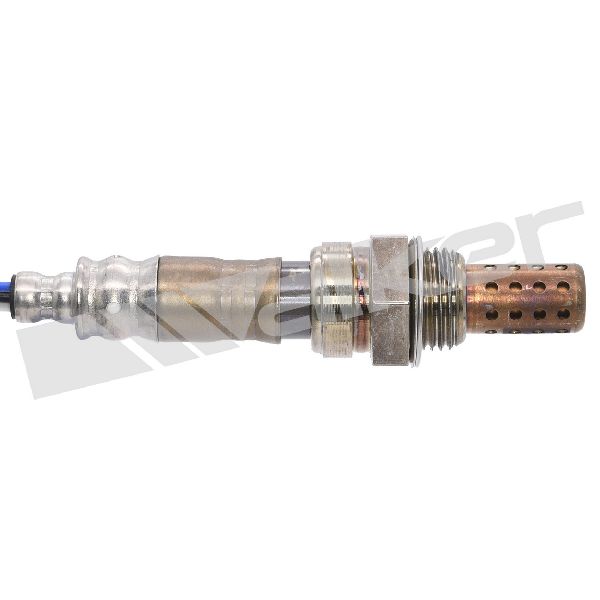
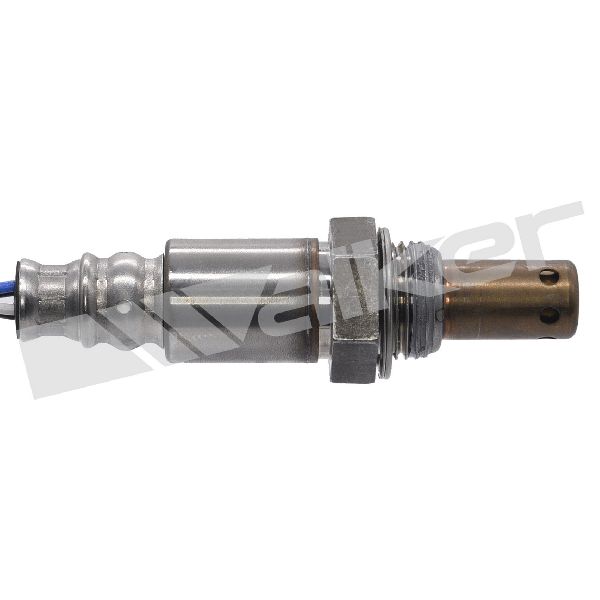
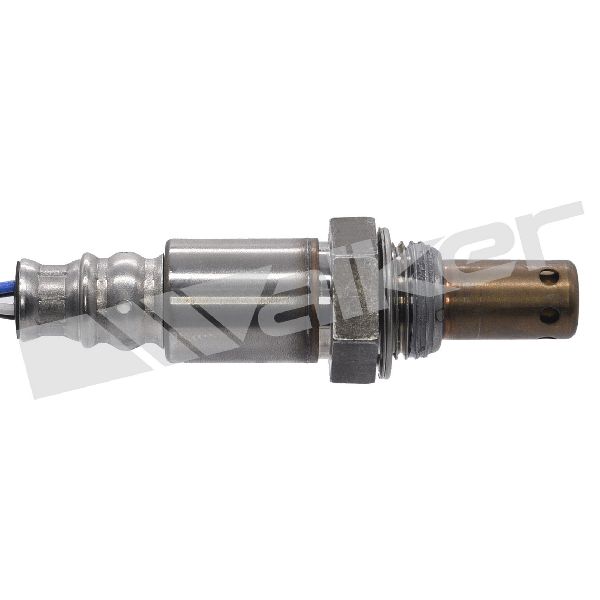
- Front Air/Fuel Ratio Sensor
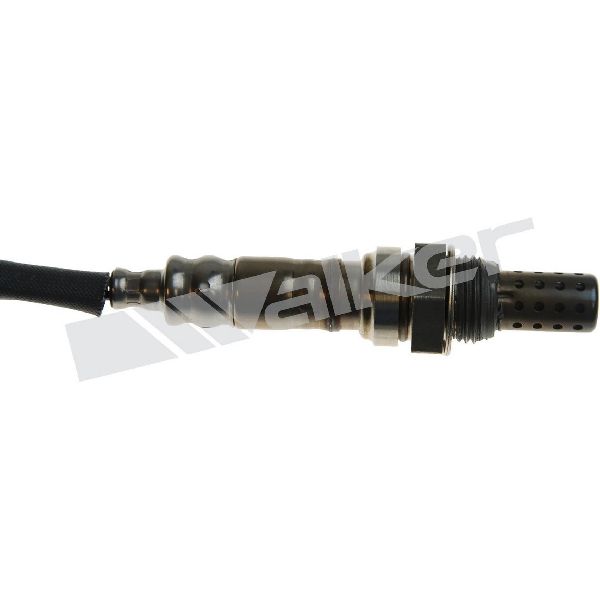
(OEM #22641AA480)— This is the component that fails in over 90% of P0132 cases on this vehicle. Its location exposes it to extreme heat, and internal failure is common. Using the correct brand is non-negotiable for a lasting repair.
Trusted brands: Denso (p/n: 234-9120), Subaru (Genuine OEM)
OEM price range: $180-$250
Aftermarket price range: $120-$190
Related Codes That Often Appear With This One
- P0172 — If the engine is genuinely running rich (e.g., from a leaky injector), the A/F sensor will correctly report high voltage (P0132) and the ECM will eventually set a P0172 code when it can no longer compensate for the excess fuel.
- P0032 — This code indicates a fault in the sensor's internal heater circuit. Since the heater element is a common failure point within the A/F sensor assembly, it can sometimes appear alongside P0132.
Platform-Specific Known Issues
- A/F Sensor Brand Sensitivity: As stated, the EJ255 ECU is extremely finicky. Forum threads are filled with stories of owners who tried a Bosch or other universal sensor only to have the P0132 code return, forcing them to buy the Denso sensor anyway.
- Connector Location: The front A/F sensor connector is a gray 4-pin connector located on the passenger side strut tower, making it relatively easy to access for testing.
- Grounding Issues: In rare cases, a corroded ground strap can be the root cause. One owner on an AliExpress blog fixed a recurring P0132 by cleaning a ground connection between the intake plenum and firewall. Another on Reddit solved O2 sensor codes by replacing a severed exhaust ground strap.
Mechanic-Grade Diagnostic Values
- A/F Sensor Heater Circuit Resistance — expected: 2 to 10 ohms at ambient temperature.. Failure: A reading of OL (infinite resistance) or significantly outside the 2-10 ohm range indicates a failed heater element within the sensor.
- A/F Sensor Element Resistance — expected: 1-3 kΩ (when testing across sensor leads, disconnected).. Failure: Values outside this range suggest a shorted or open sensor element.
- A/F Sensor #1 Current (Live Data) — expected: Fluctuating around 0.00 mA at a stable idle.. Failure: Large, erratic current readings or a value that is stuck can indicate a failing sensor.
- A/F Sensor #1 Resistance (Live Data) — expected: Should show a stable resistance value when monitored.. Failure: Erratic or out-of-spec readings.
Hidden / Shadow Codes Worth Checking
- Mode 6, Test ID for O2 Sensor: → Shop Oxygen Sensor Mode 6 data allows a technician to view the results of the ECM's self-tests for specific components, including the oxygen sensors. It can show test values and limits for sensor response time and voltage, providing a pass/fail result that is more detailed than a simple DTC. (see via A professional-grade OBD-II scanner with Mode 6 functionality.)
Scan Tool Commands That Help
- Subaru Select Monitor (SSM): Current Data Display & Save — Use this function to view manufacturer-specific PIDs not available on all generic scan tools, such as 'A/F Sensor #1 Current (mA)' and 'A/F Sensor #1 Resistance (ohm)'. These provide more detailed insight into the sensor's behavior beyond just voltage.
Wiring & Ground Locations
- Front A/F Sensor Connector — A gray 4-pin connector located on the passenger side strut tower.. This is the main connection point for the sensor. Inspecting for corrosion, moisture, or backed-out pins is a critical diagnostic step.
- Engine Ground GE-1 — Located on the left rear of the engine for the 2005 model year.. A poor engine ground can cause a variety of electrical issues, including incorrect sensor readings. Ensuring this ground is clean and tight is crucial.
- Shield & Sensor Ground Joint Connector — Located under the right side of the dash for the 2005 model year.. This is a central grounding point for multiple sensors. Corrosion or a loose connection here can affect the A/F sensor signal.
- Ground Point GB-1 — Located at the right front of the engine compartment for the 2010 model year.. This is a primary chassis ground point. A video on installing a grounding kit for a Forester XT highlights the importance of cleaning the main manifold ground bolt where multiple grounds connect.
Real Owner Repair Stories
- AliExpress Blog / Vertex AI Search (2008 Subaru Forester XT (EJ25 Turbo)) — Stubbornly recurring P0132 code, rough idle, poor fuel economy.
❌ Tried (didn't work) Replacing the front A/F sensor twice with aftermarket parts.
✅ What actually fixed it The final fix involved two hidden issues: 1) A corroded ground connection between the intake plenum bracket and the firewall bulkhead connector was cleaned. 2) A cracked PCV hose was found and replaced, which had been causing an unmetered air leak that the ECU misinterpreted as a sensor fault.
OEM Part Supersession History
22641AA381→22641AA480— Part update/revision by Subaru.
Heads up: 22641AA480 is the correct replacement for models in this range. While other numbers may exist, using the specified OEM or Denso equivalent is critical.
Diagnostic Flowchart
Other Known Issues on This Vehicle
Issues unrelated to this code that are worth knowing about as an owner of this generation:
- Turbo Oil Starvation (Banjo Bolt Filters) 🔴 High — Common on vehicles with inconsistent oil change histories. The tiny mesh filters in the oil feed banjo bolts for the turbo and AVCS can clog, starving the turbo of oil and causing catastrophic failure. (Ref: Subaru issued TSBs for later models recommending the removal of these filters as a preventative measure.)
- Ringland Failure 🔴 High — A known weakness of the EJ255's cast pistons, particularly on modified or aggressively driven vehicles. Detonation (knock) can crack the 'ringlands' (the piston material between the rings), leading to oil consumption, blow-by, and eventual engine failure.
- AVCS (Active Valve Control System) Faults 🟠 Medium — Often related to oiling issues (clogged banjo bolts, dirty oil). The oil control solenoids can fail or become clogged, causing rough running, loss of power, and codes like P0011 or P0021. (Ref: TSB 02-163-16R details diagnostic procedures for AVCS-related codes.)
- Leaking Valve Cover Gaskets 🟡 Low — Very common as the vehicle ages. The gaskets become brittle and allow oil to seep onto the hot exhaust manifolds below, causing a distinct burning oil smell.
Used vs. New Parts: Buying Guide for This Vehicle
When a used part is the smart pick: For this specific repair, using a used part is strongly discouraged. The A/F sensor is a wear item with a finite lifespan, and its electronic characteristics are critical for this vehicle. A used sensor carries a high risk of premature failure or incompatibility.
What to inspect on the donor part:
- Not applicable, as a new part is the only recommended path.
OEM-only on this vehicle (don't cheap out):
- Front Air/Fuel Ratio Sensor (Bank 1, Sensor 1)
Aftermarket brands forum-validated for this vehicle:
- Denso (Specifically part number 234-9120, which is the OE manufacturer)
Brands owners have reported issues with on this vehicle:
- Bosch (despite being a reputable brand, widely reported by owners to be incompatible with the EJ255 ECU)
- Universal sensors (require splicing and often have incorrect resistance/voltage characteristics)
- Unbranded, low-cost sensors from online marketplaces
Real Owner Stories
Aggregated from forums and TSBs cited above. Mileages and costs reflect what owners reported in those sources.
2008 Subaru Forester XT (EJ255)
Symptoms: Stubborn P0132 case where multiple aftermarket sensors failed to fix the issue.
What fixed it: Cleaning a corroded ground connection between the intake plenum and firewall and replacing a cracked PCV hose.
Source hint: AliExpress Blog - 'Subaru P0132? Here's Exactly How This Oxygen Sensor Fixed My Car'
2005-2009 Subaru Legacy GT (EJ255)
Symptoms: P0132 code appeared immediately after installing a universal Bosch sensor to fix a previous P0131 code.
What fixed it: Replacing the non-OEM Bosch sensor with the correct sensor as identified by forum consensus.
Source hint: LegacyGT.com - 'DTC P0132 - Diagnostic procedure'
2005-2010 Subaru Forester XT (EJ255)
Symptoms: O2 sensor codes and P0132.
What fixed it: Replacing a severed exhaust ground strap.
Source hint: Reddit
Related OBD-II Codes
Frequently Asked Questions
Can I use a Bosch or universal oxygen sensor to fix the P0132 code on my Forester XT?
Where is the front A/F ratio sensor connector located on the 2005-2010 Forester XT?
Why is my cruise control light flashing along with the Check Engine Light?
Could a ground strap cause a P0132 code on my Subaru?
Is there a TSB for the turbo oiling issues mentioned in the known issues section?
What should the resistance be for a healthy front A/F sensor on this vehicle?
Helpful Videos
We Have This Part in Stock


The information in this article is provided for general reference and educational purposes only. Vehicle specifications, procedures, and part compatibility can vary by production date, trim level, and region. Always consult your vehicle's factory service manual and verify part numbers before purchasing or performing repairs. Safety-critical components such as airbags, seat belts, and braking systems should be installed by a qualified professional.
- Subaru Forester XT:
- 🧭 Diagnostic Flowchart
- 🎬 Helpful Videos
- 🛍️ Shop This Part
- What's Unique About the 2005-2010 Subaru Forester XT
- Symptoms You May Notice
- Most Likely Causes
- Rare But Worth Checking
- Diagnosis Steps
- Parts You'll Likely Need
- Related Codes That Often Appear With This One
- Platform-Specific Known Issues
- Mechanic-Grade Diagnostic Values
- Hidden / Shadow Codes Worth Checking
- Scan Tool Commands That Help
- Wiring & Ground Locations
- Real Owner Repair Stories
- OEM Part Supersession History
- Other Known Issues on This Vehicle
- Used vs. New Parts: Buying Guide for This Vehicle
- Real Owner Stories
- 2008 Subaru Forester XT (EJ255)
- 2005-2009 Subaru Legacy GT (EJ255)
- 2005-2010 Subaru Forester XT (EJ255)
- Related OBD-II Codes
- Frequently Asked Questions
- 🎟️ Get 5% Off