

P0132 on 2002-2005 Subaru Impreza WRX: Front O2 Sensor High Voltage Causes & Fixes
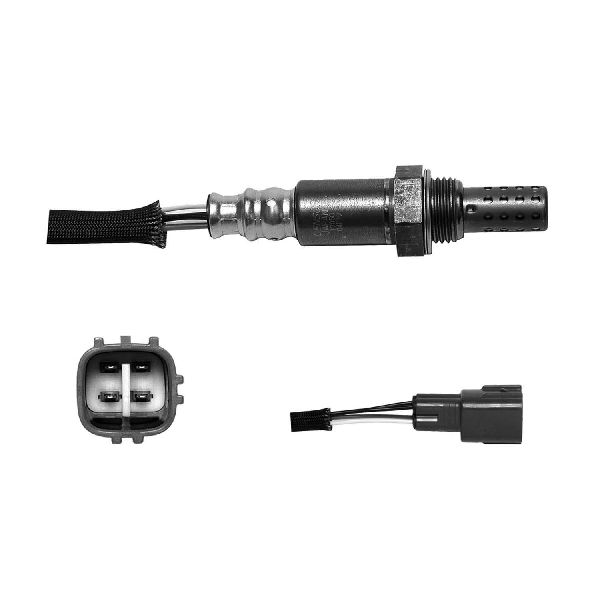
For the 2002-2005 WRX, code P0132 is almost always caused by a failed front oxygen (A/F) sensor. The sensor's voltage signal is stuck high, tricking the ECU into thinking the engine is running rich. Replacing it with an OEM-quality Denso (part #234-9011) is the most reliable fix. Expect to pay $150-$220 for the part, with DIY difficulty rated at 2/5. Ignoring this can lead to poor fuel economy and catalytic converter damage.
- P0132 on a 2002-2005 WRX almost always means the front oxygen sensor has failed.
- Do not use a generic or 'universal' sensor. You must use an OEM Subaru part or the Denso equivalent (part #234-9011) to ensure a proper fix.
- Symptoms include a check engine light, bad gas mileage, rough idle, and hesitation.
- Before replacing the sensor, do a quick visual check of the wiring harness for any obvious melting or damage, as it is routed near the hot turbo and exhaust.
- Driving with this code will cause the engine to run rich, wasting fuel and potentially damaging the expensive catalytic converter over time.
What's Unique About the 2002-2007 Subaru Impreza WRX
The turbocharged EJ205 engine in the 2002-2005 WRX is known for being particularly sensitive to the brand and quality of its front oxygen sensor. While the sensor is a common failure item on many cars, using generic or non-OEM brands on this platform often leads to persistent codes, poor performance, or new issues. Owner communities like NASIOC and Reddit overwhelmingly report that using the original equipment Denso sensor is critical for a lasting repair. This is because the ECU is calibrated for the specific response time and voltage curve of the Denso wideband sensor.
Generation note: The user-provided year range (2002-2007) covers two distinct North American WRX generations and engines. This guide is specific to the 2002-2005 'GD' Impreza WRX models equipped with the 2.0L EJ205 turbo engine. The 2006-2007 WRX used a 2.5L EJ255 engine, which may have different parts (like sensor part number 22641AA272) and diagnostic considerations.
Symptoms You May Notice
- Solid Check Engine Light
- Significantly reduced fuel economy, often by 10-15% or more
- Rough or unstable idle, sometimes stalling at stops
- Hesitation or stumbling during acceleration, especially at lower RPMs
- Noticeable smell of gasoline or rich exhaust
- Black smoke from the exhaust, particularly on cold starts
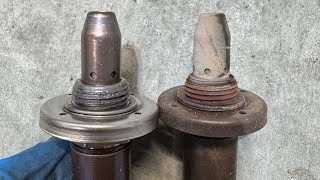
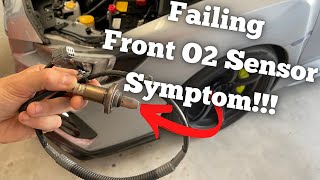
- Sputtering or bucking under load, as reported by owners 🎬 Watch: Common symptoms of a failing front oxygen sensor
- Replacing the O2 sensor with a cheap, universal, or non-Denso brand. Many owners report the P0132 code returning immediately or soon after when using brands other than Denso.
- Assuming the O2 sensor is bad when the true cause is a separate issue causing a rich condition, like a leaking fuel injector.
- Mistaking symptoms of a failing Mass Airflow (MAF) sensor (hesitation, poor idle) for a bad O2 sensor, as the symptoms can be similar. A dirty MAF can cause incorrect fueling calculations.
- Replacing the rear O2 sensor by mistake. P0132 specifically refers to Bank 1, Sensor 1, which is the front/upstream sensor before the catalytic converter.
Most Likely Causes
- Failed Front Oxygen (A/F) Sensor 🔴 High Probability → Shop Oxygen Sensor The front O2 sensor is exposed to extreme heat from the turbo and exhaust gases, leading to a finite lifespan of 60,000-90,000 miles. It's a very common failure point on this specific model, with internal failure causing a short that results in a high voltage reading.
How to confirm: Use an OBD-II scanner to view live data for 'Bank 1 Sensor 1'. A healthy sensor's voltage will fluctuate rapidly. A faulty sensor will often be stuck at a high voltage (e.g., >0.9V). Unplugging the sensor with the ignition on should cause the live data reading to drop to a default value; if it does, the sensor itself is very likely bad.
Typical fix: Replace the front oxygen sensor. It is strongly recommended to use an OEM (Subaru) or the specific OEM supplier (Denso) part to avoid compatibility issues. The correct Denso part is 234-9011.
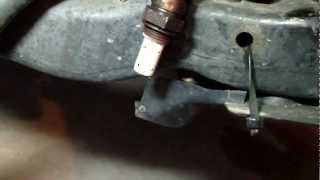
Est. part cost: $150-$220 - Wiring Harness or Connector Damage 🟡 Medium Probability The sensor wiring is routed near hot exhaust components and the passenger-side wheel well. 🎬 See this walkthrough for locating and replacing the upstream sensor Over time, the harness can become brittle, melted, or frayed, leading to a short circuit to power. Corrosion in the connector is also a possibility.
How to confirm: Visually inspect the entire wiring harness from the O2 sensor to where it connects to the main engine harness near the passenger-side strut tower. Look for any signs of melting, chafing, or corrosion on the connector pins. With the sensor and ECM unplugged, use a multimeter to check for continuity and shorts between the wires in the harness.
Typical fix: Repair or replace the damaged section of the wiring harness or clean the connector terminals with electronic contact cleaner.
Est. part cost: $10-$100 - Engine Running Rich ⚪ Low Probability While less common, issues like leaking fuel injectors or a failing fuel pressure regulator can cause a genuinely rich condition that the O2 sensor is correctly reporting.
How to confirm: This should be suspected if replacing the O2 sensor and verifying the wiring does not fix the code. Look for other codes related to the fuel system (e.g., P0172). A fuel pressure test or injector balance test may be required. Check long-term fuel trims; if they are highly negative (e.g., -10% or more), the ECU is trying to compensate for excess fuel.
Typical fix: Diagnose and replace the faulty fuel system component, such as a leaking fuel injector.
Est. part cost: $50-$500+
Rare But Worth Checking
- Exhaust Leak Before the O2 Sensor: → Shop Oxygen Sensor An exhaust leak from the manifold or uppipe gasket can sometimes affect sensor readings. While it more commonly causes lean codes, a significant leak could alter exhaust gas velocity and temperature, confusing the sensor. It's worth checking if you hear any exhaust ticking noises, especially when cold.
- Faulty Engine Control Module (ECM): → Shop Engine Control Module (ECM) This is extremely rare. The ECM's internal voltage regulation for the sensor circuit could fail. This should only be considered as the cause after all other possibilities (sensor, wiring, fuel system) have been exhaustively ruled out.
Diagnosis Steps
- Connect an OBD-II scanner and confirm P0132 is the primary code. Note any other codes present.
- View live data for the 'Bank 1 Sensor 1' A/F sensor voltage. With the engine warm, observe if the voltage is stuck high (consistently above 0.9V). A healthy sensor fluctuates.
- Perform a thorough visual inspection of the front O2 sensor's wiring harness from the exhaust manifold up into the engine bay, towards the passenger side strut tower. Look for melting, chafing, or corrosion.
- With the engine off, disconnect the O2 sensor connector. Turn the ignition to 'ON' (engine off) and re-check the live data. The voltage should drop to a default, lower value. If it does, this strongly points towards a faulty sensor. If the voltage stays high, there is a short to power in the wiring harness that needs to be traced.
- If the sensor is suspected, test its heater circuit resistance. A healthy sensor should have a specific resistance value (consult a service manual). An open or shorted heater can cause incorrect readings.
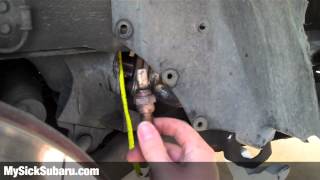
- If a faulty sensor is confirmed, replace it. Access is typically through the passenger-side wheel well. Use a 22mm or 7/8" O2 sensor socket and plenty of penetrating oil on the old sensor's threads.
- Apply the included copper-based anti-seize to the new sensor's threads if not pre-applied.
- After replacement, clear the trouble code with the scanner and perform a drive cycle, including varied speeds and idle periods, to ensure the code does not return.
Parts You'll Likely Need
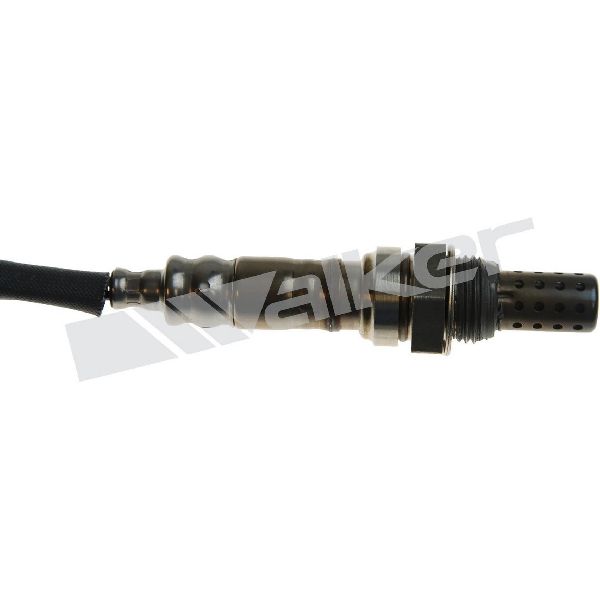
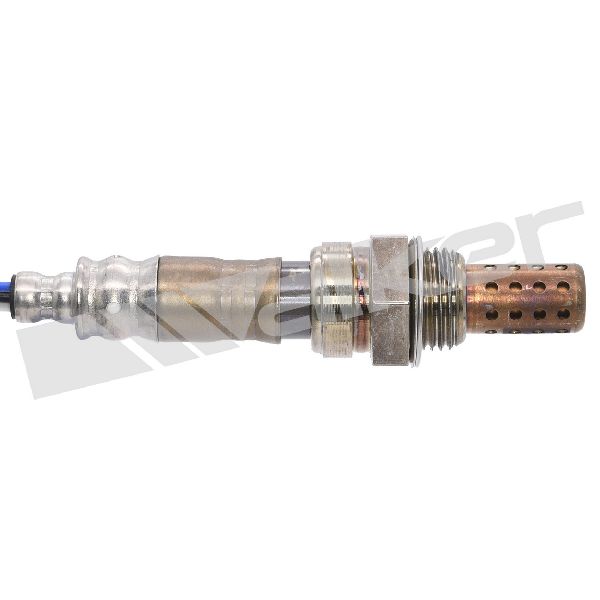
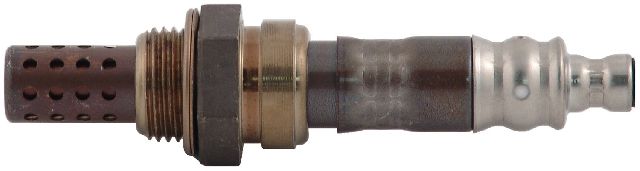
- Front Air/Fuel Ratio Oxygen Sensor
(OEM #22641AA042)— This is the most common failure part for code P0132 on the EJ205 engine. Its reading is critical for fuel control, and it fails due to age and extreme heat from the turbocharger. 🎬 Watch: Step-by-step guide to replacing your front O2 sensor
Trusted brands: Denso (OEM Supplier), Subaru (Genuine)
OEM price range: $180-$250
Aftermarket price range: $150-$220 (for Denso 234-9011)
Related Codes That Often Appear With This One
- P0172 — System Too Rich (Bank 1). If the engine is genuinely running rich from another issue (like a bad injector), the O2 sensor will report high voltage (P0132) and the ECU may also set a code for the resulting long-term rich fuel trim.
- P0131 — O2 Sensor Circuit Low Voltage. Sometimes, a failing sensor or wiring issue can cause the voltage to fluctuate wildly, triggering both high (P0132) and low (P0131) codes as the connection shorts or opens intermittently.
Technical Service Bulletins (TSBs) & Recalls
- While no TSBs directly address P0132 for this model, TSB 09-110-23 for later models outlines diagnostic procedures for P0420, which can be a long-term consequence of an unresolved rich condition indicated by P0132.
- TSB 09-95-22R for the 2022 WRX shows that Subaru sometimes issues ECM reprogramming to fix issues that can generate various DTCs, though none are specific to P0132 on the EJ205.
Platform-Specific Known Issues
- The 2002-2005 WRX ECU is notoriously picky about the front A/F sensor. Using a brand other than the OEM supplier (Denso) is a very common reason for a replacement to fail or not work correctly.
- Accessing the sensor requires removing the passenger-side front wheel and a plastic splash guard in the wheel well.
- The original sensor can be very difficult to remove due to rust. Using a generous amount of penetrating oil (like PB Blaster) and letting it soak is highly recommended before attempting removal.
Mechanic-Grade Diagnostic Values
- Front A/F Sensor Heater Circuit Resistance — expected: 2 to 3.4 ohms. Failure: No reading (open circuit) or a reading significantly outside the expected range indicates a failed heater element within the sensor.
- Short-Term Fuel Trim (STFT) - Bank 1 — expected: -5% to +5% at idle. Failure: A value consistently stuck at a high negative number (e.g., -10% to -20%) indicates the ECU is aggressively removing fuel to compensate for a perceived rich condition reported by the sensor.
- Continuity Check on Sensor Harness Wires — expected: Much less than 1.0 ohm from end to end. Failure: Resistance greater than 1.0 ohm indicates damage or corrosion in the wire, requiring repair.
- Sensor Wires to Ground Resistance Check — expected: Greater than 100 k-ohms. Failure: A reading less than 100 k-ohms indicates a short to ground in the wiring harness.
Scan Tool Commands That Help
- Subaru Select Monitor (SSM): Current Data Display & Save — Used to view live data parameters like 'A/F Correction #1' (short-term fuel trim), 'A/F Learning #1' (long-term fuel trim), and sensor voltage to diagnose the fault.
- Subaru Select Monitor (SSM): O2 Heater Diagnosis — This is a specific active test to check the functionality of the oxygen sensor's heater circuit, which is a common failure point.
Wiring & Ground Locations
- ECU Connector D, Pin D19 — At the Engine Control Module (ECU), which is located in the passenger-side footwell, behind a protective kick panel.. This is the specific pin for the 'O2 Sensor Signal (Front)' on 2002-2004 WRX models. It can be probed to test for voltage directly at the ECU to rule out wiring issues between the sensor and the computer.
- Engine Ground Strap (Intake Manifold) — A braided ground strap typically connecting the top of the intake manifold to the chassis near the strut tower.. The ECU's main ground reference is through the intake manifold. A corroded or loose ground here can cause erratic sensor readings and various electrical issues, including O2 sensor codes.
- Engine Ground (Block to Chassis) — A primary ground cable connecting the engine block itself to the vehicle's frame/chassis.. A poor engine block ground can create voltage offsets and interfere with sensor signals that rely on a clean ground path, including the A/F sensor.
- Front Oxygen Sensor Connector (Engine Harness Side) — A gray connector mounted on a bracket on the passenger side of the engine bay, near the strut tower.. This is the main connection point between the sensor and the engine wiring harness. It is a common spot for corrosion or pin damage that can cause the P0132 code.
Real Owner Repair Stories
- Factory Five Forums user (Subaru WRX EJ20 engine (in a Factory Five 818 kit car)) — Persistent P0031 code (heater circuit fault), which is related to the same sensor.
❌ Tried (didn't work) Replacing the Denso A/F sensor with a genuine Subaru OEM A/F sensor., Troubleshooting wiring continuity, which initially seemed okay., Replacing the ECU with a used unit.
✅ What actually fixed it The root cause was a poor ground connection at the E3 engine connector. The ground was shared with the OBD-II connector and was not directly linked to the A/F sensor circuit in the wiring diagram, making it difficult to trace. Cleaning the connector and applying dielectric grease resolved the high resistance and fixed the code. - Reddit user BoiOnTheGeetar (Subaru (model not specified, but symptoms and fix are relevant)) — P0132 and P0152 (high voltage for both pre-cat O2 sensors), engine stutter, minor oil leak.
❌ Tried (didn't work) Replacing the O2 sensor with an incorrect third-party part., Replacing the sensor again with the correct OEM Denso part, which only slightly delayed the code from appearing.
✅ What actually fixed it The user found the PCV valve was dirty and getting stuck. After removing and cleaning the PCV valve, the O2 sensor codes, an oil leak, and an engine tap all disappeared.
OEM Part Supersession History
22641AA042→22641AA090— Standard part evolution, likely for minor improvements in manufacturing or materials.
Heads up: The parts are interchangeable for the specified 2000-2005 EJ20 engine applications.
Model Year Variations Within This Range
- 2002-2005: The North American WRX used the 2.0L EJ205 engine with a cable-operated throttle. The front O2 sensor is Subaru P/N 22641AA042 or Denso 234-9011.
- 2006-2007: The North American WRX switched to the 2.5L EJ255 engine. This engine uses different sensors and has different ECU logic. The P0132 code on these models would involve different part numbers (e.g., 22641AA272) and potentially different diagnostic steps.
Diagnostic Flowchart
Used vs. New Parts: Buying Guide for This Vehicle
When a used part is the smart pick: For this specific repair, buying a used front A/F sensor is NOT recommended. It is a high-wear item with a finite lifespan, and its performance degrades over time. A used sensor may fail shortly after installation or provide inaccurate readings, continuing the problem. Used parts are only viable for related hardware like a replacement wiring connector pigtail or mounting brackets.
Donor-vehicle mileage cap: roughly under 10000 miles for the part to have meaningful remaining life.
What to inspect on the donor part:
- If sourcing a connector, ensure the plastic is not brittle or cracked.
- Check connector pins for any signs of green or white corrosion.
- Verify the wiring pigtail has no melted insulation or exposed copper strands.
OEM-only on this vehicle (don't cheap out):
- Front Air/Fuel (O2) Sensor
Aftermarket brands forum-validated for this vehicle:
- Denso (234-9011) is the original equipment manufacturer and the most recommended brand for a reliable fix.
Brands owners have reported issues with on this vehicle:
- Universal O2 sensors that require splicing wires.
- Unbranded or generic 'white-box' sensors from online marketplaces.
Real Owner Stories
Aggregated from forums and TSBs cited above. Mileages and costs reflect what owners reported in those sources.
2003 WRX Wagon
Symptoms: Check Engine Light with codes P0131, P0132, and P1089. The car had a rough idle, would hesitate and stutter, and would 'fall on its face' when given gas.
What fixed it: The owner was still diagnosing the issue. A commenter suggested that a broken front O2 sensor on the header is a big deal and will cause the car to misfire and sputter.
Source hint: Reddit r/WRX
2002 WRX
Symptoms: Engine was running very rich, flooding and fouling the spark plugs. The car would start, run worse and worse, and then die. Codes P0131 and P0132 were present.
What fixed it: The provided report was incomplete and did not state the final fix.
Source hint: Forum Subaru (Poland)
2002-2007 Subaru Impreza WRX EJ205 2.0L Turbo — ~85000 miles
Symptoms: Solid Check Engine Light, significantly reduced fuel economy, and a noticeable smell of rich exhaust.
What fixed it: Replacing the front oxygen (A/F) sensor with the recommended Denso part (234-9011) resolved the code.
Cost: $150-$220
Source hint: NASIOC (North American Subaru Impreza Owners Club) forums
Related OBD-II Codes
Frequently Asked Questions
What brand of front oxygen sensor should I use for my 2002-2007 WRX to fix P0132?
How long does the front O2 sensor typically last on the EJ205 engine?
Where is the front O2 sensor located and how do I access it?
My scanner shows the O2 sensor voltage is stuck high. Does this definitely mean the sensor is bad?
I replaced the O2 sensor, but the P0132 code came back. What else could be the cause?
Does this P0132 information apply to my 2005 Saab 9-2X Aero?
Are there any official Subaru TSBs for code P0132 on this WRX model?
Helpful Videos
We Have This Part in Stock


The information in this article is provided for general reference and educational purposes only. Vehicle specifications, procedures, and part compatibility can vary by production date, trim level, and region. Always consult your vehicle's factory service manual and verify part numbers before purchasing or performing repairs. Safety-critical components such as airbags, seat belts, and braking systems should be installed by a qualified professional.
- Subaru Impreza WRX:
- 🧭 Diagnostic Flowchart
- 🎬 Helpful Videos
- 🛍️ Shop This Part
- What's Unique About the 2002-2007 Subaru Impreza WRX
- Symptoms You May Notice
- Most Likely Causes
- Rare But Worth Checking
- Diagnosis Steps
- Parts You'll Likely Need
- Related Codes That Often Appear With This One
- Technical Service Bulletins (TSBs) & Recalls
- Platform-Specific Known Issues
- Mechanic-Grade Diagnostic Values
- Scan Tool Commands That Help
- Wiring & Ground Locations
- Real Owner Repair Stories
- OEM Part Supersession History
- Model Year Variations Within This Range
- Used vs. New Parts: Buying Guide for This Vehicle
- Real Owner Stories
- 2003 WRX Wagon
- 2002 WRX
- 2002-2007 Subaru Impreza WRX EJ205 2.0L Turbo — ~85000 miles
- Related OBD-II Codes
- Frequently Asked Questions
- 🎟️ Get 5% Off