

P0132 on 2005-2009 Subaru Legacy: High Voltage O2 Sensor Causes and Fixes
On a 2005-2009 Subaru Legacy, P0132 almost always means the front Air/Fuel (A/F) ratio sensor has failed. Replacing it with an OEM-quality Denso sensor is the most reliable fix. Expect to pay around $120-$150 for the part; DIY difficulty is 2/5.
- P0132 on a 2005-2009 Legacy almost always points to a faulty front Air/Fuel (A/F) Ratio Sensor.
- Do not use a 'universal' or budget aftermarket sensor. You must use an OEM Subaru or Denso-branded sensor to ensure a permanent fix.
- While driving is possible, fix the issue promptly to avoid poor fuel economy and potential long-term damage to your catalytic converter.
- Before replacing the sensor, always perform a quick visual check of the wiring harness and the connector on the passenger strut tower for obvious damage like melting or fraying.
- You will likely need a special 22mm oxygen sensor socket with a slit for the wire to perform the replacement.
- A flashing cruise control light is a normal side effect of the Check Engine Light on this vehicle and will resolve when the P0132 code is fixed.
What's Unique About the 2005-2009 Subaru Legacy
Subarus from this era, including the 2005-2009 Legacy, are notoriously sensitive to the brand and quality of the front A/F sensor. While on many vehicles an aftermarket sensor is fine, Subaru's engine management system often rejects non-OEM or 'universal' sensors, leading to the code returning immediately. Owners and mechanics on forums like LegacyGT.com consistently report that only an OEM Subaru part or the direct OEM-supplier equivalent (typically Denso) will provide a lasting fix. A common trait on these Subarus is a flashing cruise control light that accompanies the Check Engine Light; this is normal behavior designed to alert the driver that a fault has been detected and cruise control is disabled.
🎬 Watch: Why your cruise control light is flashingSymptoms You May Notice
- Check Engine Light is on
- Flashing 'CRUISE' light on the dashboard
- Decreased fuel economy by 10-20%
- Rough or unstable idle
- Hesitation or stumbling during acceleration
- Strong smell of fuel from the exhaust
- Replacing the sensor with a cheap 'universal' or off-brand part. A LegacyGT.com user reported that replacing a faulty sensor with a universal Bosch 4-wire sensor immediately caused a P0132 code. Subarus are notoriously finicky and require OEM-spec sensors.
- Replacing the rear (downstream) O2 sensor. P0132 specifically refers to Sensor 1, which is the front (upstream) Air/Fuel sensor.
- Assuming the sensor is bad without checking for an actual rich running condition caused by another component like a fuel injector.
Most Likely Causes
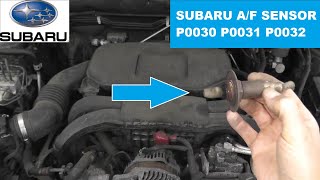
- Failed Front Air/Fuel (O2) Sensor 🔴 High Probability The front A/F sensor on this generation of Subaru is a common failure item due to age and heat cycles. Subaru even had a service program (WXW-80) for some models due to the sensor element developing cracks. It is the most frequent cause of P0132.
How to confirm: Use a scan tool to monitor live data for 'Bank 1, Sensor 1' voltage. If the voltage is stuck high (above 0.9V) and does not fluctuate rapidly during engine operation, the sensor has likely failed. A good sensor will fluctuate quickly.
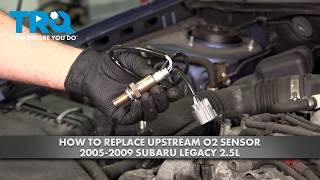
Typical fix: Replace the front A/F sensor with a new, high-quality OEM or Denso-branded part. 🎬 See this step-by-step 2.5L upstream sensor replacement Do not use a 'universal' sensor. Be aware that even new sensors can be faulty; one owner on subaruoutback.org reported getting a P0132 from a brand-new, out-of-the-box faulty Denso sensor.
Est. part cost: $120-$220 - Damaged Wiring or Connector 🟡 Medium Probability The sensor wiring is routed near hot exhaust components and can become melted, frayed, or corroded over time, causing a short circuit to power. The main connector, located on the passenger side strut tower, is a known point of failure and should be inspected for corrosion or damage.
How to confirm: Visually inspect the entire wiring harness from the sensor to the main engine harness connector on the strut tower. Check for melted plastic, chafing, or corrosion on the connector pins. A multimeter can be used to check for a short to power in the harness with the sensor and ECM disconnected.
Typical fix: Repair the damaged section of wiring or replace the connector pigtail. Ensure the repaired harness is secured away from heat sources.
Est. part cost: $10-$50
Rare But Worth Checking
- Exhaust Leak: An exhaust leak between the cylinder head and the A/F sensor can sometimes allow outside air to be drawn in, confusing the sensor. This is less common for a high voltage code (rich signal) but is worth checking.
- Rich Running Condition: A separate issue, like a leaking fuel injector, can cause a genuinely rich condition. If this is the case, you will likely have other codes present, such as a fuel trim code P0172 (System Too Rich Bank 1).
- Faulty Powertrain Control Module (PCM): → Shop Engine Control Module (ECM) This is extremely rare. The PCM should only be considered as the cause after all other possibilities, including the sensor and wiring, have been thoroughly ruled out.
Diagnosis Steps
- Read the code with an OBD-II scanner. Confirm P0132 is present and note any other codes, especially P0172.
- Use the scanner's live data function to view the voltage of 'Bank 1, Sensor 1'. At idle on a warm engine, it should fluctuate. If it's stuck high (e.g., >0.9V), it points to a problem with the sensor or its circuit.
- Perform a thorough visual inspection of the front A/F sensor's wiring harness and its connector on the passenger-side strut tower. Look for any signs of melting, chafing, or corrosion.
- Inspect the exhaust manifold and gaskets for any signs of an exhaust leak upstream of the sensor.
- If the wiring and connections appear good and there are no exhaust leaks, the front A/F sensor is the most likely culprit.
- Replace the front A/F sensor. It is highly recommended to use an OEM or Denso part to ensure compatibility. Ensure you have the correct part number for your specific model (Turbo vs. Non-Turbo). 🎬 Watch: How to change the sensor on Legacy GT models
- After replacement, clear the code with the scanner and perform a drive cycle to ensure the Check Engine Light does not return.
Parts You'll Likely Need
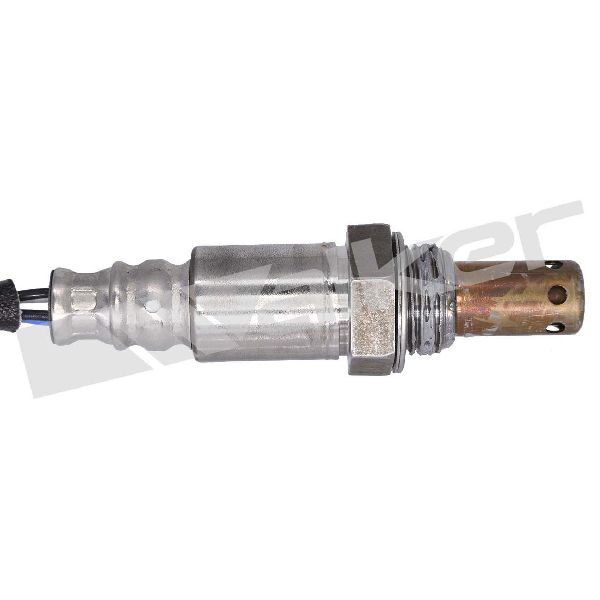
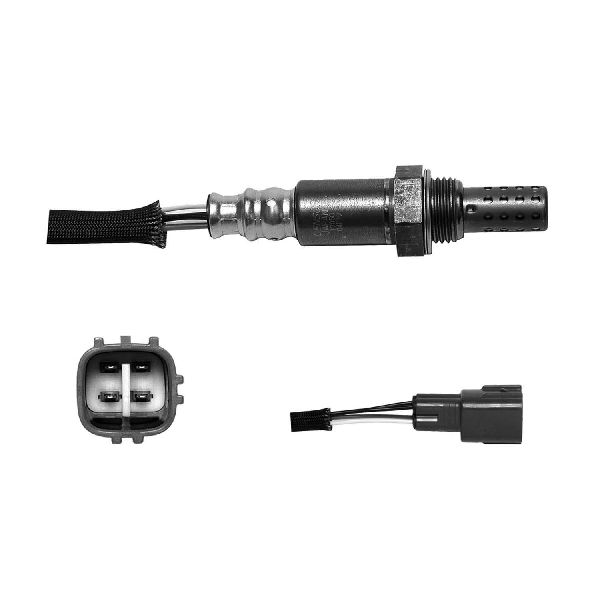
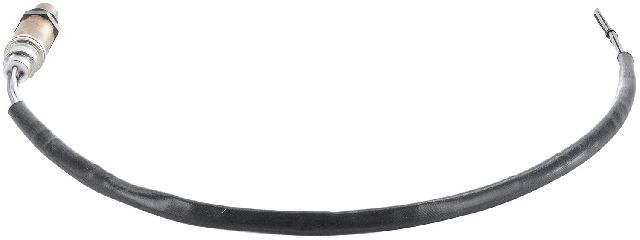
- Front Air/Fuel Ratio Sensor
(OEM #Non-Turbo (2.5i): 22641AA381 / Turbo (GT): 22641AA272 or 22641AA490 (Verify by VIN))— This is the most common failure point for code P0132 on this vehicle. The sensor's internal elements wear out over time, causing the signal to get stuck high. Using the correct part number for your engine is critical.
Trusted brands: Denso (OEM Supplier), NGK/NTK
OEM price range: $160-$220
Aftermarket price range: $120-$160 (Denso Aftermarket)
Related Codes That Often Appear With This One
- P0172 (System Too Rich Bank 1): If this code is present, it suggests the P0132 might be caused by a genuine rich running condition, not just a faulty sensor.
Technical Service Bulletins (TSBs) & Recalls
- WXW-80: A Subaru service program (not a full recall) was initiated for some models because the front oxygen (A/F) sensor element could develop a crack, leading to a Check Engine Light. This acknowledges a known weakness in the original sensor.
Platform-Specific Known Issues
- Correct Part Number is Critical: The front A/F sensor for the non-turbo 2.5i (Denso 234-9123) is different from the one for the turbo 2.5GT (Denso 234-9120). Using the wrong one will cause the code to persist or new codes to appear. Always verify the part number with your vehicle's VIN.
- Faulty New Sensors: There are multiple owner reports of receiving a brand new Denso sensor that is defective out of the box, causing an immediate P0132 code after installation. While rare, it is a known possibility.
Mechanic-Grade Diagnostic Values
- A/F Sensor Heater Circuit Resistance — expected: 1.5 - 10 Ohms (A/F sensor heaters have lower resistance than traditional O2 sensors). Failure: A reading of OL (infinite resistance) indicates an open heater circuit inside the sensor.
- Harness Voltage at ECM (Sensor Disconnected, KOEO) — expected: < 8V. Failure: Voltage greater than 8V at ECM connector B136 (pins 33 or 35) to chassis ground indicates a short to power in the wiring harness.
- Live Data A/F Sensor Voltage (Warm Engine, Idle) — expected: Rapidly fluctuating between approximately 0.1V and 0.9V.. Failure: Voltage is stuck high, consistently reading above 0.9V.
Scan Tool Commands That Help
- Subaru Select Monitor (SSM): Current Data Display / Save — This function is used to observe the live voltage, A/F correction, and A/F learning values from the front A/F sensor in real-time to determine if it is stuck high or responding correctly to engine conditions.
- Subaru Select Monitor (SSM): Read Freeze Frame Data — To review the exact engine conditions (coolant temp, RPM, load) at the moment the P0132 code was triggered, which can help differentiate between a sensor fault and a genuine rich-running condition.
Wiring & Ground Locations
- Front A/F Sensor Connector (E24) — On the passenger side of the engine bay, typically mounted to a bracket on the strut tower.. This is the primary connection point between the sensor and the engine harness. It is exposed to the elements and engine heat, making it a common point for corrosion or pin damage that can cause a high voltage reading.
- ECM Connector B136 — At the Engine Control Module (ECM), typically located in the passenger footwell area.. Pins #33 and #35 are specific to the A/F sensor circuit. Testing voltage here can definitively isolate a wiring short from a sensor failure.
- Primary Engine Grounds — Key locations include the top of the intake manifold (where the ECU itself is grounded), the alternator housing, and a strap from the engine block to the chassis.. A poor ground at the intake manifold can create a voltage offset for the entire ECU, causing it to misinterpret sensor signals. A bad engine ground can introduce electrical noise that interferes with the sensitive A/F sensor reading, potentially causing a false high voltage signal.
- Firewall Bulkhead Ground — Ground connection between the intake plenum bracket and the firewall.. This is a less obvious ground point that, if corroded, has been documented to cause a persistent P0132 code by creating a poor ground reference for engine management components.
Real Owner Repair Stories
- LegacyGT.com user 'bugeye2gt' (2009 Legacy GT) — Check Engine Light with code P0132.
❌ Tried (didn't work) The user had previously experienced a P0131 (low voltage) code and replaced the front O2 sensor with a 'universal Bosch with 4 wires'.
✅ What actually fixed it The P0132 code appeared immediately after installing the universal sensor. Forum members identified the non-OEM, universal sensor as the direct cause of the new high-voltage code, highlighting the vehicle's sensitivity to correct sensor brand and type. - AliExpress Review / Forum Anecdote (2008 Forester XT (similar EJ25 engine and electronics)) — Stubbornly recurring P0132 code.
❌ Tried (didn't work) Replacing the front A/F sensor twice with new parts.
✅ What actually fixed it The final fix involved two non-sensor issues: 1) A corroded ground connection between the intake plenum bracket and the firewall bulkhead connector was cleaned. 2) A cracked PCV hose was discovered and replaced. The combination of the bad ground and vacuum leak was causing the mixture issue that led to the code.
"I Checked Everything" — The Actual Cause
- In a documented case on a similar Subaru model, a persistent P0132 was not caused by an exhaust leak (which a smoke test would find) or a bad sensor. The root causes were a corroded engine ground connection at the firewall and a cracked PCV hose. The bad ground skewed the sensor's reference voltage, while the PCV leak created a vacuum issue, leading the ECU to see a rich condition that was not due to a faulty sensor.
OEM Part Supersession History
22641AA381→22641AA480— Unknown, likely a minor revision or change in supplier.
Heads up: Both part numbers are listed as compatible for the non-turbo 2.5i engine, but it is always best to verify with a VIN.
Model Year Variations Within This Range
- 2005-2009: Within this generation, Subaru produced vehicles for different emissions standards (e.g., Federal vs. PZEV - Partial Zero-Emission Vehicle). These standards can require different A/F sensors with unique part numbers. It is critical to verify the correct part number using the vehicle's VIN to avoid incompatibility, even if the engine appears identical.
Diagnostic Flowchart
Other Known Issues on This Vehicle
Issues unrelated to this code that are worth knowing about as an owner of this generation:
- Head Gasket Failure (Non-Turbo EJ25 Engine) 🔴 High — Very common on the naturally aspirated 2.5L engine. Often occurs between 100,000 and 150,000 miles. Typically presents as an external oil leak at the back of the cylinder head or an internal coolant/oil breach.
- Turbo Oil Starvation (Turbo GT/XT Models) 🔴 High — A mesh screen inside the banjo bolt for the turbo's oil feed line can become clogged with debris over time, starving the turbo of oil and causing catastrophic failure. Many owners proactively remove this filter as preventative maintenance.
- Brake Line Corrosion (Salt Belt Vehicles) 🔴 High — Subaru issued a recall for vehicles in salt-belt states because salt water could splash on brake lines, causing them to rust and potentially leak brake fluid. (Ref: NHTSA Campaign Number: 14V311000)
- AVCS Solenoid/Filter Issues 🟠 Medium — The Active Valve Control System (AVCS) uses oil pressure to adjust cam timing. Like the turbo feed line, the banjo bolts for the AVCS oil lines also contain filters that can clog and cause rough idling, poor performance, and fault codes (e.g., P0021). (Ref: A service bulletin was issued in 2005 for some 2005 Legacy GTs regarding this issue.)
- Failed Wheel Bearings 🟠 Medium — Wheel bearings on this generation are a common failure item, often requiring replacement sooner than expected. The symptom is a loud humming or grinding noise that changes with vehicle speed.
- Catalytic Converter Failure (P0420) 🟠 Medium — The front catalytic converter can degrade over time, leading to a P0420 code. It's important to rule out a faulty oxygen sensor before replacing the expensive converter.
Used vs. New Parts: Buying Guide for This Vehicle
When a used part is the smart pick: Almost never for the sensor itself, as it is a wear-and-tear item with a finite lifespan. A used part is a gamble. A used wiring harness pigtail is a viable option if your vehicle's connector is physically damaged, corroded, or melted.
Donor-vehicle mileage cap: roughly under 100000 miles for the part to have meaningful remaining life.
What to inspect on the donor part:
- For a wiring pigtail, inspect for any signs of melting, cracking, or brittleness in the plastic connector and wires.
- Ensure connector pins are straight and free of green or white corrosion.
- Confirm the locking tab is intact and functional.
OEM-only on this vehicle (don't cheap out):
- Front Air/Fuel Ratio Sensor: This is the most critical part to buy as OEM or from the direct OEM supplier (Denso). The vehicle's ECU is extremely sensitive to the sensor's specific resistance and response characteristics.
Aftermarket brands forum-validated for this vehicle:
- Denso (OEM supplier)
- NGK / NTK
Brands owners have reported issues with on this vehicle:
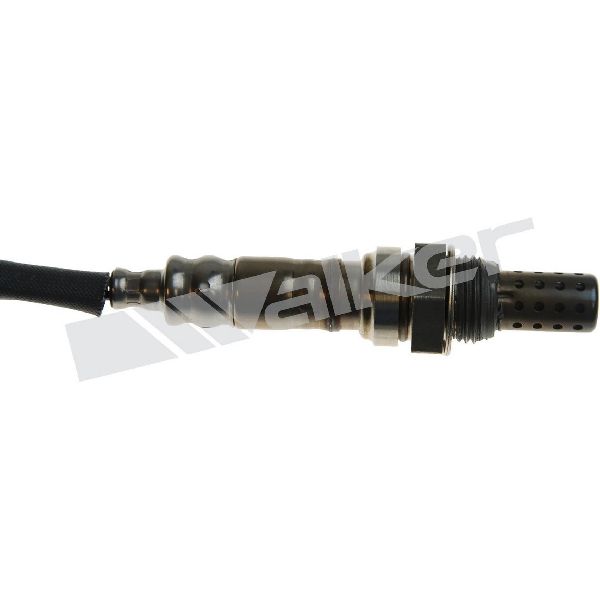
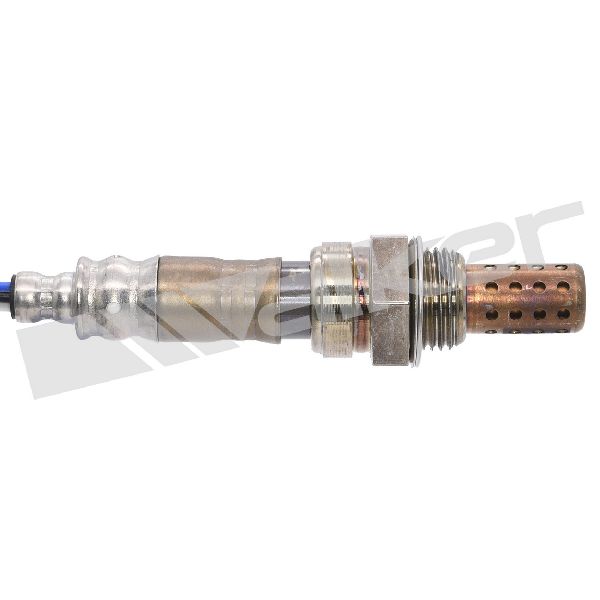
- Universal sensors: These often require splicing wires and lack the precise calibration for the Subaru ECU, frequently causing the P0132 code to appear immediately after installation.
- Bosch (Universal): One specific case on a Legacy forum directly attributes a P0132 code to the installation of a universal Bosch sensor.
Real Owner Stories
Aggregated from forums and TSBs cited above. Mileages and costs reflect what owners reported in those sources.
2009 Subaru Legacy GT
Symptoms: After a DTC P0131, the owner changed the O2 sensor for a universal Bosch 4-wire sensor. The car then immediately threw a P0132 code that would not clear.
What fixed it: The context indicates that universal sensors cause this failure; the recommended fix is replacing it with a high-quality OEM or Denso-branded part.
Source hint: LegacyGT.com - 'DTC P0132 - Diagnostic procedure'
2005-2009 Subaru Outback
Symptoms: The owner replaced a faulty sensor with the correct Denso part to fix a P0131, but received an immediate P0132 code upon installation.
What fixed it: The new Denso part was found to be faulty from the factory and required another replacement.
Source hint: subaruoutback.org - 'P0131 and now P0132'
Related OBD-II Codes
Frequently Asked Questions
Does the Subaru service program WXW-80 apply to my P0132 code?
Can I use a universal Bosch sensor to fix P0132 on my 2009 Legacy GT?
Is the front A/F sensor the same for all 2005-2009 Legacy models?
Where is the main A/F sensor connector located on this vehicle?
I just installed a brand new Denso sensor and still have a P0132. Is that possible?
Will a P0132 code affect my Subaru's cruise control?
Helpful Videos
We Have This Part in Stock


The information in this article is provided for general reference and educational purposes only. Vehicle specifications, procedures, and part compatibility can vary by production date, trim level, and region. Always consult your vehicle's factory service manual and verify part numbers before purchasing or performing repairs. Safety-critical components such as airbags, seat belts, and braking systems should be installed by a qualified professional.
- Subaru Legacy:
- 🧭 Diagnostic Flowchart
- 🎬 Helpful Videos
- 🛍️ Shop This Part
- What's Unique About the 2005-2009 Subaru Legacy
- Symptoms You May Notice
- Most Likely Causes
- Rare But Worth Checking
- Diagnosis Steps
- Parts You'll Likely Need
- Related Codes That Often Appear With This One
- Technical Service Bulletins (TSBs) & Recalls
- Platform-Specific Known Issues
- Mechanic-Grade Diagnostic Values
- Scan Tool Commands That Help
- Wiring & Ground Locations
- Real Owner Repair Stories
- "I Checked Everything" — The Actual Cause
- OEM Part Supersession History
- Model Year Variations Within This Range
- Other Known Issues on This Vehicle
- Used vs. New Parts: Buying Guide for This Vehicle
- Real Owner Stories
- 2009 Subaru Legacy GT
- 2005-2009 Subaru Outback
- Related OBD-II Codes
- Frequently Asked Questions
- 🎟️ Get 5% Off