

P0132 on 2005-2009 Subaru Legacy 2.5L: Front O2 Sensor High Voltage Causes and Fixes
On a 2005-2009 Subaru Legacy with the 2.5L EJ25 engine, code P0132 is almost always caused by a failed front oxygen sensor, which Subaru calls an Air/Fuel (A/F) Ratio Sensor. The most reliable fix is replacing it with a Denso-branded sensor (the typical OEM supplier). Expect to pay $120-$150 for the part; DIY difficulty is 2/5.
- P0132 on your 2005-2009 Legacy almost certainly means the front Air/Fuel sensor has failed.
- Do not use a cheap or universal oxygen sensor. You must use an OEM Subaru part or the direct-fit Denso equivalent (p/n 234-9123) to ensure a lasting fix.
- Before buying parts, perform a quick visual check of the sensor's wiring for any obvious melting or damage, as it is routed near hot exhaust components.
- Driving with this code will cause the engine to run rich, wasting fuel and potentially damaging the expensive catalytic converter over time.
What's Unique About the 2005-2009 Subaru Legacy
Subaru refers to the front oxygen sensor on this platform as an Air/Fuel (A/F) Ratio Sensor, which is a type of wideband sensor that provides more precise feedback than a conventional O2 sensor. These vehicles are known to be particularly sensitive to the brand of sensor used. Forum and mechanic consensus strongly advises against using universal or budget-brand sensors, as they often fail to fix the code or cause it to return quickly. A user on LegacyGT.com reported getting a P0132 immediately after installing a universal Bosch sensor to fix a P0131, highlighting this sensitivity. Using an OEM Subaru part or the direct equivalent from Denso is critical for a lasting repair.
Symptoms You May Notice
- Check Engine Light is on
- Flashing cruise control light (a standard Subaru feature when a CEL is present)
- Reduced fuel economy by 10-20%
- Rough or unstable idle, sometimes with a stutter or RPM drop of ~100 RPM when the code sets.
- Engine hesitation or stumbling during acceleration.
- Black soot on the exhaust tip from a rich running condition.
- Replacing the sensor with a cheap, universal, or non-Denso/OEM brand. Subarus are notoriously finicky, and this often results in the code returning. A LegacyGT.com forum member confirmed this after a universal Bosch sensor caused a P0132.
- Replacing the rear O2 sensor (Sensor 2) by mistake. P0132 specifically refers to the front sensor (Sensor 1) located before the catalytic converter.
- Assuming the catalytic converter is bad. A bad converter typically triggers a P0420 code, not P0132. An unresolved P0132 can, however, lead to a P0420 over time.
Most Likely Causes
- Failed Front Air/Fuel (O2) Sensor 🔴 High Probability The sensor's internal heater or sensing element fails from age and constant heat cycles, causing it to short internally and send a fixed high-voltage signal. This is a very common failure item on Subarus of this era, typically between 60,000 and 90,000 miles. It is not unheard of for a brand new sensor to be faulty out of the box, as one owner of a 2005 Outback discovered after a Denso replacement immediately threw a P0132.
How to confirm: Use an OBD-II scanner to monitor live data for 'Bank 1 Sensor 1'. If the voltage is stuck high (e.g., >0.9V) and does not fluctuate during engine operation, the sensor has likely failed. A definitive test is to unplug the sensor's electrical connector; if the voltage on the scan tool drops to a low default value, the sensor itself is confirmed to be the source of the high voltage signal. You can also test the sensor's internal heater resistance with a multimeter; a healthy sensor should read between 2 and 3.4 ohms.
Typical fix: Replace the front A/F sensor. It is crucial to use an OEM or high-quality Denso replacement part. An O2 sensor socket is highly recommended for removal, and applying penetrating oil like PB Blaster beforehand can help with a seized sensor.
Est. part cost: $120-$220 - Damaged Wiring or Corroded Connector 🟡 Medium Probability The sensor wiring is routed near hot exhaust components and can become melted, brittle, or frayed, causing a short to power. The main connector, located on the passenger-side strut tower, is also susceptible to corrosion or damage from the elements.
How to confirm: Visually inspect the entire length of the sensor's wiring harness from the sensor to the main connector. Look for any signs of melting, chafing, or breaks. Unplug the connector and check for corrosion or bent pins. A multimeter can be used with the sensor and ECM disconnected to check for a short to power on the signal wire. Check for continuity on the harness wires; resistance should be less than 1.0 ohm from end to end.
Typical fix: Repair the damaged section of wiring using heat-shrink butt connectors or solder. Clean corroded connectors with electronic contact cleaner or replace the connector pigtail if necessary.
Est. part cost: $5-$50
Rare But Worth Checking
- Exhaust Leak: An exhaust leak before the A/F sensor can introduce oxygen into the exhaust stream, which can sometimes cause erratic sensor readings. While more commonly associated with lean codes, it can disrupt sensor function and should be checked if other fixes fail.
- Leaking Fuel Injector: → Shop Fuel Injector A stuck-open fuel injector can cause a genuinely rich condition that the sensor is correctly reporting. While the ECM usually flags this with other codes (like P0172), a severe leak could potentially saturate the O2 sensor and contribute to a high voltage reading.
- Faulty Powertrain Control Module (PCM): → Shop Engine Control Module (ECM) This is extremely rare. A fault in the PCM's internal voltage regulator could theoretically send an incorrect voltage, but this should only be considered after all other possibilities, including the sensor and wiring, have been exhaustively ruled out.
Diagnosis Steps
- Connect an OBD-II scanner and confirm P0132 is the active code. Check for any other codes like P0172 or P0131.
- Observe the live data for 'Bank 1 Sensor 1' voltage. Confirm it is stuck high (above 0.9V) and not fluctuating while idling and holding RPMs at ~2500.
- Perform a sensor unplug test: With the engine running, carefully disconnect the front A/F sensor connector. Watch the live data voltage on the scanner. If it drops to a default low value, the sensor is faulty. If it stays high, a short-to-power exists in the vehicle's wiring harness.
- Turn the engine off. Locate the front A/F sensor on the exhaust manifold.
- Trace the wiring from the sensor up to its connector on the passenger-side strut tower.
- Inspect the wiring harness for any signs of melting, chafing, or physical damage, paying close attention to areas near the exhaust.
- Disconnect the sensor connector and inspect the pins for corrosion, moisture, or damage.
- If the wiring and connector appear perfect and the unplug test pointed to the sensor, the sensor itself is the cause of the failure.
- Replace the front A/F sensor, using a Denso or OEM part. Clear the code and perform a drive cycle to confirm the fix.
Parts You'll Likely Need
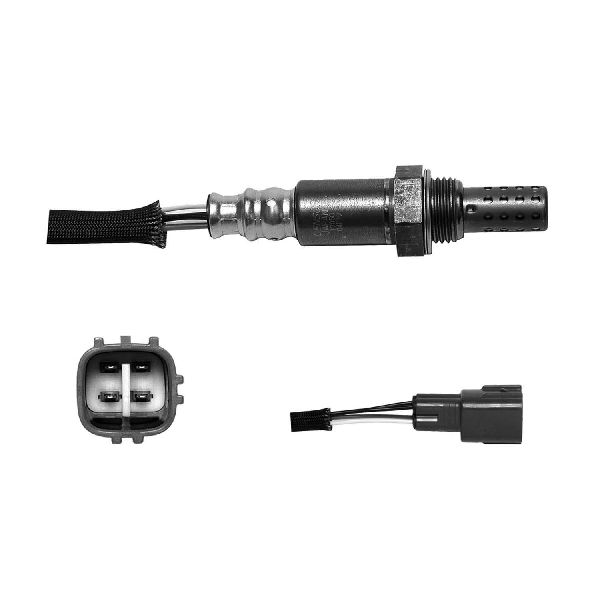
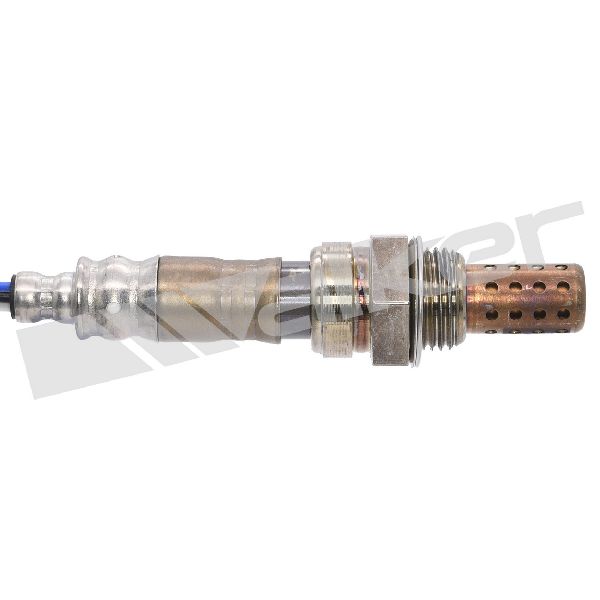
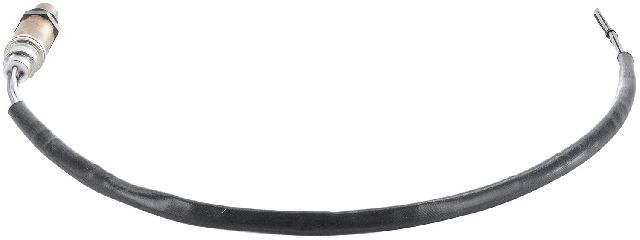
- Front Air/Fuel Ratio Sensor (Bank 1, Sensor 1)
(OEM #22641AA272 (Superseded by 22641AA381, verify with VIN))— This is the primary cause of P0132 on this vehicle due to internal failure of the sensor element or heater circuit. Using the correct OEM-spec part is critical for a lasting repair.
Trusted brands: Denso (OEM supplier, part #234-9123), NTK (OEM supplier, e.g., part #24696)
OEM price range: $160-$220
Aftermarket price range: $120-$160 - Oxygen Sensor Socket Set — A special 22mm (7/8") slotted socket is required to remove and install the sensor without damaging its wire. The sensor can be seized in the exhaust, making this tool essential.
OEM price range: $15-$30
Aftermarket price range: $15-$30
Related Codes That Often Appear With This One
- P0172 (System Too Rich): This may appear if there is a genuine rich condition from another component, like a leaking fuel injector, that the A/F sensor is correctly detecting.
- P0131 (O2 Sensor Circuit Low Voltage): Can appear alongside P0132 if the sensor is failing intermittently, causing voltage to swing between extreme highs and lows.
Platform-Specific Known Issues
- Subaru's ECU logic is highly sensitive to the electrical characteristics of the A/F sensor. Using non-OEM or universal brands is a common cause for repair failure, as documented in multiple owner forums.
- The Check Engine Light being accompanied by a flashing 'CRUISE' light is normal behavior for this generation of Subaru and is intended to get the driver's attention. The cruise control system is disabled whenever an engine-related fault code is stored.
Mechanic-Grade Diagnostic Values
- Front A/F Sensor Heater Circuit Resistance — expected: 2.0 to 3.4 Ohms at room temperature.. Failure: An open circuit (infinite resistance) or a reading significantly outside the specified range indicates a failed internal heater.
- Short-Term Fuel Trim (STFT) - Bank 1 — expected: Fluctuating between -5% and +5% at a stable idle.. Failure: A value consistently stuck at a high negative number (e.g., -10% to -25%) shows the ECU is aggressively pulling fuel to counteract the constant high voltage (rich) signal from the sensor.
- Wiring Harness Continuity — expected: Less than 1.0 Ohm from the sensor connector pin to the corresponding ECU pin.. Failure: Resistance greater than 1.0 Ohm points to corrosion or damage within the wire, causing excessive resistance.
- A/F Sensor Signal Voltage (Live Data) — expected: For a wideband A/F sensor, voltage should be around 2.2V-3.3V, not fluctuating like a traditional O2 sensor.. Failure: The P0132 code triggers when voltage is stuck high, often above 3.5V or even as high as 4.9V (shorted to power). The common 0.1V-0.9V range applies to traditional zirconia sensors, not the A/F sensors on this vehicle.
Wiring & Ground Locations
- Engine-to-Chassis Ground — On the firewall, to the left of the heater core tubes, there are two main ground bolts for the engine harness.. A poor ground connection at this point can affect the reference voltage for multiple sensors, including the A/F sensor, potentially causing incorrect readings that lead to a P0132 code even with a good sensor.
- Front A/F Sensor Connector (E23) — Attached to a bracket on the top of the passenger-side strut tower in the engine bay.. This is the primary connection point to test the sensor vs. the engine harness. A short-to-power in the harness will still show high voltage at this connector even when the sensor is unplugged.
Real Owner Repair Stories
- NASIOC forum user (2005 Legacy GT) — P0132 code appeared after installing an aftermarket downpipe.
❌ Tried (didn't work) Replacing the front O2 sensor with a new Denso unit., Checking for exhaust leaks., Verifying wiring near the sensor was not damaged.
✅ What actually fixed it The user found a ground wire on the passenger side of the intake manifold that was not reconnected during the downpipe installation. Securing this ground wire resolved the P0132 code.
OEM Part Supersession History
22641AA272→22641AA381— Standard part revision and supplier update.
Heads up: While physically similar, using the wrong year-specific sensor can cause immediate codes. The 2005 model year uses a different sensor (Denso 234-9122) than the 2006-2009 models (Denso 234-9123).
Model Year Variations Within This Range
- 2005 only: The 2005 Subaru Legacy 2.5L uses Denso part #234-9122 as the front A/F sensor.
- 2006-2009: The 2006-2009 Subaru Legacy 2.5L uses Denso part #234-9123 as the front A/F sensor. The connectors and electrical characteristics are different, and they are not interchangeable.
Diagnostic Flowchart
Other Known Issues on This Vehicle
Issues unrelated to this code that are worth knowing about as an owner of this generation:
- Head Gasket Failure 🔴 High — Very common on Phase II EJ25 engines (1999-2009), typically manifesting as an external coolant or oil leak between 100,000 and 150,000 miles.
- Clogged Turbo Oil Supply Banjo Bolt Filter (Turbo Models) 🔴 High — A small mesh filter inside the oil feed banjo bolt to the turbo is notorious for clogging with debris, starving the turbo of oil and causing catastrophic failure. Many owners and shops remove them preventatively. (Ref: Subaru TSB 02-103-07R)
- Cracked Front Lower Control Arm Bushings 🟠 Medium — The large rear bushings on the front control arms are known to crack and fail prematurely, sometimes as early as 60,000 miles, causing alignment issues and clunking noises.
- Leaking Spark Plug Tube Seals 🟡 Low — The seals around the spark plug tubes, located in the valve covers, often harden and leak oil into the spark plug wells, which can cause misfires. This is a common maintenance item when replacing valve cover gaskets.
Used vs. New Parts: Buying Guide for This Vehicle
When a used part is the smart pick: For this specific repair, buying a used Air/Fuel sensor is strongly discouraged. However, if diagnosis points to a damaged connector pigtail, a used pigtail from a junkyard harness is a cost-effective and reliable option.
Donor-vehicle mileage cap: roughly under 100000 miles for the part to have meaningful remaining life.
What to inspect on the donor part:
- For a connector pigtail, ensure the plastic is not brittle or cracked.
- Check that the locking tab is intact and functional.
- Inspect the wire insulation for any signs of melting, fraying, or previous repairs.
- Look for clean, corrosion-free terminals inside the connector.
OEM-only on this vehicle (don't cheap out):
- Front Air/Fuel Ratio Sensor
Aftermarket brands forum-validated for this vehicle:
- Denso (OEM Supplier)
- NTK
Brands owners have reported issues with on this vehicle:
- Universal sensors (that require splicing)
- Unbranded or 'white-box' sensors from online marketplaces
Real Owner Stories
Aggregated from forums and TSBs cited above. Mileages and costs reflect what owners reported in those sources.
2005 Subaru Legacy Wagon 2.5i Auto
Symptoms: Check Engine Light with code P0132 after previously having P0131.
What fixed it: Replacing a universal Bosch 4-wire sensor with an OEM Denso O2 sensor (part number 22641AA180).
Source hint: LegacyGT.com forum report cited in owner_reports
2005 Subaru Outback 2.5L
Symptoms: The vehicle immediately threw a P0132 code after a new sensor was installed.
What fixed it: Identifying that the brand new Denso replacement sensor was faulty out of the box.
Source hint: subaruoutback.org thread cited in forum_citations
Related OBD-II Codes
Frequently Asked Questions
Why is my cruise control light flashing along with the Check Engine Light on my 2005 Legacy?
Can I use a universal Bosch sensor to fix the P0132 code on my EJ25 engine?
What is the recommended replacement brand for the front A/F sensor on a 2005-2009 Subaru?
Where is the A/F sensor connector located on the 2.5L Legacy?
At what mileage does the front O2 sensor typically fail on this generation of Subaru?
How can I tell if the P0132 high voltage is caused by the sensor or the car's wiring?
Helpful Videos
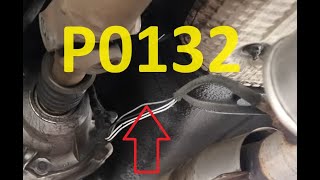
![How to Fix P0132 Engine Code in 3 Minutes [2 DIY Methods / Only $8.78]](https://img.youtube.com/vi/z01JETB0ezI/mqdefault.jpg)
We Have This Part in Stock
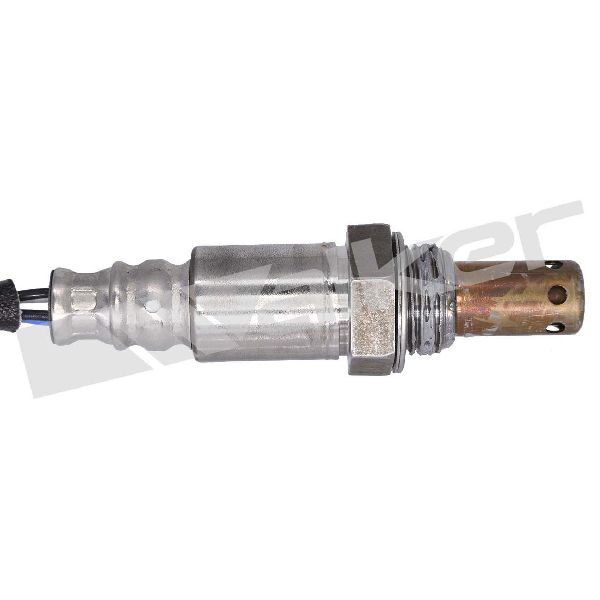
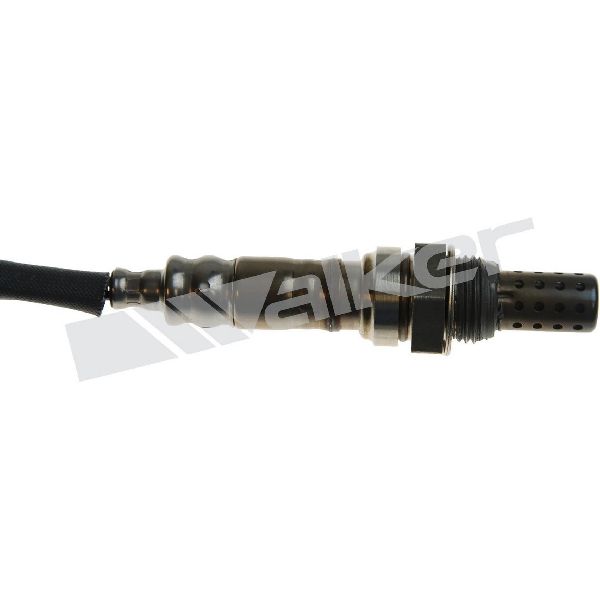


The information in this article is provided for general reference and educational purposes only. Vehicle specifications, procedures, and part compatibility can vary by production date, trim level, and region. Always consult your vehicle's factory service manual and verify part numbers before purchasing or performing repairs. Safety-critical components such as airbags, seat belts, and braking systems should be installed by a qualified professional.
- Subaru Legacy:
- 🧭 Diagnostic Flowchart
- 🎬 Helpful Videos
- 🛍️ Shop This Part
- What's Unique About the 2005-2009 Subaru Legacy
- Symptoms You May Notice
- Most Likely Causes
- Rare But Worth Checking
- Diagnosis Steps
- Parts You'll Likely Need
- Related Codes That Often Appear With This One
- Platform-Specific Known Issues
- Mechanic-Grade Diagnostic Values
- Wiring & Ground Locations
- Real Owner Repair Stories
- OEM Part Supersession History
- Model Year Variations Within This Range
- Other Known Issues on This Vehicle
- Used vs. New Parts: Buying Guide for This Vehicle
- Real Owner Stories
- 2005 Subaru Legacy Wagon 2.5i Auto
- 2005 Subaru Outback 2.5L
- Related OBD-II Codes
- Frequently Asked Questions
- 🎟️ Get 5% Off