

P0132 on 2005-2010 Volkswagen Jetta: O2 Sensor High Voltage Causes and Fixes
For a 2005-2010 VW Jetta, code P0132 almost always points to a failed upstream oxygen sensor (Bank 1, Sensor 1). The ECU sees a voltage stuck above 0.9V, indicating a rich condition or sensor failure. Replacing this sensor is the most common fix, with parts costing between $50 for an aftermarket brand and $180 for an OEM Bosch part.
- P0132 means the upstream O2 sensor (before the catalytic converter) is stuck on a high voltage reading.
- The most common cause by far is a failed O2 sensor itself.
- Symptoms include a lit Check Engine Light, poor gas mileage, and a rough idle.
- Before replacing the sensor, perform a quick visual check of the wiring harness for obvious melting or damage.
- This is a DIY-friendly repair for many owners with basic tools, including an O2 sensor socket.
What's Unique About the 2005-2010 Volkswagen Jetta
The 2005-2010 (Mk5) Jetta, particularly with its common 2.5L 5-cylinder and 2.0T 4-cylinder engines, is straightforward regarding this code. Unlike some platforms with complex electrical gremlins, the P0132 code on this Jetta generation is most often a simple case of a worn-out or internally shorted upstream O2 sensor. While wiring issues can occur, they are less frequent than the sensor itself failing from age and heat cycles. The diagnosis is typically not complicated; a scan tool showing a flat-lined high voltage from O2S11 strongly indicates a bad sensor. There was a recall for earlier VW models (1999-2001) for O2 sensor failure due to moisture causing thermal shock, but this specific issue is not documented as a widespread problem for the 2005-2010 generation.
Generation note: The 2005-2010 year range primarily covers the Volkswagen Jetta A5 (or Mk5) generation. However, the 2005 model year was a transition, and some early 2005 models were leftover A4 (Mk4) generation Jettas. This guide focuses on the A5 generation, which is the most common for these years and includes engines like the 2.5L I5 and 2.0T I4.
Symptoms You May Notice
- Check Engine Light is on.
- Decreased fuel economy.
- Rough or unstable idle.
- Engine hesitation or stumbling during acceleration.
- Black smoke from the exhaust or a strong smell of fuel, indicating a rich condition.
- Failed emissions test.
- Replacing the downstream (Bank 1, Sensor 2) oxygen sensor. P0132 specifically refers to Sensor 1, which is the upstream sensor before the catalytic converter.
- Replacing the catalytic converter. A bad converter typically sets codes like P0420, not P0132. A P0132 code left unfixed can eventually damage the converter, but the converter is not the cause.
- Ignoring wiring damage. Many owners replace the sensor only to find the code returns, because the actual problem was a short in the harness that was overlooked.
Most Likely Causes
- Faulty Upstream Oxygen Sensor (Bank 1, Sensor 1) 🔴 High Probability → Shop Oxygen Sensor Oxygen sensors are wear-and-tear items that degrade over time due to constant exposure to high exhaust temperatures (300°-700° F). Internal components, particularly the heater element or sensor element, can short out, causing the sensor to send a fixed high voltage signal.
How to confirm: Use an OBD-II scanner to monitor the live data for the Bank 1, Sensor 1 O2 sensor ('O2S11'). A healthy sensor's voltage should fluctuate rapidly between approximately 0.1V and 0.9V. If the voltage is stuck high (e.g., >0.9V) and does not fluctuate, the sensor has likely failed.
Typical fix: Replace the upstream oxygen sensor. On the 2.5L engine, it is on the front of the exhaust manifold. On the 2.0T, it is on top of the turbocharger housing. An oxygen sensor socket is highly recommended for removal.
Est. part cost: $50-$180 - Damaged Wiring or Corroded Connector 🟡 Medium Probability The O2 sensor wiring harness is routed near hot exhaust components. Over time, the plastic loom can become brittle and the wiring insulation can melt. A short between the signal wire and the heater circuit's power wire is a common failure mode that will cause a constant high voltage reading.
How to confirm: Visually inspect the entire wiring harness from the O2 sensor to the main engine harness. Look for melted or frayed wires, especially where the harness might contact the engine or exhaust. Unplug the sensor and check the connector pins for corrosion, moisture, or being pushed out. With the sensor unplugged, the scan tool reading should drop to a default low or middle voltage; if it stays high, a short-to-power exists in the harness.
Typical fix: Repair the damaged section of the wiring harness or clean/replace the connector. Use heat-shrink tubing to protect repairs.
Est. part cost: $10-$60 - Engine Running Genuinely Rich ⚪ Low Probability While less common to be the root cause for this specific code, issues like a leaking fuel injector, a faulty fuel pressure regulator, or a failing Mass Airflow (MAF) sensor can create a genuinely rich condition. The O2 sensor will accurately report this as high voltage.
How to confirm: This is harder to diagnose. Look for other trouble codes (e.g., P0172 System Too Rich). Check short-term and long-term fuel trims with a scan tool; consistently negative values (e.g., -10% or more) indicate the ECM is trying to remove fuel. A fuel pressure test can confirm if pressure is above specification.
Typical fix: Diagnose and replace the root cause, such as a leaking fuel injector, faulty fuel pressure regulator, or dirty MAF sensor.
Est. part cost: $70-$400
Rare But Worth Checking
- Exhaust Leak: An exhaust leak before the O2 sensor can sometimes, counter-intuitively, affect sensor readings. While it more commonly causes a lean code (P0131), a significant leak can disrupt the exhaust flow and cause erratic signals that may be misinterpreted by the ECU.
- Faulty Engine Control Module (ECM): → Shop Engine Control Module (ECM) This is extremely rare. The ECM's internal voltage regulation for the O2 sensor circuit would have to fail. Before condemning the ECM, all other possibilities (sensor, wiring, fuel system) must be exhaustively ruled out by a professional.
Diagnosis Steps
- Connect an OBD-II scanner and confirm that P0132 is the primary code. Note any other codes present, especially fuel system codes like P0172.
- Access the live data stream on the scanner. Watch the voltage for 'O2S11' (Oxygen Sensor Bank 1 Sensor 1).
- Observe the voltage with the engine warm and at idle. It should fluctuate rapidly between ~0.1V and ~0.9V. If it is stuck high (e.g., >0.9 volts), the problem is confirmed.
- Wiring Check: Turn the engine off. Unplug the O2 sensor. With the key on and engine off, check the scan tool data again. The voltage should drop. If it remains high, there is a short-to-power in the vehicle's wiring harness that must be found and repaired.
- If the voltage drops when unplugged, the wiring is likely okay. Proceed to inspect the sensor and harness. Let the engine cool completely. Locate the upstream O2 sensor.
- Carefully inspect the sensor's wiring harness and connector for any signs of melting, chafing, or corrosion, paying close attention to where it might touch the engine block or exhaust components.
- If the wiring looks good and the unplug test pointed to the sensor, the O2 sensor itself is the most probable cause. Replacement is the next step.
- If a new sensor and good wiring do not resolve the code, further investigation into the fuel system (fuel pressure, injectors, MAF sensor) is needed, especially if fuel trims are highly negative.
Parts You'll Likely Need
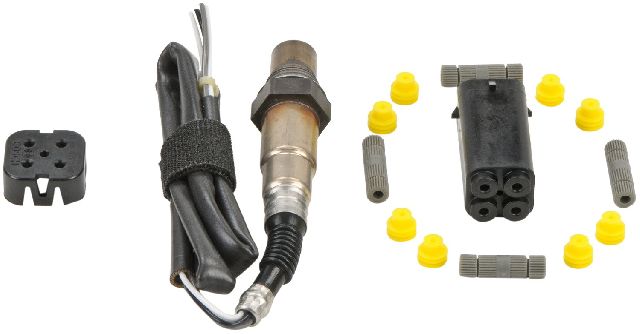
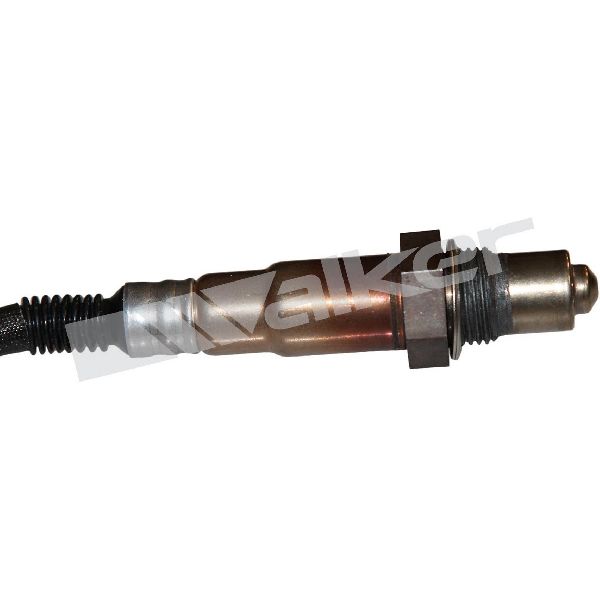
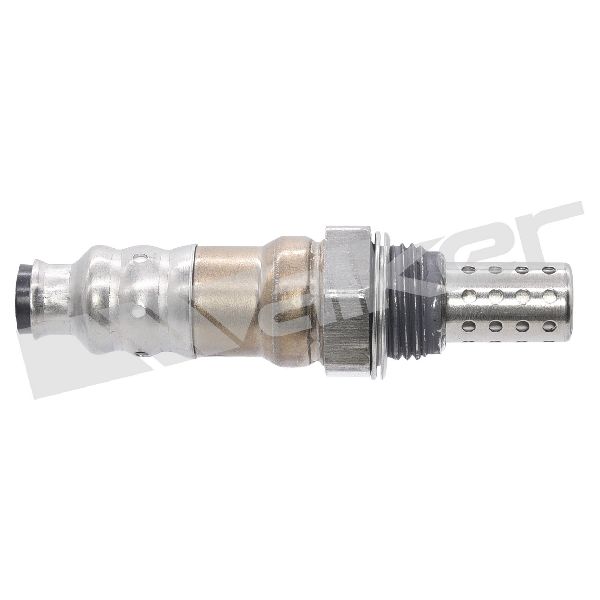
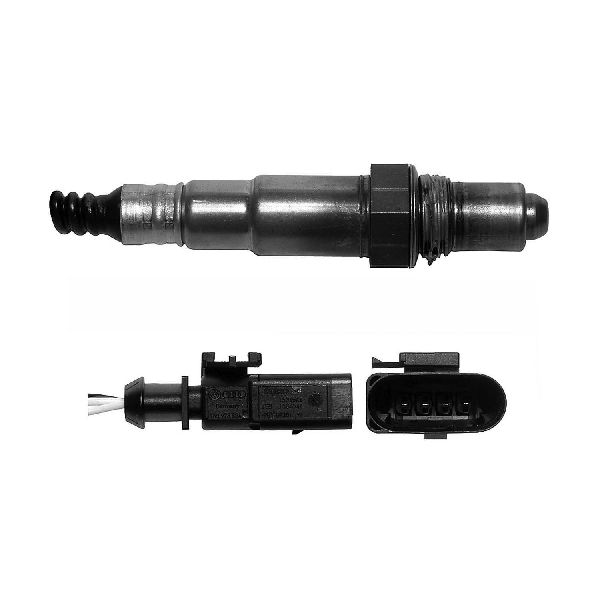
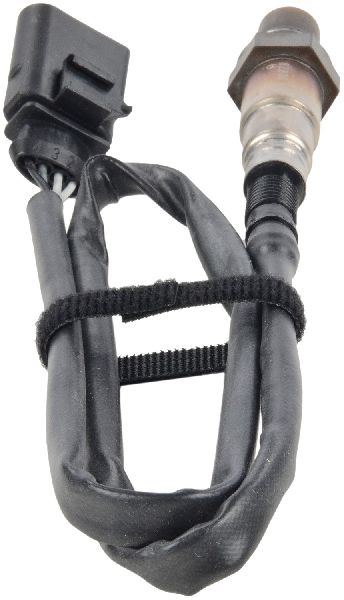
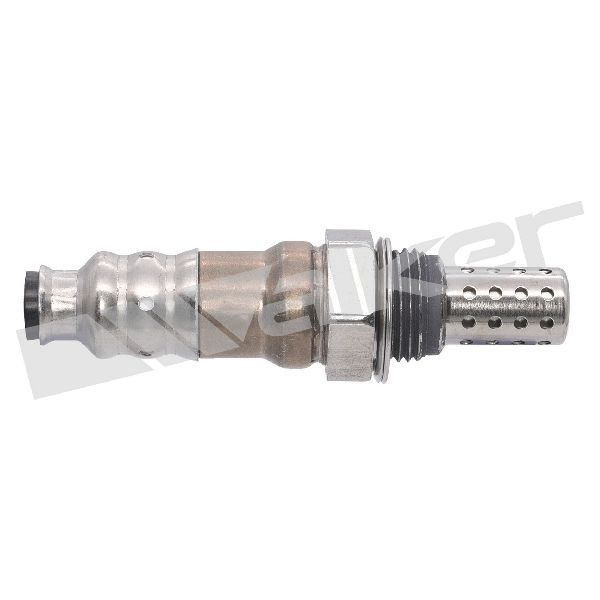
- Upstream Oxygen Sensor (Bank 1, Sensor 1)
(OEM #2.5L: 06A906262BR, 07K906262F. 2.0T: 06J906262AA, 1K0998262AD.)— This is the most frequent failure point for code P0132. The sensor's internal components wear out or short, causing it to send a persistent high voltage signal.
Trusted brands: Bosch (OEM supplier), NGK/NTK, Denso
OEM price range: $120-$180
Aftermarket price range: $50-$120
Related Codes That Often Appear With This One
- P0172 — System Too Rich (Bank 1). This code can appear alongside P0132 if the engine is genuinely running rich due to a fuel system problem, causing the O2 sensor to report high voltage.
- P0300, P0301, etc. — Random or specific cylinder misfire codes can be triggered because the ECM's incorrect fuel adjustments (based on the faulty O2 sensor signal) can lead to poor combustion and fouled spark plugs.
- P0130 — O2 Sensor Circuit Malfunction (Bank 1, Sensor 1). This is a more general O2 sensor circuit code that may appear with P0132, indicating a problem detected in the sensor's overall circuit performance.
Technical Service Bulletins (TSBs) & Recalls
- No specific TSBs for P0132 on this platform were found during research. The issue is typically addressed through standard diagnostic procedures.
Platform-Specific Known Issues
- Engine-Specific Sensor Location and Part Numbers: The 2005-2010 Jetta was offered with several engines. For P0132, the key difference is the upstream O2 sensor. On the 2.5L 5-cylinder engine, the sensor is located on the front of the exhaust manifold, relatively easy to access. A common OEM part is Bosch 17098 or VW part 06A906262BR. For the 2.0T 4-cylinder turbo engine (found in GLI models), the sensor is on top of the turbocharger housing, under the heat shield. A common OEM part is Bosch 17270 or VW part 06J906262AA. Always verify the correct part number with the vehicle's VIN.
Mechanic-Grade Diagnostic Values
- O2 Sensor Heater Resistance — expected: Typically 3-10 Ohms, can be around 5-6 Ohms on a cool engine.. Failure: A reading of 0 Ohms (short circuit) or infinite/OL (open circuit) indicates a failed heater element within the sensor.
- O2 Sensor Signal Voltage (Live Data) — expected: Rapidly fluctuating between 0.1V and 0.9V on a warm, running engine.. Failure: Voltage is stuck consistently above 0.9V, often as high as 1.25V, and does not fluctuate.
- O2 Sensor Harness Voltage (Sensor Unplugged, KOEO) — expected: Approximately 11-14V (battery voltage) at the heater power pin.. Failure: No voltage at the heater power pin indicates a wiring or fuse issue upstream of the sensor.
Scan Tool Commands That Help
- VCDS (VAG-COM): Engine -> Measuring Blocks (Function 08) — Use this to monitor live data from the oxygen sensors. Key groups for this diagnosis are typically 030-049, which show lambda values, sensor voltages, and heater status. This is the primary method for confirming if the Bank 1 Sensor 1 voltage is stuck high.
- VCDS (VAG-COM): Switch to Basic Settings (from Measuring Blocks screen) — After replacing a sensor or performing repairs, certain procedures may require switching to Basic Settings to run readiness tests or reset adaptations. This should be done with guidance from a service manual.
Wiring & Ground Locations
- G13 / G15 — On or near the cylinder head/top of the engine.. These are primary engine ground points. A corroded or loose ground here can affect sensor readings and ECU operation, potentially causing erratic voltage signals.
- Ground Point 12 — Engine compartment, left side, below the battery tray.. This is a major chassis ground point for multiple harnesses in the engine bay. Poor connection here can introduce electrical noise and faults into various sensor circuits, including the O2 sensor.
- G44 — At the base of the lower left 'A' pillar, inside the cabin.. This is an interior ground point for several control modules. While less likely to be the direct cause, a fault here can create cascading electrical issues that could affect ECU behavior.
Real Owner Repair Stories
- Reddit user in r/autoelectrical (VW Jetta, year not specified but within Mk5/Mk6 era based on context.) — P0132 code (high voltage) appeared after replacing the catalytic converter and both O2 sensors. The engine ran very poorly, feeling starved of fuel.
❌ Tried (didn't work) Replacing the catalytic converter., Replacing both upstream and downstream O2 sensors.
✅ What actually fixed it The user recalled that during the exhaust manifold removal, they had forgotten to disconnect the O2 sensor, and its weight was supported by the wiring. The wires had pulled out of the connector. Although they had put the wires back in, the P0132 code appeared with the new sensor. The implication is that the connector or harness was damaged when the wires were ripped out, and this wiring fault was the true cause, not the new sensor itself.
OEM Part Supersession History
06F906262R, 06F906262AC→06J906262AA— Part revision and consolidation by Volkswagen/Audi for the 2.0T engine.
Heads up: While these parts are generally interchangeable for the 2.0T engine in this generation, it is always critical to use a VIN lookup to confirm the exact part number required, as some mid-year production changes can occur. Using the wrong sensor, even if it fits, can cause performance issues.
Model Year Variations Within This Range
- 2004-2006 vs 2007-2010: The immobilizer system changed mid-generation. Early Mk5 Jettas (approx. 2004-2006) use 'Immo 4', while later models (approx. 2007+) use 'Immo 4c'. This is critical if diagnosing a rare ECU fault, as the ECU and instrument cluster are paired and must be of the same immobilizer generation if being replaced.
Diagnostic Flowchart
Real Owner Stories
Aggregated from forums and TSBs cited above. Mileages and costs reflect what owners reported in those sources.
2006 Volkswagen Jetta 2.5
Symptoms: Experienced code P0132 and checked the live data to confirm the high voltage reading.
What fixed it: Confirmed the high voltage reading using a scan tool to diagnose the O2 sensor circuit.
Source hint: VWvortex Forums - 'P0132 O2 Sensor Circuit High Voltage Bank 1 Sensor 1'
Related OBD-II Codes
Frequently Asked Questions
Where is the upstream oxygen sensor located on my 2005-2010 Volkswagen Jetta?
What is the correct replacement part number for the upstream O2 sensor on a 2.5L Jetta?
What is the correct replacement part number for the upstream O2 sensor on a 2.0T Jetta GLI?
Are there any specific Technical Service Bulletins (TSBs) for the P0132 code on the 2005-2010 Jetta?
How can I tell if the P0132 code is caused by a bad sensor or a damaged wiring harness on my Jetta?
Can a failing MAF sensor cause a P0132 code on my Jetta?
We Have This Part in Stock

The information in this article is provided for general reference and educational purposes only. Vehicle specifications, procedures, and part compatibility can vary by production date, trim level, and region. Always consult your vehicle's factory service manual and verify part numbers before purchasing or performing repairs. Safety-critical components such as airbags, seat belts, and braking systems should be installed by a qualified professional.
- Volkswagen Jetta:
- 🧭 Diagnostic Flowchart
- 🛍️ Shop This Part
- What's Unique About the 2005-2010 Volkswagen Jetta
- Symptoms You May Notice
- Most Likely Causes
- Rare But Worth Checking
- Diagnosis Steps
- Parts You'll Likely Need
- Related Codes That Often Appear With This One
- Technical Service Bulletins (TSBs) & Recalls
- Platform-Specific Known Issues
- Mechanic-Grade Diagnostic Values
- Scan Tool Commands That Help
- Wiring & Ground Locations
- Real Owner Repair Stories
- OEM Part Supersession History
- Model Year Variations Within This Range
- Real Owner Stories
- 2006 Volkswagen Jetta 2.5
- Related OBD-II Codes
- Frequently Asked Questions
- 🎟️ Get 5% Off