

P0133 on 1994-2001 Acura Integra: O2 Sensor Slow Response Causes and Fixes
On a 1994-2001 Acura Integra, P0133 most often means the primary (upstream) oxygen sensor is old and needs replacement. An exhaust leak before the sensor is the second most likely cause. Expect to pay $40-$90 for a quality aftermarket sensor (Denso/NTK) and $150+ for OEM. Always check for exhaust leaks before replacing the sensor, as a leak can mimic a slow sensor.
- P0133 means the primary (upstream) O2 sensor is responding too slowly.
- The most likely cause is an aged O2 sensor that needs replacement.
- Before replacing the sensor, always check for exhaust leaks at the manifold and gaskets, as this is a very common issue on Integras that mimics a bad sensor.
- Use a high-quality Denso or NTK replacement sensor for a lasting repair; cheaper brands are known to fail prematurely on this platform.
What's Unique About the 1994-2001 Acura Integra
The 1994-2001 Acura Integra, like many Hondas of its era, is known for being particularly sensitive to the brand of oxygen sensor used. While many aftermarket options are available, owners and mechanics on forums like Honda-Tech.com frequently report that using OEM-equivalent brands like Denso or NTK is crucial for a lasting fix. Using cheaper, universal-style sensors can sometimes lead to the P0133 code returning prematurely. Additionally, the exhaust manifolds on these cars, especially the cast iron B18B1 (LS, RS, GS) version, can develop cracks over time, creating leaks that are a common cause of this code. One owner on Honda-Tech reported their manifold had cracked in half, causing the P0133 code.
Generation note: This guide covers the entire third generation of the Acura Integra (chassis codes DC2, DC4, DB7, DB8), sold from 1994 to 2001. The P0133 code is specific to OBD-II vehicles (1996-2001). Pre-1996 OBD-I models have a similar fault (Code 1) but do not use the 'P' code format. The causes and fixes are broadly similar across all engine types (B18B1, B18C1, B18C5), though the specific location and part number for the O2 sensor may vary slightly.
Symptoms You May Notice
- Check Engine Light is on
- Decreased fuel economy
- Rough or unstable idle
- Engine hesitation or sluggish acceleration
- Failing an emissions test
- Engine feels down on power
- Rotten egg smell from exhaust
- Replacing the oxygen sensor without first checking for exhaust leaks. An exhaust leak can introduce fresh air that makes a good sensor appear slow, leading to the code returning even with a new part.
- Replacing the wrong oxygen sensor. P0133 specifically refers to Bank 1, Sensor 1, which is the upstream sensor before the catalytic converter. OBD-II cars (1996+) have a second sensor (Sensor 2) after the catalytic converter which is not related to this code.
- Using a cheap, 'universal' or incorrect brand of oxygen sensor. Many owners report that brands other than Denso or NTK do not perform to OEM standards for Hondas/Acuras and can cause the code to return.
Most Likely Causes
- Failing Primary Oxygen Sensor (Bank 1, Sensor 1) 🔴 High Probability → Shop Oxygen Sensor Oxygen sensors are wear items with a finite lifespan, typically 60,000 to 100,000 miles. After high mileage, the internal heating element can weaken or the sensing element can become contaminated with carbon, oil, or coolant, slowing its response time.
How to confirm: Use a scan tool to graph the live data from the B1S1 O2 sensor. Warm the engine to operating temperature and hold RPMs at a steady 2,000-2,500. A healthy sensor's voltage will switch rapidly and frequently between approximately 0.1V and 0.9V. A slow sensor will show lazy, infrequent, or flattened-out voltage swings. Some technicians look for at least three rich-to-lean switches per second at 1200 RPM. The sensor's internal heater circuit can also be tested with a multimeter; it should have a resistance between 9 and 40 ohms when cold.
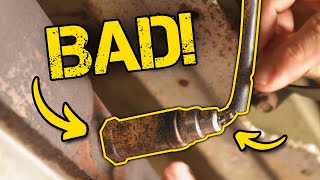
Typical fix: Replace the primary (upstream) oxygen sensor. It is located in the exhaust manifold/header. Using a 22mm (or 7/8") offset O2 sensor socket is recommended for removal. 🎬 Watch: This walkthrough shows how to replace the Integra's oxygen sensor. It is highly recommended to use a Denso or NTK brand sensor for a reliable repair.
Est. part cost: $40 - $90 - Exhaust Leak 🟡 Medium Probability The factory exhaust manifold, both the cast iron B18B1 and tubular B18C versions, can develop cracks over time, especially around the collector or runners. Gaskets between the cylinder head and manifold, or the manifold and downpipe/catalytic converter, can also fail. This is a very common reason for the code to return after a sensor replacement.
How to confirm: Visually inspect the exhaust manifold for cracks, often appearing as thin black lines of soot. Listen for a 'ticking' or 'puffing' sound from the engine bay, especially when the engine is cold. A definitive method is to use a smoke machine to pump smoke into the exhaust system (with the tailpipe blocked) and watch for where it escapes. You can also have a helper briefly cover the tailpipe with a rag while you feel for leaks by hand around the manifold.
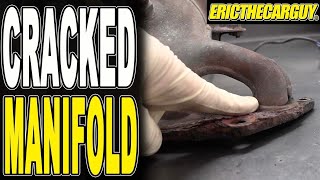
Typical fix: If a crack is found in the manifold, it must be replaced or welded. 🎬 Watch: A guide on how to repair a cracked exhaust manifold. If a gasket is leaking, replace the gasket. Ensure all mating surfaces are clean before reassembly.
Est. part cost: $15 - $300+ - Damaged Wiring or Connector ⚪ Low Probability The O2 sensor wiring is located in a hot engine bay near the exhaust manifold and axles. It can become brittle, melted, or frayed over time. The connector is typically mounted to a bracket on the back of the engine block near the oil filter and can be damaged or left unplugged during other maintenance.
How to confirm: Visually inspect the entire length of the O2 sensor harness from the sensor to its connection point on the engine harness. Look for any signs of melting, chafing, or corrosion on the connector pins. Use a multimeter to check for continuity on the heater circuit wires (usually the two same-colored wires, often black) which should show resistance between 10 and 40 ohms. Check for continuity from the sensor signal wire at the ECU (Pin D7 on OBD2a) to the sensor connector.
Typical fix: Repair the damaged section of wire. If the connector is damaged, it may need to be replaced with a pigtail connector. Clean any oil or debris from the connection. Ensure the harness is properly routed away from hot exhaust components or moving axles.
Est. part cost: $10 - $30
Rare But Worth Checking
- Engine Running Excessively Rich or Lean: If the engine has other problems like a leaking fuel injector, incorrect fuel pressure, or a large vacuum leak, it can sometimes cause the O2 sensor to respond slowly as it's operating outside its normal range. This can also cause the sensor to become fouled with carbon (rich) or overheat (lean). Usually, other trouble codes like P0171 (System Too Lean) will be present in this situation.
- Contaminated Sensor: Using the wrong type of RTV sealant on nearby components (like the valve cover) that is not 'sensor safe' can release vapors that contaminate the O2 sensor. Also, an internal engine issue that causes oil or coolant to burn can foul the sensing element, causing it to fail. A user on Honda-Tech noted their new sensor was 'charcoaled/burnt' after a few days, indicating a deeper engine problem.
- Faulty Powertrain Control Module (PCM): → Shop Engine Control Module (ECM) In very rare cases, the engine computer itself can be the source of the problem. This should only be considered after all other possibilities (sensor, wiring, exhaust leaks, fuel system issues) have been thoroughly ruled out. A poor main ground connection for the ECU, typically located on the thermostat housing, can also cause this and should be checked first.
Diagnosis Steps
- Retrieve the stored trouble code(s) with an OBD-II scanner. Confirm P0133 is present and note any other codes.
- Visually inspect the exhaust manifold/header for any obvious cracks or signs of black soot indicating a leak.
- Listen for any audible exhaust leak 'ticking' noises, especially when the engine is cold.
- Inspect the oxygen sensor's wiring harness and connector for any signs of melting, chafing, corrosion, or oil contamination.
- Using a scan tool with live data graphing capabilities, warm the engine to full operating temperature (coolant temp > 160°F).
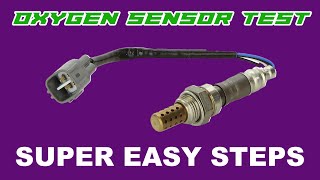
- Bring the engine to a steady 2,500 RPM and observe the graph for 'O2S B1S1'. The voltage should fluctuate rapidly and consistently between approximately 0.1V and 0.9V. If the transitions are slow, lazy, or the graph looks more like a gentle wave than a sharp sawtooth pattern, 🎬 See how to use a scan tool to identify a slow sensor. the sensor is likely faulty.
- If an exhaust leak is suspected but not obvious, perform a smoke test on the exhaust system.
- If no exhaust leaks or wiring issues are found and the sensor's waveform is slow, replace the Bank 1 Sensor 1 oxygen sensor with a quality Denso or NTK part.
- After repair, clear the codes and perform a drive cycle to confirm the fix.
Parts You'll Likely Need
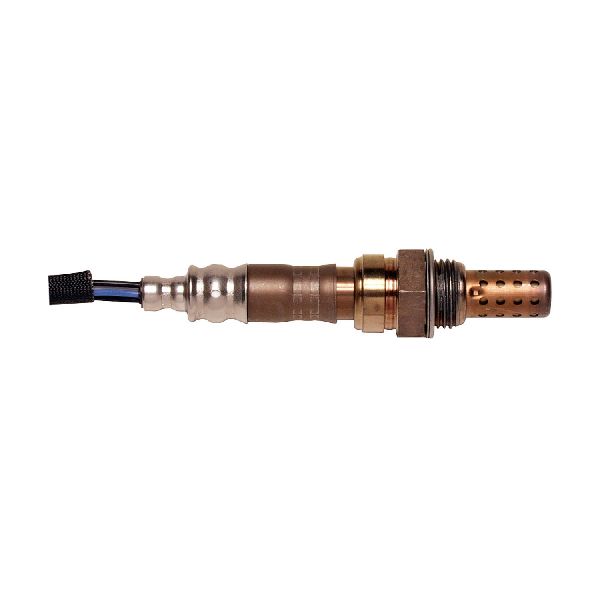
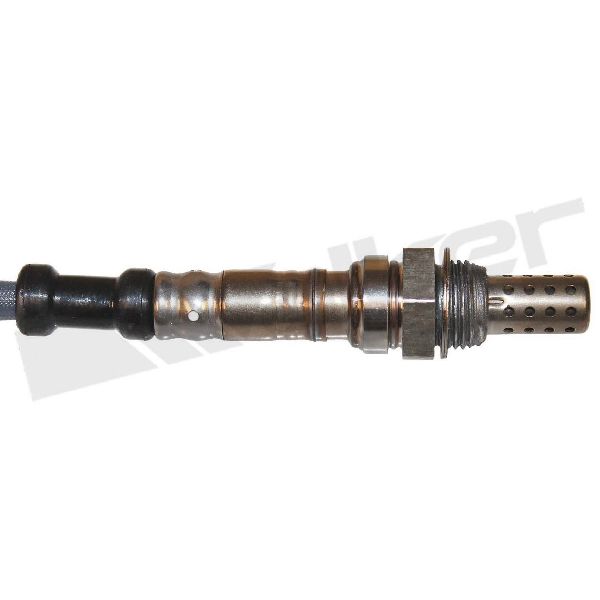
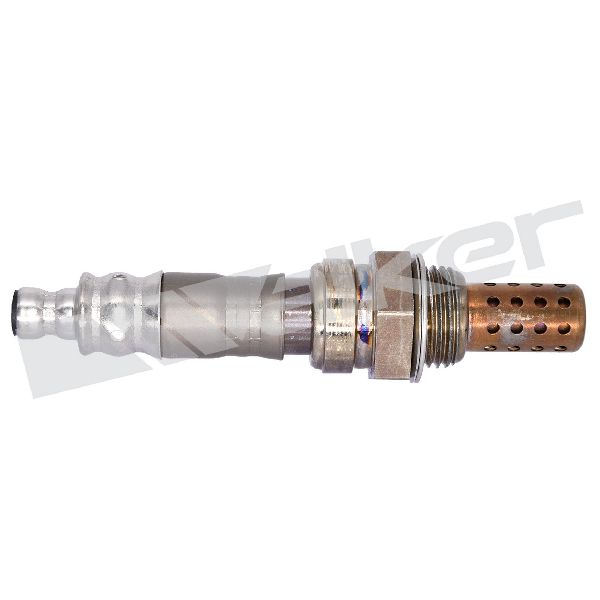
- Primary Oxygen Sensor (Upstream / Bank 1 Sensor 1)
(OEM #36531-P72-A01 (For B18C1/B18C5), 36531-P75-A01 (For B18B1))— This is the most common failure point for a P0133 code. The sensor is a wear item that degrades over time.
Trusted brands: Denso (e.g., 234-4011), NTK (e.g., 24033)
OEM price range: $150-$190
Aftermarket price range: $40-$90 - Exhaust Manifold Gasket
(OEM #18115-P72-003)— If an exhaust leak is found between the cylinder head and the manifold, this gasket will need to be replaced.
Trusted brands: Fel-Pro, Mahle, OEM Honda/Acura
OEM price range: $15-$25
Aftermarket price range: $5-$15
Related Codes That Often Appear With This One
- P0170 / P0171 (Fuel Trim Malfunction / System Too Lean): An exhaust or vacuum leak is a common cause for both P0133 and lean codes. The unmetered air causes the O2 sensor to read lean and can also slow its response.
- P0420 (Catalyst System Efficiency Below Threshold): A slow-responding P0133 sensor provides bad data to the computer, which can prevent it from accurately monitoring the catalytic converter, sometimes leading to a false P0420 code. Fix P0133 first.
Platform-Specific Known Issues
- Cracked B18B1 Exhaust Manifold: → Shop Exhaust Manifold The cast iron exhaust manifold on non-VTEC Integra models (LS, GS, RS) is known to develop cracks, particularly after many heat cycles. This often occurs on the runners or near the collector where the pipes merge. A crack will introduce oxygen into the exhaust stream before the O2 sensor, causing it to read incorrectly and trigger a P0133 code. A visual inspection is critical before replacing the sensor.
- Aftermarket Header Leaks: Many Integras have been modified with aftermarket exhaust headers. These headers, especially lower-quality ones, are prone to developing leaks at the collector flange, flex pipe (if equipped), or at the welds. These leaks are a frequent cause of a persistent P0133 code. A user on Honda-Tech found a crack on their aftermarket header which caused the code to return even after cleaning the O2 sensor.
Mechanic-Grade Diagnostic Values
- Primary O2 Sensor Heater Circuit Resistance — expected: 9 - 40 Ω (Ohms) when measured across the two heater pins on the sensor connector (engine cold).. Failure: A reading of 0 ohms (short circuit) or OL/infinite resistance (open circuit) indicates a failed heater element.
- Primary O2 Sensor Signal Wire at ECU (OBD2a) — expected: Continuity (near 0 Ω) between pin D7 (White wire) on the ECU connector and the corresponding pin on the engine harness side of the O2 sensor connector.. Failure: High or infinite resistance (OL) indicates a break in the signal wire.
- Primary O2 Sensor Heater Control at ECU (OBD2a) — expected: Continuity (near 0 Ω) between pin C1 (Black/White wire) on the ECU connector and the corresponding pin on the engine harness side of the O2 sensor connector.. Failure: High or infinite resistance (OL) indicates a break in the heater control wire.
Wiring & Ground Locations
- G101 — Bolted to the thermostat housing on the cylinder head.. This is a primary ground point for the ECU and many of its sensors. A corroded or loose connection here can cause erratic sensor readings, including those from the O2 sensor, leading to false codes.
- Primary O2 Sensor Connector — Mounted to a metal bracket on the back of the engine block, near the oil filter and below the intake manifold.. This connector is the main interface for the sensor. It can get contaminated with oil from a leaking distributor O-ring or valve cover gasket, or be damaged during other repairs like clutch or axle jobs, causing a poor connection.
- ECU Connector D, Pin 7 (OBD2a: 96-99) — On the ECU, located behind the passenger side kick panel.. This is the specific pin where the primary O2 sensor's signal (White wire) terminates. It is the final point to test for continuity from the sensor to confirm the wiring is intact.
Real Owner Repair Stories
- Honda-Tech user 'thewrai6th' (Acura Integra (model unspecified, but context implies 3rd gen)) — P0133 code persisted for weeks.
❌ Tried (didn't work) Initial diagnosis was likely focused on the sensor itself.
✅ What actually fixed it The user discovered their exhaust manifold had cracked in half. Replacing the manifold resolved the code. - Honda-Tech user 'Drzhope89' (1998 Acura Integra GSR) — P0133 code returned after sensor replacement.
❌ Tried (didn't work) Replacing the primary O2 sensor (B1S1), Replacing the ECT (Engine Coolant Temperature) sensor, Replacing the MAP (Manifold Absolute Pressure) sensor
✅ What actually fixed it The user found a crack in the exhaust header. After replacing the header and cleaning the new, now-blackened O2 sensor, the code still returned, indicating the new sensor was likely fouled by the rich condition caused by the leak, or another issue was present. This highlights the importance of fixing leaks *before* installing a new sensor. - Acurazine user 'Algavin' (Acura TL (different model, but same Honda/Acura principle)) — Check engine light with O2 sensor codes.
❌ Tried (didn't work) Replacing the primary O2 sensor with a cheap, non-OEM brand., Receiving a warranty replacement for the cheap sensor, which also proved to be defective.
✅ What actually fixed it The user concluded the cheap brand was the problem and sought advice on dependable brands. Forum members overwhelmingly recommended sticking to Denso or NTK and avoiding Bosch for Honda/Acura applications.
When the Usual Fixes Don't Work
- In multiple documented cases, replacing the oxygen sensor—the most common fix—did not resolve the P0133 code. The actual root cause was frequently an undetected crack in the exhaust manifold. This introduces unmetered air before the sensor, causing it to read incorrectly and making the ECU flag its response time as slow. This proves that a thorough inspection for exhaust leaks is not just a suggestion but a mandatory first step before spending money on a new sensor.
OEM Part Supersession History
36531-P72-A01→Discontinued— End of life for an older model part.
Heads up: This part was specific to 1994-1995 OBD1 GSR models. While physically similar, using an OBD2 sensor on an OBD1 car or vice-versa can cause issues. Always use a direct-fit Denso or NTK replacement specified for your exact year and model.
Model Year Variations Within This Range
- 1996-1999 vs 2000-2001: The ECU and engine wiring harness changed from OBD2a (1996-1999) to OBD2b (2000-2001). The ECU connectors are physically different, requiring a jumper harness if swapping ECUs between these ranges. While the primary O2 sensor's function is identical, wiring pinouts at the ECU differ, which is critical knowledge for electrical diagnosis or engine swaps.
Diagnostic Flowchart
Used vs. New Parts: Buying Guide for This Vehicle
When a used part is the smart pick: A used OEM exhaust manifold from a junkyard or part-out is a smart choice, as aftermarket manifolds can have fitment issues and OEM units are robust if not cracked.
Donor-vehicle mileage cap: roughly under 150000 miles for the part to have meaningful remaining life.
What to inspect on the donor part:
- Inspect thoroughly for hairline cracks, especially around the collector welds and where the runners meet the flange.
- Look for black soot trails which indicate a crack has been leaking.
- Place a straight edge across the cylinder head and downpipe flanges to check for warpage.
OEM-only on this vehicle (don't cheap out):
- While not strictly 'OEM-only', the Oxygen Sensor should be sourced from the OEM supplier to avoid issues.
Aftermarket brands forum-validated for this vehicle:
- Denso for oxygen sensors
- NTK for oxygen sensors
- Fel-Pro for exhaust gaskets
Brands owners have reported issues with on this vehicle:
- Bosch oxygen sensors are frequently reported by Honda/Acura owners to fail prematurely or not work correctly out of the box.
- Universal 'splice-in' oxygen sensors should be avoided due to high failure rates and potential for improper wiring.
Real Owner Stories
Aggregated from forums and TSBs cited above. Mileages and costs reflect what owners reported in those sources.
Acura Integra with aftermarket header
Symptoms: The P0133 Check Engine Light code returned even after cleaning the primary O2 sensor.
What fixed it: The owner found and repaired a crack on the aftermarket exhaust header, which was the source of an exhaust leak.
Source hint: Honda-Tech, cited in 'Aftermarket Header Leaks' section
Related OBD-II Codes
Frequently Asked Questions
What brand of oxygen sensor is best for my 1994-2001 Integra to fix a P0133 code?
I replaced the O2 sensor on my Integra, but the P0133 code came back. What's the most likely cause?
My Integra is a non-VTEC model (LS/GS/RS). Is there a specific problem I should look for with code P0133?
Where is the Bank 1 Sensor 1 oxygen sensor located on my Integra?
How can I test the oxygen sensor on my Integra without just replacing it?
I have an aftermarket header on my Integra. Could that be causing my P0133 code?
Helpful Videos
We Have This Part in Stock


The information in this article is provided for general reference and educational purposes only. Vehicle specifications, procedures, and part compatibility can vary by production date, trim level, and region. Always consult your vehicle's factory service manual and verify part numbers before purchasing or performing repairs. Safety-critical components such as airbags, seat belts, and braking systems should be installed by a qualified professional.
- Acura Integra:
- 🧭 Diagnostic Flowchart
- 🎬 Helpful Videos
- 🛍️ Shop This Part
- What's Unique About the 1994-2001 Acura Integra
- Symptoms You May Notice
- Most Likely Causes
- Rare But Worth Checking
- Diagnosis Steps
- Parts You'll Likely Need
- Related Codes That Often Appear With This One
- Platform-Specific Known Issues
- Mechanic-Grade Diagnostic Values
- Wiring & Ground Locations
- Real Owner Repair Stories
- When the Usual Fixes Don't Work
- OEM Part Supersession History
- Model Year Variations Within This Range
- Used vs. New Parts: Buying Guide for This Vehicle
- Real Owner Stories
- Acura Integra with aftermarket header
- Related OBD-II Codes
- Frequently Asked Questions
- 🎟️ Get 5% Off