

P0133 on 2009-2016 Audi A4 2.0T: Causes for Slow O2 Sensor Response
For the 2009-2016 Audi A4 with the 2.0T EA888 engine, code P0133 most often means the front oxygen sensor (Bank 1, Sensor 1) is failing. A replacement sensor costs between $70-$150 for an aftermarket part and is a common DIY fix. However, before replacing the sensor, it is critical to rule out a failed PCV valve or an exhaust leak, as these are very common underlying issues on this platform that will cause the code to return.
- P0133 means the primary oxygen sensor is responding too slowly, which affects fuel economy.
- The most likely cause is a failing upstream O2 sensor, which is a normal wear item.
- On the Audi A4 2.0T, a failed PCV valve is a very common secondary cause and should be checked before replacing the O2 sensor.
- Check for strong suction at the oil cap with the engine running to diagnose a bad PCV valve.
- Always check for exhaust leaks between the engine and the sensor before replacing parts.
What's Unique About the 2009-2016 Audi A4
On the EA888 engine, while a failing oxygen sensor is the most common cause, this code can also be triggered by a failed PCV (Positive Crankcase Ventilation) valve. This creates a significant hidden vacuum leak that won't be found with a typical smoke test, often leading to misdiagnosis. Owners may replace the O2 sensor only to have the code return because the root cause was the PCV system. Additionally, exhaust leaks at the downpipe flex pipe or turbocharger gasket are common and can introduce outside air, skewing sensor readings and causing this code.
Generation note: The 2009-2016 year range covers the Audi A4 B8 (2009-2012) and B8.5 (2013-2016) generations. Both use variations of the EA888 2.0T engine (Gen 2). While the P0133 code has similar primary causes across these models, issues like PCV failure are particularly well-documented on the EA888 Gen 2 engines. Earlier models (2009-2012) are also more susceptible to the original, failure-prone timing chain tensioner design and oil consumption issues, which can indirectly affect exhaust components.
Symptoms You May Notice
- Check Engine Light is on
- Reduced fuel economy
- Rough or uneven idling
- Slower acceleration or hesitation
- Engine misfires
- Whistling or squealing noise from the engine bay at idle (indicative of PCV failure)
- Replacing the O2 sensor without checking for exhaust leaks or a failed PCV valve first. A vacuum or exhaust leak is a common underlying cause that will make a brand new sensor appear to be faulty, causing the P0133 code to return shortly after the repair.
Most Likely Causes
- Failing Upstream Oxygen (O2) Sensor 🔴 High Probability → Shop Oxygen Sensor Oxygen sensors are wear items that degrade over time from heat and contaminants. They typically have a lifespan of 60,000 to 90,000 miles. On this platform, they are a very frequent failure item.
How to confirm: Use an OBD-II scanner with live data to monitor the Bank 1 Sensor 1 voltage. A healthy sensor's voltage should fluctuate rapidly between approximately 0.1V and 0.9V. A slow sensor will show sluggish or delayed voltage changes.
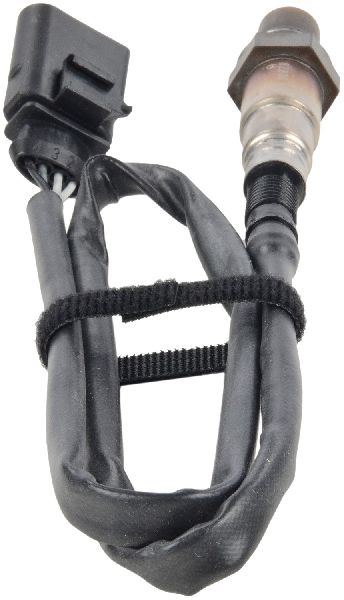
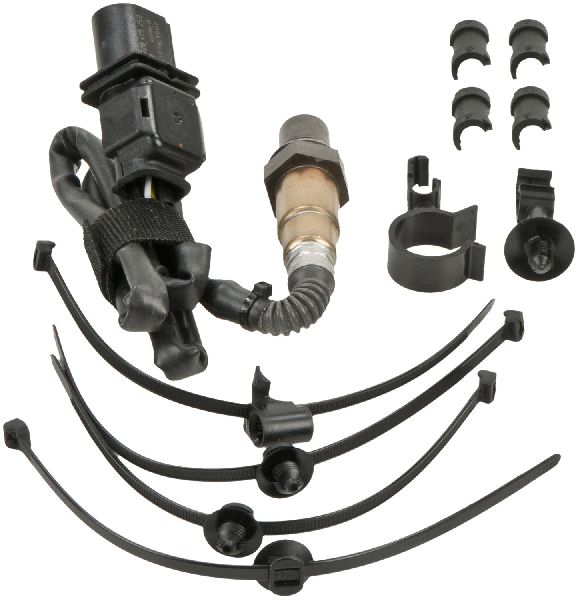
Typical fix: Replace the upstream oxygen sensor (Bank 1, Sensor 1). The OEM sensor is made by Bosch.
Est. part cost: $70-$250 - Failed PCV Valve / Oil Separator 🔴 High Probability The diaphragm in the PCV assembly on the EA888 engine is a known, high-frequency failure point. When it tears, it creates a large, unmetered vacuum leak that the ECU struggles to compensate for, often leading to lean codes (P0171) and being misinterpreted as a slow O2 sensor.
How to confirm: With the engine running, try to lift the oil fill cap. If there is strong suction holding it down, or a loud whistling/sucking sound, the PCV diaphragm has failed. This condition often throws a P0171 (System Too Lean) code as well.
Typical fix: Replace the entire PCV valve/oil separator assembly. It is highly recommended to use an updated Genuine VW/Audi part to ensure longevity.
Est. part cost: $120-$180 - Exhaust Leak 🟡 Medium Probability Leaks can develop at gasket joints, the turbo-to-downpipe V-band clamp, or the flexible pipe section of the downpipe, especially on higher-mileage vehicles. This allows outside air to enter the exhaust stream before the O2 sensor, corrupting its readings.
How to confirm: Visually inspect the exhaust manifold and downpipe for cracks or black soot trails indicating a leak. Listen for an audible ticking or hissing sound that changes with engine RPM. A smoke test is the most definitive way to pinpoint the source of the leak.
Typical fix: Repair the leak by replacing the faulty gasket, V-band clamp, or the entire downpipe if the flex pipe has failed.
Est. part cost: $20-$400
Rare But Worth Checking
- Damaged O2 Sensor Wiring or Connector: → Shop Oxygen Sensor The wiring harness is routed near hot exhaust components and can become brittle, melted, or corroded over time, leading to high resistance that slows the sensor's signal.
- Low Fuel Pressure or Dirty MAF Sensor: → Shop Fuel Injection Air Flow Meter While less common, issues that cause the engine to run consistently lean, like a weak fuel pump or a contaminated Mass Airflow (MAF) sensor, can sometimes be misinterpreted by the ECM as a slow O2 sensor. Cleaning the MAF sensor is a simple diagnostic step.
- Engine Control Module (ECM) Software Issue: → Shop Engine Control Module (ECM) In some rare cases, the ECM's software calibration may be too sensitive. A software update from an Audi dealer can sometimes resolve the issue, though this is uncommon for this specific code.
Diagnosis Steps
- Scan for codes: Use an OBD-II scanner to confirm P0133 is present and check for any other related codes like P0171 or P0507, which strongly point towards a vacuum leak.
- Check for PCV failure: With the engine idling, listen for a distinct whistling or sucking noise near the top of the engine cover. Try to remove the oil filler cap. If it is held down by strong vacuum, the PCV valve diaphragm is torn and must be replaced.
- Inspect for exhaust leaks: Perform a thorough visual and auditory inspection of the exhaust manifold, turbocharger outlet, and downpipe (especially the flex-pipe section) for soot trails or hissing sounds. A professional smoke test is the most effective way to find small leaks.
- Analyze O2 sensor live data: Use a scan tool to graph the voltage of Bank 1, Sensor 1. At a steady 2500 RPM, the voltage should fluctuate rapidly and consistently between ~0.1V and ~0.9V. If the switching is lazy, flat-lined, or biased high/low, and no leaks are present, the sensor itself is faulty.
- Inspect wiring: Visually check the O2 sensor's wiring harness and connector for any signs of melting, chafing, corrosion, or damage from proximity to hot exhaust components.
Parts You'll Likely Need
- Upstream Oxygen Sensor (Air/Fuel Ratio Sensor)
(OEM #06J906262AA (Bosch 17090 is a common compatible part))— This is the most common part to fail and cause a P0133 code. It is a critical sensor for fuel mixture control and is a standard wear-and-tear item. Bosch is the original equipment manufacturer.
Trusted brands: Bosch, Denso, NTK
OEM price range: $180-$250
Aftermarket price range: $70-$150 - PCV Valve / Oil Separator
(OEM #06H103495AK (or latest revision))— A known weak point on the EA888 engine. A failed diaphragm creates a vacuum leak that can trigger P0133 and other lean codes. Audi has released multiple revisions of this part; it is crucial to use the latest version available.
Trusted brands: Genuine VW/Audi, Vaico, RKX
OEM price range: $120-$180
Aftermarket price range: $30-$90
Related Codes That Often Appear With This One
- P0171 — System Too Lean (Bank 1). A vacuum leak from a failed PCV valve or an exhaust leak before the O2 sensor will often cause both a lean condition (P0171) and a slow sensor response (P0133).
- P0507 — Idle Air Control System RPM Higher Than Expected. A significant vacuum leak from a failed PCV valve can cause the engine idle to increase, triggering this code alongside P0171 and P0133.
- P0420 — Catalyst System Efficiency Below Threshold (Bank 1). A persistently slow or malfunctioning O2 sensor can lead to improper fuel mixture, which over time can degrade the catalytic converter, eventually triggering a P0420 code.
Technical Service Bulletins (TSBs) & Recalls
- TSB 2027731: While not directly for P0133, this TSB addresses the excessive oil consumption issue on 2009-2011 models. This condition can lead to oil fouling of the O2 sensor, causing it to become slow and trigger a P0133 code.
Platform-Specific Known Issues
- The PCV valve diaphragm is a very common failure item on the EA888 engine, leading to a hidden vacuum leak that is often misdiagnosed as a bad O2 sensor. The tell-tale sign is strong suction at the oil fill cap.
- Exhaust flex pipes on the original downpipe are prone to cracking with age and mileage, creating a pre-sensor exhaust leak that directly causes code P0133.
Mechanic-Grade Diagnostic Values
- Upstream O2 Sensor (B1S1) Voltage Swing — expected: Should oscillate rapidly between approximately 0.1V (lean) and 0.9V (rich).. Failure: Voltage changes take longer than 1-2 seconds, or the signal is flat or biased.
- O2 Sensor Heater Circuit Resistance — expected: Typically between 1 and 4 Ohms, but should be checked against manufacturer spec for the specific sensor part number.. Failure: Resistance is out of specification (e.g., infinite for an open circuit or near zero for a short).
- Short-Term Fuel Trim (STFT) at Idle — expected: Should fluctuate close to 0%, generally within +/- 10%.. Failure: Consistently high positive values (e.g., > +10%) at idle that decrease as RPMs increase suggest a vacuum leak (like a failed PCV).
- Long-Term Fuel Trim (LTFT) at Idle — expected: Should be stable and as close to 0% as possible, ideally within +/- 10%.. Failure: A high positive value (e.g., > +10%) indicates the ECU has been compensating for a persistent lean condition over time.
Scan Tool Commands That Help
- VCDS (VAG-COM): Basic Settings - "IDE00553 Automatic test sequence" or "B200 Readiness Code" — After a repair (like replacing the O2 sensor or fixing a leak) to force the ECU to run through its internal emissions system tests to set readiness monitors. This can confirm a fix without waiting for days of normal driving. The user may need to hold the brake and accelerator to initiate the test sequence.
- VCDS (VAG-COM): [Engine-01] -> [Readiness-15] -> [Set Readiness] — This is a guided script function that walks the user through the steps to set all readiness monitors. It is a more user-friendly alternative to the manual Basic Settings test, but may not be available for all ECU versions. If the button is greyed out, the manual method must be used.
Wiring & Ground Locations
- ECU Pins for B1S1 — At the main Engine Control Unit (ECU) connector.. For testing continuity and checking for shorts without having to access the sensor connector directly. A document for a similar Bosch ECU shows the B1S1 ground on Pin 51 and the ion/signal wire on Pin 52, but this must be verified with a vehicle-specific diagram. Damaged wiring can cause resistance that slows the signal, triggering P0133.
- Engine Block Ground Strap — Typically a braided strap connecting the engine block to the chassis frame rail, often near the passenger side motor mount.. A corroded or loose main engine ground can cause a variety of electrical issues, including erratic sensor readings. While not a primary cause, it's a critical check for any electrical fault code like P0133.
Real Owner Repair Stories
- MHH Auto forum user (Audi A4 B8 with EDC17CP14 ECU) — Non-starter, fault code P0651 (Sensor reference voltage B - Open Circuit)
❌ Tried (didn't work) Initial diagnosis pointed to a general sensor voltage issue.
✅ What actually fixed it The fault was a failed turbo actuator. When connected, it would short the 5V reference circuit shared by other sensors, causing the voltage to drop to 0.99V. Disconnecting the actuator restored the 5V supply. This is a valuable story as a shorted component on a shared circuit can cause misleading codes for other sensors.
"I Checked Everything" — The Actual Cause
- A torn diaphragm in the PCV valve creates a significant internal vacuum leak. This unmetered air enters the crankcase, is pulled into the intake manifold, and leans out the air-fuel mixture. This type of leak will not be detected by a standard smoke test performed on the intake tract or exhaust system, leading a technician to incorrectly rule out leaks as a cause for P0133 and related lean codes. The definitive symptom is strong suction at the oil filler cap with the engine running.
OEM Part Supersession History
06H103495H, 06H103495J, 06H103495AE, 06H103495AB, 06H103495AF, 06H103495AJ→06H103495AK (latest common revision for Gen 1/2)— The original PCV valve diaphragms were prone to tearing. Subsequent revisions aimed to improve the durability of the diaphragm material and valve design.
Heads up: It is critical to use the latest available revision for the specific engine code. While older versions will fit, they are likely to fail prematurely in the same manner as the original part.
Model Year Variations Within This Range
- 2009-2012 (B8) vs 2013-2016 (B8.5): The B8.5 is a facelift model. Externally, it features a grille with angled corners, different headlight and taillight designs (LED strips vs. dots), and different bumpers. Internally, the MMI system was updated to 3G+ with better graphics, and some switchgear was changed. While both use the EA888 Gen 2 engine, the B8.5 models received a minor power bump from 211hp to 220hp and benefited from later revisions of parts like the PCV valve and timing chain tensioner from the factory.
- 2009-2015: The EA888 Gen 2 engine was used for the entire B8/B8.5 A4 generation in the US market. In other markets (Rest of World), the EA888 Gen 3 engine began appearing in A4 models as early as May 2013. This is a key distinction, as the Gen 3 engine has significant differences, including dual injection (in some versions) and an integrated exhaust manifold.
Diagnostic Flowchart
Other Known Issues on This Vehicle
Issues unrelated to this code that are worth knowing about as an owner of this generation:
- Excessive Oil Consumption 🔴 High — Very common on early EA888 Gen 2 engines (approx. 2009-2012) due to flawed piston ring design. Can begin as early as 40,000-60,000 miles. (Ref: Subject of class-action lawsuits and TSB 2027731, which in its final stage involves piston and ring replacement.)
- Timing Chain Tensioner Failure 🔴 High — Affects models made up to ~2013 with the original tensioner design. Failure can be catastrophic and often occurs between 50,000 and 100,000 miles. A rattling noise on cold starts is the key warning sign. (Ref: No recall, but an updated tensioner (P/N 06K109467K) was released to fix the design flaw.)
- Water Pump Failure 🟠 Medium — Common across all B8/B8.5 models. The plastic housing can crack or the gasket can fail, causing coolant leaks. Failure can occur at a wide range of mileages, some as early as 25,000 miles.
- Intake Manifold Flap Failure 🟠 Medium → Shop Engine Intake Manifold — The runner flaps inside the plastic intake manifold can fail, causing rough idle, loss of power, and fault codes. This is a common issue on higher mileage vehicles.
Used vs. New Parts: Buying Guide for This Vehicle
When a used part is the smart pick: For this repair, buying used parts is generally not recommended. The primary failure items—the oxygen sensor and the PCV valve—are wear-and-tear components. A used part from a donor vehicle will have an unknown amount of remaining service life and could fail shortly after installation.
Donor-vehicle mileage cap: roughly under 30000 miles for the part to have meaningful remaining life.
What to inspect on the donor part:
- If considering a used part is unavoidable, verify the donor vehicle has very low mileage.
- For a PCV valve, check the part number to ensure it is the latest revision (e.g., ending in AK or later). Avoid any earlier part numbers.
- Visually inspect any used O2 sensor for heavy soot, oil contamination, or physical damage to the wiring, all of which are signs of a compromised part.
OEM-only on this vehicle (don't cheap out):
- PCV Valve / Oil Separator: While aftermarket options exist, the Genuine VW/Audi part has undergone the most revisions to fix the original design flaw. Using the latest OEM revision is the most reliable way to prevent a repeat failure.
Aftermarket brands forum-validated for this vehicle:
- Oxygen Sensor: Bosch is the Original Equipment Manufacturer (OEM) for Audi, so a Bosch-branded sensor is equivalent to the dealer part. NTK and Denso are also highly reputable manufacturers of oxygen sensors with proven reliability.
Brands owners have reported issues with on this vehicle:
- Unbranded or generic 'white-box' PCV valves and oxygen sensors from online marketplaces should be avoided. These parts often use lower-quality materials (especially for the PCV diaphragm and sensor element) and can fail quickly or be dead-on-arrival.
Real Owner Stories
Aggregated from forums and TSBs cited above. Mileages and costs reflect what owners reported in those sources.
Audi A8 (D3 Platform) with EA888-style symptoms
Symptoms: Owner was chasing P0133 and P0420 codes and noted an audible exhaust leak from the flex connectors.
What fixed it: Repairing the exhaust leak at the flex pipes rather than replacing the O2 sensor.
Source hint: AudiWorld Forums: P0133 - User 'audijim131' discusses chasing P0133 and P0420
Audi A4 2.0T (EA888)
Symptoms: Fuel trims go high specifically on deceleration, causing a lambda slow response error.
What fixed it: Identifying an unmetered air leak (vacuum or exhaust) causing the slow response code.
Source hint: Audi-Sport.net: Headache with p0133 lambda slow response
Related OBD-II Codes
Frequently Asked Questions
Could the excessive oil consumption issue on my 2010 Audi A4 be causing the P0133 code?
I hear a whistling noise from my engine bay at idle; is this related to the P0133 code?
Is there a specific brand of oxygen sensor I should use for my B8 A4?
How can I tell if my P0133 is a bad sensor or a PCV failure without tools?
My A4 has high mileage; could an exhaust leak be the cause of P0133?
Helpful Videos

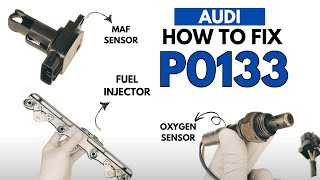
We Have This Part in Stock

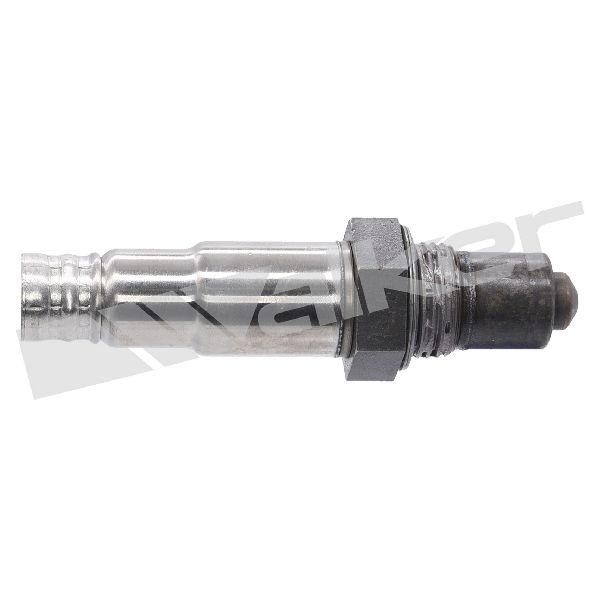
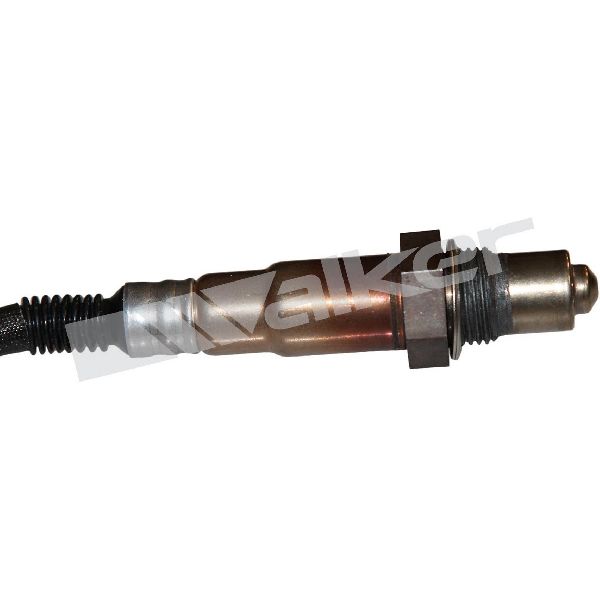
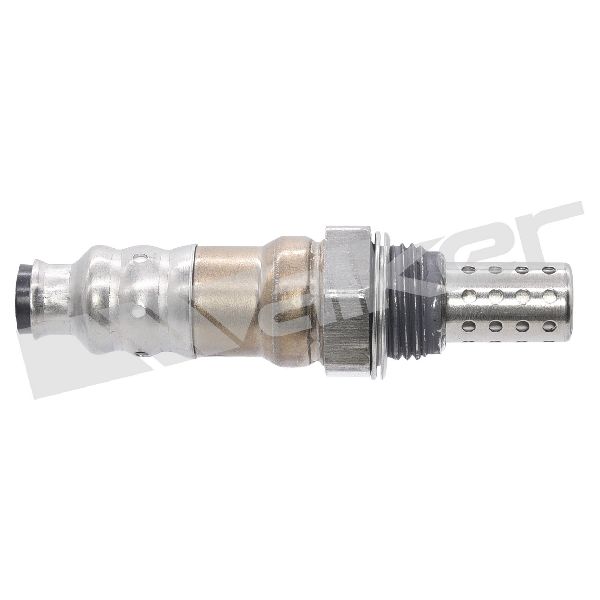

The information in this article is provided for general reference and educational purposes only. Vehicle specifications, procedures, and part compatibility can vary by production date, trim level, and region. Always consult your vehicle's factory service manual and verify part numbers before purchasing or performing repairs. Safety-critical components such as airbags, seat belts, and braking systems should be installed by a qualified professional.
- Audi A4:
- 🧭 Diagnostic Flowchart
- 🎬 Helpful Videos
- 🛍️ Shop This Part
- What's Unique About the 2009-2016 Audi A4
- Symptoms You May Notice
- Most Likely Causes
- Rare But Worth Checking
- Diagnosis Steps
- Parts You'll Likely Need
- Related Codes That Often Appear With This One
- Technical Service Bulletins (TSBs) & Recalls
- Platform-Specific Known Issues
- Mechanic-Grade Diagnostic Values
- Scan Tool Commands That Help
- Wiring & Ground Locations
- Real Owner Repair Stories
- "I Checked Everything" — The Actual Cause
- OEM Part Supersession History
- Model Year Variations Within This Range
- Other Known Issues on This Vehicle
- Used vs. New Parts: Buying Guide for This Vehicle
- Real Owner Stories
- Audi A8 (D3 Platform) with EA888-style symptoms
- Audi A4 2.0T (EA888)
- Related OBD-II Codes
- Frequently Asked Questions
- 🎟️ Get 5% Off