

P0133 on 2005-2010 Chevrolet Cobalt: O2 Sensor Slow Response Causes and Fixes
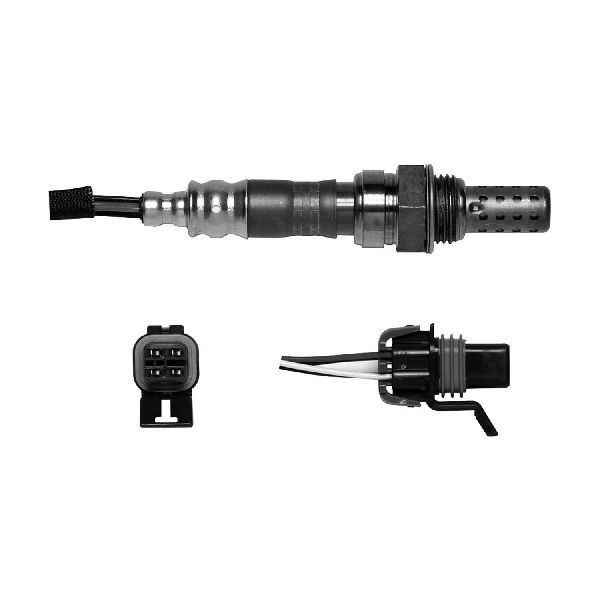
On a 2005-2010 Chevrolet Cobalt, code P0133 is most often caused by a failing upstream oxygen (O2) sensor. Replacing it is a common DIY fix, with parts costing between $40 for an aftermarket sensor and $70 for an OEM ACDelco part. It is critical to use an OEM ACDelco or NTK sensor, as other brands like Bosch or Denso are known to cause this code to return.
- P0133 on a Cobalt almost always points to the upstream O2 sensor (Bank 1, Sensor 1) being old and slow.
- It is absolutely critical to use an OEM ACDelco or an NGK/NTK sensor for the replacement. Other aftermarket brands, especially Bosch, are known to cause the code to return.
- Before replacing the sensor, always check for an exhaust leak between the engine and the sensor, which presents as a ticking/puffing noise when the engine is cold.
- Ignoring the code will lead to poor gas mileage and will eventually damage the expensive catalytic converter.
What's Unique About the 2005-2010 Chevrolet Cobalt
While a failing sensor is the most common culprit, the Ecotec engines in the Cobalt are particularly sensitive to the brand of oxygen sensor used. Owners and mechanics on forums like CobaltSS.net overwhelmingly report that using aftermarket sensors, especially Bosch and sometimes Denso, can lead to an immediate or recurring P0133 code. It is strongly recommended to use only OEM ACDelco or NGK/NTK branded sensors to ensure compatibility and prevent repeat failures. Additionally, these platforms are prone to exhaust leaks at the manifold or the donut gasket connecting to the downpipe. These leaks introduce outside air, which can fool the ECM into thinking the O2 sensor is slow, leading to a P0133 code when the sensor itself may be fine.
Symptoms You May Notice
- Check Engine Light is on
- Decreased fuel economy
- Rough or uneven idle
- Engine hesitation or lack of performance
- Black smoke from the exhaust in some cases
- Audible ticking or puffing noise from the engine bay, especially when cold
- Replacing the catalytic converter. A P0133 code should always be resolved before suspecting a bad catalytic converter, as a slow sensor can cause false catalyst inefficiency codes (like P0420).
- Replacing the downstream (Sensor 2) O2 sensor. This code specifically points to Sensor 1, the upstream sensor responsible for fuel trim.
- Replacing the O2 sensor with an incorrect brand (e.g., Bosch, Denso), leading to the code returning.
Most Likely Causes
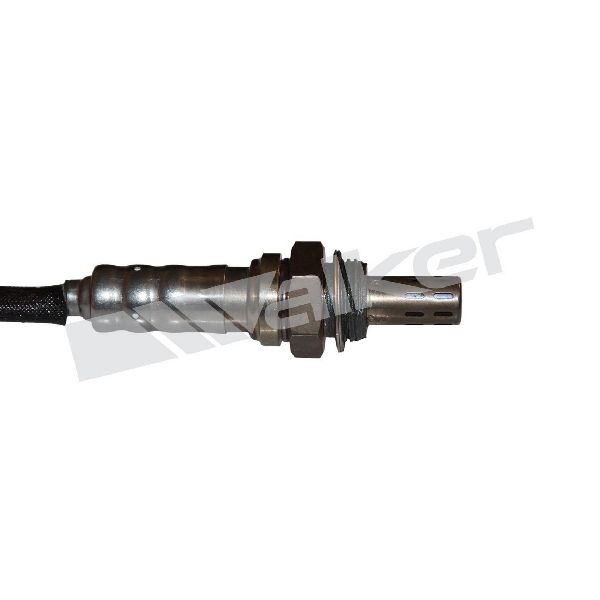
- Failing Upstream Oxygen Sensor (Bank 1, Sensor 1) 🔴 High Probability → Shop Oxygen Sensor Oxygen sensors are wear items that degrade over time from heat and contaminants. After many years and miles, their chemical reactivity slows down, which is the direct cause of this code. The Ecotec engines are also notoriously sensitive to the sensor's brand.
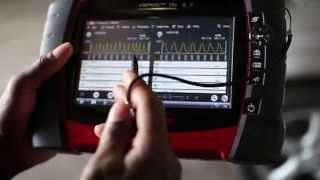
How to confirm: Using a scan tool with live data, graph the voltage of the Bank 1 Sensor 1. A healthy sensor's voltage should fluctuate rapidly and frequently between approximately 0.1V and 0.9V, making a full swing in under a second. 🎬 See how to check for slow O2 response using a scan tool. A slow sensor will show lazy, rounded waves that take more than 1-2 seconds to transition from low to high voltage, or may appear flat for seconds at a time.
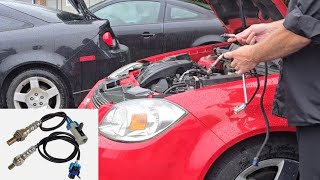
Typical fix: Replace the upstream oxygen sensor with an ACDelco or NTK/NGK branded part. It is located in the exhaust manifold and is accessible from the engine bay. 🎬 Watch: This walkthrough shows how to replace the Cobalt's O2 sensor.
Est. part cost: $40-$80 - Exhaust Leak Before the O2 Sensor 🟡 Medium Probability → Shop Oxygen Sensor The exhaust manifold or the donut gasket between the manifold and the downpipe can develop leaks over time due to heat cycles, vibration, and rust.
How to confirm: Perform a visual inspection of the exhaust manifold for cracks (often visible as black soot trails). Listen for a distinct 'ticking' or 'puffing' noise from the engine bay, especially when the engine is cold. The noise may quiet down or disappear as the metal heats up and expands, sealing the crack.
Typical fix: If the manifold is cracked, it must be replaced. If the leak is at the gasket, replace the exhaust manifold-to-downpipe gasket (donut gasket).
Est. part cost: $15-$150 - Damaged O2 Sensor Wiring or Connector ⚪ Low Probability → Shop Oxygen Sensor The wiring harness is close to hot exhaust components and can become brittle, melted, or chafed over time. The connector pins can also corrode, leading to high resistance and a dampened signal.
How to confirm: Visually inspect the wiring harness and connector leading to the upstream O2 sensor. Look for any signs of melting, corrosion on the pins, chafed insulation, or loose connections. A multimeter can be used to check for high resistance in the signal wire; a small increase of even 0.5 Ω can be enough to trigger the code.
Typical fix: Repair the damaged section of the harness or clean the connector terminals with contact cleaner. If the connector itself is damaged, it may need to be replaced.
Est. part cost: $10-$50
Rare But Worth Checking
- Engine Vacuum Leak: A significant vacuum leak (e.g., from an intake manifold gasket) can introduce unmetered air, altering the air-fuel ratio and causing the O2 sensor to read incorrectly, potentially triggering a P0133.
- Contaminated O2 Sensor: → Shop Oxygen Sensor An internal engine leak, such as a leaking valve cover gasket dripping oil onto the exhaust or a coolant leak burning in the cylinder, can contaminate the sensor tip with white or sooty deposits, causing it to fail.
- Dirty or Failing Mass Airflow (MAF) Sensor: → Shop Fuel Injection Air Flow Meter A dirty MAF sensor can under-report the amount of air entering the engine, causing the ECM to command an incorrect fuel mixture and potentially setting this code as a secondary fault. One HHR owner with a P0133 found their MAF sensor caked with debris.
- Swapped O2 Sensor Connectors: → Shop Oxygen Sensor While rare, it is possible, especially after major engine or exhaust work, to accidentally swap the electrical connectors for the upstream (Sensor 1) and downstream (Sensor 2). This will cause illogical readings and can trigger a P0133. GM issued TSB PIP4699A for this issue on other models.
Diagnosis Steps
- Read the code with an OBD-II scanner and confirm P0133 is present. Note any other codes.
- With the engine cold, start the car and listen for any ticking or puffing sounds from the exhaust manifold area, which would indicate an exhaust leak.
- Visually inspect the exhaust manifold and the connection to the downpipe for black soot trails, which are a clear sign of a leak.
- Inspect the O2 sensor's wiring harness and connector for any signs of melting, corrosion, or physical damage.
- If no leaks or wiring issues are found, connect a scan tool capable of graphing live data.
- Bring the engine to operating temperature to enter 'closed loop' mode.
- Graph the voltage for 'O2S B1S1' (Bank 1, Sensor 1). The voltage should switch rapidly from below 0.2V to above 0.8V multiple times per second. A full rich-to-lean or lean-to-rich cycle should take less than 1 second.
- If the waveform is slow, lazy (taking >1-2 seconds to swing), or biased high or low, the oxygen sensor has failed and should be replaced.
- If an exhaust leak was found, repair it, clear the codes, and re-test before replacing the sensor.
- Before replacing the sensor, confirm the correct brand is being used. For a Cobalt, this should be ACDelco or NTK/NGK.
Parts You'll Likely Need
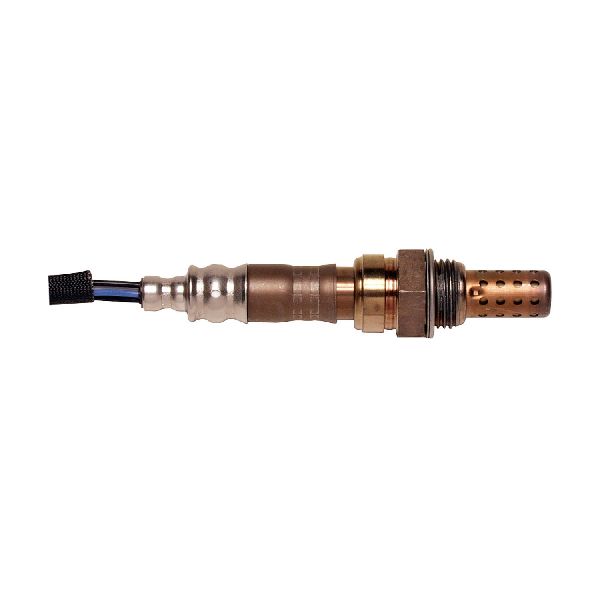
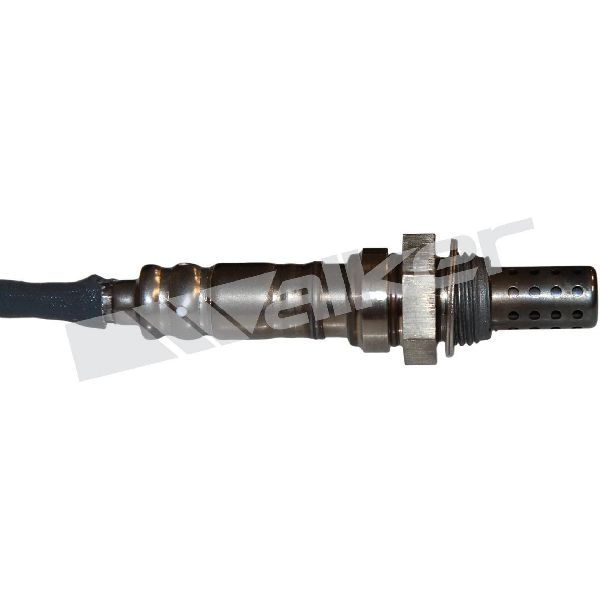
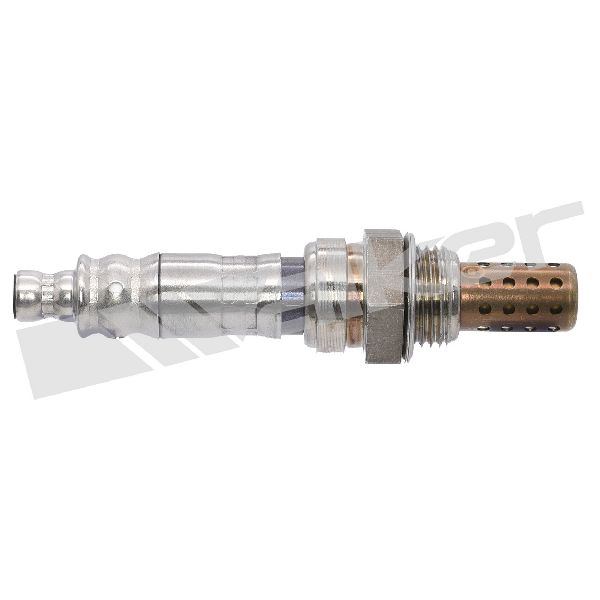
- Upstream Oxygen Sensor (Bank 1, Sensor 1)
(OEM #ACDelco 213-4195 (for 2.2L/2.4L), ACDelco 213-1574 (for 2.0L LSJ), NGK/NTK 24325 (for 2.0L LNF))— This is the most common failure part for code P0133. It is a wear-and-tear component that degrades over time. Using the correct OEM brand is critical on this vehicle.
Trusted brands: ACDelco (Recommended), NGK / NTK (Recommended, often the original manufacturer), Bosch (Not Recommended), Denso (Not Recommended)
OEM price range: $60-$80
Aftermarket price range: $40-$65
Related Codes That Often Appear With This One
- P0171 — If an exhaust or vacuum leak is the root cause, the system will run lean, often triggering a P0171 (System Too Lean) code alongside P0133.
- P0135 — This code indicates a fault in the O2 sensor's internal heater circuit. A failed heater will prevent the sensor from reaching operating temperature quickly, which will almost always cause a P0133 slow response code to be set as well.
Technical Service Bulletins (TSBs) & Recalls
- GM TSB PIP4699A: While not for the Cobalt specifically, this bulletin addresses a P0133 code on other GM vehicles caused by swapped upstream and downstream O2 sensor electrical connectors after a repair. This is a possible, though rare, cause on a Cobalt as well.
Platform-Specific Known Issues
- Extreme Sensitivity to O2 Sensor Brand: → Shop Oxygen Sensor Numerous owner experiences confirm that the Ecotec engine platform is highly sensitive to the brand of the upstream O2 sensor. Using non-OEM brands, particularly Bosch and sometimes Denso, frequently results in a P0133 code, even with a brand new sensor. The issue was documented by a user on CobaltSS.net who installed a new Denso sensor with a header and immediately got a P0133, which was resolved by switching to an NTK sensor. To avoid this, it is critical to use only ACDelco or NTK/NGK parts.
Mechanic-Grade Diagnostic Values
- HO2S Rich-to-Lean / Lean-to-Rich Transition Time — expected: Less than 1-2 seconds. Failure: The PCM will set P0133 if the time to transition from below 450 mV to above 650 mV (or vice-versa) is too long.
- HO2S Heater Circuit Resistance — expected: 3-15 Ohms. Failure: A reading outside of this range indicates a faulty heater element within the sensor.
- HO2S Signal Wire Resistance — expected: Less than 0.5 Ω. Failure: Resistance greater than 0.5 Ω in the wiring harness can dampen the signal enough to trigger a P0133 code.
- Short-Term Fuel Trim (STFT) at steady RPM — expected: Between -10% and +10%. Failure: While not a direct cause, consistently high positive or negative fuel trims can indicate an underlying issue (like a vacuum or exhaust leak) that could contribute to a P0133 code.
Wiring & Ground Locations
- G105 — In the engine compartment on the left side inner fender, near the engine body control module. On some models, it's a stud behind the driver's side headlight.. This ground point serves the Engine Control Module (ECM), Mass Airflow (MAF) sensor, and Ignition Control Module, among others. A poor connection at G105 can cause erratic sensor readings and communication issues for the entire engine management system, potentially leading to a false P0133 code.
- Upstream vs. Downstream Connectors — Engine harness. To prevent accidental swapping, the upstream (Sensor 1) O2 sensor has a female electrical plug on the sensor side, while the downstream (Sensor 2) has a male plug.
Real Owner Repair Stories
- CobaltSS.net user (Chevrolet Cobalt SS with aftermarket ZZP shorty header) — Check Engine Light with code P0133 came on a few days after installing the header and a new Denso O2 sensor.
❌ Tried (didn't work) Using a new Denso brand O2 sensor.
✅ What actually fixed it The user was advised by other forum members that Denso and Bosch sensors are problematic on this platform. The issue is resolved by replacing the new Denso sensor with an OEM-equivalent NTK (NGK) sensor. - CorvetteForum user (Corvette with aftermarket long tube headers) — Constantly getting P0133 after header installation.
❌ Tried (didn't work) Replacing the O2 sensor., Checking for crossed wiring., Using O2 simulators.
✅ What actually fixed it The final fix was to have the PCM custom tuned to edit out or disable the P0133 diagnostic test. The issue is caused by the O2 sensor being located further downstream in the header, causing it to run cooler and respond slower than the PCM expects.
OEM Part Supersession History
ACDelco 213-4195→Unknown, part is listed as discontinued by some vendors but still available from others.— End of life or replacement by a newer GM part number.
Heads up: Some GM Genuine Parts may have formerly appeared as ACDelco GM OE. The part may require programming or special setup procedures on some vehicles, though this is not typically the case for a simple O2 sensor on a Cobalt.
Model Year Variations Within This Range
- 2010 only: A specific ground location, G107, was added for 2010 models on the left front upper control arm mount. While G105 remains the primary ground for the ECM, this additional ground point could be a factor in diagnosing electrical issues on the final model year.
Diagnostic Flowchart
Real Owner Stories
Aggregated from forums and TSBs cited above. Mileages and costs reflect what owners reported in those sources.
Chevrolet Cobalt SS — 90000 miles
Symptoms: Check engine light came on 3-4 days after installing a new header and sensor, but the car still runs great and can get into boost.
What fixed it: Switched from the newly installed Denso oxygen sensor to an NTK (NGK) OEM replacement sensor.
Source hint: Cobalt SS Network - 'P0133 trouble code after ZZP shorty header install'
Chevrolet Cobalt
Symptoms: Received a P0133 code immediately after installing a new Bosch oxygen sensor.
What fixed it: Removed the Bosch sensor and installed an ACDelco sensor based on GM diagnostic criteria.
Source hint: CobaltSS.net - 'Big probs with Po133'
2006 Chevrolet Cobalt LS 2.2L
Symptoms: MIL Lamp on with code P0133. The code returned just 2 days after a repair attempt.
What fixed it: The initial diagnostic dead-end was replacing both upstream and downstream O2 sensors with aftermarket sensors, which caused the code to return immediately.
Source hint: iATN forum report
2003-2007 Saturn Ion (Ecotec Engine)
Symptoms: Experienced a recurring P0133 code after replacing the factory sensor with a Bosch unit.
What fixed it: Resolved the recurring code by switching from the Bosch sensor to an ACDelco part.
Source hint: SaturnFans forum thread regarding shared GM Delta platform issues
Related OBD-II Codes
Frequently Asked Questions
Why did my Cobalt throw a P0133 code right after I installed a brand new Bosch O2 sensor?
I hear a ticking noise from the engine bay when I start my Cobalt cold. Could this be causing my P0133 code?
Does GM TSB PIP4699A apply to my 2005-2010 Chevrolet Cobalt?
What should the live data look like for a healthy upstream O2 sensor on my 2.2L Ecotec?
Can a dirty MAF sensor cause a P0133 code on this platform?
Helpful Videos
We Have This Part in Stock


The information in this article is provided for general reference and educational purposes only. Vehicle specifications, procedures, and part compatibility can vary by production date, trim level, and region. Always consult your vehicle's factory service manual and verify part numbers before purchasing or performing repairs. Safety-critical components such as airbags, seat belts, and braking systems should be installed by a qualified professional.
- Chevrolet Cobalt:
- 🧭 Diagnostic Flowchart
- 🎬 Helpful Videos
- 🛍️ Shop This Part
- What's Unique About the 2005-2010 Chevrolet Cobalt
- Symptoms You May Notice
- Most Likely Causes
- Rare But Worth Checking
- Diagnosis Steps
- Parts You'll Likely Need
- Related Codes That Often Appear With This One
- Technical Service Bulletins (TSBs) & Recalls
- Platform-Specific Known Issues
- Mechanic-Grade Diagnostic Values
- Wiring & Ground Locations
- Real Owner Repair Stories
- OEM Part Supersession History
- Model Year Variations Within This Range
- Real Owner Stories
- Chevrolet Cobalt SS — 90000 miles
- Chevrolet Cobalt
- 2006 Chevrolet Cobalt LS 2.2L
- 2003-2007 Saturn Ion (Ecotec Engine)
- Related OBD-II Codes
- Frequently Asked Questions
- 🎟️ Get 5% Off